
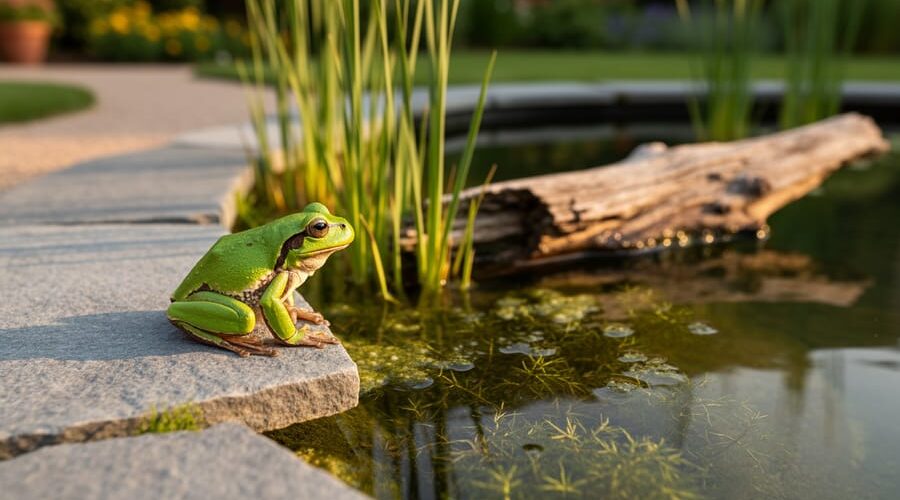
Transform Your Pond Into a Thriving Amphibian Nursery
Your backyard pond can become a thriving sanctuary for frogs, toads, and salamanders with just a few intentional design choices. These remarkable creatures need more than just water—they’re looking for the right depth variations, hiding spots, and easy access that signals “safe breeding ground here.”
Creating an amphibian-friendly habitat starts with understanding what brings them to your pond in the first place. Shallow edges that gradually slope into deeper water give tadpoles warm nursery areas while adults find refuge in cooler zones. Native plants around the perimeter provide essential cover from predators and harsh sun, while submerged vegetation offers attachment points for egg masses. The absence of fish is often the deciding factor, since most fish species view amphibian eggs and tadpoles as an all-you-can-eat buffet.
The reward for getting this right goes beyond the cheerful chorus of spring peepers. Amphibians are natural pest controllers, consuming thousands of mosquitoes, flies, and slugs throughout the season. They’re also sensitive environmental indicators—when frogs choose your pond for breeding, you know you’ve created something genuinely healthy and balanced.
Whether you’re planning a new pond from scratch or retrofitting an existing water feature, the principles remain the same. This guide walks you through each element amphibians need to complete their life cycle, from egg to adult, right in your backyard. You’ll discover that supporting these fascinating creatures is simpler than you might think, and the benefits extend far beyond your pond’s edge.
Why Amphibians Choose Your Pond (And Why You Should Welcome Them)
If you’ve noticed frogs croaking near your pond on warm evenings or spotted a toad hopping through your garden, congratulations! Your water feature has passed nature’s quality test. Amphibians are incredibly selective about where they breed, and when they choose your pond, they’re telling you something wonderful about your little ecosystem.
So what exactly draws these fascinating creatures to certain ponds? Think of amphibians as the ultimate house hunters, but with very specific requirements. They’re looking for shallow, gently sloping edges where they can easily enter and exit the water. Dense vegetation around the pond margin is essential, giving them hiding spots from predators and comfortable places to rest between swims. Most importantly, they need clean water, free from harsh chemicals and heavy chlorination. That’s why naturally balanced ponds without aggressive filtration systems often become amphibian magnets.
Now, before you worry about frogs taking over your carefully designed water garden, let me share why these visitors are actually your pond’s best friends. Amphibians are nature’s pest control specialists. A single toad can consume thousands of mosquitoes, flies, slugs, and other garden pests each season. I’ve watched my own pond transform from a mosquito breeding ground to a virtually bug-free zone after a family of frogs moved in. They work tirelessly at dawn and dusk, hunting down those irritating insects that would otherwise make your garden less enjoyable.
Beyond pest control, amphibians serve as excellent indicators of environmental health. Their permeable skin makes them sensitive to pollutants, so their presence confirms your pond water quality is good. They also contribute to the nutrient cycle, and their tadpoles help control algae by grazing on it constantly. When you create a space that supports diverse wildlife pond habitats, you’re essentially building a self-regulating ecosystem where different species help maintain balance.
The wonderful bonus? Watching the complete amphibian lifecycle unfold in your backyard is genuinely magical. From spotting the first jelly-like egg masses to observing tiny tadpoles develop legs, you’ll have front-row seats to one of nature’s most remarkable transformations. It’s educational, entertaining, and incredibly rewarding.
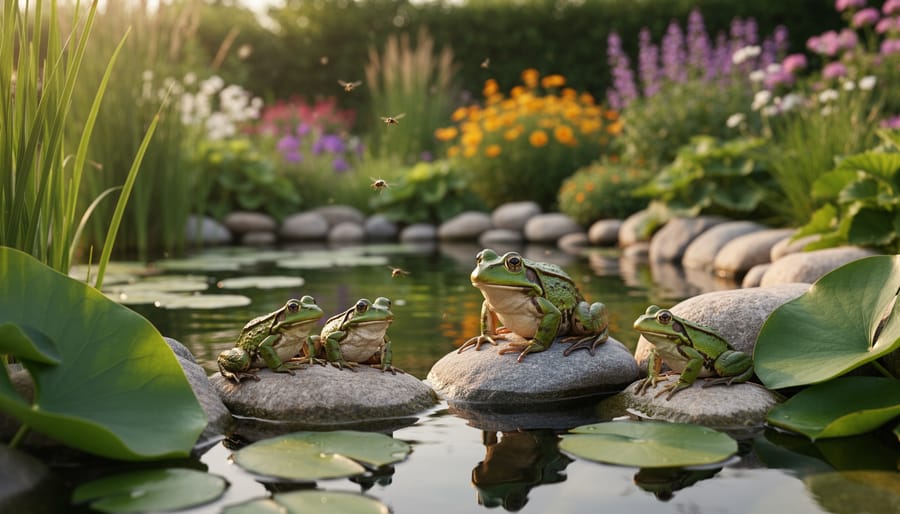
The Essential Elements of Amphibian-Friendly Pond Design
Water Depth Zones That Welcome Every Life Stage
Think of water depth zones like rooms in a house—different amphibians need different spaces at different times in their lives. When I first started building ponds, I made everything a uniform depth, and while it looked neat, the frogs and newts barely visited. Once I understood that creating microhabitat zones with varied depths was the secret, everything changed.
Shallow margins between 5-15 centimeters are absolute gold for egg-laying. Frogs love depositing their jelly-like masses in these warm, sun-kissed shallows where the water heats up quickly and encourages tadpole development. I always make sure at least 30 percent of my pond perimeter has this gentle gradient.
Mid-depth zones around 30-45 centimeters provide perfect nursery areas where young amphibians can hunt for insects while still having quick escape routes from predators. These zones also offer cooler retreats during hot summer days.
The deeper section—at least 60-80 centimeters—is essential for overwintering. Many frogs and newts spend winter months buried in mud at the bottom where temperatures stay stable and above freezing. Without this depth, they simply won’t survive harsh winters in your pond.
The beauty is you don’t need a massive pond to achieve this. Even a modest 2-meter-wide pond can incorporate all three zones by creating a gradual slope from one side to the other. Your amphibian residents will thank you by returning year after year.
Creating Safe Entry and Exit Points
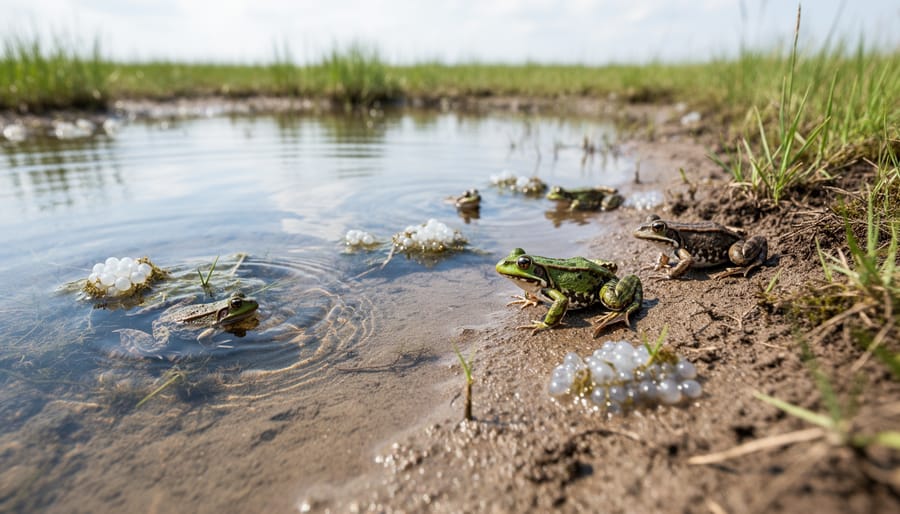
Think of your pond edges as welcoming doorways rather than barriers. Amphibians need easy ways to move between water and land throughout their lives, so creating gentle access points is absolutely essential for a successful breeding habitat.
The golden rule? Always include at least one shallow, gradual slope where the pond bank angles gently into the water. I learned this the hard way when I found a stranded toad struggling in my first pond, which had sides that were just too steep. A slope of about 20 degrees or less works beautifully, allowing even the smallest froglets to hop in and out without difficulty.
Strategically placed rocks and flat stones create natural stepping stones and resting spots. Stack them in graduated sizes from the water’s edge upward, ensuring they’re stable and won’t shift. These also provide sunny basking spots that amphibians absolutely love.
Dense vegetation along your pond margins serves double duty as both access points and protective cover. Plant trailing species that drape into the water, giving tiny amphibians something to grip as they climb.
Here’s your critical warning: steep-sided ponds become death traps. Without escape routes, exhausted amphibians drown or become easy prey. If you have an existing steep-sided pond, add some log ramps or create rock piles immediately to provide emergency exits.
Plant Selection for Breeding Success
Creating the perfect plant mix is like setting up a five-star resort for your amphibian guests! The right combination of submerged and emergent plants makes all the difference for successful breeding.
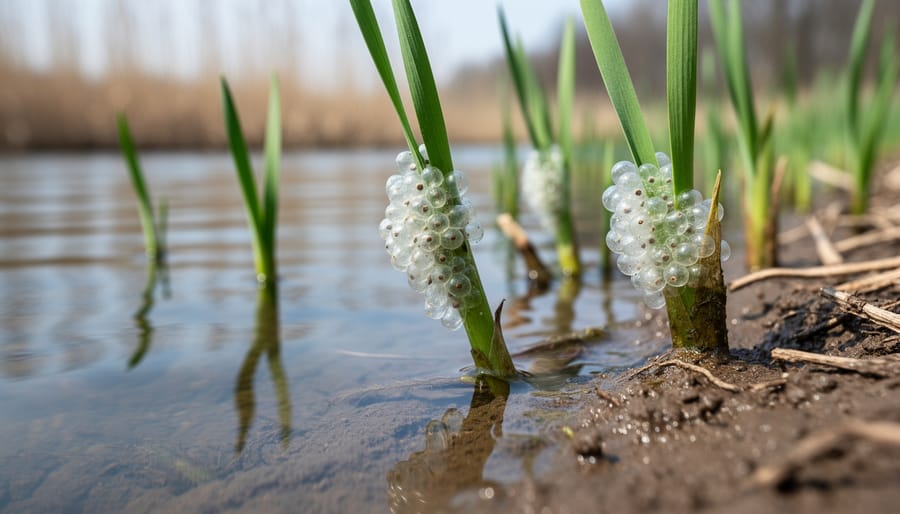
For egg-laying surfaces, nothing beats submerged plants like hornwort and water milfoil. These feathery beauties give frogs and newts the perfect spots to wrap their precious egg masses around. I’ve watched countless frogs choose hornwort over everything else in my pond – it’s like their favorite nursery! Canadian pondweed is another winner that spreads quickly and provides excellent coverage.
Emergent plants are equally important. Water irises create wonderful vertical surfaces where frogs can deposit eggs just below the waterline. Their sturdy stems also give newly transformed froglets safe perches when they’re ready to leave the water. Marsh marigolds brighten up pond edges while offering ideal shallow-water egg-laying spots.
Don’t forget tadpole dining options! Submerged plants develop algae and biofilm that tadpoles absolutely devour. Water starwort and various pondweeds work brilliantly for this purpose. As they decompose naturally, they create additional food sources for developing tadpoles.
When planning your planting scheme, consider aquatic plants for different depths to ensure complete coverage. Aim for about 50-70% plant coverage overall – enough to provide shelter and food without overwhelming your pond. This balanced approach creates the thriving amphibian habitat you’re hoping for!
Shelter and Hibernation Spots Around Your Pond
Amphibians spend most of their lives on land, so creating cozy shelters around your pond is just as important as the water itself. Think of your pond edge as a gateway to a complete neighborhood for your amphibian friends.
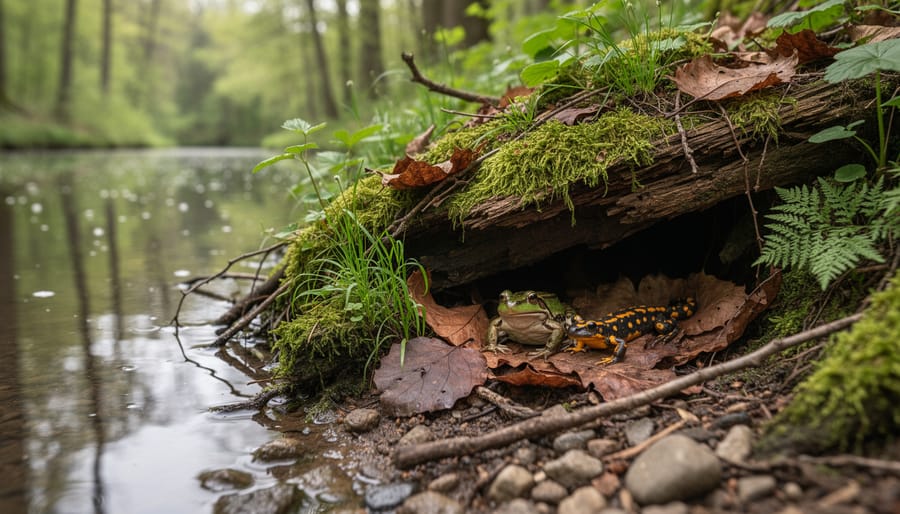
Start by positioning log piles within 10-15 feet of your pond. Partially buried logs work wonderfully, creating damp spaces underneath where frogs and newts love to hide during hot days. I keep a rotting log pile near my pond, and it’s become the most popular amphibian hangout spot in my garden.
Rock piles and stone crevices offer excellent cool retreats. Stack flat stones loosely to create gaps and tunnels. These become essential hibernation spots during winter months when amphibians need protection from freezing temperatures.
Leave at least one section of your pond perimeter completely undisturbed with tall grasses, leaf litter, and ground cover plants. This messy area might not win garden beauty contests, but amphibians absolutely need these wild pockets for foraging and resting.
Avoid placing shelters in full sun. Amphibians have sensitive skin and prefer shaded, moist environments. Position your habitat features under trees or shrubs whenever possible for year-round comfort.
What to Avoid: Common Pond Features That Discourage Breeding
Creating a pond that welcomes amphibians means understanding what drives them away just as much as what attracts them. I learned this lesson the hard way when I couldn’t figure out why frogs visited my pond but never stayed to breed. Turns out, I had several features working against me without even realizing it.
The biggest breeding deterrent is fish. I know, I know – many of us love watching colorful koi or goldfish gliding through the water. But here’s the reality: fish are natural predators of amphibian eggs and tadpoles. Even small goldfish will happily munch on frog eggs, and larger fish like koi can decimate an entire season’s worth of breeding in days. If you’re serious about creating an amphibian haven, you’ll need to choose between fish and frogs. Consider dedicating one pond to amphibians while keeping a separate water feature for your fish collection.
Moving water features like fountains, waterfalls, and powerful filtration systems create another significant obstacle. While these features look beautiful and keep water oxygenated, amphibians need calm, still areas for breeding. Strong currents scatter eggs, stress adult amphibians, and make it difficult for tiny tadpoles to navigate. If you already have a fountain, try creating a separate shallow zone away from the water movement where breeding can occur undisturbed.
Chemical treatments pose serious risks to amphibian populations. Their permeable skin absorbs everything in the water, making them extremely sensitive to algaecides, chlorine, and other pond treatments. I’ve transitioned to natural pond management methods, allowing beneficial bacteria to do the heavy lifting instead of reaching for chemical solutions. Yes, you might have some algae, but that’s actually beneficial for tadpoles who graze on it.
Finally, barren ponds without vegetation simply don’t support breeding. Amphibians need plants to attach their eggs to, and tadpoles require vegetation for food and shelter from predators. A pond with only open water and a liner visible at the bottom won’t attract breeding activity. The solution is simple: add native aquatic plants around the edges and in shallow zones to transform your pond into a genuine amphibian nursery.
Creating Your Amphibian Breeding Zone: A Step-by-Step Approach
For Existing Ponds: Simple Modifications That Make a Big Difference
Good news! You don’t need to start from scratch to make your existing pond amphibian-friendly. A few simple tweaks can transform it into a welcoming breeding habitat, and I’ve seen these changes work wonders in my own backyard.
Start by creating gentle entry and exit points. Frogs and newts aren’t strong climbers, so steep pond edges can trap them. Add a few flat rocks arranged as a gradual ramp on one side, or position a textured log at an angle from the water’s edge to the bottom. I learned this lesson when I discovered exhausted frogs struggling to escape my steep-sided pond—adding those rock ramps made all the difference.
Next, consider adding marginal shelves if your pond doesn’t have them. You can stack flat stones or concrete blocks around the edges to create shallow platforms about 3-6 inches below the surface. These shelves become perfect spots for planting native vegetation like rushes, irises, and marsh marigolds, which provide egg-laying sites and cover for developing tadpoles.
Speaking of plants, go native whenever possible. Local amphibians have evolved alongside native aquatic plants, and these species support the insects that feed growing frogs and toads. Avoid invasive species that can overwhelm your pond ecosystem.
Don’t forget the area surrounding your pond. Create a buffer zone with rocks, logs, and dense ground cover like ferns or native grasses. Amphibians spend most of their adult lives on land, so they need moist hiding spots within hopping distance of the water. A simple log pile or stone arrangement nearby gives them the damp shelter they’re looking for during the day.
These modifications might seem small, but together they address the key habitat elements amphibians need for successful breeding.
Building a New Amphibian-Friendly Pond From Scratch
Creating a pond that welcomes frogs, newts, and other amphibians is one of the most rewarding projects you can tackle in your backyard. I still remember the spring morning when I heard the first chorus of frogs in my homemade pond—it felt like nature had given me a gold star!
When building a wildlife pond for amphibians, size really does matter. Aim for at least 2 square meters of surface area, with a depth range that’s crucial for success. Include shallow edges of just 5-10 centimeters where tadpoles can bask and feed, gradually sloping to a deeper zone of 60-80 centimeters where adults can hibernate during winter.
Location is everything. Choose a spot that receives partial sunlight—around 4-6 hours daily. Too much sun can overheat the water, while too much shade limits the aquatic plants amphibians depend on. Position your pond away from trees to minimize leaf litter, which can create toxic conditions as it decomposes.
For pond liners, skip the preformed rigid options and go with flexible rubber or EPDL liners instead. These allow you to create those gentle, irregular slopes that mimic natural wetlands. Amphibians struggle with steep sides, so think beach-like gradients rather than swimming pool edges.
Here’s a game-changer: add rocks, logs, and native plants around the margins. These provide vital cover for young frogs making their first journeys onto land. I learned this the hard way when my first pond’s bare edges left froglets exposed to birds and cats. Within weeks of adding rocks and grasses, survival rates soared.
Remember, patience pays off—amphibians will find your pond naturally once conditions are right.
Seasonal Maintenance to Support Breeding Cycles
Creating a maintenance schedule around your amphibian residents’ natural rhythms makes all the difference between a thriving breeding site and a disappointing empty pond. Let me walk you through what I’ve learned works best throughout the year.
Spring is your hands-off season. From late winter through mid-spring, resist the urge to do any major pond work. This is when frogs, toads, and newts are actively breeding, laying eggs, and developing as tadpoles. I once made the mistake of cleaning out debris in March, thinking I was being helpful, only to realize I’d disturbed several clumps of frog spawn. Now I simply observe and enjoy the activity. You can gently remove excess blanket weed if it becomes overwhelming, but keep movements minimal and avoid draining or deep cleaning.
Summer requires a watchful eye on water levels. As tadpoles transform into froglets, they need reliable access to both water and land. Top up your pond during dry spells to prevent it from drying out completely. This is where understanding seasonal water level management becomes crucial for breeding success. Let algae and vegetation grow naturally as they provide essential cover and food sources.
Autumn is your preparation window. Once amphibians have left for hibernation (typically late September onwards), you can do your annual tidy-up. Remove excessive leaf litter that could decompose and reduce oxygen levels, but leave some debris as it provides overwintering spots for invertebrates that tadpoles will feed on come spring. Cut back dead plant material, leaving some hollow stems above water for beneficial insects.
Winter is another quiet period. Avoid breaking ice by force as the shock waves can harm hibernating creatures. Instead, place a pan of hot water on the surface to melt a hole for gas exchange. Your amphibians are tucked away safely, either buried in mud or hidden under logs nearby, preparing for next year’s breeding cycle.
Creating a thriving amphibian habitat in your pond is truly one of the most rewarding projects you can undertake as a water gardener. Every time I step outside and hear the chorus of frogs or spot a newt gliding through the water, I’m reminded that these small changes we make have real, meaningful impact. You’re not just building a pond—you’re creating a refuge, a breeding ground, and a vital link in your local ecosystem.
The benefits extend far beyond the amphibians themselves. As these creatures establish themselves in your garden, you’ll notice fewer mosquitoes and garden pests, healthier plant growth, and a more balanced, resilient ecosystem overall. Your pond becomes a living classroom where you can observe natural behaviors, breeding cycles, and the intricate connections between water, land, and wildlife.
Remember, you don’t need to implement every suggestion at once. Start with what feels manageable—maybe adding some shallow areas this season, planting native vegetation next spring, or simply reducing your use of chemicals around the pond. Each small step matters. I’ve seen gardens transform gradually over years, and that slow evolution often creates the most sustainable, stable habitats.
This is an ongoing journey, not a destination. Your amphibian habitat will change with the seasons, adapt to its residents, and teach you something new each year. Embrace the learning process, celebrate your successes, and don’t worry about perfection. The frogs certainly won’t mind.