
The Predators Stalking Your Pond Fish Right Now (And How to Stop Them)
Install motion-activated deterrents like sprinklers or ultrasonic devices around your pond perimeter to startle herons, raccoons, and other predators before they strike. Position these strategically at common approach points, typically within 6-10 feet of the water’s edge where most predators pause before entering.
Create physical barriers by stretching pond netting 6-12 inches above the water surface, securing it tightly at ground level with landscape staples or weighted edges. This simple solution stops dive-bombing birds and prevents raccoons from wading in, though you’ll need to check it weekly for tears or sagging that clever predators might exploit.
Add hiding places for your fish by installing cave structures, submerged PVC pipe sections, or planting dense aquatic vegetation in 18-24 inch depths. Fish with escape routes survive predator attacks far more often than those trapped in open water, and these refuges work around the clock without maintenance.
The reality is that predators view your pond as an all-you-can-eat buffet, and they’re remarkably persistent. A great blue heron can devour thousands of dollars worth of koi in a single morning visit, while nighttime raiders like raccoons and possums create ongoing losses you might not even notice until your fish population mysteriously dwindles. Beyond predation, you’re also managing other threats to pond fish that require different solutions. The good news? Effective protection doesn’t require expensive systems or professional installation. With the right combination of deterrents, barriers, and habitat modifications, you can dramatically reduce predation while maintaining your pond’s natural beauty.
Know Your Enemy: Common Pond Predators
Birds: Herons, Egrets, and Kingfishers
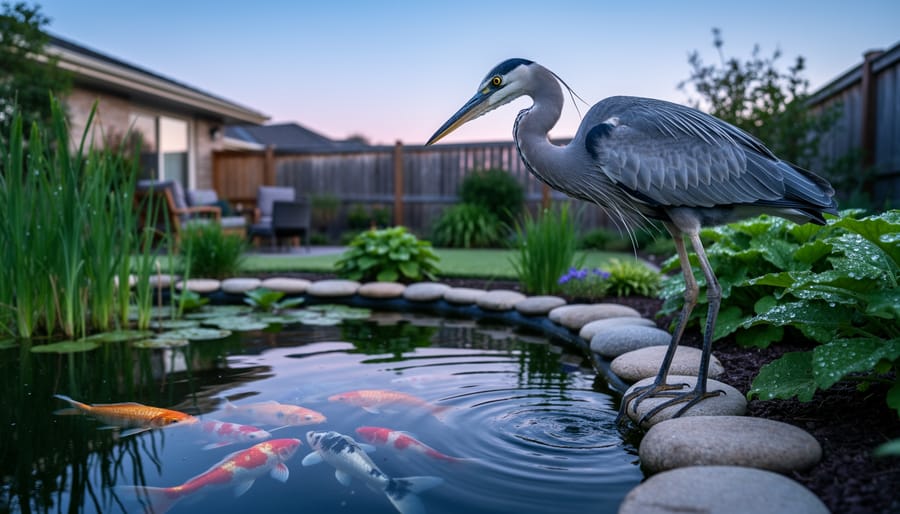
If you’ve ever walked out to your pond only to find a statuesque heron standing motionless at the water’s edge, you know how startling it can be. These elegant birds are remarkably skilled hunters, and your pond looks like an all-you-can-eat buffet to them.
Herons and egrets are patient predators. They’ll stand perfectly still for ages, then strike with lightning speed when a fish swims within range. I’ve watched a great blue heron clear out a third of someone’s koi population in just a few morning visits. They typically hunt during early morning or dusk when fish are most active near the surface.
Kingfishers take a different approach. These smaller, colorful birds perch on nearby branches or structures, then dive-bomb into the water to snatch fish. While they prefer smaller prey, they can still make a dent in your goldfish population.
What attracts these birds? Simply put, visibility and easy access. Shallow pond edges with clear water make hunting effortless. Ponds without overhead cover or nearby perching spots become prime targets. Birds also have excellent memories and will return repeatedly once they’ve identified your pond as a reliable food source, sometimes bringing their friends along for the feast.
Mammals: Raccoons, Cats, and Otters
Mammals can be surprisingly persistent pond predators, and I’ve watched many pond owners underestimate just how clever these nighttime visitors can be. Raccoons top the list as the most destructive mammalian threat. These masked bandits are incredibly dexterous, using their nimble paws to scoop fish from shallow areas. They’re most active during spring and summer when they’re feeding young, and they’ll visit your pond repeatedly once they discover it’s a reliable food source.
Domestic and feral cats pose a significant threat to smaller fish, especially koi fingerlings and goldfish. They typically hunt from the pond’s edge during dawn and dusk, patiently waiting to swipe at fish that venture too close to the surface.
River otters, while less common in residential areas, can devastate an entire pond in a single visit. These playful-looking creatures are actually efficient hunters that work in family groups, and they’re most active during winter months when other food sources become scarce.
Understanding these behavioral patterns helps you time your protective measures appropriately. Raccoons require year-round vigilance, while otter problems tend to be seasonal and location-specific.
Aquatic Hunters: Snakes and Bullfrogs
You might be surprised to learn that some of your pond’s most efficient predators are already living right there with your fish! Water snakes are incredibly skilled hunters that can slip into ponds unnoticed, especially at dawn or dusk. They’re attracted to the buffet of fish, frogs, and tadpoles your pond provides. While most water snakes are harmless to humans, they can quickly reduce your fish population. Look for shed snake skins near the water’s edge or ripples near the pond margins as telltale signs.
Bullfrogs are another unexpected threat, particularly to smaller fish and young koi. These hefty amphibians will eat anything that fits in their substantial mouths, including your prized goldfish fingerlings. I once watched a bullfrog in my own pond successfully catch a three-inch goldfish, which was quite the wake-up call! They’re most active at night and can be identified by their deep, resonant calls.
If you discover these residents, consider installing netting or creating deeper zones where fish can escape. Sometimes the best predator control starts with understanding who’s already sharing your backyard water feature.
Creating a Multi-Layer Defense System
Here’s something I learned after losing my favorite koi to a persistent heron: no single protection method is foolproof. That clever bird figured out how to work around my netting within days! This frustrating experience taught me what experienced pond keepers already know—the most effective predator control combines multiple strategies working together.
Think of it like securing your home. You wouldn’t rely solely on a lock or just an alarm system, right? You use both, maybe add motion lights and a doorbell camera. The same principle applies to protecting your pond. When predators encounter one obstacle after another, they eventually decide your fish aren’t worth the effort and move on to easier targets.
A multi-layer defense system works because different methods address different vulnerabilities. Physical barriers like netting stop aerial attacks, while deeper water zones give fish escape routes from wading birds. Add motion-activated deterrents for nighttime raiders, and suddenly your pond becomes a fortress rather than a buffet.
The beauty of this approach is flexibility. You don’t need to implement everything at once. Start with two or three strategies that fit your situation and budget, then add more if needed. Maybe combine a shallow barrier around your pond edges with some strategic planting and a scarecrow. As you observe which predators visit and when, you can adjust your defenses accordingly. This adaptive approach saves money while maximizing protection for your finned friends.
Physical Barriers That Actually Work
Netting: Your First Line of Defense
When a heron paid an unwelcome visit to my koi pond last spring, I quickly learned that netting is your absolute best first defense. It’s affordable, effective immediately, and doesn’t require any technical expertise to set up.
You’ll find two main netting types at your local garden center. Heavy-duty knotted netting works wonderfully for permanent installations and stands up to weather beautifully. For seasonal use, lightweight mesh netting does the job and stores easily during winter months. I recommend choosing netting with openings no larger than one inch to keep out herons while preventing smaller birds from getting tangled.
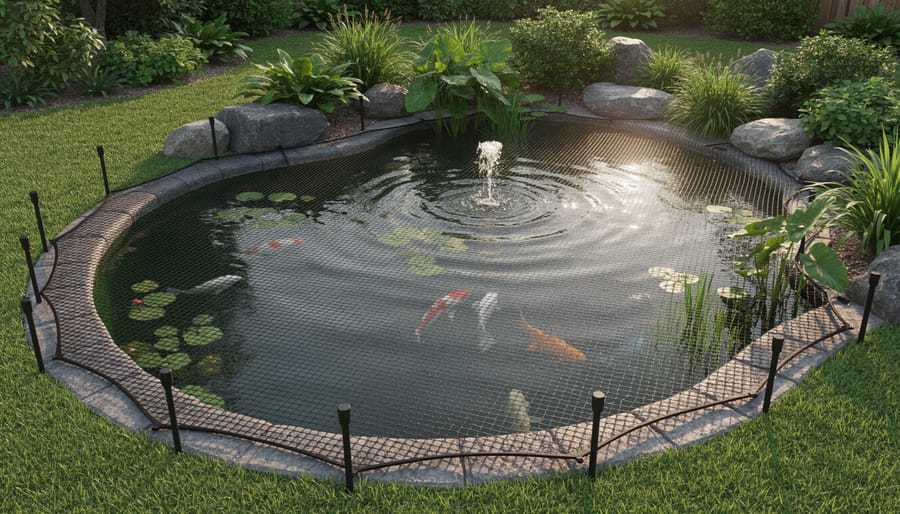
Installation is straightforward. Create a frame around your pond using stakes or PVC pipes positioned every few feet. Drape your netting over this framework, keeping it at least six inches above the water surface so herons can’t spear through to your fish. Secure the edges with landscape pins or heavy stones, ensuring there are no gaps where clever predators might sneak through.
During fall, netting pulls double duty by catching leaves before they decompose in your water. Just shake it off weekly to prevent sagging from debris weight. In winter, consider removing netting in snowy regions to avoid damage from ice accumulation, or switch to a sturdier version that can handle the load.
Fencing and Cage Systems
Fencing and cage systems offer one of the most reliable defenses when predators persistently target your pond. I’ll be honest—I resisted fencing for years, thinking it would ruin my pond’s natural look. But after a heron cleaned out half my goldfish in one weekend, I discovered that smart fencing doesn’t have to be an eyesore.
For temporary protection during peak predation seasons, consider lightweight netting stretched over hoops or stakes around your pond’s perimeter. This works brilliantly during spring when herons are feeding chicks or fall when visiting raccoons get bolder. You can remove it once the threat passes.
Permanent fencing requires more planning but delivers year-round security. A fence at least 3-4 feet tall with mesh small enough to exclude raccoons (2-inch spacing maximum) works wonders. For a more attractive option, surround your pond with decorative metal fencing or create a “living fence” using dense shrubs planted strategically.
Overhead netting systems are excellent for persistent aerial predators. Suspend black netting 12-18 inches above water level on posts—it virtually disappears from view but stops diving birds cold. The key is keeping it taut so predators can’t push through gaps.
Pond Covers and Tunnels
For the ultimate peace of mind, permanent pond covers and tunnels create a complete barrier against aerial predators. I installed a simple frame-and-netting cover over my koi pond years ago, and it’s been game-changing—no more heron visits!
The easiest DIY approach uses PVC pipes or wooden frames positioned across your pond, then draped with sturdy netting. Secure everything well so it doesn’t sag into the water. For winter protection, these structures also support pond heaters and prevent ice damage.
If you’re handy with construction, consider building an attractive pergola-style cover. Add wire mesh or clear polycarbonate panels for predator protection while maintaining visibility. Some water gardeners create beautiful covered walkways alongside their ponds—functional and gorgeous!
Mesh tunnels work wonderfully for long, narrow ponds. Simply create arched supports every few feet and stretch netting over them. This gives you easy access from the ends while keeping predators out.
The main investment is upfront effort, but once installed, these solutions require minimal maintenance and provide year-round protection without daily effort.
Electric Fencing for Persistent Predators
When you’ve tried everything else and raccoons or herons keep coming back, electric fencing might be your answer. I know it sounds intimidating, but modern low-impedance chargers are actually quite safe for both people and pets while being incredibly effective at teaching persistent predators to stay away.
Consider electric fencing when you’ve had repeated visits despite other deterrents, especially from raccoons who’ve learned your pond means an easy meal. The system works through a memorable but harmless shock that creates a strong avoidance response.
For pond applications, use a two-strand setup about 6 and 12 inches off the ground, positioned around your pond’s perimeter. Choose a solar-powered or plug-in charger rated for your fence length. Always post warning signs and check local regulations before installation.
The beauty of electric fencing is that predators typically only need one encounter to learn their lesson. Within a week or two, you’ll notice visits drop dramatically. Just remember to keep vegetation trimmed away from wires to prevent grounding, and test your system weekly with a voltage tester to ensure it’s working properly.
Design Your Pond to Discourage Predators
Depth Matters: Creating Safe Zones
Here’s a secret that saved my koi from becoming heron snacks: depth is your fish’s best friend! When danger strikes, fish instinctively dive deep where most predators can’t reach them.
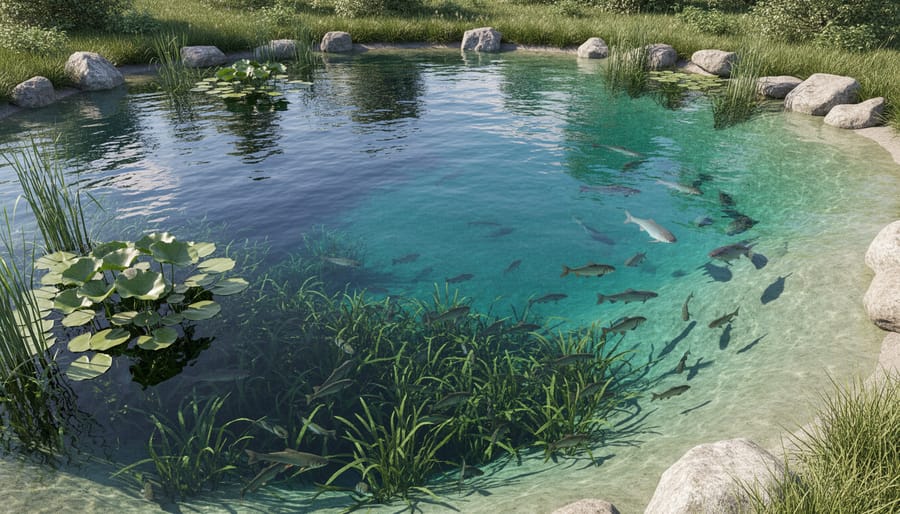
Aim for at least one area of your pond that’s 3-4 feet deep. This creates a safe zone beyond the reach of wading birds and most mammals. I learned this the hard way after losing several goldfish in my original 18-inch-deep pond. After excavating a deeper section, the attacks stopped almost immediately.
You don’t need to make your entire pond deep, which would be expensive and impractical. Instead, create strategic refuge zones. Think of it like building an underwater bunker! Place these deeper areas in the center of your pond, away from edges where predators typically hunt.
If you already have an existing pond, you can retrofit deeper pockets without rebuilding everything. Excavate a central basin or add a preformed deep zone liner. Position rocks or pond-safe pipes along the bottom to create additional hiding tunnels. Your fish will quickly learn where their safe havens are located and dart there whenever they sense danger overhead.
Strategic Planting and Cover
Creating hiding spots is one of my favorite ways to protect pond fish—it’s practical and makes your pond look absolutely stunning! Think of it as giving your fish their own safe houses where predators can’t reach them.
Start by adding clusters of aquatic plants like water lilies, which provide excellent overhead cover. Their broad leaves create shaded refuges where fish can dart under when herons or other birds approach. I’ve watched my koi disappear completely beneath lily pads within seconds!
Install underwater caves, PVC pipe hideaways, or decorative rock formations around your pond’s deeper areas. These give fish escape routes that larger predators simply can’t access. Position plants near pond edges to break up clear sightlines—predators prefer easy targets in open water.
Don’t forget overhanging plants around your pond’s perimeter. Ornamental grasses, ferns, and low-hanging shrubs create natural barriers that make it harder for herons to land and wade in. The key is balancing coverage with maintaining those beautiful open water views you love.
Edge Design to Prevent Easy Access
Your pond’s design can be one of your best defenses against hungry visitors! I learned this the hard way when a raccoon practically set up camp at my gently sloping pond edge, treating it like an all-you-can-eat buffet.
Steep sides make a huge difference. If your pond edges drop off at a sharp angle (at least 45 degrees), it’s much harder for herons to wade in and raccoons to comfortably fish from the shore. They prefer stable, shallow access points where they can stand safely while hunting.
Marginal shelves need strategic placement. While these shallow ledges are wonderful for plants, positioning them 12-18 inches below the surface keeps them useful for vegetation without creating the perfect hunting platform. Predators struggle to reach fish at this depth.
Smart landscaping around your pond perimeter acts as a natural barrier. Dense plantings of shrubs or ornamental grasses create an obstacle course that discourages approach. I’ve found that prickly or dense plants work especially well, just leave yourself access for maintenance! Avoid flat, open areas right up to the water’s edge, which basically roll out the welcome mat for predators.
Deterrents and Scare Tactics
Motion-Activated Devices
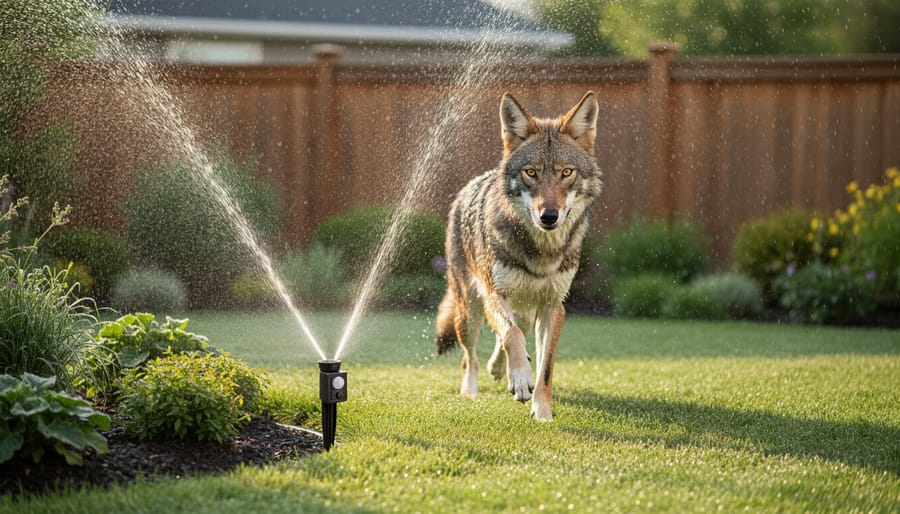
Motion-activated devices are like having a security guard who never sleeps! These clever gadgets detect movement and spring into action, startling predators before they can reach your fish.
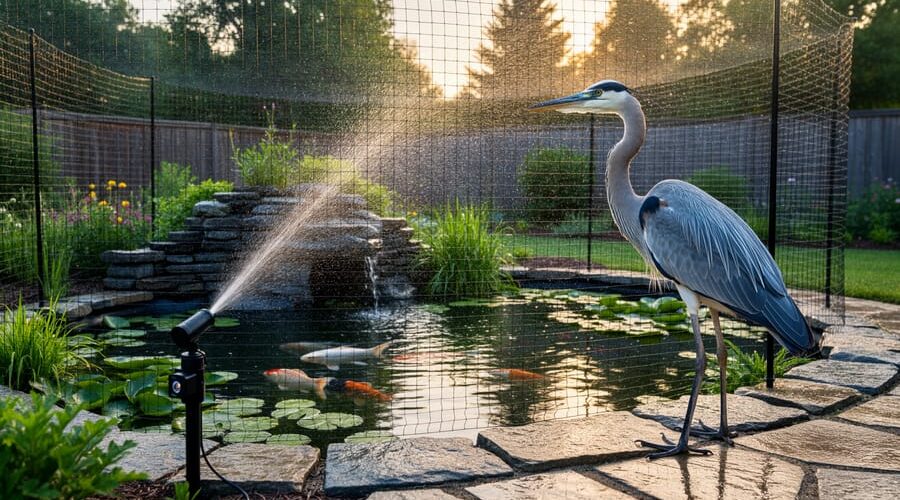
Motion-activated sprinklers are incredibly effective and probably my favorite option. When a heron or raccoon approaches, they get hit with a harmless blast of water. The surprise sends them scurrying, and after a few encounters, most predators learn to avoid your pond entirely. Position sprinklers to cover vulnerable areas like shallow edges where herons typically wade.
Motion-activated lights work well for nighttime prowlers like raccoons and cats. The sudden brightness disrupts their hunting and makes them feel exposed. These are particularly useful if you live in an area where neighbors might not appreciate a sprinkler going off at midnight!
Sound-emitting devices produce loud noises or ultrasonic frequencies when triggered. While some work well initially, many predators eventually realize these noises pose no real threat. For best results, rotate different deterrents or combine sound devices with sprinklers to keep predators guessing and prevent them from getting comfortable around your pond.
Decoys and Visual Deterrents
Visual deterrents can be surprisingly effective, especially when you’re dealing with herons and other birds. I’ve had great success with realistic heron decoys placed near my pond—the idea is that herons are territorial and won’t fish where another heron appears to be. Just make sure your decoy looks convincing and position it at the water’s edge like a real bird would stand.
Reflective tape, old CDs hung on fishing line, or specialized scare tape create moving flashes of light that unsettle predators. The key is movement, so hang them where they’ll catch the breeze. Predator eye balloons with large, menacing eyes can also make birds think twice about approaching.
Here’s the catch: predators are smart and quickly realize these items aren’t threats. Rotate your deterrents every few days, moving them to different locations or swapping between different types. I alternate between my heron decoy, reflective streamers, and a floating alligator head throughout the month. This constant change keeps predators guessing and prevents them from becoming comfortable. Think of it as redecorating for safety—the novelty matters more than the specific item you choose.
The Reality of Scare Tactics
Let me be straight with you about those fake owls and floating alligator heads: they work great for about a week. I learned this the hard way when a heron literally perched on my decoy swan after ignoring it completely. Predators are smart, and they quickly figure out that your motionless guardian isn’t a threat.
This doesn’t mean scare tactics are useless, though. The trick is rotation and combination. Move your decoys every few days, swap different types, and use them alongside physical barriers. I’ve had success alternating between a heron decoy, reflective tape, and motion-activated sprinklers. The key is keeping predators guessing rather than letting them get comfortable.
Think of scare tactics as your first line of defense, not your only defense. They’re perfect for deterring casual visitors while you implement more permanent solutions like netting or deeper water zones. Used smartly, they buy you valuable time and reduce predator visits.
When and How to Use Each Strategy
Choosing the right protection strategy really comes down to three key factors: what’s hunting your fish, your budget, and the season you’re dealing with.
If you’re facing aerial predators like herons or egrets, I always recommend starting with netting during peak hunting times. These birds are most active in early morning and evening, especially during spring when they’re feeding young. I learned this the hard way when I lost three beautiful koi one April morning before I’d gotten my net up for the season. Now I install it in late March without fail.
For year-round protection on a budget, fishing line creates an excellent deterrent for around twenty dollars. It works brilliantly against herons but won’t stop a determined raccoon. I combine it with motion-activated sprinklers near the pond edges where raccoons typically approach. This dual approach has saved me countless fish over the years.
Deeper water refuges are your best investment if you’re committed to long-term pond keeping. They work in all seasons and protect against virtually every predator. I created mine during a pond renovation, but you can retrofit one into an existing pond over a weekend. Aim for at least three feet deep in a section covering about twenty percent of your pond’s surface area.
For winter predator control, remember that herons hunt year-round in many climates. Don’t make my mistake of removing protection after the first frost. I once watched a heron walk across my frozen pond edge in January, waiting patiently at an opening in the ice.
If you’re dealing with nighttime raids, focus on raccoons and possums. These clever bandits need physical barriers or electric fencing since visual deterrents rarely work in darkness. Pond netting installed securely at ground level stops them effectively without breaking the bank.
Combine multiple strategies for best results. I use cave structures year-round, add netting during migration seasons, and keep motion sprinklers active during summer when predator activity peaks.
Living With Wildlife: The Balanced Approach
Here’s something I’ve learned from years of managing backyard ponds: the herons, raccoons, and other visitors aren’t villains in your story—they’re just trying to survive. Before we installed our pond, I never realized how much local wildlife activity happened right in our own yard. It completely changed how I approach predator management.
The most important thing to understand is that harming or relocating wildlife is often illegal and rarely solves the problem long-term. In Australia, many predators like water birds are protected species, and you could face serious fines for harming them. Even if a particular animal isn’t protected, removing one predator simply creates a vacancy that another will fill. Trust me, I’ve seen neighbors try this approach, and they’re always surprised when a new heron shows up the following week.
The balanced approach means accepting that your pond exists within a natural ecosystem. Your goal isn’t to eliminate predators but to make your pond less accessible while still enjoying these magnificent creatures from a respectful distance. I actually keep a journal now of the different birds that visit our pond—just from a distance where my fish are safe behind netting.
Think of it this way: you’re creating barriers, not battles. Physical deterrents like netting, fencing, and hiding spots work because they redirect wildlife to easier food sources without causing harm. This approach respects nature while protecting your investment, and honestly, it feels much better than constantly worrying about harming animals that are simply following their instincts. You can have both a thriving pond and appreciation for the wildlife around you.
Protecting your pond fish from predators doesn’t have to feel overwhelming. The key takeaway here is that you don’t need to implement every strategy at once. Start with the basics—netting, shelters, and proper depth—then layer on additional protections as you see what works best for your situation. I’ve found that combining even just two or three methods creates a surprisingly effective defense system.
Remember, predators are persistent but predictable. Once you understand their patterns and vulnerabilities, you’ve already won half the battle. A heron won’t risk landing if it can’t see a clear approach. A raccoon won’t wade into water it can’t gauge the depth of. These simple truths work in your favor.
Beyond protection, maintaining excellent fish health management keeps your fish alert and better able to evade threats. Healthy fish are naturally more vigilant and faster swimmers.
You’ve got this. With patience and the right approach, you can absolutely create a safe haven for your fish while still enjoying the beauty and tranquility your pond brings to your outdoor space.