
How to Tackle Algal Bloom Treatment: Proven Methods for a Healthy Pond
You can stop an algal bloom by removing nutrients, cutting light exposure, and physically removing algae through manual skimming, natural bacterial treatments, or targeted chemical algaecides. Most pond owners see noticeable results within three to seven days when combining methods, though complete clearing may take two weeks depending on bloom severity.
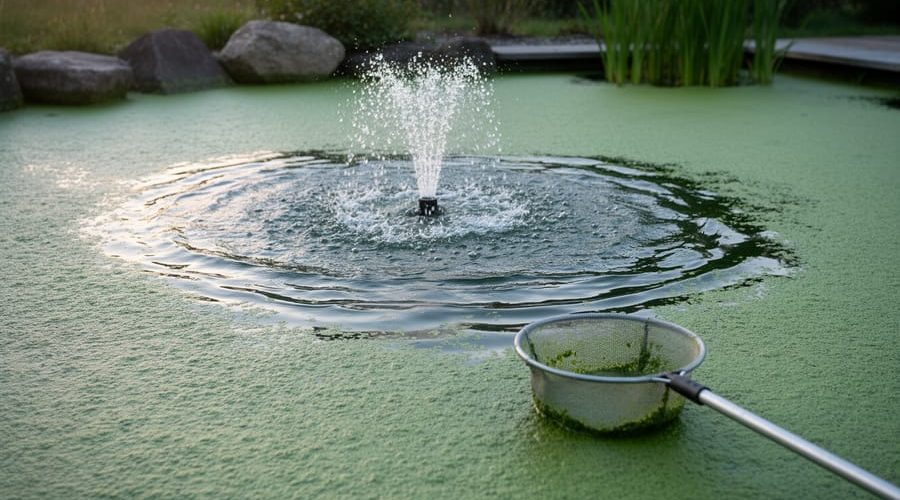
That green, soupy mess covering your pond didn’t appear overnight, and the good news is you don’t need to drain everything and start over. Algal blooms happen when excess nutrients (usually from fish waste, decaying leaves, or fertilizer runoff) meet warm water and sunlight. The result? Explosive algae growth that chokes oxygen, harms fish, and turns your beautiful water feature into something resembling pea soup.
I’ve tackled more than a few pond crises over the years, and algae blooms always feel urgent because they are. Low oxygen levels can stress or even kill fish within days. But panic leads to mistakes, like dumping too much chemical treatment or forgetting to keep your aerator running during treatment.
The key to successful bloom treatment is understanding you have options. Manual removal works fast but requires effort. Beneficial bacteria treatments take longer but improve long-term water health. Chemical algaecides deliver quick knockdowns but need careful dosing. Most effective treatment plans combine two or more approaches and then shift focus to prevention, because a treated bloom will absolutely come back if the underlying nutrient problem isn’t fixed.
Understanding Algal Blooms in Your Pond
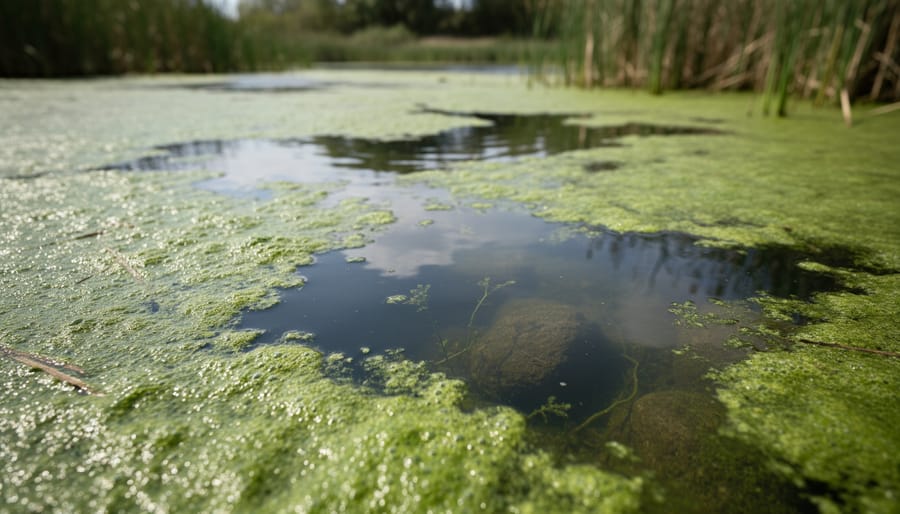
An algal bloom happens when microscopic algae multiply rapidly, turning your pond water green, brown, or even bright blue-green. You’ll know you have one when the water looks like pea soup, develops a thick surface scum, or smells foul. These blooms are more than just an eyesore, they choke out oxygen at night, block sunlight from reaching beneficial aquatic plants, and can release toxins harmful to fish, pets, and wildlife.
Blooms typically explode during warm weather when your pond has excess nitrogen and phosphorus from sources like fish waste, decaying leaves, runoff fertilizer, or overfeeding. Stagnant water and too much direct sunlight create perfect conditions for algae to dominate. A healthy pond has a natural balance: beneficial bacteria break down waste, plants absorb nutrients, and algae stay in check. When that balance tips, often from too many nutrients and not enough competition, algae take over fast.
Not every bit of algae means you have a crisis. A light green tint or thin strands on rocks are normal. But if you can’t see more than a few inches below the surface, if fish are gasping at the top, or if the water smells like rotten eggs, you’re dealing with an active bloom that needs action. The good news? Most blooms respond well to treatment when you address both the symptom and the root cause.
What You’ll Need: Tools and Materials for Algal Bloom Treatment
Before you start treating an algal bloom, gather the right tools and materials so you’re not scrambling mid-process. What you need depends on which treatment method you’ll use, and most pond owners find they’ll combine approaches rather than rely on just one. Having everything on hand before you begin makes the job smoother and helps you act quickly when blooms strike.
- Manual removal tools: pond net, rake or algae scraper, skimmer, buckets for disposing of collected algae
- Natural treatments: barley straw extract or barley straw bales, beneficial aquatic plants like water lilies or submerged oxygenators
- Biological treatments: beneficial bacteria products specifically formulated for ponds, typically liquid or powder concentrates
- Chemical options: algaecides labeled safe for fish and plants, UV clarifier systems for persistent green water blooms
You’ll also want a water testing kit that measures ammonia, nitrite, nitrate, and pH. These parameters tell you whether your pond conditions are fueling the bloom and help you monitor recovery after treatment. A pond thermometer is useful too, since treatment effectiveness changes with water temperature.
Keep a notebook or your phone handy to record what you use, how much, and when. This tracking pays off if you need to adjust your approach or if the bloom returns later. If you’re planning to use chemical treatments, read the product labels now to check dosing rates and waiting periods before applying anything.
Most of these supplies are reusable, and the manual tools especially will serve you for years of pond maintenance. Start with the gentler methods first, manual removal and natural treatments, before moving to chemicals. That way you’re not buying products you might not need, and you’re giving your pond ecosystem the least disruptive treatment that works.
Safety First: Important Precautions Before You Begin
Before you reach for any treatment, pause and consider your pond’s current state. Treating an algal bloom isn’t just about killing algae, it’s about protecting everything else living in your water.
Timing Matters for Your Fish
Never treat during hot weather when water temperatures exceed 28°C. Warm water already holds less dissolved oxygen and dying algae will consume even more as they decompose. This double-whammy can suffocate fish within hours. Wait for cooler conditions or tackle the bloom in sections over several days rather than all at once.
Similarly, skip treatment if your fish are spawning, stressed, or showing signs of illness. An already compromised fish can’t handle the additional burden of fluctuating water chemistry.
When to Hold Off Completely
Don’t treat if you suspect blue-green algae (cyanobacteria). These organisms release potent toxins when they die, and standard treatments can trigger a dangerous toxin release. If your bloom looks like spilled paint, smells musty, or forms thick surface scums, contact a pond professional for testing before doing anything.
Also avoid treatment if your beneficial bacteria colony is newly established, typically within the first six weeks of setup or after a filter clean. Chemical algaecides can wipe out these crucial microbes, setting back your pond’s biological balance for months.
Step-by-Step: How to Treat Algal Blooms
Step 1: Assess Your Bloom Type and Severity
Before you grab any treatment products, you need to know what you’re dealing with. Not all algae blooms are the same, and using the wrong approach wastes time and money.
Green water algae turns your pond into pea soup, thick, cloudy water you can’t see through. It’s usually harmless to fish but makes your pond look terrible. If you can’t see more than a few inches below the surface, you’ve got a green water problem.
String algae (or filamentous algae) forms visible strands, mats, or hair-like clumps. You’ll find it clinging to rocks, waterfalls, and plant stems. It feels slimy or cottony when you touch it. This type is easier to remove manually but grows back quickly without addressing the root cause.
Blue-green algae (cyanobacteria) is the serious one. It looks like spilled paint on the water’s surface, often bright green or bluish, and smells musty or earthy. This type produces toxins dangerous to pets, wildlife, and humans. If you suspect blue-green algae, keep everyone away from the water and contact your local environmental agency.
Gauge severity by coverage: light (under 25%), moderate (25-50%), or heavy (over 50%). Heavy blooms need aggressive treatment; light ones respond well to natural methods.
Step 2: Manual Removal (First Line of Defense)
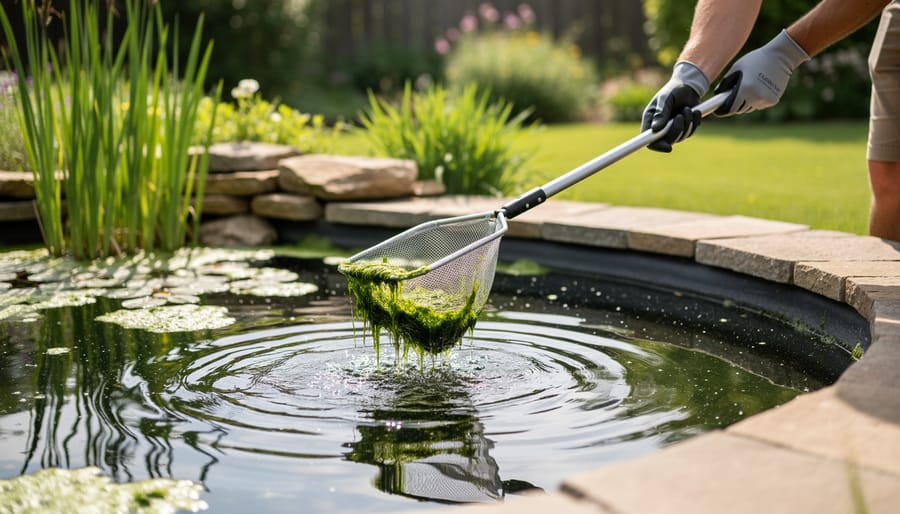
Manual removal is your simplest, safest starting point, grab a net, skimmer, or garden rake and physically pull algae out of the water. This method works brilliantly for string algae clinging to rocks and waterfall edges, and for surface scum you can skim off the top. Just reach in, twist the algae around a stick or rake, and lift it out in clumps. You’ll be surprised how much you can remove in 15 minutes.
Work from the edges inward, scooping floating mats before they sink and break apart. For stubborn patches on liner or rocks, use a soft brush to loosen them first, then net the debris. Always dispose of removed algae away from the pond, composting works great, since dumping it back releases nutrients that fuel new growth.
Manual removal won’t solve the root cause, but it instantly improves water clarity and reduces the algae load your pond has to handle. Think of it as buying time while natural and biological treatments kick in. The more you pull out now, the less organic matter remains to decompose and feed another bloom.
Step 3: Apply Natural and Biological Treatments
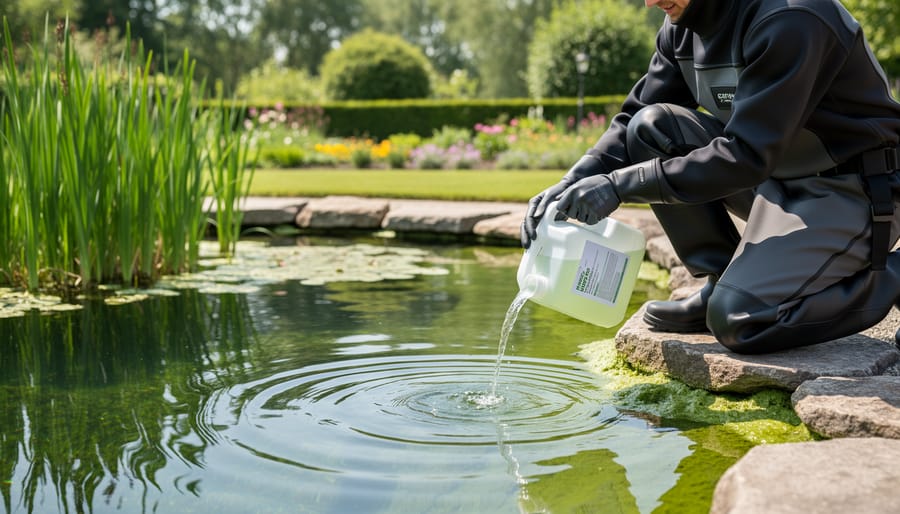
Beneficial bacteria are your pond’s cleanup crew. They consume excess nutrients like nitrates and phosphates that fuel algae growth, starving blooms at their source. Choose products labeled specifically for pond use, these contain strains of Bacillus or Nitrosomonas bacteria that thrive in aquatic environments. Apply according to package directions, typically by sprinkling dry powder or pouring liquid directly into the water. You’ll need repeat doses weekly for the first month, then maintenance applications monthly. Results take 2-3 weeks as bacteria colonies establish.
Barley straw extract offers a faster alternative to whole straw bales. As it breaks down, barley releases compounds that inhibit algae cell reproduction without harming fish or plants. Liquid extracts work within days, unlike bales that need 4-6 weeks to activate. Dose based on your pond volume, usually 1-2 ounces per 100 gallons weekly. Pour it where water circulates well, near pumps or waterfalls.
Adding aquatic plants creates direct competition for nutrients. Submerged plants like hornwort and anacharis absorb nutrients through their leaves, while floating plants like water lettuce shade the surface. Aim for plants covering 40-60% of your pond’s surface to reduce sunlight penetration, which algae need for photosynthesis. Plant lily pads, marginal iris, or cattails around edges for additional nutrient uptake. Established plants can prevent blooms from forming in the first place.
Step 4: Use Chemical Treatments (When Necessary)
Chemical treatments should be your last resort after manual removal and biological methods haven’t solved the problem. Algaecides work quickly but can stress your pond ecosystem if used carelessly.
Choose a pond-safe algaecide specifically labeled for your algae type. Green water algae responds to copper-based or peroxide formulas, while string algae needs contact algaecides. Read the label carefully and calculate the exact dose for your pond volume, overdosing kills beneficial bacteria and can harm fish.
Apply algaecide in the morning on a cloudy day when water temperatures are below 75°F. Warm water holds less oxygen, and dying algae consume even more as they decompose. Treat only half your pond at a time, waiting 5-7 days between applications to avoid sudden oxygen crashes.
Run your aeration system continuously during and after treatment. Watch for fish gasping at the surface, which signals dangerous oxygen levels requiring immediate water changes.
UV clarifiers offer a gentler chemical-free option for green water blooms. Install a properly-sized UV sterilizer in your filter system, it kills free-floating algae cells as water passes the ultraviolet light. Results appear gradually over 1-2 weeks as the UV clears existing cells.
Step 5: Remove Dead Algae and Monitor Water Quality
After your treatment kills the algae, you’re not done yet, dead algae sinking to the bottom creates a new problem. As it decomposes, it consumes oxygen and releases ammonia, potentially harming your fish more than the original bloom did.
Start removing dead algae within 24-48 hours of treatment. Use a fine mesh net to skim floating debris from the surface. For settled material, a pond vacuum works best to remove it from the bottom without stirring up the entire pond. Don’t skip this step, decaying algae can trigger an even worse bloom cycle.
Test your water daily for the first week after treatment. You’re watching for ammonia spikes (should stay below 0.25 ppm), dissolved oxygen levels (aim for 5-8 ppm), and pH fluctuations. If ammonia rises, perform partial water changes of 10-15% daily until levels stabilize.
Run your aeration system continuously during this recovery period. Extra oxygen helps beneficial bacteria break down the dead matter safely while keeping fish stress-free.
If you notice fish gasping at the surface or water turning cloudy within days of treatment, you’re seeing oxygen depletion. Increase aeration immediately and remove more dead material.
How to Know Your Treatment Worked: Verification and Next Steps

After you’ve followed the treatment steps, you’re probably eager to see results. Here’s how to tell if your efforts are paying off and what to do next.
Visual Signs of Success
The most obvious indicator is improved water clarity. Within 3-5 days of treatment, you should notice the water becoming less green or murky. String algae will turn brown or white as it dies off, making it easier to remove. The water should gradually shift from pea soup green to a clearer state where you can see 12-18 inches deep or more.
Check your pond’s surface each morning. A healthy, treated pond has minimal surface scum and no thick mats of algae forming overnight. Your fish should be more visible and active near the surface, a sign that oxygen levels are improving.
Testing for Real Progress
Don’t rely on looks alone. Test your water parameters 48 hours after treatment and again at the one-week mark. You’re looking for ammonia and nitrite levels at zero, nitrates below 20 ppm, and pH stable between 7.0-8.5. Dissolved oxygen should read above 6 ppm, especially in the early morning when it’s naturally lowest.
If the Bloom Returns
Seeing algae reappear within two weeks usually means excess nutrients remain in your system. This calls for more aggressive nutrient control: reduce feeding, add more aquatic plants, or improve filtration. A bloom that returns after a month suggests seasonal conditions have changed, requiring adjustments to your maintenance routine rather than repeated treatments.
Preventing Future Blooms: Maintaining Ecosystem Balance
Successfully treating an algal bloom is one thing; keeping it from coming back is another. The good news is that prevention comes down to a few consistent habits that maintain a balanced pond ecosystem. Once you’ve cleared a bloom, these practices will prevent algal bloom problems from reappearing and save you from repeating the treatment process.
The most effective prevention strategies include:
- Maintain 40-60% surface coverage with floating and submerged plants to outcompete algae for nutrients
- Feed fish only what they can consume in 3-5 minutes to minimize excess nutrients from uneaten food
- Remove fallen leaves, dead plant matter, and debris weekly to prevent nutrient buildup
- Test water weekly during warm months and adjust as needed to catch problems early
Beyond these core habits, strengthen your filtration system if blooms have been a recurring issue. A properly sized biological filter processes fish waste efficiently, while a UV clarifier handles free-floating algae before it becomes visible. During spring and summer when algae grows fastest, add beneficial bacteria monthly to keep nutrients cycling properly.
Avoid overstocking your pond with fish. A common guideline is one inch of fish per square foot of surface area, though larger ponds can support slightly higher densities. Too many fish means too much waste, which translates directly into excess nutrients that fuel algae growth.
Finally, resist the urge to completely drain and scrub your pond. This wipes out beneficial bacteria and disrupts the ecosystem balance you’ve worked to establish. Spot-clean problem areas instead, and trust that a healthy, balanced system naturally resists algae takeover. Think of prevention as creating conditions where algae simply can’t thrive, rather than fighting it constantly.
Common Questions About Algal Bloom Treatment
How long does it take to clear an algal bloom?
Most treatments show visible improvement within 3 to 7 days, though complete clearance can take 2 to 3 weeks depending on bloom severity and treatment method. Natural approaches work more slowly than chemical treatments but provide longer-lasting results.
Are algal bloom treatments safe for my fish?
Manual removal and beneficial bacteria are completely safe for fish. Chemical algaecides require careful dosing and can stress fish if misused, so always follow product instructions precisely and maintain strong aeration during treatment. Avoid treating during hot weather when oxygen levels are already low.
Should I use natural methods or chemical treatments?
Start with natural methods, manual removal, beneficial bacteria, and increased plant coverage, as your first approach. Reserve chemical treatments for severe blooms that don’t respond to gentler methods, or when dealing with deadly algae like blue-green cyanobacteria that pose immediate health risks.
Why does my algal bloom keep coming back?
Recurring blooms signal an underlying imbalance, typically excess nutrients from overfeeding, insufficient filtration, or too few aquatic plants. Treatment addresses the symptom, but you need to fix the root cause through better nutrient management and ecosystem balance to prevent future outbreaks.
Seasonal timing affects both bloom intensity and treatment effectiveness. Spring and summer create ideal conditions for algae growth due to warmer temperatures and longer daylight, so blooms develop faster and may require more aggressive intervention during these months. Fall treatments often work more quickly as cooler water temperatures slow algae reproduction, while winter blooms are rare in most climates. If you’re treating in early spring, expect blooms to be more persistent since conditions favour regrowth, making prevention strategies especially important as temperatures rise.
Treating an algal bloom doesn’t have to be overwhelming. You’ve now got a complete toolkit of methods, from simple manual removal to natural solutions and, when absolutely necessary, chemical treatments. The key is starting gentle and working up only if needed, your pond’s ecosystem will thank you for taking a measured approach.
Remember, successful treatment isn’t just about eliminating the current bloom. It’s about restoring balance to your pond’s entire ecosystem. When you combine effective treatment with smart prevention habits like controlling nutrients, adding beneficial plants, and maintaining proper filtration, you create an environment where algae struggles to take over in the first place.
Most pond owners find that their blooms respond well to the natural and biological methods we’ve covered. You’ll likely see improvements within days and clear water within a few weeks. Stay patient, monitor your water parameters, and don’t panic if results aren’t instant.
Your pond can absolutely recover and thrive. With the right approach and consistent care, you’ll enjoy crystal-clear water and a healthy habitat for your fish and plants. You’ve got this, now go tackle that bloom with confidence.