
How to Protect Your Pond Fish From Predators (Before It’s Too Late)
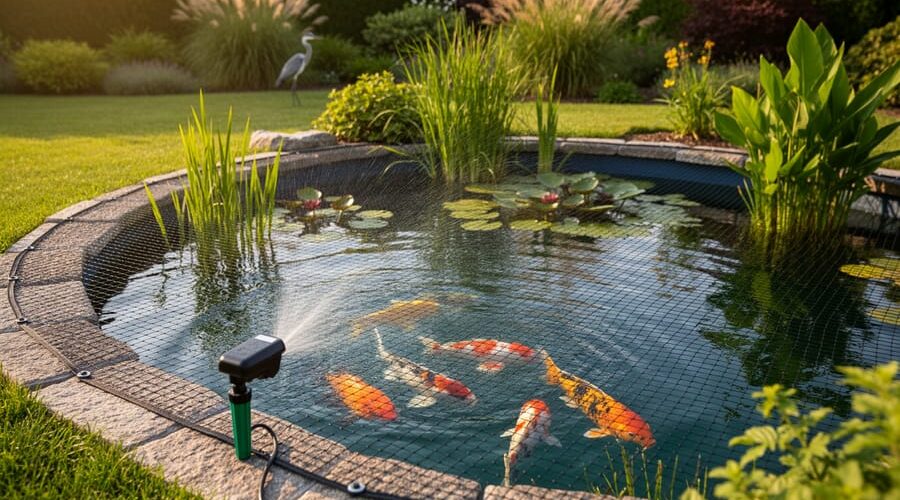
Install netting over your pond immediately if you’ve spotted herons stalking the edges at dawn—this simple barrier stops the most persistent fish thieves in their tracks. Position motion-activated sprinklers around the perimeter to startle raccoons, cats, and birds before they can reach the water’s edge. Create hiding spots using underwater caves, PVC pipe shelters, and dense aquatic plants where fish can escape when predators approach. Add a steep drop-off zone at least 60cm deep around the pond’s edges, making it difficult for wading birds to hunt in shallow areas.
Understanding which predators threaten your pond transforms you from a worried owner into a confident protector. You’ll face different challenges depending on your location—suburban ponds attract neighborhood cats and raccoons, while rural settings bring foxes, snakes, and larger birds into the equation. The frustration of discovering your prized koi missing or finding injured fish floating at the surface drives home how quickly predators can devastate years of careful pond building.
Protection doesn’t mean creating an ugly fortress around your water feature. The most effective strategies blend seamlessly with your pond’s natural beauty while addressing specific predator behaviors. Beyond hunting predators, you’ll also need to manage other threats to pond fish for comprehensive protection. This guide walks you through identifying your specific threats and implementing layered defenses that actually work, ensuring your fish thrive safely in their aquatic home.
Know Your Enemy: Common Pond Predators
Airborne Threats
Birds can be among the most challenging predators to manage because they’re naturally drawn to the easy meal your pond represents. Let’s talk about the most common aerial hunters you might encounter.
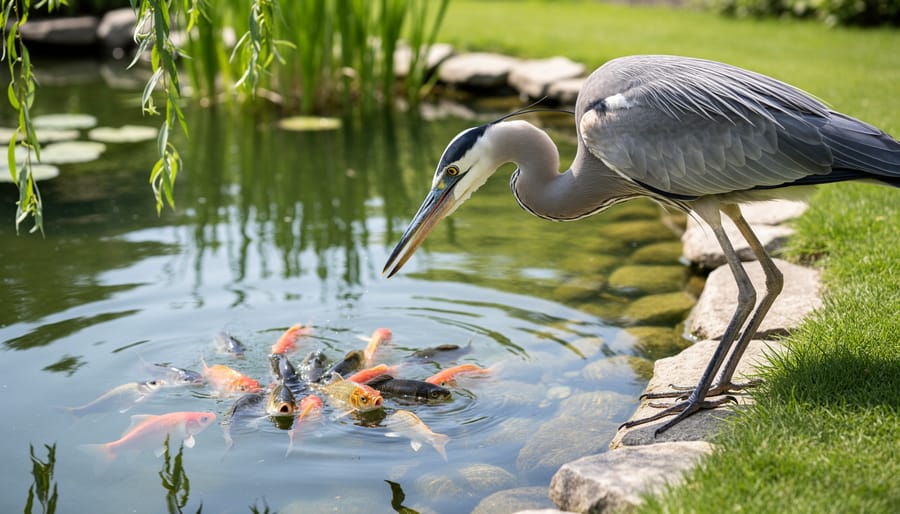
Herons are probably the most notorious pond raiders. These tall, elegant birds typically hunt during early morning or dusk, standing motionless at the water’s edge before striking with lightning speed. Great blue herons are the largest culprits, but smaller green herons can be equally destructive. You’ll recognize them by their S-shaped necks and patient hunting style. They often leave behind telltale tracks in muddy areas around your pond.
Egrets hunt similarly to herons, with their distinctive white plumage making them easier to spot. Both herons and egrets are surprisingly bold and will return repeatedly once they’ve discovered your pond.
Kingfishers are smaller but incredibly efficient hunters. These vibrant blue birds perch on nearby branches or wires, diving headfirst into the water to snatch small fish. While they typically target smaller fish than herons, they can still make a significant dent in your goldfish or koi population.
Ospreys and certain hawks may also visit larger ponds, especially in rural areas. Understanding these hunters’ behaviors is your first step in developing an effective protection strategy that keeps your fish safe without harming these protected birds.
Land-Based Predators
Land-based predators can be surprisingly persistent when they discover your pond is stocked with fish. Raccoons are perhaps the most notorious culprits, using their dexterous paws to scoop fish right out of the water. They typically hunt at night and prefer shallow pond edges where fish are easier to catch. I’ve seen raccoon tracks around ponds where they’ve systematically worked the perimeter, night after night.
Neighborhood cats, both domestic and feral, also pose a significant threat, especially to smaller fish. They’re patient hunters who will sit motionless at the water’s edge, waiting for the perfect moment to strike. Foxes and opossums are less common visitors but will absolutely take advantage of an easy meal when the opportunity presents itself.
Most of these predators are primarily nocturnal, becoming active from dusk through early morning hours. This is when your fish are most vulnerable, particularly if they rest in shallow areas overnight. Understanding these hunting patterns helps you implement protection strategies at the right times. Watch for telltale signs like paw prints in soft soil around your pond’s edge, disturbed rocks or plants, and fish that suddenly seem skittish or hide more than usual.
Aquatic Invaders
Your pond might attract some unexpected visitors who see it as an all-you-can-eat buffet! Frogs, snakes, and turtles are common aquatic predators that can slip into your water garden with surprising stealth.
Frogs and toads generally won’t harm adult fish, but they’re opportunistic feeders who’ll snack on fish fry and eggs. The bigger concern? Bullfrogs. These guys can grow large enough to swallow small goldfish whole. I once watched a bullfrog stake out my shallow shelf area like a patient angler—not exactly the wildlife interaction I was hoping for!
Water snakes are often mistaken for venomous species, but most are harmless to humans. Unfortunately, they’re skilled fish hunters. You’ll spot them gliding along the surface or lurking near rocks where fish hide.
Turtles deserve special mention because many pond owners introduce them intentionally without realizing the consequences. Even friendly-looking painted turtles and red-eared sliders become aggressive fish predators as they mature. Snapping turtles are particularly problematic, capable of taking down sizable koi.
The best defense against aquatic invaders is creating steep pond edges that make entry and exit difficult. Removing nearby brush piles and wood debris also helps, since these provide daytime hiding spots for snakes and turtles between hunting sessions.
Creating a Predator-Proof Pond Design
Depth Matters
Here’s one of my favorite lessons from years of pond keeping: herons and raccoons are surprisingly lazy hunters! I learned this after noticing my fish always survived in the center of my pond, even during heavy predator activity. The secret? Depth.
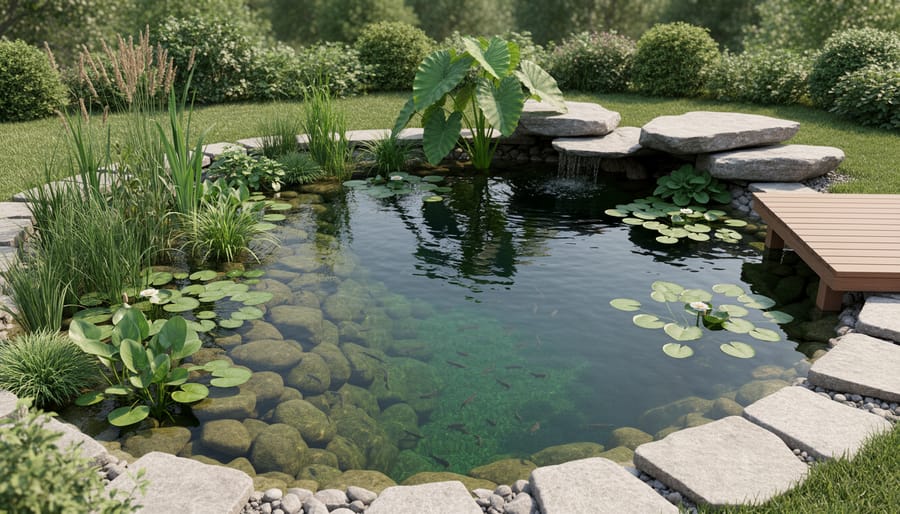
When you’re thinking about pond zones and design, aim for at least one area that’s 3 feet deep or more. This might seem like a lot, but it’s a game-changer for fish safety. Wading birds like herons can only hunt effectively in water up to about 18 inches deep. Their legs simply won’t reach deeper, and they’re not about to start swimming after your koi!
Raccoons face similar limitations. While they’re excellent swimmers, they prefer staying in shallow areas where they can stand and grab fish quickly. Deep zones force predators to work much harder, and most will simply give up and move on to easier targets.
Think of these deep areas as underwater safe rooms. When danger approaches, your fish dart down where long legs and paws can’t reach them, staying secure until the coast is clear.
Strategic Plant Placement
Creating a safe haven for your pond fish starts with thoughtful plant placement. Think of your pond plants as nature’s security system, offering refuge and breaking up sight lines that predators rely on. I learned this lesson after watching a heron repeatedly visit my pond, always targeting the same open areas where fish had nowhere to hide.
Water lilies are your first line of defense. Their broad surface leaves provide overhead cover that fish can duck under when aerial predators approach. Aim for about 40-60% surface coverage, which gives fish protection without blocking all sunlight. Position lilies in deeper zones where larger fish naturally congregate.
Floating plants like water lettuce and water hyacinth create dynamic hiding spots that move with the current. These plants form dense mats that confuse predators and provide dappled shade. The dangling roots also offer shelter for smaller fish and fry.
Marginal plants around your pond’s edges are equally important. Tall varieties like cattails, iris, and rushes create vertical barriers that disrupt a heron’s wading path and block raccoons from easy access points. Plant these in groups rather than single specimens for maximum visual disruption.
The key is layering your defenses. Combining strategic aquatic plants at different heights and depths creates a three-dimensional maze that makes hunting difficult while maintaining the natural beauty of your water garden. Position plants more densely near areas where predators typically enter or perch.
Edge Protection and Overhangs
One of my favorite design tricks for keeping predators at bay is creating steep edges around your pond—think of it like giving herons and raccoons the “no trespassing” treatment! When pond edges slope sharply at 45 degrees or steeper, wading birds can’t easily walk into the shallows to hunt. I learned this the hard way after watching a heron casually stroll into my gently sloped pond like it owned the place.
Rock overhangs are equally brilliant for defense. By stacking flat stones to create ledges that jut out over the water’s edge by at least 12 inches, you’re building natural hiding spots underneath where fish can escape when danger approaches. These overhangs also make it nearly impossible for raccoons to reach down and scoop fish out with their paws—something they’re frustratingly good at otherwise.
The beauty of this approach is that it looks completely natural and enhances your pond’s aesthetics while serving a protective function. Position these overhangs especially around the shallower areas where fish tend to gather. You can even add some aquatic plants in the protected zones underneath to make them even more appealing refuges for your finned friends.
Physical Barriers That Actually Work
Pond Netting: Types and Installation
Netting remains one of the most reliable ways to keep herons, raccoons, and other fish-loving visitors from treating your pond like an all-you-can-eat buffet. I learned this the hard way after losing three prized koi to a persistent heron one spring morning!
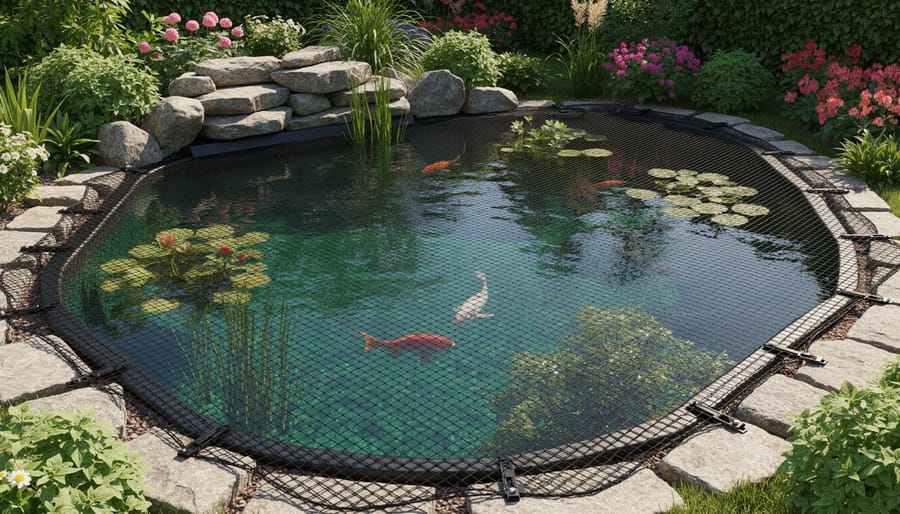
You’ll find several netting types available. Fine mesh netting works beautifully for smaller ponds and offers nearly invisible protection when installed properly. The tight weave prevents even determined predators from reaching through. Heavy-duty pond netting features larger openings but incredible strength, perfect for larger water gardens where you need to cover significant square footage. For a more permanent solution, rigid grid netting stretches taut across support frames, creating a sturdy barrier that won’t sag into the water.
Timing matters considerably. Install netting during peak predation seasons, typically early spring when herons are nesting and fall when fish are fattening up. Many pond owners leave netting up year-round for peace of mind.
For installation, position support stakes or hoops around your pond’s perimeter, creating anchor points about three feet apart. Drape the netting over these supports, ensuring it sits at least six inches above water level so herons can’t simply stand on it and spear through. Secure edges with landscape staples or heavy stones, leaving no gaps for clever raccoons to exploit.
Here’s my favorite aesthetic trick: use black netting rather than green or brown. Counterintuitively, black virtually disappears against water and plantings when viewed from normal distances. Position strategically placed rocks or driftwood along edges to disguise anchor points, maintaining your pond’s natural beauty while protecting your finned friends.
Electric Fencing for Serious Threats
When you’ve tried everything else and raccoons or other persistent mammals keep finding ways to raid your pond, electric fencing might be your answer. I know it sounds extreme, but hear me out—this is sometimes the only solution that works for serious, ongoing predation problems.
Low-voltage electric fencing creates a psychological barrier rather than a physical one. When predators touch the charged wire, they receive a memorable but harmless shock that teaches them to stay away. These systems run on battery or solar power and deliver just enough voltage to startle without causing injury to animals, pets, or curious kids.
Install your electric fence about 4-6 inches above ground level and 6-8 inches away from your pond’s edge. For raccoons, add a second wire at about 12 inches high—they’re smart and will try to jump over. Use fiberglass or plastic posts to prevent grounding issues, and keep vegetation trimmed back so plants don’t touch the wire and drain power.
Safety is paramount. Always post clear warning signs, check local regulations before installation, and consider whether this option fits your household. If you have small children or pets that frequently access the pond area, other deterrents might be more appropriate. Test the fence regularly with a voltage meter to ensure it’s working properly but not running too hot.
Protective Structures and Tunnels
Give your fish their own safe houses! Creating protective structures is one of the most effective ways to shield smaller fish from hungry predators. Think of it as building a neighborhood of cozy hideaways where your fish can duck into when danger approaches.
PVC pipes work wonderfully and cost just a few dollars at any hardware store. Choose pipes that are 3-4 inches in diameter for koi and goldfish, and simply place them at various depths around your pond. The openings allow fish to dart inside, but most predators like herons can’t reach in. I’ve found that painting the pipes dark colors helps them blend beautifully into the pond environment.
Natural rock caves offer both protection and visual appeal. Stack flat rocks to create small caverns with multiple entry points. Position them near the pond’s deeper areas so fish have quick escape routes. The key is making sure the openings are large enough for your fish but too small for reaching beaks or paws.
Don’t forget about aquatic plants with dense root systems. Water lilies and lotus create excellent overhead cover, while submerged plants like hornwort provide hiding spots throughout the water column. Combine these living shelters with your constructed hideaways for maximum protection. The more escape options your fish have, the better their chances of avoiding becoming someone’s lunch.
Deterrent Devices and Scare Tactics
Motion-Activated Sprinklers
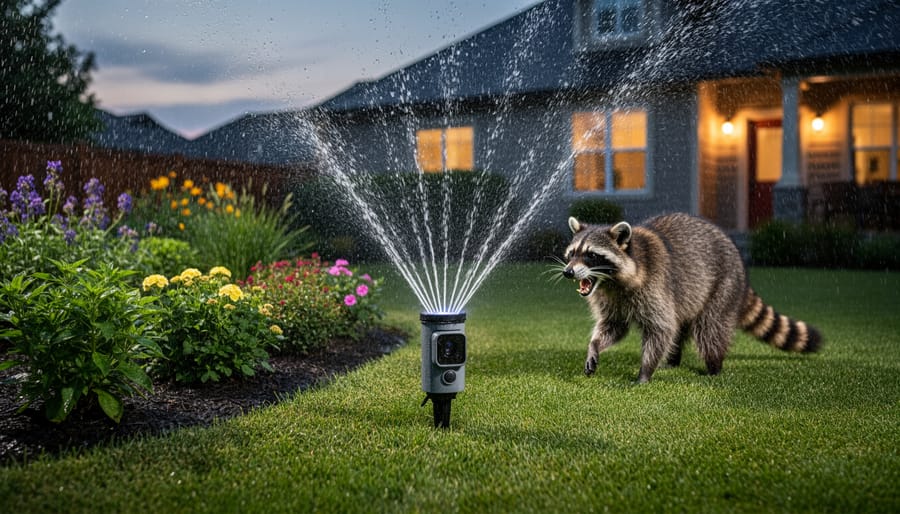
Motion-activated sprinklers are one of my favorite solutions because they’re effective, harmless, and honestly pretty entertaining to watch in action! These clever devices use infrared sensors to detect movement, then release a sudden burst of water that startles predators without causing any harm.
The mechanics are straightforward. When a heron, raccoon, or other visitor enters the detection zone, the sensor triggers a three-second spray accompanied by a clicking sound. This unexpected experience teaches predators to avoid your pond without you lifting a finger. Most models cover about 1,000 square feet and run on standard 9-volt batteries.
Placement is crucial for success. Position sprinklers to cover common entry points like the pond’s edge where herons typically wade, or pathways raccoons use to approach. I’ve found that placing one on each side of medium-sized ponds works wonderfully. Remember to adjust the sensitivity settings, especially if you have outdoor cats or dogs that might trigger false alarms.
These devices work exceptionally well against herons, cats, and raccoons. However, persistent predators may eventually learn the spray pattern, so occasionally repositioning your sprinkler keeps them guessing. During winter months, you’ll need to bring them indoors to prevent freeze damage, which means exploring alternative deterrents for cold-weather protection.
Decoys and Visual Deterrents
Visual deterrents can work wonderfully when you first introduce them, but here’s the catch: predators are surprisingly smart! I learned this the hard way when my heron decoy worked brilliantly for about two weeks, then the real herons seemed to treat it like a friendly neighbor.
Heron decoys are your first line of defense against these patient fish-thieves. Place them near the water’s edge where herons typically hunt, and move them every few days. This is crucial because predators quickly recognize stationary objects as harmless. I rotate mine between three different spots around my pond.
Reflective tape, spinning pinwheels, and motion-activated sprinklers add another layer of protection. The key is variety and movement. String reflective tape across your pond at different heights, creating an unpredictable environment. The flashing light and rustling sound make predators nervous about approaching.
Here’s my biggest tip: rotate your deterrents regularly. Use the heron decoy for a week, then switch to reflective streamers, then try a different combination. This prevents predators from becoming comfortable with any single setup. Think of it as keeping them guessing rather than letting them learn your patterns. Combine visual scares with other protection methods for best results, because determined predators will eventually test any single defense strategy.
Sound and Ultrasonic Devices
Let’s be honest about electronic deterrents – they’re not magic solutions, but they can be helpful tools when used correctly. Ultrasonic devices and motion-activated sound systems work best as part of a layered defense strategy rather than standalone solutions.
Here’s the reality: predators adapt quickly to repetitive sounds. That fancy ultrasonic device might work brilliantly for the first week or two, but herons and raccoons are smart cookies. They’ll eventually figure out the noise won’t actually hurt them. To maximize effectiveness, rotate different types of deterrents and change their positions regularly – think of it like redecorating to keep predators guessing.
Motion-activated devices that combine sound with water sprays or flashing lights tend to perform better than sound alone. The surprise factor is key! I’ve had better luck with devices that vary their patterns rather than playing the same alarm every single time.
If you do invest in these gadgets, place them strategically where predators typically approach – near shallow areas or feeding zones. And remember, electronic deterrents work best when combined with physical barriers and visual scare tactics for comprehensive protection.
Smart Fish Management for Predator Protection
Choosing the Right Fish
Not all fish are equally vulnerable to predators. When stocking your pond, think strategically about species that have better survival odds. Koi and goldfish, while beautiful, can be easy targets when they’re small. If you’re in an area with lots of herons or raccoons, consider starting with larger fish—those over 6 inches are much harder for most predators to grab and carry off.
Faster, more agile fish like golden orfes or rosy red minnows can often outmaneuver slow-moving predators. I learned this firsthand when my quick-moving shubunkins consistently escaped heron attempts while my slower butterfly koi weren’t as lucky.
Color matters too. Brightly colored fish are easier for aerial predators to spot from above. Mixing in some naturally colored fish or those with darker backs provides camouflage, especially in murkier water. And here’s a practical tip: avoid introducing very young or small fish during peak predator seasons like spring and early summer. Give them time to grow in a protected environment first, then release them when they’re big enough to have a fighting chance.
Feeding Strategies That Don’t Attract Attention
One of the simplest ways to protect your fish is being strategic about feeding time. Herons and other predators learn to visit ponds when fish gather at the surface, so avoid creating predictable routines. I learned this the hard way after losing several koi to a particularly smart heron that showed up like clockwork every morning!
Try feeding your fish in different locations around the pond rather than the same spot daily. This prevents them from congregating in one vulnerable area. Better yet, train your fish to come to deeper, covered sections of the pond by consistently feeding near overhanging plants or beneath structures. It takes patience, but fish quickly learn where food appears.
Consider using sinking pellets rather than floating food, which creates less surface activity. Automatic feeders can help by dispensing smaller amounts throughout the day instead of one big feeding frenzy that screams “buffet!” to passing predators.
Following smart feeding practices means only offering what your fish can consume in a few minutes. Leftover food floating at the surface is like hanging a welcome sign for opportunistic hunters.
Seasonal Protection Strategies
Understanding how predator activity changes with the seasons helps you stay one step ahead in protecting your pond fish. Just like you adjust your pond maintenance routine throughout the year, your predator management strategy needs seasonal tweaking too.
Spring brings the most intense predator pressure, and I learned this the hard way during my first year of water gardening. As temperatures warm, herons and egrets return from their winter grounds, hungry after migration and actively seeking easy meals. This coincides perfectly with spawning season when your fish are distracted and vulnerable. During March through May, ramp up your protection by installing or reinforcing netting, ensuring motion-activated sprinklers are working, and adding extra visual deterrents. Your fish are also slower in cooler spring water, making them easier targets.
Summer means different challenges. While migratory birds have settled into their territories, raccoons become more active with growing families to feed. Hot weather brings these masked bandits to water sources at night. This is when shoreline protection becomes critical. Make sure rocks are secured, and consider adding electric fencing if raccoon activity increases. Ospreys and kingfishers also hunt more aggressively during summer months.
Fall sees another wave of migration as birds prepare for winter journeys, stopping at ponds to refuel. You might notice new predators you haven’t seen before. Keep your protection measures active even as temperatures drop.
Winter offers the most relief in many regions, though herons in milder climates remain active year-round. However, don’t completely drop your guard. Hungry predators may still visit during warmer winter days, especially if your pond remains ice-free.
When Predators Strike: Response and Recovery
Discovering a predator has attacked your pond is heartbreaking, and I genuinely understand that sinking feeling when you realize fish are missing. First, take a deep breath. You’re not alone in this experience, and there are clear steps forward.
Start by doing a careful fish count during feeding time when everyone comes to the surface. Document who’s missing and check for any injured survivors. Look around your pond’s perimeter for evidence like tracks, feathers, or disturbed areas that might identify your visitor. This detective work helps you target your defense strategy properly.
If you find injured fish, isolate them immediately in a quarantine tank if possible. Clean water and reduced stress give them the best recovery chance. Consider reviewing fish health management practices to support their healing.
Now it’s time to reinforce your defenses before the predator returns, because they almost always do. Predators remember successful hunting spots. Install or activate deterrents that evening, whether that’s motion-activated sprinklers, netting, or lighting. Don’t wait until tomorrow.
Take this opportunity to assess what failed. Was your netting loose? Did branches provide aerial access? Shore up these vulnerabilities immediately.
Regarding the emotional side, losing fish you’ve cared for genuinely hurts. Many pond keepers name their fish and form real bonds. Give yourself permission to feel disappointed while channeling that energy into better protection. Your remaining fish are counting on you, and you’ve now gained valuable experience that makes you a better pond keeper.
Here’s the good news: protecting your pond fish from predators is absolutely achievable, and you don’t need to turn your backyard oasis into Fort Knox to make it happen. Throughout my years of pond keeping, I’ve learned that successful predator management isn’t about implementing every single strategy at once. It’s about starting with the basics and building your defenses based on what actually shows up at your pond.
Think of it as creating layers of protection. Begin with the fundamentals—providing adequate depth in at least part of your pond, adding some hiding spots like aquatic plants or cave structures, and perhaps installing a simple motion-activated deterrent. From there, observe what happens. Are you seeing heron footprints in the morning? Time to add netting or a heron decoy. Did a raccoon manage to catch a fish despite your efforts? Consider upgrading to electric fencing or improving your pond edges.
The key is staying observant and willing to adapt. Your predator challenges will likely change with the seasons, and what works perfectly in spring might need tweaking come fall. Keep a simple journal of what you see and how your fish respond to different protection methods.
Remember, you’re not in this alone. Countless pond enthusiasts have faced the same challenges and found solutions that work. Start where you are, use what you have, and build your predator management system one step at a time. Your fish are counting on you, but with patience and persistence, you’ve absolutely got this.