
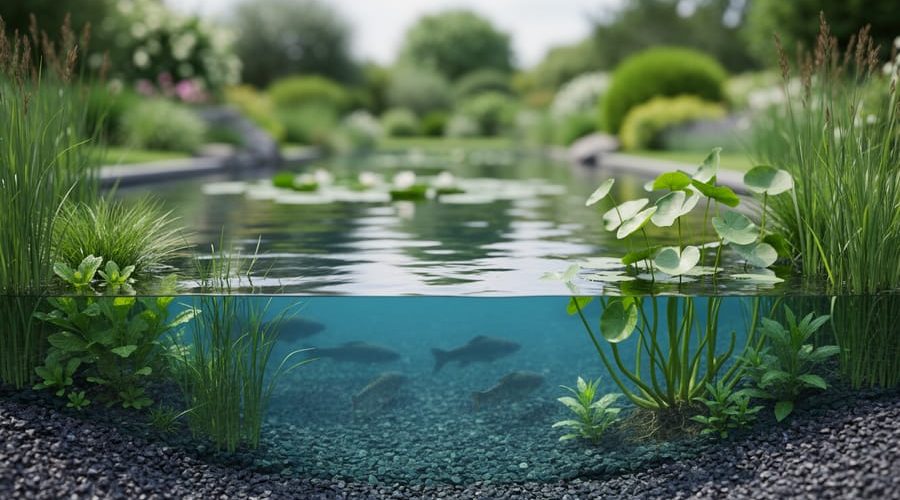
Edge Pond Management: The Secret to Perfect Water Balance in Your Garden Pond
Edge pond management is the practice of deliberately shaping, planting, and maintaining the shallow margins of your pond to regulate water chemistry, support beneficial biology, and reduce algae naturally. By treating these zones as active filtration and habitat areas rather than simple decoration, you create a self-sustaining system that does far more heavy lifting than traditional open-water setups. The edges act as buffer zones where plant roots absorb excess nutrients, beneficial bacteria colonize gravel substrates, and aquatic insects establish thriving populations that contribute to overall pond water balance.
Most pond owners focus their energy on pumps, filters, and chemical treatments while overlooking the most powerful tool right at their fingertips. The shallow margins, often just 15 to 30 centimeters deep, offer ideal conditions for rooted plants that pull nitrogen and phosphorus directly from the water before algae can use them. These edges also provide thermal gradients and oxygen-rich zones that benefit fish and invertebrates year-round.
The difference between a pond with thoughtfully managed edges and one without is immediately visible. Clear water, thriving plants, and far fewer algae blooms are the norm when edges are designed with purpose. You’re not just adding marginal plants for looks. You’re engineering a biological filtration system that works 24 hours a day without electricity.
This guide walks you through the science behind edge zones, the best construction methods for creating effective shallow margins, and the specific plants and substrates that deliver results. Whether you’re building a new pond or retrofitting an existing one, you’ll learn how to turn your edges into the hardest-working part of your water garden.
What Makes Your Pond’s Edge Zone So Special
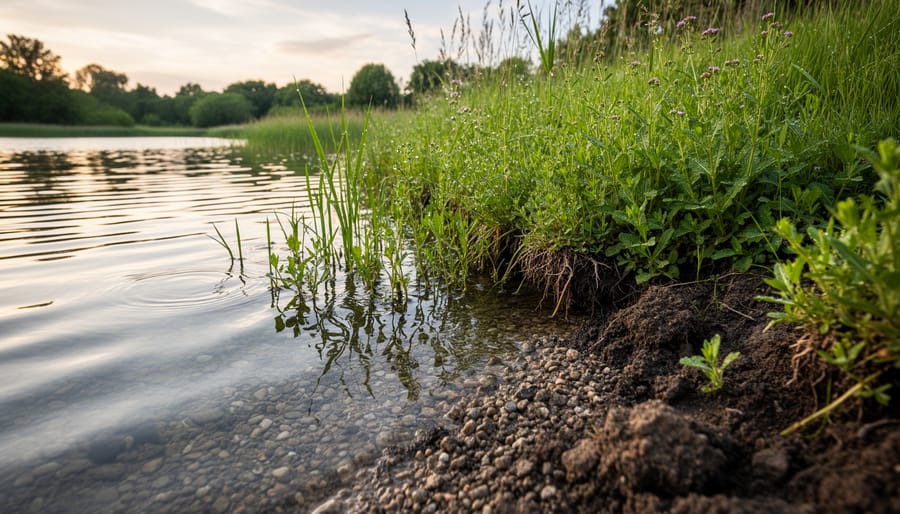
Your pond’s edge zone occupies maybe 10% of your water surface, yet it punches way above its weight when it comes to biological activity. This narrow band where water, soil, and air converge creates conditions you won’t find anywhere else in your pond.
The defining feature is depth, typically just 2 to 12 inches of water. This shallowness means sunlight penetrates all the way to the bottom, unlike your pond’s center where light fades quickly with depth. More light equals more photosynthesis, which translates directly into more CO2 absorption. On a bright summer day, a thriving edge zone can process carbon dioxide at rates five times higher than deeper water.
Temperature swings are dramatic here. While your pond’s center maintains relatively stable temps, edge water can warm 10 to 15 degrees by afternoon, then cool rapidly overnight. Warmer water holds less dissolved CO2, so your edges naturally release carbon dioxide as they heat up during the day. This isn’t bad, it’s part of the natural rhythm that creates those helpful CO2 fluctuations we’ll discuss later.
The real magic happens at the interface. Plant roots penetrate the substrate, creating countless tiny channels. Beneficial bacteria colonize these root surfaces and the surrounding sediment, breaking down organic matter and releasing nutrients that marginal plants immediately reclaim. It’s a tight, efficient loop. The plants pull CO2 from the water for photosynthesis, then pump oxygen down to their roots, which feeds the bacteria, which release nutrients, which fuel more plant growth.
This isn’t just theory. Researchers measuring gas exchange in constructed wetlands found that shallow vegetated margins exchange CO2 with the atmosphere 30 times faster than open water. Your pond edge operates as a biological turbocharger, constantly processing, exchanging, and regulating.
How Edge Zones Impact Your Pond’s CO2 Levels
Morning vs. Evening: The CO2 Swing at Your Pond’s Edge
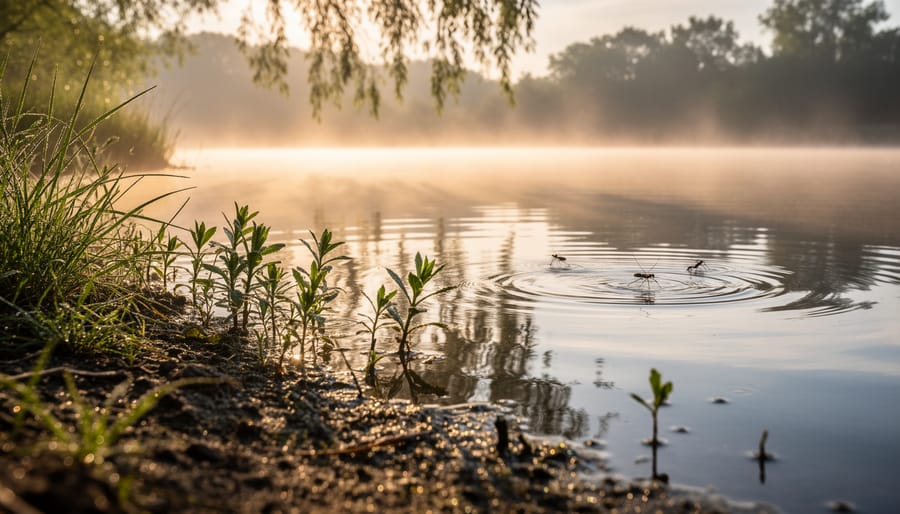
Your pond’s edge experiences a dramatic CO2 rollercoaster every single day, and understanding this pattern can explain a lot about what you see happening in your pond.
Here’s what’s going on: At sunrise, CO2 levels in your shallow edge zones are at their peak. During the night, plants stopped photosynthesizing but kept respiring, fish continued breathing, and beneficial bacteria kept working, all releasing CO2 into the water. With no sunlight to drive photosynthesis, that CO2 just accumulates. In shallow edges, this buildup is more pronounced than in deeper water because there’s less volume to dilute it.
Then comes morning. As sunlight hits your marginal plants, they kick into photosynthesis mode and start consuming CO2 rapidly. By mid-afternoon on a sunny day, CO2 levels in well-planted edge zones can drop significantly, sometimes to levels that actually limit further plant growth.
Why does this matter for you? If you notice fish hanging near the surface at dawn, especially in summer, they might be reacting to elevated CO2 (and corresponding lower oxygen) in the shallows. This is normal, but extreme swings indicate you need better plant coverage or circulation. For plant management, it means the afternoon isn’t actually when your marginals are most productive, they’re often CO2-starved by then. This daily swing is precisely why diverse edge plantings work better than a monoculture; different species respond to varying CO2 levels throughout the day.
The Temperature Factor
Temperature plays a fascinating role in how your pond’s edge handles carbon dioxide. When water warms up, it simply can’t hold as much dissolved CO2. Think of it like a warm soda going flat faster than a cold one, the same principle applies to your pond.
During summer, your shallow edges heat up quickly, sometimes reaching temperatures 10-15 degrees higher than deeper water. This warmth drives CO2 out of the water and into the atmosphere. On hot afternoons, you might notice your edge zones actively releasing tiny bubbles as gases escape the warming water.
This temperature effect creates a helpful natural cycle. Warm edges release excess CO2 efficiently during the day, preventing buildup that could stress fish. However, cooler mornings see the reverse, edge water can temporarily hold more CO2, which is why fish sometimes avoid shallow areas at dawn.
Understanding this temperature-CO2 relationship helps explain why your pond edges work hardest during the warmest part of the day. The heat that feels uncomfortable to you is actually powering a natural degassing process that keeps your water chemistry balanced.
Smart Plant Choices for Edge Zone CO2 Management
High-Performance CO2 Absorbers
If you’re serious about using plants to manage CO2 at your pond’s edge, you need species that combine vigorous growth with extensive root systems, that’s where the real carbon processing happens.
Cattails (Typha species) are arguably the champions here. A single cattail can push out two to three feet of new growth in a season, and all that biomass requires substantial CO2 uptake. They’ll thrive in water anywhere from saturated soil to six inches deep. The caveat? They spread aggressively through rhizomes, so plant them in containers if you have a smaller pond. I learned this the hard way when my initial three cattails became a dense colony that took over nearly half my edge zone within two years.
Rushes, particularly soft rush (Juncus effusus), offer similar CO2 processing power with slightly better manners. They grow in clumps rather than running wild, making them easier to control while still providing the dense photosynthetic activity you want. They’ll handle water depths up to four inches and tolerate partial shade better than cattails.
Pickerel weed (Pontederia cordata) brings beauty alongside function, those purple flower spikes are gorgeous, while still doing serious carbon work. It’s less aggressive than cattails but still grows vigorously enough to make a real difference in your pond’s CO2 balance. Plant it in three to five inches of water for best results.
For maximum impact, combine all three. The varied heights and growth patterns create more surface area for gas exchange while giving you seasonal interest.
Balancing Coverage Without Overcrowding
The sweet spot for edge planting covers roughly 40-60% of your pond’s perimeter. This range gives you enough plant mass to absorb meaningful CO2 during daylight while leaving adequate open water for gas exchange and fish movement. Think of it as creating breathing room, dense plantings look impressive, but a continuous wall of vegetation around your entire edge actually works against you.
Here’s why: At night, those same plants that devoured CO2 all day flip the script. They consume oxygen and release CO2, potentially stressing fish if your margins are packed too tight. If you’ve planted heavily, you’ll see the pond aeration benefits become essential rather than optional.
Space plant clusters 12-18 inches apart within your edge zone. This creates productive pockets without forming stagnant dead zones where water movement slows to nothing. In smaller ponds (under 500 gallons), lean toward the lower coverage percentage, around 40%, since you have less total volume to buffer overnight oxygen swings. Larger systems can handle denser plantings because they maintain better overall gas equilibrium.
Building Your Edge Zone for Maximum CO2 Control
The Ideal Edge Slope and Depth
Your pond’s edge slope determines how well that zone manages CO2, and getting it right makes a massive difference. Think of it like this: a gentle slope creates more usable space for plants and beneficial processes, while a steep drop-off limits what can happen there.
Aim for a 3:1 or 4:1 slope ratio, that means three to four feet of horizontal distance for every foot of depth. This gradual transition gives you a wider planting zone where marginal plants can establish strong root systems. More roots mean more CO2 absorption and better water chemistry buffering. Steep edges concentrate everything into a narrow band, reducing the biological activity that helps stabilize your pond.
For depth, create shelves at multiple levels. Start with a 2-4 inch zone right at the waterline for emergent plants like rushes. Then step down to 6-8 inches for plants that prefer slightly deeper water, and finally to 12-15 inches for your deepest marginals. This terraced approach maximizes the surface area where water interacts with plant material and substrate.
If you’re working with an existing pond that has steep sides, don’t despair. You can retrofit by adding shelves with stacked rocks, creating planted berms that extend into the water, or using flexible pond liner to build out gradual slopes in strategic locations. Even a small improvement in slope ratio helps, a 2:1 slope beats a vertical wall any day.
Substrate Matters More Than You Think
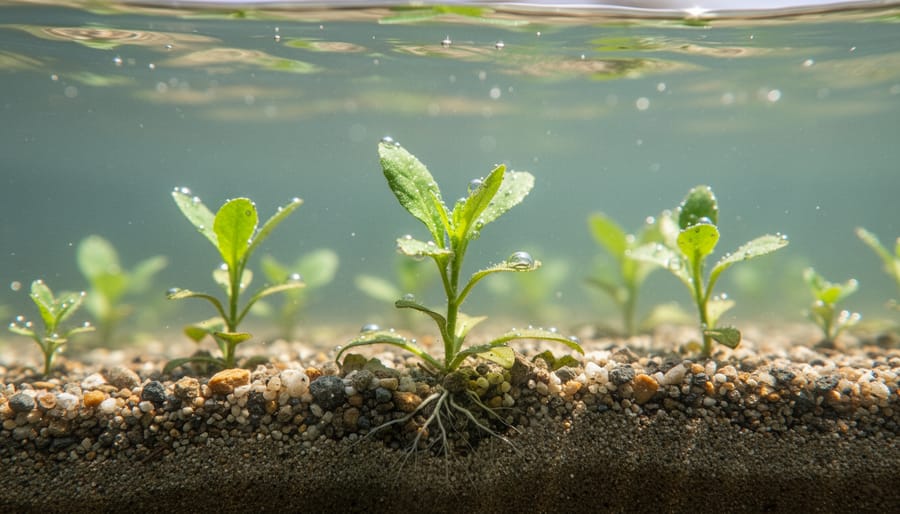
The bottom material in your edge zone creates the foundation for both healthy plant growth and active microbial communities that process CO2. While you might be tempted to use whatever’s convenient, your substrate choice directly impacts how well your edge performs.
A mixture of clay-based soil topped with pea gravel works exceptionally well. The clay holds nutrients that marginal plants need while allowing beneficial bacteria to colonize throughout. The gravel layer prevents soil from muddying your water while creating countless tiny pockets where CO2-processing microbes thrive. Avoid pure sand, it drains too quickly and doesn’t support microbial colonies effectively.
Substrate depth matters too. Aim for 4 to 6 inches of planting media in your edge shelves. Too shallow and plants struggle to anchor; too deep and you waste materials without gaining benefits.
If you’re working with an existing pond, you can improve poor substrate by carefully adding a layer of quality aquatic planting mix to your shelves during spring maintenance. Your plants will establish faster, and within weeks you’ll notice the difference in water clarity as the microbial community develops in the improved substrate.
Managing Edge Zones Throughout the Seasons
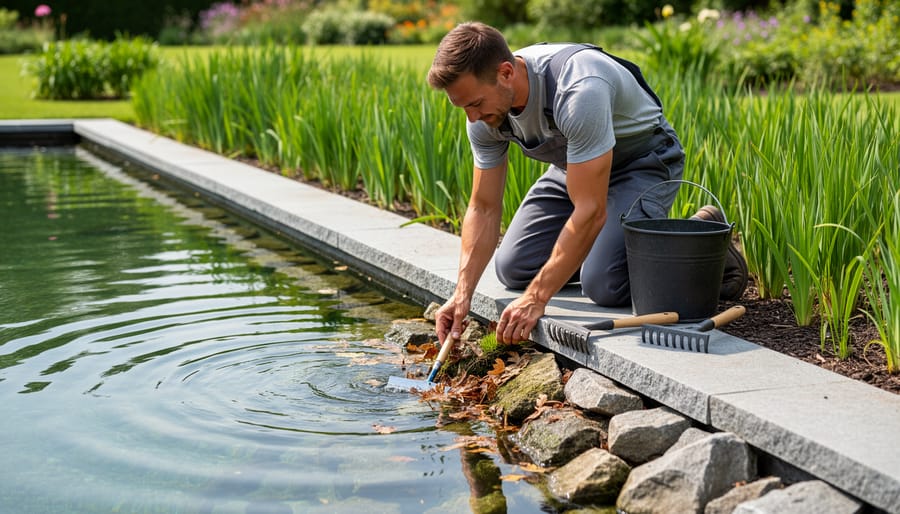
Your edge zone doesn’t take vacations, and neither should your management approach. Each season brings distinct challenges and opportunities for maintaining optimal CO2 balance in these critical transition areas.
Spring: The Cleanup and Plant Kickstart
As water temperatures climb above 50°F, your marginal plants wake up hungry. This is your best window to divide overcrowded clumps, they’ll recover quickly and establish stronger root systems before summer heat arrives. Remove winter debris trapped in edge vegetation within the first few warm weeks. Decomposing leaves release CO2 directly into shallow water where it can’t dissipate as readily as in deeper zones. Cut back last year’s dead stems to within two inches of the crown, but don’t yank them out entirely. Those established root masses are already positioned to start processing CO2 the moment active growth begins.
Summer: Balancing Growth and Gas Exchange
Your edge plants hit peak productivity now, which means maximum CO2 absorption, but also maximum nighttime respiration. Thin aggressive spreaders like cattails by removing about one-third of the stems if they’ve formed solid walls. Dense growth blocks water movement and creates stagnant pockets where CO2 accumulates overnight. Check water levels weekly during hot spells. Evaporation concentrates dissolved gases in shallow edges, and topping off with fresh water helps flush excess CO2. If edge water feels noticeably warmer than the main pond (more than 5°F difference), increase circulation or add partial shade.
Fall: Preparing for Dormancy
September through November, cut back flowering stems as they brown but leave basal foliage until it yellows completely. Those leaves are still photosynthesizing and pulling CO2 from the water. Once plants go dormant, trim everything to three inches above the waterline. Skip the temptation to do a complete fall cutback in early autumn, you’ll sacrifice several weeks of CO2 processing when fish are still active and water holds gas more readily as it cools.
Winter: Minimal Intervention, Maximum Planning
In zones with ice cover, leave some hollow-stemmed plants like rushes standing. They create gas exchange pathways through ice. Otherwise, winter is observation season. Note where snow melts first (warmest microclimates), where ice forms last (best circulation), and which areas collect debris. These patterns tell you where to adjust your edge design come spring.
Troubleshooting Common Edge Zone Problems
When your shallow edges turn pea-soup green within days of clearing them, you’re seeing a classic edge zone problem: too much sunlight hitting nutrient-rich water without enough plant competition. That algae bloom isn’t just unsightly, it’s a sign your CO2 balance is off. During the day, the algae consume CO2 and produce oxygen, which sounds good until you realize they reverse this at night, potentially stressing fish. The fix involves strategic planting to shade at least 60% of your edge zone surface. Established marginal plants outcompete algae for nutrients and create the filtered light conditions that keep blooms in check.
Plant die-back in edge zones often confuses pond owners who see lush growth in summer turn to brown mush by autumn. This is particularly problematic because decaying plant material dumps organic matter into your shallowest, warmest water, exactly where decomposition accelerates and releases CO2. The solution isn’t to remove all plants before winter, though. Cut back only the dead foliage above water level, leaving root systems intact. These roots continue processing nutrients through winter and provide crucial anchoring against erosion.
Erosion problems manifest as bare soil, exposed liner, or gradually deepening edges that no longer support marginal plants. Once erosion starts, it accelerates, wave action and rain wash more substrate away, plants lose their footing, and you lose your primary CO2 management tool. Combat this with a combination of coconut coir matting pinned along vulnerable slopes and densely planted plugs of vigorous spreaders like soft rush. The matting provides immediate stabilization while roots establish.
Why is my edge zone always green with algae?
Shallow water plus direct sunlight creates perfect algae conditions. Plant enough marginals to shade 60-70% of the edge surface and outcompete algae for nutrients.
Why do my edge plants die back in winter?
Most marginal plants naturally die back above water in cold months, which is normal. Cut dead foliage to prevent decomposition in the water but leave roots intact for spring regrowth.
How do I stop my pond edge from eroding?
Use erosion control matting and plant densely with spreading marginals whose root systems bind substrate. A gentler slope (4:1) also reduces erosion pressure compared to steep edges.
Is duckweed in my edge zone helpful or harmful?
Small amounts provide shade and absorb nutrients, but dense duckweed mats block gas exchange and can suffocate other plants. Remove excess weekly to maintain balance.
Stagnant water in corners or behind dense plant stands creates localized CO2 pockets where levels spike overnight. You’ll notice fish avoiding these areas at dawn. This happens when edge vegetation becomes so thick it blocks water circulation. The answer isn’t removing all plants but creating channels through dense stands and ensuring your natural pond aeration reaches edge zones. Position fountain returns or add a small circulation pump specifically for edges if your pond exceeds 15 square meters. Moving water prevents both stagnation and the temperature stratification that makes edges trap CO2.
Connecting Edge Management to Your Whole Pond System
Your pond edges don’t exist in isolation. They’re part of a dynamic system where shallow zones, open water, and deep areas all interact to maintain healthy CO2 levels and overall water quality.
Think of your pond as having three connected layers. The edges act as your CO2 processing zone, actively absorbing carbon dioxide during daylight hours. Your deeper water serves as a CO2 reservoir, storing excess gases and providing stable temperatures. The open surface between them allows gas exchange with the atmosphere. When these zones work together, you create natural balance without constant intervention.
Your edge plants directly influence conditions in deeper water. As marginals absorb CO2, they pull water from the pond’s interior toward the edges, creating gentle circulation patterns. This movement helps distribute oxygen-rich water outward while drawing CO2-laden water from deeper zones toward the plant roots. It’s a continuous cycle that benefits the entire pond.
Aeration systems complement this natural process rather than replace it. If you run a fountain or aerator, position it away from dense edge plantings so it pushes deeper water toward your margins. This circulation strengthens the natural flow, ensuring your edge plants receive the CO2-rich water they need to process.
Your fish population factors in too. Fish produce CO2 as they breathe and digest food. In a well-managed edge system, this waste becomes fuel for plant growth rather than a water quality problem. Regular water quality testing helps you verify the balance is working.
When edges, depth zones, and circulation all support each other, you’ll notice fewer pH swings, clearer water, and you’ll need fewer stubborn algae solutions. That’s integrated management in action.
Your pond’s edge isn’t just where the water stops, it’s where the real work happens. Those shallow margins you’ve been treating as simple borders are actually doing heavy lifting when it comes to managing CO2 levels and keeping your water balanced. Once you start seeing your edges as active management zones rather than decorative afterthoughts, everything changes.
The beauty of edge pond management is that it works with nature instead of against it. You’re not fighting chemistry with expensive equipment or constant interventions. You’re creating conditions where plants, microbes, and water naturally regulate themselves. That daily CO2 swing we talked about? Your well-designed edge zone smooths it out. Those afternoon oxygen peaks? Your marginal plants deliver them consistently when fish need them most.
Start simple. Walk around your pond tomorrow and look at what you’ve got. Is 30-50% of your edge planted with vigorous CO2 absorbers? Do you have gentle slopes that let plants establish properly? Even adding a single planting shelf with a few bunches of rushes or pickerel weed makes a measurable difference within weeks.
Your edge zone is already there, already part of your pond. The question isn’t whether to manage it, you’re managing it right now, either well or poorly. With the strategies you’ve learned here, you can turn those margins into your pond’s best natural filtration system. The water quality improvements you’ll see aren’t months away, they start the moment your first edge plants hit the water.