
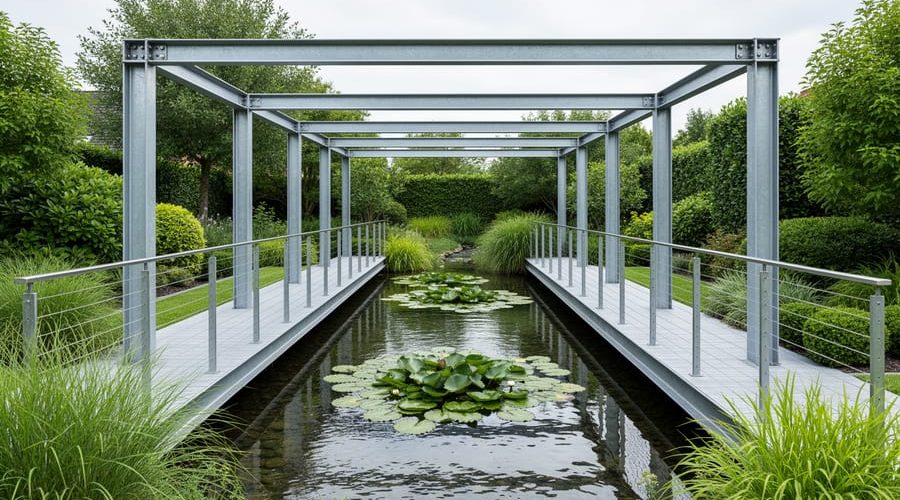
AESS Structural Steel for Your Pond: Safe, Sturdy, and Easy to Reach
AESS stands for architecturally exposed structural steel, and it means steel that holds up your structure and is meant to be seen. Instead of hiding beams and posts behind cladding or timber, AESS treats them as part of the design, with clean welds, smooth finishes, and carefully chosen coatings.
In a backyard pond setting, that opens up some great options. Think a slim steel footbridge over a stream, a crisp railing along the water’s edge, a pergola that frames your lily pads, or a viewing platform where you can watch the koi without craning your neck. Steel is strong enough to keep these designs light and slender, so they don’t swallow the garden.
Looks are only part of the picture. Near water and fish, you’ll want to know how the steel is protected, whether it’s safe for your pond life, and whether the finished space works for everyone, including kids, grandparents, and anyone using a wheelchair or walker. Getting those details right at the planning stage is where a good aesthetic engineer earns their keep.
This guide walks you through what AESS is, how it looks and lasts around water, and how to plan, build, and maintain it, whether you’re doing it yourself or hiring a pro.
What Is AESS Structural Steel (And Why Pond Lovers Should Care)?
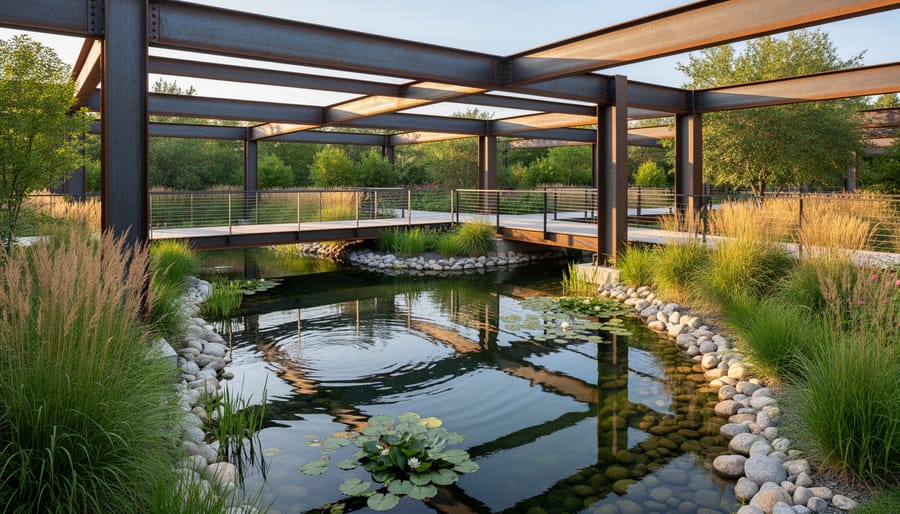
Steel You’re Meant to See
Think of the difference between a plain concrete patio and one with a polished, thoughtful finish. AESS steel works the same way. Because it stays in plain view, every detail counts, and nothing gets hidden under paint, siding, or soil.
So what does that look like up close? Welds are ground smooth, so you won’t see lumpy beads or rough spatter. Surfaces are clean and even, with no dents, scratches, or sharp burrs. Edges and corners are crisp and straight, which gives the whole piece a tidy, intentional shape.
Why does this matter for your pond? When a footbridge or railing sits next to water, ferns, and flowering plants, it becomes part of the picture. A slim steel frame can frame the view instead of competing with it. The clean lines echo the calm, quiet feel of still water.
There’s a handy bonus, too. Smooth surfaces are easier to coat evenly and easier to wipe down, and they feel nicer under your hand.
Where It Shows Up Around a Water Garden
Once you start noticing exposed steel, you’ll see it everywhere in a water garden. The most common spot is a footbridge over a stream or a narrow arm of the pond. A slim steel frame carries foot traffic without the bulk of a timber beam, and it looks lovely with a few ferns spilling over the edge.
Pergola frames are another favorite. Steel posts and crossbeams above a seating area give you shade and structure, and they hold up climbing plants like wisteria without sagging. Along the water itself, handrails keep little feet and curious pets safe while barely interrupting the view.
You’ll also find steel hiding in plain sight as stair stringers on a sloped bank, deck supports for a pond-side patio, and the framing under a lookout platform where you can watch the koi. If you’re sketching ideas for your own space, it helps to think about these features alongside your overall pond-edge design so the steel and the plants feel like one planned picture.
Aesthetic-Structural Safety: Making It Pretty and Strong
Fighting Rust Where Water Is Everywhere
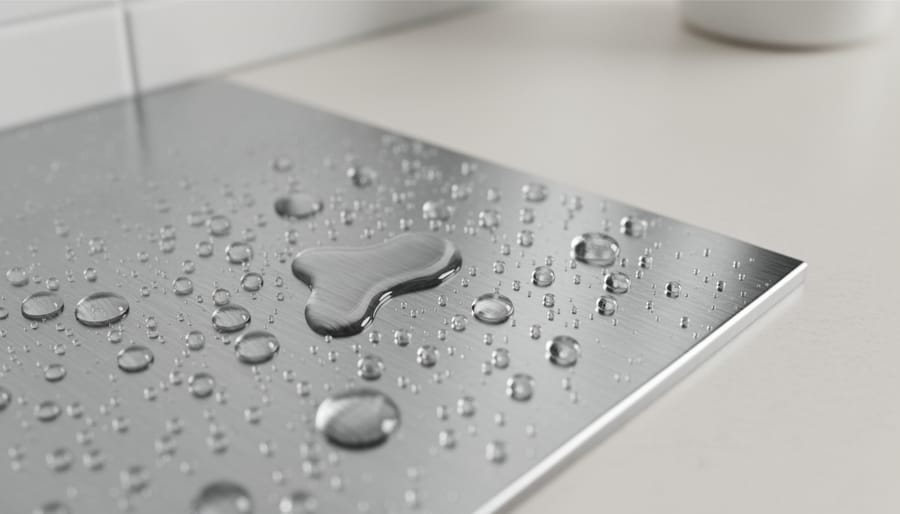
Water is steel’s worst enemy, and a pond is basically a garden full of it. Splashes, morning dew, and humid air keep surfaces damp for hours, and studies show that dissolved oxygen increases corrosion in steel that stays wet. That’s why bare, unprotected steel near a pond starts showing orange streaks surprisingly fast.
The good news is you have several beginner-friendly ways to fight back, and each one gives your steel a different look:
| Finish | Look | Upkeep | Best Pond-Side Use |
|---|---|---|---|
| Hot-dip galvanized | Silvery gray, slightly mottled | Very low | Bridge frames, posts, stair supports |
| Powder-coated | Smooth color, matte or glossy | Low (touch up chips) | Railings, pergolas, decorative screens |
| Weathering steel | Warm, rusty brown patina | Low once the patina forms | Edging, planters, features set back from the water |
| Stainless steel | Bright, clean metallic | Low (occasional rinsing) | Handrails and fittings near splash zones |
Galvanizing dips the steel in molten zinc, which acts like a sacrificial shield. Powder coating gives you the widest color choice, so you can match your garden’s mood. Weathering steel is the artsy option: it develops a stable rust-colored skin that protects itself, though it can stain nearby stone, so keep it away from light-colored patios.
Solid Footings and Stable Ground
Even the prettiest steel post is only as good as what’s underneath it. Near a pond, the ground is often soft, damp, and a little restless. It swells after rain, shrinks in dry spells, and can shift with freezing and thawing. A post set carelessly into that kind of soil may sink, lean, or wobble, and a leaning railing is exactly the kind of thing that sent me rethinking my own setup.
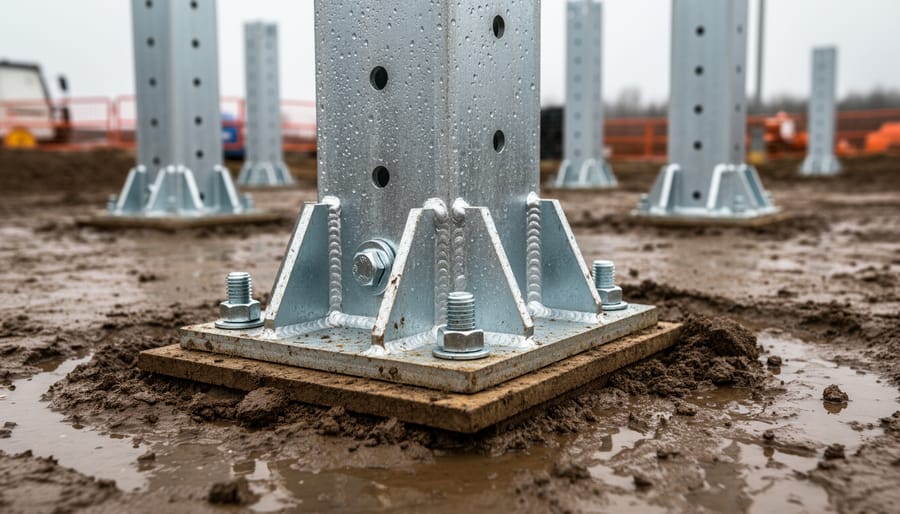
The fix is a proper foundation. Concrete footings poured below the frost line give posts a firm, level base, and a wider footing spreads weight so it can’t settle on one side. Add a layer of compacted gravel under the concrete so water drains away instead of pooling. Stand each post on a steel base plate bolted to the footing, rather than burying bare steel in the ground, so the metal stays above the wettest soil.
For the same reason, keep steel out of constant, direct submersion. Standing in water speeds up rust and wears down even tough coatings. Placing posts on dry, raised footings just beyond the water’s edge keeps the structure steadier and the finish looking sharp for years.
Protecting Pond Life and Water Quality
Steel near a pond is only a good idea if it’s kind to everything living in the water. Fresh coatings can release solvents and fine particles, and a rainstorm can wash those straight into the pond. Fish are sensitive to even small changes, and plants can suffer too, so it pays to think about this before the first post goes in.
Start by choosing finishes that are labeled safe for use around fish and plants. Many standard paints and sealers aren’t, so check the manufacturer’s data sheet or ask your fabricator what’s in their product. Hot-dip galvanizing and quality powder coating tend to be popular choices because they cure into a hard, stable layer.
Then give that layer time. Let any coating cure completely, usually days or even weeks depending on the product, before the piece goes anywhere near the water. Fresh paint smells strongly for a reason, and you don’t want those fumes or flakes ending up in your pond.
If runoff is a worry, pairing your build with some smart filtration helps keep the water balanced and clear, giving your fish and plants an extra safety net.
Accessibility Solutions: A Pond Everyone Can Enjoy
Railings, Handrails, and Edge Protection
Railings do double duty around a pond: they keep people safe and they frame the view. Steel is great for this because slim, strong bars can do the job without blocking the water.
Start with a handrail people can actually hold. A round or oval rail about 1.5 inches across is easy to wrap a hand around, which matters for older relatives and anyone steadying themselves on a damp day. Keep the top of the rail around 36 inches high for walkways and decks, and check your local building rules, since heights can vary.
Gap spacing is where families should pay close attention. Vertical balusters spaced no more than 4 inches apart stop small children from slipping through, and the same spacing helps hold back curious dogs and cats. Vertical bars also beat horizontal ones because little climbers can’t use them as a ladder. For more ideas on how to keep kids and pets safe without losing your pond’s beauty, plan your barriers early.
To protect the view, choose thin balusters and a slim top rail in a dark, matte finish. Dark tones tend to fade from sight, so your eye goes straight to the water and the fish.
Smooth Paths, Gentle Ramps, and Sturdy Platforms
Steps are the first thing that keeps some people from the water’s edge. Swap them for a gentle ramp and suddenly grandparents, strollers, and wheelchair users can all get there together. A good rule of thumb is a slope of about 1 inch of rise for every 12 inches of ramp, so the walk stays easy and a wheelchair doesn’t have to fight gravity. If your yard drops sharply, a longer ramp with a flat landing partway down is kinder than a short, steep one.
This is where steel framing earns its keep. A welded steel frame stays rigid over a long span, so your ramp or platform won’t bounce, sag, or dip into soft ground. Then you choose what people actually walk on. Go for a firm, slip-resistant surface like textured decking, grating with small openings, or grippy composite boards, because wet pond-side surfaces get slick fast.
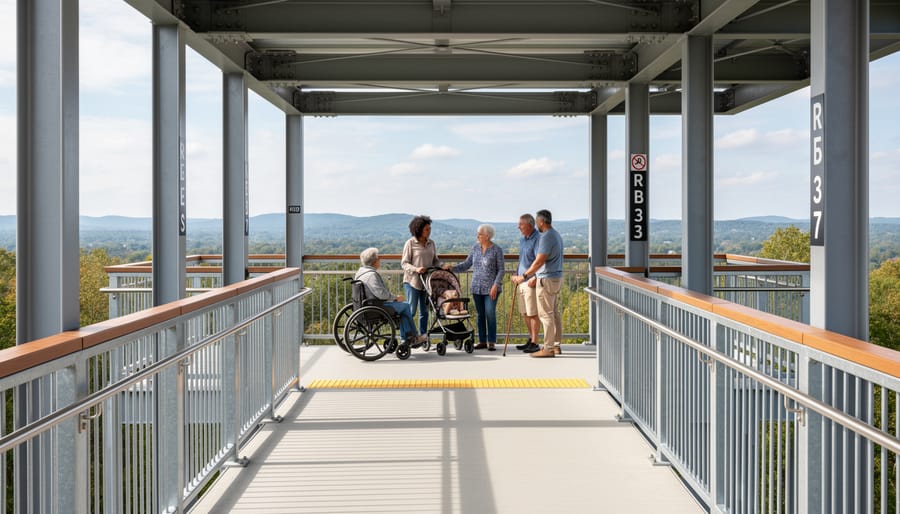
Keep widths generous. About 36 inches is the common minimum for a wheelchair, and wider lets two people pass or turn comfortably. Finish the route with a level viewing platform big enough to roll onto and turn around, with a little room beside the water to simply sit and watch the fish drift by.
Planning Your Own Steel Pond Feature, Step by Step
What You Can Tackle Yourself (And What to Hand to a Pro)
Here’s my honest rule of thumb: if it holds up plants, it’s DIY territory. If it holds up people, call a pro.
Small decorative projects are a great place to start. Think steel edging along a flower bed, a simple planter frame, a trellis for climbing plants, or a tidy enclosure to hide pumps and filters. These carry almost no weight, so a mistake costs you a little time rather than anyone’s safety. Pre-cut, pre-coated kits make them even friendlier, and you can finish most in a weekend with basic tools.
Anything that bears a load is a different story. Footbridges, elevated platforms, stair stringers, and railings that people will lean on all depend on correct welds, proper footings, and calculations you can’t eyeball. A weak weld looks fine until the day it doesn’t. Pond-side ground is soft and damp, which makes the engineering even less forgiving.
If a structure goes above knee height, spans open water, or will carry kids or grandparents, hire a qualified fabricator and ask about local building rules too. Your wallet and your family will thank you.
Keeping It Looking Great Season After Season
Good news: a well-built steel feature doesn’t ask for much. A little attention each season keeps it handsome and safe.
Start with a gentle rinse. Use a garden hose and a soft cloth to wash away dust, pollen, and fish-pond splash, which can leave a film that traps moisture. Skip harsh cleaners near the water, since runoff can reach your plants and fish.
Then take a slow walk around the structure and look for chips or scratches in the coating. Bare steel is where rust gets its foothold, so touch up any spots promptly with a compatible repair paint. Check the label first, and let it dry fully before rain or splashing.
Next, give welds and bolts a quick check. Look for hairline cracks near welds, and wiggle railings to see if anything feels loose. Snug up bolts as needed.
Finally, watch for rust. A few orange freckles are easy to fix early, but ignored, they spread.
Try a short checkup each spring and fall, plus one after a big storm. It takes about fifteen minutes and saves a lot of trouble.
Common Questions About Steel Near Water
Most worries about steel near a pond come down to a handful of questions. Here are the ones I hear most often, with straight answers.
Will steel harm my fish?
Not if you choose a pond-safe finish and let it cure fully before it goes near the water. Keep steel out of constant submersion, and avoid letting fresh coatings, runoff, or treatment residue drip into the pond.
How long does coated steel last near water?
It depends on the coating, the conditions, and how well you look after it. Galvanizing or powder coating can last many years when you rinse it, touch up chips, and catch rust early, so a quick seasonal check goes a long way.
Is it safe for kids and pets?
Yes, when it’s designed with them in mind. Smooth welds, rounded edges, and railing gaps small enough to keep little heads and paws from slipping through make exposed steel a very safe choice.
Do I need a permit?
Often, yes, especially for bridges, raised platforms, or anything load-bearing. Rules vary a lot by location, so call your local building office before you start.
One more question I get a lot: can you mix steel with wood and stone? Absolutely, and it’s one of my favorite ways to build. A slim steel frame with a warm timber deck and a natural stone landing looks right at home beside the water, and the steel quietly does the heavy lifting while the softer materials get the spotlight.
If you’re ever unsure about a finish, a footing, or a permit, ask before you build. A five-minute question to a fabricator or your local office is far cheaper than fixing a mistake after the first rainy season.
When you step back, AESS steel really does three jobs at once. It looks good, because the clean welds and crisp lines become part of the garden instead of something to hide. It stays safe, because the right coating, solid footings, and pond-friendly finishes help it stand up to constant moisture without harming your fish or your water quality. And it opens the pond up to more people, because sturdy handrails, gentle ramps, and level platforms let kids, grandparents, and anyone using a wheelchair or walker enjoy the view right alongside you.
None of that happens by accident, though. The best pond-side features start with a bit of patient planning: where will people walk, where will they pause, and how will the steel weather over the years? Think through the ground conditions, the finish, and the little details like railing height and gap spacing before anything gets built. And when a project involves real weight or welding, bringing in a pro is a smart investment, not a failure.
So grab a pencil and a scrap of paper. Sketch the bridge you’ve been daydreaming about, or the railing that finally replaces that wobbly one. Even a rough drawing gets you moving. Your pond deserves something beautiful, strong, and welcoming, and you’re closer to it than you think.