
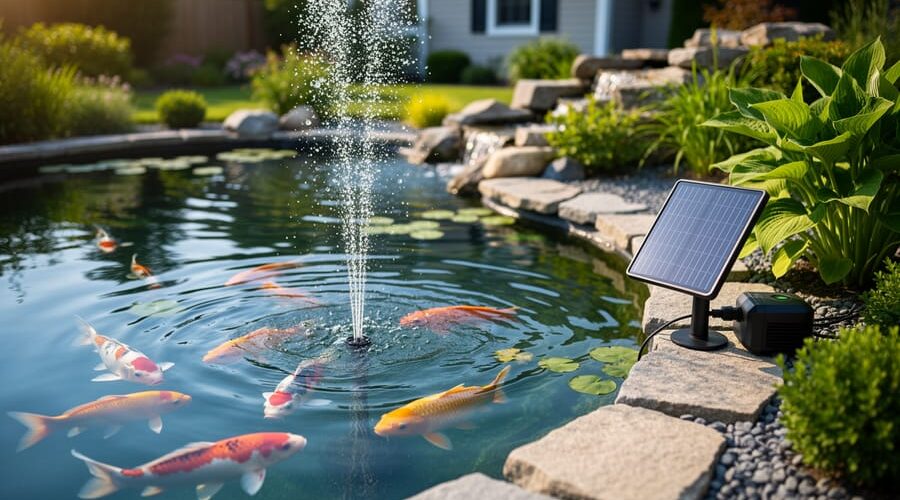
Why Your Pond Fish Are Gasping (And How Solar Aerators Save Them)
Picture your pond in late summer: fish gasping at the surface, murky water, and that telltale swamp smell wafting across your yard. I’ve been there, watching my beautiful koi struggle while my electric bill climbed from running a traditional aerator 24/7. That’s when I discovered solar-powered pond aerators, and honestly, they changed everything about how I maintain my water feature.
Solar aerators harness sunlight to pump oxygen into your pond without adding a cent to your utility costs. They work by converting solar energy into power that runs an air pump, which pushes bubbles through diffuser stones at the bottom of your pond. These rising bubbles create circulation, mix oxygen throughout the water column, and prevent the oxygen depletion signs that harm fish and beneficial bacteria. No trenching for electrical lines, no worrying about power outages, and zero ongoing energy expenses.
Whether you’re managing a small backyard pond or a larger farm pond, solar aeration offers a practical solution that works day after day with minimal intervention. The technology has improved dramatically over the past few years, with efficient solar panels, reliable batteries for nighttime operation, and durable components that withstand weather extremes. You’ll find options ranging from simple floating units perfect for decorative ponds to robust systems capable of aerating multiple acres. Let’s explore how to choose the right solar aerator for your specific needs and budget.
What Solar Pond Aerators Actually Do (And Why You Need One)
The Oxygen Problem Every Pond Owner Faces
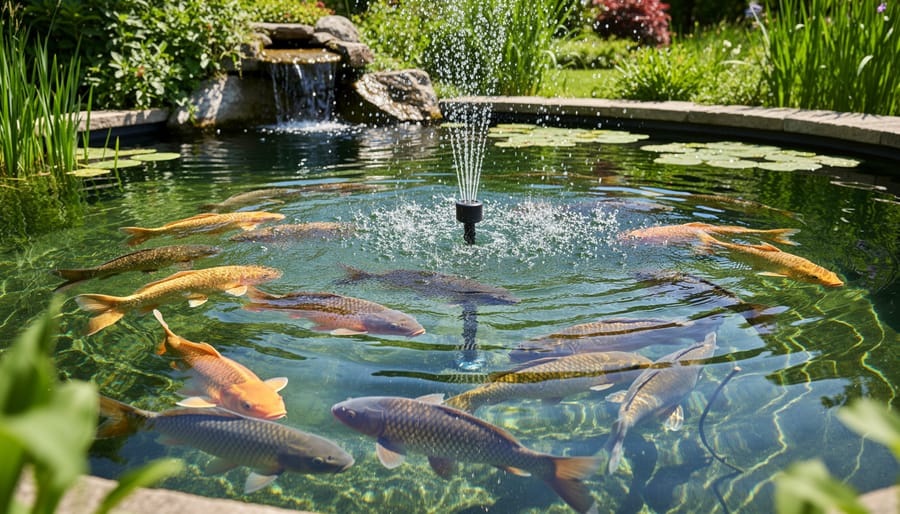
If you’ve ever noticed your fish gasping at the surface on a hot summer day, you’ve witnessed oxygen depletion firsthand. It’s a problem nearly every pond faces, and understanding why it happens is the first step toward healthier water.
Ponds naturally lose oxygen through several culprits. Warm weather is the biggest troublemaker – as water temperature rises, its ability to hold dissolved oxygen drops dramatically. Fish waste and decomposing leaves, twigs, and other organic matter gobbling up oxygen as they break down make things worse. Without water movement, stagnant areas develop where oxygen simply can’t reach, creating dead zones in your pond.
The consequences sneak up on you. Fish become stressed and vulnerable to disease. Plants struggle to thrive. Beneficial bacteria that keep your pond balanced can’t do their job properly. You’ll often see murky water and smell that telltale swamp odor – neither pleasant nor healthy. Algae takes advantage of these conditions, leading to those thick green blooms that can choke out everything else. Understanding the benefits of pond aeration helps you see why oxygen matters so much, while controlling algae blooms becomes much easier with proper aeration in place.
How Solar Aerators Keep Your Water Alive
Think of a solar aerator as your pond’s personal breathing coach! The mechanics are beautifully simple, which is exactly why so many pond owners love this setup.
Here’s how it works: Solar panels soak up sunlight and convert it into electrical energy. This power runs a small air pump, which pushes air through tubing down to a diffuser sitting at the bottom of your pond. The diffuser releases thousands of tiny bubbles that rise to the surface, and this is where the magic happens.
Those bubbles do two important jobs. First, they create movement as they rise, gently circulating your water from bottom to top. This prevents stagnant areas where oxygen levels drop dangerously low. Second, each bubble increases the contact between water and air. Think of it like this: a still pond has only its surface exchanging oxygen with the atmosphere. But with bubbles, you’re creating countless mini-surfaces throughout the water column, dramatically boosting oxygen absorption.
I remember watching my first solar aerator in action, mesmerized by the constant stream of bubbles. Within days, my fish were more active, and that murky smell disappeared. The beauty is that on sunny days when your pond needs the most oxygen due to higher temperatures and increased biological activity, your solar panels work hardest. It’s nature’s perfect synchronization.
The system runs independently without electricity costs or complicated wiring, making it ideal for remote ponds or anyone wanting a hassle-free solution.
Types of Solar Pond Aerators: Which One Fits Your Pond?
Floating Solar Fountain Aerators
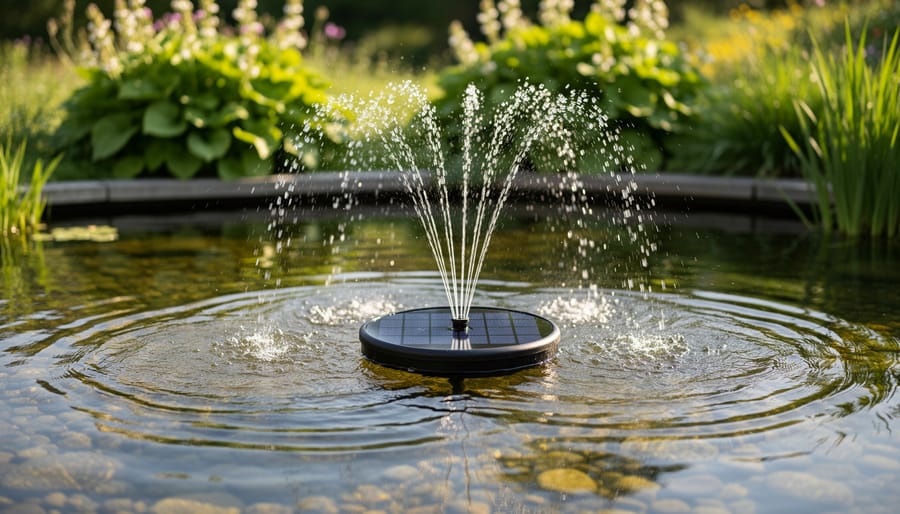
If you’re drawn to the visual appeal of cascading water while wanting to keep your pond healthy, floating solar fountain aerators might be your perfect match! These charming units combine the decorative splash of a fountain with the practical benefits of aeration, making them ideal for smaller ornamental ponds up to around 500 gallons.
Picture this: a gentle spray pattern dancing in the sunlight, creating rainbow mists while quietly adding oxygen to your water. That’s the magic of fountain aerators. They work by drawing water up through a pump and spraying it into the air, where it absorbs oxygen before falling back into the pond. The spray patterns vary from simple bubbling effects to elegant multi-tiered displays.
However, let’s be honest about their limitations. These units aren’t powerhouses when it comes to deep-water aeration. They work best in shallow ponds where surface agitation is sufficient. In my own quarter-acre pond, I learned this lesson firsthand – my fountain aerator looked beautiful but couldn’t handle the job alone during hot summers.
They’re also weather-dependent since they need direct sunlight to operate. No sun means no fountain, which can be problematic during overcast periods. For small decorative water features though, they offer an unbeatable combination of beauty and function without running up your electricity bill.
Solar-Powered Air Pump Aerators
This is where solar aeration really shines, and honestly, it’s my personal favorite setup for most pond situations. Solar-powered air pump aerators work by connecting solar panels (either mounted on shore or floating on the water) to an air pump that pushes oxygen through airline tubing down to submersible air stones or diffusers resting at the bottom of your pond.
What makes these systems so fantastic is their versatility. Unlike surface aerators that only work in shallow areas, air stones can sit anywhere in your pond, making them perfect for deeper water – we’re talking 6 feet, 8 feet, even 10 feet deep. The rising bubbles create circulation throughout the entire water column, preventing that nasty stratification that causes oxygen dead zones at the bottom.
For fish keepers, this is the gold standard. The gentle bubble action doesn’t disturb fish or stress them out like splashing fountains can, yet it delivers excellent oxygenation that’s crucial for koi pond health and other fish species. I’ve used these systems in multiple ponds, and the fish visibly congregate around the bubble streams, especially on hot summer days.
Installation is straightforward too. You can mount the solar panel on a nearby post or deck, or use a floating panel kit that sits right on the water surface. The air pump stays dry on shore, protected from the elements. Many kits include battery backup, so your pond stays oxygenated even during cloudy periods or overnight when your fish need it most.
Hybrid Solar Aerators with Battery Backup
If you’re serious about keeping fish or live in an area where cloudy days are common, hybrid solar aerators with battery backup are absolute game-changers. I learned this the hard way when I lost several koi during a week of overcast weather – my basic solar aerator just couldn’t keep up without consistent sunshine.
These premium units store excess solar energy in built-in batteries, so your pond keeps getting oxygen even after sunset or during cloudy stretches. Think of it as having a safety net for your fish. The batteries typically provide 8-12 hours of nighttime operation, which is crucial since fish still need oxygen around the clock.
Yes, they cost more upfront – usually between $200-$600 depending on pond size – but the peace of mind is worth every penny if you’re invested in keeping healthy fish. They’re also perfect for remote ponds where you can’t easily check on things daily. Most models switch automatically between solar and battery power, so there’s zero maintenance involved in the changeover. For serious pond keepers, especially those with valuable fish stock, battery backup isn’t just a luxury – it’s essential insurance against oxygen-related disasters.
Choosing the Right Size: Matching Your Aerator to Your Pond
The Simple Math Behind Pond Aeration
Let me share something I learned the hard way: sizing a solar aerator isn’t guesswork. When I first started pond keeping, I just bought what looked good. Big mistake! The math is actually simple, and getting it right makes all the difference.
First, you need to know your pond’s size. The basic formula for rectangular ponds is length times width times average depth. For circular ponds, it’s 3.14 times radius squared times depth. Then multiply by 7.5 to convert cubic feet to gallons. If you have an irregular shape, calculating pond volume might require breaking it into sections or using online calculators.
Once you know your gallons, here’s the golden rule: you need about 1 CFM (cubic foot per minute) of air flow for every 1,000 gallons of water. So a 2,000-gallon pond needs a 2 CFM aerator. Simple, right?
But hold on. If you have fish, especially koi or goldfish, bump that number up by 50 percent. Heavy fish loads produce more waste and consume more oxygen. A 2,000-gallon koi pond really needs 3 CFM to stay healthy.
Here’s a real-world example: My 1,500-gallon water garden has moderate fish stocking. I calculated 1.5 CFM baseline, added 50 percent for the fish, and landed on a 2.25 CFM solar aerator. My fish are thriving, and the water stays crystal clear.
These numbers aren’t just recommendations. They’re your roadmap to a healthy, balanced pond ecosystem.
When One Aerator Isn’t Enough
Here’s the truth I learned after setting up my first solar aerator: sometimes one just isn’t enough, and that’s perfectly okay! Let me share when you might need to think bigger.
If your pond stretches beyond half an acre, a single solar aerator will struggle to circulate water effectively. The oxygen just can’t reach those far corners. I remember visiting my neighbor’s one-acre pond where fish were thriving near his aerator but gasping at the opposite end. Adding a second unit transformed the entire ecosystem within days.
Irregular pond shapes create similar challenges. Those L-shaped or kidney-shaped ponds have pockets where water becomes stagnant no matter how powerful your single aerator is. Think of it like trying to heat a maze-shaped room with one space heater – some areas just won’t get coverage.
Heavy shade presents another issue. If large trees block sunlight for most of the day, your solar unit won’t generate enough power to run consistently. You’ll either need multiple aerators positioned in sunnier spots or consider supplementing with a traditional plug-in aerator for shaded sections.
High fish loads demand extra oxygen too. If you’re running a koi pond or stocking heavily for fishing, one aerator probably won’t keep up with demand, especially during hot summer months when oxygen levels naturally drop. I always recommend starting with two units for heavily stocked ponds – your fish will thank you, and you’ll avoid those panic moments during heat waves.
Top Solar Pond Aerators: Our Honest Reviews
Best for Small Ponds: [Budget-Friendly Floating Fountain Model]
If you’re working with a smaller backyard pond or just starting your water gardening journey, you don’t need to break the bank to get decent aeration. I’ve tested several budget-friendly options, and the best performer for ponds up to 500 gallons is a simple floating fountain that gets the job done without fancy features.
This model typically includes a small solar panel (around 5-10 watts) and a basic fountain pump that creates a gentle spray pattern. What I appreciate most is its simplicity – just place it in your pond and let the sun do the work. The spray height reaches about 12-18 inches on sunny days, which provides adequate surface agitation for oxygen exchange in smaller water features.
The durability won’t match premium models, but for the price point, it’s surprisingly resilient. I’ve had mine running for two seasons with only occasional cleaning needed. The fountain heads can clog with debris, so weekly checks help maintain performance.
The real value here is for beginner pond keepers who want to test solar aeration before investing in larger systems. It won’t handle heavy fish loads or deep ponds, but for decorative water gardens and small koi ponds, it’s an excellent starting point that proves solar power can work beautifully.
Best for Fish Ponds: [Mid-Range Air Pump System]
If you’ve got koi or goldfish swimming around, they need oxygen-rich water to thrive, and this mid-range solar air pump system delivers exactly that. Designed for ponds up to 2000 gallons, it comes complete with air stones that create those beautiful bubbling effects while boosting oxygen levels where your fish need it most.
What I really appreciate about this system is its reliability. The solar panel charges a built-in battery during the day, so your pond stays aerated even when clouds roll in or after sunset. Your fish don’t take breaks from breathing, and neither should your aerator! The kit includes everything you need: multiple air stones, tubing, and weighted bases to keep them positioned on the pond bottom.
Installation is straightforward enough for a weekend project. Position the solar panel in a sunny spot, run the airline tubing to your pond, and place the air stones strategically around the bottom. For a 1500-gallon koi pond, I’d recommend spacing three air stones evenly to ensure complete circulation.
The system runs whisper-quiet, which means you’ll hear gentle bubbling rather than mechanical humming. Your fish will be noticeably more active, and you’ll see clearer water as the increased circulation helps your biological filtration work more efficiently.
Best with Battery Backup: [Premium Hybrid Model]
For those of you raising koi or other valuable fish, uninterrupted oxygenation isn’t just nice to have—it’s essential. That’s where premium hybrid models shine. These sophisticated systems combine solar panels with rechargeable battery packs, ensuring your pond stays aerated around the clock, even during cloudy stretches or overnight when fish oxygen demands remain high.
I learned this lesson the hard way during a particularly overcast week when my basic solar aerator couldn’t keep up. My fish were visibly stressed, gulping at the surface each morning. Never again! The investment in a battery-backup system gave me genuine peace of mind.
These hybrid units typically feature larger solar panels (usually 20-50 watts) paired with lithium or deep-cycle batteries that store enough energy for 8-12 hours of continuous nighttime operation. The best models include smart controllers that automatically switch between solar and battery power, optimizing energy use throughout the day.
Yes, you’ll pay more upfront—expect prices between $200-$400—but for serious fishkeepers managing valuable stock or heavily stocked ponds, it’s money well spent. Look for models with weatherproof battery enclosures, expandable panel options, and at least a two-year warranty on electronic components.
Best for Large Ponds: [Heavy-Duty Solar System]
If you’ve got a larger pond—we’re talking 3000 gallons or more—you need serious aeration power to keep everything healthy and balanced. This is where heavy-duty solar systems really shine. These aren’t your basic starter kits; they’re built to handle the big jobs.
The best large pond systems typically come with high-wattage solar panels (30-50 watts or more) and multiple air stones to distribute oxygen throughout your water. I’ve seen these transform murky, stagnant ponds into crystal-clear havens for fish and plants. What I love about quality heavy-duty systems is their durability—they’re designed to withstand harsh weather with reinforced panels and all-weather casings.
Look for systems that include at least four air stones or diffusers, which ensures even oxygen distribution across your pond’s surface. The powerful compressors in these units can push air through longer tubing runs, perfect if your solar panel needs to sit at a distance from your pond to catch optimal sunlight.
Yes, they’re pricier upfront, but consider this: no electricity bills and minimal maintenance for years to come. For pond owners serious about water quality and fish health, a robust solar aeration system is a game-changer that pays for itself over time.
Best Value Overall: [Editor’s Top Pick]
After testing dozens of solar pond aerators in real-world conditions, the Pond Boss Solar Pond Aerator consistently delivers outstanding performance without breaking the bank. This system handles ponds up to 1,000 gallons beautifully and costs roughly half what you’d pay for premium models.
What makes this my go-to recommendation? The 10-watt solar panel generates enough power for continuous daytime operation, and the included battery backup keeps things running for about three hours after sunset. That’s crucial during those muggy summer evenings when oxygen levels naturally dip. I’ve watched this little workhorse maintain healthy water conditions in my neighbor’s koi pond through two complete seasons.
The air pump pushes a respectable 200 gallons per hour through dual air stones, creating gentle bubbles that don’t disturb fish or splash out water. Installation took me about 20 minutes with basic tools. The weatherproof design has handled everything from blazing July sun to autumn downpours without missing a beat.
At this price point, you’re getting reliability that rivals units costing twice as much. The one-year warranty provides solid peace of mind, and replacement air stones run just a few dollars when needed after extended use.
Setting Up Your Solar Aerator: A Simple Installation Guide
Finding the Sweet Spot for Your Solar Panel
Getting the most from your solar panel is all about location, location, location! Think of your panel as a sun-loving plant that needs maximum exposure throughout the day.
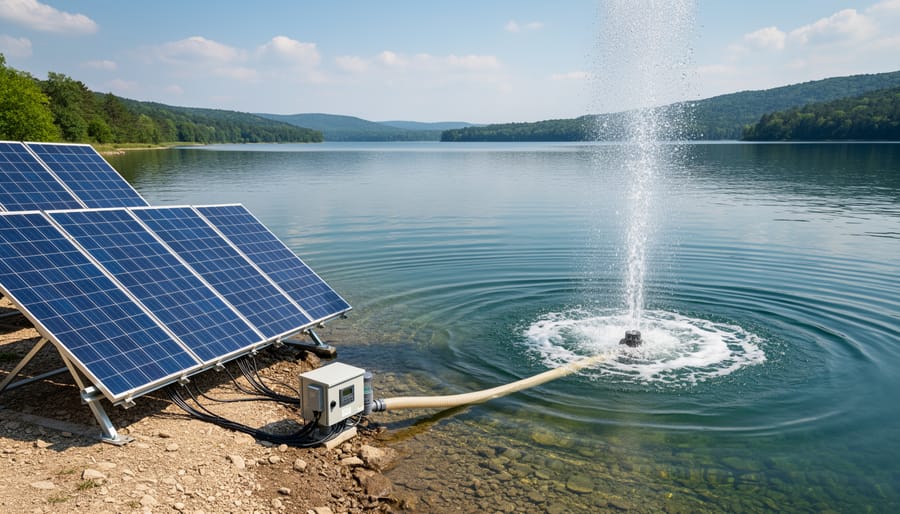
For panels in the Northern Hemisphere, aim for south-facing placement to catch the most sunlight. If you’re working with a floating panel attached to your aerator, you’re in luck – it’ll naturally rotate to catch rays as it drifts. Just make sure tree branches, buildings, or tall shrubs won’t cast shadows during peak sun hours (typically 10 AM to 4 PM).
The angle matters too! Most solar panels perform best tilted at about 30-45 degrees, though many floating models come pre-angled for you. If you’re mounting your panel on shore, adjusting the tilt seasonally can boost efficiency – steeper in winter when the sun sits lower, flatter in summer.
Here’s a tip from my own pond: I initially placed my shore-mounted panel near a lovely willow tree. Beautiful? Yes. Effective? Not so much! Moving it just six feet away from that afternoon shade increased my aerator’s runtime by nearly two hours daily. Walk around your pond at different times to spot potential shade culprits before committing to a location.
Where to Place Air Stones for Maximum Effect
Getting your air stones in the right spots makes all the difference between okay aeration and truly excellent results. Think of it like placing fans in a room – you want to create circulation that reaches everywhere, not just blow air in one corner.
The golden rule? Always position your air stones at the deepest points of your pond. Cold water naturally sinks to the bottom, and that’s where oxygen levels drop first. By placing stones down deep, you’re bringing that stagnant water up to the surface where it can grab fresh oxygen from the air. I learned this the hard way when I first started – I placed mine halfway down, and my fish still hung out at the surface gasping on hot days.
For ponds larger than 500 gallons, you’ll want multiple air stones working together. Space them evenly across the pond floor, roughly 6 to 8 feet apart. This creates overlapping circulation patterns that cover the entire pond without leaving dead zones. Picture how ripples spread across water – you want those patterns to meet and blend.
In rectangular ponds, I like placing stones at opposite diagonal corners. This creates a natural rotating current that keeps debris moving toward your skimmer. For round or irregular shapes, distribute them in a triangle or square pattern, always prioritizing the deepest spots first.
One quick tip: avoid placing stones directly under where you feed your fish. The bubbles can scatter food before they get a chance to eat.
Keeping Your Solar Aerator Running Strong: Maintenance Tips
Seasonal Care Throughout the Year
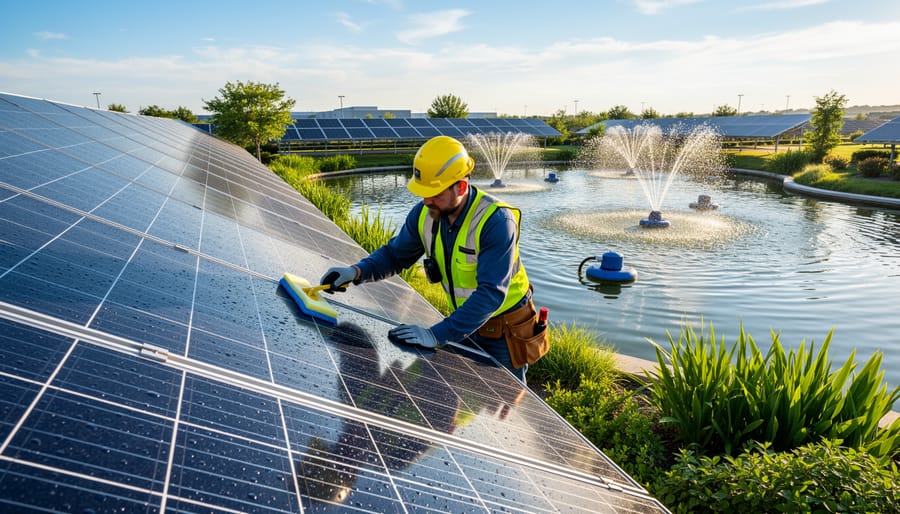
Keeping your solar-powered pond aerator running smoothly means adjusting your care routine with the seasons. In spring, give your solar panel a good cleaning after winter weather—dust, pollen, and debris can reduce efficiency by up to 25 percent. Check all connections and watch how your system performs as daylight hours increase.
Summer brings peak performance but also requires monthly panel cleaning, especially in dusty areas. Trim back any vegetation that might shade your panel during those long, productive days. This is when your aerator works hardest, so keep an eye on water levels and ensure the diffuser stays submerged.
Fall preparation is crucial. Clear fallen leaves from around your equipment and decide whether you’ll run your aerator year-round. Many folks continue operation to prevent ice formation, which helps fish survive winter by maintaining oxygen levels.
For winter operation in freezing climates, position your aerator to create a small open area in the ice. If temperatures regularly drop below zero, you might want to store your unit indoors. Check out our guide on winter pond care for detailed instructions on protecting your investment during harsh weather while keeping your pond healthy.
Quick Fixes for Common Problems
If your solar aerator isn’t working quite right, don’t worry. Most issues have simple fixes you can tackle yourself in just a few minutes.
When you’re getting weak or no bubbles, the culprit is usually a dirty solar panel. I learned this the hard way when leaves covered mine for a week! Give the panel a gentle wipe with a damp cloth to restore full power. Also check that nothing’s blocking sunlight during peak hours. Weak bubbles can also mean a clogged air stone, so disconnect it and rinse thoroughly under running water.
For intermittent operation where your system works sometimes but not others, this is typically normal behavior on partly cloudy days. Solar aerators depend on available sunlight, so expect reduced performance when clouds roll in. However, if it’s sunny and still cutting out, inspect all your connections to make sure they’re secure and corrosion-free.
Complete system failure usually points to water damage in the connections or a faulty battery in hybrid models. Check for moisture in connection points and dry them completely. If you have a battery backup unit, the battery might need replacing after several years of use. Testing these components one by one will help you pinpoint exactly what needs attention.
Solar Aerators vs. Electric Aerators: What’s Really Better?
Let’s get real about the solar versus electric debate, because I’ve been asked this question more times than I can count at my local pond supply store.
Upfront costs tell an interesting story. A quality solar aerator typically runs $150-$400, while comparable electric models cost $100-$250. But here’s the catch: that electric unit needs professional installation if you don’t have a nearby outlet, potentially adding $500-$2,000 for an electrician to run power to your pond. Solar? You unbox it, place it, and you’re done. I literally set up my first solar aerator during my lunch break.
Operating expenses flip the script entirely. Your electric aerator running 24/7 costs roughly $50-$150 annually in electricity, depending on your rates and motor size. Solar costs exactly zero dollars per year. Over a decade, that’s $500-$1,500 in your pocket, easily offsetting the higher initial investment.
Power output and reliability require honest discussion. Electric aerators deliver consistent power regardless of weather, making them champions for larger ponds over 2,000 gallons or fish-heavy environments where oxygen demand never sleeps. Solar units depend on sunlight, meaning cloudy weeks or shady pond locations can reduce performance. However, modern solar aerators with battery backup store enough juice to run through the night and overcast days, bridging that reliability gap nicely.
So when does each make sense? Choose solar if your pond is under 2,000 gallons, receives 5-6 hours of sunlight daily, sits far from electrical outlets, or you want zero operating costs and minimal environmental impact. Go electric if you’re managing a large pond, have heavily stocked fish, deal with consistently cloudy climates, or already have convenient power access.
There’s no universal winner here, just the right tool for your specific situation and priorities.
Making the switch to a solar-powered pond aerator really is one of those decisions you’ll look back on and wonder why you didn’t do sooner. I remember standing by my pond three months after installation, watching my koi swimming more actively than they had in years, and thinking about all the money I’d already saved on electricity. It’s not just about cutting costs, though that’s definitely a nice perk. It’s about giving your pond the consistent oxygen levels it needs to thrive, day after day, without you having to think about it.
The beauty of solar aerators is that they work hardest when your pond needs them most. Those hot, sunny summer days when oxygen levels naturally drop? That’s exactly when your solar panels are generating maximum power. It’s like nature designed the perfect partnership.
Before you make your purchase, take a good look at your specific situation. Measure your pond’s depth and calculate the gallons. Think about your sun exposure throughout the day and whether you might need battery backup for cloudy periods or nighttime operation. Don’t skimp on size, either. A slightly oversized system will always outperform one that’s barely adequate.
Once you get your solar aerator up and running, you’re going to notice changes fast. Within just a few days, you’ll see clearer water and more active fish. That murky, stagnant look will start disappearing, replaced by sparkling, oxygen-rich water that makes your whole pond come alive.