
The Sounds of Water: How Musical Elements Transform Your Pondside Experience
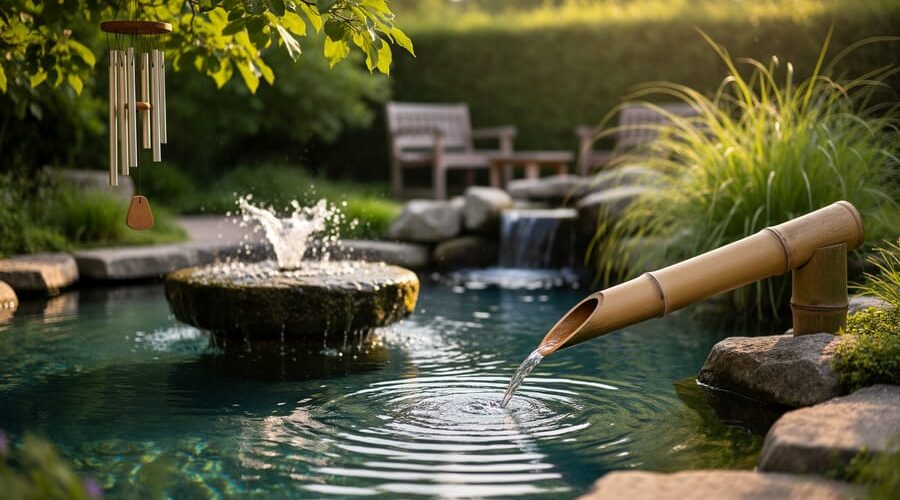
Layer the gentle splash of a fountain with wind chimes hung from nearby branches to create your first soundscape. Position a small recirculating waterfall near your seating area where the trickling water naturally masks neighborhood noise and invites relaxation. Add a simple bamboo water spout that produces rhythmic tapping sounds as water fills and empties each segment, bringing meditative percussion to your pondside retreat.
Your water garden already produces music through bubbling aerators, cascading streams, and rustling ornamental grasses, but intentional sound additions transform these natural notes into a complete outdoor symphony. Strategic placement of musical elements around your pond creates zones of different acoustic experiences, from energizing morning spaces with brighter tones to evening corners filled with deeper, calming sounds. Whether you install a professional water organ system or craft DIY chimes from repurposed materials, combining water’s inherent musicality with deliberate sound design turns your pond into an immersive sensory destination that engages visitors before they even see the water itself.
What Makes a Pond Naturally Musical
Water Movement as Your First Instrument
Water is perhaps nature’s most versatile musician, and you’re about to become its conductor! The beautiful thing about water features is that each one produces its own signature sound, and with a few simple adjustments, you can tune them to create the perfect auditory backdrop for your outdoor space.
Let’s start with fountains, which are like the string section of your water orchestra. A tall, narrow fountain jet creates a crisp, high-pitched tinkle as water droplets fall back into the pool. Want something more soothing? Reduce the flow rate to create a gentler cascade. I discovered this by accident one afternoon when my pump’s flow was partially restricted by debris. Instead of rushing to fix it, I sat back and realized the softer sound was actually more relaxing! Most fountain pumps have adjustable flow controls, so experiment until you find your sweet spot.
Spillways and waterfalls are your percussion instruments. A wide spillway with moderate flow produces a consistent, meditative sheet of sound. Narrow the opening or increase the flow, and you’ll get more dramatic splashing. The height matters too. Water falling from three feet creates deeper tones than a six-inch drop.
Streams offer something special: variety. As water moves over rocks and around bends, it creates changing rhythms. Place larger stones strategically in the streambed to add gurgling accents. Shallow sections babble cheerfully, while deeper pools provide quiet moments between the active sounds.
Wildlife Performers in Your Water Garden
Your pond doesn’t need expensive speakers when nature provides its own orchestra! Once you attract wildlife to your pond, you’ll discover a symphony of sounds throughout the day and night.
Frogs are your star vocalists, especially during spring and summer evenings. To encourage them, include shallow edges where they can enter easily and add native plants like rushes and sedges for shelter. A few flat rocks near the water’s edge give them perfect stages for their performances.
Birds bring daytime melodies when they visit to drink and bathe. Install a gently sloping beach area or add a large, flat stone just above the waterline as a bird bath station. Native shrubs planted nearby provide safe perches where they’ll sing before and after their visits.
Don’t overlook the supporting cast of dragonflies and crickets. These performers thrive when you leave some wild areas around your pond with tall grasses and leaf litter. Avoid pesticides completely, as they silence your natural musicians.
The best part? This wildlife concert costs nothing and performs year-round, creating an ever-changing soundscape that no recording could match.
Adding Intentional Musical Elements to Your Pondside
Wind-Powered Instruments That Love Water Gardens
There’s something magical about combining the gentle sounds of wind instruments with the peaceful atmosphere around your pond. Wind-powered musical elements bring an effortless, ever-changing soundtrack to your water garden without requiring any electricity or maintenance.
Wind chimes are the classic choice, and they’re perfect for pondside placement. I’ve found that metal tube chimes produce the clearest, most resonant tones that carry beautifully across water. The moisture from your pond won’t damage them like it might wooden varieties. Hang them from tree branches overhanging the water, or install a simple post nearby. Position them where they’ll catch gentle breezes but won’t overwhelm quieter moments – about 6-8 feet from where you typically sit works wonderfully.
Bamboo wind organs take things up a notch. These are essentially vertical bamboo poles of different lengths that create haunting, hollow tones when wind passes through them. You can make your own by cutting bamboo pieces at varying heights and mounting them securely in the ground near your pond’s edge. The natural materials blend seamlessly with water garden aesthetics.
For a truly unique touch, consider installing a wind harp. This simple instrument uses stretched strings that vibrate in the breeze, creating ethereal humming sounds. Mount it on a decorative post or small pergola structure where it catches consistent airflow.
The key to placement is observing your property’s wind patterns for a few days. Notice where gentle breezes naturally flow, especially during morning and evening hours when you’ll likely enjoy your pond most.
Water-Activated Musical Features
Water has this magical ability to create music all on its own, and adding water-activated features to your pond area can transform your space into a living concert hall. Let me share some of my favorite ways to bring these delightful sounds to life.
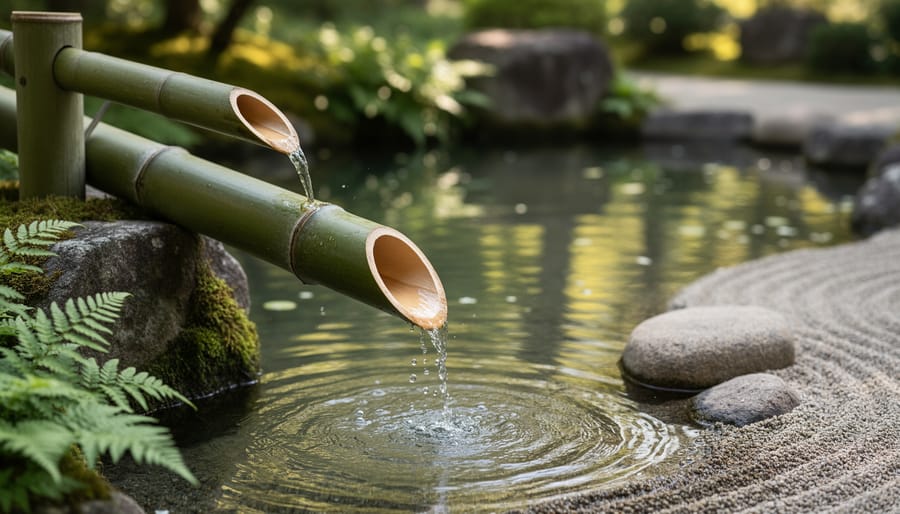
The bamboo shishi-odoshi, or deer scarer, is perhaps the most charming water-activated instrument you can add. Originally designed in Japanese gardens to startle deer away from crops, this simple device fills with water until it tips, creating a distinctive clacking sound as it strikes a rock. I installed my first one about five years ago, and I still find myself smiling every time I hear that gentle knock. You can make one yourself using bamboo poles from a garden center, a pivot point, and a base stone. The rhythm depends on your water flow, so you can adjust it to your preference.
Musical fountains take the concept further by channeling water through different sized pipes or vessels to create various tones. Think of it like a water-powered xylophone. You can experiment with terracotta pots, metal containers, or even repurposed materials to discover unique sounds that resonate with your outdoor space.
Weatherproof Options for Year-Round Music
Creating a musical pondside oasis means choosing instruments that can handle rain, snow, and humidity throughout the seasons. I learned this the hard way when my first wind chime rusted after just one winter! Now I stick with materials that truly last.
Stainless steel and powder-coated aluminum are your best friends for outdoor musical elements. These materials resist rust and maintain their sound quality even after years of exposure. Marine-grade metals work beautifully, though they cost a bit more upfront.
For bamboo instruments, apply marine varnish annually to prevent splitting and water damage. I seal mine each spring and they’ve lasted five years strong. Cedar and teak naturally resist rot, making them excellent choices for wooden elements like resonators or decorative supports.
Position instruments where they’ll get some shelter from direct downpours. Placing them under tree canopies or pergolas extends their life significantly. Winter storage is ideal for delicate pieces, but well-made metal instruments can brave all seasons. Regular cleaning with mild soap keeps everything sounding crisp and looking beautiful year after year.
Designing Your Musical Zones
Creating Listening Spots
The magic of your musical park truly comes alive when you create comfortable spots where people can pause and soak in the soundscape. Think about your favorite places to sit by the pond – those are your starting points!
Begin by positioning benches or seating areas at varying distances from your musical elements. I’ve found that placing one seat close to wind chimes (within 6-8 feet) creates an immersive experience, while another spot 15-20 feet away offers a gentler, ambient sound. This gives visitors choice in their listening experience.
When designing walking paths, create natural pauses near your sound features. A slight curve or widening in the path invites people to stop and listen. Consider adding flat stepping stones that lead to a quiet observation point – the sound of footsteps on stone adds its own rhythmic element!
Acoustics matter more than you might think. Hard surfaces like stone walls or large rocks can reflect sound beautifully, amplifying your bamboo chimes or bells. Soft plantings, on the other hand, absorb sound and create pockets of quiet – perfect for creating a meditative pondside retreat.
Try positioning seating so listeners face away from street noise and toward your pond. This simple trick dramatically improves the ambiance. Add some comfortable cushions, and you’ve created an irresistible invitation to sit, listen, and relax.

Balancing Sound Layers Without Overwhelm
Creating a harmonious musical atmosphere around your pond is all about thoughtful spacing and intentional placement. Think of it like seasoning a dish – you wouldn’t dump all your spices in at once!
Start by mapping out your space and identifying natural sound sources first. Your waterfall or fountain already provides a baseline rhythm, so plan additional elements around this foundation. I learned this the hard way when I placed wind chimes too close to my bubbling fountain – the competing sounds were exhausting rather than relaxing!
Position musical elements at different distances from your main seating area. Place wind chimes at least 8-10 feet apart from each other, allowing each one to have its moment without creating a cacophony. Consider varying the tones too – if you have deep-toned chimes near the water, opt for lighter, higher-pitched bells in your garden beds.
Layer sounds by height as well. Hanging elements should occupy different vertical zones, creating dimension without crowding the auditory space. Ground-level features like singing stones or bamboo wind instruments add variety without competing with overhead sounds.
Remember the principle of negative space. Just as silence between musical notes creates rhythm, quiet zones in your garden allow listeners to appreciate each sound element individually. Let your ears rest between features, and you’ll create a truly peaceful musical park experience.
Budget-Friendly DIY Musical Projects
Building Your Own Bamboo Water Chime
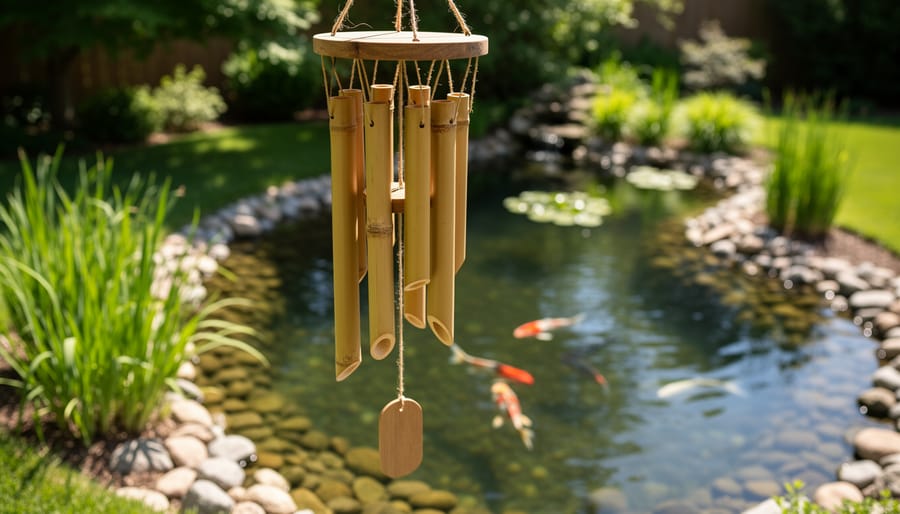
Creating your own bamboo water chime is easier than you might think, and the soothing sounds it produces will transform your pond into a peaceful retreat. I’ll never forget the first one I built – the gentle “tonk” sound as water filled the bamboo tube was absolutely magical!
Start by gathering materials: one thick bamboo piece (about 2-3 inches diameter) for the base, one thinner piece (1-2 inches) for the pivoting arm, flexible tubing, a stone or decorative rock, and basic tools like a saw and drill. Cut your thick bamboo into an 8-inch section, leaving one end sealed at the natural node. This becomes your resonating chamber.
For the pivoting arm, cut the thinner bamboo about 12-15 inches long, hollow throughout. Drill a small hole near one end for your pivot point, and attach it to a sturdy frame using waterproof cord or wire. Position a container beneath the arm to catch and recycle water.
Connect your pump to the tubing, directing water into the open end of the arm. As it fills, the weight tips the arm forward, emptying the water onto your stone with that distinctive hollow knock. The bamboo instantly rights itself, ready to fill again. Adjust the water flow until you find your perfect rhythm – typically one strike every 5-10 seconds creates the most meditative effect.
Repurposing Materials for Unique Sounds
Your garden likely holds hidden musical treasures just waiting to be discovered! I’ve always loved transforming everyday materials into beautiful sound-makers for my pond area, and you’d be amazed at what you can create with items you might otherwise discard.
Copper pipes make fantastic wind chimes with deep, resonant tones. Cut them into different lengths (between 8 to 16 inches works wonderfully) to create a range of notes. Suspend them from a wooden base using fishing line, and you’ll have a professional-sounding chime at a fraction of the store-bought cost. The natural patina that develops over time adds character too!
Ceramic pots and terracotta planters produce surprisingly melodic sounds when tapped. Hang them upside down in graduated sizes near your water feature, and attach wooden strikers so the breeze plays them naturally. I once created an entire percussion set from broken pots I couldn’t bear to throw away.
For truly unique instruments, explore recycled materials like glass bottles, old silverware, and metal washers. Glass bottles filled with different water levels create beautiful bell-like tones, while suspended silverware adds whimsical tinkling sounds. The beauty of repurposing is that each piece tells a story while creating one-of-a-kind music for your garden sanctuary.
Seasonal Musical Experiences
Your pondside symphony transforms beautifully throughout the year, and each season brings its own distinctive soundtrack worth celebrating. Understanding these natural rhythms helps you create a richer year-round wellness experience in your water garden.
Spring awakens your pond with the gentle trickle of melting ice and increased water flow. This is when frogs begin their evening chorus, creating nature’s percussion section. I love adding wind chimes near my pond in spring because the breezes are strongest then, creating delightful harmonies with the water sounds. Consider positioning bamboo wind instruments where spring winds catch them best.
Summer brings the fullest orchestra with buzzing dragonflies, splashing fish, and the constant burble of fountains working overtime. The warm air carries sound beautifully, so this is perfect for adding waterfall features or installing solar-powered water bells that dance in the sunlight.
Autumn offers crisp, clear acoustics as falling leaves create gentle plinks on the water surface. Enhance this by placing decorative metal pieces near the pond edge where leaves can drum against them. The cooler air makes sounds sharper and more distinct.
Winter presents a quieter, more contemplative soundscape. If your pond stays active, the contrast between flowing water and frozen surroundings creates magical acoustics. Adding evergreen plantings around musical elements helps deflect winter winds while maintaining year-round visual interest alongside your sonic garden.
You don’t need to transform your entire pond area into a symphony overnight. Start with just one musical element that speaks to you, whether that’s a simple wind chime hanging near your favorite sitting spot or a set of bamboo chimes positioned to catch the evening breeze. Listen to how it interacts with your water sounds for a few weeks, then consider adding another layer when you’re ready.
Remember, creating a musical pond experience isn’t about overwhelming your senses. It’s about discovering those magical moments when the trickle of your waterfall harmonizes with distant chimes, or when morning birdsong mingles with the gentle resonance of water-tuned bells. These combinations offer genuine therapeutic benefits that can reduce stress and create a peaceful retreat right in your backyard.
The beauty of a pondside musical space is that it grows with you. What begins as a single chime can evolve into a carefully curated soundscape that reflects your personality and meets your relaxation needs. Take your time, experiment with placement, and trust your ears. Your pond already has its own natural music, you’re simply learning to conduct the orchestra.