
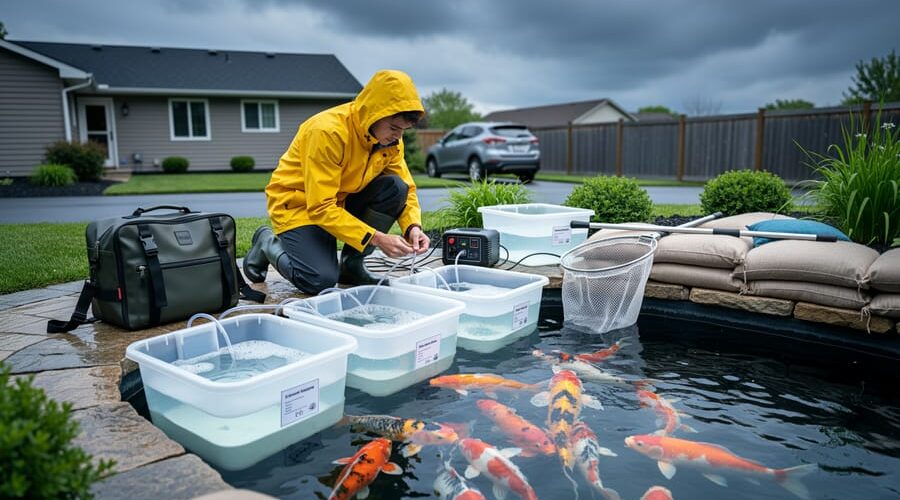
When Disaster Strikes: Your Pond’s 6 P’s Emergency Evacuation Plan
Picture this: You’re watching storm warnings on TV when you realize your beloved koi and goldfish could be in serious danger. Floodwaters, power outages, and evacuation orders don’t wait for you to figure out a plan. That panicked feeling of not knowing how to protect years of investment and creatures you’ve grown to love is exactly why emergency preparedness matters for pond owners.
The 6 P’s of evacuation framework gives you a clear, actionable system to protect your fish and pond investment when disaster strikes. Originally developed for general emergency preparedness, this approach translates perfectly to pond care because it covers everything from immediate fish safety to long-term recovery. Whether you’re facing hurricanes, wildfires, floods, or severe storms, having a plan means the difference between scrambling in chaos and executing a calm, effective response.
Most pond owners never think about emergency scenarios until it’s too late. Your filtration system depends on electricity. Your fish need consistent water quality. Your plants can’t survive prolonged neglect. Without preparation, a single disaster can wipe out everything you’ve built. But here’s the good news: dedicating just a few hours to understand and implement the 6 P’s creates a safety net that protects your aquatic ecosystem no matter what nature throws your way. This framework isn’t about fear, it’s about confidence and control when you need it most.
Understanding Pond Emergencies: When Every Second Counts
I’ll never forget the morning I woke up to find my pond looking like pea soup after an unexpected storm knocked out power for two days. My beautiful koi were gasping at the surface, and I had no plan whatsoever. That panic-stricken scramble taught me something crucial: pond emergencies don’t announce themselves politely, and they certainly don’t wait for you to figure things out.
The truth is, pond emergencies come in many forms. Natural disasters like floods, hurricanes, or severe storms can overwhelm your pond system in hours. Power outages shut down filtration and aeration, meaning your fish can be in serious trouble within 12-24 hours depending on water temperature and fish load. Equipment failures can happen without warning, and water contamination from runoff, chemicals, or toxic algae blooms can turn deadly within hours.
Here’s what really keeps me up at night: how fast things deteriorate. In warm weather, oxygen levels can plummet dangerously low in just a few hours without aeration. Ammonia builds up quickly in stagnant water. During a wildfire evacuation, you might have 30 minutes or less to act. That’s barely enough time to think, let alone execute a complex plan.
This is exactly why having an evacuation plan matters so much. Your fish depend entirely on you. They can’t pack themselves up or adapt quickly to emergency conditions. When I developed my 6 P’s evacuation framework after that storm disaster, everything changed. I had clear steps, pre-packed supplies, and confidence that I could protect my finned friends no matter what came our way.
The good news? You don’t need to learn this the hard way like I did. With the right preparation, you can face any emergency knowing exactly what to do.
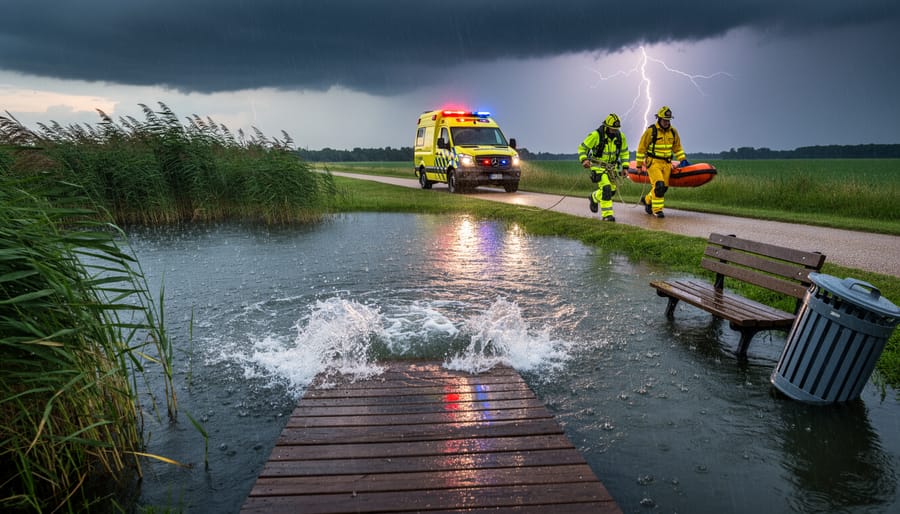
The 6 P’s of Pond Evacuation: Your Emergency Framework
You’ve probably heard of the 6 P’s of evacuation for households, but did you know this same life-saving framework works perfectly for protecting your pond during emergencies? Whether you’re facing a wildfire, flood, hurricane, or sudden freeze, your fish and aquatic plants depend on you having a solid plan in place.
The traditional 6 P’s stand for People, Prescriptions, Papers, Personal Needs, Priceless Items, and Phone. When I first adapted this system for my own backyard pond, I realized it needed a few tweaks to address the unique challenges water gardeners face. After all, you can’t exactly grab your 200-gallon koi pond and run out the door!
Think of this framework as your emergency playbook. It’s about identifying what matters most in your pond ecosystem and knowing exactly what to do when disaster strikes. The beauty of the 6 P’s approach is that it breaks down overwhelming emergency scenarios into manageable categories. Instead of panicking when you hear evacuation warnings, you’ll have clear priorities and pre-packed supplies ready to go. This isn’t just theory, it’s a practical system that pond owners have used to save their beloved fish and preserve years of careful water garden development.
P #1: People – Prioritize Human Safety First
Let me be absolutely clear about something: your life and your family’s safety always come first, no matter how much you love your pond and fish. I’ve been in situations where I had to make tough calls, and I learned this lesson the hard way during a wildfire evacuation when I spent precious minutes trying to net koi instead of securing important documents. Don’t make that mistake.
During any emergency—whether it’s a wildfire, flood, hurricane, or other disaster—your primary responsibility is getting yourself and your loved ones to safety. Fish are resilient creatures, and while we’ll discuss ways to help them survive emergencies, they should never take priority over human wellbeing. If authorities tell you to evacuate immediately, you go. Period.
That said, smart planning means you won’t face that terrible split-second decision. Include your entire household in your pond emergency planning sessions. Make sure everyone knows that human safety is rule number one, but also teach them the quick evacuation steps for the pond if time permits. Even kids can help with simple tasks like unplugging equipment or covering the pond with netting during the early stages of an emergency.
Create a family emergency plan that addresses both your home and your pond. Designate who does what if you have advance warning. Maybe one person handles indoor preparations while another takes fifteen minutes for pond tasks. Set a firm time limit—if you can’t complete pond preparations in that window, you leave anyway.
Keep a written emergency checklist near your pond that clearly states: “Complete ONLY if safe and time permits.” This reminder helps prevent panic-driven poor decisions when stress levels are high and thinking clearly becomes difficult.
P #2: Prescriptions and Papers – Essential Pond Documentation
When disaster strikes, you won’t have time to hunt down equipment manuals or remember that special supplier’s phone number. That’s why creating a comprehensive emergency pond folder is absolutely essential, and trust me, you’ll thank yourself later for taking this step now.
Think of this as your pond’s medical file and instruction manual rolled into one. Start by creating a detailed fish inventory that includes the species, approximate size, age, and any special health considerations for each fish. I learned this lesson the hard way when I had to evacuate during a wildfire and couldn’t remember which koi had the recurring swim bladder issue. Having that information readily available helped the temporary caretaker provide proper care.
Next, gather copies of your water parameter records from the past six months. These baseline readings for pH, ammonia, nitrite, and nitrate levels are incredibly valuable if you need to set up a temporary system or explain your pond’s conditions to someone helping you. Include seasonal temperature logs too, as these details matter more than you might think.
Collect all your equipment manuals and warranty information for pumps, filters, UV clarifiers, and aerators. Add a simple diagram of your plumbing setup showing valve locations and how everything connects. This seems tedious now, but imagine trying to explain your system to a neighbor or emergency responder without visual aids.
Create a contact list that includes your pond supplier, equipment repair services, aquatic veterinarian if you have one, and local koi clubs or pond societies. These are your lifelines during emergencies.
Take clear photos of your entire pond setup from multiple angles, including close-ups of healthy fish. These images help with insurance claims and provide reference points for reassembly if you need to dismantle equipment.
Store everything in a waterproof document bag or container, and create digital backups uploaded to cloud storage. Keep one set at home and another with a trusted friend or family member off-site. When minutes count, having this information instantly accessible could save your fish.
P #3: Personal Needs – Fish Life Support Essentials
When disaster strikes, having the right supplies ready can mean the difference between losing your fish and successfully relocating them to safety. I learned this lesson the hard way during a bushfire evacuation when I frantically searched for equipment I thought I had but couldn’t locate in the chaos. Now, I keep everything organized in one dedicated emergency kit, and I encourage you to do the same.
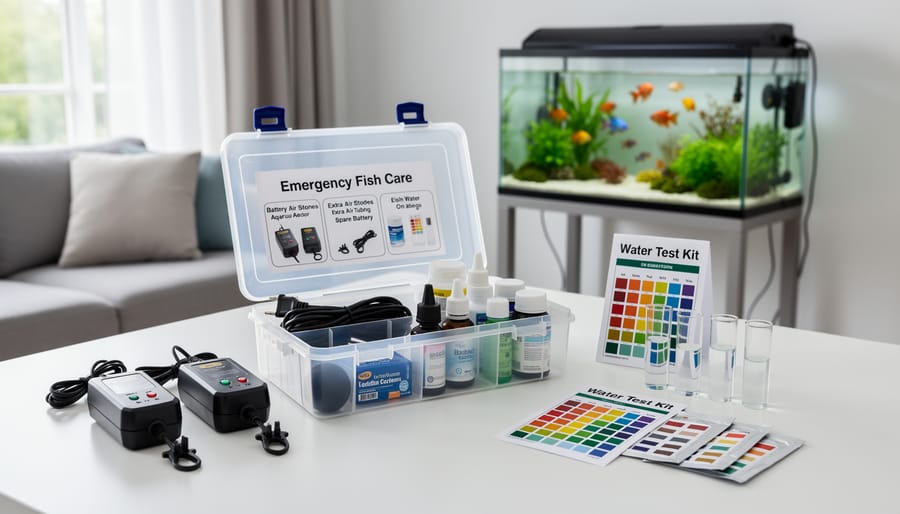
Start by assembling your fish life support essentials in a waterproof container that’s easy to grab. The most critical item is a battery-powered aerator or two. These little devices are lifesavers, literally keeping oxygen flowing in transport containers when you’re without power. Look for models that run on D-cell batteries and test them quarterly to ensure they work when needed.
Next, gather appropriate transport containers. Five-gallon buckets with lids work brilliantly for smaller fish, while large coolers accommodate koi and bigger specimens. The insulation in coolers also helps maintain stable water temperatures during transport, which reduces stress on your fish. Make sure you have enough containers to comfortably house all your fish without overcrowding.
Your emergency kit should include water treatment products specifically designed for rapid use. Dechlorinator is essential if you need to use tap water, and stress coat products help protect fish during the trauma of relocation. Include a bottle of beneficial bacteria to jump-start biological filtration in temporary holding tanks.
Don’t forget water testing kits for ammonia, nitrite, and pH. These simple tests help you monitor water quality in temporary setups, allowing you to catch problems before they become fatal. Pack them in a sealed plastic bag to prevent moisture damage.
Consider adding a portable filtration unit to your kit if budget allows. These compact systems provide mechanical and biological filtration for temporary tanks, significantly improving survival rates during extended evacuations.
Finally, include basic supplies like a fish net, plastic bags for transport, rubber bands, towels, and a permanent marker for labeling containers. Store this entire kit in an accessible location near your pond, not buried in the garage. Review and refresh supplies annually, replacing batteries and expired treatments. Your future self will thank you for this preparation when every second counts.
P #4: Priceless Items – Your Most Valuable Fish and Equipment
When disaster strikes, you won’t have time to save everything, so knowing your priorities beforehand can make all the difference. This is where having a clear mental list of your most valuable fish and equipment becomes absolutely essential.
Start by identifying your priority fish well before any emergency. These typically include expensive koi varieties, rare or hard-to-replace species, breeding stock, and any fish with sentimental value. I learned this lesson the hard way during a severe storm warning when I frantically realized I had no idea which of my thirty fish were actually the most valuable. Now I keep a simple photo inventory on my phone with notes about each important fish, including their approximate value and any special characteristics that make them irreplaceable.
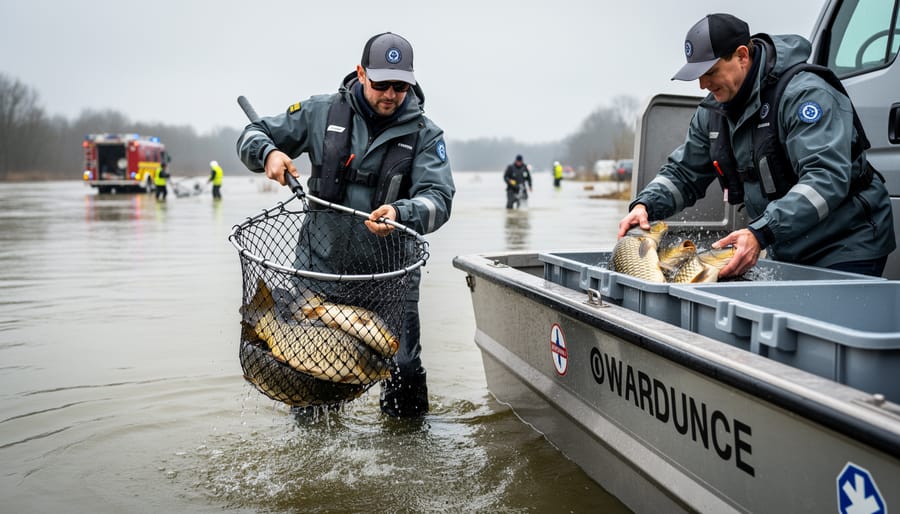
For catching priority fish quickly, invest in a high-quality koi sock or soft mesh net. Never use your regular pond net during evacuations since the stress of capture can injure expensive fish. Practice the catching process during routine maintenance so you’re comfortable doing it under pressure. The key is smooth, confident movements rather than rushed, panicky ones.
Your valuable equipment deserves attention too. UV clarifiers, quality pumps, and biological filter media containing beneficial bacteria should be high on your list. If you have a prize-winning water feature or custom-made pond components, take photos for insurance purposes even if you can’t physically save them.
Making triage decisions is emotionally difficult but necessary. Create a tier system now, while you’re thinking clearly. Tier one might include your three most valuable koi and your pump. Tier two could be breeding pairs and your UV system. Tier three covers everything else. This isn’t about loving some fish more than others, it’s about making impossible choices slightly easier when every second counts.
Remember, saving twenty common goldfish takes the same time as saving your five championship koi. Choose wisely, act decisively, and don’t second-guess yourself during the evacuation.
P #5: Provisions – Temporary Housing and Care
Once you’ve safely transported your fish, the next challenge is keeping them healthy and comfortable until they can return home. Think of this as setting up a temporary hotel for your finned friends—it needs to meet their basic needs without all the bells and whistles of their permanent pond.
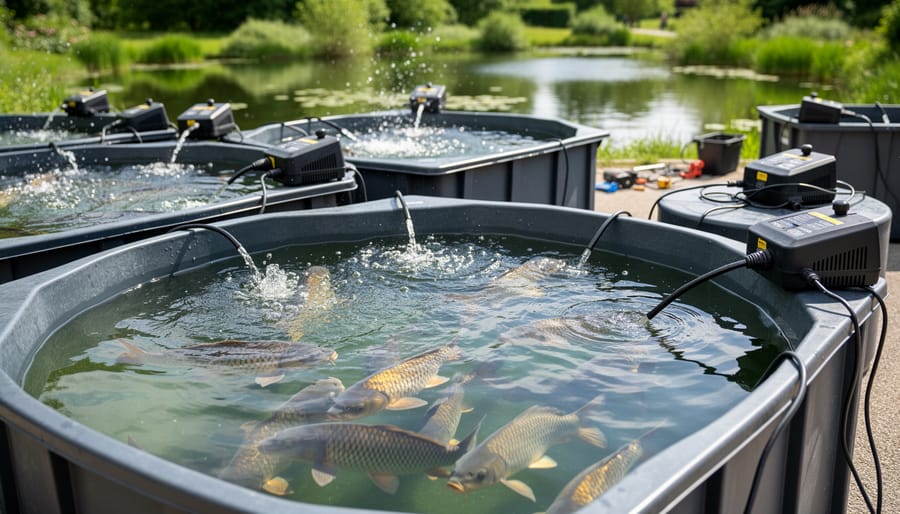
Emergency holding tanks come in many forms. Large plastic storage bins, clean garbage cans, or even your bathtub can work in a pinch. I once housed my koi in a friend’s unused hot tub during a wildfire evacuation, and they did surprisingly well! Coolers work for shorter stays, though they’re not ideal for extended periods. If you’re lucky enough to have a friend with a healthy pond, that’s often the best option—just make sure their water parameters are compatible first.
Maintaining water quality in temporary containers requires extra vigilance. Without your usual filtration system, you’ll need to perform partial water changes every day or two, depending on fish density. Remove about 25-30% of the water and replace it with dechlorinated water at the same temperature. Battery-powered air stones are lifesavers here—they keep oxygen levels up without needing electricity.
Feeding during evacuation requires restraint. Stressed fish produce more waste, and temporary setups can’t handle the same feeding schedule as your established pond. Cut feeding to once daily or even every other day, offering only what they’ll eat in a few minutes. Less food means less waste and better water conditions.
Duration matters significantly. For evacuations lasting just a day or two, minimal equipment works fine. Beyond three days, you’ll need more robust setups with proper aeration and daily water changes. After a week, consider whether you need to upgrade to something more permanent, like borrowing space in someone’s established pond or investing in a larger temporary system. Remember, your fish are remarkably resilient—they just need clean water, oxygen, and a little patience from you.
P #6: Pets – Evacuating Your Entire Pond Population
When you have sufficient warning time, evacuating your entire pond population becomes possible—and often the safest choice for your aquatic friends. I learned this lesson during a wildfire evacuation when I successfully relocated 27 goldfish and koi to temporary homes. Here’s how to make it happen smoothly.
Start with your largest, slowest fish first. Koi and larger goldfish are easier to net when they’re not spooked by frantic activity. Use a soft, fine-mesh net and guide them gently into corners rather than chasing them frantically around the pond. For smaller, quicker fish like mosquito fish or minnows, try using two nets to create a “funnel” effect that guides them into your catching zone.
Keep a large, clean bucket filled with pond water nearby for immediate transfer. Never use tap water without dechlorinator—the stress of evacuation plus chlorine exposure can be deadly. Add a battery-powered air stone to each transport container to maintain oxygen levels during the journey.
Here’s a catching trick that works beautifully: feed your fish at the same spot daily before any emergency arises. When evacuation time comes, they’ll naturally gather there, making the process infinitely easier. During non-emergency times, occasionally practice gentle netting so fish become somewhat accustomed to the experience.
Transport fish in coolers or sturdy containers, filling them only halfway to prevent sloshing. Cover containers with mesh or breathable fabric to keep fish from jumping while allowing air circulation. Avoid overcrowding—better to make multiple trips than stress fish with cramped conditions.
Once you reach your temporary location, don’t rush the acclimation process. Float sealed bags or containers in the new water for 15-20 minutes to equalize temperature. Gradually add small amounts of the new water to their container over another 15 minutes before final release.
Consider forming a “pond partner” network with fellow water gardeners in different areas. You’ll watch their fish during their emergencies, and they’ll return the favor when disaster strikes your neighborhood. This mutual aid system has saved countless fish in our local pond community.
Creating Your Pond Evacuation Action Plan
Now that you understand the 6 P’s, let’s put them into action with a practical plan you can actually use. Think of this as your pond’s emergency playbook, something you can grab and follow without having to think too hard when stress levels are high.
Start by creating a written document, whether that’s on your computer or a laminated sheet kept near your pond. List each of the 6 P’s as separate sections and fill in your specific details. Under People, write down who’s responsible for what. Maybe you handle the fish while your partner secures the equipment. Under Prescriptions, list any water treatments you use regularly and their dosages. For Papers, note where you keep receipts, warranties, and those precious photos of your pond at its best.
Next, make practicing drills part of your routine, just like you would with regular safety checks. Once a season, walk through your evacuation steps. Time yourself catching and transferring fish. Check if your backup containers still hold water without leaking. It might feel silly doing a practice run on a sunny afternoon, but you’ll be grateful when an actual emergency strikes.
Keep your emergency contact list current. Veterinarians move, friends change phone numbers, and local aquarium shops sometimes close. Review this list every six months and update as needed.
Remember that seasonal preparation varies significantly. Summer storms require different readiness than winter freezes. In warmer months, focus on oxygen supplies and shade options. During colder seasons, prioritize heating elements and indoor space availability.
Finally, store your supplies where you can actually reach them quickly. That backup generator won’t help if it’s buried under holiday decorations in the garage. Create a dedicated emergency zone near your pond, keeping everything maintained and ready to deploy at a moment’s notice.
Prevention: The Best Emergency Preparedness
Here’s the truth I’ve learned after years of pond keeping: the best evacuation is the one you never have to do. Think of it like having a great insurance policy—you want it there, but you hope you’ll never need to use it.
Start with weekly walkarounds of your pond. I spend about ten minutes every Sunday morning with my coffee, just observing. Check your equipment, look for leaks, watch how your fish behave, and test your water quality. These simple habits catch small problems before they become emergency situations.
Battery backup systems are absolute game-changers. A basic air pump with battery backup costs less than dinner out, but it can save your fish during power outages. I keep two fully charged backups in my garage—one for the pond and one as a spare. For folks with larger ponds, consider a generator or solar-powered aerator.
Redundancy is your friend. If your pond depends on a single pump or filtration system, you’re one equipment failure away from trouble. I run two smaller pumps instead of one large one. If something fails, I’ve still got partial circulation while I fix the problem.
Install monitoring technology that fits your budget. Simple floating thermometers work great, but smart pond monitors can alert your phone if oxygen levels drop or temperatures spike. These early warnings give you time to respond calmly rather than react frantically.
Finally, design resilience into your pond from the start. Adequate depth prevents temperature swings, proper filtration maintains stable water quality, and strategic plant placement provides natural backup oxygenation. Prevention isn’t exciting, but it’s the smartest investment you’ll make.
Here’s the truth about emergency preparedness: it’s not about predicting disasters, it’s about reducing panic when they happen. You’ve invested time, money, and probably countless weekends creating your backyard pond paradise. Those beautiful koi or goldfish aren’t just pets, they’re part of your family. Protecting them doesn’t require a perfect plan, just a plan that exists.
Start today. Right now, you can grab a plastic container and begin assembling your basic emergency kit. Even if all you manage this week is buying a battery-powered aerator and some extra fish bags, you’re already ahead of where you were yesterday. Remember, basic preparation beats perfect preparation that never happens.
Your pond represents years of hard work and financial investment. The plants you’ve carefully selected, the water chemistry you’ve balanced, the ecosystem you’ve nurtured, all of it deserves protection. The 6 P’s framework gives you a roadmap, but you control the pace. Maybe you tackle People and Pond this month, Papers and Provisions next month. Progress matters more than perfection.
When evacuation orders come, you won’t have time to research or second-guess. You’ll rely entirely on the preparation you did during calm moments like right now. Your future self, standing safely with healthy fish in temporary containers, will thank you for taking action today. Every step you take toward preparedness is a step away from panic.