
Transform Your Water Garden Into a Living Classroom
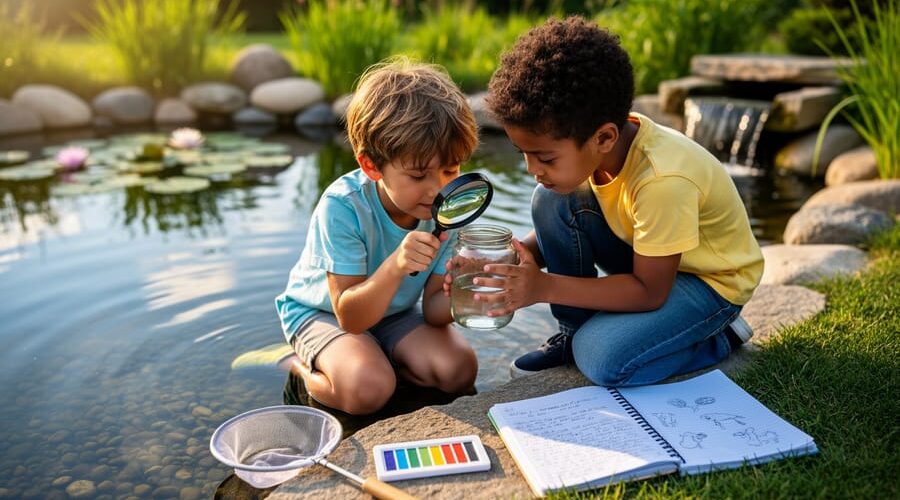
Transform your backyard pond into a dynamic learning laboratory by anchoring activities in Creative Curriculum water study principles. Set up observation stations around your water feature where children can record daily changes in water clarity, wildlife visitors, and plant growth—this hands-on documentation builds scientific thinking while connecting learners directly to living ecosystems. Create a “pond investigation kit” with magnifying glasses, nets, pH testing strips, and journal notebooks that children can grab whenever curiosity strikes, making spontaneous exploration as easy as stepping outside.
Design purposeful learning zones that address Creative Curriculum’s key developmental domains simultaneously. Your pond’s shallow edge becomes a math center where kids measure water depth, count tadpoles, and calculate plant spacing. The filter area transforms into an engineering station for understanding how water moves and gets cleaned. Plant propagation corners teach life science while developing fine motor skills through potting and transplanting. These aren’t separate activities—they’re integrated experiences that mirror how real scientists work in aquatic environments.
Connect your pond-based learning to structured curriculum frameworks that give your activities educational credibility and clear learning objectives. Document discoveries through photos, drawings, and measurements that show genuine skill progression. When children investigate why algae grows, test different filtration methods, or design wildlife habitats, they’re not just playing—they’re engaging in authentic inquiry that meets rigorous educational standards while developing a lifelong connection to aquatic ecosystems.
What Makes Water Gardens Perfect for Creative Learning
The Science Living in Your Pond
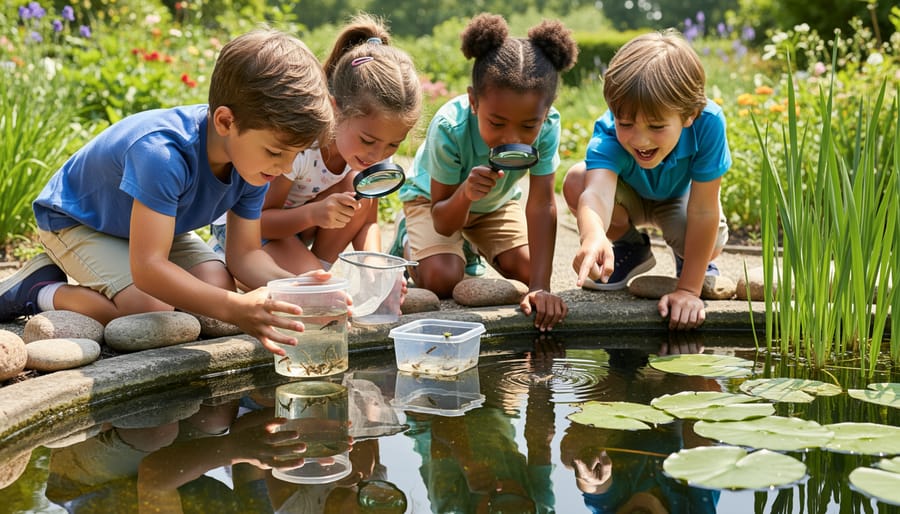
Your pond isn’t just a beautiful water feature—it’s a living laboratory brimming with scientific discovery! Every time you peer into the water, you’re observing the same principles that scientists study in aquatic ecosystems worldwide.
Let’s start with the water cycle happening right in your backyard. Watch how water evaporates on sunny days, condenses as morning dew on surrounding plants, and returns through rainfall. Your pond demonstrates this continuous cycle perfectly, making it tangible for young learners who might struggle with abstract concepts.
The chemistry is equally fascinating. When you test your water for pH, ammonia, or nitrates, you’re doing real science. These aren’t just numbers—they tell the story of biological processes happening beneath the surface. Beneficial bacteria breaking down fish waste, plants absorbing nutrients, and oxygen levels fluctuating throughout the day all create a delicate chemical balance.
Then there’s the physical science. Temperature stratification occurs as warmer water rises and cooler water sinks. Surface tension allows water striders to dance across the pond. Light refraction makes fish appear closer than they actually are.
I’ve watched countless children become genuinely excited about science through pond observation. They’re not memorizing facts from textbooks—they’re witnessing biology, chemistry, and physics working together in real time. That hands-on discovery transforms abstract concepts into memorable, meaningful learning experiences that stick with them for years.
Math and Engineering Hide in Plain Sight
Here’s where your water garden becomes a living math classroom, and trust me, kids won’t even realize they’re calculating! When you’re planning your pond, you’re naturally working through geometry and volume calculations. A simple question like “How many gallons does my pond hold?” turns into a practical lesson in measuring length, width, and depth, then multiplying to find cubic feet before converting to gallons. I’ve watched children excitedly measure their small container ponds, suddenly invested in getting the math right because it affects their real project.
Fish stocking opens wonderful ratio discussions. The classic rule of one inch of fish per gallon of water becomes a hands-on proportion problem. If you have a 50-gallon pond and want goldfish that grow to 6 inches, how many can you keep? Suddenly, division and multiplication matter in a tangible way.
Water flow rates, pump sizing, and filtration calculations offer more advanced opportunities. Even simple observations like tracking water evaporation over a week and calculating daily averages give children ownership of mathematical thinking. The beauty is that these aren’t contrived textbook problems. They’re real measurements with real consequences, making abstract concepts click into place naturally.
Setting Up Your Water Garden Workshop Space
Safety First: Making Your Pond Child-Friendly
Before we dive into the exciting learning opportunities your pond offers, let’s talk about keeping little explorers safe around water. I learned this lesson early in my water gardening journey when my neighbor’s curious toddler made a beeline for my koi pond during a backyard gathering!
The most effective safety measure is a physical barrier. Consider installing a decorative fence with a self-closing gate, at least four feet high, around your pond perimeter. For smaller features, rigid mesh grids just below the water surface can support a child’s weight while still allowing fish and plants to thrive. These grids are practically invisible once installed and won’t compromise your pond’s beauty.
Establish clear supervision zones for different age groups. Younger children should always have an adult within arm’s reach during pond activities, while older kids might explore from designated viewing platforms with visual supervision. Mark these areas with colorful stepping stones or low garden edging to create natural boundaries.
Design age-appropriate access points that match children’s developmental stages. Shallow observation areas with stable footing work beautifully for preschoolers, while older students can safely use sturdy platforms for dipping nets or collecting samples. For comprehensive guidance on implementing these measures, explore our resources on child-friendly pond safety and discover more age-appropriate pond activities.
Remember, safety features don’t mean sacrificing educational value. With thoughtful planning, your pond becomes both a secure and magical learning environment where children can explore water studies confidently.
Essential Tools and Materials for Water Study
You don’t need fancy equipment to launch an exciting water study adventure with your kids or students. Some of my favorite discoveries happened with the simplest tools, like the day my daughter spotted tiny daphnia swimming in our pond using just a basic magnifying glass from the dollar store.
Start with a small aquarium net or kitchen strainer for safely catching and observing pond creatures. A magnifying glass opens up an entire microscopic world, turning ordinary pond water into a fascinating ecosystem. I recommend getting at least 5x magnification, which lets you see everything from algae strands to minuscule water insects.
Clear containers are essential for temporary observation stations. Mason jars, plastic containers, or even ice cube trays work perfectly for comparing water samples from different pond areas. White ice cube trays are particularly clever since the white background makes tiny organisms easier to spot.
An observation journal transforms casual looking into scientific discovery. Simple composition notebooks work great. Encourage sketching what you see, recording dates, weather conditions, and questions that arise. My son still treasures his water study journal from three years ago, complete with his earliest pond creature drawings.
For slightly deeper exploration, basic pH test strips cost just a few dollars at pet stores and reveal invisible water chemistry. A thermometer helps track seasonal temperature changes and understand why certain creatures appear at different times.
Remember, the best tool is curiosity. Start simple, and add equipment as your water study journey unfolds naturally.
Seasonal Water Garden Curriculum Activities
Spring: Watching Life Wake Up
Spring is magical for water study! This is when your pond becomes a living classroom bursting with activity.
Start by tracking water temperature changes. Give kids simple thermometers and create a daily temperature chart. You’ll notice how the warming water triggers incredible transformations. We love checking temperatures first thing in the morning and comparing them to afternoon readings.
Plant emergence offers fantastic observation opportunities. Watch as marginal plants push through the mud and unfurl new leaves. Have children draw or photograph the same plant every few days to document growth. Submerged plants like hornwort suddenly spring to life, providing perfect specimens for close-up viewing in clear containers.
Tadpole development is absolutely captivating for young learners. If you have frogs visiting your pond, collect a small amount of pond water with a few tadpoles for temporary observation. Use magnifying glasses to examine their developing legs and changing body shapes. Document the stages through drawings or photos, then return them to the pond within a day or two.
Create prediction journals where children guess when certain plants will bloom or when tadpoles will develop legs. This builds scientific thinking and keeps them engaged throughout the season’s changes.
Summer: Peak Growth and Balance
Summer brings the most exciting learning opportunities as your water garden comes alive! This is the perfect time to tackle the concept of balance in aquatic ecosystems through hands-on observation.
Start by monitoring algae growth with your learners. Notice how that green tint appears on warm, sunny days? Use a simple jar test: fill a clear container with pond water and place it in sunlight versus shade. Compare algae development over a week. This demonstrates how sunlight fuels algae, introducing the concept of photosynthesis in kid-friendly terms.
Fish behavior becomes fascinating during peak activity periods. Watch how they respond to feeding times, shade, and water temperature. Create a simple chart tracking their movements throughout the day. You’ll notice they’re more active in cooler morning hours—a natural introduction to how temperature affects living things.
The nitrogen cycle comes to life through daily observation. Explain it simply: fish waste becomes food for beneficial bacteria, which creates nutrients for plants, which clean the water for fish. It’s nature’s perfect recycling system! Test your water weekly using basic strips, tracking ammonia and nitrite levels. Kids love seeing those color changes and understanding what they mean for their aquatic friends.
Fall and Winter: Preparing for Rest
As temperatures drop, your water garden becomes a fascinating classroom for studying nature’s seasonal rhythms. This is when things get really interesting for young learners, as they witness how aquatic environments prepare for winter’s challenges.
Start by observing how plants naturally slow down their growth. Children can track this transition by measuring plant height weekly or photographing the same spot to document changes. It’s amazing to watch aquatic plants shift from vibrant green to golden brown, teaching kids that dormancy isn’t death but a survival strategy. We’ve found that comparing pond plants to hibernating animals helps children grasp this concept beautifully.
Leaf decomposition offers another incredible learning opportunity. Gather fallen leaves and place some in mesh bags in your pond while keeping identical leaves in a dry container. Over several weeks, students can observe how water speeds up decomposition and discuss the role of beneficial bacteria. This hands-on experiment naturally leads to conversations about nutrient cycling and why removing excess debris matters for pond health.
Cold-weather maintenance becomes a science lesson in itself. Let children help with winterizing tasks like installing pond heaters or aerators, explaining how these tools keep oxygen flowing for overwintering fish. Checking water temperature together introduces thermometer skills and data recording.
Even ice formation provides teachable moments. Observe ice crystals forming at the edges, discuss why ponds freeze from top to bottom, and look for signs of life beneath the surface. These quiet winter observations teach patience and reveal that your water garden remains a living ecosystem year-round.
Hands-On Projects That Teach Real Skills
Build a Mini Ecosystem in a Container
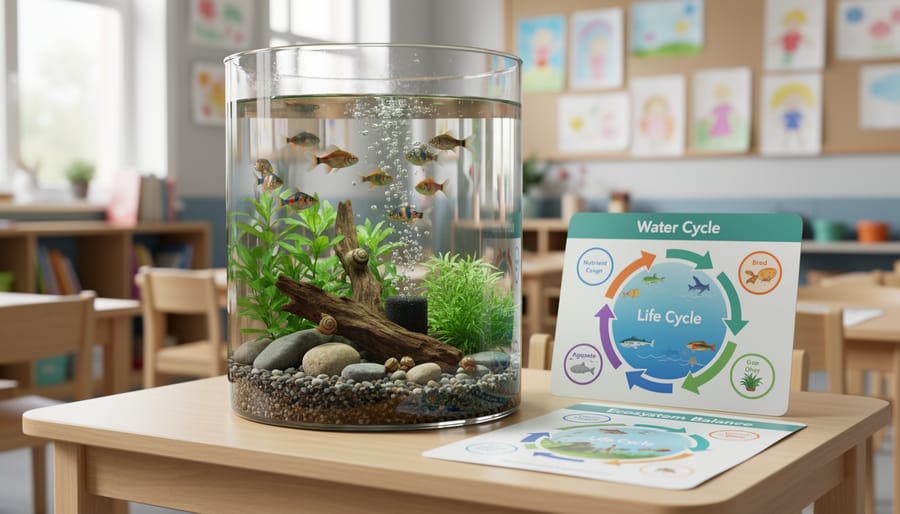
Creating mini ecosystem containers is one of my favorite ways to introduce children to water ecology principles in a manageable, engaging format. Start with clear glass or plastic containers, anything from large jars to small aquariums works beautifully. Layer about two inches of rinsed gravel at the bottom, then add dechlorinated water, leaving a few inches of space at the top.
Next, introduce aquatic plants like hornwort or water lettuce, which are practically foolproof for beginners. Wait a few days for the plants to settle before adding small aquatic creatures such as snails or tiny fish. I always recommend starting simple, perhaps just plants and snails for younger learners.
The magic happens when children observe daily changes. They’ll notice how plants produce oxygen bubbles, how snails clean algae, and how everything works together. Keep the container in indirect sunlight and top up evaporated water weekly. This hands-on project perfectly demonstrates interdependence, nutrient cycles, and the delicate balance required in healthy aquatic environments.
The Fish Population Detective Project
Turn your water garden into a living classroom with fish as the perfect subjects for teaching data collection! This hands-on project combines daily observation with real math skills that kids genuinely enjoy.
Start by creating a simple fish counting chart. Each morning, have children count and record the number of fish they spot. You’ll be amazed how this seemingly basic activity teaches pattern recognition and consistency in data gathering. My nephew struggled with math until we started tracking our goldfish – suddenly numbers made sense because they meant something real to him.
Next, establish a feeding schedule where children measure and document how much food the fish eat. Use a small measuring spoon and track consumption over two weeks. Do fish eat more on sunny days? After water changes? These questions spark natural scientific curiosity.
Growth tracking adds another dimension. Choose one or two easily identifiable fish and photograph them monthly against a ruler placed outside the pond. Children can create growth charts comparing fish development over time. This introduces concepts like rate of change and visual data representation without feeling like traditional schoolwork. The beauty is that fish population studies teach spreadsheet basics, graphing, and analytical thinking while kids simply care for creatures they’ve grown to love.
Water Quality Investigation Station
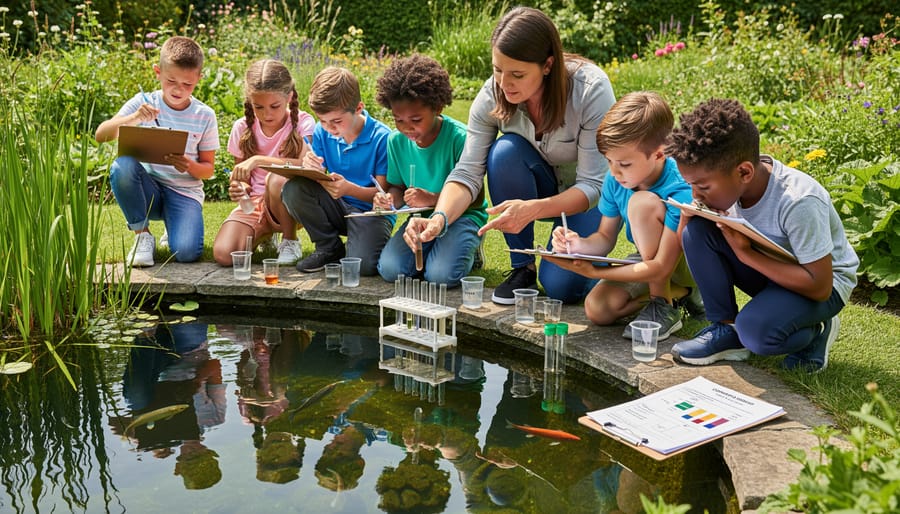
Transform your pond area into a hands-on science lab where kids become water detectives! Setting up a regular testing routine makes scientific method feel like exciting detective work rather than homework.
Start with a simple weekly testing schedule. I like to designate “Water Wednesday” at my pond, where we check pH, temperature, and clarity. You don’t need fancy equipment – basic pond test kits work perfectly and teach kids to follow step-by-step procedures. Have children record their findings in a waterproof journal, creating their own data collection system.
The beauty of this station is watching kids develop hypothesis skills naturally. When my neighbor’s daughter noticed cloudy water after heavy rain, she predicted it would clear within three days. We tested daily to track her theory, and she was thrilled to see the science in action!
Create simple testing routines that build environmental awareness. Ask questions like “Why might the water temperature change?” or “What happens to fish when pH levels shift?” This connects abstract concepts to real-world pond health.
Keep a testing calendar visible near your pond, using stickers or drawings to mark completed tests. This visual tracker helps children take ownership of their scientific investigation while building consistent observation habits that serve them well beyond the water garden.
Adapting Lessons for Different Learning Styles
Every child discovers the wonder of water differently, and your water garden workshops can shine when you adapt them to match how each learner processes the world around them.
For visual learners, create colorful observation charts where children can draw what they see happening in the water garden each day. Set up before-and-after photo stations where kids document plant growth or water clarity changes. Use picture cards to label different pond features, and encourage these learners to create illustrated water cycle diagrams based on what they observe in your garden.
Kinesthetic learners thrive when they’re hands-on. Let them physically measure water depth with rulers, feel different pond liner textures, and build miniature water gardens in containers. These are the kids who’ll love scooping water, arranging rocks, and getting their hands muddy while planting aquatic vegetation. Give them tasks like testing water temperature at different times of day or hand-feeding fish if your setup allows.
Auditory learners benefit from discussion-based activities. Encourage them to describe water sounds they hear – drips, splashes, or fountain bubbles. Create storytelling sessions where children narrate the journey of a raindrop through your garden. These learners excel when you ask them to explain their observations out loud or teach younger children what they’ve discovered.
For children with special needs, simplify tasks into smaller steps and offer sensory-friendly options. Some children may need gloves for tactile sensitivities, while others might benefit from weighted tools for better grip. Create quiet observation zones away from busy areas, and use timers to help children transition between activities. Consider partnering each child with a buddy for support, and always celebrate progress at their own pace rather than comparing achievements across the group.
Documenting Your Water Study Journey
Capturing your water study adventures doesn’t need fancy equipment or complicated systems. In fact, some of the most meaningful documentation happens with simple tools and a bit of creativity.
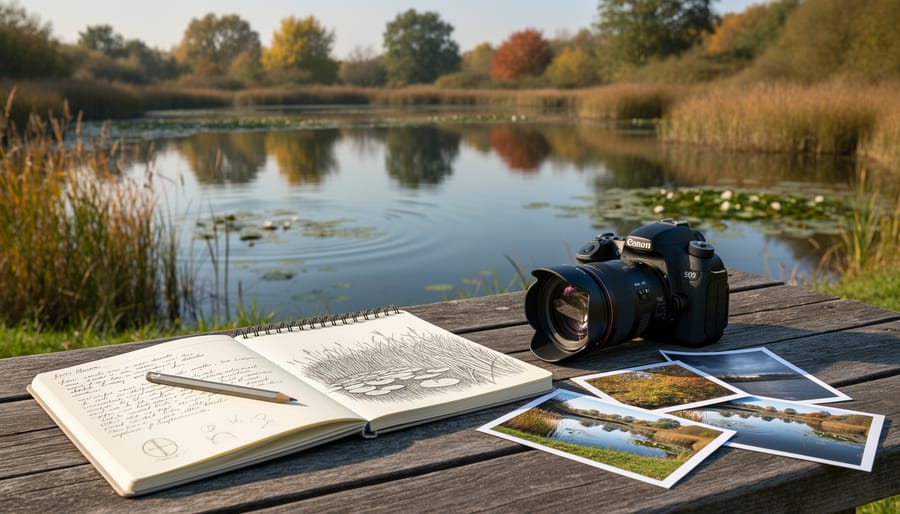
Start with a dedicated water journal. A basic notebook works perfectly where children can sketch what they see, paste in dried plants from pond edges, and write observations in their own words. I keep waterproof paper near our pond so young explorers can jot down discoveries right when they happen, even with wet hands. Date each entry and watch how observations change through seasons.
Photo diaries bring water studies to life in ways words can’t capture. Let kids photograph the same pond view weekly to document seasonal changes, or zoom in on individual water droplets, ripples, and reflections. Create simple before-and-after comparisons of water experiments. Print favorites and arrange them chronologically to see real growth over time.
Digital portfolios work wonderfully for families comfortable with technology. Use free apps to combine photos, voice recordings of children explaining their discoveries, and short videos of water experiments in action. These create shareable keepsakes that grandparents love.
Don’t overlook tactile documentation. Collection boxes with labeled samples, pressed flowers from water-loving plants, or even small containers of different water types create tangible memories. One family I know created a rolling timeline on butcher paper along their hallway, adding new discoveries weekly.
The key is consistency, not perfection. Even five minutes of documentation after each water activity builds a remarkable record of learning and wonder.
Common Challenges and Simple Solutions
Let’s be honest – even the best-planned water study activities don’t always go smoothly! I’ve had my share of hiccups over the years, and I want to share some practical fixes that have saved many a pond lesson.
Weather interruptions are probably the biggest challenge. Rain or cold snaps can derail outdoor plans quickly. My solution? Always have a backup indoor activity ready. Keep collected water samples, photographs from previous pond visits, or dried aquatic plants on hand. You can examine pond water under a magnifying glass indoors just as easily, and kids often focus better without outdoor distractions anyway. I also embrace light rain – it’s actually a fantastic time to observe how water moves and where runoff flows around your pond.
Maintaining engagement over multiple sessions requires variety. If children lose interest, switch up your approach. Alternate between active collection days and quieter observation sessions. Let kids lead sometimes – their questions often create the most memorable lessons. One child’s curiosity about “why pond water looks green” led us down a fascinating algae investigation I hadn’t planned.
Balancing education with pond health matters too. Teach children that we’re visitors in this ecosystem. Establish gentle handling rules: observe first, touch carefully, and always return creatures to their homes. Use white collection trays for temporary viewing rather than removing animals for extended periods.
Time constraints? Start small. A fifteen-minute pond visit beats an overwhelming hour-long session that exhausts everyone. Focus on one concept per visit rather than cramming everything in. Quality observations trump quantity every time. Remember, water study should feel like discovery, not a chore – for you and the children.
Here’s the wonderful truth about using your water garden as a learning space: you don’t need fancy curriculum guides or teaching credentials to make it happen. Your pond is already doing the heavy lifting. Every time a tadpole wiggles, a dragonfly hovers, or ripples spread across the surface, nature is extending an invitation to wonder and explore.
Start small if you’re feeling uncertain. Set up a simple observation jar near your pond. Spend five minutes watching what happens at the water’s edge. Grab a notebook and sketch what you see. These tiny moments are where real learning takes root, not just for the children in your life, but for you too. I’ve learned more from simply sitting quietly by my pond than from any gardening book on my shelf.
The beauty of water garden education is that curiosity leads the way. You don’t need to know all the answers before you begin. When a young learner asks why the water strider doesn’t sink, it’s perfectly fine to say, “I’m not sure! Let’s figure it out together.” That sense of shared discovery is powerful and genuine.
Your pond doesn’t care about lesson plans or learning objectives. It simply exists, changes, grows, and invites questions. All you need to bring is a willingness to observe, wonder, and explore alongside anyone who joins you at the water’s edge. That’s the heart of meaningful education, right there in your backyard.