
Paint Your Pond: How Expressionist Watercolors Transform Water Garden Design
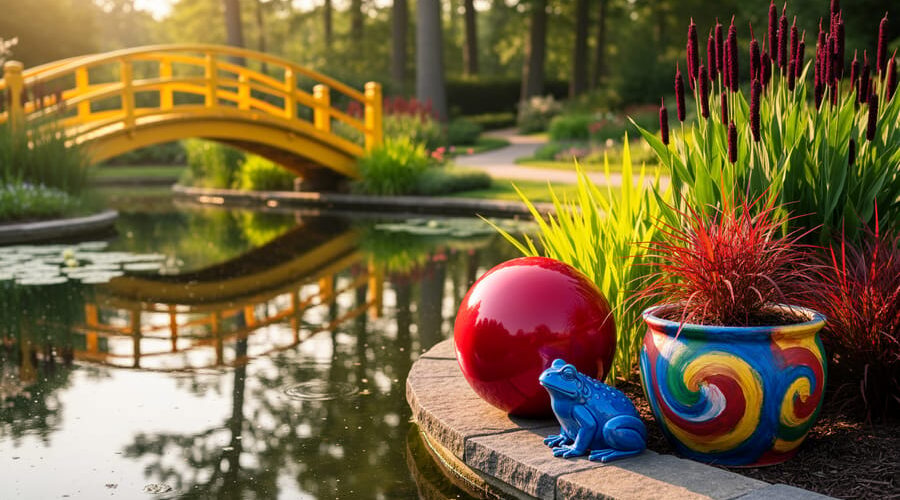
Transform your pond into a living canvas by borrowing bold color choices and emotional energy from expressionist painters. Select ornaments in unexpected hues—deep crimson gazing balls, cobalt blue ceramic frogs, or sunshine-yellow bridge accents—that mirror the vibrant, non-naturalistic palettes expressionists used to convey feeling over realism. Position these statement pieces where sunlight catches them, creating dramatic focal points that shift the mood of your entire water feature from serene to exhilarating.
Layer plants with the same fearless approach expressionists applied to brushstrokes. Combine scarlet Japanese blood grass with chartreuse sweet flag and deep purple pickerelweed in arrangements that clash intentionally, generating visual tension and excitement rather than matchy-matchy harmony. Think of each plant cluster as a bold stroke of color applied with confidence, not caution.
The connection between watercolor art and water gardens runs deeper than aesthetics alone—both mediums celebrate fluid movement, light reflection, and spontaneous beauty. Expressionist watercolorists embraced unpredictability, letting pigments bleed and merge in ways they couldn’t fully control, which perfectly mirrors how water gardens evolve with weather, seasons, and natural growth patterns you can guide but never dominate.
Create DIY ornaments using weatherproof paints in expressionist style—swirling gestural marks across stepping stones, painting emotional color fields on planters, or adding abstract patterns to fountain bowls. Your goal is capturing mood and movement rather than realistic representation, making your pond space feel like an outdoor art installation that reflects your personal creative vision.
What Expressionist Watercolors Can Teach Your Water Garden
Bold Color Splashes in Your Pond
Expressionist painters weren’t afraid of color—they wielded it like emotion on canvas. Think of Kandinsky’s explosive blues against fiery oranges, or the bold yellows that seem to dance across expressionist works. You can channel this same fearless approach when you transform your water garden into a living masterpiece.
Start with fish selections that create visual tension. Pair golden koi with midnight-black varieties, or choose bright orange goldfish to contrast against deep green water plants. The effect is immediate and dramatic, just like those striking expressionist palettes.
Your plant choices offer another opportunity for color drama. Consider red-stemmed cardinal flowers alongside electric yellow irises, or purple pickerel rush set against lime-green sweet flag. Don’t worry about being too matchy-matchy—expressionism celebrates contrast and emotional impact over harmony.
Garden ornaments provide your finishing touches. A cobalt blue gazing ball catches sunlight differently throughout the day, while a rust-orange sculpture creates warmth against cool water tones. I learned this lesson when I added a bright yellow ceramic pot to my pond edge—it transformed the entire space from pleasant to powerful, proving that bold color choices really do make waves.
Embracing Natural Flow and Movement
Just like watercolor paint naturally bleeds and flows across paper, water in your garden has its own beautiful, unpredictable movement. When I designed my first fountain, I spent an entire afternoon just watching how water tumbled over different arrangements of rocks. That’s when I realized that embracing natural flow creates the most captivating effects.
Think about how expressionist painters let their watercolors pool and drift. You can mirror this approach when positioning your fountain or designing a small stream. Instead of forcing water into rigid channels, work with gravity and natural contours. Place larger stones asymmetrically to create spontaneous splashes and unexpected ripples, just like bold brushstrokes on canvas.
The ripples themselves become art. A gentle fountain creates concentric circles that expand outward like layers of translucent paint. A bubbling rock feature produces chaotic, energetic patterns. Even a simple spitter can send wavelets dancing across your pond surface.
Don’t overthink it. Start with one water feature and observe how it moves throughout the day. Notice where ripples intersect, where reflections shimmer, where movement draws your eye. Let the water guide your design choices, and you’ll create something authentically expressive.
Choosing Ornaments with Expressionist Flair
Sculptures and Statuary That Make a Statement
Sculptures bring that dynamic, three-dimensional quality to your water garden that mirrors the layered depth of expressionist paintings. I’ve found that choosing the right statuary can completely transform your pond from pretty to powerful.
Look for pieces with flowing, organic shapes rather than rigid classical forms. Think abstract herons with exaggerated curves, or modern metal sculptures that seem to dance in the breeze. The best choices echo those gestural brushstrokes we love in expressionist art. I once discovered a copper fish sculpture with hammered textures that caught the light differently throughout the day, creating ever-changing reflections on the water’s surface.
Color matters tremendously here. Skip the standard gray concrete and embrace sculptures with bold patinas—verdigris greens, rust oranges, deep blues. Many artists now create resin pieces with hand-painted finishes that literally look like frozen watercolor washes. These weather beautifully and maintain their vibrancy through seasons.
Scale is your friend too. Don’t be timid! A single dramatic sculpture makes more impact than several small ones. Position your statement piece where it interacts with the water, perhaps partially submerged or positioned to cast interesting reflections. This creates that emotional punch expressionist art is known for, turning your pond into a genuine outdoor gallery.
Colorful Ceramic and Glass Features
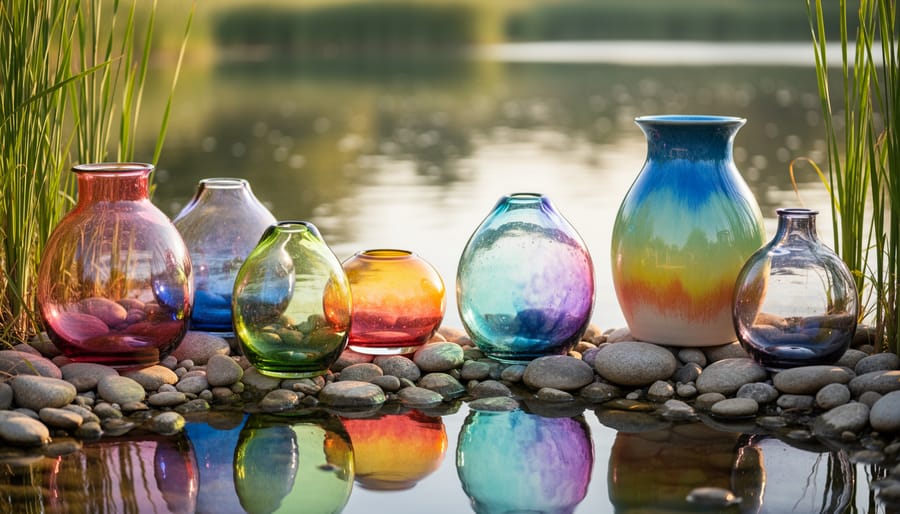
One of my favorite discoveries in pond design was finding how beautifully hand-painted ceramics capture that dreamy watercolor aesthetic right at the water’s edge. Think about placing a turquoise-glazed pottery piece near your pond—the way glazes pool and blend during firing creates those same soft color transitions you see in expressionist paintings.
Blown glass floats are absolutely magical for this style. I remember adding cobalt blue glass fishing floats to my own pond, and the way sunlight passed through them created shimmering, translucent effects that reminded me of watercolor washes on wet paper. You can nestle these among your marginal plants or let them float on the water surface for ever-changing reflections.
Look for ceramic garden spheres with multiple color glazes that have run together during the kiln process. These pieces naturally embody watercolor’s spontaneous, flowing character. Artisan pottery with drip glazes in sunset oranges, deep purples, or ocean blues works wonderfully too. The key is choosing pieces where colors blend rather than sitting in hard-edged blocks. Place them strategically where they’ll catch light and create focal points that feel both artistic and completely at home in your water garden landscape.
Living Art: Koi as Swimming Brushstrokes
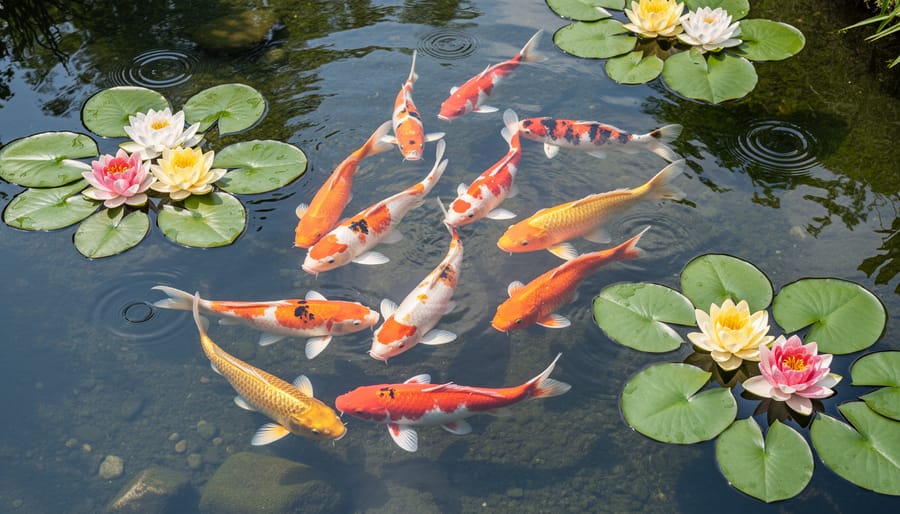
Think of your koi and goldfish as living paintbrushes gliding through your pond’s canvas. When planning your koi pond design, choose varieties that capture that spontaneous watercolor energy. Showa koi, with their dramatic black, red, and white splashes, create bold abstract compositions as they move. Sanke varieties offer softer color transitions that blend like wet-on-wet painting techniques. For a more impressionistic feel, try metallic Ogon koi whose reflective scales catch light like shimmering watercolor washes.
Butterfly koi add an extra dimension with flowing fins that trail behind them like brushstrokes in motion. Calico goldfish bring speckled, dabbed color patterns reminiscent of pointillist techniques. I’ve watched my own Hariwake koi create mesmerizing orange-and-white patterns that shift and reform with every movement, exactly like watching paint bloom across wet paper. The magic happens when these fish swim together, creating an ever-changing masterpiece that no static art could replicate.
Planting Your Palette: Flora That Mirrors the Canvas
Water Lilies and Lotus: Your Floating Masterpieces
If you want your pond to truly capture that bold expressionist spirit, water lilies and lotus flowers are your living paintbrushes! These floating beauties naturally deliver those vivid splashes of color that make expressionist art so captivating.
Think beyond the classic white water lily. Instead, choose varieties like the fiery red ‘Attraction’ water lily or the sunset-yellow ‘Chromatella’ that practically glow against the water’s surface. For lotus lovers, ‘Momo Botan’ offers deep rose-pink blooms that look hand-painted by nature itself.
Here’s my favorite trick: plant these vibrant varieties in groupings of three or five rather than scattering them randomly. This creates those bold color blocks that expressionist painters loved, giving your pond deliberate visual punch. I learned this after years of dotting single plants everywhere and wondering why my pond felt busy instead of bold!
The magic happens when sunlight hits those colorful petals floating on the water. They cast colored reflections below, creating this amazing double-image effect that would make any expressionist artist jealous. During morning and evening golden hours, the effect intensifies beautifully.
Mix hot pinks with sunshine yellows, or combine reds with orange-toned varieties for maximum drama and artistic impact.
Marginal Plants with Dramatic Impact
When I’m thinking about adding drama to my pond edges, I always turn to vertical accent plants that shoot upward like bold brushstrokes on a canvas. Just as Expressionist painters used intense vertical lines to create emotional impact, your pond’s marginal zone can become a gallery of striking color columns.
Japanese iris are my absolute favorites for this effect. These beauties send up sword-like foliage topped with stunning blooms in deep purples, bright whites, and electric blues. Plant them in clusters of three or five for maximum visual punch—the way they reflect in the water creates a doubled impact that mirrors the layered color technique in Expressionist works. They thrive in shallow water or consistently moist soil at the water’s edge.
Cardinal flower is another showstopper I always recommend. Those brilliant scarlet spikes rising two to three feet tall create an unforgettable accent against green foliage and blue water. Hummingbirds adore them too, adding living movement to your composition. Plant them where morning or late afternoon light can backlight the blooms—trust me, the effect is pure magic.
Don’t overlook yellow flag iris or pickerel rush either. Yellow flags bring sunshine-bright vertical interest, while pickerel rush offers softer purple spikes with heart-shaped leaves. The key is thinking about height variation and color contrast. Place your tallest vertical plants where they’ll be reflected in calm water, creating those dynamic vertical lines that give Expressionist watercolors their emotional power.
Creating Emotional Atmosphere Through Design
Lighting as Your Emotional Brushstroke
Lighting transforms your pond from a daytime delight into evening magic, and it’s your secret weapon for creating that moody, emotional quality expressionist painters adored. Think of your underwater lights as brushstrokes that paint from within. I’ll never forget the first time I installed warm amber LEDs beneath my water lilies at dusk—suddenly, my pond looked like a Kandinsky canvas come to life!
Start with underwater spotlights positioned beneath key features like waterfalls or sculptural elements. Cool blue lights create mysterious, contemplative moods, while warm amber and orange tones evoke the passionate energy found in artistic water features. The real drama happens at dusk when natural and artificial light mingle.
For landscape lighting, angle spotlights upward through ornamental grasses or behind bold foliage to cast dramatic shadows on nearby walls or fences. Layer different light temperatures—perhaps cool white highlighting your rocks while warm tones illuminate plants—to create depth and visual tension. Don’t illuminate everything; shadows are just as important as light in expressionist design. Experiment with dimmer switches to adjust intensity as evening deepens, letting your pond’s personality shift and evolve throughout the night.

Intentional Imperfection and Spontaneity
Here’s the beautiful secret about expressionist watercolor design in your pond: perfection isn’t the goal. In fact, those wonderfully wonky, slightly unbalanced arrangements often create the most captivating water gardens.
Think about it this way. When you watch watercolor paint bloom and spread across paper, it never flows in perfectly straight lines. Similarly, your pond shouldn’t feel like everything was measured with a ruler. Instead of arranging three stones in a perfectly symmetrical triangle, try placing them in an irregular cluster where one sits slightly forward, another leans back, and the third peeks out from behind.
This approach mirrors how nature actually works. Rivers don’t flow in straight channels, and wildflowers don’t grow in tidy rows. When you’re positioning rocks around your pond edge, resist the urge to space them evenly. Let some huddle together while others stand alone. Place a tall ornament off-center rather than dead-middle in your sightline.
The spontaneity comes in allowing happy accidents. Maybe that water lily drifted to an unexpected spot, or moss naturally colonized one side of your fountain. Don’t rush to “fix” these organic developments. Often, these unplanned moments create the most expressive, living quality in your water garden.
DIY Project: Creating Your Own Expressionist-Inspired Pond Art
Ready to bring that expressionist watercolor magic to your pond? This DIY project is easier than you think and creates stunning, one-of-a-kind accents for your water garden. I remember the first time I painted rocks for my pond—it felt intimidating at first, but once I started playing with colors and letting them blend, I was completely hooked!
Let’s start with materials. Gather smooth river rocks, unglazed ceramic pots, or concrete stepping stones—whatever speaks to you. You’ll need outdoor acrylic paints in bold, vibrant colors (think deep purples, brilliant oranges, and electric blues), a spray bottle filled with water, several brushes in different sizes, and a clear outdoor sealer to protect your finished pieces.
Here’s the fun part: Apply your first color directly to your dry surface in loose, expressive strokes. Don’t worry about perfection—expressionism celebrates emotion over precision! While the paint is still wet, quickly add a second contrasting color nearby. Now grab that spray bottle and lightly mist the painted area. Watch the colors blend and dance together, creating those dreamy watercolor effects.
Continue layering colors, allowing some areas to dry while others stay wet. This creates depth and visual interest. Try bold brush strokes, drips, and unexpected color combinations. Remember, there’s no wrong way to do this—you’re channeling that expressionist spirit!
Once completely dry, apply two coats of outdoor sealer, letting each coat dry thoroughly. Position your finished pieces around your pond where they’ll catch the light and complement the natural water reflections. The beauty of these pieces is that they’re uniquely yours, bringing personalized artistry to your water garden sanctuary.
Your pond is more than just water and plants—it’s a canvas waiting for your personal artistic vision. By embracing expressionist watercolor principles, you’ve learned how bold color choices, fluid movement, and emotional resonance can transform an ordinary water feature into your own outdoor gallery. Whether you’ve chosen vibrant koi that dance like brushstrokes, positioned ornaments that capture spontaneous energy, or planted bold flowers that bleed color across the water’s surface, you’re creating something uniquely yours.
The beauty of this approach is that there’s no wrong way to express yourself. Trust your instincts when selecting colors that speak to you, embrace the unexpected ways light plays across your pond throughout the day, and don’t be afraid to experiment. Your water garden should make you feel something every time you look at it.
Remember, keeping your artistic vision alive does require ongoing attention. Regular maintenance—trimming plants to preserve your color palette, cleaning ornaments to maintain their visual impact, and adjusting elements seasonally—ensures your expressionist masterpiece continues to evolve and inspire. Just as watercolor artists revisit and refine their work, your pond will flourish when you tend it with both practical care and creative passion.