
How to Build a Water Garden That Thrives in Any Climate
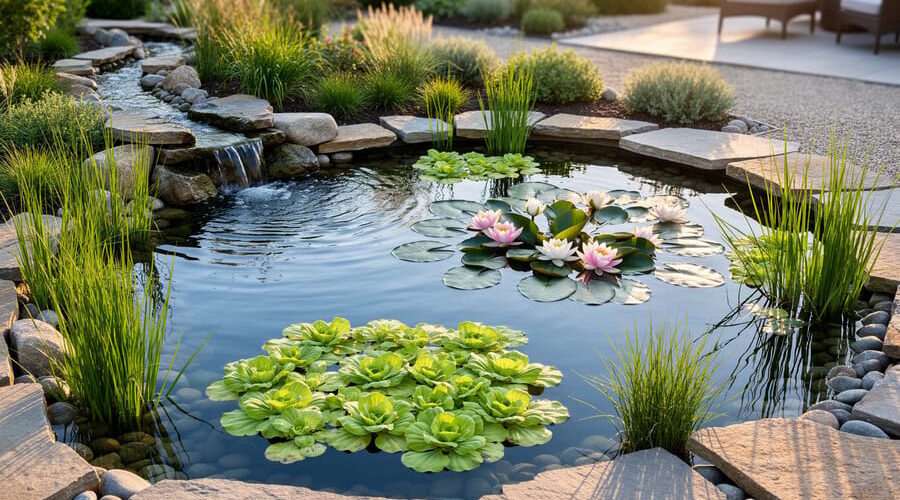
Layer your water garden with plants at different depths to create a self-sustaining ecosystem that naturally reduces evaporation and maintenance. Position deep-water plants like water lilies in the center at 18-24 inches, marginal plants along edges at 2-6 inches, and floating plants on the surface to shade 40-60% of the water. This collaborative approach mimics natural ponds where plants work together to keep water cool, clear, and oxygen-rich while using less water than traditional landscaping.
Choose plants that share similar water and light requirements within each zone to minimize waste and simplify care. Pair aggressive growers with equally vigorous companions rather than mixing delicate species with bullies that will dominate resources. Hardy native plants adapted to your local rainfall patterns require less supplemental watering once established and provide critical habitat for beneficial insects, frogs, and dragonflies that control pests naturally.
Install a recirculating pump to move water between levels, reducing stagnation while preventing the water loss that occurs with traditional fountains that spray into the air. The gentle movement aerates your pond without the evaporation penalty, and the sound masks neighborhood noise just as effectively. During hot months, top off your water garden in early morning or evening when temperatures are cooler to minimize immediate evaporation losses.
Start small with a container water garden to test plant combinations and understand maintenance rhythms before committing to larger installations. Even a half-barrel pond teaches valuable lessons about balancing plant density, managing algae, and observing which species thrive in your specific microclimate.
Understanding Water-Wise Principles for Your Water Garden
Why Plant Collaboration Matters
Think of your water garden as a team sport—each player has a unique position, and when they work together, magic happens! In a thriving pond ecosystem, different plant types collaborate to create a naturally balanced environment that practically takes care of itself.
Let me break down the dream team for you. Oxygenators are your underwater workhorses, plants like hornwort and anacharis that live submerged and pump oxygen into the water while absorbing excess nutrients that algae would otherwise feast on. They’re like your pond’s personal cleaning crew, working 24/7 beneath the surface.
Floaters, such as water lettuce and duckweed, shade the water’s surface and dramatically slow evaporation—crucial for water conservation. I’ve seen ponds lose up to 30% less water just by adding adequate floating coverage. They also starve algae of sunlight, keeping your water crystal clear.
Marginal plants like rushes and pickerel weed grow along the edges, filtering runoff before it enters your pond and providing habitat for beneficial insects and wildlife. Their root systems stabilize pond edges while adding vertical interest.
When these three plant groups work in harmony, they create what I call a “living filter system” that naturally regulates water chemistry, reduces maintenance, and conserves water far better than mechanical solutions alone. Pair this plant collaboration with water-efficient garden technology, and you’ve got an ecosystem that’s both beautiful and remarkably self-sustaining.
Zoning Your Water Garden by Depth and Sunlight
The Five Water Garden Zones
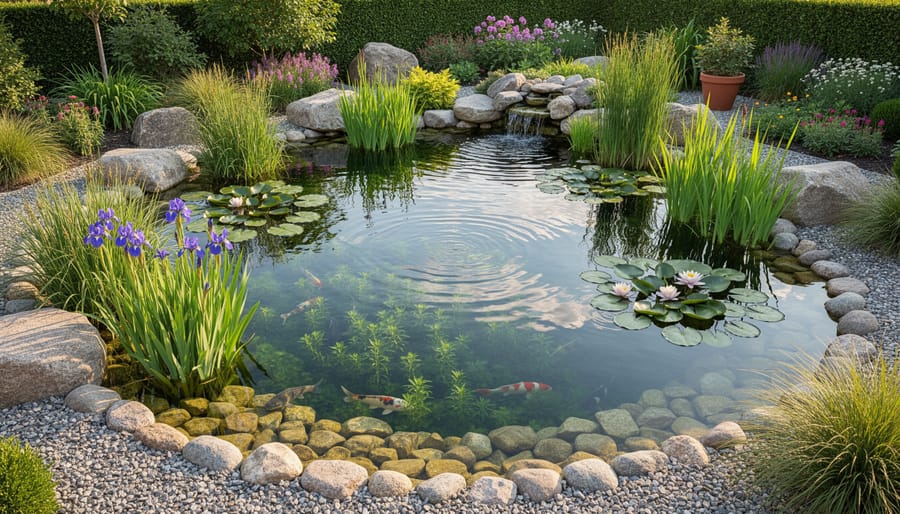
Understanding your pond’s natural zones is like reading a roadmap—it guides you to place the right plants in the right spots for a thriving, water-wise ecosystem. I learned this the hard way when I first tried cramming water lilies into the shallow edges of my pond, only to watch them struggle! Let me walk you through the five distinct zones, so you can avoid my beginner mistakes.
The bog or marginal zone sits at the pond’s edge, with water depths from 0 to 6 inches. This transition area between land and water stays consistently moist and is perfect for plants that love wet feet but also need some exposure to air. Think of it as your pond’s welcoming entrance.
Moving deeper, the shallow shelf zone ranges from 6 to 12 inches deep. This zone creates a gentle stepping-stone between shallow and deep areas, providing ideal conditions for many popular marginal plants that appreciate a bit more submersion. It’s often the busiest zone in terms of plant diversity.
The medium depth zone, at 12 to 18 inches, is where you’ll find the sweet spot for many aquatic plants. Water temperatures here remain more stable than in shallower areas, which makes it perfect for plants that need consistent conditions without extreme fluctuations.
The deep water zone extends from 18 inches to 3 feet or more. This is your pond’s anchor—the area that maintains the most stable temperatures year-round and provides crucial habitat for fish during hot summers and cold winters. This zone also houses your most dramatic specimens.
Finally, the floating zone exists at the water’s surface across all depths. These free-floating plants don’t need soil and drift wherever the breeze takes them, providing crucial shade that reduces algae growth and evaporation—making them essential for water-wise success.
Understanding these zones helps you create balanced plant combinations for every zone, ensuring each plant thrives exactly where nature intended it to grow.
Selecting Plants That Work Together
Deep Water Champions
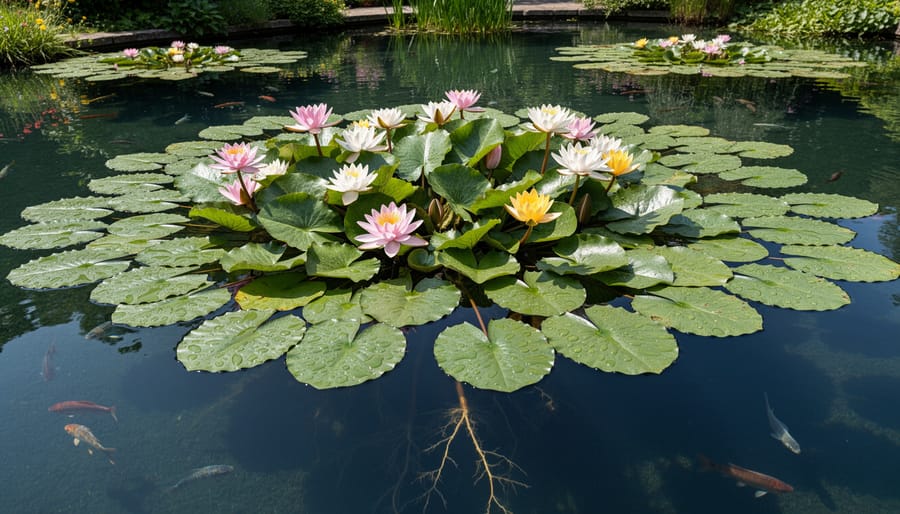
Think of deep-water plants as the foundation of your water garden ecosystem. These beauties root in soil at the bottom of your pond, sending leaves and flowers to float majestically on the surface. They’re not just gorgeous to look at—they’re working hard behind the scenes to keep your water garden healthy and water-wise.
Water lilies are the superstars here, and you’ll want to know about the two main types. Hardy water lilies can handle freezing temperatures and come back year after year in most climates. I absolutely love Nymphaea ‘Attraction’ with its deep red blooms—it’s been thriving in my zone 5 pond for years. Tropical water lilies, on the other hand, offer stunning colors and often bloom at night, but they need warmer water and won’t survive winter in cold regions unless you bring them indoors.
Lotus plants deserve special mention. These ancient beauties hold their spectacular blooms high above the water and have leaves that repel water in the most fascinating way. They’re surprisingly hardy once established, though they do need a larger space than water lilies—think of them as the statement piece of your water garden.
Here’s why these plants are water-wise champions: their broad leaves create natural shade that dramatically reduces evaporation, sometimes by up to 50 percent during hot summer months. That shade also keeps water temperatures cooler, which means less algae growth and happier fish. Plus, their root systems absorb excess nutrients that would otherwise fuel unwanted algae blooms.
When choosing varieties, match them to your pond depth. Dwarf water lilies thrive in just 6-12 inches of water, perfect for container water gardens, while standard varieties prefer 18-36 inches. This thoughtful placement ensures each plant gets exactly what it needs without wasting resources.
Oxygenators: The Invisible Workers
Think of submerged plants as your pond’s cleaning crew working around the clock beneath the surface. These underwater champions like hornwort, anacharis, and parrot’s feather might not be showstoppers, but they’re absolutely essential for a healthy water garden.
Here’s what makes them so valuable: they absorb excess nutrients that would otherwise fuel algae growth, constantly release oxygen into the water (which your fish will thank you for), and provide cozy hiding spots for fish and beneficial bacteria. I learned this the hard way when my first pond turned pea-soup green because I skipped adding submerged plants. Once I added a few bunches of anacharis, the water cleared up within weeks.
The key is finding the right balance. A good rule of thumb is one bunch of submerged plants for every two square feet of pond surface. For a 100-gallon pond, start with about 5-6 bunches. You can always add more, but going overboard can crowd your pond and actually reduce oxygen at night when plants switch from producing to consuming it.
These plants are incredibly low-maintenance too. Simply anchor bunches with small weights or tuck them into gravel. They’ll grow happily without soil, drawing all their nutrients directly from the water. Trim them back when they get too enthusiastic, and you’ll have a naturally balanced, crystal-clear pond that practically takes care of itself.
Marginal Plants for Edges and Shelves
The edges and shelves of your water garden are prime real estate for marginal plants that work incredibly hard for you. These shallow-water heroes do triple duty by filtering nutrients from the water, holding soil in place to prevent erosion, and creating those gorgeous natural transitions between water and land. Think of them as your pond’s cleanup crew and design team rolled into one.
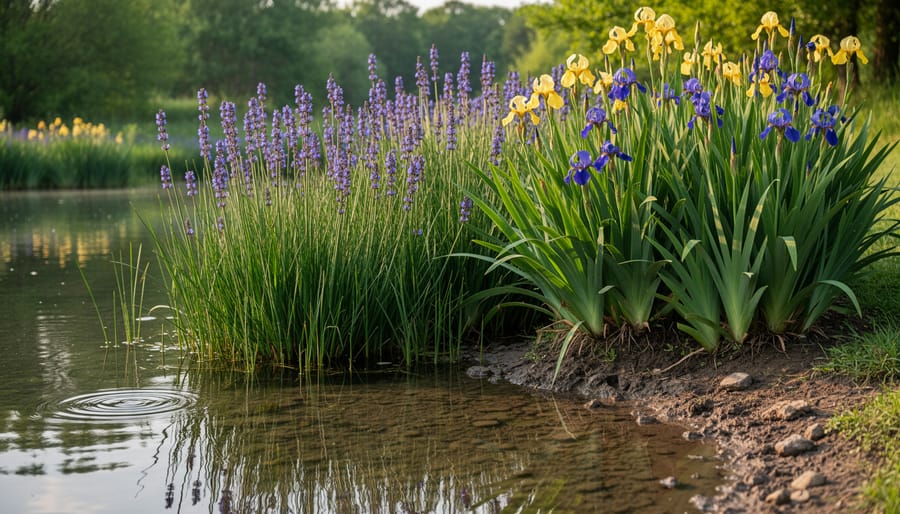
Cattails are the workhorses of marginal plants, sending their distinctive brown seed heads skyward while their roots filter excess nutrients. Just be warned, they’re enthusiastic spreaders! I learned this the hard way when my first cattail planting took over half my pond edge in two seasons. Now I grow them in submerged containers to keep them in check. Water irises bring stunning spring blooms in purples, yellows, and whites while providing excellent filtration. Japanese iris and Louisiana iris are particularly well-suited for shallow shelves.
Pickerel rush deserves a spot in every water garden with its glossy heart-shaped leaves and pretty purple flower spikes that butterflies adore. It’s a much more polite grower than cattails, staying in manageable clumps. For textural interest, try adding arrowhead with its distinctive arrow-shaped foliage or sweet flag with its grass-like leaves that release a wonderful scent when brushed.
When planning your marginal zone, consider creating multicolor plant combinations by grouping plants with different bloom times and foliage colors. To control aggressive spreaders, plant them in fabric nursery pots before submerging, which confines roots while allowing water exchange. Check plants twice yearly and divide vigorous growers as needed. Position taller plants like cattails toward the back and shorter varieties toward the front to create natural depth and viewing angles.
Strategic Floaters
Floating plants are your secret weapon for keeping water temperatures down and reducing evaporation—sometimes by up to 50 percent! I learned this the hard way during my first summer with a pond, watching the water level drop daily until I added some strategic floaters.
Water lettuce and water hyacinth are the showstoppers of the floating world, with gorgeous rosette shapes and trailing roots that fish absolutely love. They create instant shade and help filter the water as a bonus. The catch? In warm climates, they reproduce faster than you can say “water garden,” so you’ll need to scoop out extras weekly during growing season. Think of it as a pleasant excuse to spend more time pondside.
Duckweed is the minimalist’s choice—tiny, efficient, and incredibly effective at covering water surface. A little goes a long way, though. I recommend starting with just a handful and watching it spread. If it gets too enthusiastic, simply net out what you don’t want and add it to your compost pile.
Climate matters tremendously here. In zones 9-11, water hyacinth and water lettuce can become invasive, so check your local regulations before introducing them. In cooler zones, they’ll die back in winter, which actually provides natural population control.
Management tip: Aim for 40-60 percent surface coverage. This sweet spot provides shade and reduces evaporation while still allowing oxygen exchange and giving you glimpses of your fish. Use a pool skimmer for easy weekly maintenance, removing excess plants before they become overwhelming.
Climate-Specific Plant Combinations That Save Water
Hot and Dry Climates
If you’re gardening in hot, dry regions like the Southwest or Mediterranean zones, creating a water-wise garden means working smart with nature’s rhythms. The secret? Think of your plants as a community where taller species provide shade for smaller ones, reducing overall water loss through evaporation.
Start by positioning heat-loving ornamental grasses like Mexican feathergrass or fountain grass as your backbone plants. These tough customers create natural shade pockets while needing minimal irrigation once established. Beneath them, cluster drought-tolerant groundcovers like trailing rosemary or creeping thyme. This layering approach mimics how plants naturally grow in arid regions, and honestly, it’s been a game-changer in my own desert garden.
For poolside or near water features, consider pairing silver-leafed plants together. Lavender, artemisia, and santolina not only reflect heat but their light-colored foliage actually creates a cooling visual effect. Add some structural drama with agave or yucca, spacing them strategically to cast afternoon shadows over more delicate plants.
Mediterranean favorites like oleander, lantana, and bougainvillea thrive in scorching conditions while offering brilliant color. Group them on your garden’s sunniest side where they’ll shield moisture-loving plants positioned closer to your pond’s edge.
Here’s a practical tip: mulch heavily between plant groupings with decomposed granite or gravel. This reduces soil temperature by up to 20 degrees and cuts evaporation dramatically. Your plants will thank you, and your water bill definitely will too. Remember, successful hot-climate gardening isn’t about fighting the heat but embracing it through clever companion planting.
Cold Climate Water Gardens
Creating a thriving water garden in cold climates requires thinking ahead and choosing plants that can handle freezing temperatures without missing a beat. I learned this the hard way after losing several beautiful water lilies during my first Minnesota winter!
Start with hardy plants that naturally survive in zones 3-7. Native cattails, water irises, and hardy water lilies are your best friends here. These champions have adapted to freeze-and-thaw cycles over thousands of years. The key is understanding that hardy doesn’t mean indestructible. Even tough plants need proper placement and winter preparation.
Position your most cold-sensitive plants in the deepest part of your pond, where water won’t freeze solid. I always place hardy water lilies at least 18 inches below the surface. The water acts as insulation, keeping roots safe even when ice forms on top.
Create protective plant communities by grouping species together. Tall grasses like rushes and sedges form natural windbreaks for lower-growing marginals. This collaborative approach reduces cold damage significantly. Think of it as plants huddling together for warmth.
Before winter arrives, trim back dead foliage but leave some vertical stems. They help oxygen exchange if ice forms and provide winter interest. Move tropical varieties indoors or treat them as annuals.
Consider adding native arrowhead, pickerel rush, and marsh marigold. These reliable performers bounce back year after year, creating a self-sustaining ecosystem that actually gets better with time. Your water-wise cold climate garden will reward your patience with increasing beauty each season.
Humid and Temperate Zones
If you’re gardening in a humid or temperate climate, you’ve got a head start with naturally moist conditions! The challenge here isn’t getting enough water to your pond plants, but rather managing that abundance wisely. I learned this lesson after my first rainy season when my water lettuce practically took over the entire surface in just three weeks.
In these regions, focus on spacing your plants thoughtfully to prevent overcrowding. Yes, those lily pads look sparse at first, but trust me, they’ll fill in faster than you expect. Aim to keep about 60% of your water surface clear to maintain proper oxygen levels and prevent that dreaded green-water algae bloom.
Choose native or well-behaved plants that won’t become invasive. Pickerel rush, cardinal flower, and native iris varieties are fantastic options that thrive without bullying their neighbors. Avoid aggressive spreaders like purple loosestrife or certain water hyacinth varieties that can quickly escape control.
Here’s a practical tip: create planting zones within your pond. Keep vigorous growers in contained baskets rather than planting directly in soil. This makes it easier to manage growth and prevents any single species from dominating your water garden ecosystem. Regular thinning every few weeks during peak growing season keeps everything balanced and beautiful.
Balancing Plants with Fish and Wildlife
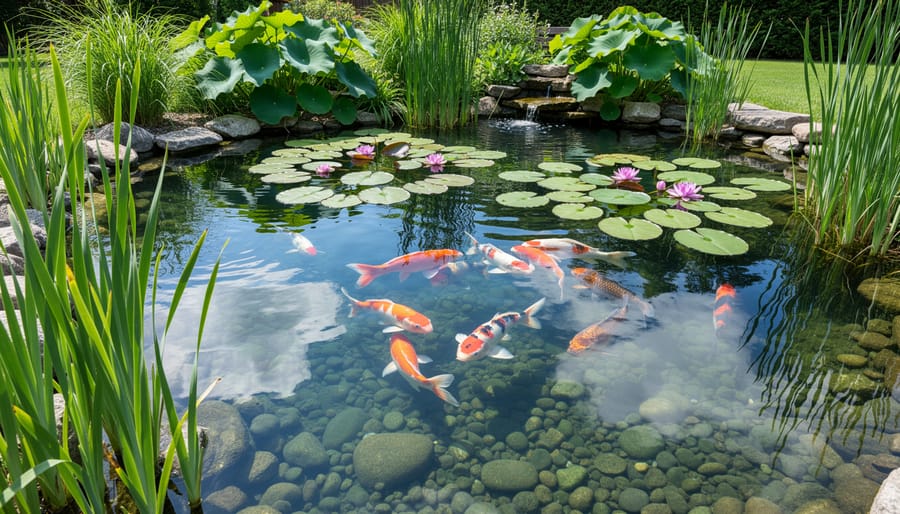
Creating a harmonious water garden means finding the sweet spot between your fish and your plants—they can be the best of friends or sworn enemies! I learned this the hard way when my enthusiastic koi demolished my beautiful water lilies in just one afternoon. Let me share what I’ve discovered about keeping everyone happy.
First, understand that koi and goldfish have different appetites. Koi are the garden goats of the pond world—they’ll nibble, uproot, and taste-test almost anything. Goldfish are gentler but still curious. The key is choosing plants that either taste unappetizing to fish or grow fast enough to handle occasional snacking.
Your best fish-proof choices include water lilies with established root systems (plant them in heavy clay pots at least 12 inches deep), lotus, cattails, and horsetail reed. These tough customers can withstand nibbling and provide shade that fish adore. Anacharis and hornwort are excellent submerged plants that fish enjoy grazing on without destroying—think of them as salad bars that regrow quickly.
Plants to avoid or protect include delicate floating plants like water lettuce and frogbit if you have large koi. They’ll shred these in minutes! Instead, create protected zones using plant baskets with gravel tops or dedicated plant shelves where smaller goldfish-friendly varieties can thrive.
For supporting beneficial wildlife, incorporate marginal plants like pickerel rush, iris, and marsh marigold. These create landing spots for dragonflies (nature’s mosquito patrol!) and shelter for frogs, while staying safely out of reach from your fish.
The secret is diversity. Mix tough, established plants with fast-growing varieties and create zones at different depths. Your fish get their greens, your plants get to flourish, and wildlife finds sanctuary—everyone wins in this balanced ecosystem approach.
Maintenance Tips for Water-Wise Success
Once your water-wise garden is established, the beauty is that it practically takes care of itself—but a little seasonal attention keeps everything thriving harmoniously. I’ve learned that the best maintenance strategy is gentle observation rather than aggressive intervention.
Spring is your action season. As water temperatures rise, trim back any winter-damaged foliage and divide overgrown marginal plants that have spread beyond their designated zones. I typically divide plants like irises and rushes every three to four years when I notice the centers becoming sparse or flowering declining. Simply lift the clump, pull or cut it into sections with healthy roots, and replant the vigorous outer portions. It’s incredibly satisfying and gives you extras to share with fellow pond enthusiasts!
Summer maintenance focuses on maintaining clear water while managing vigorous growth. Thin out floating plants if they cover more than two-thirds of the surface—your fish and submerged plants need light too. Remove spent flowers and yellowing leaves before they decompose in the water. This simple habit prevents nutrient buildup that fuels algae.
Autumn calls for cutting back deciduous plants before they drop leaves into the pond. I leave about six inches of stem above water level, which provides winter habitat for beneficial insects.
The minimal intervention approach means resisting the urge to fuss constantly. Let your plants find their balance naturally. If one species becomes overly dominant, simply thin it back rather than removing it entirely. Watch how different plants interact—sometimes an aggressive grower actually helps shade out algae or provides shelter for shy fish. Trust the ecosystem you’ve created, and adjust only when truly necessary.
Ready to start your water-wise journey? Here’s the exciting part: you don’t need to transform your entire water garden overnight. Begin with just a few collaborative plant groups that thrive in your climate zone. Maybe start with a single marginal shelf featuring native iris and rushes, or try a floating plant community with water lettuce and dwarf water lilies. As these plants settle in and begin working together, you’ll notice something wonderful happening.
Your garden will actually become easier to care for as time goes on. Established plants develop root systems that filter naturally, shade out algae, and create hiding spots for beneficial wildlife. The balance they create means less intervention from you and more time simply enjoying your peaceful water feature.
Don’t be afraid to experiment a little. Every pond has its own personality shaped by sunlight patterns, local wildlife, and water chemistry. Keep a simple journal noting what thrives and what struggles in your specific conditions. Some plants might surprise you with vigorous growth, while others may need a different spot or companion.
The beauty of water-wise gardening is that nature does most of the heavy lifting once you’ve set the stage. Trust the process, observe closely, and let your collaborative plant communities show you what works best in your unique backyard ecosystem.