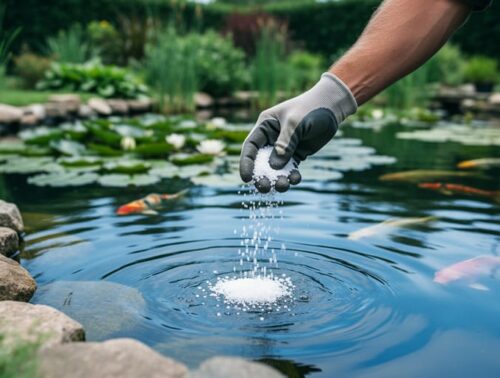
Why Your Pond Turns Green (And What’s Really Causing Those Toxic Algal Blooms)

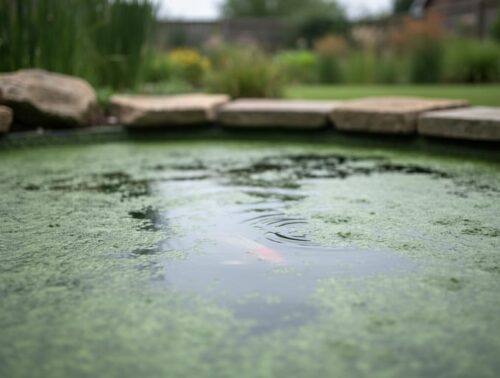
You’ve just walked out to check on your beautiful backyard pond, only to find the water has transformed into a thick, murky green soup practically overnight. That shocking moment when crystal-clear water turns into what looks like pea soup isn’t just an aesthetic nightmare—it’s a toxic algal bloom, and understanding what triggers it is your first step toward prevention.
Toxic algal blooms happen when microscopic algae explode in population, releasing harmful toxins that can sicken wildlife, pets, and even humans. While a small amount of algae is normal in any healthy pond ecosystem, certain conditions create the …

Read more Why Your Pond Turns Green (And What’s Really Causing Those Toxic Algal Blooms)

Why Your Pond Fish Are Gasping (And How Diffusers Fix It)

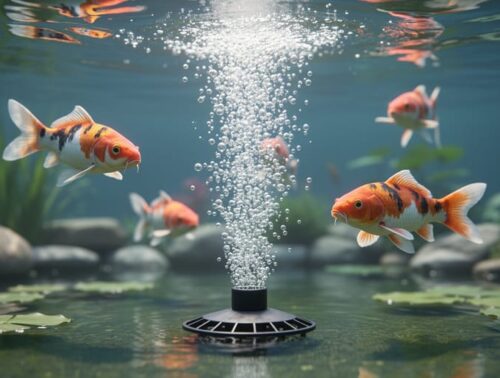
Your pond’s murky water, gasping fish, and stubborn algae blooms often point to one invisible culprit: low dissolved oxygen. Without adequate oxygen circulation, beneficial bacteria can’t break down organic waste, fish struggle to breathe, and your once-clear water turns into a cloudy, smelly problem that worsens with each passing week.
Pond aeration diffusers solve this by releasing tiny bubbles from the pond bottom, creating a continuous circulation pattern that oxygenates water throughout the entire water column. Unlike surface fountains that only aerate the top few inches, diffusers work from the bottom up, pushing …

Read more Why Your Pond Fish Are Gasping (And How Diffusers Fix It)

Why Your Backyard Pond Depends on Healthy Ocean Ecosystems

Look through the clear water of your backyard pond, and you’re witnessing the same delicate balance that sustains our vast oceans. The tiny ecosystem thriving in your water garden operates on identical principles as marine aquatic ecosystems—complex networks where every plant, fish, and microorganism plays a crucial role in maintaining water quality and supporting life.
Marine aquatic ecosystems face unprecedented challenges today, from pollution and temperature changes to habitat loss and nutrient imbalances. These aren’t distant problems affecting only oceanographers and marine biologists. The same forces threatening…

Read more Why Your Backyard Pond Depends on Healthy Ocean Ecosystems

Watch Your Pond Banks Crumble? Here’s How to Stop Shoreline Erosion for Good

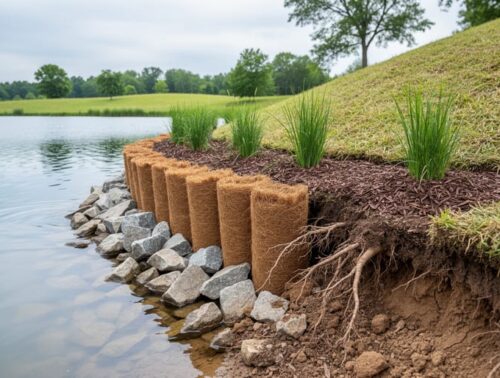
Watch for warning signs like crumbling banks, exposed tree roots, and muddy water after rain—these tell you erosion is already stealing your pond away, inch by inch. I learned this the hard way when a section of my own pond bank collapsed after a spring storm, taking ornamental grasses and several feet of shoreline with it. The good news? You can stop shoreline erosion and even reverse damage with the right combination of plants, materials, and techniques tailored to your specific situation.
The key is understanding that erosion happens when water movement, rainfall, and soil type work against unprotected banks. Waves lap away at …

Read more Watch Your Pond Banks Crumble? Here’s How to Stop Shoreline Erosion for Good

Why Potassium Turns Your Pond Into a Chemical Experiment (And How to Keep It Balanced)

Understanding why potassium behaves differently than other nutrients in your pond starts with a simple chemical equation: 2K + 2H₂O → 2KOH + H₂. This balanced equation reveals what happens when potassium metal contacts water, producing potassium hydroxide and hydrogen gas in a vigorous, sometimes explosive reaction.
Before you panic about adding potassium to your pond, know that the potassium in fertilizers and pond treatments exists as stable compounds, not pure metal. When potassium sulfate or potassium carbonate dissolves in your water garden, it simply breaks into harmless ions that plants absorb. The dramatic reaction …

Read more Why Potassium Turns Your Pond Into a Chemical Experiment (And How to Keep It Balanced)

How the Four Types of Biodiversity Keep Your Pond Alive and Thriving

Stand at the edge of your pond right now and count what you see: fish swimming, dragonflies hovering, plants swaying, maybe a frog hiding among the lily pads. Each living thing you’ve spotted represents one piece of a complex puzzle that determines whether your water garden thrives or struggles. Your pond’s biodiversity isn’t just about having lots of different creatures—it’s about understanding how four specific components work together to create a self-sustaining ecosystem that …

Read more How the Four Types of Biodiversity Keep Your Pond Alive and Thriving

Set It and Forget It: Your Pond’s Self-Maintaining Water Change System

Transform your pond maintenance routine from a weekly chore into a completely hands-free operation by installing a simple automatic water change system that works while you sleep. Picture this: crystal-clear water, healthy fish, and thriving plants without ever hauling another bucket or wrestling with hoses on Saturday mornings.
Your pond loses water daily through evaporation and fish waste constantly builds up harmful compounds, creating a maintenance treadmill that never stops. An automatic system solves both problems simultaneously by adding fresh water on a timer while removing old water through an overflow drain, exactly like …

Read more Set It and Forget It: Your Pond’s Self-Maintaining Water Change System

Why Your Pond Needs Living Filters (And How They Actually Work)

Your pond water looks murky, your fish are gasping at the surface, and you’re wondering why that expensive filter isn’t doing its job. The answer might surprise you: mechanical filtration alone won’t keep your pond healthy. You need an invisible army of beneficial bacteria working around the clock to break down fish waste, uneaten food, and decaying plant matter before they poison your water.
Biological filtration is nature’s own cleanup crew. Think of it as a miniature wastewater treatment plant right in your backyard. Beneficial bacteria colonize special filter media, converting toxic ammonia from fish …

Read more Why Your Pond Needs Living Filters (And How They Actually Work)

Why D.E. Filters Keep Your Pond Crystal Clear (Without Harsh Chemicals)

Consider diatomaceous earth filtration if you’re dreaming of crystal-clear pond water that looks like glass. This natural filtration method uses microscopic fossilized algae to trap particles as tiny as 3-5 microns, making it roughly three times more effective than traditional sand filters. Think of D.E. filters as the precision tools of pond keeping—they capture everything from free-floating algae cells to the finest debris that clouds your view of those gorgeous koi.
D.E. filters work by coating grids inside a pressure tank with diatomaceous earth powder, creating a filter bed that water passes through. As your pump pushes…

Read more Why D.E. Filters Keep Your Pond Crystal Clear (Without Harsh Chemicals)

Why Your Backyard Pond Needs the Same Care as a Natural Lake

Your pond is struggling because you’ve been fighting individual problems instead of supporting the whole system. Ecosystem-based management means working with nature’s interconnected web rather than against it, and it’s the difference between constantly battling algae blooms and enjoying a balanced, self-sustaining water feature.
Think of your pond like a neighborhood. You wouldn’t try to fix community problems by only focusing on one house while ignoring how residents interact with each other. Similarly, you can’t create lasting pond health by just treating symptoms like murky water or invasive plants…

Read more Why Your Backyard Pond Needs the Same Care as a Natural Lake