
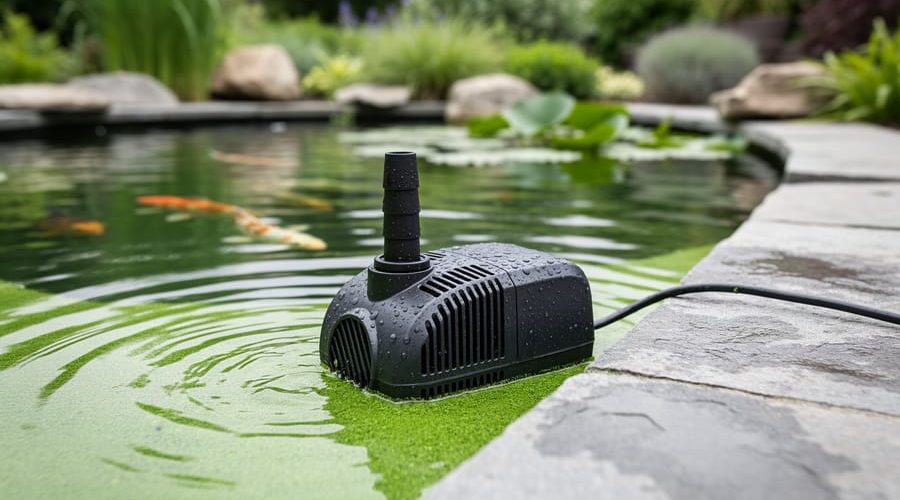
What Are Algal Bloom Solutions (and How Do They Restore Your Pond)?
Algal bloom solutions are treatments and management practices that remove or prevent excessive algae growth in ponds, using physical, biological, chemical, or mechanical methods to restore water clarity and ecosystem balance. When your pond turns pea-soup green or develops thick mats of string algae, you’re dealing with an algal bloom, and finding the right solution means understanding which method fits your pond’s size, the type of algae you’re fighting, and whether you have fish or plants to protect.
I’ve watched too many pond owners panic and dump in the first product they find, only to clear the algae but crash their pond’s oxygen levels or harm their koi. The truth is, algal bloom solutions work best when matched to your specific situation. A livestock pond with occasional blooms needs a different approach than a backyard water garden battling hair algae every spring.
This article walks you through what algal bloom solutions actually do, how each type works at the water chemistry level, and which methods pair well together for lasting results. You’ll learn to spot the difference between quick fixes and sustainable strategies, understand when to treat aggressively versus when to let beneficial bacteria do the heavy lifting, and avoid the mistakes that turn a simple algae problem into a full pond crisis. Whether you’re facing your first bloom or your fifth recurring episode, you’ll finish with a clear action plan tailored to your pond’s needs and your comfort level with hands-on maintenance.
What Algal Bloom Solutions Really Mean for Your Pond
Algal bloom solutions are the tools, treatments, and practices you use to bring excessive algae growth back under control and restore balance to your pond. They’re not about eliminating every trace of algae, a little algae is normal and even healthy. Instead, these solutions target the harmful blooms that cloud your water, choke out plants, and threaten fish by depleting oxygen overnight.
Here’s how to think about the key concepts:
- Algal bloom
- A rapid, excessive increase in algae population that visibly discolors water (green, brown, or blue-green scum) and disrupts pond ecology.
- Eutrophication
- The process where a pond becomes overly enriched with nutrients, leading to dense plant and algae growth that harms water quality.
- Nutrient loading
- The accumulation of nitrogen and phosphorus in pond water from fish waste, uneaten food, decaying leaves, or fertilizer runoff, the primary fuel for algae blooms.
- Beneficial vs. harmful algae
- Small amounts of algae support the food web and produce oxygen during the day, but dense blooms create toxic conditions, block sunlight, and crash oxygen levels at night.
Blooms happen when conditions align perfectly for algae: nutrients, sunlight, warm waters create an all-you-can-eat buffet. The most common trigger is nutrient overload when nitrogen and phosphorus levels spike from overfeeding fish, decomposing debris, or fertilizer washing in from surrounding gardens. Add strong sunlight and temperatures above 20°C, and algae can double their population in hours.
So what does ‘solution’ mean for you? It’s any approach that interrupts this cycle, cutting off the nutrient supply, blocking excess light, introducing natural competitors, or directly removing algae. Some solutions are preventive (keeping rising nutrient levels in check with proper feeding and filtration), while others are reactive (adding beneficial bacteria or using a UV clarifier during an active bloom). The most effective strategy combines both, treating the symptoms while addressing the root causes that let blooms take hold.
How Algal Bloom Solutions Work
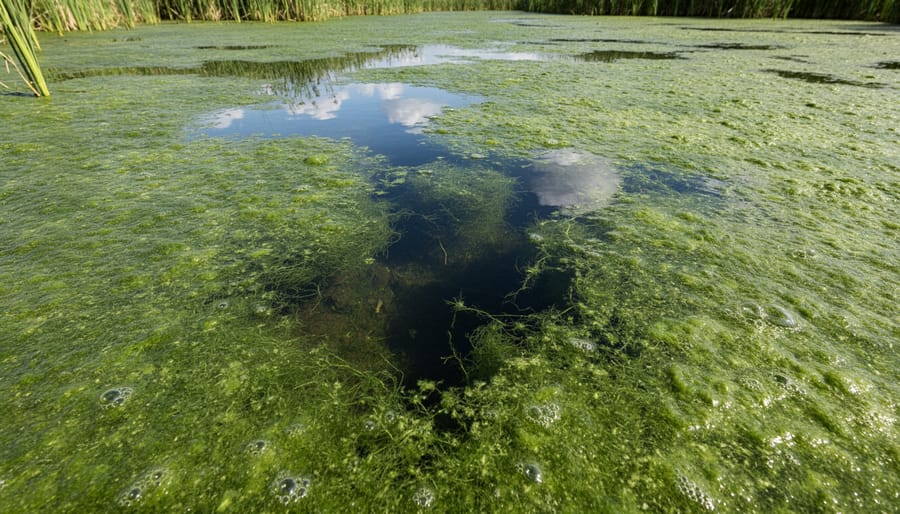
Nutrient Control Methods
Algae need nitrogen and phosphorus to grow, so cutting off their food supply is one of the most effective ways to regain control of your pond. When you remove these nutrients faster than they accumulate, algae simply can’t sustain a bloom.
Regular partial water changes dilute nutrient concentrations. Swapping out 10-15% of your pond water weekly during warm months physically removes dissolved nitrogen and phosphorus before algae can use them. Your filtration system plays a supporting role here, biological filters convert fish waste into less harmful compounds, while mechanical filters trap debris before it breaks down into nutrients.
Stopping nutrients at the source makes an even bigger difference. Most pond owners unknowingly feed their algae problem by overfeeding fish. Uneaten food sinks and decomposes, releasing nitrogen and phosphorus directly into the water. Feed only what your fish can consume in three to five minutes, once or twice daily.
Check for fertilizer runoff from surrounding lawns and gardens, too. Redirect drainage away from your pond, or create a buffer zone of plants that absorb nutrients before they reach the water. These simple adjustments address the root cause rather than just treating symptoms.
Light and Physical Barriers
Algae are sun-loving organisms. Cut their light supply, and you slow their growth dramatically. Shade is the simplest physical barrier, overhanging trees, pergolas, or strategically placed pond umbrellas can block direct sunlight for part of the day. Floating plants like water lettuce and water hyacinth create natural shade while absorbing excess nutrients, giving you a double benefit.
Pond dyes tint the water blue or black, filtering out the wavelengths algae use for photosynthesis. They’re harmless to fish and plants but remarkably effective at preventing green water blooms in full-sun ponds. Just remember, dyed water hides your fish from view.
UV clarifiers take a different approach. They don’t block light; they expose algae to ultraviolet radiation as water flows through the unit. This damages algae cells, causing them to clump together so your filter can remove them. UV clarifiers excel at clearing green water but won’t touch string algae clinging to rocks.
Biological and Chemical Interventions
Beneficial bacteria target the excess nutrients algae feed on, nitrogen and phosphorus, by breaking down organic waste like fish droppings, uneaten food, and decaying plant matter before algae can consume them. Added regularly as liquid or powder treatments, these microorganisms establish colonies in your filter media and substrate, essentially outcompeting algae for food.
Barley straw works differently. As it slowly decomposes in water, it releases compounds that interfere with algae cell formation, preventing new growth without harming existing pond life. It won’t clear green water overnight, but it stops blooms from building momentum when introduced early in spring.
Competitor plants, submerged oxygenators like hornwort and anacharis, absorb dissolved nutrients directly through their leaves, starving algae of resources while releasing oxygen that supports fish and beneficial bacteria. Fast-growing floaters like water lettuce provide similar nutrient uptake plus shade.
Algaecides offer the fastest algae kill but come with trade-offs. These chemical treatments rupture algae cells within days, clearing cloudy water quickly. However, dying algae consume oxygen as they decay, potentially stressing fish. Use algaecides sparingly, with adequate aeration, and only when natural methods can’t keep pace with severe blooms.
Types of Algal Bloom Solutions You Can Use
Preventive Practices
The smartest way to prevent algal bloom is to stop it before it starts. Prevention beats intervention every time, and it’s cheaper, easier, and kinder to your pond ecosystem.
Start with thoughtful stocking. One inch of fish per ten gallons of water is a rough guideline; overcrowded ponds produce excess waste that feeds algae. Feed sparingly, too. Give fish only what they’ll eat in five minutes, once or twice daily. Uneaten food and overfeeding spike nutrient levels fast.
Keep debris out. Net falling leaves in autumn, skim off floating grass clippings, and clear dead plant material promptly. Organic matter decaying on the bottom releases nitrogen and phosphorus, algae’s favourite meals.
Manage runoff. Position your pond away from lawn fertilizer zones, or create a planted buffer strip to absorb nutrients before they reach the water. Slope the surrounding ground away from the pond if possible.
Incorporate plenty of aquatic plants. Submerged oxygenators and floating species compete directly with algae for nutrients and sunlight, starving blooms before they gain a foothold. A well-planted pond naturally stays clearer, healthier, and more balanced year-round.
Natural and Biological Controls
Natural solutions work with your pond’s ecosystem rather than against it. Beneficial bacteria products contain strains that consume the same nutrients algae need, starving blooms while breaking down organic debris. These bacteria colonize filter media and pond surfaces, establishing a living defense system that works continuously once established.
Barley straw extract releases compounds as it decomposes that inhibit algae cell growth without harming fish or plants. You can use liquid extract for faster results or traditional barley straw bales for slow-release control throughout the season. The effect isn’t instant, expect two to three weeks before you notice clearer water.
Aquatic plants act as nutrient sponges. Submerged oxygenators like hornwort and anacharis absorb dissolved nutrients directly from the water column, competing directly with algae. Floating plants such as water lettuce and water hyacinth block sunlight while their roots filter nutrients. A well-planted pond naturally resists blooms because established plants claim resources first, leaving algae with scraps.
Mechanical and Physical Solutions
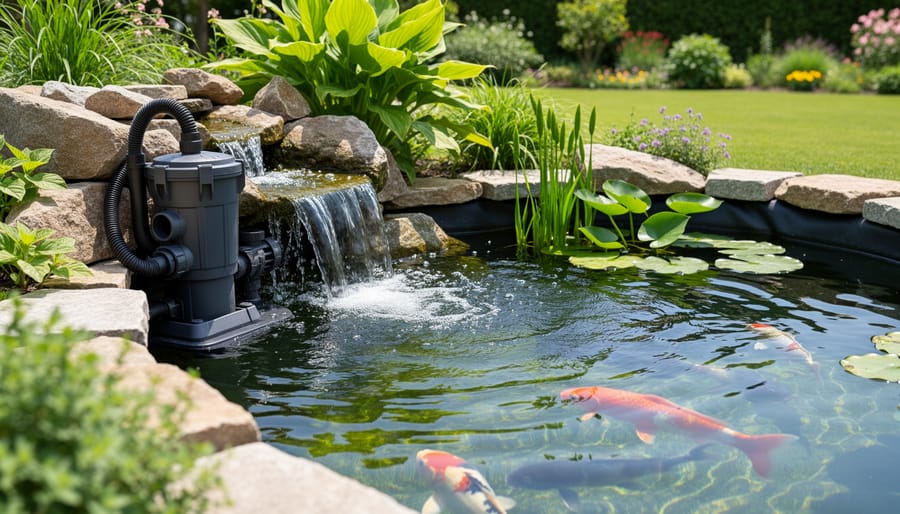
Mechanical tools tackle algae by physically disrupting conditions that allow blooms to thrive. Aeration systems pump oxygen into your pond, breaking up stagnant zones where algae love to settle and creating water movement that makes it harder for suspended algae to take hold. Pond skimmers continuously pull floating debris and surface algae into your filtration system before they decompose and feed new growth.
UV sterilizers shine ultraviolet light on water flowing through your filter, rupturing algae cells as they pass through, highly effective against green water blooms that cloud your pond. Upgrading your filtration system, especially adding biological filter media, boosts your pond’s ability to process waste nutrients before algae can claim them.
Manual removal remains surprisingly useful: skimming string algae with a net or toilet brush, vacuuming muck from the bottom, and physically pulling out algae clumps gives you immediate results. Yes, it’s hands-on work, but it removes the problem directly rather than waiting for treatments to take effect. Combine these mechanical approaches with preventive care and you’ll see clearer water faster.
Chemical Treatments
Chemical treatments offer quick intervention when algae overwhelms your pond, but they’re best reserved for severe blooms that haven’t responded to gentler methods.
Algaecides kill algae cells directly, providing rapid clearing within days. Choose copper-based formulas carefully, they work well but can stress fish in soft water or harm invertebrates. Follow dosing instructions precisely, and never treat the entire pond at once if your bloom is heavy. Treat half, wait 48 hours, then treat the remainder to avoid oxygen crashes from decaying algae.
Flocculants clump suspended algae particles together so they sink or get filtered out. They clarify green water without killing organisms, making them safer for established ponds. You’ll still need to remove the settled debris manually.
Pond dyes block sunlight penetration, preventing new algae growth without harming existing pond life. They’re excellent for prevention after you’ve cleared a bloom, though they won’t eliminate algae already present.
Whatever you choose, treat chemical solutions as temporary rescue tools, not permanent fixes. Test your water before and after treatment, run aeration continuously, and tackle the underlying nutrient problem simultaneously. Your fish, plants, and beneficial bacteria depend on your restraint.
When and How to Apply Algal Bloom Solutions
Choosing the Right Solution for Your Bloom Type
Not all algae behave the same way, so your solution needs to match what’s actually growing in your pond.
Green water algae (planktonic) turns your pond into pea soup, you can’t see through it, but there’s nothing to grab onto. This free-floating type responds best to UV clarifiers, which physically destroy the algae as water passes through the light. Beneficial bacteria and barley straw extract work well here too, breaking down the nutrients that fuel the bloom. Patience is key, green water clears gradually over 1-2 weeks as solutions take hold.
String algae (filamentous) forms slimy mats and hairy clumps you can physically pull from rocks and plant stems. Manual removal is your first move, literally rake it out before it spreads. Follow up with increased aeration and competing plants like hornwort or watercress, which absorb the nutrients string algae craves. Algaecides work but can cause oxygen crashes as dying algae decompose, so use sparingly and with extra aeration running.
Blue-green algae (cyanobacteria) looks like spilled paint or greenish scum and often smells musty. This type is toxic and needs urgent action, spot harmful algae early to protect pets and wildlife. Reduce nutrients aggressively through water changes, remove decaying organic matter, and improve circulation. Chemical treatments should be handled carefully to avoid releasing toxins as the bloom dies off.
Combining Solutions for Long-Term Success
Most pond owners discover that relying on a single treatment leads to frustration, algae might disappear temporarily, only to roar back a few weeks later. The real breakthrough comes when you layer multiple approaches that work together over time.
Start with strong preventive habits as your foundation: control feeding, add shade plants, and keep debris out of the water. Build on that base with biological support, introduce beneficial bacteria monthly during warm months and maintain a healthy population of submerged plants that compete with algae for nutrients. When blooms do appear despite your best efforts, intervene strategically with targeted treatments like UV clarification or spot application of algaecide, but return quickly to your preventive routine once you’ve regained control.
Here’s what this looks like in practice: A typical backyard pond might use weekly bacteria treatments from April through September, run a UV clarifier continuously during peak summer, add barley straw extract at the first sign of string algae, and perform partial water changes every two weeks. That combination addresses nutrient levels, provides constant biological competition, kills free-floating algae cells, and dilutes accumulated waste, all without shocking the ecosystem or creating a chemical dependency.
Maintaining Ecosystem Balance While Treating Blooms
Here’s the thing about algae: a little bit is perfectly normal, even healthy. Your pond isn’t supposed to look like a sterile swimming pool. The real goal when treating blooms is restoring balance, not achieving total algae elimination. Some algae in the water column and on surfaces actually supports your pond’s food web, it feeds tiny organisms that feed larger ones, which in turn support your fish.
When you’re treating a bloom, the biggest mistake is going too hard, too fast. Aggressive chemical treatments or sudden massive algae die-offs can crash your system. Dead algae decompose rapidly, consuming oxygen that your fish need and releasing nutrients back into the water, potentially triggering an even worse bloom later. This is why gentle, gradual approaches almost always win.
Protect your beneficial organisms while you work. Beneficial bacteria colonies in your filter and on surfaces are your long-term allies; harsh algaecides can knock them back. If you must use chemicals, follow dosing instructions carefully and consider supplementing with beneficial bacteria afterward. Your aquatic plants deserve consideration too, they’re competing with algae for nutrients, so keeping them healthy strengthens your defense. Check product labels to ensure treatments won’t harm the species you’re growing.
Pond biodiversity is your foundation. A pond with multiple plant types, healthy fish populations, and thriving microbial life naturally resists severe blooms better than a sparse, simple system.
Patience matters more than you’d think. After applying a solution, give it time to work, usually a week or two before judging results. Observe daily. Is the water slowly clearing? Are fish behaving normally? Resist the urge to add more product or switch methods impulsively. Steady, consistent care beats frantic intervention every time.
Common Questions About Algal Bloom Solutions
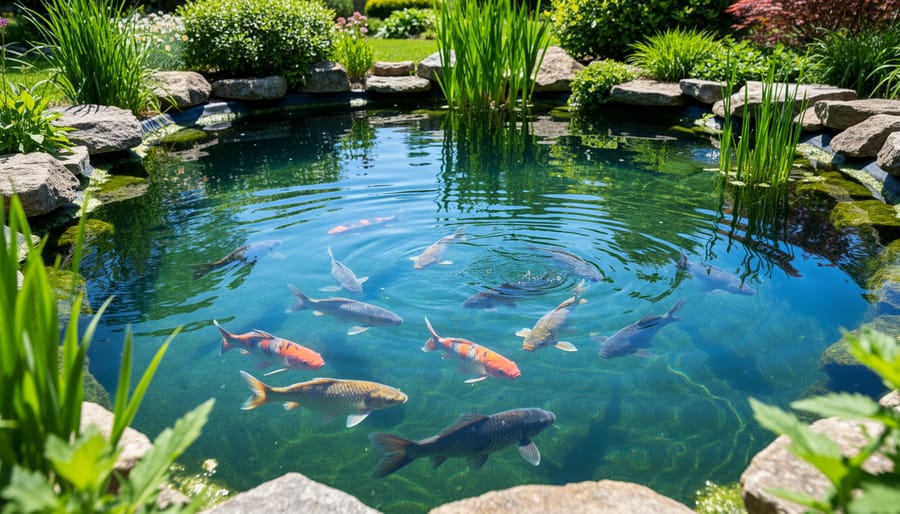
You’ve spent hours researching solutions, but now the practical questions start piling up. Let’s tackle the concerns most pond owners raise when they’re ready to take action against algae blooms.
How long does it take to see results from algal bloom treatments?
Most biological solutions like beneficial bacteria take 2-4 weeks to show noticeable improvement, while UV clarifiers can clear green water in 3-5 days. Chemical algaecides work fastest, often within 24-72 hours, but don’t address the underlying cause.
Are algaecides safe for my fish and plants?
When used exactly as directed, most modern algaecides are safe for fish and hardy plants. However, overdosing can deplete oxygen as algae dies off rapidly, and some formulas harm certain aquatic plants, so always read labels carefully and consider removing sensitive species temporarily.
Can I combine multiple algae solutions at once?
Yes, layering solutions often works best, for example, adding beneficial bacteria while running a UV sterilizer and introducing more oxygenating plants. Just avoid using chemical algaecides at the same time as beneficial bacteria, since the chemicals can kill the helpful microbes you’re trying to establish.
What’s the most budget-friendly way to control algae blooms?
Prevention costs the least long-term. Reduce fish feeding, add inexpensive floating plants for shade, manually remove string algae, and perform partial water changes regularly, all of these cost nearly nothing but deliver consistent results.
The timing question trips up many pond owners who expect instant transformations. Chemical treatments deliver the quickest visual change, but that speed comes with a catch. When algae dies off suddenly, it releases nutrients back into the water and consumes oxygen as it decomposes. You might clear the green within days only to stress your fish or trigger another bloom two weeks later. Slower biological and mechanical methods take patience, but they create stability rather than a boom-bust cycle.
Budget concerns make sense when you’re looking at UV clarifiers that cost several hundred dollars or monthly bacteria treatments. But the reality is that your most effective tools are often free or cheap. Scooping out string algae with a toilet brush takes five minutes. Adding a few bunches of hornwort or water lettuce costs less than dinner out. Cutting back fish food by a third saves money while starving algae of nutrients. The expensive solutions have their place, but start with the fundamentals before opening your wallet.
The prevention question deserves its own emphasis because it’s where most long-term success lives. Blooms come back when the conditions that caused them remain unchanged. If your pond still gets eight hours of direct sun, you’re still overfeeding, and runoff still washes fertilizer into the water, you’ll be treating blooms every few months forever. True prevention means addressing sunlight exposure, nutrient inputs, and biological balance, then maintaining those improvements consistently. It’s less glamorous than pouring in a miracle cure, but it’s what separates ponds that stay clear from those that need constant intervention.
Managing algal blooms isn’t about finding a magic bullet that solves the problem forever. It’s about developing a rhythm with your pond, understanding its needs, watching for early signs of imbalance, and responding thoughtfully rather than reactively. The clearest, healthiest ponds aren’t those that never see algae; they’re the ones where pond owners have learned to maintain that delicate balance between preventing overgrowth and supporting the beneficial organisms that keep ecosystems thriving.
Think of algal bloom solutions as tools in your ongoing relationship with your water garden. Some weeks you’ll focus on preventive maintenance, other times you’ll need to intervene more actively. The more you observe your pond’s patterns, how it responds to weather changes, seasonal shifts, and your care practices, the better you’ll become at keeping it balanced with minimal effort.
This journey teaches patience and attentiveness, but the rewards are worth it. There’s something deeply satisfying about stepping outside to a pond that reflects the sky clearly, where fish swim lazily through vibrant plants, and the water hums with quiet life. You’ve created that. And with the right approach to bloom management, you’ll keep enjoying it for years to come.