
What Is the Food Chain in an Aquatic Ecosystem (and How Does It Work)?
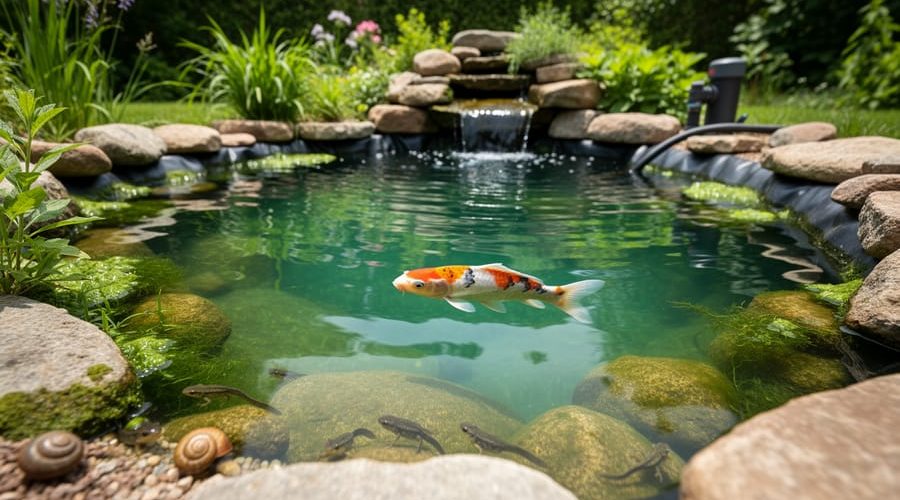
A food chain in an aquatic ecosystem is the sequence of who eats whom in a pond, lake, or stream, starting with tiny algae and plants and moving up through insects, fish, and larger predators. Understanding this natural cycle is the secret to keeping your backyard pond balanced, clear, and thriving without constant intervention.
When you grasp how energy flows through your water garden, you stop fighting nature and start working with it. That green tinge on your pond rocks? It’s not just algae. It’s the foundation of the entire system, feeding snails and tadpoles, which in turn feed your fish. Break one link in that chain, and you’ll find yourself battling cloudy water, aggressive algae blooms, or fish that never seem quite right.
Most pond owners focus on the fish and forget about the invisible workers below. The truth is, a healthy aquatic food chain runs itself when you give it the right conditions. Beneficial bacteria break down waste, microscopic organisms consume debris, small invertebrates clean surfaces, and fish control insect populations. Each level supports the next.
In this guide, you’ll learn exactly how the aquatic food chain operates in your pond, who the key players are at each level, and what practical steps keep the whole system humming. Whether you’re troubleshooting murky water or planning a new pond from scratch, understanding this natural framework changes everything about how you manage your water feature.
What the Aquatic Food Chain Actually Means
Think of your pond as a busy restaurant where everyone has a specific role. The aquatic food chain is simply the path that energy takes as it moves from one living thing to another in the water. It starts with organisms that can make their own food and moves through a series of diners who eat and get eaten, each one transferring energy up the line.
At its core, the food chain describes who eats whom in your pond. Algae and pond plants capture sunlight and turn it into food through photosynthesis. Tiny creatures munch on these plants. Small fish gobble up the tiny creatures. Bigger fish hunt the small fish. When anything dies or produces waste, decomposers break it down and release nutrients back into the water, where plants can use them again. It’s a continuous loop that keeps your pond ecosystem humming along.
Here are the essential terms that help explain how this system works:
- Producers
- Organisms like algae and aquatic plants that create their own food using sunlight, forming the foundation of the food chain.
- Consumers
- Animals that eat other organisms to get energy, ranging from tiny zooplankton to your largest koi.
- Decomposers
- Bacteria, fungi, and scavengers that break down dead material and waste, recycling nutrients back into the ecosystem.
- Trophic Levels
- The different feeding positions in a food chain, from producers at the bottom to top predators at the apex.
- Energy Transfer
- The movement of energy from one organism to another when something gets eaten, with roughly 10% passing to the next level.
The beauty of understanding this system is that it shows you how interconnected everything in your pond really is. When one link weakens or disappears, the whole chain feels the effects. That struggling water lily or sudden algae bloom might be telling you something about the balance between these different players in your water garden’s natural restaurant.
How Energy Flows Through Your Pond
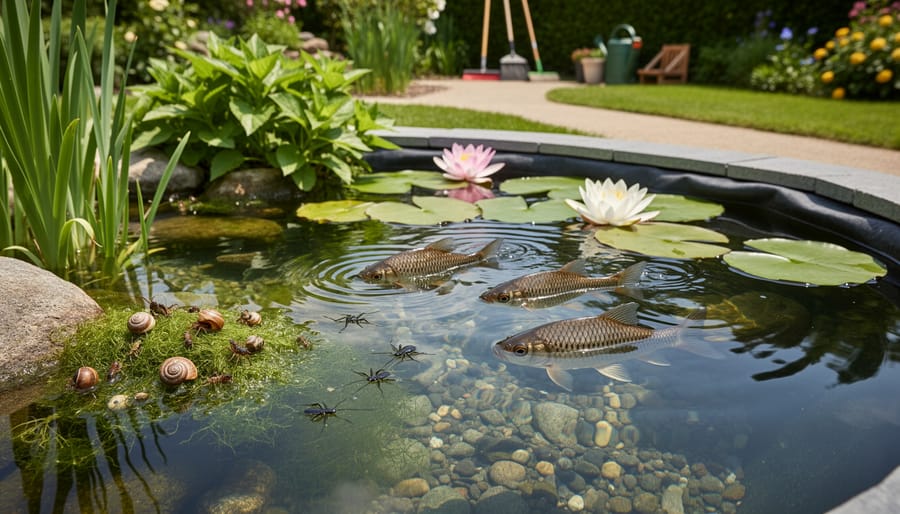
The Foundation: Algae and Aquatic Plants
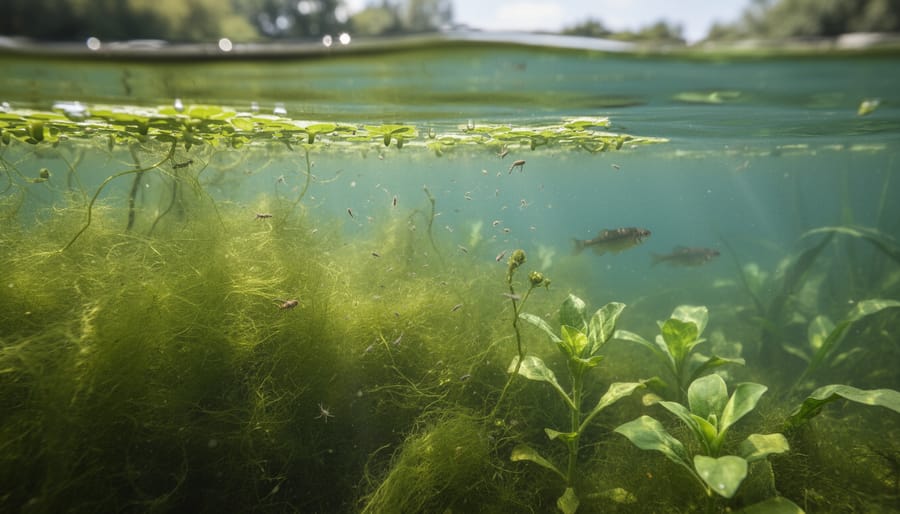
Algae and aquatic plants form the absolute starting point of your pond’s food web. These primary producers do something no other organism in your water garden can: they turn sunlight directly into food through photosynthesis. That simple green film on your pond surface? It’s capturing solar energy and converting it into nutrients that feed everything else in the ecosystem.
Producers make their own food using chlorophyll, water, and carbon dioxide, creating the organic matter that fuels the entire chain above them. In your backyard pond, this includes floating algae (phytoplankton), rooted plants like cattails and water lilies, and submerged vegetation such as hornwort and anacharis.
Without these green producers constantly manufacturing food from sunlight, there’s nothing for insects to eat, nothing for your fish to hunt, and ultimately no functioning ecosystem. Think of them as your pond’s solar panels, collecting free energy from the sun and storing it in forms other creatures can use.
The Middle Links: From Zooplankton to Fish
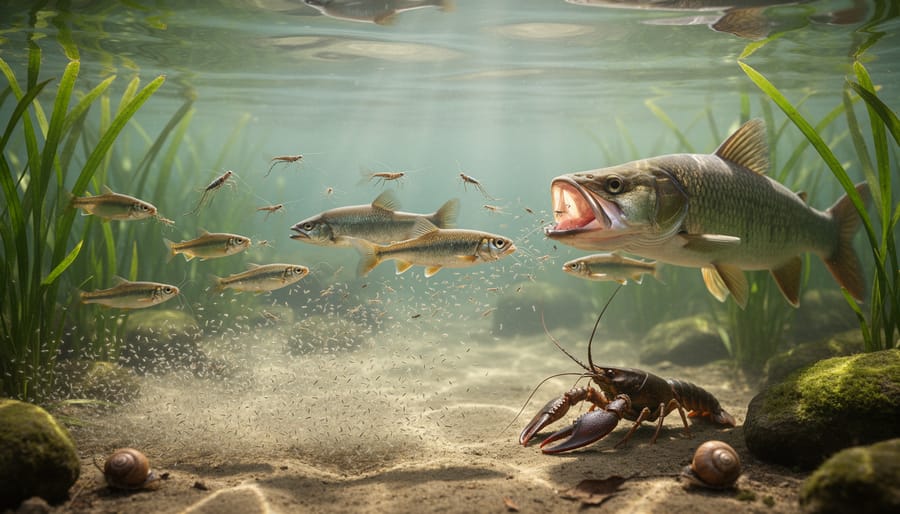
Once zooplankton feast on algae, they become lunch for the next level up. These tiny drifting animals, barely visible to the naked eye, attract insect larvae like mosquito wigglers and damselfly nymphs. You’ve probably seen these squirming around in shallow water near your pond’s edge.
These insect larvae, in turn, draw the attention of small fish. Minnows, juvenile goldfish, and young koi cruise through the water column, snapping up anything that moves. They’re constantly hunting for protein-rich prey to fuel their growth.
As these fish mature, larger predators enter the picture. Adult koi, bass, and other game fish patrol deeper waters, targeting smaller fish and even adult insects that land on the surface. Each predator up the chain is bigger, stronger, and needs more energy, which is why you’ll always have fewer large fish than small ones in a balanced pond. This natural pyramid keeps the system stable.
The Clean-Up Crew: Decomposers at Work
When plants and animals die in your pond, they don’t just disappear. Bacteria and fungi immediately get to work breaking down this organic matter into simpler compounds. These microscopic decomposers are the recycling heroes of your water garden, releasing nutrients like nitrogen and phosphorus back into the water where algae and plants can use them again.
You’ll also see larger decomposers doing their part. Bottom-feeding fish like koi and goldfish nibble on decaying plant material. Snails cruise along surfaces, consuming dead leaves and algae. Freshwater clams filter tiny particles from the water column. Even those tadpoles darting around are often munching on decomposing matter.
This cleanup crew closes the loop, turning waste into fuel for new growth. Without them, your pond would quickly become a stagnant mess of dead material instead of a thriving ecosystem.
The Players in Your Pond’s Food Chain
Your pond hosts a cast of characters working together to keep the ecosystem humming, and each one has a specific job in the food chain. Let’s meet the players you’re likely to see in your own water garden.
Primary Producers: The Solar-Powered Foundation
At the bottom of every food chain, you’ll find the organisms that make food from scratch. In your pond, these are the algae coating your rocks, the phytoplankton floating invisibly in the water, and your rooted plants like water lilies and hornwort. They’re the only ones creating energy rather than consuming it, turning sunlight into sugars that fuel everything else. That green film on your pond liner? It’s not just algae, it’s the cafeteria that feeds the whole neighborhood.
Primary Consumers: The Plant Eaters
These are the grazers and browsers that munch on all those producers. Zooplankton, tiny drifting creatures like daphnia and cyclops, feast on phytoplankton and algae. Pond snails scrape algae off surfaces. Tadpoles nibble on plant matter and algae. Grass carp, if you’ve stocked them, devour aquatic weeds. Even some adult insects like water beetles fall into this category. They convert plant material into animal protein, becoming meals for the next level up.
Secondary Consumers: The Hunters of Small Prey
Now we’re getting to the predators. These creatures eat the plant eaters. In most backyard ponds, this role belongs to smaller fish like mosquito fish and young bluegill, along with dragonfly nymphs prowling the shallows. Frogs and toads snap up insects. Water striders skate across the surface hunting for anything that falls in. They’re the middle management of your pond’s food chain, keeping herbivore populations in check while feeding the bigger hunters above them.
Tertiary Consumers: The Top Predators
These are your pond’s apex predators, the organisms that few other creatures hunt. Larger koi and goldfish eat smaller fish and insects. Bass gulp down anything that fits in their mouths. Herons standing at your pond’s edge? They’re tertiary consumers too, though technically visiting from outside your aquatic ecosystem. Turtles often occupy this spot, hunting fish, frogs, and invertebrates.
Decomposers: The Recycling Crew
Finally, there are the organisms breaking down dead material and waste, returning nutrients to the water for producers to use again. Bacteria colonies coat every surface. Fungi work on decaying leaves. Bottom-feeding fish like catfish and certain goldfish varieties clean up organic debris. Aquatic worms process sediment. Without them, your pond would fill with dead material and the whole cycle would grind to a halt.
Why This Matters for Your Water Garden
Understanding how the food chain works in your pond is not just interesting science, it is the foundation of smart, low-effort pond care. When you know which organisms depend on which, you can make decisions that let your pond largely look after itself instead of constantly fighting algae blooms, murky water, or sick fish.
A balanced food chain gives you tangible, everyday benefits:
- Natural algae control through grazing organisms that keep populations in check
- Healthier fish with access to diverse, natural food sources rather than relying solely on pellets
- Reduced maintenance needs as the ecosystem handles filtration and waste breakdown
- Clearer water from proper balance between producers, consumers, and decomposers
- A resilient ecosystem that bounces back from minor disruptions without intervention
- Wildlife attraction as dragonflies, frogs, and birds discover your thriving habitat
The practical payoff shows up in your weekly routine. When primary producers, herbivores, predators, and decomposers are all present in sensible numbers, you get natural filtration that works around the clock. Algae grows, snails and zooplankton graze it down, fish eat the grazers, and bacteria break down waste. You spend less time scrubbing, fewer dollars on chemical treatments, and more hours enjoying the view.
Understanding these connections also helps you troubleshoot. Green water that never clears usually means missing herbivores. Fish that constantly get sick might signal poor water quality from an overwhelmed decomposer community. Recognizing these patterns lets you add the right fix, a few more plants, some snails, or better aeration, instead of throwing random products at symptoms. Your pond becomes a partner in its own upkeep rather than a chore that demands constant attention.
Common Food Chain Challenges in Backyard Ponds
Even a well-designed pond can develop food chain problems that throw the whole ecosystem off balance. Recognizing these disruptions early makes fixing them much easier.
Too Much of a Good Thing
Overfeeding fish ranks as the number one culprit behind food chain collapse in backyard ponds. When you toss in more food than fish can eat in five minutes, the excess sinks to the bottom and fuels explosive algae growth. This flood of nutrients skips past the natural producers and consumers, creating a shortcut that overwhelms your pond’s ability to process waste. You’ll notice cloudy green water, fish gasping at the surface, and that unpleasant swamp smell. The decomposers simply can’t keep up with the artificial nutrient load you’ve introduced.
The Missing Middle
Sometimes a pond lacks crucial links in the food chain. New ponds especially struggle with this, you’ve added water, plants, and fish, but forgotten about the invisible workers. Without enough zooplankton to graze on algae, or beneficial bacteria to break down waste, the system stalls. I’ve seen ponds where owners added fish immediately without letting the ecosystem establish first. The result? Persistent water quality issues because the supporting cast never had time to move in and multiply.
Unwelcome Guests
Invasive species wreak havoc by muscling out native organisms or eating things they shouldn’t. A single aggressive plant like water hyacinth can carpet your pond surface, blocking sunlight that algae and submerged plants need. Predatory insects that hitchhike on new plants might decimate your zooplankton population overnight. Even well-meaning additions like releasing pet goldfish into larger ponds can disrupt established hierarchies.
Outside Interference
Runoff from lawns treated with fertilizers or pesticides poisons the food chain from the bottom up. These chemicals kill beneficial bacteria and invertebrates first, then accumulate in fish. Similarly, seasonal temperature swings can temporarily halt the food chain, cold snaps slow decomposer activity while leaves keep falling, creating a backlog of organic matter that becomes a problem come spring.
Supporting a Healthy Food Chain in Your Pond
Creating a balanced food chain in your pond is less about rigid control and more about gentle guidance. I’ve learned this lesson the hard way after years of trying to micromanage every aspect of my water garden, only to find that nature works best when we provide the right conditions and then step back.
Start with your foundation layer. Plant a variety of native aquatic vegetation, submerged plants like hornwort or water milfoil, floating species such as water lettuce, and emergent plants along the edges. Aim for about 40 to 60 percent plant coverage. This gives your primary producers a strong foothold and creates habitat for the organisms that’ll feed on them. I always tell people to resist the urge to over-plant at once. Add gradually and let each species establish itself.
Stock your pond thoughtfully. If you’re adding fish, match the species to your pond size and avoid overcrowding. A good rule of thumb is one inch of fish per ten gallons of water. Include bottom feeders like certain catfish species to handle decomposition duties. I’ve found that letting natural colonization happen for smaller organisms works beautifully. Insects, zooplankton, and beneficial bacteria will arrive on their own if conditions are right.
Feed sparingly. Overfeeding disrupts the natural chain by flooding the system with excess nutrients, leading to algae problems and poor water quality. Your fish should consume everything within five minutes. In warmer months when the food chain is active, they’ll find plenty of natural food sources, insects, larvae, and plant matter.
Maintain proper oxygen levels through pond aeration. Every link in your food chain needs dissolved oxygen to thrive. A fountain, waterfall, or dedicated aerator keeps the water moving and supports all your pond inhabitants.
Finally, add hiding spots. Rocks, logs, and plant clusters give smaller organisms refuge from predators, which ironically strengthens the whole chain by maintaining healthy populations at each level rather than letting any single group dominate.
Frequently Asked Questions
Understanding how the aquatic food chain works naturally leads to questions about managing it in your own pond. Here are answers to what pond owners ask most often.
What happens if one link in the food chain is removed?
Removing a link creates imbalance that ripples through the entire system. If you eliminate snails, for example, algae can overgrow because nothing’s grazing on it, while fish that eat snails lose a food source and may turn to other organisms, throwing everything off balance.
Do I need to manually add all these organisms to my pond?
No, many will arrive naturally over time through plants, visiting wildlife, and water sources. You typically only need to introduce fish and possibly a few starter plants, then let nature fill in the gaps with insects, microorganisms, and small invertebrates.
How does feeding my fish affect the natural food chain?
Overfeeding disrupts the chain by making fish dependent on you rather than hunting naturally, while excess food decomposes and adds nutrients that fuel algae blooms. Feed sparingly, only what fish consume in a few minutes, so they still forage for insects and zooplankton.
Can a small pond really support a complete food chain?
Yes, even a modest water feature can host the full cycle from algae to fish to decomposers. The key is appropriate stocking levels and not overwhelming the system with too many large predators for the space available.
What happens to the food chain in winter?
Activity slows dramatically but doesn’t stop. Fish become less active and eat less, while decomposers work more slowly in cold water, but the chain continues at a reduced pace until spring warmth accelerates everything again.
Regular water quality testing helps you spot when the food chain is struggling. If ammonia or nitrite levels spike, it often means decomposers can’t keep up with waste, signaling an imbalance. Similarly, maintaining proper water balance supports every organism in the chain, from the smallest algae to your largest koi. The food chain isn’t fragile, but it responds to conditions you create.
Understanding the food chain in your aquatic ecosystem isn’t just academic knowledge, it’s the blueprint for creating a pond that practically takes care of itself. When you know how energy flows from algae to fish to decomposers and back again, you stop fighting against nature and start working alongside it.
The beauty of a balanced food chain is that it solves problems before they start. Algae blooms calm down when you have the right grazers. Water stays clearer when decomposers break down waste efficiently. Fish thrive when their natural food sources are abundant. You’ll spend less time troubleshooting and more time enjoying your water garden.
Think of yourself as the conductor, not the performer. Your job isn’t to micromanage every organism, it’s to create the conditions where the whole system can flourish. Stock thoughtfully, plant strategically, feed sparingly, and give nature room to do what it does best.
The challenges will come, they always do with living systems. But now you’ve got the framework to understand what’s happening beneath the surface and how to guide things back into balance. That knowledge transforms you from a pond owner into a genuine water gardener, cultivating an ecosystem rather than just maintaining a decorative feature.