
How to Protect Your Pond from Forest Carnivores Near Coniferous Woods
Protecting your pond from forest carnivores like raccoons, herons, otters, and foxes requires a layered defense strategy combining physical barriers, habitat modification, and smart deterrents. The most effective approach uses mesh netting or pond covers as your primary defense, supported by motion-activated lights and strategic planting that removes hiding spots near the water’s edge. Most pond owners in wildlife zones can implement a basic protection system in a weekend for around $150 to $400, depending on pond size and the specific predators in your area.
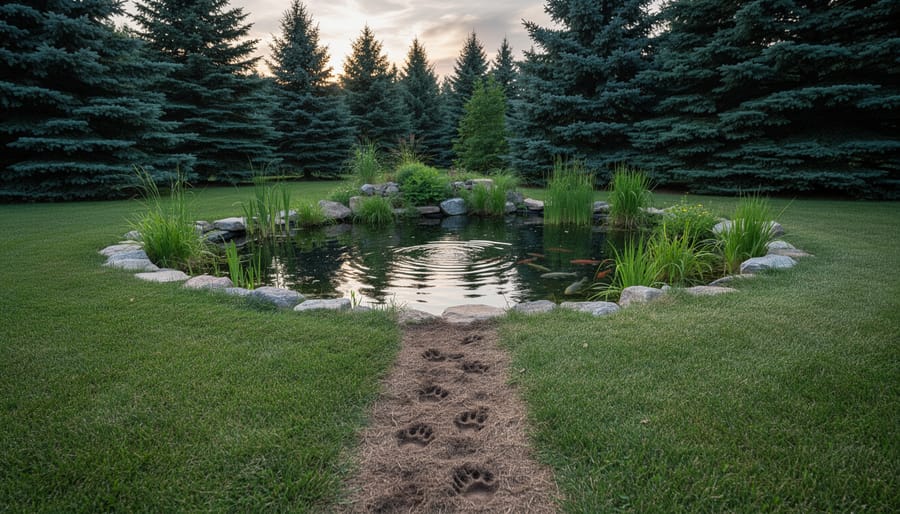
If you’ve woken up to find fish missing or spotted paw prints in the mud around your pond, you’re not alone. Forest carnivores are simply doing what comes naturally, hunting where food is easy to access. The good news? You don’t need to choose between your fish and the local wildlife. With the right combination of barriers and behavioral deterrents, you can make your pond a less appealing target while keeping the ecosystem around it healthy and balanced.
The key is understanding how these animals hunt. Raccoons wade in shallow areas and grab fish with their paws. Herons stand patiently at the edge, striking with lightning speed. Otters are opportunistic and incredibly persistent. Each predator requires slightly different tactics, but the core principle remains the same: make access difficult and unpredictable. This guide walks you through exactly how to assess your specific threat, choose the right materials, and install protection that actually works.
Understanding Which Forest Carnivores Target Ponds
Knowing which predators you’re up against makes all the difference when protecting your pond. The forest carnivores drawn to backyard water gardens in coniferous regions share one trait: they’re opportunistic hunters that see your pond as an all-you-can-eat buffet. Each species brings different hunting tactics, schedules, and seasonal patterns that determine when and how they’ll strike.
The most frequent visitors include:
- Raccoons, Skilled fishers that wade in shallow areas, feeling with sensitive paws for slow-moving koi and goldfish; most active dusk through dawn, year-round near water
- Red foxes, Stalk pond edges at twilight, pouncing on fish near the surface; heaviest activity during breeding season (winter) and when feeding kits (spring)
- Mink and weasels, Agile swimmers that dive after fish in deeper water; hunt day or night but prefer early morning; more common near streams feeding into ponds
- Bobcats, Patient ambush predators that watch from pond-side cover; primarily nocturnal; target larger fish and occasionally waterbirds visiting the pond
- Black bears, Visit ponds in spring (post-hibernation) and fall (pre-hibernation) for easy protein; tear through barriers, overturn rocks, and destroy pond edges while fishing
What draws these carnivores from surrounding forest habitats to your yard? Ponds offer concentrated prey with nowhere to hide, especially during spring when fish spawn in shallows or late summer when water levels drop. The sound of waterfalls and fountains acts like a dinner bell, audible from hundreds of feet into the woods. Coniferous forests provide excellent daytime cover close to pond edges, letting predators rest nearby and strike quickly at feeding times. If your property borders dense evergreens with low-hanging branches and minimal undergrowth, you’re creating a perfect stalking corridor. Recognizing which animals leave tracks, scat, or disturbed vegetation around your pond tells you exactly which defenses to prioritize.
What You’ll Need to Protect Your Pond
Protecting your pond from forest carnivores doesn’t require an enormous budget, but you’ll need a mix of physical barriers, deterrent devices, and habitat materials. Here’s what to gather before you start.
Physical Barriers
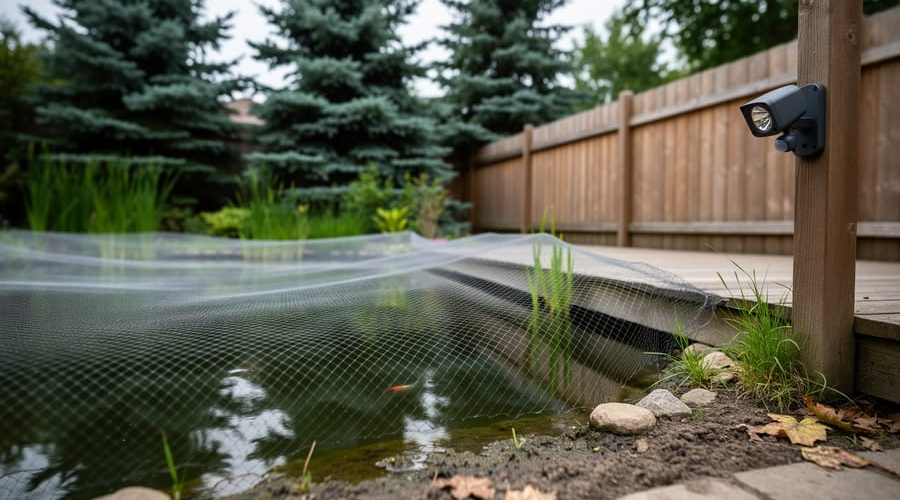
Low-profile fencing is your first line of defense. A 3-4 foot welded wire fence or hardware cloth (¼-inch mesh) runs $50-100 for materials to encircle a typical backyard pond. You’ll also need fence posts or stakes ($20-30) and zip ties or wire for securing. Pond netting comes in various grades, lightweight bird netting ($15-25) works for smaller predators, while heavy-duty knotted netting ($40-80) resists raccoons and foxes. Look for UV-resistant options at farm supply stores or online retailers like Pond Supplies or Home Depot.
Motion-Activated Deterrents
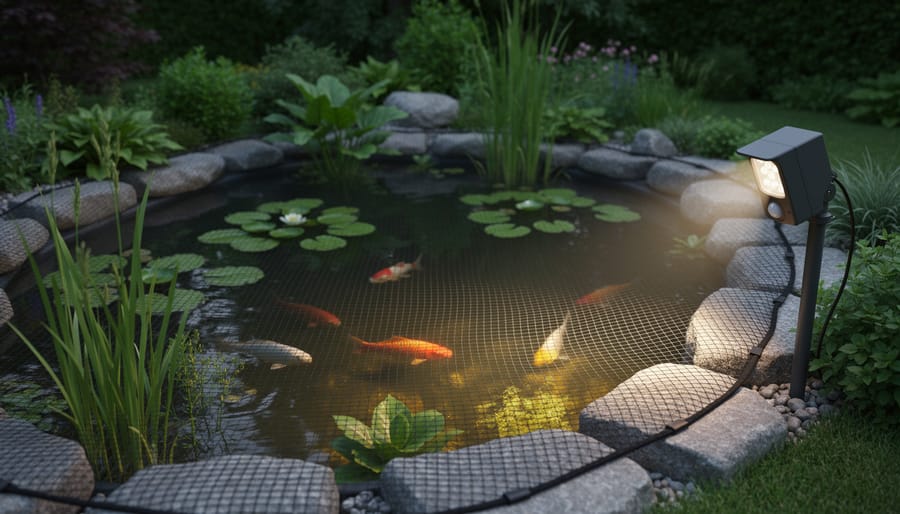
Motion-sensor sprinklers ($40-70 each) are highly effective and humane. Brands like Orbit and Havahart work well. You’ll need a garden hose connection and fresh batteries. Motion-activated LED lights ($20-40 per unit) add another layer, especially for nocturnal visitors. Solar-powered options reduce maintenance. Ultrasonic animal repellers ($25-50) emit sounds that bother carnivores without affecting fish, though results vary by species.
Fish Shelter Materials
Create underwater refuges using stacked flat rocks, terracotta pots on their sides, or specialized pond caves ($30-60). PVC pipe sections (4-6 inch diameter, $10-20) also work. You’ll want enough shelters for your fish population, plan one hideout per 3-5 fish.
Habitat Modification Tools
Gather pruning shears ($15-30), a rake, and work gloves for clearing brush near the pond. A headlamp ($15-25) helps with evening inspections. Keep a notebook or use your phone to log observations, it costs nothing and proves invaluable for tracking patterns.
Most items are available at hardware stores, garden centers, or online pond specialists.
Safety Precautions Before You Start
Before you install any deterrents, check your local council and state wildlife regulations, many areas have specific laws about what you can and can’t use to manage native animals, and some carnivores like quolls are protected. You don’t want to accidentally break the law or face fines while trying to protect your fish.
Know when to call professionals. If you spot a sick or aggressive animal, see a bear near your property, or find evidence of a den with young nearby, contact a licensed wildlife controller rather than attempting DIY solutions. These situations require expert handling for everyone’s safety.
If you’re installing motion sensors or fencing at night, bring a torch, wear long sleeves and pants to protect against scratches from plants or wire, and let someone know where you’ll be working. Consider the safety of pets and other wildlife too, your barriers should deter carnivores without trapping harmless visitors like possums or creating a safe haven for frogs that accidentally excludes them. Test deterrents during daylight first to ensure they won’t startle neighborhood dogs or native animals you want to keep around.
Step-by-Step: Setting Up Carnivore Defenses Around Your Pond
Step 1: Assess Your Pond’s Vulnerability
Walk your property at dusk when carnivores are most active. Stand at the pond’s edge and scan the tree line, note any clear paths, gaps in vegetation, or low-hanging branches that could serve as approach routes from the forest. Carnivores prefer cover, so they’ll typically move along fence lines, dense shrubs, or shadowy corridors rather than crossing open lawn.
Check the soft ground around your pond for tracks. Raccoon prints show five distinct toes and look like tiny human hands. Fox tracks are more oval with claw marks. Mink leave small, paired prints near the water’s edge. Fresh scat is another giveaway, raccoon droppings often contain fish scales or crayfish shells.
Look for disturbed rocks, overturned edging stones, or muddy paw prints on pond liner. If you’ve lost fish recently, carnivores are already visiting. Note the time of losses, raccoons hunt after dark, while mink may strike during daylight.
Sketch a simple map showing vulnerable spots where woods meet water with minimal obstacles between.
Step 2: Create Physical Barriers
Physical barriers form your first line of defense, making it harder for carnivores to reach the water’s edge. Start with low fencing around the pond perimeter, 18 to 24 inches is enough to discourage raccoons and foxes without obstructing your view. Welded wire mesh with 2-inch openings works well, anchored with stakes every three feet. Bury the bottom edge 4-6 inches to prevent digging underneath.
Position large, flat rocks around vulnerable access points where animals typically approach. Create an 8-12 inch border of smooth river rocks that shift underfoot, disrupting a predator’s silent stalk and giving fish warning time. Between rocks, plant thorny shrubs like barberry or native roses, carnivores avoid brushing against sharp obstacles when easier hunting spots exist nearby.
For maximum protection, install pond netting across the water surface. Choose 3/4-inch mesh that prevents paws from reaching through while allowing leaves and rain to pass. Suspend it 6-8 inches above water level using stakes or a frame, and secure edges with landscape staples. Remove netting temporarily for maintenance, but replace it before dusk when most hunting occurs.
Step 3: Install Motion-Activated Deterrents
Motion-activated deterrents create unpredictable experiences that train carnivores to avoid your pond without causing harm. Start with sprinkler systems, which work exceptionally well against raccoons and foxes. Mount the sensor 18-24 inches above ground, angled slightly downward to cover the most common approach paths you identified in Step 1. Test the spray pattern during daylight, you want a forceful burst that reaches 15-20 feet without overshooting into areas where you don’t want triggers.
Motion-activated lights should sit higher, around 4-6 feet, with sensors aimed at shoulder height for medium-sized predators. Choose bright LED models rated for outdoor use. The sudden illumination disrupts their preferred hunting conditions, though bears and mink may adapt faster than other species.
Ultrasonic devices emit frequencies uncomfortable for mammals but inaudible to most people. Place them 3-4 feet high, facing outward from the pond’s perimeter. Test each device by walking through its range at different speeds, carnivores move differently than humans, so adjust sensitivity accordingly. Combine all three deterrent types for best results, creating overlapping zones of unpredictability that discourage repeat visits.
Step 4: Add Fish Shelters and Deep Zones
Fish need safe hiding spots when predators stalk your pond’s edge. Creating underwater shelters dramatically improves their survival odds during hunting attempts.
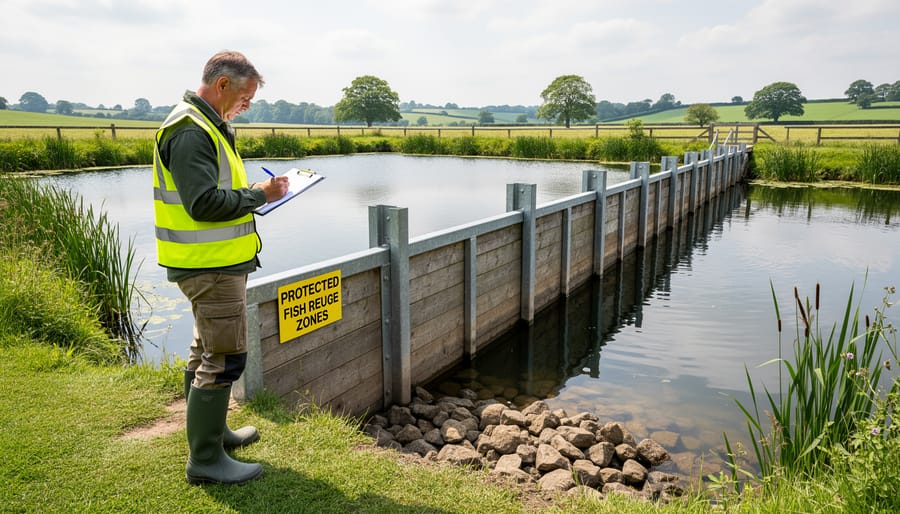
Start by adding artificial caves using stacked flat rocks or terra cotta pots laid on their sides. Position these structures along the pond’s deepest areas, at least 3 feet down if possible. Predators like raccoons and mink prefer shallow hunting zones where they can reach in without swimming. Fish that retreat to depth become much harder targets.
Build overhangs by placing large flat stones to create ledges that jut out over deeper water. Secure them properly so they won’t shift and trap fish underneath. These overhangs mimic natural rock formations in streams where fish instinctively hide.
Install PVC pipe sections (4-6 inches in diameter) horizontally along the bottom as escape tunnels. Fish will quickly learn to use them as refuges. Place multiple shelters around the pond so fish aren’t cornered in one area.
Add dense aquatic plants like water lilies, which provide surface cover and make it harder for predators to track fish movement. Submerged plants like hornwort create additional hiding layers throughout the water column.
The goal is giving your fish multiple escape routes and concealment options at different depths.
Step 5: Modify the Surrounding Landscape
Carnivores rely on cover to stalk prey effectively, so eliminating hiding spots within 10-15 feet of your pond forces them into the open where they feel exposed and vulnerable. Start by clearing dense brush, thickets, and undergrowth that provides concealment for approaching predators. Trim low-hanging branches below four feet, these create shadowy pathways that raccoons and foxes use for concealed approaches.
Remove woodpiles, stacked lawn equipment, and debris piles near the water’s edge. These structures offer perfect daytime resting spots for mink and weasels. If you have ornamental grasses or tall perennials close to the pond, consider relocating them further back or replacing them with low-growing groundcovers that don’t provide stalking cover.
Create a visibility buffer zone by maintaining short grass or gravel pathways around the pond perimeter. This open space makes carnivores uncomfortable and easier to spot, naturally discouraging hunting attempts while keeping your sight lines clear for monitoring activity.
Step 6: Establish a Maintenance Routine
Set aside 15 minutes each week to walk your pond perimeter, checking fences for gaps and testing motion sensors. Replace batteries in deterrent devices monthly, mark dates on your calendar. Adjust strategies seasonally, reinforce barriers in early spring and fall when bears are most active, while keeping raccoon defenses up year-round. Keep a simple notebook logging any tracks, missing fish, or triggered sensors. These patterns reveal what’s working and what needs tweaking before you lose more fish.
How to Know Your Protection Is Working
Success isn’t measured by eliminating all wildlife activity, that’s neither realistic nor desirable. Instead, you’re looking for signs that carnivores are choosing easier hunting grounds and your fish population remains stable. Here’s how to track your progress and know when adjustments are needed.
Start by documenting baseline conditions before implementing defenses. Take photos of the pond perimeter, count visible fish during feeding times, and note any existing tracks or disturbances. This gives you a clear “before” picture to measure against.
Check for physical evidence weekly during the first month, then biweekly once patterns stabilize. Walk the pond’s edge looking for fresh tracks in soft soil or mud, you’ll notice fewer paw prints and claw marks if deterrents are working. Reduced scat near the water is another positive indicator. Carnivores leave droppings where they feel comfortable, so finding less waste material suggests they’re spending less time at your pond.
Monitor your fish population consistently. During regular feedings, do head counts of your larger, more visible fish. While perfect accuracy is impossible, you should notice stability rather than sudden disappearances. Healthy fish that aren’t constantly stressed by hunting attempts will also display normal behavior, active swimming, regular feeding responses, and visible presence during daylight hours rather than constant hiding.
Review motion-activated device logs if your equipment records triggers. Initial weeks often show frequent activations as curious carnivores investigate new obstacles. Success looks like declining trigger frequency, from nightly visits to occasional checks to rare appearances. Some wildlife will always pass through, but they shouldn’t be stopping to hunt.
Inspect physical barriers for damage or circumvention attempts. Check fencing for bent sections, dig marks underneath, or attempts to climb over. Examine pond netting for tears or lifted edges. Undisturbed barriers indicate carnivores aren’t investing effort to breach your defenses, which means they’re working.
Expect gradual improvement rather than overnight transformation. Most carnivores need two to four weeks to learn that your pond isn’t worth the effort anymore and adjust their hunting routes accordingly.
What to Do If Problems Continue
If deterrents aren’t reducing predation after three to four weeks of consistent use, it’s time to call a licensed wildlife control professional. They can identify which specific carnivore is causing the problem, tracks and scat from a mink look different than a raccoon’s, and recommend targeted solutions that comply with local regulations. Many regions have strict laws about trapping, relocating, or harming native predators, so professional guidance keeps you legal and humane.
Contact your state or provincial wildlife agency for referrals to certified operators. In rural wooded areas, consider talking to neighbors; persistent carnivore issues often affect multiple properties, and coordinated approaches like synchronized deterrent placement or shared habitat modification work better than isolated efforts.
Professional coniferous forest carnivore management strategies sometimes include seasonal trapping permits, habitat corridors that redirect animals away from residential zones, or population monitoring programs. These regional solutions balance wildlife conservation with property protection.
If your pond has become a problem site despite all efforts, reassess whether maintaining it as a fish habitat makes sense, or whether transitioning to a watering oasis for smaller, less vulnerable species might restore enjoyment without constant conflict.
Common Questions About Forest Carnivores and Ponds
Can I relocate carnivores myself?
No, relocating wildlife is illegal in most areas and requires permits. Trapped animals often die or return, and you risk injury from stressed predators. Contact licensed wildlife control professionals for legal removal options.
Will my dog scare forest carnivores away from my pond?
Temporarily, yes, but carnivores quickly learn your dog’s routine and visit when it’s indoors. Dogs also can’t patrol all night. Use your pet as one layer of defense, not your only strategy.
Do forest carnivores hunt during the day?
Raccoons, foxes, and mink are primarily nocturnal, hunting from dusk to dawn. However, hungry mothers with young may visit ponds in late afternoon, and bold animals in low-traffic areas sometimes hunt midday.
How do I protect my pond in winter when it’s frozen?
Carnivores can walk on ice to reach unfrozen sections or openings near aerators. Maintain netting year-round, keep fish in deep zones below ice level, and check for tracks after snowfall to monitor activity.
Are there plants that naturally deter predators?
Thorny shrubs like hawthorn, barberry, and wild rose create uncomfortable barriers when planted densely at pond edges. They won’t stop determined hunters but make access routes less appealing compared to easier water sources.
Can my pond still attract beneficial wildlife with these protections?
Absolutely. Selective barriers target hunting carnivores while still allowing your pond to function as a thriving wildlife watering hole for birds, frogs, beneficial insects, and smaller mammals that drink without threatening your fish.
These protections create balance rather than exclusion. Your goal is coexistence where pond fish remain safe while the surrounding ecosystem continues to support diverse wildlife. Most carnivores will shift to natural prey sources once your pond becomes less convenient than forest hunting grounds.
Protecting your pond from forest carnivores doesn’t mean waging war on wildlife. It’s about creating smart boundaries that let both your fish and the local ecosystem thrive. The layered approach we’ve covered, physical barriers, motion deterrents, fish shelters, and landscape management, works because it addresses multiple entry points and hunting strategies without harming any animals.
Start simple. Assess your pond’s vulnerability, install basic fencing or netting, and add a motion-activated sprinkler. You’ll likely see results within days. Remember, perfect elimination isn’t realistic or necessary. Even occasional visits from a curious raccoon or fox won’t devastate a well-protected pond with deep refuge zones and adequate cover.
Living near coniferous forests means sharing space with incredible wildlife. Your pond can be part of that landscape while staying safe for your fish. The strategies here give you control without guilt.
Have you tried any of these methods? We’d love to hear what worked in your setup, especially if you’ve found creative solutions we haven’t covered. Your experience could help another pond owner facing the same midnight visitors.