
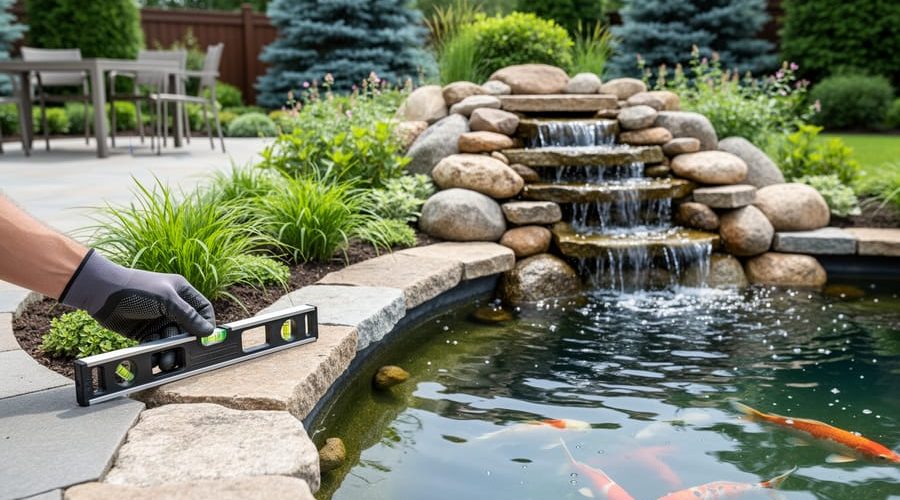
What Is an Aesthetic Engineer? (And Why Your Pond Needs One)
An aesthetic engineer is someone who designs outdoor water features with equal attention to beauty and structural safety. When you’re planning a backyard pond or waterfall, you’re already thinking like one. You’re weighing how a boulder arrangement will look against whether it’ll stay stable through freeze-thaw cycles, or considering if that picture-perfect edge planting will also provide sure footing for maintenance visits.
This dual perspective matters more than most homeowners realize. A gorgeous tiered fountain that develops leaks within a season wastes money and effort. A perfectly sealed pond liner hidden under sharp-edged flagstone becomes a safety hazard the first time someone slips. The aesthetic engineer mindset asks you to hold two questions at once: does this look right, and will it work safely for years?
You don’t need formal training to adopt this approach. Water gardening in 2026 has become wonderfully accessible, with better materials and clearer guidance than ever before. What you do need is a shift in how you plan each element of your feature. Before you commit to that dramatic cantilevered deck over the koi pond or those moss-covered stepping stones, you’ll learn to evaluate the engineering reality behind the visual appeal.
This article walks you through the practical skills of aesthetic engineering for home water features. You’ll see exactly where design and safety intersect, what mistakes to avoid, and how to make choices that deliver both curb appeal and long-term reliability.
The Core Role: Beauty Meets Function
At its heart, aesthetic engineering is about refusing to choose between form and function. An aesthetic engineer looks at a pond project and asks two questions simultaneously: “Will this be beautiful?” and “Will this work safely for everyone who uses it?” That dual focus shapes every material choice, every layout decision, every structural detail.
In practice, this means your decorative stone edging isn’t just there to frame the water prettily. It’s selected and installed to prevent soil erosion during heavy rain, positioned to create a stable walking surface that won’t shift underfoot, and shaped with rounded edges that won’t trip someone stepping close to admire the koi. The same stone that completes your natural woodland aesthetic also holds the bank in place and provides a secure footing for maintenance work.
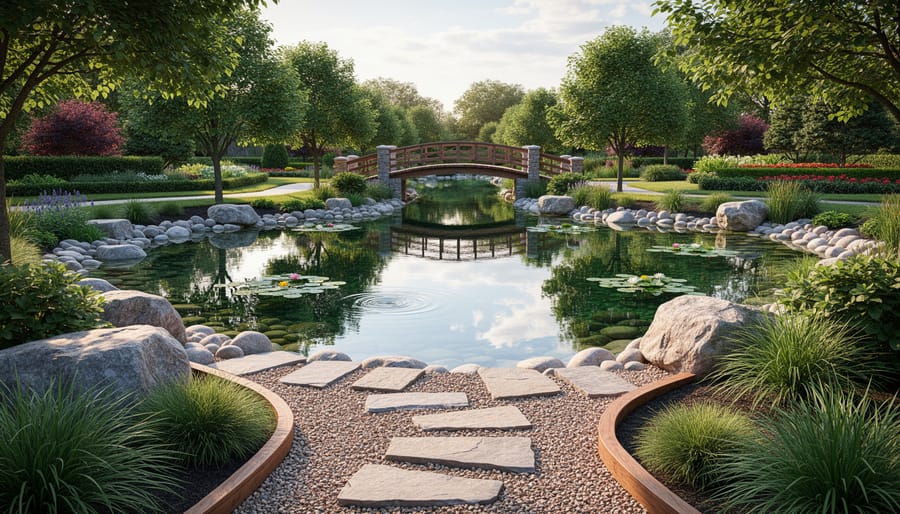
Consider a bridge spanning a narrow section of your pond. An aesthetic engineer designs it to enhance the visual flow, perhaps with a gentle arch that mirrors the curve of the water or natural wood railings that echo the trees overhead. But that same bridge is also engineered to support the weight of multiple people safely, built with non-slip decking materials, and equipped with handrails at a height that assists both children and adults. The beauty and the structural integrity aren’t competing goals, they’re intertwined from the first sketch.
Planting choices reveal the same integrated thinking. Those tall ornamental grasses and flowering shrubs you place along the water’s edge create privacy and soften hard lines, making the pond feel like a natural retreat. But they’re also positioned to avoid blocking sightlines from wheelchair-height seating areas, spaced to allow maintenance access without trampling other plants, and rooted in zones that stabilize the soil rather than undermine the bank. The result is a layered, lush border that works as hard as it looks good.
This approach matters because backyard ponds aren’t museum pieces, they’re living spaces where people walk, sit, lean over to feed fish, and navigate in all kinds of weather and light. An aesthetic engineer designs for real use, not just curb appeal, creating outdoor features that invite interaction without hidden hazards.
Where Aesthetic Engineering Shows Up in Water Gardens
Edging and Borders
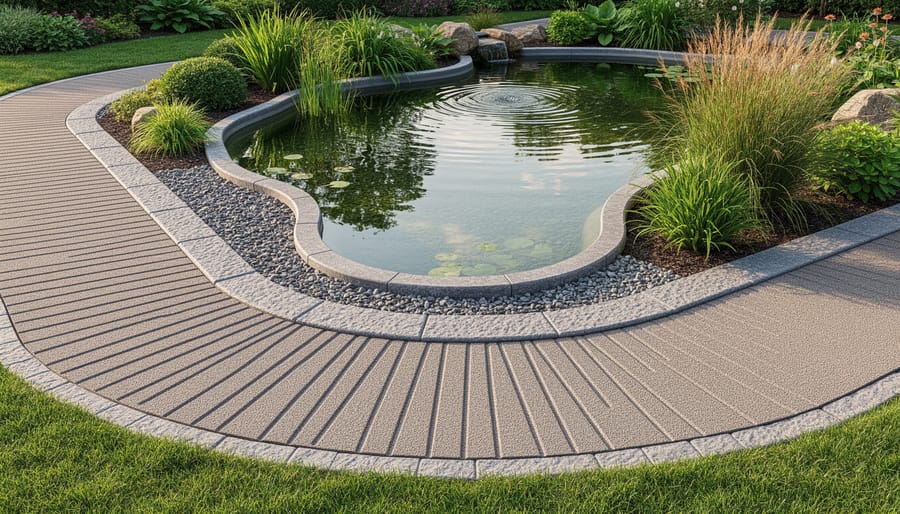
A stunning pond edge does more than frame the water, it locks the bank in place and gives you a safe perimeter to walk on. Start by choosing materials with texture: rough-cut flagstone, tumbled river rock, or flat pavers with a lightly brushed finish all look natural and grip underfoot, even when wet. Avoid polished granite or smooth slate; they’re beautiful but turn into skating rinks after a rain.
Install edging on a compacted gravel or sand base, not bare soil. This foundation prevents settling and keeps stones level over time. Overlap the liner edge by at least six inches, then cover it with your chosen stone so the liner stays hidden and protected from UV. Angle the top layer slightly away from the pond to shed runoff and reduce slip risk.
Round or flat-topped stones work best along walkable edges, skip anything with sharp corners or jagged points that could catch a shoe or trip a child. If you’re using larger boulders for visual drama, nestle them into the soil and test stability by pushing hard from different angles. They shouldn’t rock or shift. Finally, backfill gaps with smaller cobbles or packed soil to eliminate ankle-twisting voids, and your edging will stay put while looking effortlessly integrated.
Pathways and Access Routes
A pathway around your pond isn’t just a way to get from point A to point B, it’s an invitation to linger, to see the water from different angles, and to actually use the space you’ve created. But if that path is too narrow, too steep, or turns into a skating rink when wet, nobody’s going to enjoy it.
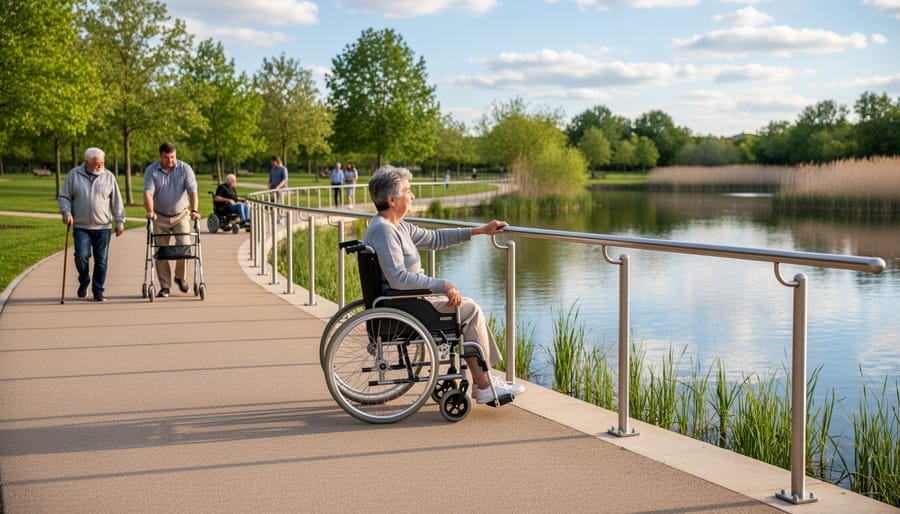
Start with width. A comfortable pathway needs at least 36 inches to accommodate a wheelchair or walker, though 48 inches is better if you want two people to pass comfortably. Mark this out with stakes and string before you buy materials, you’ll be surprised how much wider it looks on paper than in reality.
Grade matters more than most people think. A gentle slope of 1:20 (one inch of rise per twenty inches of horizontal distance) feels flat but still sheds water. Anything steeper than 1:12 becomes difficult for wheelchairs and starts feeling like a hike rather than a stroll.
For materials, skip the smooth pavers. Textured concrete, decomposed granite with stabilizer, or natural stone with a rough finish all provide grip without looking industrial. I’ve seen beautiful pathways using large, irregular flagstones set in gravel, the stone creates firm footing while the gravel fills gaps and drains instantly.
Bridges, Platforms, and Viewing Areas
A timber bridge arching over a pond creates a focal point that draws the eye and invites people into the landscape. But that graceful curve needs to carry not just aesthetic weight, it has to support actual people, withstand seasonal moisture, and prevent falls. The key is choosing materials and dimensions that do both jobs well. A 36-inch-wide bridge accommodates a wheelchair or two people passing comfortably, while pressure-treated lumber or composite decking resists rot without looking industrial. If your bridge rises more than 30 inches above the water or ground, you’ll need railings that meet code loads for railings (typically 200 pounds of lateral force). That doesn’t mean sterile metal barriers, rounded cedar posts with horizontal cables or closely spaced balusters can blend into a naturalistic setting while keeping everyone secure.
Platforms and viewing decks work the same way. Position them where they frame your best views, a waterfall, a cluster of blooming lilies, a sunset reflection, but build them level, with slip-resistant surfaces and sturdy footings. A low deck (under 12 inches high) might skip railings legally, but adding a single horizontal rail at sitting height gives elderly visitors something to steady themselves against without cluttering the sightline. Finish with recessed lighting along the edges so evening visits feel magical, not hazardous.
Why Safety and Accessibility Matter (Even in Backyard Ponds)
A backyard pond feels like a private retreat, but it’s also a place where family and friends gather, and that means thinking beyond curb appeal. Safety and accessibility aren’t just box-ticking exercises. They protect the people you care about, reduce your legal exposure if someone gets hurt, and ensure your pond remains a source of joy as circumstances change.
Consider liability first. If a visitor slips on wet stone edging or a child falls from an unsecured deck, you could face a lawsuit. Homeowners insurance may not cover injuries resulting from known hazards you failed to address. Installing non-slip surfaces, handrails, and proper lighting isn’t paranoia, it’s sensible risk management that also happens to make your pond more welcoming.
Aging parents, friends with mobility aids, and young children all deserve to enjoy your water feature safely. A pond surrounded by narrow, uneven pathways or steep slopes excludes people who use walkers or wheelchairs. Smooth, gently graded access routes and sturdy railings transform the space into one everyone can navigate confidently, turning your pond into a true gathering spot rather than an obstacle course.
Then there’s future-proofing. Your knees and balance won’t stay sharp forever. A pond designed with accessible principles today means you won’t face costly renovations in ten years when stairs become difficult or wet pavers turn treacherous. Many pond safety tips double as accessibility improvements, wider pathways, textured surfaces, and well-lit edges benefit everyone.
I spoke with a pond owner in Victoria who installed a beautiful timber deck overlooking her koi pond, but skipped handrails to preserve the clean sightlines. After a near-fall during a rainy evening gathering, she added railings and replaced the smooth decking with textured pavers. The adjustments didn’t diminish the aesthetic, they enhanced it by creating a space her elderly mother could visit without fear and where grandkids could explore safely. She even used strategic plantings to hide pumps and filters that were previously exposed, turning necessity into improved design.
Safety and accessibility aren’t compromises. They’re investments in a pond that works for real life, not just photo ops.
DIY Tips: Thinking Like an Aesthetic Engineer
You don’t need an engineering degree to build a pond that’s both gorgeous and genuinely safe for everyone who uses it. What you do need is a shift in mindset, start looking at every design choice through two lenses at once. Before you break ground or place a single stone, grab a notebook and sketch your pond layout with honest detail. Mark where people will actually walk, where they’ll pause to look at fish or take photos, and where the ground slopes or drops off. Note which side gets morning sun (slippery algae risk) and where kids or pets are likely to enter. This isn’t about perfection, it’s about catching problems on paper instead of discovering them when someone slips on wet flagstone.
Once you’ve got that map, walk through a simple audit process that covers the essentials:
- Map all access routes around the pond perimeter, including how people will reach the water’s edge from the house, patio, or garden gate.
- Identify elevation changes, mark steps, slopes, bridges, and any transition from lawn to pavers where someone could trip.
- Select slip-resistant materials for every walking surface, focusing on textured stone, brushed concrete, or composite decking with grooves.
- Plan placement for pathway lights, spotlights on stairs, and fish-safe lighting near the water to ensure visibility after dark without glare.
- Test pathways physically by walking them with a mobility aid, stroller, or wheeled cart to reveal tight corners, unstable footing, or awkward transitions you missed on paper.
When you’re choosing materials, resist the urge to prioritize looks alone. Smooth river rock might photograph beautifully, but it becomes a skating rink when wet. Instead, go for flagstone with a naturally rough surface, pavers with a textured finish, or gravel stabilized with a grid system. Rounded edges matter more than you’d think, a bull-nosed coping stone feels better underfoot and won’t catch toes or cane tips the way sharp-cut edges will. For decking, choose boards with grooves or a composite material designed for wet environments, and always run boards perpendicular to the direction of travel so water doesn’t pool in the grooves.
Installation is where good planning pays off. Every pathway needs a solid base, compact at least four inches of crushed stone before laying pavers to prevent settling and wobbling. Grade all surfaces away from the pond slightly (a one percent slope is plenty) so rainwater doesn’t puddle where people walk. If you’re adding a handrail to a bridge or deck, sink posts into concrete footings, not just soil, and use stainless steel or coated hardware that won’t rust and weaken over time.
Finally, test your work before you call it done. Walk the entire perimeter with a wheelchair, a walker, or even a loaded wheelbarrow. You’ll immediately feel where the gravel is too loose, where a transition between surfaces is too abrupt, or where a turn is too tight. Fix those spots now, and your pond will welcome everyone safely for years.
Common Mistakes (And How to Avoid Them)
I’ve seen countless pond owners fall into the same traps, sacrificing safety for looks without realizing it. The most common mistake? Installing gorgeous, polished flagstone around the pond perimeter. It photographs beautifully, but the moment dew settles or your sprinkler mists it, that stone becomes an ice rink. A friend of mine learned this the hard way during a garden party when a guest in sandals slipped and nearly ended up in the koi pond. Switch to textured or thermally-finished stone instead, you’ll keep the natural aesthetic while getting actual traction underfoot.
Skipping handrails is another frequent misstep. Many DIYers think a railing will ruin the clean lines of their deck or bridge, so they leave it off entirely. But code requirements exist for good reasons, and your future self (or an elderly parent visiting next summer) will appreciate the extra stability. If you hate the look of metal pipe railings, consider cable rail systems or stained wood that blends with your deck, they provide grip without blocking sightlines.
Narrow pathways seem fine when you’re laying them out, but try pushing a wheelbarrow full of mulch around that 24-inch-wide curve. It doesn’t work, and it definitely won’t accommodate a wheelchair or walker. Aim for 36 inches minimum on primary routes. You can soften the wider path with low plantings on either side.
Finally, neglecting lighting turns your beautiful pond into a liability after sunset. Solar path lights are inexpensive and easy to install along walkways and steps. Place them before you need them, not after someone trips on that decorative boulder you positioned for visual interest.
Frequently Asked Questions
Do I need permits for accessible pond features?
It depends on your local building codes. Most jurisdictions require permits for decks, bridges, or elevated platforms, especially if they exceed certain height or square footage thresholds. Contact your city or county building department before starting construction, they can tell you exactly what’s required for your project.
Can I retrofit an existing pond for better accessibility?
Absolutely. You can add graded pathways, install handrails along existing decking, replace slippery edging with textured stone, and improve lighting without rebuilding the entire feature. Start with the areas you or your family use most often, then expand as budget allows.
What’s the most cost-effective safety improvement I can make?
Non-slip surfacing and adequate lighting give you the biggest safety return for the least investment. Adding textured pavers or anti-slip coatings to walkways costs far less than treating an injury, and solar path lights are inexpensive yet dramatically reduce nighttime hazards.
How do I balance aesthetics with accessibility?
Use natural materials in accessible configurations, wide flagstone pathways, wooden handrails with organic curves, and plantings that screen utilitarian elements like ramps or railings. The goal is to make safety features feel intentional, not tacked on, so they enhance the design rather than fight it.
These questions come up constantly in our water gardening community, and the answers reveal a helpful truth: accessibility improvements don’t have to look clinical or institutional. When you choose materials and layouts that respect both form and function, the result is a pond that welcomes everyone without sacrificing the natural beauty you worked so hard to create. If you’re unsure where to start, walk your pond’s perimeter and note any spot where you hesitate, reach for support, or watch your step extra carefully, those are your priority zones for improvement.
Thinking like an aesthetic engineer doesn’t require a degree or a massive budget. It just means approaching your pond with two questions in mind: Does this look beautiful? And is it safe and accessible for the people I care about? When you can answer yes to both, you’ve created something truly special.
Take a walk around your pond, or your planned pond site, and look with fresh eyes. Notice where the ground slopes sharply, where wet stone catches the light but also catches feet, where a railing could guide someone safely while framing a perfect view. These aren’t compromises. They’re opportunities to make your water garden work harder for you.
Small changes deliver outsized results. Swapping smooth flagstone for textured pavers takes an afternoon and prevents years of slips. Adding a simple handrail to your deck costs less than a weekend dinner out, yet it means your aging parents can enjoy the pond independently. Installing low-voltage path lighting transforms evening ambiance while eliminating trip hazards you can’t see after sunset.
Your pond should welcome everyone who visits it, from toddlers chasing frogs to grandparents settling into a bench with their morning coffee. When beauty and function work together, you’re not sacrificing one for the other, you’re building a space that invites people in and keeps them safe while they’re there. That’s the real art of aesthetic engineering, and it’s within reach for every pond owner willing to think beyond the surface.