
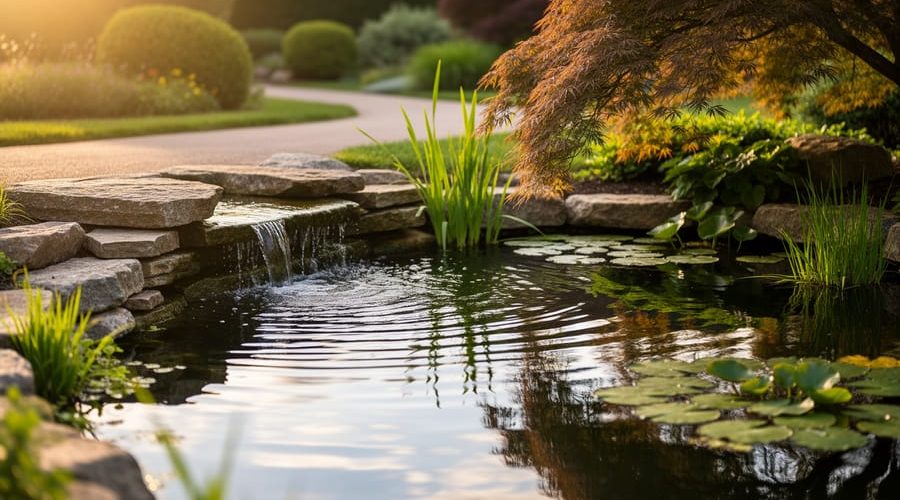
7 Elements of Art Ideas for Creating Interactive Pond Landscapes That Captivate
Your pond can be more than a water feature. By applying the seven classical elements of art (line, shape, form, color, value, texture, and space) to your pond design, you transform a functional water garden into a living masterpiece that shifts with the seasons and changes throughout the day.
These aren’t abstract principles reserved for galleries and museums. Each element offers practical, hands-on ways to make design decisions, from choosing where to place that Japanese maple to deciding which stone creates the perfect waterfall edge. I’ve watched my own pond evolve from a simple liner-and-pump project into something that makes visitors stop and stare, and the shift happened when I stopped thinking like a plumber and started thinking like an artist.
The beauty of this approach is that you don’t need formal training or expensive materials. You’re already working with incredible raw ingredients: moving water catches light differently than still surfaces, rocks provide endless textural variety, and aquatic plants offer colors you won’t find in any traditional garden. The seven elements simply give you a framework to arrange these features with intention rather than guesswork.
Whether you’re planning a new pond or refining an existing one, understanding how line guides the eye around your water garden, how form creates depth and dimension, or how value (the range from light to dark) can make a shallow pond feel mysteriously deep will change the way you see every stone, plant, and reflection. You’ll start noticing opportunities everywhere, and small adjustments will yield surprisingly dramatic results.
How We Selected These Art Elements for Your Pond
We didn’t reinvent the wheel when selecting these seven classical art elements for your pond design. These principles have guided artists and architects for centuries, and they translate beautifully to water gardening because they’re fundamentally about how humans perceive and interact with space. What makes them perfect for ponds is their hands-on, sensory nature. Unlike theoretical design concepts that sound impressive but feel abstract, these elements create tangible experiences: the splash of water over textured rocks, the visual path your eye follows around curved borders, the cool smoothness of river stones under your fingers.
We focused on elements that actively invite interaction rather than passive viewing. Each one offers multiple entry points for DIY enthusiasts. You can start simple with a few carefully placed stones (shape and texture) or go elaborate with sculptural water features (form and movement). The beauty is that these principles scale perfectly from a container water garden on your patio to an expansive koi pond, and they encourage experimentation without requiring artistic training or expensive materials.
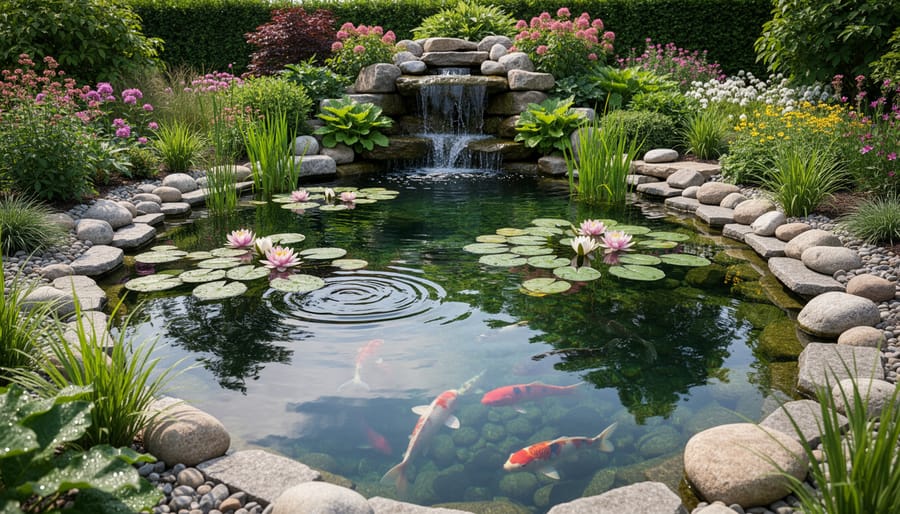
1. Line, Guiding Movement and Flow Through Your Water Garden
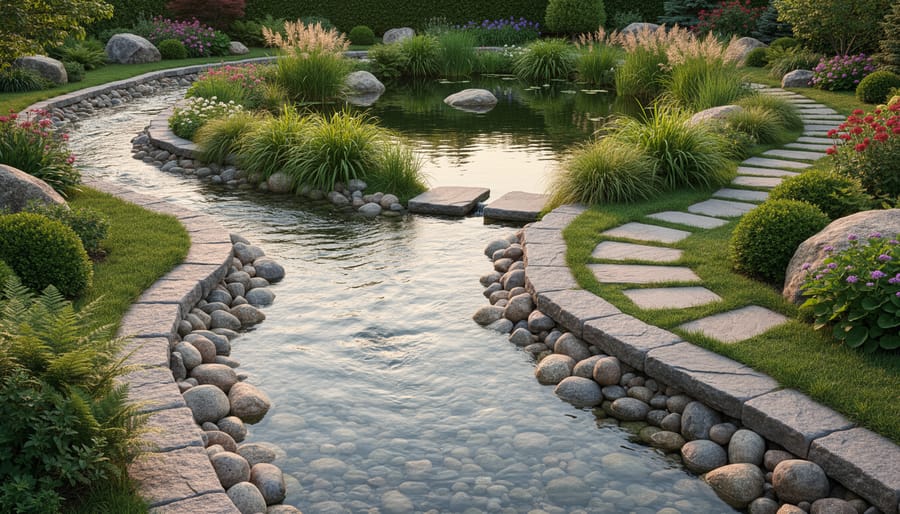
Lines are the invisible architects of your pond, quietly directing where people walk, where they pause, and where their eyes wander next. A curved pond edge pulls visitors around its perimeter, inviting them to discover what’s beyond the next bend, while a straight stream channel offers a direct, purposeful path that feels intentional and modern. When you plant tall irises or cattails in vertical clusters, you create natural lines that lift the gaze skyward, making even a small pond feel expansive.
The beauty of working with lines in water gardening is that you’re simultaneously designing for foot traffic and visual flow. Stepping stones arranged in a gentle arc become both a functional pathway and a compositional element that guides the eye across the water’s surface. Bamboo stakes placed at intervals create rhythm and repetition, their vertical lines contrasting beautifully with the horizontal plane of the water. I’ve found that the most engaging ponds use both curved and straight lines in combination, perhaps a meandering stream feeding into a rectangular catch basin, where the tension between organic and geometric shapes creates unexpected interest.
Consider these practical ways to introduce lines into your pond landscape:
- Use flexible edging materials like steel or composite boards to create smooth, flowing curves along pond borders
- Plant ornamental grasses in drifts that follow the natural contours of your space rather than rigid rows
- Design water channels that zigzag or meander rather than flowing in straight paths
- Arrange flat stones in linear sequences that lead visitors toward focal points like waterfalls or sculptures
- Install vertical bamboo screens or reed bundles at strategic angles to frame views and create sightlines
The interplay between horizontal water surfaces and vertical plant stems creates natural contrast that keeps the eye moving. When you combine this understanding of line with 3D design principles, you’ll build depth and dimension that transforms a flat landscape into something visitors want to explore from every angle.
2. Shape, Creating Recognizable Forms That Invite Interaction
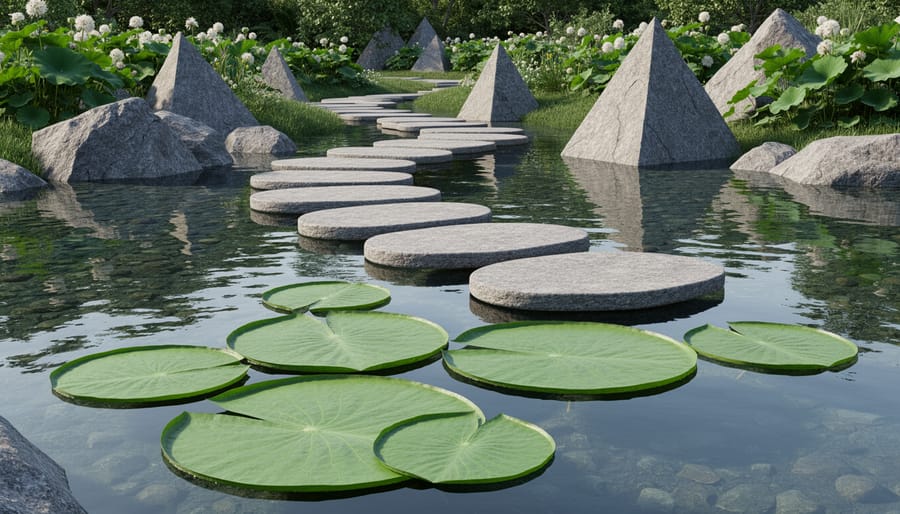
Shape is where pond design shifts from flat planning to three-dimensional reality. The forms you choose, whether round lily pads floating on the surface, angular rocks stacked at the water’s edge, or the overall outline of your pond, create visual anchors that draw people in and encourage them to interact with your landscape.
Start by considering shapes at different levels. Flat, smooth stepping stones arranged in irregular patterns invite visitors to hop across, turning simple pond access into a playful experience. Place them close enough to feel secure but irregular enough to require attention with each step. I’ve watched guests spend ten minutes crossing a pond on stones they could have walked around in thirty seconds, simply because the shapes created an irresistible path.
Rounded boulders naturally invite sitting. Position a large, dome-shaped rock at a pond’s edge with a flat top, and people will gravitate toward it as a resting spot. The curve feels welcoming in a way that angular rocks don’t. Pair rounded sitting stones with triangular rock clusters nearby to create visual contrast, the combination keeps eyes moving around the space.
Concave shapes add another layer of interaction through sound. A shallow depression in a rock positioned under a small waterfall becomes a natural basin that amplifies trickling sounds. Similarly, bowl-shaped planters at various heights create repeating circular forms that echo your pond’s curves.
The magic happens when you combine shapes thoughtfully. Try pairing the geometric precision of square pavers with the organic circles of water lilies, or contrast sharp triangular stone arrangements with soft, mounding plants through creative plant design. These deliberate contrasts make each shape more noticeable and create natural spots where visitors pause, touch, and explore your water garden’s spatial story.
3. Form, Adding Three-Dimensional Depth and Sculptural Elements
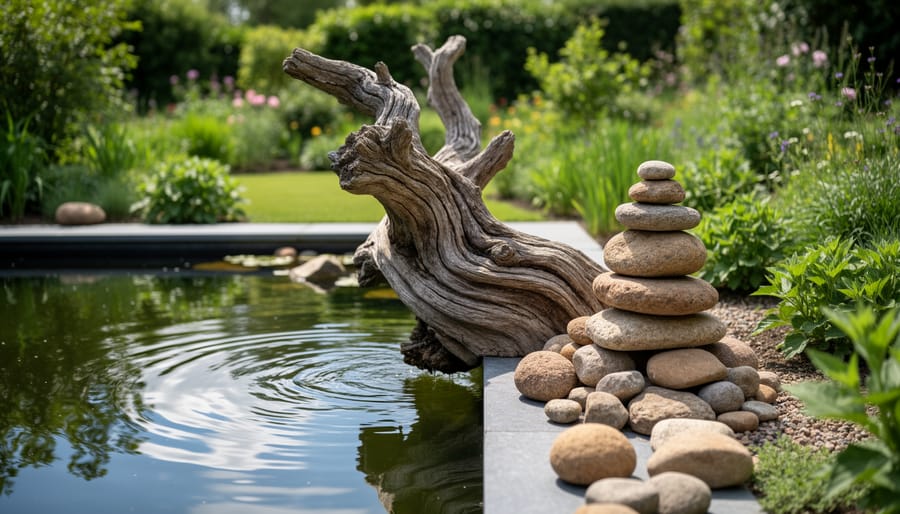
Form brings your pond design off the flat page and into the three-dimensional world where visitors can walk around features, peer behind objects, and discover new perspectives with each step. Unlike shape, which deals with outlines, form creates physical mass that casts shadows, blocks sightlines, and invites exploration from multiple viewpoints.
Driftwood pieces are among the most versatile forms for pond edges, I once dragged a weathered log from a creek bed and positioned it half-submerged along my pond’s north corner, and within weeks it became the favorite perching spot for dragonflies and an impromptu bench for anyone wanting to dip their fingers in the water. The sculptural quality of weathered wood, with its gnarled branches and silvered texture, creates instant visual interest and serves functional roles too.
Stacked stone cairns add vertical dimension while maintaining a natural aesthetic. Build them at different heights around your pond perimeter, some knee-high, others waist-level, to create rhythm and give the eye multiple resting points. These structures work beautifully near waterfalls or stream entries where the vertical forms echo the downward movement of water.
Floating planters introduce form that literally moves through space as wind and water currents shift them across the surface. Fill them with water lettuce or small iris varieties, and suddenly your pond has living sculptures that never occupy the same position twice. Fountain features contribute both visual form and the sculptural quality of moving water itself, which pairs perfectly with dynamic lighting after sunset.
Balance natural forms like boulders and logs with occasional constructed elements, a small stone lantern, a gracefully arched bridge, or a ceramic sphere, but let nature dominate the ratio. Fish themselves are living forms that transform the underwater space, their bodies creating movement and shadow that static elements can’t replicate.
4. Color, Orchestrating Seasonal Palettes That Change and Surprise
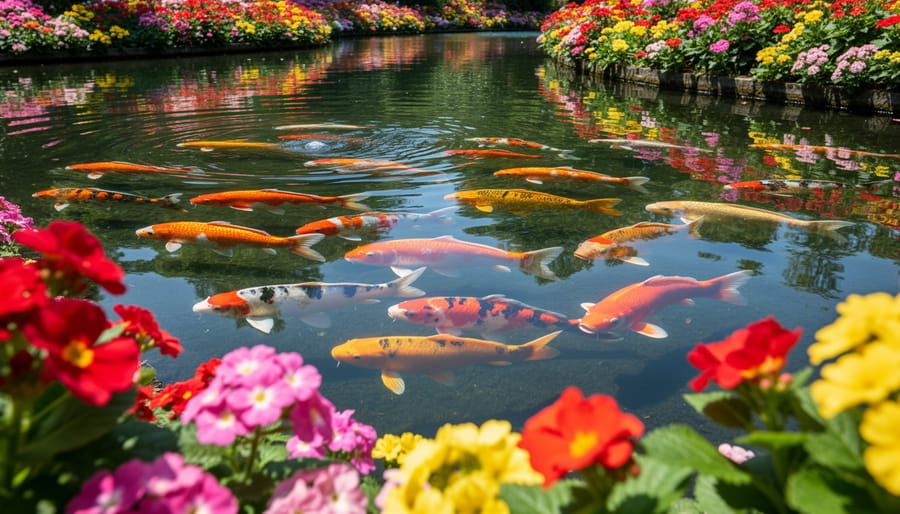
Color transforms your pond from a static feature into a living canvas that shifts with the seasons and surprises visitors throughout the year. Unlike fixed landscape elements, water gardens offer unique opportunities to layer colors through aquatic plants, fish, and hardscape materials that interact with changing light and reflections.
Start by planning your color palette around seasonal shifts. Water lilies bloom in shades from pure white to deep crimson during warmer months, while iris varieties provide purple, yellow, and blue accents in spring. Foliage plants like taro offer dramatic burgundy or chartreuse leaves that contrast beautifully with green-leaved companions. Your fish become moving color elements, golden koi catch sunlight as they glide beneath the surface, while shubunkin goldfish add splashes of blue, red, and black.
Consider these seasonal palettes for year-round interest:
- Spring: soft pinks, pale yellows, lavender iris, and fresh green emerging foliage
- Summer: vibrant reds, oranges, deep purples from tropical water lilies and cannas
- Autumn: warm copper, bronze, and rust tones from ornamental grasses and changing leaves
- Winter: structural silvers, tans, and rich browns from seed heads and bare stems
Warm colors like reds, oranges, and yellows create energy and draw visitors closer to the pond edge, while cool blues, purples, and silvers promote calm and make spaces feel larger. Place warm tones near seating areas where you want interaction, and use cool colors in distant corners to add depth.
Water doubles your color impact through reflections. A single burgundy Japanese maple overhanging the pond creates both direct color and a mirrored image that shifts with ripples. Position beautiful textures and colors where they’ll catch afternoon light for the most dramatic reflections, and remember that darker pond bottoms intensify color reflections compared to light-colored liners.
5. Value, Playing with Light, Shadow, and Contrast for Drama
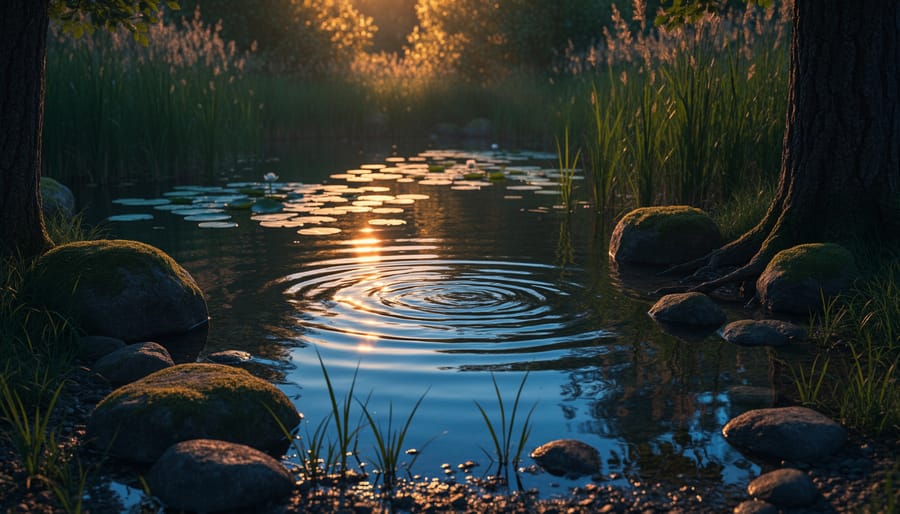
Value is your secret weapon for creating drama around your pond. Think of it as controlling the interplay between light and darkness to make visitors stop and stare.
Start with your pond bottom. A dark liner (black or deep charcoal) makes water look deeper and more mysterious than it actually is. The contrast against light-colored koi creates a natural spotlight effect as fish glide through what appears to be an endless void. Conversely, pale sand or light gravel around the edges draws the eye outward and makes paths feel inviting.
Overhanging plants create pockets of shadow that change throughout the day. Position a Japanese maple or willow where it casts dappled shade across the water at noon, and you’ll get shifting patterns that turn the surface into moving art. These shadowy areas give visitors a reason to return at different times, discovering new moods as the sun tracks across your garden.
The magic really happens at dusk. Strategic lighting transforms value relationships completely. Uplight a pale boulder and it becomes a glowing sculpture. Backlight a fountain and the spray turns into liquid silver against the dark sky. Submersible lights placed beneath waterfalls create dramatic illumination that makes white water appear to float in darkness.
Try this combination: dark stones as pond edging, light-colored grasses (like feather reed grass) planted behind them, and a spotlight angled to create long shadows at twilight. The value contrast between illuminated plumes and their dark silhouettes creates depth that pulls people closer. Your pond becomes a living theater where light and shadow perform nightly.
6. Texture, Engaging the Sense of Touch and Visual Interest
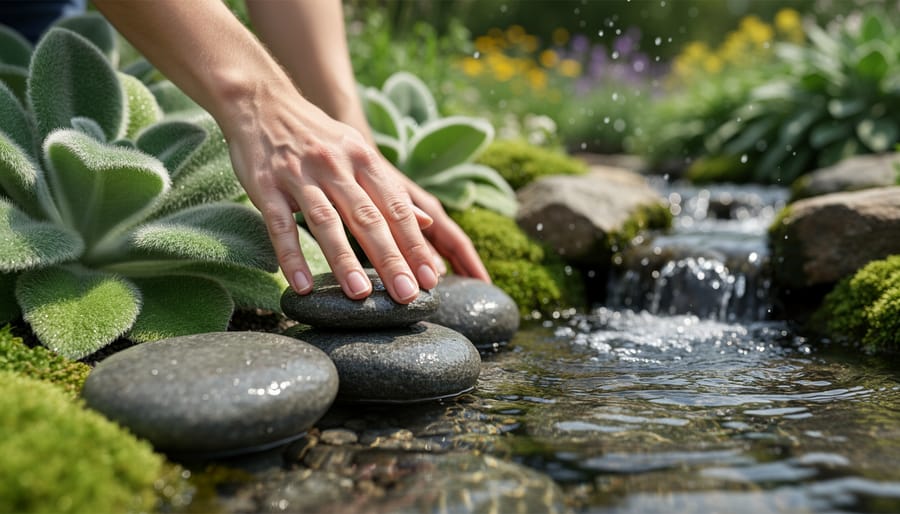
Texture transforms your pond from a visual experience into something visitors instinctively want to touch. When you place smooth river stones next to rough bark or fuzzy plants at the water’s edge, you create natural stopping points where people pause to run their hands across surfaces, connecting physically with your design.
The key is creating deliberate contrasts at arm’s reach around your pond. Position velvety lamb’s ear or soft ferns where visitors naturally lean in to look at fish. Place rough-textured boulders next to smooth pebble beaches. Let spiky ornamental grasses brush against the legs of anyone walking your pond-side path. These tactile moments make your water garden memorable because they engage more than just the eyes.
Water itself offers the most dynamic texture in your landscape. Still water creates a mirror-smooth surface that begs to be touched, while gentle ripples add visual shimmer. A small waterfall or fountain introduces cascading texture that visitors both see and hear, pulling them closer. I’ve watched guests at my own pond spend minutes trailing fingers through different water zones, comparing the silky feel of calm areas to the energetic push of moving water near the spillway.
Strategic texture placement matters as much as variety. Consider these effective combinations:
- Smooth river rocks against rough limestone or weathered wood
- Soft moss or ground covers next to hard concrete or metal edging
- Static stone surfaces paired with moving grasses that sway in the breeze
- Sleek water lily pads floating near textured lotus seed pods
Place your most interesting textures at decision points where paths split or seating areas invite lingering. A bench backed by wispy grasses gives visitors something to touch while they rest. Stepping stones with varied surfaces, from polished to pebbled, create a sensory journey across the water.
7. Space, Designing Positive and Negative Areas for Balance
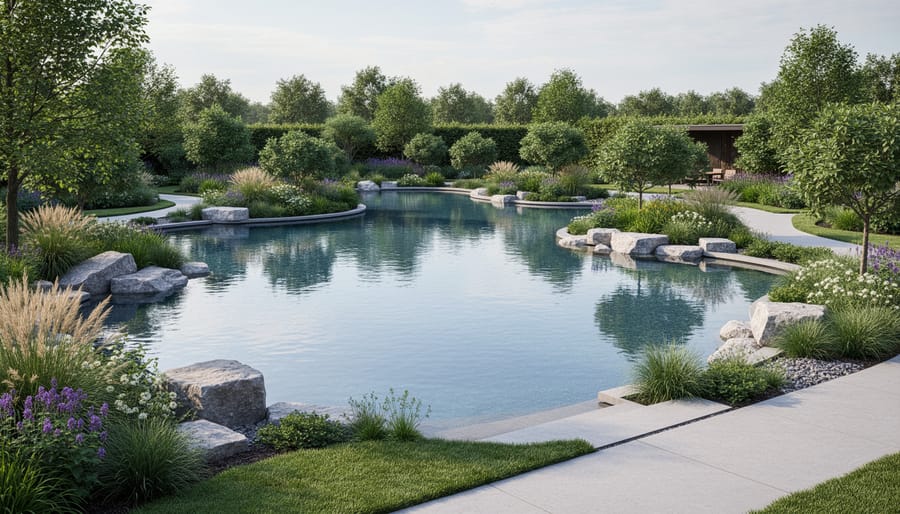
Space works as an invitation. When you balance open water against planted or hardscaped areas, you create natural stopping points where visitors pause to take in the view or settle onto a bench. The empty expanses of water, your negative space, give the eye a place to rest between clusters of lilies, rock groupings, and fountain features. Think of these open areas as breathing room that makes every positive element feel more intentional and noticeable.
A pond that’s crammed edge-to-edge with plants and decorations doesn’t invite interaction because there’s nowhere to focus. Instead, cluster your irises and water lettuce in distinct zones, leaving generous water gaps between them. These clear sections create pathways that guide koi movement and reflect the sky, drawing people around the perimeter to see what’s next. I’ve found that placing a single large boulder near one shore, surrounded by open water, pulls more attention than five rocks crowded together.
Vertical space adds another layer entirely. Vary your pond’s depth so shallow beach areas transition to deeper pockets, and let tall cattails or bamboo rise at different heights behind lower groundcovers. This stacking effect creates intimate nooks where visitors can crouch down to observe tadpoles in the shallows, then stand to admire the full sweep of the water garden from elevated deck areas. A well-designed pond offers both enclosed moments and expansive views depending on where you position yourself, turning a single landscape into multiple experiences shaped by how you’ve allocated your space.
Common Questions About Applying Art Elements to Pond Design
Do I need to use all seven elements?
No, you can create a beautiful pond using just two or three elements. Start with what excites you most and add others gradually as your design evolves.
How do I start if I’m not artistic?
Begin by observing what naturally draws your eye in your existing space. You’re already using these elements without realizing it, naming them simply helps you refine and expand what’s already working.
Can I apply these to an existing pond?
Absolutely. Most artistic enhancements work beautifully as additions to established ponds. You might add textured rocks around the edge, introduce colorful plants, or place a driftwood sculpture without major reconstruction.
What’s the most important element for small ponds?
Color and texture give you the biggest impact in compact spaces. A few vibrant plants and varied surface materials create visual richness without requiring much room.
How do these elements work together?
They naturally complement each other. A curved line might be created by textured stones in graduated colors, combining three elements in one feature. The more you work with them, the more instinctively you’ll layer them.
How much does it cost to incorporate artistic elements?
You can start with free or low-cost materials like collected stones, driftwood from walks, or division from existing plants. Many artistic improvements cost nothing but creativity and rearrangement of what you already have.
The beauty of working with art elements in pond design is that there’s no right or wrong answer. Your pond reflects your personal taste and the unique conditions of your space. Some gardeners naturally gravitate toward bold color contrasts, while others prefer subtle texture variations or dramatic form. Trust your instincts, experiment freely, and remember that water gardens change with every season. What you create today will look different next month, and that’s part of the joy.
Your pond doesn’t have to be a masterpiece overnight. Start with one element that excites you, maybe a pop of color from water lilies or a textured boulder placed just right, and watch how it changes the way you experience your space. These seven art principles aren’t rigid rules. They’re tools that help you see possibilities in every stone, plant, and ripple.
What makes water gardens special is that they’re never finished. They shift with the seasons, grow with time, and respond to your vision. Each adjustment you make teaches you something new about balance, contrast, and flow. Before long, you’ll have created something that’s uniquely yours, a living artwork that invites you to pause, touch, listen, and truly see what’s around you every single day.