
Smart Water Isn’t Reverse Osmosis (But Here’s What Actually Purifies Your Pond)
Understand that Smart Water bottled water does use reverse osmosis in its purification process, but this has almost nothing to do with your pond needs. The brand vapor-distills and adds electrolytes to drinking water, which sounds impressive but creates completely the wrong water quality for fish and plants.
Recognize that reverse osmosis removes nearly everything from water—minerals, beneficial bacteria, even oxygen—leaving it essentially “dead.” While perfect for removing contaminants in drinking water, RO-treated water lacks the buffering capacity and mineral content that pond ecosystems desperately need to thrive. Your fish require calcium for bone development, and your beneficial bacteria need minerals to establish colonies that keep ammonia and nitrite levels safe.
Skip the reverse osmosis system for your pond unless you’re dealing with extreme contamination like heavy metals or agricultural runoff. Even then, you’ll need to remineralize the water afterward, which defeats the purpose and wastes money. Standard municipal tap water, after dechlorination, works perfectly for most backyard ponds.
Focus instead on proper filtration, regular partial water changes, and maintaining beneficial bacteria colonies. These methods address the real challenges pond owners face—algae control, ammonia spikes, and murky water—without stripping away the minerals and trace elements your aquatic life depends on. If you’re concerned about tap water quality, simple dechlorinators and water conditioners handle chlorine and chloramine effectively at a fraction of the cost of RO systems.
What Smart Water Actually Is (And Why It Confused You)
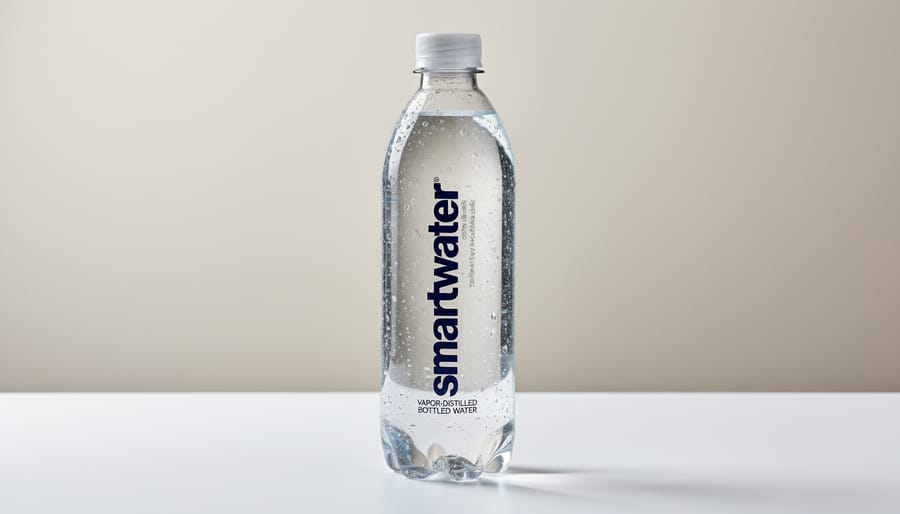
Hey, I totally get why you might be scratching your head about this one! If you’ve been Googling whether Smart Water uses reverse osmosis, you’re definitely not alone. Here’s the thing: Smart Water (the popular bottled water brand you see at the grocery store) isn’t made with reverse osmosis at all. It’s actually vapor-distilled, which is a completely different purification method.
So what’s the difference? Think of distillation like this: the water gets heated until it turns into steam, leaving behind minerals, chemicals, and impurities. Then that steam cools back down into pure water. It’s kind of like how rain forms naturally, but in a controlled factory setting. After distillation, Smart Water adds back specific electrolytes for taste.
Reverse osmosis, on the other hand, pushes water through an incredibly fine membrane filter that catches contaminants. No heating or steam involved—just really good filtration under pressure.
Now, here’s where pond owners sometimes get confused. When you’re searching for information about water purification for your pond or water garden, you might stumble across Smart Water results and wonder if it’s relevant to your situation. The truth is, understanding these purification methods matters more than the brand name. Whether you’re considering treating tap water for your koi pond or wondering about water quality for sensitive aquatic plants, knowing how different purification systems work helps you make informed decisions.
The good news? For most pond applications, you probably don’t need either distilled or reverse osmosis water. But we’ll get into what you actually need in just a bit!
Reverse Osmosis Explained for Water Gardeners
How RO Works Without the Science Jargon
Think of reverse osmosis like a super-fine coffee filter for your water. You know how a coffee filter catches grounds while letting the liquid through? RO does something similar, but way more precise.
The heart of the system is a special membrane with microscopic pores—we’re talking incredibly tiny, like trying to push a basketball through a chain-link fence. Water molecules are small enough to squeeze through, but dissolved minerals, chemicals, and contaminants are too large and get trapped on one side.
Here’s the clever part: you need pressure to push water through these tiny holes, which is why RO systems have pumps. Imagine trying to squeeze water through a sponge versus just pouring it through a strainer—that’s the difference.
The result? You get purified water on one side and concentrated waste water (with all the rejected stuff) on the other. It’s like separating the good from the bad using nothing but size and pressure. The membrane does all the heavy lifting, catching things even smaller than what your eyes can see—including dissolved salts, heavy metals, and many chemicals.
What RO Removes (And What It Doesn’t)
Reverse osmosis works like nature’s finest filter, removing an impressive range of substances from water. The good news? It eliminates nearly all dissolved solids, including chlorine, chloramines, heavy metals like lead and copper, nitrates, phosphates, and various dissolved minerals. This makes it incredibly effective at producing ultra-pure water.
For pond keeping, understanding what RO removes helps you make informed decisions. It strips out around 95-99% of total dissolved solids, meaning beneficial minerals like calcium and magnesium disappear along with the bad stuff. Think of it as hitting the reset button on your water chemistry.
What RO doesn’t remove might surprise you. It won’t eliminate certain volatile organic compounds, some pesticides, or dissolved gases. Most importantly for pond owners, it doesn’t remove everything you actually want in your pond water.
Here’s the practical reality: while RO creates a blank canvas, your pond ecosystem typically needs some mineral content for biological filtration and fish health. That ultra-pure water, though technically perfect, often requires remineralization before it becomes pond-ready. It’s like baking bread from scratch when sometimes a quality store-bought loaf works just fine for your specific recipe.
Smart Water Feature Technology: Your Pond’s Autopilot System
Sensors That Watch Your Water 24/7
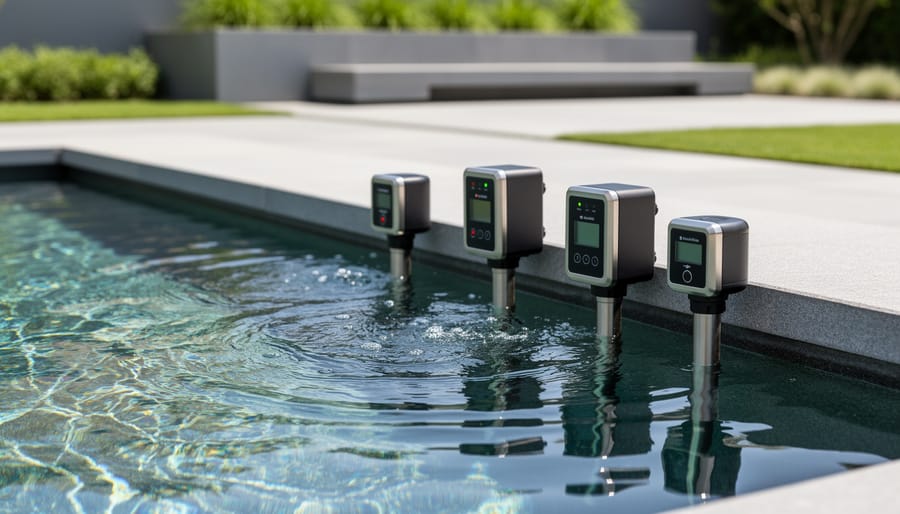
Modern technology has revolutionized how we care for our water features, and smart monitoring systems are becoming increasingly accessible for everyday pond owners like us. Gone are the days of manually testing water every few days and hoping everything stays balanced between checks.
Today’s smart sensors act as your pond’s guardian angels, keeping constant watch over critical water parameters. pH monitors are perhaps the most popular, sending real-time alerts to your smartphone when acidity levels drift outside the safe zone for your fish and plants. I remember losing several koi before investing in automated monitoring—those sleepless nights wondering if my water chemistry was stable are thankfully behind me.
Temperature sensors are equally valuable, especially during seasonal transitions when rapid temperature swings can stress aquatic life. These devices track both water and ambient temperatures, helping you anticipate problems before they affect your pond inhabitants.
Water quality detectors have become incredibly sophisticated yet surprisingly affordable. Many systems now measure multiple parameters simultaneously—ammonia, nitrites, nitrates, dissolved oxygen, and even turbidity. Some connect to your home Wi-Fi and create detailed graphs showing trends over weeks or months, making it easy to spot patterns and adjust your maintenance routine accordingly.
The beauty of these sensors is their simplicity. Most install in minutes without professional help, and the peace of mind they provide is genuinely priceless for any serious water gardener.
Automated Systems That Do the Work for You
Let me tell you about one of the most exciting developments in water gardening – technology that actually thinks for you! Modern automated systems are making pond maintenance easier than ever before.
Smart pumps are the workhorses of this revolution. They automatically adjust their flow rates based on water levels, temperature, and even time of day. No more waking up at 3am worried about your pump running dry – these clever devices sense water levels and slow down or stop when needed.
Automatic dosing systems are another game-changer. Once you’ve set your desired parameters, they release the exact amount of beneficial bacteria, pH adjusters, or clarifiers your pond needs. Think of it as having a personal pond keeper who never forgets to add treatments at the right time.
The real magic happens with app-controlled features. From your phone, you can monitor water quality, adjust fountain spray patterns, or turn on your pond lights before you even get home. Many systems send alerts straight to your mobile if something needs attention – like when your filter needs cleaning or water temperature drops too low.
These smart features work together, responding to sensor data in real-time. It’s like having a fully automated pond management team working 24/7. While the upfront investment might seem significant, the time saved and stress reduced makes it worthwhile for many pond owners.
When Your Pond Actually Needs Reverse Osmosis (Spoiler: Probably Not)
The Problem with Ultra-Pure Water in Ponds
Here’s the thing about reverse osmosis water in ponds—it’s almost too clean for its own good! I learned this lesson the hard way when I enthusiastically filled my new koi pond with perfectly purified RO water, thinking I was giving my fish the ultimate spa treatment.
Ultra-pure water stripped of all minerals creates what we call an unstable environment. Think of it like trying to live in a completely sterile bubble—technically clean, but missing essential elements for life. Fish need trace minerals in their water to maintain proper gill function and overall health. Without these minerals, the water can actually pull electrolytes from your fish’s bodies through osmosis, stressing them out considerably.
Your beneficial bacteria colony faces similar challenges. These microscopic heroes that keep your pond balanced need minerals to thrive and establish themselves. In demineralized water, they struggle to colonize properly, which means your biological filtration system won’t work as effectively.
Pond plants also suffer in mineral-free water. They rely on dissolved nutrients to grow strong and vibrant. Without calcium, magnesium, and other trace elements, you’ll notice stunted growth and yellowing leaves.
The water’s pH stability becomes problematic too. Without mineral buffering capacity, your pond’s pH can swing wildly with even minor changes, creating a rollercoaster environment that stresses everything living in your water feature.
The Few Cases Where RO Makes Sense
While reverse osmosis isn’t necessary for most backyard ponds, there are a few specific situations where it actually makes perfect sense.
If you’re breeding delicate fish species like discus or certain rare goldfish varieties, RO water gives you precise control over water chemistry. These sensitive fish need very specific conditions to thrive and reproduce successfully, and starting with purified water lets you add back exactly the minerals they need.
Dealing with seriously contaminated well water? That’s another scenario where RO shines. I’ve talked with pond owners whose wells had dangerously high levels of nitrates, heavy metals, or agricultural runoff. In these extreme cases, reverse osmosis effectively removes contaminants that could harm fish and plants. However, before investing in an expensive RO system, get your water tested first. You might discover your water issues can be solved with simpler, more affordable filtration methods.
Small indoor aquariums and quarantine tanks are also great candidates for RO water. The smaller water volume makes using purified water practical and cost-effective.
For everyone else with typical municipal water or decent well water, you’re better off focusing on proper filtration, beneficial bacteria, and regular maintenance. These tried-and-true methods work beautifully without the expense and hassle of reverse osmosis systems.
Better Water Treatment Options for Your Water Garden
Simple Treatments That Actually Work
Here’s the good news: you don’t need fancy equipment to maintain beautiful, clear pond water! Most water garden challenges can be solved with straightforward, budget-friendly treatments that deliver real results.
Start with a quality water conditioner to neutralize harmful chlorine and chloramines from tap water during fill-ups or water changes. Think of it as giving your pond an instant safety boost. I keep a bottle by my pond year-round because even small top-ups need treatment.
Next, embrace beneficial bacteria products. These tiny helpers are absolute game-changers for pond health. They naturally break down fish waste, uneaten food, and decaying plant matter that would otherwise cloud your water and harm your fish. Apply them regularly during warmer months when bacterial activity peaks, and you’ll notice a significant difference within weeks.
For basic filtration, a simple mechanical filter removes debris and keeps water circulating. Pair this with biological filtration, where beneficial bacteria colonize filter media to process harmful ammonia and nitrites. This combination handles most everyday water quality issues without complex systems.
Add some aquatic plants to the mix, and you’ve created a natural filtration powerhouse. Plants absorb excess nutrients that algae would otherwise feast on, keeping your water clear and balanced.
These simple treatments work together beautifully, creating a healthy ecosystem without reverse osmosis or expensive technology.
Pairing Smart Tech with Traditional Filtration
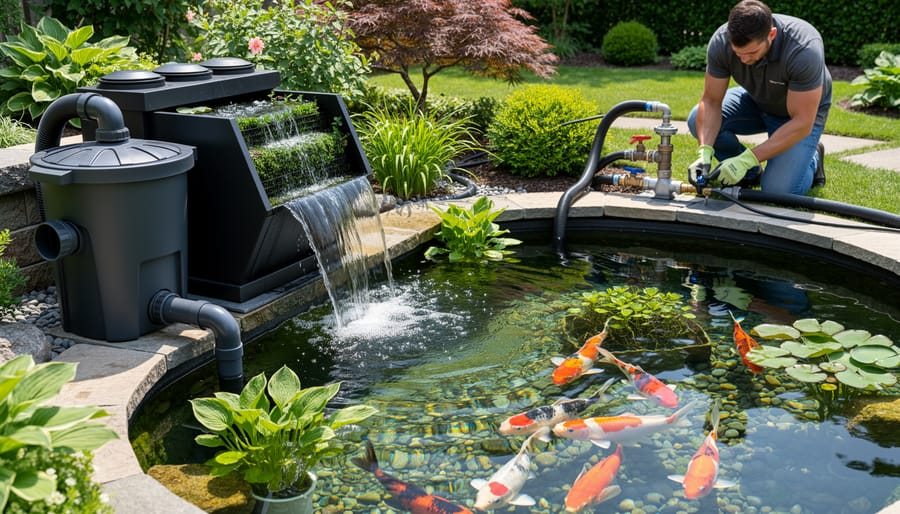
Here’s the exciting part—you don’t have to choose between old-school reliability and modern convenience! Think of smart technology and traditional filtration as best friends working together to keep your pond pristine.
Start with what works. Your mechanical filters, biological media, and UV clarifiers are the backbone of water quality management. These proven filtration methods handle the heavy lifting—removing debris, breaking down harmful ammonia, and controlling algae. They’ve been keeping ponds healthy for decades, and they’re not going anywhere.
Now, add smart monitoring to supercharge your system. Install sensors that track water parameters like pH, temperature, and oxygen levels in real-time. Connect them to your smartphone so you receive alerts when something needs attention. I learned this lesson after losing some beautiful koi during a hot summer—a simple temperature sensor would have warned me to add extra aeration before it became critical.
The beauty of this combination is that smart tech tells you when to act, while your traditional filters do the actual work. You’re not replacing reliability with gadgets; you’re adding eyes and ears to your existing setup.
Consider smart pump controllers that adjust flow rates based on water conditions, or automated feeding systems that prevent overfeeding and excess waste. These additions work alongside your standard equipment, creating a comprehensive system that’s both dependable and intelligent. You get the security of time-tested filtration with the convenience of modern monitoring.
So, let’s clear things up once and for all. Smart Water the bottled brand isn’t made using reverse osmosis, despite what many people assume. It uses a different purification process called vapor distillation. But here’s the more important takeaway for you as a pond owner: most water features don’t actually need reverse osmosis water at all.
Reverse osmosis removes almost everything from water, including the beneficial minerals that support healthy pond ecosystems. Unless you’re dealing with extremely specific situations like breeding delicate fish species or managing severe contamination issues, RO water is overkill and potentially problematic for your typical backyard pond.
Instead of chasing expensive purification systems you probably don’t need, focus your energy on what really matters: smart monitoring technology combined with the right filtration system for your specific setup. Test your water regularly, understand what those numbers mean, and choose filtration methods that target your actual problems, whether that’s algae control, debris removal, or balancing nutrients.
The beauty of modern pond keeping is that you have access to tools and technology our predecessors could only dream about. Smart sensors can alert you to pH swings before they become disasters. Quality mechanical and biological filters handle the heavy lifting. And simple dechlorinators solve most tap water concerns.
Your pond is unique, with its own personality, inhabitants, and challenges. Making informed decisions means understanding what your water feature truly needs, not following one-size-fits-all solutions or brand-name confusion. Trust your testing, observe your ecosystem, and give your pond exactly what it needs to thrive.