
Your Pond is Slowly Turning Into a Swamp (Here’s How to Stop It)
Notice the water’s edge creeping inward each season? That’s sediment accumulation at work, and left unchecked, your crystal-clear pond will transform into a shallow marsh within just a few years. The good news: you can slow, stop, or even reverse this natural process with the right approach.
Every pond faces the same quiet enemy. Rain washes soil from surrounding land. Decomposing leaves and plant material sink to the bottom. Fish waste settles into layers. Algae blooms die off and add their mass to the growing muck. Year after year, these deposits build up, reducing water depth and changing the entire character of your water feature. What started as a beautiful six-foot-deep pond might shrink to a muddy three-foot puddle choked with cattails and reeds.
I learned this lesson the hard way with my first backyard pond. Within three years, my once-pristine swimming hole for koi had turned into a bog garden I never intended to create. The transformation seemed to happen overnight, though the sediment had been silently accumulating all along. That experience taught me everything about prevention, maintenance, and restoration.
Understanding why ponds fill with sediment is only half the battle. The real challenge lies in maintaining a healthy pond ecosystem that resists excessive buildup while working with nature rather than against it. Whether you’re trying to save a pond that’s already becoming marsh-like or prevent the problem before it starts, practical solutions exist for every budget and skill level. From simple weekly tasks to seasonal deep-cleaning projects, you can keep your pond deep, clear, and thriving for decades to come.
Why Ponds Fill Up With Sediment (And Why It Matters)
The Natural Succession Process
Have you ever noticed your pond gradually getting shallower over the years, or spotted new plants sprouting in areas that used to be open water? You’re witnessing something ecologists call succession, which is just nature’s way of transforming one ecosystem into another over time.
Here’s how it works in your backyard pond. Every autumn, leaves drift into the water. Throughout the year, algae dies and sinks, fish waste accumulates, and soil washes in from surrounding areas. All this organic material settles on the bottom, creating a layer of nutrient-rich sediment. At first, you might only notice the water looking a bit murkier or the pond appearing slightly less deep than before.
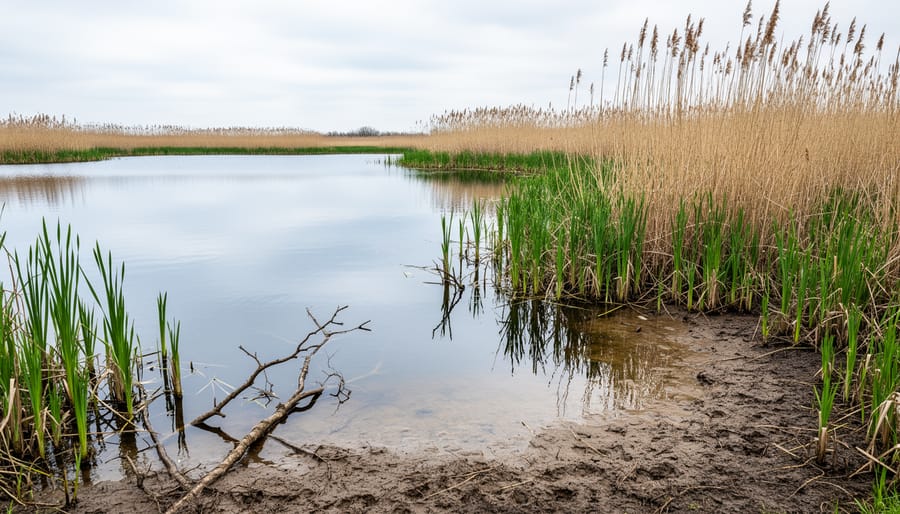
As sediment builds up, the pond becomes shallower, and this is where things get interesting. Shallow water means more sunlight reaches the bottom, and those nutrients in the sediment act like fertilizer. Before long, you’ll see cattails and rushes poking up along the edges where they couldn’t grow before. Water lilies and other aquatic plants start spreading into areas that were once too deep for them.
Year after year, this continues. The sediment layer thickens, the water gets shallower still, and more aggressive plants move in. Eventually, given enough time without intervention, your crystal-clear pond can transform into a marshy wetland where solid ground is replacing open water. This entire process might take decades or even centuries, but it’s constantly happening at varying speeds depending on your pond’s size and surroundings.
Signs Your Pond is Filling In
Catching sediment buildup early makes all the difference between a simple cleanup and a major restoration project. Here’s what to watch for during your regular pond visits.
The most obvious sign is reduced water depth. If you used to have three feet of water at your dock but now it’s barely two, sediment is taking over. Grab a measuring stick and check depths in several spots – you might be surprised how much has accumulated since last season.
Plant growth tells a story too. When cattails, rushes, and water lilies start marching toward the center of your pond where they never grew before, they’re responding to shallower water and richer sediment. It’s like they’re claiming new territory as your pond shrinks.
Murky, cloudy water that never seems to clear up is another red flag. Sure, water gets cloudy after rainstorms, but if yours stays brown or green for weeks, suspended sediment and organic matter are likely building up faster than your pond can handle.
Watch your fish behavior carefully. If they’re gasping at the surface more often or congregating in specific areas, declining water quality from sediment buildup might be reducing oxygen levels. Sediment doesn’t just take up space – it affects the whole ecosystem.
Finally, notice where you can walk. If you’re suddenly able to wade much farther into your pond without deep water, or if muddy areas are expanding around the edges, your pond is transitioning. These shallow zones are exactly where marshes begin.
Preventing Sediment Buildup Before It Starts
Smart Landscaping Around Your Pond
The area around your pond plays a huge role in how quickly sediment accumulates, so let’s talk about creating a landscape that actually protects your water feature instead of filling it up!
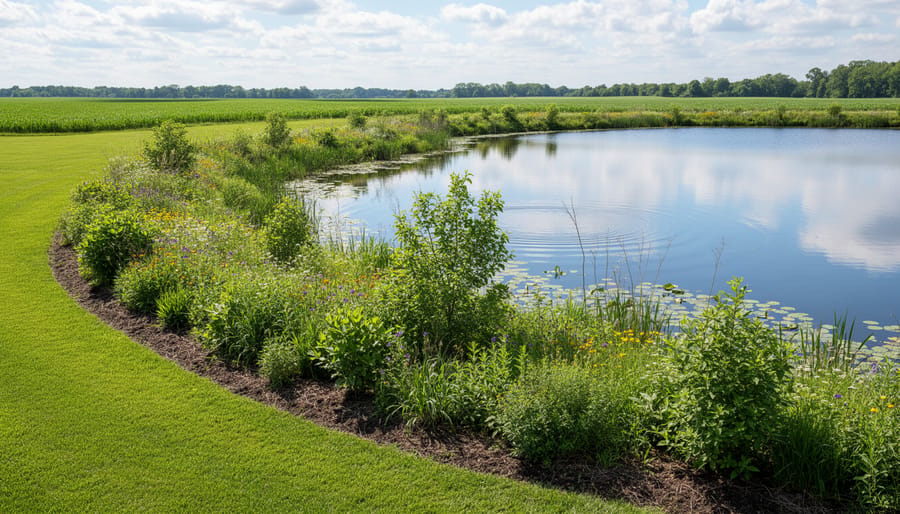
First, think about establishing buffer zones around your pond’s edge. I learned this lesson the hard way when heavy rain washed half my garden bed straight into my pond! A buffer zone is simply a protective barrier of vegetation between your pond and the rest of your yard. Plant a ring of native grasses, groundcovers, or appropriate plants about three to five feet wide around your pond’s perimeter. These plants act like nature’s filter, catching soil and debris before it reaches the water. They also stabilize the soil with their root systems, preventing erosion during storms.
Speaking of erosion, take a good look at the land surrounding your pond. Does water rush downhill toward it when it rains? You might need to redirect runoff using simple landscaping techniques. Consider creating gentle berms or swales that guide water away from your pond, or install a small rain garden uphill to catch and absorb runoff before it becomes a problem.
Position matters too. If you’re planning a new pond, avoid low-lying areas where water naturally collects, bringing sediment with it. A slight elevation change can make all the difference in keeping your pond clearer longer.
Managing Organic Matter
The best defense against sediment buildup is stopping organic matter from becoming sediment in the first place. Think of it as catching problems at the source rather than dealing with inches of muck later.
Start with autumn leaves, which are sediment waiting to happen. I learned this lesson the hard way after my first fall as a pond owner, when I skipped netting and spent the next spring dealing with a thick layer of decomposed leaves. Now I stretch fine mesh netting over my pond in October, securing it with stakes around the edges. When leaves pile up, I simply lift the netting, shake it out, and compost the leaves. This five-minute weekly task saves hours of dredging later.
Regular skimming makes a huge difference too. Keep a pond net handy and make it part of your morning routine. Grab floating leaves, grass clippings, and debris before they waterlog and sink. Even two minutes daily prevents far more sediment than monthly cleanups can remove.
Aquatic plants need managing as well. While they’re beautiful and beneficial, dying plant material adds to sediment. Trim back yellowing leaves throughout the growing season, and in fall, cut back marginal plants like cattails and irises to just above the waterline. Remove the trimmings completely rather than letting them fall into the water.
Fish populations directly impact sediment levels through their waste. Overcrowded ponds accumulate waste faster than beneficial bacteria can process it. A general guideline is one inch of fish per square foot of surface area, though filtration improves this capacity. If your water consistently looks murky despite cleaning, you might have too many fish for your pond size.
Using Beneficial Bacteria and Natural Enzymes
Here’s a secret I discovered during my third year of pond keeping: you can actually recruit tiny helpers to do the heavy lifting! Beneficial bacteria and natural enzymes work like an invisible cleanup crew in your pond, breaking down leaves, fish waste, and other organic debris before it settles to the bottom and becomes that troublesome sediment.
Think of beneficial bacteria as microscopic composters. They consume organic matter and convert it into harmless compounds that either dissolve into the water or get used by your plants. The best part? This natural, chemical-free approach works continuously without any effort from you once established.
You can boost your pond’s bacterial population by adding commercial bacterial supplements, especially in spring when your pond wakes up from winter. I add mine monthly during the warm season, sprinkling the powder near my waterfall where oxygen levels are highest. Natural enzymes, which you can also buy in liquid or powder form, work alongside bacteria to accelerate the breakdown process.
The key is patience and consistency. Unlike mechanical removal that gives instant results, biological treatment prevents future buildup gradually, making it perfect for maintenance rather than emergency fixes.
Removing Sediment: Your Options Explained
Manual Removal for Small Ponds
For smaller ponds (under 1,000 gallons), you can absolutely tackle sediment removal yourself, and I find it’s actually quite satisfying to see the immediate results! The best time to do this is during spring or early summer when water levels are manageable and you won’t disturb nesting wildlife.
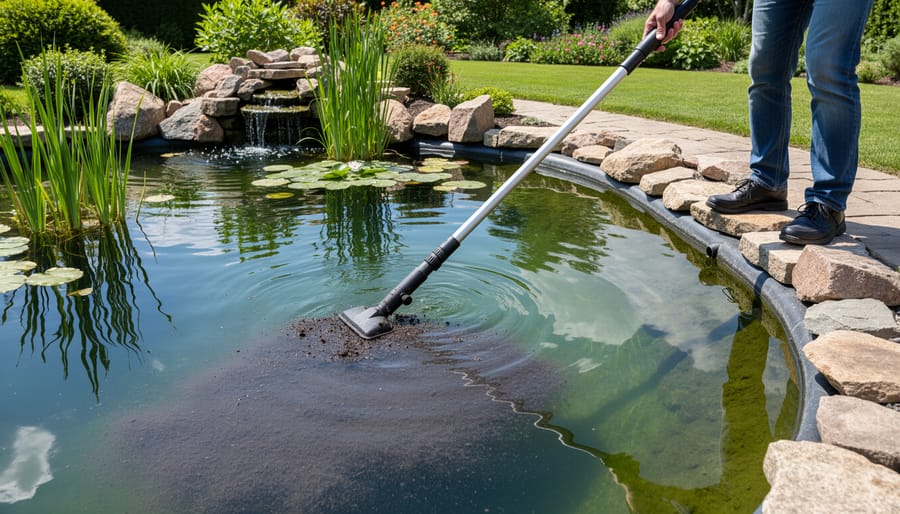
Let me walk you through what you’ll need. A pond vacuum is your best friend here – these handy devices work like a wet-dry vacuum specifically designed for underwater muck. You can find basic models for around $150-300, and they’re worth every penny. For shallow areas, a fine-mesh pond net works beautifully for scooping out loose sediment and debris. Keep some sturdy buckets nearby for collecting what you remove, and wear waterproof gloves and boots to keep comfortable.
Here’s how to tackle the job. Start by removing larger debris like leaves and twigs with your net – this prevents clogging your vacuum later. Next, work your pond vacuum systematically from one end to the other, moving in overlapping strips like you’re mowing a lawn. Focus especially on problem areas where sediment accumulates thickest, usually near inlets or corners. The vacuum will slurp up the muck along with some water, which you’ll need to empty periodically into your buckets.
The process of removing pond muck typically takes a few hours for a small pond, depending on how much sediment has built up.
Now, what do you do with all that muck? Good news – it’s fantastic for your garden! The nutrient-rich sediment makes excellent fertilizer for flower beds, vegetable gardens, or around trees. Spread it thinly and let it dry before working it into soil. Just avoid using it near water-sensitive plants initially, as it can be quite rich.
Dredging for Larger Water Features
When your pond reaches a certain size—typically over 1,000 square feet—or when sediment accumulation exceeds 18-24 inches deep, it’s time to consider professional dredging. I’ll be honest, this was a tough decision when my own pond became more marsh than water feature, but understanding the process made it much less intimidating.
Professional dredging involves specialized equipment like hydraulic dredges or dragline excavators that remove accumulated muck from the pond bottom. The contractor pumps or scoops sediment into a designated area where it can dry and be repurposed or removed. You’ll know dredging is necessary when DIY methods become impractical due to pond size, when sediment depth threatens the entire ecosystem, or when you’re dealing with compacted clay-like material that manual removal can’t tackle.
Before dredging begins, discuss fish and plant preservation with your contractor. Reputable companies will help you temporarily relocate fish to holding tanks and protect valuable aquatic plants. Many contractors schedule work during cooler months when aquatic life is less active, minimizing stress on your pond ecosystem.
Cost varies significantly based on pond size, sediment depth, and access difficulty. Expect to pay between 50 cents to two dollars per cubic yard of sediment removed, with minimum project costs starting around $2,000 for smaller residential ponds. While that sounds steep, consider that professional dredging typically restores ponds for 10-15 years when combined with proper maintenance.
Get multiple quotes, ask for references, and verify the contractor’s experience with residential water features. The disruption typically lasts a few days to a week, but the result—a rejuvenated pond with proper depth and clarity—makes it worthwhile.
The Smart Drain-and-Clean Approach
Sometimes your pond needs more than a spot-cleaning. If sediment has built up significantly or your water quality has seriously declined, a complete drain-and-clean gives you a fresh start. Think of it as a reset button for your pond ecosystem.
I’ll be honest with you – this is a big job, but it’s incredibly rewarding. The best time for a total cleanout is spring or early fall when temperatures are moderate and fish are less stressed.
Start by preparing a temporary holding area for your fish. A large stock tank or even clean plastic bins work well. Fill them with pond water, not fresh tap water, to minimize shock. Set up a small aerator if you have one – your fish friends need oxygen during their temporary stay.
Now for the draining. Use a pump to remove water, but here’s a tip from experience: stop when there’s still about six inches left. This makes it easier to catch fish without the stress of netting them from muddy puddles. Gently transfer your fish to their holding tanks, keeping them covered to prevent jumping.
Once emptied, remove the thick sediment layer with a shovel and bucket. Don’t aim for sparkling perfection though. Leave a thin layer of the old material – it contains beneficial bacteria that’ll help restart your ecosystem.
When refilling, add a dechlorinator if using tap water and reintroduce fish gradually once temperatures match. Your refreshed pond will thank you with clearer water and healthier conditions.
Working With Nature: When a Little Marsh Is Actually Good
Here’s something that might surprise you: not every pond needs to be crystal clear with open water stretching from edge to edge. In fact, a pond that’s developing some marshy characteristics isn’t necessarily in trouble—it might actually be creating a richer, more vibrant ecosystem.
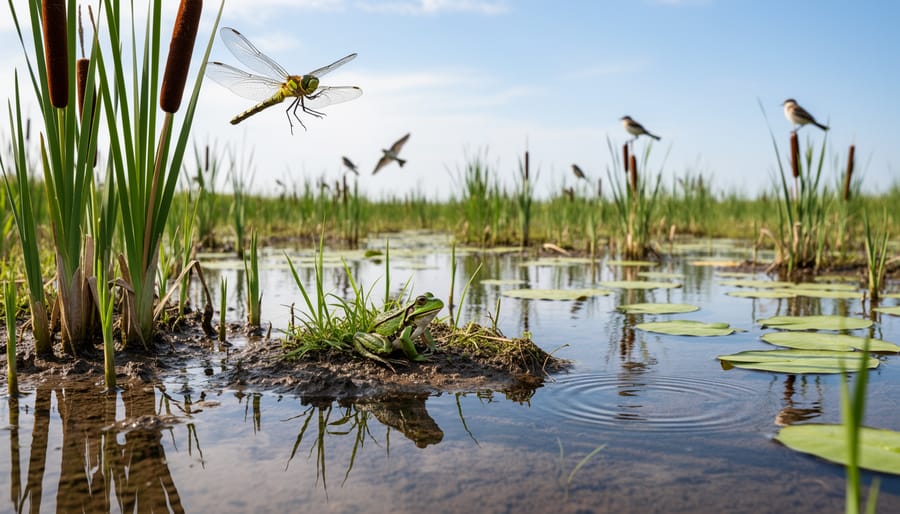
I learned this lesson the hard way when I spent an entire weekend removing every bit of vegetation from my pond’s shallow edges, only to notice that the frogs and dragonflies I’d loved watching suddenly disappeared. Turns out, those “messy” shallow areas were providing exactly what they needed to thrive.
The sweet spot lies in understanding that sediment and marsh plants serve important ecological purposes. Those muddy shallows and emerging plants create nursery areas for amphibians, feeding grounds for birds, and shelter for beneficial insects. The key isn’t preventing all sediment accumulation—it’s managing it so your pond doesn’t completely transform into a wetland unless that’s your goal.
Think of it this way: a healthy pond often has zones. You might have deeper, clearer areas in the center perfect for fish and water lilies, while the edges feature shallower sections with cattails, rushes, or iris that provide incredible wildlife benefits. This gradient from deep to shallow, clear to vegetated, actually mimics natural water bodies and supports diverse life.
The problem only arises when sediment accumulation tips the balance too far. If your entire pond is becoming shallow and choked with vegetation, or if the water quality is suffering, then intervention makes sense. But if you’ve got some lovely marginal plants establishing themselves in shallow areas while maintaining deeper zones for swimming or boating, you might have accidentally created something wonderful.
Consider these benefits before you wage war on every bit of sediment:
Shallow, vegetated areas filter nutrients naturally, actually helping prevent algae blooms in your deeper water. Those plant roots stabilize sediment and create habitat simultaneously. The insects that colonize marsh plants become food for fish and birds, creating a self-sustaining food web.
The goal isn’t eliminating all natural processes—it’s steering them in a direction that serves both your aesthetic preferences and the pond’s ecological health. Sometimes that means embracing a little wildness around the edges while keeping the center open and clear.
Creating Your Sediment Management Schedule
Managing sediment doesn’t have to feel overwhelming when you break it down into simple seasonal tasks. I’ve found that spending just a few minutes each season makes a world of difference compared to facing a massive cleanup project down the road. Think of it as giving your pond a regular checkup rather than waiting for emergency surgery!
Spring is when your pond wakes up, and it’s the perfect time for your most important sediment work. As temperatures rise above 50°F, plan a weekend for your annual cleanout if needed. This is when I tackle any dredging projects or use my pond vacuum to remove accumulated winter debris. The water’s cooler, making it easier to work, and you’re giving aquatic plants and beneficial bacteria time to establish before summer. Budget about 4-6 hours for a thorough spring cleaning, depending on your pond size. Also inspect your filtration system and clean or replace filters that might be clogged with sediment.
Summer shifts to prevention mode. Every two weeks, spend 15-20 minutes trimming back excessive plant growth before it drops leaves into the water. Check your aerator or fountain weekly to ensure it’s working properly. This is also prime time for adding beneficial bacteria products, which I do monthly during warm weather. These helpful microbes break down organic matter before it becomes sediment, and it literally takes two minutes to sprinkle them in.
Fall requires your second-biggest time investment. Install netting over your pond before leaves start dropping, saving yourself hours of skimming later. Once weekly, remove any debris that’s accumulated on the net. Before winter arrives, do a lighter cleaning session, removing excess plant material and checking that nothing’s blocking water flow.
Winter is mostly hands-off. Just ensure your aerator keeps running if you have fish, maintaining that crucial oxygen exchange. Check monthly that ice hasn’t completely sealed the surface, which takes about five minutes.
Here’s the thing about sediment filling your pond: it’s not a failure on your part, and it’s definitely not the end of your beautiful water feature. It’s simply nature doing what nature does. The good news? You’re now equipped with the knowledge and tools to work with that natural process rather than fight against it.
Managing sediment is an ongoing part of pond ownership, just like mowing your lawn or pruning your roses. But unlike those tasks that need weekly attention, sediment management can often be handled with just a few simple practices that become second nature over time. Plant some buffer vegetation around the edges, keep up with those regular small cleanouts, and you’ll be amazed at how little dramatic intervention your pond actually needs.
I’ve seen ponds bounce back from serious sediment problems to become sparkling showcases again. I’ve also watched friends maintain gorgeous, crystal-clear ponds for twenty years or more with nothing but consistent, gentle care. The secret isn’t fancy equipment or expensive treatments. It’s understanding your pond’s story and being willing to give it a little attention throughout the year.
So here’s your assignment: take a walk around your pond this week. Really look at it. Where is sediment entering? Is your pond already showing signs of filling in? Then pick just one prevention step from this article and commit to it. Maybe you’ll add some marginal plants next weekend, or finally install that simple sediment trap you’ve been considering. One small step today prevents a big project tomorrow, and your pond will reward you with years of beauty, wildlife visits, and peaceful water reflections that make all the effort worthwhile.