
How to Protect Your Pond When Wildfire Ash Starts Falling
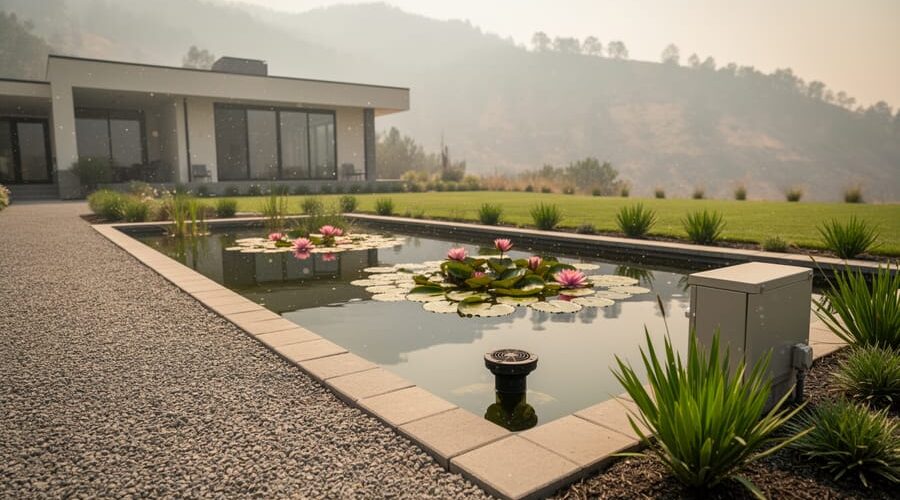
Position your pond as a defensive water reserve by maintaining a minimum 2,500-gallon capacity accessible to firefighting equipment, with a clearly marked access point at least 10 feet wide leading directly to the water’s edge. Install ember-resistant materials within a 30-foot perimeter around your pond—replace wood decking with concrete pavers, stone, or gravel, and remove overhanging branches that could drop burning debris into the water. Create defensible zones using fire-retardant aquatic plants like water lilies and lotus in the pond itself, while keeping surrounding vegetation low, green, and well-irrigated to prevent fire from traveling across your landscape.
Design your pond with ash contamination in mind from the start. Build in a skimmer system with oversized collection baskets you can empty quickly after ash fall, and install a bottom drain with shut-off capability so you can isolate contaminated surface water from your pond’s depths. Keep a supply of activated carbon and zeolite on hand—these materials absorb toxins from ash and can save your fish population when wildfire smoke arrives before flames do. Position pond equipment in fireproof enclosures or underground vaults, ensuring pumps and filters can continue operating even if embers rain down.
The reality facing pond owners in fire-prone regions isn’t whether wildfire will threaten your property, but when. Your pond can either become a liability filled with flammable debris and inaccessible water, or transform into your property’s most valuable defensive asset. By integrating climate resilience strategies into your pond’s design and maintenance routine, you create a water feature that protects itself while protecting your home.
Why Your Pond is Vulnerable During Wildfire Season
The Real Danger: Ash and Chemical Runoff
Here’s something most people don’t realize until it’s too late: the fire itself often causes less damage to your pond than what comes afterward. I learned this the hard way when a neighbor’s property burned and the resulting ash runoff turned my crystal-clear pond into a murky chemical soup within hours.
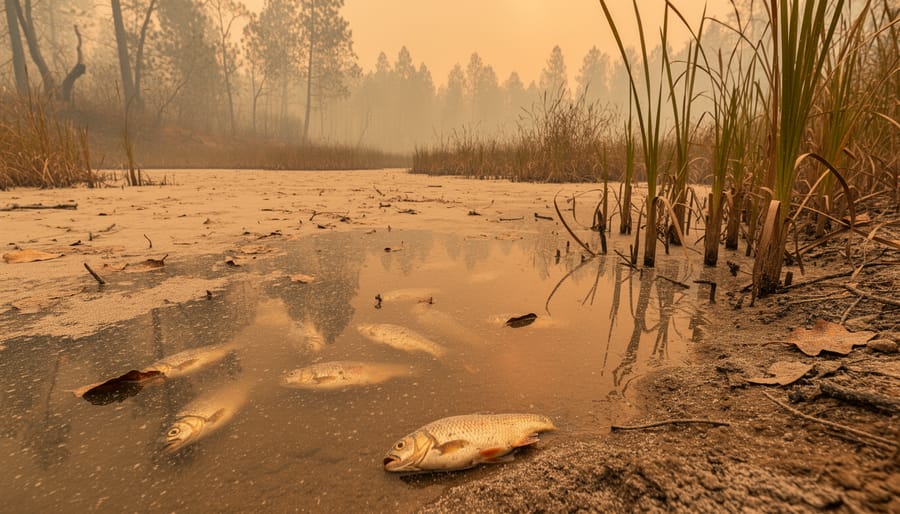
When ash settles on your property and mixes with rain or irrigation water, it creates a toxic cocktail that heads straight for the lowest point in your landscape—your pond. This isn’t just about cloudy water. Ash dramatically alters water chemistry in ways that can devastate your aquatic ecosystem.
First, ash causes sharp pH spikes, sometimes jumping from a healthy neutral range to dangerously alkaline levels above 9 or 10. Fish and beneficial bacteria can’t handle these sudden swings. I’ve seen koi gasping at the surface within 24 hours of ash contamination, their gills struggling in water that’s chemically hostile.
But pH is just the beginning. Wildfire ash carries heavy metals like mercury, lead, and arsenic from burned structures, treated lumber, and even vehicles. These metals settle into your pond substrate where they can poison fish and plants for months. The ash also dumps massive amounts of nutrients—nitrogen and phosphorus—into the water, triggering explosive algae blooms that suffocate everything beneath.
Chemical runoff from fire retardants adds another layer of danger. These products contain ammonia-based compounds that are directly toxic to fish even in small concentrations.
The bottom line? Post-fire runoff requires immediate action, not a wait-and-see approach. Understanding these chemical threats is your first step toward protecting the aquatic environment you’ve worked so hard to create.
Designing Your Pond for Wildfire Resilience
Smart Pond Placement and Defensible Space
Where you place your pond can make all the difference when wildfire threatens. Think of your pond not just as a beautiful water feature, but as an active participant in your property’s fire defense strategy.
The golden rule? Position your pond away from structures and dense vegetation that could carry flames. I learned this the hard way when visiting a friend’s property where their gorgeous koi pond sat just ten feet from a wooden fence line backed by ornamental grasses. Beautiful in spring, but a potential fire highway in summer. Ideally, you want at least 30 feet of clearance between your pond and any buildings, and even more distance from heavy brush or tree canopies.
Creating defensible space around your pond doesn’t mean turning your backyard into a barren moonscape. Start by establishing zones. Within the first five feet of your pond’s edge, stick with low-growing, fire-resistant ground covers and succulents. These plants retain moisture and won’t fuel flames. Move out to a second zone of 10-15 feet where you can include slightly taller plants, but keep them well-spaced. No plant should touch its neighbor, and definitely avoid creating dense clumps that trap dry leaves and debris.
Here’s a trick that works beautifully: use your pond as a natural firebreak by positioning it between your home and higher-risk areas like wooded sections of your property. The water itself, combined with the cleared zones around it, creates a gap that can slow or stop fire spread.
Maintain visibility too. Trim low-hanging branches up to six feet from the ground, and rake away pine needles, dead leaves, and plant debris regularly. Yes, some debris is natural and beneficial for wildlife, but during fire season, keeping areas around your pond tidy isn’t just aesthetic, it’s essential. You’re not sacrificing beauty; you’re designing smarter, choosing plants that look stunning while staying green and hydrated even in summer’s heat.
Fire-Resistant Materials and Construction Choices
When I rebuilt my pond after a close call with a brushfire, I learned firsthand that material choices make all the difference. If you’re tackling pond construction basics in a fire-prone area, selecting the right materials isn’t just about aesthetics—it’s about survival.
Start with your pond liner. EPDM rubber liners are excellent choices because they won’t ignite from embers, unlike cheaper PVC options that can melt and release harmful fumes. For extra protection, consider concrete or clay liners, which are completely non-combustible. Yes, they cost more upfront, but that investment pays off when fire threatens.
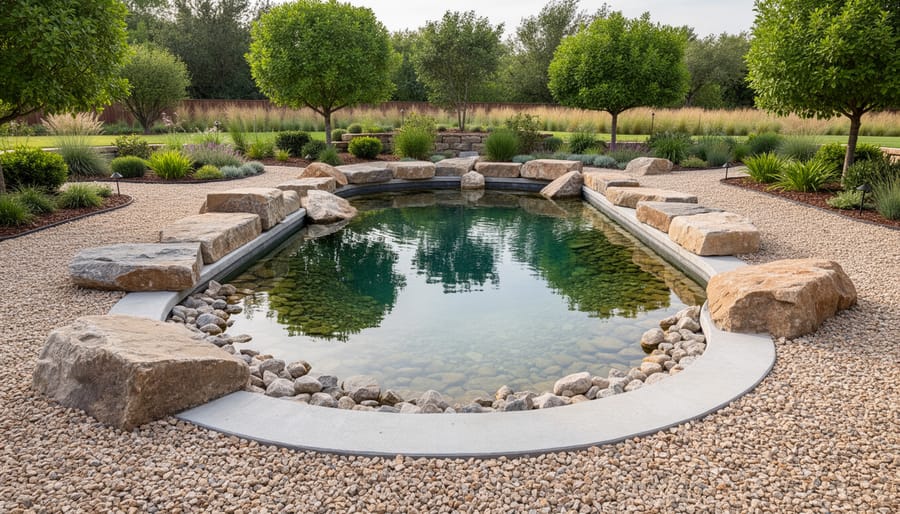
Your edging and hardscaping deserve equal attention. Stone pavers, natural rock, and concrete blocks create beautiful, fire-resistant borders that actually act as firebreaks. I’ve surrounded my pond with stacked slate and river rock—it looks gorgeous and gives me tremendous peace of mind. Metal edging works wonderfully too, though it can get hot during fires.
Avoid wood edging, decorative timber borders, and plastic landscape materials entirely. They’re essentially fuel waiting to ignite. If you currently have wooden deck sections near your pond, consider replacing them with stone patios or concrete pavers. One neighbor lost their entire pond surround because wooden railroad ties caught fire and contaminated the water.
For hardscaping features like waterfalls or fountains, stick with natural stone, cast concrete, or metal fixtures. Skip resin-based decorative elements and synthetic rocks—they’ll melt under intense heat and potentially leach chemicals into your water. Remember, fire-resistant doesn’t mean fireproof, but these materials significantly improve your pond’s chances of surviving unscathed while keeping your water safe from toxic contamination.
Protecting Your Pond Equipment
Your pond equipment is surprisingly vulnerable during a wildfire. Pumps, filters, and electrical components can be damaged or destroyed by flying embers and intense radiant heat, even if the flames never reach your property. I learned this the hard way when a neighbor’s equipment melted during a nearby brush fire, and it wasn’t even a direct hit.
Start by creating simple protective enclosures for your equipment. You don’t need anything fancy. A metal storage box or even a terra cotta planting pot turned upside down can shield your pump from embers. Make sure whatever you use has ventilation holes to prevent overheating during normal operation, but small enough that embers can’t easily enter. Position these enclosures away from wooden fences, dry vegetation, and other flammable materials. Keep at least a three-foot clearance zone around all equipment.
For electrical components like timers and GFCI outlets, consider installing weatherproof metal junction boxes. These are inexpensive and available at any hardware store. Mount them on non-combustible surfaces like brick or concrete rather than wood siding. If your equipment is currently housed in a wooden shed or cabinet, relocate it or replace the structure with metal or cement board.
Establish a clear emergency shutdown procedure before fire season arrives. Label your circuit breakers and know exactly which switches control your pond equipment. Create a laminated checklist that includes shutting off power, disconnecting hoses, and covering vulnerable components. Keep it posted near your electrical panel. During high fire danger days or if evacuation seems likely, go ahead and power down your system. Your fish can survive a few days without filtration much better than they’d survive a complete equipment failure.
Managing Ash Runoff and Water Contamination
Pre-Fire Prevention Strategies
The best defense against wildfire damage is preparation well before fire season arrives. Think of it like getting your pond ready for winter – a little effort now saves you major headaches later.
Start by assessing the landscape around your pond. Water naturally flows downhill, and after a fire, that water will carry ash, debris, and contamination straight toward your pond. Creating simple diversion channels upslope from your pond can redirect runoff away from the water. These don’t need to be elaborate – even shallow berms or swales lined with rocks can make a huge difference. I’ve seen friends in fire-prone areas dig trenches that loop around their ponds, sending ash-laden water to designated collection areas instead.
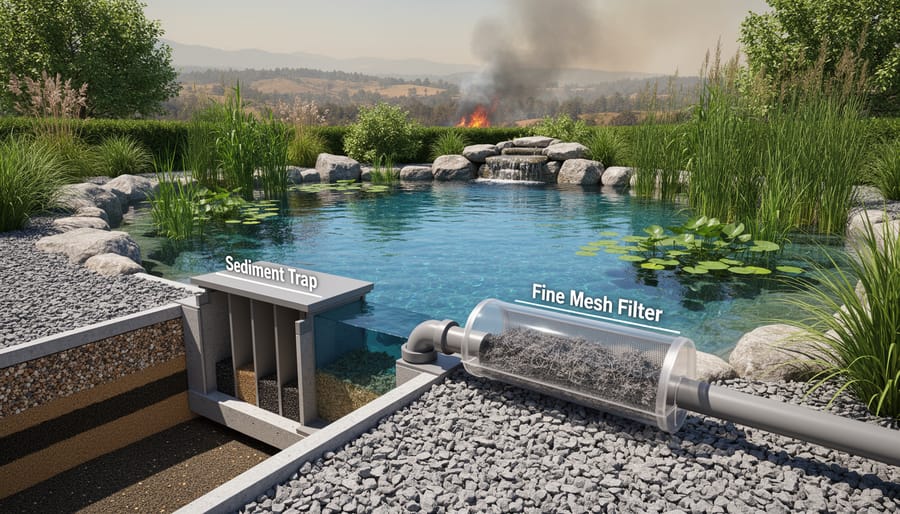
Sediment traps are your next line of defense. Position these upstream from your pond to catch debris before it enters the water. A basic trap can be as simple as a mesh-lined depression filled with gravel. The idea is to slow water down and let particles settle out naturally. Clean these regularly during fire season so they’re ready when you need them most.
Installing pond covers or netting might seem extreme, but in high-risk areas, they’re invaluable. Fine mesh netting stretched across your pond surface catches falling ash while still allowing gas exchange. Just ensure it’s securely anchored – you don’t want it blowing into the water during gusty conditions.
Consider upgrading your filtration systems before fire season hits. Adding pre-filters or foam barriers at intake points prevents ash from clogging your main filter. Some pond owners create temporary filtration barriers using filter floss or padding around pond edges during high-risk periods.
These proactive steps transform your pond from vulnerable to resilient, giving you peace of mind when fire warnings appear.
Emergency Response When Ash Falls
When ash starts falling, your first instinct might be to spring into action, but taking the right steps in the right order makes all the difference for your pond and fish.
First things first: turn off your filtration system immediately. I know this seems counterintuitive, but running your pump will pull ash directly through your filters and potentially into your biofilter, where it can clog everything and release harmful chemicals faster. Your fish can handle a few hours without circulation far better than they can handle contaminated water being pumped throughout the pond.
Next, if you have the ability to do so safely, cover as much of your pond surface as possible with tarps, plywood, or pond netting. Even partial coverage helps. During one wildfire season, a friend managed to protect about 60 percent of her pond surface with some old sheets weighted down at the edges, and it made cleanup dramatically easier.
Resist the urge to feed your fish during active ashfall. They’re stressed, their appetites are low, and uneaten food will just add to your water quality problems. Your fish will be fine without food for several days.
Once the ash stops falling and you can safely access your pond, test your water immediately. Focus on pH levels first, as ash typically makes water more alkaline. Also check ammonia levels, since ash contains nitrogen compounds that can spike quickly. Document these baseline numbers because you’ll need them to track how your remediation efforts are working over the coming days.
Post-Fire Water Recovery
Once the immediate danger has passed and you’re cleared to return home, it’s time to bring your pond back to life. I’ll be honest—this part requires patience, but your aquatic friends are counting on you to do it right.
Start by assessing the ash accumulation. If you see a light dusting, you’re in better shape than if there’s a thick layer. For surface ash, use a fine mesh net to gently skim it off before it settles to the bottom. Think of it like skimming leaves, but with extra care. Avoid stirring up the water, which just spreads the contamination.
Next, test your water immediately. Focus on pH levels first, as ash typically makes water more alkaline. Also check ammonia and nitrite levels, since ash introduces harmful compounds. Your local pond supply store can provide test kits if you don’t have them already.
Here’s where patience becomes crucial: resist the urge to do massive water changes right away. Instead, change about 10-15% of your pond water daily for the first week. This gradual approach prevents shocking any surviving fish or plants. During each change, use a pond vacuum to remove settled ash from the bottom.
Your beneficial bacteria colony likely took a hit, so you’ll need to rebuild it. Add a quality bacterial supplement according to package directions, and consider adding extra aeration to help the good bacteria reestablish themselves.
If ash contamination is severe, water tests show dangerous levels that won’t stabilize, or you’ve lost most of your aquatic life, don’t hesitate to call a pond professional. Sometimes expert intervention saves both time and heartache.
Plant Selection for Fire-Smart Water Gardens
Choosing the right plants for your water garden can make a real difference when wildfire threatens your property. I learned this firsthand after my neighbor’s pond area stayed remarkably green during a nearby fire, while surrounding landscapes turned brown and crispy. The secret? High-moisture plants strategically placed around the water’s edge.
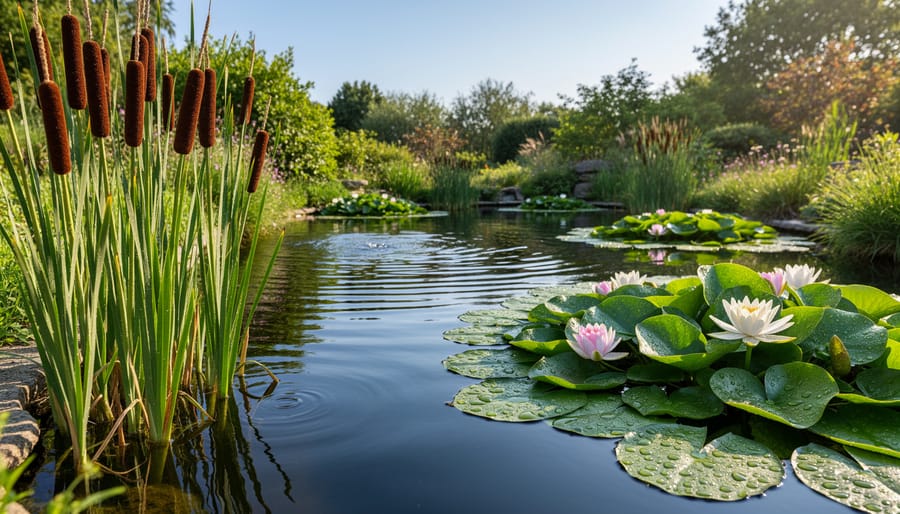
Start with pond plants that naturally retain water in their leaves and stems. Water lilies, lotus, and pickerelweed are excellent choices that float or emerge from the water itself, creating a moisture barrier. These plants don’t just look beautiful—they’re practically fireproof because they’re constantly hydrated from below.
For the immediate pond perimeter, consider fleshy, succulent-like marginals such as marsh marigold and cardinal flower. These climate-ready pond plants store water in their tissues, making them naturally fire-resistant. Position them in clusters rather than sparse arrangements to maximize their protective effect.
Here’s a tip I wish someone had told me earlier: some aquatic plants actually help filter ash particles from water. Cattails and rushes have dense root systems that trap sediment and debris, acting as natural biofilters when ash falls. Plant them on the windward side of your pond, where they’ll intercept airborne particles before contamination spreads.
Avoid planting trees with papery bark or resinous oils directly adjacent to your pond. Instead, maintain a ten-foot clearance zone of low-growing, moisture-loving perennials. Think creeping Jenny, water mint, and brooklime—plants that hug the ground and stay perpetually damp.
The goal isn’t creating a fortress, but rather designing layers of increasingly fire-resistant vegetation that protect your pond while maintaining that natural, inviting aesthetic we all love.
Protecting Your Fish and Wildlife
Your fish and aquatic wildlife face unique challenges during wildfire events, and knowing how to protect them can make all the difference. When smoke settles over your pond or ash begins to fall, your fish are already experiencing stress, even if they’re not showing obvious signs yet.
Watch for these stress indicators: fish gasping at the surface, clustering near aerators or waterfalls, or becoming unusually lethargic. These behaviors tell you the water quality is declining and oxygen levels may be dropping. Similar to extreme heat protection strategies, maintaining adequate aeration becomes absolutely critical during wildfire events.
If evacuation becomes necessary, have a plan ready. Keep large, clean containers or coolers on hand specifically for emergency fish transport. Fill them with existing pond water rather than tap water to minimize additional stress. Don’t overfeed before or during evacuation, as this depletes oxygen faster.
Creating refuge zones within your pond gives fish safer options when conditions deteriorate. Deep areas (at least three feet) provide cooler, more stable temperatures and better protection from surface contamination. If possible, position these zones away from prevailing winds that might push ash concentrations toward certain areas.
Consider adding temporary shade structures during fire season to reduce surface heating and provide psychological comfort for stressed fish. Even a simple tarp positioned above part of the pond can create a protective zone that fish will instinctively seek out when conditions become challenging.
Your Wildfire Preparedness Checklist
Let’s break this down into bite-sized chunks you can tackle throughout the year. I keep my own checklist on my phone so I can knock out tasks as the seasons change—trust me, it’s much less overwhelming than doing everything at once!
Seasonal Maintenance Tasks:
– Spring: Clear dead vegetation within 30 feet of your pond, clean gutters, trim overhanging branches, inspect pond liners for damage
– Summer: Remove dry leaves from pond surface weekly, check emergency water pumps, refresh your evacuation supply kit
– Fall: Rake and dispose of fallen leaves before they dry out, prune back ornamental grasses, test your backup power system
– Winter: Review and update your emergency contacts, photograph your property for insurance records, service fire extinguishers
Emergency Supplies to Keep Ready:
– Portable pump with battery backup or generator
– Pond netting and tarps for quick ash coverage
– N95 masks for ash cleanup
– Flashlights, first aid kit, and battery-powered radio
– Three days of water and food for family and pets
– Important documents in waterproof containers
Action Plan by Fire Proximity:
Fire Within 5 Miles: Cover your pond with netting, fill additional containers with pond water, prepare to evacuate, move combustibles away from structures.
Fire Within 1 Mile: Execute evacuation plan immediately, turn off gas, leave outdoor lights on, don’t wait for mandatory orders.
After Fire Passes: Wait for official clearance, assess ash contamination before uncovering pond, document all damage with photos.
I know thinking about wildfires can feel overwhelming, especially when you’re looking at your beautiful pond and wondering how to protect it. But here’s the good news: you’ve just armed yourself with practical knowledge that genuinely makes a difference. You don’t need to tackle everything at once or transform your entire property overnight.
Start with just one or two changes that feel manageable for your situation. Maybe it’s clearing vegetation around your pond’s edge this weekend, or ordering a pond cover for ash protection. Perhaps it’s simply creating a written emergency response plan and keeping ash removal tools handy. Each small step builds your resilience and reduces risk.
Remember, water gardeners in fire-prone areas have successfully protected their ponds using these exact strategies. Your pond can be both a source of joy and a valuable asset during wildfire season. The preparation you do today, even if it seems modest, creates real protection when you need it most. You’ve got this, and your pond will be better protected because you took the time to learn and act.