
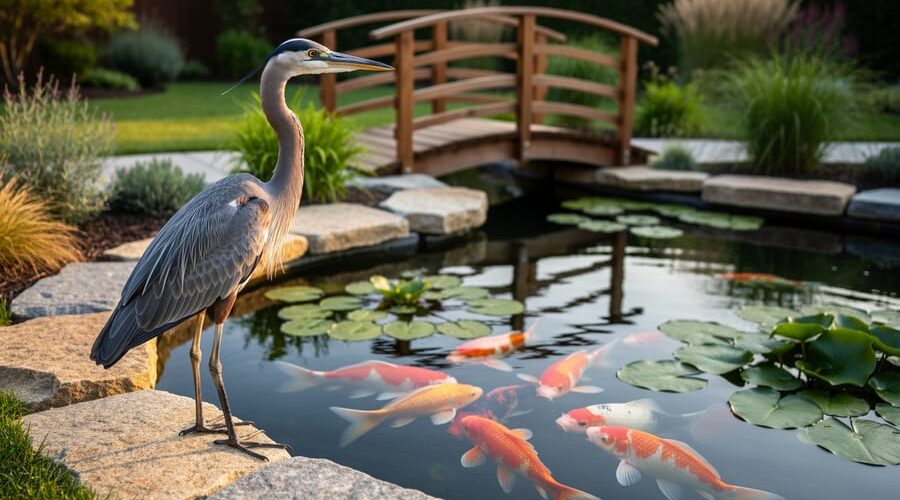
When Predators Threaten Your Pond Fish: Making Decisions That Feel Right
Discovering a heron standing at your pond’s edge or finding fish missing after a raccoon visit creates an immediate urge to protect your aquatic friends. Yet the decision to implement predator control shouldn’t be made hastily or emotionally. The most effective approach combines understanding why predators target your pond in the first place with humane deterrent methods that respect local wildlife while keeping your fish safe.
Your pond acts as a beacon to wildlife, advertising itself through visual cues, sounds, and scents that hungry predators can detect from surprising distances. Before considering any control measures, recognize that these animals are simply following their natural instincts. This doesn’t mean you have to sacrifice your cherished koi or goldfish, but it does mean your solutions should prioritize coexistence over elimination whenever possible.
The ethical considerations in predator management extend beyond personal preference. Many pond predators are protected species, making lethal control illegal in numerous regions. Even where it’s permitted, removal of one animal often creates a vacancy that another quickly fills, leaving you in an endless cycle without addressing the root attraction.
Successful predator control starts with accurate identification of which species you’re dealing with, followed by strategic implementation of physical barriers, visual deterrents, and habitat modifications. This systematic approach transforms your pond from an easy target into a protected sanctuary, giving you peace of mind while respecting the broader ecosystem around your water garden.
Understanding Your Pond’s Predator Problem
Common Culprits: Who’s Visiting Your Pond?
Before you can protect your pond, you need to know who’s dropping by for dinner! Let me share what I’ve learned from years of detective work around my own water garden.
Herons are the early risers, typically visiting at dawn. You’ll spot their telltale footprints in soft soil around the pond’s edge and notice fish that seem to vanish overnight. These patient hunters can stand motionless for ages, so even a brief glimpse means they’ve likely been visiting regularly.
Raccoons are the messy eaters of the common pond predators. They leave muddy paw prints and disturbed pond edges. I once found my pond plants scattered everywhere – classic raccoon behavior! They’re nocturnal, so check for disturbances each morning.
Cats, both domestic and feral, leave scratch marks near the water and create well-worn paths to their favorite fishing spots. They’re most active during twilight hours.
Kingfishers are beautiful but efficient hunters, diving from overhanging branches. You’ll hear their distinctive rattling call and might spot droppings on nearby perches.
Understanding these patterns helps you choose the right deterrent strategy for your specific visitor.
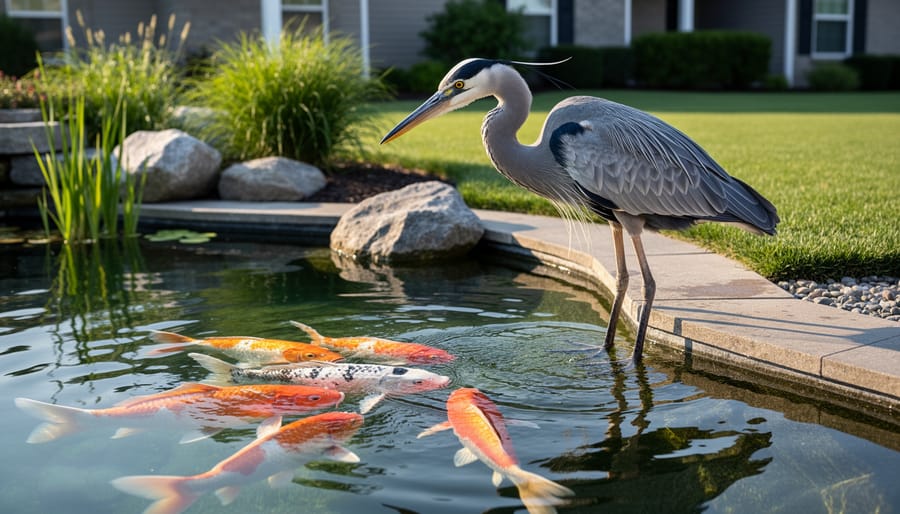
Why Your Pond Looks Like a Buffet
Here’s the thing that’s easy to forget when we’re frustrated: from a heron’s perspective, your pond isn’t someone’s backyard project. It’s a buffet line that just opened in their neighborhood.
Think about it from their point of view for a moment. You’ve created a shallow, clear body of water stocked with slow-moving, brightly colored fish that have nowhere to hide. There’s easy access from the edges, and the fish are often so tame they swim right up to investigate movement. If you were a predator, you’d think you’d hit the jackpot too!
Raccoons see a convenient fishing spot without the challenges of natural waterways. Herons discover a hunting ground far easier than wading through reeds and murky wetlands. Even neighborhood cats recognize an opportunity when they see one. You’ve essentially built the wildlife equivalent of a drive-through restaurant.
This isn’t about vilifying these animals. They’re simply doing what nature programmed them to do: find the easiest meal with the least effort. Understanding this perspective helps us approach predator control with both compassion and practicality, focusing on making our ponds less accessible rather than viewing wildlife as enemies.
The Ethical Framework: Questions to Ask Yourself
What Do You Owe Your Fish?
When you decided to add fish to your pond, you took on more than just feeding and maintenance—you became responsible for their safety and wellbeing. These aren’t just decorative elements; they’re living creatures that depend on you for protection. I learned this lesson the hard way when I lost three beautiful koi to a persistent heron before I took action.
Your fish can’t escape predators on their own. Unlike wild fish in vast lakes and streams, pond fish live in a confined space with nowhere to hide when danger approaches. They trust that their environment is safe because you’ve created it for them. That trust comes with responsibility. You owe them reasonable protection from threats, whether that’s a hungry raccoon, a patient heron, or a diving kingfisher. This doesn’t mean you need to harm wildlife, but it does mean taking thoughtful steps to create a safer home for your aquatic friends.
What Do You Owe the Wildlife?
Here’s a perspective shift that might help: those herons, raccoons, and otters visiting your pond aren’t intruders—they’re just doing what comes naturally. They were here long before our backyard ponds existed, following instincts honed over thousands of years.
Before jumping to extreme measures, consider that you’ve essentially created a buffet in their traditional hunting grounds. It’s not personal; it’s survival. Many of us find it helpful to view predator management as finding a middle ground rather than waging war. You can protect your fish while still respecting wildlife’s role in the ecosystem.
Think about providing alternative water sources nearby or leaving part of your property wilder to give predators other options. Sometimes, accepting that you might lose an occasional fish is part of the natural balance of maintaining a living water feature. This doesn’t mean being passive—deterrents and protective measures absolutely have their place—but approaching the situation with empathy often leads to more sustainable, less stressful solutions for everyone involved, including you.
What Does the Law Say?
Before taking action against pond predators, it’s important to know the legal landscape. Many predators, including herons, kingfishers, and certain turtles, are protected by federal and state wildlife laws. You can’t harm, trap, or relocate these animals without proper permits, and honestly, most of us wouldn’t want to anyway.
I learned this the hard way when a gorgeous blue heron became a regular at my pond. While I was frustrated about losing fish, I discovered that frightening the bird away was perfectly legal, but any physical intervention wasn’t. Check your local wildlife regulations before implementing any control measures, as rules vary significantly by region.
Some areas have specific ordinances about netting, fencing heights, or even noise deterrents. Your local wildlife agency or cooperative extension office can provide guidance on what’s permitted in your area. They’re usually incredibly helpful and may even offer suggestions for humane deterrents that work within the law. Remember, the goal is coexistence, not elimination, and staying within legal boundaries protects both you and the wildlife that makes our outdoor spaces so vibrant.
The Humane Approach: Non-Lethal Predator Control Methods
Physical Barriers That Actually Work
Sometimes the simplest solutions are the most effective. Physical barriers give you peace of mind while letting nature take its course elsewhere in your yard. Let’s explore what actually works.
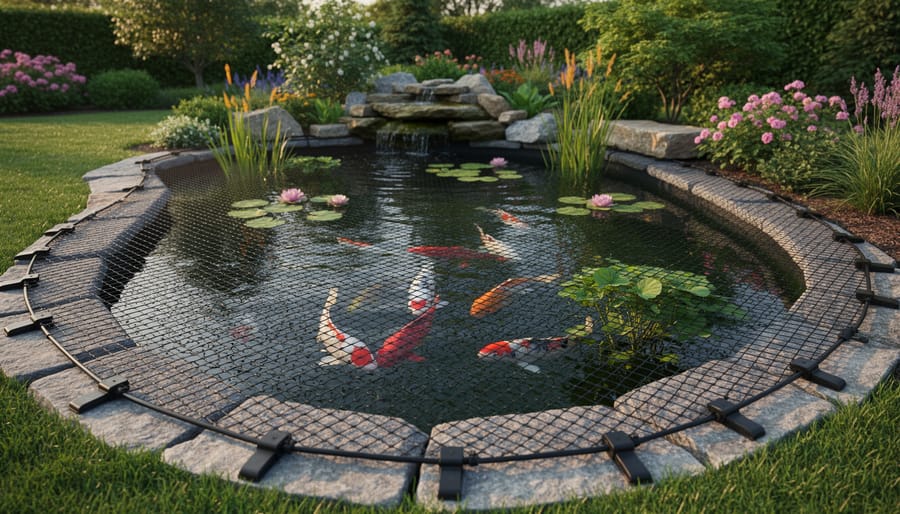
Netting remains one of my favorite proven defense strategies because it’s affordable and versatile. Stretch fine mesh netting across your pond surface, securing it with stakes or weights around the edges. Choose mesh small enough to stop herons but large enough that beneficial insects can still reach the water. I learned the hard way that cheap netting tangles easily, so invest in quality material designed for pond use.
Fencing works wonders for larger predators like raccoons and cats. A two-foot barrier around your pond perimeter disrupts their hunting angles. Wire mesh or decorative edging both do the job, and you can incorporate them into your landscaping design so they don’t look industrial.
Pond covers provide total protection during vulnerable times. Rigid covers work brilliantly in winter when you’re not enjoying the view daily, while removable frame-and-net systems let you quickly protect fish when predators are spotted.
Don’t overlook shelter structures within the pond itself. Overhanging rocks, submerged pipes, and aquatic plant clusters give fish safe hiding spots. Think of these as panic rooms for your fish, creating vertical layers and shadowy zones where predators can’t easily reach.
Deterrents and Scare Devices
Scare tactics can be surprisingly effective, especially when you rotate them regularly. I’ve had great success with motion-activated sprinklers positioned around my pond’s perimeter. The sudden burst of water startles herons and raccoons without harming them, and honestly, watching a surprised predator hop away makes me smile every time.
Decoy herons work on a simple principle: real herons are territorial and avoid areas where another heron appears established. Place your decoy near the water’s edge and move it every few days so it looks realistic. Just remember that decoys lose effectiveness over time as clever predators catch on to the ruse.
Motion-activated lights create an unwelcoming environment for nocturnal hunters like raccoons and possums. Since most predators prefer hunting under cover of darkness, bright LED lights that flash on when they approach can send them looking for easier meals elsewhere.
The key to success with any deterrent is variety and unpredictability. Predators are smart and adaptable, so mixing different methods keeps them guessing. One week I’ll use the sprinkler, the next I’ll add reflective tape that moves in the breeze. This rotating strategy has protected my fish much better than relying on just one solution.
Making Your Pond Less Attractive
Sometimes the best defense is making your pond less appealing to predators in the first place. Think of it as redesigning your backyard buffet so it’s not quite so inviting to unwelcome dinner guests.
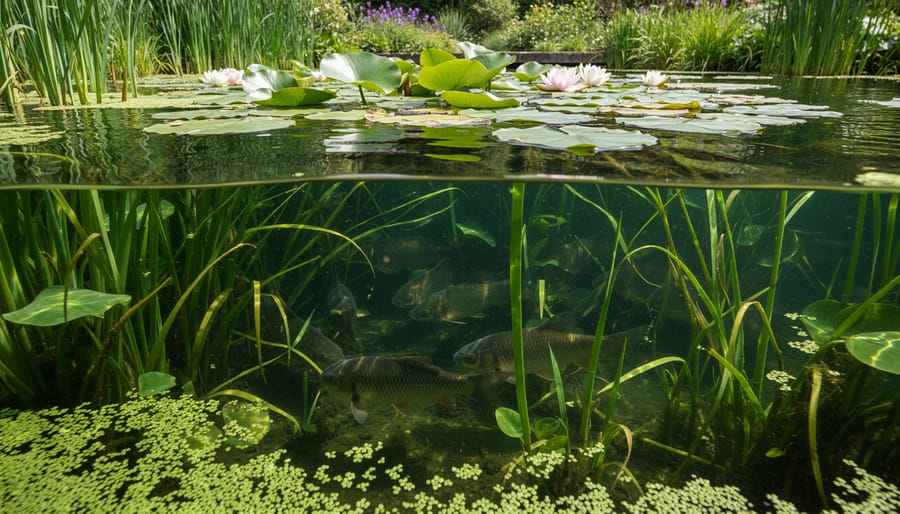
Start by creating depth zones in your pond. Aim for at least one area that’s 3-4 feet deep where fish can retreat when danger approaches. Herons and raccoons prefer shallow hunting grounds, so deeper water gives your fish a safe escape route. I learned this the hard way after losing several koi to a persistent heron who loved wading in my shallow edges.
Add plenty of hiding spots throughout your pond. Floating plants like water lilies provide overhead cover, while submerged structures like caves, tunnels, and large rocks create underwater refuges. PVC pipe sections work wonderfully as inexpensive fish shelters. Position these strategically so fish always have a quick hiding place nearby.
Dense aquatic vegetation around pond margins discourages wading birds from easy access. Plants like cattails, iris, and pickerel rush create natural barriers while enhancing your pond’s beauty. Just remember to leave some open water for viewing and oxygen exchange.
Consider placing netting or mesh just below the water surface in vulnerable areas. This creates an underwater barrier that doesn’t obstruct your view but prevents predators from diving deep.
When to Call for Help
Sometimes DIY solutions aren’t enough, and that’s completely okay. If you’re facing persistent predator problems despite your best efforts, or if you’re dealing with protected species like herons or eagles, it’s time to call in the professionals. Wildlife relocation specialists have the training and permits to safely handle animals without harm to you or them.
Consider professional help if predators return repeatedly, if you’ve identified bears, coyotes, or aggressive animals near your pond, or if local regulations restrict what you can do yourself. Many wildlife services offer humane trapping and relocation, ensuring animals find new homes in appropriate habitats far from residential areas.
I once struggled with a determined raccoon family until a wildlife expert showed me they’d actually made a den under my deck. The pros relocated them safely and helped me seal the entry points. Sometimes the kindest solution is admitting we need backup, and there’s no shame in protecting both your pond and the wildlife responsibly.
The Difficult Conversation: When Lethal Control Seems Necessary
Evaluating If You’ve Truly Exhausted Other Options
Before considering more intensive measures, let’s walk through a genuine evaluation together. I’ve been there myself, feeling like nothing was working, only to realize I’d missed a crucial step.
Start by asking: Did I give each method enough time? Most non-lethal deterrents need at least two weeks to show results, as predators are creatures of habit. Next, check your consistency. Motion-activated sprinklers only work if they’re positioned correctly and always active. Netting is effective only when it’s properly secured with no gaps.
Have you combined multiple methods? A heron deterrent alone might not stop raccoons. Think layered defense: netting plus motion deterrents plus habitat modifications work better together than any single approach.
Consider whether you addressed the root attraction. Is there adequate fish hiding spots? Are you feeding at consistent times that predators have learned? Sometimes adjusting your pond management reduces visits more than any deterrent.
Finally, honestly assess the damage level. Are you losing fish weekly, or did one incident prompt panic? I’ve watched pond owners implement extreme measures after losing a single fish, when patience with existing methods would have sufficed. Document what you’ve tried, how long, and actual results. This clarity helps you make truly informed decisions.
Legal and Humane Considerations
Before taking any lethal action against wildlife, it’s essential to understand the legal landscape. Most predatory birds like herons and kingfishers are protected under federal law, and harming them without proper permits can result in significant fines or even criminal charges. State and local regulations often add additional layers of protection for native wildlife.
I’ll be honest with you—after decades of maintaining backyard ponds, I’ve learned that DIY lethal control is almost never the right answer. Beyond the legal risks, there are practical reasons too. Removing one heron doesn’t solve your problem; another will simply take its place. Nature abhors a vacuum, as they say.
If you’re facing persistent predation issues that non-lethal methods haven’t resolved, your first call should be to your state’s wildlife agency. They can help you understand what’s legally permissible in your area and may offer permits for specific situations. Some regions have nuisance wildlife control programs that connect you with licensed professionals who understand both the regulations and the most humane approaches.
The humane consideration matters just as much as the legal one. These predators are simply doing what they’ve evolved to do—finding food. They’re not being malicious or vindictive toward your beloved koi. By focusing on deterrents and protective measures rather than elimination, you’re working with nature instead of against it, which typically yields better long-term results anyway.
Finding Balance: Real Stories from Pond Owners
I’ve heard so many different stories from pond owners over the years, and honestly, they’ve taught me that there’s no perfect answer to the predator challenge we all face. Each situation is unique, and what works in one backyard might not work in another.
My friend Sarah dealt with persistent heron visits by installing a motion-activated sprinkler system. She was thrilled when it worked for about six months, but then her clever heron learned the spray pattern and simply waited it out. Meanwhile, her neighbor Tom put up fishing line around his pond and hasn’t had a single heron visit in two years. Same neighborhood, same predator, completely different outcomes.
Then there’s Linda, who shared her story at our local water gardening meetup. She initially wanted to trap the raccoons raiding her pond, but after learning about managing predator balance, she tried pond netting instead. She lost some sleep over the decision, worried she was being too soft. But you know what? It worked beautifully, and she felt good about her choice.
What really struck me was hearing from Mike, who lives rurally and has space for a separate wildlife pond. He stocks his main koi pond heavily and accepts some losses, viewing it as nature’s way. His approach wouldn’t work for everyone, especially those with prized fish, but it gave him peace of mind.
The common thread in all these stories? Everyone struggled with the decision. They all felt that same guilt, frustration, and uncertainty you might be feeling right now. And that’s completely normal. There’s no judgment here, whatever path you choose for your pond.
Managing predators around your pond isn’t a one-and-done task, and that’s perfectly okay. Your approach will likely evolve as seasons change, as different visitors arrive, and as you learn what works best for your specific situation. Some methods will surprise you with their effectiveness, while others might need tweaking or replacing entirely. That’s all part of the journey.
Remember, the same care and attention that led you to create a beautiful pond environment is exactly what makes you thoughtful about protecting it. You’re not being overly precious about your fish or unreasonable about wildlife. You’re simply seeking balance, and that takes time to find.
Stay flexible and keep trying different combinations of deterrents. What doesn’t work in spring might be perfect for fall. Connect with other pond keepers in your area to share what’s working for them. Most importantly, give yourself permission to adjust your strategies as your comfort level and circumstances change.
Your pond is a living, breathing ecosystem that you’ve nurtured into existence. Protecting it with humanity and creativity is simply an extension of that original care. You’ve got this, and your pond community is rooting for you.