
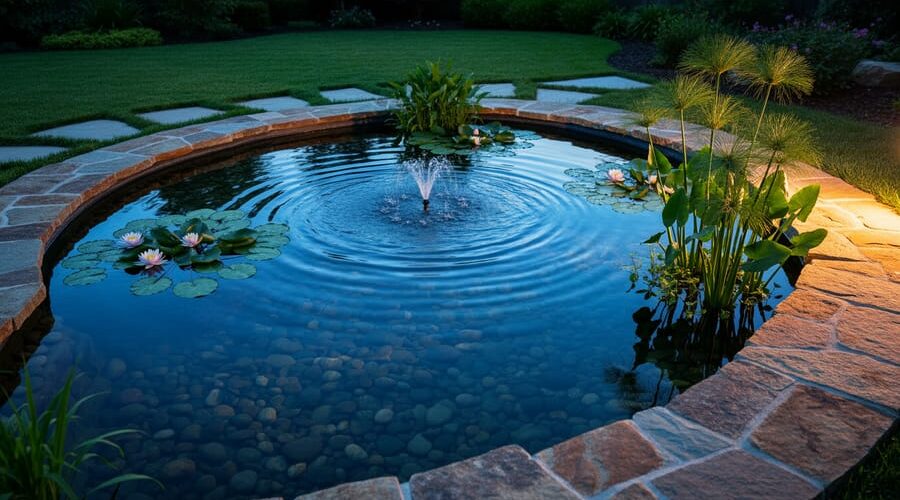
Transform Your Water Garden Into a Living Masterpiece
Your pond can become a living masterpiece with the right artistic touches. Water art transforms ordinary backyard features into captivating focal points that reflect your personal style and complement your landscape.
Think of your water garden as a three-dimensional canvas where movement, reflection, and living elements work together. The rippling surface catches sunlight differently throughout the day, creating ever-changing patterns. Natural stone arrangements frame the water’s edge, while aquatic plants add vertical interest and color. Strategic lighting extends the visual impact into evening hours, turning your pond into an illuminated sculpture.
The beauty of water art lies in its accessibility. You don’t need formal training or expensive equipment to create stunning results. Simple techniques like arranging river rocks in deliberate patterns, positioning fountain heads to create specific water movements, or selecting plant combinations for contrasting textures can dramatically elevate your pond’s appearance.
This approach combines aesthetic principles with hands-on projects anyone can tackle. You’ll discover how to use reflection to double your garden’s visual impact, select features that create focal points, and layer elements for depth. Whether you’re working with a small container pond or an expansive water garden, understanding the artistic fundamentals helps you make confident design choices.
The following guide breaks down water art into manageable concepts and practical projects, giving you the knowledge to transform your water feature from functional to phenomenal.
What Makes Water Art Different From Traditional Garden Design
The Element of Movement
There’s something almost magical about water in motion that no statue or stone pathway can replicate. I remember sitting by my pond one morning, coffee in hand, watching ripples spread outward from a fountain spray. Each circle caught the light differently, creating an ever-changing show that held my attention far longer than I’d planned!
Flowing water brings your garden to life in ways that static features simply can’t match. A gentle waterfall creates mesmerizing cascades that shift with the changing light throughout the day. Even subtle movement from a small bubbler creates concentric circles that expand and intersect in fascinating patterns. These moving elements give your eye something to follow, creating a sense of energy and vitality.
The beauty of movement in water art is that you can control its intensity. A vigorous fountain creates dramatic splashes and sounds, perfect for masking street noise. Meanwhile, a slow trickle over rocks offers gentle, contemplative motion that invites closer observation. I’ve found that even the slightest current makes fish more active and interesting to watch as they navigate the flow. The interplay between still reflective surfaces and moving water creates contrast that draws people in and keeps them engaged with your water feature in ways that purely decorative elements never could.
Playing With Light and Reflection
One of my favorite things about having a water feature is how it becomes a living canvas that changes throughout the day. The water’s surface acts like nature’s mirror, doubling the beauty of everything around it. I’ve learned that still water creates the most dramatic reflections, capturing perfect images of clouds drifting overhead, the surrounding foliage, and even nearby garden ornaments.
To maximize reflections in your pond, position it where it can capture interesting features. A tree overhanging one side creates gorgeous shifting patterns, while strategic placement near colorful plantings doubles their visual impact. The magic happens during golden hour when the low sun paints everything in warm tones that shimmer on the water’s surface.
Dark-bottomed ponds create the clearest reflections, almost like adding a second dimension to your garden. If your pond liner is lighter colored, don’t worry. Adding darker river rocks or allowing beneficial algae to naturally darken the bottom works wonders.
Keep in mind that wind disrupts reflections, so partially sheltering your pond with plantings or hardscaping helps maintain that mirror-like quality. Even gentle ripples, though, create their own artistic effect, fragmenting reflections into impressionistic patterns that shift and dance with every breeze.
Natural Water Art: Working With What Water Does Best
Creating Texture With Water Flow
The magic of water features isn’t just in how they look—it’s in how they sound and move! I discovered this by accident when I adjusted a pump setting on my backyard waterfall and suddenly had this wonderful trickling sound that completely changed the atmosphere. That’s when I realized that controlling water flow is where the real artistry happens.
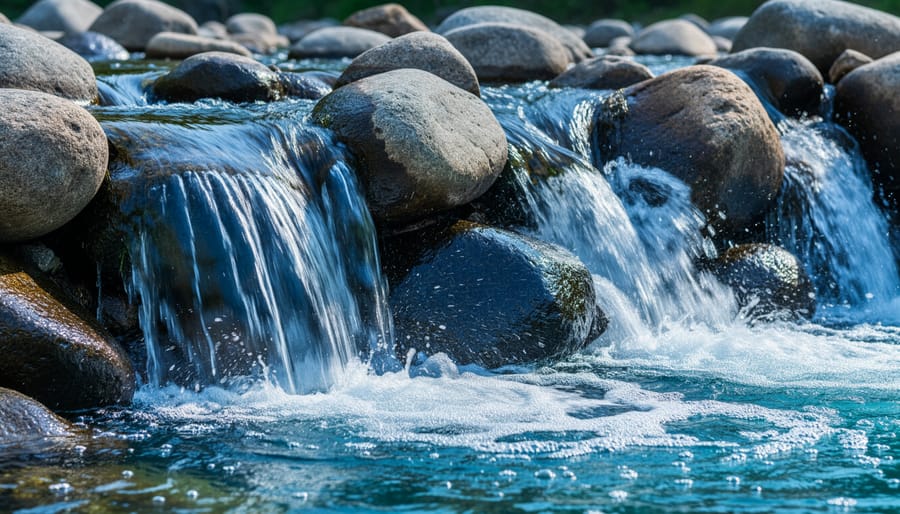
Think about the different personalities water can have. A gentle sheet of water sliding over a flat rock creates a smooth, glassy appearance and produces soft, meditative sounds. This works beautifully for creating calm spaces where you want to relax with a book. To achieve this effect, use wide, flat stones positioned horizontally and keep your pump at a moderate setting.
For more drama and energy, create cascading falls by stacking rocks with slight lips and edges. Water tumbling over irregular surfaces produces that cheerful, bubbly sound we all love. I like to use different sized rocks—mixing smooth river stones with rougher ones creates varying splash patterns that catch the light beautifully.
Here’s a simple technique that made a huge difference in my pond: create multiple levels in your waterfall rather than one straight drop. Each level gives water a chance to spread out, change direction, and create new patterns. Even a three-tiered setup spanning just two feet can generate amazing visual interest.
Don’t be afraid to experiment with your pump flow rate! Start low and gradually increase it while observing how the water behaves. You’ll find that sweet spot where the movement and sound feel just right for your space.
Still Water as a Canvas
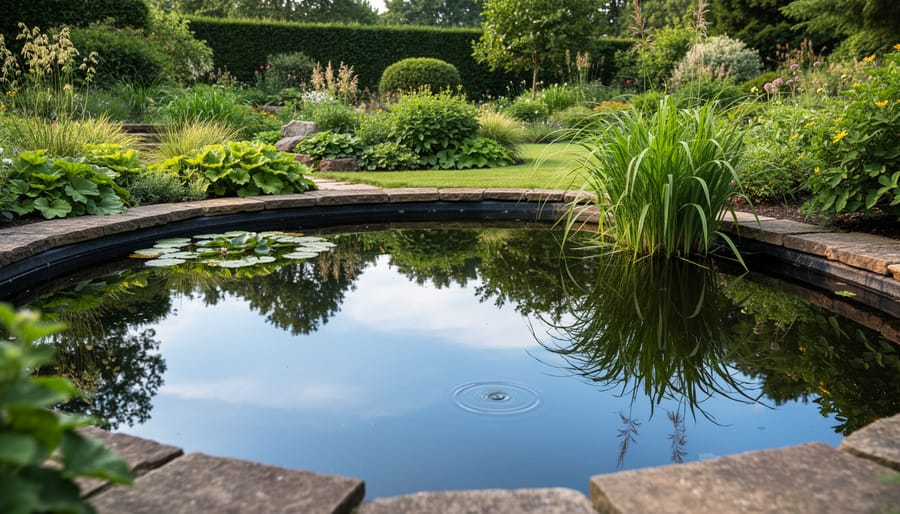
There’s something magical about a perfectly still pond surface – it becomes nature’s mirror, doubling the beauty of everything around it. I remember the first morning I saw my pond completely calm, reflecting the sky so perfectly I couldn’t tell where water ended and air began. That’s when I realized still water isn’t just a feature; it’s a living canvas.
The key to maximizing these mirror-like reflections is positioning. Place your pond where it can capture interesting views – overhanging branches, architectural elements, or even dramatic clouds. Early mornings and evenings typically offer the calmest conditions, perfect for creating peaceful focal points in your garden.
Lily pads add another dimension to still water art. Their circular patterns create natural geometry across your pond’s surface, breaking up the reflection in visually interesting ways. I’ve found that allowing them to spread naturally (while managing their growth) produces the most artistic arrangements. The negative space between pads is just as important as the pads themselves.
To maintain that glass-like surface, minimize water movement during key viewing times. Strategic placement of plants can also act as natural windbreaks, protecting your watery canvas from ripples.
Seasonal Water Art
Your water feature is never the same twice – and that’s part of its magic! Each season brings completely different artistic opportunities that’ll keep your garden fascinating year-round.
Winter creates nature’s own ice sculptures right in your pond. When temperatures drop, you’ll discover intricate frost patterns along the edges and delicate ice formations that catch the morning light like crystal chandeliers. I’ll never forget the first time I saw my small fountain frozen mid-splash – it looked like a glass sculpture! Just remember to keep a small area ice-free if you have fish.
Autumn transforms your water into a canvas for floating art. Those falling leaves aren’t a nuisance – they’re free decorations! Golden ginkgo leaves, crimson maples, and orange oak leaves create stunning natural mosaics on the water’s surface. Let a few float intentionally before your regular cleanup for ever-changing patterns.
Spring brings remarkable clarity as the water warms and awakens. This is when you’ll see straight through to your pond bottom with incredible detail. The fresh greenery reflecting in crystal-clear water creates a mirror effect that’s absolutely breathtaking. It’s the perfect time to showcase underwater plantings or decorative stones.
Summer offers lush growth and vibrant reflections, with blooming water lilies and active fish adding movement and color. Each season tells its own story – embrace them all!
Artistic Elements You Can Add to Your Water Garden
Sculpture and Water Features
Adding sculptural elements to your water garden can transform it from pleasant to absolutely enchanting. The key is selecting pieces that enhance your water feature rather than dominate it. When I added my first fountain spitter, I learned this lesson the hard way – a massive frog statue completely overshadowed my lovely lilies!
Start by considering scale and proportion. For smaller ponds, choose subtle pieces like a simple spitter or a small statue positioned along the edge. Larger water gardens can accommodate grander artistic fountain designs as focal points. Think about placement carefully – sculptures look most natural when positioned to appear as if they belong, perhaps tucked among plants or reflecting in the water’s surface.
Water spitters serve double duty by adding visual interest while aerating your pond. Popular choices include fish, frogs, turtles, or classical designs like lion heads. Match the style to your garden’s overall theme. A Japanese garden benefits from bamboo water spouts, while cottage gardens shine with whimsical animal figures.
Remember, less is often more. One well-chosen piece creates impact, while too many competing elements create visual chaos. Let your water remain the star of the show.
Strategic Stone and Rock Placement
Rocks and boulders are the unsung heroes of pond design, transforming a simple water feature into a natural-looking masterpiece. The key is making your placement look effortless and organic, as if nature herself arranged them.
Start by selecting rocks of varying sizes – think big anchor stones, medium-sized companions, and smaller accent pieces. I learned this the hard way when I first lined my pond with same-sized river rocks. It looked like a bathtub! Now I embrace variety, and the difference is remarkable.
For authentic Japanese garden inspiration, follow the principle of odd numbers and asymmetry. Place your largest boulder first as a focal point, then build around it. Partially submerge some rocks to blur the line between water and land – this creates that magical transition zone.
Group stones in triangular arrangements rather than straight lines. Tilt some at angles instead of standing them upright like soldiers. The goal is controlled chaos that mimics nature.
Don’t forget practical benefits too! Rocks provide basking spots for wildlife, anchor marginal plants, and hide unsightly pond equipment. Position flat-topped boulders near the edge as natural seating areas where you can sit and enjoy your creation.
Bridges and Viewing Platforms
A simple bridge or viewing platform transforms how you experience your water garden, giving you that perfect spot to pause and really take it all in. I added a small arched bridge over the narrowest part of my pond, and suddenly I was spending my morning coffee there instead of on the patio!
These structures don’t need to be complicated. A flat wooden walkway extending a few feet over the water creates an intimate connection with your aquatic world. You’ll notice fish behavior you never saw from the edge, and the reflection of the structure itself adds wonderful symmetry to the composition.
For viewing platforms, consider a simple deck that cantilevers slightly over the water. This brings you closer to floating plants and allows you to appreciate water movement from directly above. Even a strategically placed flat stone or two can create a stepping-stone path that offers new perspectives.
When designing these elements, think about what you want to see. Position bridges to frame a waterfall or fountain in the background. Angle platforms toward your most colorful plantings or where afternoon light creates the best reflections. These architectural additions become part of your water art while helping you enjoy every other element you’ve created.
Lighting Your Water Art
The right lighting transforms your water feature from a daytime delight into evening enchantment! I still remember the first time I installed submersible LED lights in my pond—watching the water glow from within felt absolutely magical.
Start with underwater lights for that stunning nighttime water garden magic. These submersible fixtures illuminate from below, highlighting waterfalls, fountains, and fish movement. Choose color-changing LEDs for versatility, or stick with warm white for classic elegance. Position them near moving water to create mesmerizing light patterns.
Spotlights placed above water work beautifully to highlight specific features like sculpture or plantings. Angle them carefully to avoid harsh glare, and use waterproof fixtures rated for outdoor use.
For installation, use low-voltage systems for safety around water. Run cables through conduit to protect them from damage, and always use GFCI outlets. Solar-powered options eliminate wiring headaches entirely, perfect for beginners.
Layer different light sources at varying heights to create depth and dimension. Timer switches let you enjoy your illuminated masterpiece automatically each evening without lifting a finger.
Living Art: Plants and Fish as Design Elements
Color Coordination With Aquatic Plants
Think of your pond as a living painting where plants are your color palette! I learned this the hard way when I first started – I grabbed every pretty plant I saw and ended up with a chaotic rainbow that felt more confusing than calming.
Water lilies and lotus flowers become your focal points, so choose their colors intentionally. Pink and white blooms create a soft, romantic feel, while vibrant yellows and reds add drama and energy. My favorite trick? Pick one or two primary colors and let them shine.
Marginal plants around your pond’s edges offer fantastic opportunities for complementary or contrasting schemes. Purple pickerelweed looks stunning against yellow water lilies, while red cardinal flowers create gorgeous contrast with white blooms. For a harmonious approach, try pairing pink lotus with lavender irises – the similar tones feel naturally cohesive.
Creating visual rhythm means repeating colors throughout your design. If you’ve chosen yellow water lilies, echo that warmth with golden-leafed grasses at the margins. Plant in odd-numbered groups (three or five) rather than pairs – it feels more organic and pleasing to the eye.
Don’t forget foliage! Silvery-green plants like houttuynia provide breathing space between colorful blooms, preventing visual overwhelm. This strategic use of neutral tones lets your star colors truly pop while maintaining that artistic balance you’re after.
Fish as Moving Art
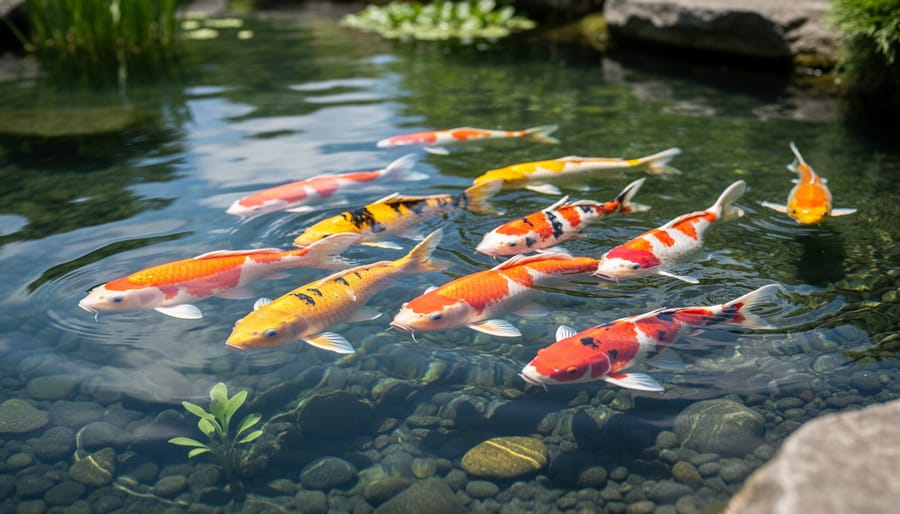
Think of your fish as swimming brushstrokes that change your pond’s composition every moment. Unlike static garden elements, fish bring spontaneous movement and living color that transforms your water feature into dynamic art you’ll never tire of watching.
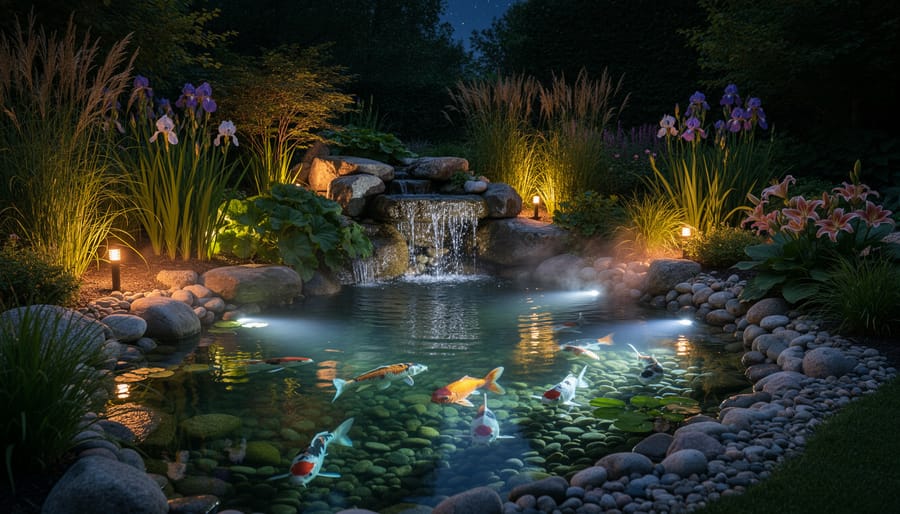
When selecting varieties, consider how their colors will interact with your pond’s backdrop. Koi offer spectacular options: brilliant orange Kohaku create bold focal points against dark liner, while white-and-black Shiro Utsuri provide elegant contrast. Metallic Ogon varieties catch sunlight beautifully, creating flashes of gold or platinum as they glide beneath the surface. For smaller ponds, fancy goldfish like Ryukin or Shubunkin deliver impressive color in more compact sizes, with patterns ranging from calico mixes to solid reds and whites.
I’ve learned that koi as artistic elements work best when you choose a cohesive color palette rather than buying every pretty fish you see. Three to five well-chosen fish create more visual impact than a chaotic mixture.
The magic happens in their movement. Fish naturally explore different depths and speeds, creating ever-changing compositions. Morning feeding time brings them to the surface in graceful swirls, while afternoon finds them cruising mid-water, their patterns visible through clear depths. This unpredictability means your pond never looks the same twice, offering fresh visual interest throughout each day.
Texture and Height Variation
Think of your water garden like a beautiful photograph – it needs depth to draw the eye in! I learned this the hard way when all my plants were the same height and my pond looked surprisingly flat. The solution? Mix it up with layers and textures.
Start with tall, dramatic plants like papyrus or cattails at the back, creating your backdrop. In the middle, add medium-height beauties like pickerel rush with their heart-shaped leaves. Then finish with low-growing floaters or marginals along the edges. This creates natural depth that makes your pond look twice as interesting.
Texture matters just as much! Combine the fine, delicate fronds of water horsetail with the broad, bold leaves of water lilies. Place spiky iris leaves next to soft, rounded lotus foliage. These contrasts make each plant stand out while creating visual harmony. It’s like building a living sculpture where every layer adds another dimension to your water art masterpiece.
Design Principles That Make Water Art Work
Balance and Proportion
Getting the size right makes all the difference in creating harmonious water art. A tiny fountain can look lost in a sprawling yard, while an oversized pond might overwhelm a cozy patio space. A good rule of thumb I’ve learned: your water feature should claim about 10-20% of the visible garden area to feel intentional without dominating everything else.
Think of your pond like arranging furniture in a room. Visual weight matters just as much as physical size. A cluster of tall grasses on one side needs something to balance it on the other, perhaps a broad flat rock or grouping of smaller plants. When I placed a large boulder near my pond, it felt lopsided until I added a waterfall on the opposite end to distribute the visual interest.
Consider the view from different angles too. Walk around your space and notice where your eye naturally travels. Place taller elements like fountains orstatuary where they draw attention without blocking sightlines to other beautiful features. The most successful water gardens feel complete from every vantage point, creating a sense of wholeness that invites you to linger and explore.
Creating Focal Points
Every beautiful water garden needs a visual anchor—something that naturally draws your eye and says “look here first!” Think of it like arranging furniture in a living room; you need that statement piece.
I learned this the hard way when my pond felt chaotic despite having lovely plants. The solution? Creating deliberate focal points. A stunning lotus positioned at the pond’s center became my star attraction, while everything else played supporting roles. You might choose a bubbling fountain, a distinctive rock formation, or even a striking water lily in a complementary pot.
The trick is limiting yourself to one or two main focal points. Too many competing features create visual clutter that dilutes impact. Position your focal point using the rule of thirds—imagine your pond divided into a grid, and place key features where lines intersect rather than dead center.
Contrast works wonders too. A bright yellow iris pops against dark water, while a pale statue stands out beautifully against dense greenery. Frame your focal point with lower-growing plants that guide the eye naturally toward it, creating depth and visual flow without overwhelming the space.
The Frame Around Your Water
Think of the area surrounding your water feature as the frame around a masterpiece painting. Just as a beautiful frame draws your eye to the art within, the right plants and hardscaping can make your pond the stunning centerpiece of your garden.
I learned this lesson when my first pond got lost in a sea of grass. Once I added some ornamental grasses and hostas around the edges, suddenly the water became the star of the show! The key is creating contrast and layers. Place taller plants at the back, medium-height perennials along the sides, and low-growing ground covers near the water’s edge. This creates depth and naturally guides the eye toward the water.
Don’t forget about negative space. Sometimes leaving areas open around your pond actually makes it more dramatic. A clean stone border or a simple mulched area can provide visual breathing room that lets the water shine. Consider using natural stone or decorative pavers that complement your pond’s style, whether that’s smooth river rocks for a natural look or crisp bluestone for modern elegance.
Remember, your frame should enhance, not overpower. The water feature is the art, everything else supports it.
Simple Projects to Enhance Your Water Garden’s Artistic Appeal
DIY Floating Plant Arrangements
Floating plant arrangements offer one of the easiest ways to create stunning water art! I love how quickly you can transform your pond’s appearance by clustering floaters into intentional displays rather than letting them scatter randomly.
Start with water lettuce or water hyacinth as your foundation plants. These beauties naturally multiply, giving you plenty to work with. Try gathering 5-7 plants together using fishing line tied loosely around their bases, creating a floating bouquet. You can anchor these clusters near pond edges or around fountain bases for dramatic effect.
For seasonal interest, I swap arrangements throughout the year. Spring calls for fresh water lettuce paired with delicate salvinia. Summer heat brings lush water hyacinth with their gorgeous purple blooms. Fall transitions beautifully with red-tinged frogbit creating warm color palettes.
Here’s my favorite technique: create circular arrangements by gently corralling floaters into ring shapes around water lilies or other focal points. The contrast between stationary and floating plants adds wonderful depth.
Remember to thin your floaters regularly since they grow enthusiastically. This maintenance actually gives you fresh material for new arrangements every few weeks, keeping your water garden looking intentionally designed rather than overgrown.
Building a Simple Bubble Fountain
Creating your own bubble fountain is easier than you might think, and I promise it’s incredibly rewarding! Start by selecting a waterproof container like a glazed ceramic pot or plastic basin. Drill a small hole in the bottom if one doesn’t exist, then thread a small submersible pump’s cord through it. Place the pump at the container’s base and stack river rocks or decorative stones around it, leaving the pump’s top exposed. Fill with water until it just covers the stones. When you plug in the pump, water will bubble up through the rock gaps, creating a mesmerizing, gentle display.
The beauty of this project is how customizable it becomes. I once used smooth beach glass mixed with white pebbles for a coastal theme that caught sunlight beautifully. You can adjust the pump’s flow rate to create anything from a gentle gurgle to an energetic burble. Add floating flowers or position small potted plants around the edge to enhance the artistic appeal and integrate it naturally into your garden space.
Edge Artistry
The magic of a truly beautiful pond happens right at the water’s edge, where land meets liquid. I discovered this the hard way when my first pond looked like someone just dropped a plastic tub in the ground! The secret to natural-looking edges is hiding the hard lines where your liner meets the soil.
Start by arranging rocks of varying sizes along your pond perimeter. Think like nature does – cluster three or four stones together, then skip a section, rather than creating a perfectly uniform border. Tuck flat stones slightly under rounded ones to create layered depth and shadows that look completely organic.
Between those stone groupings, create planted pockets by leaving gaps filled with quality soil. Creeping plants like creeping jenny or ajuga will cascade beautifully toward the water, softening the transition. I love tucking a few moisture-loving ferns behind larger rocks for height variation.
Here’s my favorite trick: partially submerge some edge stones so they appear to continue beneath the surface. This creates the illusion that your pond has been there forever, naturally carved into the landscape. Add some pebbles or river rocks in shallow areas to complete the natural gradient from shore to deeper water.
Your water garden is a living canvas that will change with the seasons, the years, and your growing vision. That’s the beauty of water art—it’s never really finished, and it shouldn’t be. Think of it as an evolving project that reflects who you are and what brings you joy. Some days you’ll stand by your pond and feel completely satisfied. Other days, you’ll notice a spot that could use a new plant or a different stone arrangement. Both reactions are perfectly normal and part of the creative journey.
Remember, there’s no single right way to create water art. What matters is that your water feature speaks to you. I’ve seen magnificent koi ponds that look like Japanese paintings and simple container gardens that capture morning light in the most enchanting way. Both are equally valid expressions of creativity. The gardener who carefully positions every rock according to traditional principles isn’t more correct than the one who spontaneously clusters driftwood pieces because they feel right together.
If you’re just starting out, don’t let elaborate designs intimidate you. Begin with one element that excites you—maybe it’s a single water lily, a bubbling fountain, or a perfectly weathered piece of driftwood. Watch how it transforms your space. Notice what draws your eye and what makes you smile. That’s your artistic instinct at work, and it will guide you forward. As your confidence grows, so will your water garden, one thoughtful addition at a time.