
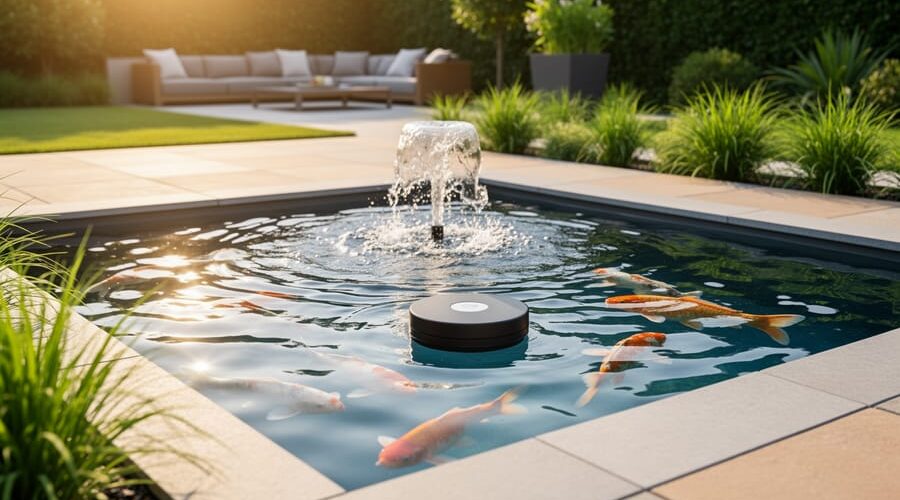
Your Water Feature Can Run Itself (Here’s How Smart Systems Make It Happen)
Picture this: You’re heading out for a long weekend, but instead of relaxing, you’re worrying whether your pond pump is still running or if your water level has dropped too low. I’ve been there, rushing home early from trips because I couldn’t shake the nagging feeling that something might go wrong with my koi pond.
This is exactly why smart water systems have become game-changers for pond owners and water gardeners like us. These aren’t complicated NASA-level contraptions requiring engineering degrees. Think of them as helpful assistants that monitor water levels, control pumps on schedules, send alerts to your phone when something needs attention, and adjust fountain displays based on the time of day. The best part? Many systems now work right out of the box with simple smartphone setup.
What makes these systems truly valuable isn’t the fancy technology itself, but the freedom they give you back. No more daily treks to check water levels. No more manual timer adjustments as seasons change. No more wondering if your UV clarifier is actually running or just humming uselessly.
Whether you’re managing a small container water garden on your patio or a sprawling backyard pond ecosystem, smart automation scales to fit your needs and technical comfort level. Some solutions require nothing more than plugging in a smart outlet and downloading an app, while others let you dive deeper into customized controls if that’s your thing.
The real question isn’t whether smart water systems work—they absolutely do—but which approach fits your specific setup and how handy you want to get.
What Makes a Water System ‘Smart’?
Think of a smart water system like having a helpful assistant who watches over your pond 24/7. Instead of you checking water levels, testing quality, and adjusting pumps manually, automated components handle these tasks while you enjoy your coffee.
At its heart, a smart water system has three main players working together. First, you’ve got sensors, which are like the eyes and ears of your setup. These little devices monitor things like water level, temperature, and pH. They’re constantly gathering information about what’s happening in your pond.
Next come the controllers, which act as the brain. Think of them as the decision-makers that receive reports from your sensors and decide what needs to happen. When a sensor reports that the water level has dropped below a certain point, the controller springs into action.
Finally, there are the automated devices, the hands of your system. These include automatic water fill valves, pump timers, fountain controllers, and UV clarifier switches. When the controller says “we need more water,” these devices actually do the work.
Here’s where it gets beautiful: these three components chat with each other constantly. Your water level sensor notices the pond is low. It tells the controller, which then activates your auto-fill valve. Water flows in until the sensor says “that’s enough,” and the controller tells the valve to shut off. All while you’re at work or tending to other garden tasks.
The best part? You don’t need to be a tech genius to use these systems. Modern smart components are designed with regular folks in mind. Many connect to simple apps on your phone, using the same straightforward setup you’d use for a video doorbell or smart thermostat. You’re essentially giving your pond the gift of paying attention to itself, so you can focus on enjoying it rather than constantly maintaining it.
The Core Components You’ll Actually Use
Smart Controllers and Timers
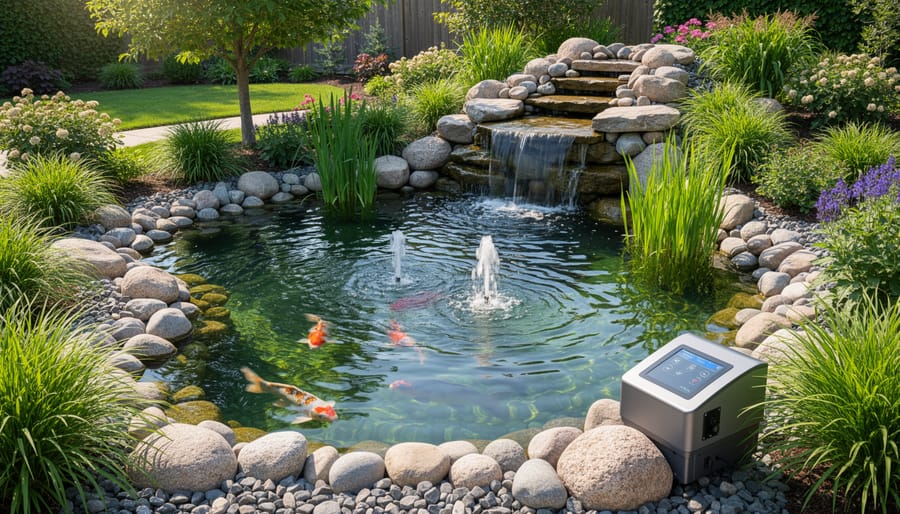
Think of smart controllers and timers as your water feature’s personal assistant—they handle the routine stuff so you don’t have to. These devices plug into your existing setup and let you program when your pumps, fountains, and lights turn on and off throughout the day.
The beauty of timers is their simplicity. Once you’ve got your pump setup basics sorted, a basic digital timer can run your fountain from 8am to 8pm daily without you lifting a finger. I learned this the hard way after forgetting to turn off my pump before a weekend trip—came home to find it had been running continuously for three days in shallow water. Not ideal for pump longevity!
More advanced smart controllers take things further. They connect to your Wi-Fi and let you adjust schedules from your phone, even when you’re away. Many include features like sunset sensors for lighting automation, ensuring your lights only run when it’s actually dark outside.
These gadgets prevent common headaches like pump burnout from running dry, wasted electricity from 24/7 operation, and algae blooms that thrive when circulation stops unexpectedly. Most plug-and-play models require zero technical skills—just set your desired schedule and let the controller handle the rest. The energy savings alone often pay for the device within a season, and your equipment will thank you with a longer lifespan.
Water Level Sensors and Auto-Fill Systems
Let me share something I learned the hard way: running your pump dry even once can seriously damage it, and I found that out after a weekend away from my pond. That’s where water level sensors become your absolute lifesavers.
Think of water level sensors as watchful guardians for your water feature. They’re simple devices that detect when water drops below a safe level and either shut off your pump automatically or trigger a refill. The most common types are float switches, which work just like the mechanism in your toilet tank. As water levels drop, a floating ball descends and trips a switch. No complicated electronics, just physics doing its thing.
For auto-fill systems, you’ve got a couple of great options. Mechanical float valves are the simplest solution and connect directly to your garden hose or plumbing line. When water evaporates or splashes out, the float drops and opens the valve, adding fresh water until the proper level returns. I installed one in about twenty minutes without any special tools.
If you want something fancier, electronic auto-fill systems offer more precision. These use sensors to detect water levels and activate solenoid valves when needed. They’re particularly helpful for larger ponds where precise water chemistry matters.
Installation tip: Position your float switch or sensor where water movement won’t cause false readings. I mount mine in a calm corner away from waterfall splash. Also, always include a manual shutoff valve in your auto-fill line because you’ll eventually need to do maintenance, and trust me, you don’t want water flowing while you’re working.
Water Quality Monitors
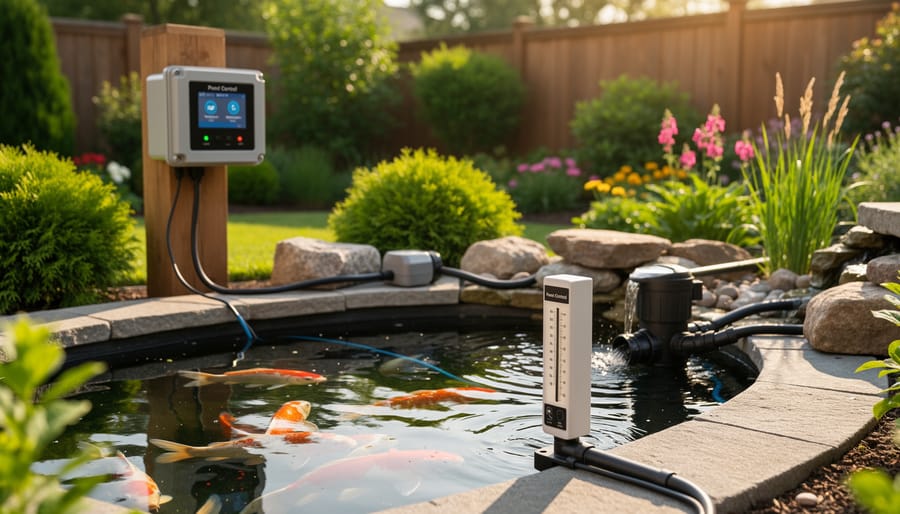
Monitoring water quality doesn’t have to feel like running a science lab, but knowing what’s happening in your pond can save you headaches down the road. Let me break down which monitors actually matter for your setup.
If you have fish, a pH sensor becomes pretty essential. Fish are surprisingly picky about pH levels, and shifts can stress them out before you even notice something’s wrong. I learned this the hard way when my goldfish started acting lethargic, and by the time I tested manually, the pH had already swung too far. A continuous pH monitor would have caught it early. These sensors typically alert you when levels drift outside your target range, usually between 6.5 and 8.5 for most pond fish.
Temperature monitors are the definition of nice-to-have for most backyard ponds. Sure, they’re handy if you’re in an area with dramatic temperature swings or keeping sensitive koi, but honestly, many pond keepers can skip this one. Plants certainly don’t need constant temperature tracking.
Now, dissolved oxygen sensors are where it gets interesting. If you have fish, especially in warmer climates, dissolved oxygen monitoring moves from nice-to-have to genuinely important. Warm water holds less oxygen, and fish can suffocate even in a seemingly healthy pond. I consider this sensor second only to pH for fish ponds. For plant-only water gardens, though, you can absolutely skip it.
The sweet spot for most people? Start with pH monitoring if you have fish, then add dissolved oxygen monitoring if your budget allows. Plant-only gardeners can honestly skip all three and focus your smart system budget elsewhere, like automation controls that’ll make a bigger daily difference.
Building Your System: Start Simple, Add Smart
Level 1: The Weekend Warrior Setup
Let’s start with the easiest wins that’ll have you feeling like a tech wizard without any complicated wiring! If you’re still building your water feature or just getting comfortable with pond maintenance, this level is perfect for you.
Pick up a simple outdoor timer from your local hardware store. These plug-in timers work wonders for controlling your pump and lighting. No apps, no Wi-Fi required. Set your waterfall to run during the hours you’re actually outside enjoying it, saving energy and reducing wear on your equipment. I started with a fifteen-dollar timer on my fountain pump, and honestly, it felt magical coming home to a bubbling feature every evening.
Next, grab a basic water testing kit that connects to your smartphone. These affordable kits let you check pH, temperature, and other water quality indicators, then track the results over time in an app. You’ll start noticing patterns, like how hot weekends affect your water chemistry.
These simple upgrades require zero technical skills but deliver immediate results. You’ll reduce your electricity bill, stop forgetting to turn things on and off, and actually understand what’s happening in your water. Perfect weekend project, massive satisfaction guaranteed.
Level 2: The Hands-Off Upgrade
Ready to take a real step back from daily pond duties? Level 2 is where automation starts doing the heavy lifting for you.
I’ll never forget the summer I installed my first auto-fill valve. I’d been topping off my koi pond manually every other day, and honestly? I was getting tired of dragging the hose around. The auto-fill changed everything. It connects to your water line and maintains the perfect water level automatically using a simple float mechanism, just like your toilet tank but outdoor-rated.
At this level, you’re looking at programmable controllers that manage multiple zones independently. Think of it like setting different watering schedules for various garden areas, but for your pond equipment. Your waterfall can run on a different schedule than your UV clarifier, and your aerator can kick in during the hottest afternoon hours when oxygen levels naturally drop.
The game-changer here is basic water quality monitoring. Simple sensors can alert you via text or app notification when pH swings too far or temperature spikes unexpectedly. You’re not glued to test strips anymore.
Most Level 2 systems install with basic plumbing skills and standard electrical outlets. You’ll spend a weekend setting things up, then enjoy months of hands-free operation. The reduction in daily maintenance is genuinely life-changing, giving you more time to actually enjoy your water feature instead of constantly maintaining it.
Level 3: The Complete Smart Ecosystem
Ready for the ultimate hands-off pond experience? Level 3 transforms your water feature into a truly intelligent system that practically runs itself.
At this level, you’re connecting all your components through a central Wi-Fi controller hub. Think of it as the brain that coordinates everything. Your pump, UV clarifier, fountain, and lighting all communicate with each other and with you through a smartphone app. I’ll never forget checking my pond’s oxygen levels from a beach vacation and adjusting my aerator with a few taps. That peace of mind is priceless.
The real game-changer here is continuous monitoring. Sensors constantly track water temperature, pH levels, oxygen content, and water level. When something shifts outside your preset parameters, you get an instant alert. No more discovering problems days later when fish start acting stressed.
For koi and goldfish enthusiasts, automated feeders integrate seamlessly into the system. Schedule multiple daily feedings, adjust portion sizes remotely, and even skip feeding days when you’re home to do it manually. The system learns your patterns and can suggest optimizations.
The setup requires more initial investment and about half a day for installation, but the long-term convenience is remarkable. Most systems use plug-and-play components, so you’re not doing any complicated wiring. The apps are surprisingly intuitive, with visual dashboards that make understanding your pond’s health straightforward.
This level suits anyone who wants their pond to be spectacular without the daily maintenance commitment.
Real-World Benefits You’ll Notice Right Away
Your Water Stays Clearer, Longer
Here’s the thing about green water – it doesn’t just happen overnight. It’s usually the result of stagnant zones where algae spores settle in, combined with inconsistent water movement that lets nutrients accumulate. When your smart system keeps water circulating on a reliable schedule, those problem conditions simply don’t develop.
I learned this the hard way with my backyard pond. For two summers, I battled pea-soup green water every time the weather warmed up. I’d clean it out, and within weeks, it was murky again. After installing a timer-controlled pump paired with natural filtration systems, the transformation was remarkable. The constant gentle flow prevented algae from getting established, and the monitoring alerts caught any issues before they snowballed.
Smart systems also help you spot trouble early. A sudden temperature spike or oxygen drop gets flagged immediately, letting you adjust circulation before algae blooms take hold. It’s like having a watchful friend who never takes a day off, keeping conditions stable so your water stays crystal clear season after season.
Lower Energy Bills (Yes, Really)
Here’s something I didn’t expect when I automated my pond: my electric bill actually went down! It seems counterintuitive, right? Adding technology should cost more. But here’s the thing – traditional timers run your pump whether it needs to run or not. Smart systems are different.
When your pump only runs during off-peak hours (when electricity is cheaper), you’re already saving money. My system shifted most operations to nighttime, cutting costs by about 15%. But the real savings came from preventing disasters. One temperature sensor caught my pump overheating before it burned out completely. That early warning saved me a $300 replacement and who knows how much in emergency repairs.
Smart sensors also prevent your equipment from working harder than necessary. If your pond doesn’t need aeration because oxygen levels are fine, why run the aerator? These small efficiencies add up. Most folks report their systems pay for themselves within 18 months through reduced electricity use and avoided repair costs.
Vacation Without Worry
Remember that sinking feeling when you’re lying on a beach somewhere, suddenly wondering if your pond pump is still running? I used to pack my worries right alongside my sunscreen every vacation. One summer, I returned home to find my water level dangerously low because a floating valve had stuck. Never again.
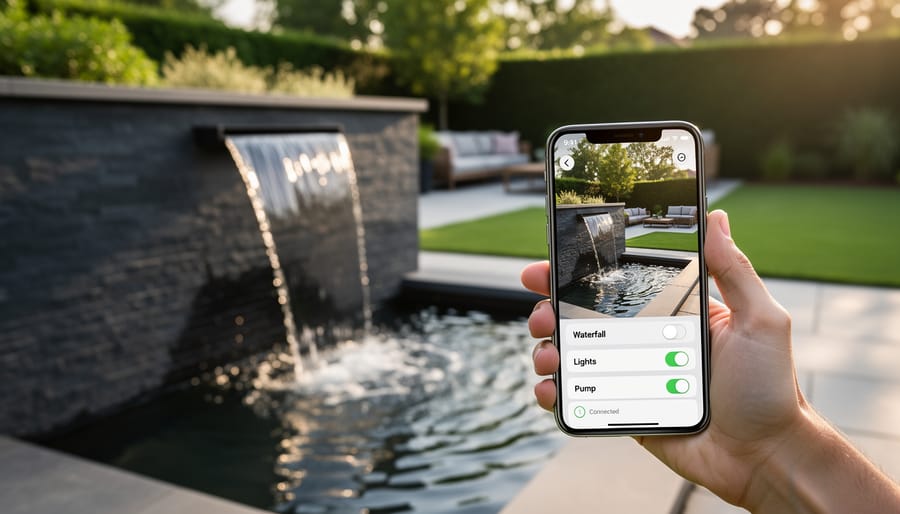
That’s where remote monitoring becomes your vacation sidekick. Modern smart systems send alerts straight to your phone if water levels drop too low or rise too high. You’ll know immediately if your auto-fill valve stops working or if a pump fails. Some systems even let you check current readings from anywhere with cell service.
I tested this last spring during a weekend getaway. My phone buzzed with a low-water alert Saturday morning. A quick video call to my neighbor confirmed a kinked supply line, easily fixed. Crisis averted before any fish were stressed or equipment damaged.
The best part? You’re not glued to your phone constantly checking. The system watches everything and only bothers you when something actually needs attention. That’s genuine peace of mind.
Common Pitfalls (And How to Avoid Them)
Don’t Forget About Power Safety
Before you start connecting your smart sensors and controllers, let’s talk about keeping everything safe around water and electricity. I learned this the hard way when my first pump controller got rained on during installation!
Always use GFCI (Ground Fault Circuit Interrupter) outlets for any electrical component near your water feature. These special outlets cut power instantly if they detect moisture, potentially saving your equipment and your safety. Most outdoor outlets are already GFCI, but double-check before plugging anything in.
Make sure all connections are rated for outdoor use and properly sealed. I wrap mine with self-fusing silicone tape and tuck them into weatherproof junction boxes. It might seem like overkill, but one storm proved otherwise when my neighbor’s non-protected setup sparked out.
Keep your transformer or power supply in a dry, ventilated area like a garage or shed rather than directly exposed to elements. And if you’re installing anything beyond basic plug-and-play devices, consider having a licensed electrician review your setup. It’s worth the peace of mind, especially for permanent installations.
Sensors Need Maintenance Too
Your smart sensors are only as reliable as the care you give them! I learned this the hard way when my pH sensor started giving wonky readings, and I nearly overdosed my pond with chemicals. Turns out, algae had built up on the probe, throwing everything off.
Think of sensor maintenance like brushing your teeth—small effort, big payoff. Every two weeks, gently wipe down your sensors with a soft cloth to remove mineral deposits and debris. Once a month, check calibration using testing solutions (usually included with quality sensors). If readings seem off, recalibrate following the manufacturer’s instructions—it typically takes just five minutes.
Regular maintenance keeps your system trustworthy. Mark your calendar or set phone reminders so it becomes routine. Clean sensors mean accurate data, which means your automation actually works as intended, saving you time and protecting your water feature investment.
Start With What You Have
I learned this lesson the hard way when I bought three smart devices at once for my koi pond, and nothing worked together! My best advice? Start small and simple. Pick one thing that bugs you most about your water feature. Is it topping off water after evaporation? Maybe just grab a smart water level sensor and automatic valve. Frustrated with murky water? Try a single smart pump controller first.
Test that one component for a few weeks. Get comfortable with how it works, figure out the quirks, and make sure it actually solves your problem. Once you’re confident, then add another piece. This approach saves you money if something doesn’t fit your needs, and honestly, it’s way less overwhelming than trying to program five different gadgets at once. Plus, you’ll learn what features actually matter for your specific setup versus what just sounds cool in the product description. Remember, even the fanciest system won’t help if you can’t figure out how to use it!
Making It Work for Your Specific Setup
Small Decorative Fountains and Birdbaths
Small decorative fountains and birdbaths are perfect candidates for simple automation, even if you’re working with limited space or a tight budget. I started with a basic tabletop fountain on my patio, and adding just a simple timer transformed it from a finicky ornament into a delightful feature I could actually enjoy without constant fussing.
Solar-powered pumps are your best friend here. They’re affordable, require zero wiring, and automatically run when the sun shines, which is usually when you’re outside enjoying your space anyway. Most come with battery backup options now, so your fountain keeps trickling into the evening hours. For birdbaths, a solar bubbler keeps water moving to prevent mosquitoes without any complicated setup.
If you want more control, plug-in timers are incredibly simple and cost under twenty dollars. Just set your fountain to run during morning hours or when you’re typically home. This prevents water waste and pump burnout while ensuring your feature looks lively when it matters most. No smartphone app needed, just straightforward dial-and-forget convenience that genuinely works.
Koi and Fish Ponds
When you’re caring for koi or goldfish, a smart water system becomes your pond’s guardian angel. I learned this the hard way after losing several beautiful koi during an unexpected heat wave that depleted oxygen levels overnight.
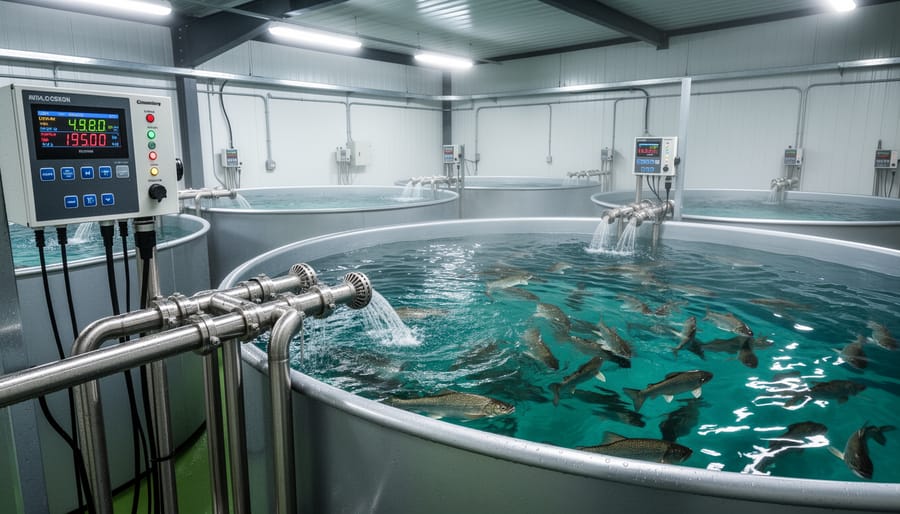
The game-changers for fish ponds are dissolved oxygen sensors and temperature monitors. These devices send instant alerts to your phone when oxygen drops to dangerous levels or temperatures spike beyond your fish’s comfort zone. Some systems even trigger aerators automatically, adding oxygen before your fish start gasping at the surface.
Water quality monitoring takes the guesswork out of fish keeping. Smart pH and ammonia sensors help you catch problems before they become fish health crises. Instead of manual testing every few days, you’ll get continuous readings and trend data showing how your pond’s chemistry changes throughout the day.
For serious fish keepers, automated feeders that connect to your monitoring system can adjust portions based on water temperature, since fish metabolism changes with the seasons. This integration creates a complete life-support system that keeps your finned friends thriving year-round.
Planted Water Gardens
Your planted water garden thrives when conditions stay steady, and that’s where smart systems really shine. I’ve found that automated circulation makes the biggest difference—programmable pumps can adjust flow based on time of day, giving you gentle morning currents when plants photosynthesize most actively, then calming things down at night.
Lighting automation takes the guesswork out of plant care. Set timers to deliver 8-10 hours of light daily for submerged plants, with gradual sunrise and sunset transitions that feel natural. Some controllers even adjust intensity seasonally, mimicking nature’s rhythms without you lifting a finger.
Temperature monitoring prevents those scary swings that stress aquatic plants. Smart sensors alert you if water gets too warm or cold, while automated heaters or chillers kick in before problems develop. For water lilies and lotus, maintaining that sweet spot between 65-75°F becomes effortless. You’ll spend less time testing and more time enjoying your underwater garden’s growth.
Your Next Steps
Take a moment to think about what drives you the craziest about maintaining your water feature. Is it constantly adjusting the water level? Wrestling with timers that never seem to work right? Worrying about your fish while you’re away? That frustration right there is your starting point.
Choose one problem and tackle it first. If you’re losing sleep over water levels, start with an automatic top-off system. If you dread cleaning chores, begin with a smart filter monitor. If you just want peace of mind, grab a simple camera or water quality sensor. You don’t need to transform your entire pond overnight.
Start small and let yourself get comfortable. Install one device, play with the app, watch how it works for a few weeks. You’ll build confidence naturally, and before you know it, you’ll be ready to add another component. Most water gardeners I’ve met started with a single sensor and gradually built their dream setup over months or even years.
Here’s something important to remember: adding smart technology to your pond doesn’t make you less of a hands-on gardener. It actually gives you more time to enjoy the parts you love, whether that’s watching your koi, tweaking your plant arrangements, or simply sitting by the water with your morning coffee. Every experienced water gardener started exactly where you are now, and the ones who embrace helpful technology often find their hobby becomes more rewarding, not less personal.