
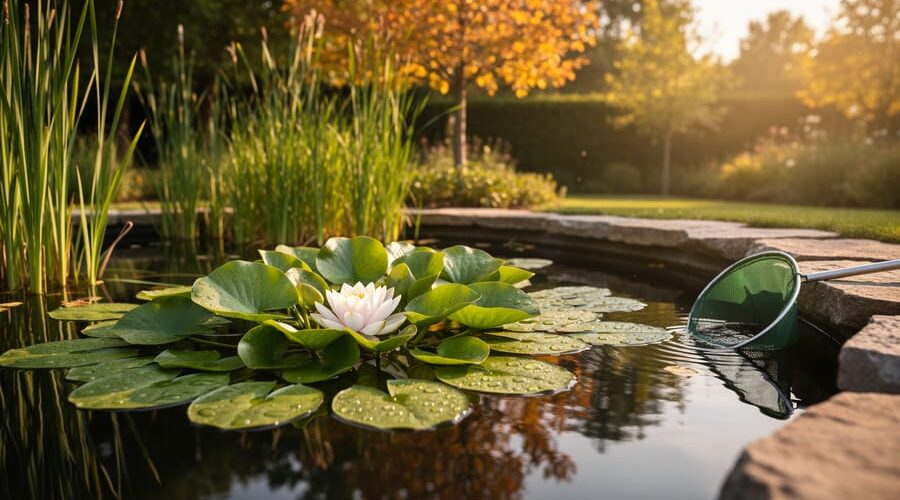
How Aquatic Plants Change Through the Seasons (And What You Need to Do About It)
Watch your pond transform through the seasons, and you’ll notice patterns: plants that explode with growth in June, water that clouds in March, and leaves that seem to multiply overnight each October. These aren’t random events. They’re your pond’s natural rhythm, and once you understand them, maintenance becomes less about fighting nature and more about flowing with it.
Most pond owners struggle because they treat their water garden the same way year-round. They wonder why their spring cleaning doesn’t prevent summer algae, or why their plants look stressed despite constant attention. The secret lies in aquatic ecology—the living, breathing system where plants, water, beneficial bacteria, and seasonal changes all work together.
Think of your pond as a mini-ecosystem that shifts with each season. In spring, warming water triggers plant growth and bacterial awakening. Summer brings peak activity and potential imbalances. Fall demands preparation for dormancy. Winter requires minimal intervention while life slows beneath the surface.
This seasonal approach isn’t more complicated—it’s actually simpler. Instead of guessing what your pond needs, you’ll learn to read the signs nature provides. You’ll know when to trim, when to step back, and when to prepare for the next phase. Whether you’re managing a small container water garden or a large backyard pond, understanding these ecological principles transforms you from a worried caretaker into a confident water gardener who works alongside nature’s proven schedule.
Why Your Pond’s Ecology Changes Every Season
The Temperature-Growth Connection
Think of water temperature as your pond’s thermostat – it controls everything! Just like you might feel sluggish on a cold morning, your aquatic plants respond dramatically to temperature changes throughout the year.
When water warms up in spring, reaching around 10-15°C, it’s like flipping a switch. Your plants wake from their winter rest and start growing again. As temperatures climb to 18-24°C in summer, growth rates skyrocket. I’ve watched water lilies unfurl three new leaves in a single week during peak warmth! This is when your plants work hardest, photosynthesizing rapidly and competing for nutrients.
But here’s the fascinating part: temperature doesn’t just speed things up or slow them down. It actually triggers specific behaviors. When autumn brings cooler water below 10°C, many plants receive their cue to go dormant, storing energy in roots and rhizomes for next year. This natural rhythm is crucial for maintaining ecosystem balance – it’s why forcing year-round growth with heaters can actually stress your pond.
Understanding this temperature-growth connection helps you time your maintenance perfectly. Plant divisions, fertilizing, and major pruning all work best when aligned with your plants’ natural temperature-driven cycles.
Light and Day Length Matter More Than You Think
Here’s something that surprised me when I first started my pond journey: it’s not just temperature that tells your aquatic plants when to wake up or wind down. Daylight hours, or what scientists call photoperiod, play a huge role in your pond’s seasonal rhythms.
Think of photoperiod as nature’s alarm clock. As days lengthen in spring, your water lilies and marginal plants receive the signal to break dormancy and start pushing out new growth. Those longer light periods trigger hormones inside the plant that basically say “time to grow!” This is why you’ll notice explosive growth in late spring even if temperatures are still moderate.
Come late summer, decreasing daylight tells plants to shift gears. Many aquatic plants will flower during specific day lengths, which is why your pickerel rush might bloom like clockwork each August. As fall approaches and days shorten further, plants begin storing energy in their roots and rhizomes, preparing for winter dormancy.
Understanding this helps you anticipate your pond’s needs. When spring days start stretching past 12 hours, expect your plants to need more nutrients. When autumn daylight dips, don’t panic if growth slows, it’s perfectly natural, not a problem to fix.

Spring: When Your Pond Wakes Up
Early Spring Cleanup (Before Plants Start Growing)
As winter loosens its grip and temperatures start climbing, it’s time for your first pond visit of the season. Think of this as your pond’s wake-up call, but approach it gently since your aquatic plants are still groggy from their winter rest.
Start by removing any large debris that accumulated over winter—fallen branches, leaves, and twigs. Use a pond skimmer net for this job, working slowly to avoid stirring up too much sediment. I like to work on a calm day when I can actually see what I’m doing through the water’s surface.
Next, tackle the dead plant material from last season. Here’s where patience really matters. Cut back brown, mushy stems from hardy marginals like cattails and irises, but leave about 2-3 inches above the water line. This protects any new growth that might already be developing beneath the surface, even if you can’t see it yet. Use clean, sharp pruning shears to make neat cuts that won’t invite disease.
Watch for tiny green shoots poking through the mud—that’s your signal to tread carefully around those areas. If your water lilies have become overgrown, early spring is the perfect time to divide them, but only once the water temperature consistently reaches 50 degrees Fahrenheit.
Finally, give your pump and filter a quick inspection. Clean out any debris and make sure everything’s working smoothly. Your aquatic ecosystem is about to spring into action, and you want all systems ready to support that burst of life ahead.
Planting and Dividing Season
Spring brings wonderful opportunities for expanding your aquatic garden! As water temperatures climb above 10°C and daylight increases, this becomes the perfect window for introducing new plants. Your pond plants are naturally waking from winter dormancy, making them resilient and ready to establish strong root systems before summer’s heat arrives.
I’ve found that dividing overgrown plants in early to mid-spring works brilliantly. Look for crowded marginals like irises or reeds pushing out of their containers—that’s your cue! Simply lift the plant, rinse the roots gently, and use a sharp knife or spade to divide it into sections. Each piece should have healthy roots and several shoots.
Here’s my top timing tip: wait until you see active new growth emerging, but don’t delay past late spring. This gives plants maximum growing time before they need to flower or handle summer stress. When replanting divisions, use fresh aquatic compost and position them at their original depth. Water lilies particularly appreciate spring division, bouncing back quickly when the water temperature consistently reaches 15°C. Keep newly planted specimens in shallow water initially, gradually moving them deeper as they strengthen.
Managing the Spring Algae Bloom
If your pond looks a bit green and murky in early spring, don’t panic! This is actually a completely natural part of your pond’s seasonal cycle. Here’s what’s happening: as temperatures rise and sunlight increases, microscopic algae wake up and multiply rapidly. They’re quick to respond to the warming water because they’re so simple and small. Your beautiful aquatic plants, on the other hand, are still sleeping or just beginning to grow their roots and leaves. Think of it like this: algae are the sprinters while your plants are marathon runners.
The key to managing this spring bloom is patience and restraint. Resist the urge to add algaecides or completely drain your pond. These aggressive actions can actually harm the beneficial bacteria and tiny creatures that are establishing themselves in your ecosystem. Instead, perform partial water changes if the algae gets really thick, removing about 20-30 percent of the water. Add some barley straw extract, which naturally inhibits algae growth without harsh chemicals. Most importantly, be patient. Once your aquatic plants hit their growth stride in late spring, they’ll outcompete the algae for nutrients and sunlight, and your water will clear naturally.
Summer: Peak Growth and Active Management
Controlling Aggressive Growers
Summer is when your enthusiastic growers really take off, and while that lush growth is beautiful, it can quickly overwhelm your pond if left unchecked. Water lilies are notorious for this. I’ve seen them carpet an entire pond surface in just a few weeks during peak growing season, which might sound lovely but actually starves the water below of oxygen and light.
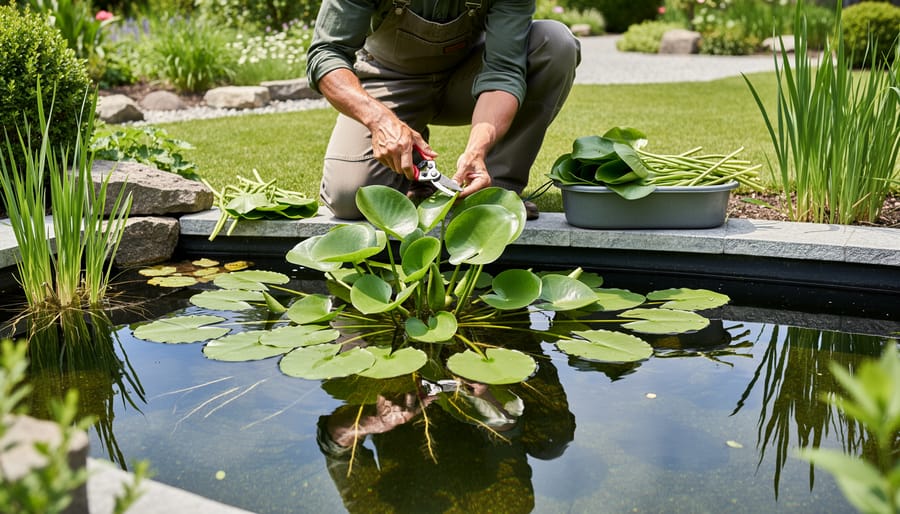
The key is trimming little and often rather than one big hack-back. Every two to three weeks during summer, take a walk around your pond with pruning shears. Remove older lily pads that are yellowing or crowding newer growth, cutting stems as close to the base as possible. Aim to keep about 60 percent of your water surface clear for proper gas exchange.
Marginal plants like irises and rushes benefit from deadheading spent flowers and removing any brown or damaged foliage. This encourages fresh growth and prevents seed dispersal that could lead to overcrowding next season.
Here’s my favorite tip: Always remove trimmings from the pond immediately. Decaying plant matter releases nutrients that feed algae, creating more work for you later. Think of summer trimming as gentle guidance rather than aggressive pruning. You’re working with your plants’ natural vigor, not fighting against it, keeping everything balanced and beautiful.
Keeping the Water Balanced
Summer heat can really challenge your pond’s ecosystem. As temperatures rise, warm water holds less oxygen than cool water—think of it like a warm soft drink going flat! This creates stress for fish and beneficial bacteria that keep your pond healthy. At the same time, algae absolutely love the combination of warmth and sunlight, often leading to those frustrating green water blooms.
This is where your aquatic plants become true heroes. They naturally compete with algae for nutrients, provide shade to cool the water, and release oxygen through photosynthesis during daylight hours. Maintaining a good balance—covering about 40-60% of your water surface with floating and submerged plants—works wonders for water quality and balance.
Watch for signs of imbalance like fish gasping at the surface (especially in early morning), foul odors, excessive algae growth, or cloudy water. These signals tell you it’s time to add more oxygenating plants, increase water circulation, or trim back overgrown vegetation that might be decaying. Remember, you’re aiming for harmony—not perfection!
Deadheading and Aesthetic Maintenance
During the growing season, keeping your aquatic plants looking their best doesn’t just boost curb appeal—it actually helps your pond ecosystem thrive. Think of deadheading as a gentle housekeeping routine that benefits everyone in your water garden.
Start by regularly removing spent blooms from flowering plants like water lilies and pickerel rush. This simple task prevents seed formation, which means your plants redirect their energy into producing more flowers rather than reproduction. I make it a habit to walk around my pond with morning coffee, snipping off faded flowers before they turn mushy.
Yellowing or damaged leaves should also get the snip treatment. These decaying plant parts don’t just look untidy—they sink into your pond and decompose, adding excess nutrients that can fuel algae growth. Use clean, sharp scissors or pruners and cut stems below the water line to prevent unsightly brown stubs.
Here’s a tip from experience: keep a bucket nearby during your rounds. Collect all trimmings immediately rather than letting them float away. Even small bits of plant matter can accumulate and affect water quality over time. Plus, those clippings make excellent compost for your land-based garden beds, closing the loop in your home ecosystem.
Fall: Preparing for the Transition
When to Cut Back (And When to Wait)
Timing your fall cutback correctly makes all the difference in your pond’s health. Here’s my general rule: hardy tropical plants and spent annuals should be removed before the first hard frost, while many native marginal plants can wait until late winter or early spring.
I always cut back soft-stemmed plants like water lettuce and water hyacinth once they start declining in fall. They’ll turn to mush over winter and create unnecessary debris. However, plants with hollow stems like cattails and rushes serve an important purpose through winter. Their stems act like little snorkels, allowing oxygen exchange even when ice forms on the surface. I learned this the hard way after cutting everything back one overzealous autumn and wondering why my fish seemed stressed that winter!
For ornamental grasses and seed-head plants around your pond edges, waiting until late winter gives overwintering insects shelter and provides food for birds. Come February or March, when you see new green growth emerging at the base, that’s your signal it’s safe to trim away last year’s growth. Your pond ecosystem will thank you for the patience.
Protecting Tender Plants
As temperatures start dropping, your tropical water plants need special attention to survive. I learned this the hard way when I lost a beautiful water hyacinth collection to an unexpected early frost! Here’s what you should do to keep your tender plants safe.
Start monitoring nighttime temperatures when they consistently dip below 15°C. This is your signal to begin preparations. For tropical plants like water lettuce, taro, and papyrus, you’ll need to bring them indoors before the first frost hits. Carefully lift these plants from your pond, rinse the roots gently to remove debris and any hitchhiking snails, then pot them in containers with aquatic soil. Place them in a sunny spot indoors or in a greenhouse where they can stay moist and warm through winter.
For marginally hardy specimens that can tolerate some cold but need a little help, try moving pots to the deepest part of your pond where water temperatures remain more stable. You can also add floating insulation or pond heaters to create protective microclimates. Remember to reduce feeding as plants naturally slow their growth, respecting their need for dormancy while keeping them alive for spring’s return.
Managing Falling Leaves
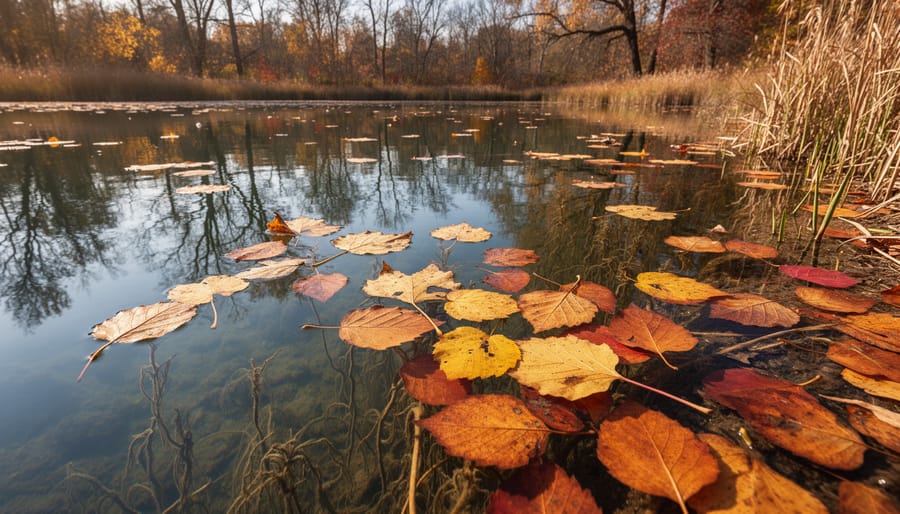
Autumn leaves might look beautiful drifting across your pond, but they’re actually setting you up for spring headaches. As leaves decay underwater, they release nutrients that fuel algae blooms and create a mucky mess that steals oxygen from your fish and plants.
The easiest prevention? Install pond netting before leaves start falling. Stretch it across the surface and secure the edges with stakes or weights. Sure, it’s not the prettiest look, but removing leaves from netting weekly beats fishing them out of the water daily. I learned this the hard way during my first pond autumn, spending hours with a skimmer net when I could’ve been enjoying pumpkin spice season.
If leaves do sneak in, scoop them out promptly with a pond skimmer. Those that sink to the bottom need attention too. Use a pond vacuum or carefully rake the shallows before winter sets in. Even small amounts of decomposing organic matter can create toxic gas pockets under ice, so staying on top of removal now prevents fish losses later. Think of it as giving your pond a clean slate for spring.
Winter: The Dormant Season Isn’t Hands-Off
What’s Happening Beneath the Ice
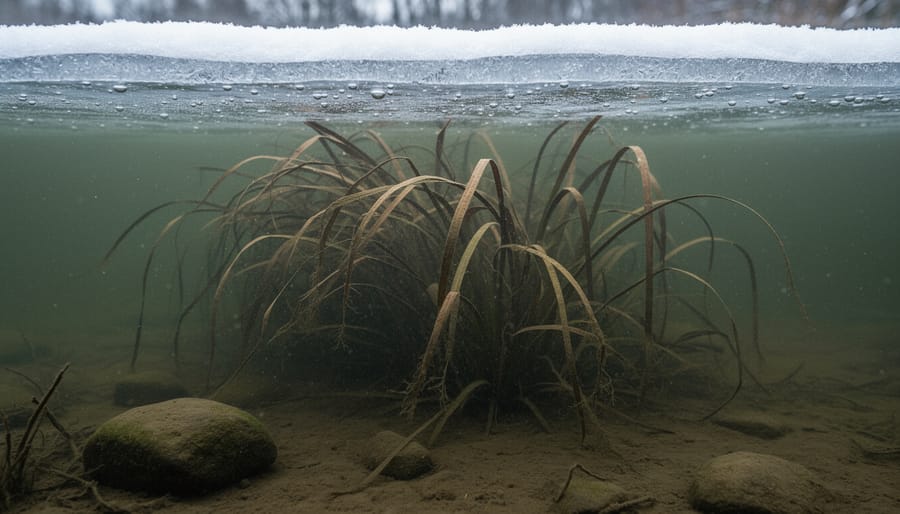
Just because your pond plants look still and quiet doesn’t mean they’ve checked out for the season. They’re actually in a state called dormancy, which is like a deep sleep that helps them survive winter. During this time, their growth slows way down, and they’re living off energy stored from sunnier days.
Think of dormant plants as conserving their batteries. They’re still alive and breathing, just at a much slower pace. This is why certain winter conditions can spell trouble even though everything looks peaceful on the surface. Sudden temperature swings can confuse plants, making them wake up too early only to get hit by another freeze. Ice that forms a solid seal over your pond can trap harmful gases underneath, creating a toxic environment for both plants and fish. And here’s something many pond owners don’t realize: plants still need some light filtering through to maintain their minimal life processes. Extended periods of heavy snow covering the ice can essentially suffocate your underwater garden, leaving you with dead or severely weakened plants come spring.
Winter Monitoring and Maintenance
Winter might seem like a time when your pond is simply sleeping, but there are a few essential tasks that ensure your aquatic ecosystem emerges healthy come spring. Think of it as gentle caretaking rather than active maintenance.
Your top priority is maintaining gas exchange at the surface. Even when ice forms, harmful gases from decomposing organic matter need to escape, and oxygen needs to enter. I’ve found that using a pond de-icer or aerator works wonderfully, creating a small opening in the ice. Never break ice forcefully, though—the shock waves can stress overwintering fish.
Check on any tender aquatic plants you’ve stored indoors every couple of weeks. They don’t need much attention, just enough water to keep their roots from completely drying out. I keep mine in a cool basement, and a quick spritz now and then does the trick.
If you have hardy evergreen aquatics like certain rushes still visible above the waterline, keep an eye on them during harsh freezes. While most are remarkably tough, protecting their crowns with a layer of mulch during extreme cold snaps provides extra insurance. The beauty of winter monitoring is its simplicity—just a few mindful checks keep everything on track until spring’s grand awakening.
Working With Natural Cycles (Not Against Them)
Here’s the thing about nature: she’s going to do her own thing whether we like it or not. And honestly? That’s fantastic news for your aquatic ecosystem. Once I stopped trying to keep my pond looking like a magazine spread year-round and started paying attention to what it actually wanted to do each season, everything got easier.
Think of your pond as a living calendar. It wants to burst with energy in spring, grow lush in summer, wind down in fall, and rest in winter. Fighting these rhythms is like trying to convince yourself you don’t need sleep. Sure, you can force it for a while, but you’ll exhaust yourself and your pond in the process.
The secret to low-maintenance seasonal management is simple: observe first, act second. Spend time watching what your pond does naturally. Notice when algae blooms happen, when plants die back, when fish become less active. These aren’t problems to fix immediately; they’re signals telling you what your ecosystem needs.
Instead of creating rigid schedules, build flexible routines around these natural cues. When water temperatures drop below 50 degrees Fahrenheit, your fish tell you they need less food by eating less. When daylight shortens, your plants signal their dormancy by yellowing. These are your management triggers, not arbitrary calendar dates.
Design your maintenance around three principles: minimal intervention during transitions, strategic preparation before extreme seasons, and celebration of what each season brings. Spring isn’t better than winter; it’s just different. Your autumn pond, with its golden leaves floating on the surface and preparing for rest, has its own quiet beauty worth appreciating rather than frantically cleaning away.
Understanding how your pond changes with the seasons transforms you from someone who simply maintains a water feature into a true water gardener who works in harmony with nature. Once you start noticing the patterns—when algae blooms, how your fish behave as temperatures shift, which plants thrive when—pond care becomes less about rigid schedules and more about responding to what your pond is telling you.
I encourage you to spend time observing your pond throughout the year. Grab a cup of coffee on spring mornings and watch for new growth. Notice which areas warm first in summer or where leaves accumulate in fall. These small observations will guide your decisions better than any calendar-based checklist ever could.
The real reward of understanding aquatic ecology isn’t just a clearer, healthier pond—though that’s wonderful! It’s the deeper connection you develop with this little ecosystem you’ve created. You’ll find yourself anticipating changes, celebrating seasonal transformations, and feeling confident in your decisions because they’re rooted in observation and understanding. Your pond becomes not just something you maintain, but something you truly know.