
How to Feed Your Pond Without Starving Its Life
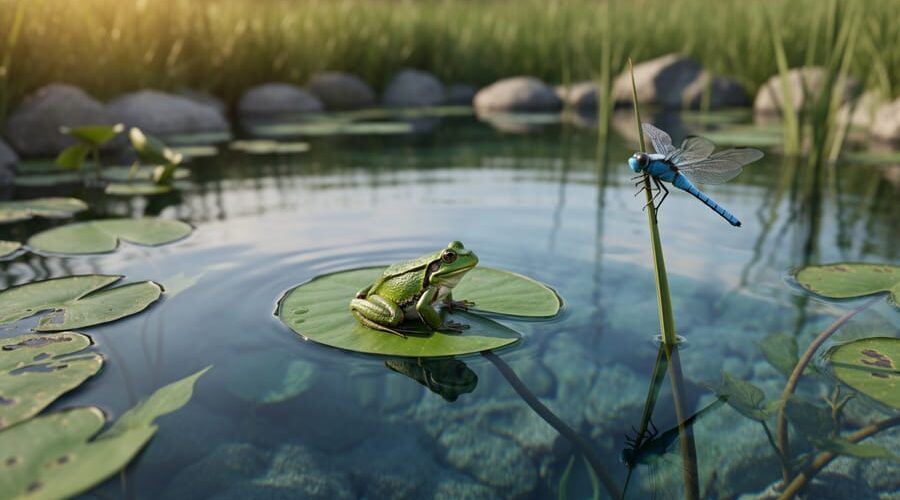
Balance your pond’s nutrients like you would season a meal—too little leaves everything bland and struggling, too much creates a murky, algae-choked mess that chokes out the diverse life you’re hoping to see. The connection between what feeds your pond and what lives in it isn’t mysterious, but it is profound. When you get nutrients right, you’re not just maintaining water quality; you’re setting the stage for dragonflies to patrol the surface, frogs to chorus at dusk, and native plants to create shelter for dozens of species you might never directly see but that make your pond genuinely alive.
Most pond owners discover this relationship backward—noticing their water turning green, fish gasping, or plants vanishing before realizing nutrients drove every problem. You’ve probably stood at your pond’s edge wondering why it doesn’t look like those picture-perfect examples in magazines, and the answer almost always traces back to nitrogen, phosphorus, and how they’re moving through your ecosystem.
The good news? You don’t need a chemistry degree to create conditions where biodiversity thrives. What you need is an understanding of how nutrients behave in small water bodies, recognition of the warning signs your pond shows when balance tips wrong, and practical strategies you can implement this weekend. Whether you’re dealing with murky water, disappearing wildlife, or simply want to transform your pond from ordinary to extraordinary, managing nutrients is your most powerful tool for building the vibrant, diverse ecosystem you envisioned when you first broke ground.
Why Your Pond’s Nutrient Balance Matters More Than You Think
Think of nutrients as the invisible fuel that powers your entire pond. Just like your garden needs fertilizer to thrive, your pond relies on nutrients—primarily nitrogen and phosphorus—to support life at every level. But here’s where it gets interesting: these nutrients don’t just feed your fish. They’re actually the foundation of a fascinating chain reaction that determines whether your pond becomes a thriving ecosystem or a murky green mess.
Let me explain how this works in your backyard pond. When nutrients enter the water (from fish waste, decaying leaves, or runoff), they first feed microscopic algae and phytoplankton. These tiny organisms might be invisible to your eye, but they’re the base of the food pyramid. Zooplankton and other microscopic creatures feast on them, which then become meals for aquatic insects, water beetles, and dragonfly larvae. These insects feed your fish, frogs, and visiting birds. It’s a beautiful cycle of pond ecosystem dynamics that starts with those simple nutrients.
The tricky part? Balance is everything. Too few nutrients and your pond becomes a biological desert—clear water but minimal life. Too many nutrients and you’ll trigger algae blooms that choke out oxygen and suffocate other organisms. I learned this the hard way when I overfed my koi one summer, thinking I was helping them grow. Within weeks, my once-diverse pond turned into pea soup, and I watched my dragonfly population vanish.
When you manage nutrients properly, you’re not just maintaining water clarity—you’re orchestrating an entire symphony of life. Each level of the food web depends on having just the right amount of nutrients flowing through the system. Get this balance right, and you’ll notice more variety: additional insect species, healthier fish, visiting wildlife, and that satisfying sense that your pond is truly alive.
The Goldilocks Problem: Too Much, Too Little, or Just Right
When You’re Overfeeding Your Pond
I’ve been there—standing at the pond’s edge, tossing in just a bit more fish food because those koi look hungry, right? But here’s what I learned the hard way: too much of a good thing can actually crash your pond’s ecosystem.
When you’re overfeeding, your pond will tell you loud and clear. The most obvious sign is those thick, soupy algae blooms that turn your water pea-green seemingly overnight. You might notice your water becoming murky or cloudy, losing that crystal-clear quality you worked so hard to achieve. Watch your fish closely too—if they’re hanging at the surface gasping for air, especially in the morning, that’s a red flag that something’s off balance.
Here’s the frustrating part: excess nutrients don’t create a richer ecosystem. They actually do the opposite. When leftover food and fish waste break down, they flood your pond with nitrogen and phosphorus. This might sound like plant food (and it is), but it creates conditions that only a few tough species can handle—mainly algae and certain aggressive plants.
Your delicate water lilies struggle. Native submerged plants get choked out. The diverse community of insects, amphibians, and microorganisms that make a pond truly thrive start disappearing. You end up with what I call a “green desert”—lots of algae, but very little actual life. The ecosystem becomes simplified, dominated by whatever can survive in those nutrient-rich, oxygen-poor conditions. That’s the opposite of biodiversity.
When Your Pond Is Running on Empty
Here’s an ironic twist: sometimes your pond can be too clean for its own good. I learned this the hard way when I was obsessed with crystal-clear water in my first pond. The water looked absolutely pristine, but nothing thrived. My plants barely grew, fish seemed sluggish, and the ecosystem felt strangely empty.
If your pond water is so clear you could read a book through it, but you’re not seeing much life, you might have a nutrient deficiency problem. Think of it like trying to grow a garden in sand – everything looks tidy, but there’s nothing to feed the plants. Stunted aquatic vegetation, slow fish growth, and that eerily lifeless quality are telltale signs.
Here’s what’s happening: ponds need a baseline level of nutrients to support algae and microorganisms, which form the foundation of the food web. Without these tiny organisms, there’s nothing for zooplankton to eat, which means nothing for small fish to munch on, and so the chain breaks down. A truly healthy pond has just enough nutrients to support diverse life without tipping into algae overload. That sweet spot creates the bustling underwater community we’re all after.
What a Balanced Pond Actually Looks Like
A healthy, balanced pond is actually quite easy to spot once you know what to look for. The water should be relatively clear—you’ll be able to see down at least a foot or two—but it won’t be crystal clear like a swimming pool. Instead, expect a slight green or amber tint, which indicates a natural, living ecosystem rather than a sterile environment.
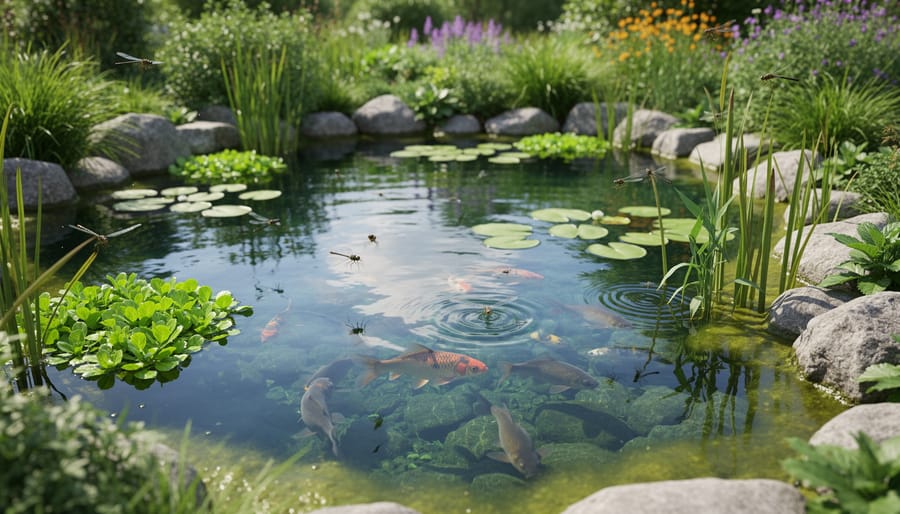
You’ll notice variety everywhere. Different types of aquatic plants should be thriving at various depths: submerged plants oxygenating the water, floating plants providing shade, and marginal plants softening the edges. Insects will be active around the pond—dragonflies zipping about, water striders skating across the surface, and perhaps even frogs calling from the shallows.
Your fish should display energetic, healthy behavior, swimming actively throughout different water levels rather than gasping at the surface or hiding constantly. If you have the chance to measure your pond’s biodiversity, you’ll likely find a satisfying mix of species coexisting peacefully.
The key indicator? Balance. No single element dominates—not algae, not one plant species, not excessive muck. Everything works together in harmonious proportion, creating that peaceful, thriving pond you envisioned.
Where Nutrients Come From (And How to Control Them)
Fish Food and Fish Waste
I learned this lesson the hard way when I noticed my crystal-clear pond turning into pea soup every summer. Turns out, I was accidentally sabotaging my own pond’s balance by overfeeding my fish. Every uneaten flake and every bit of fish waste adds nutrients to your water, and too much of a good thing creates the perfect buffet for algae.
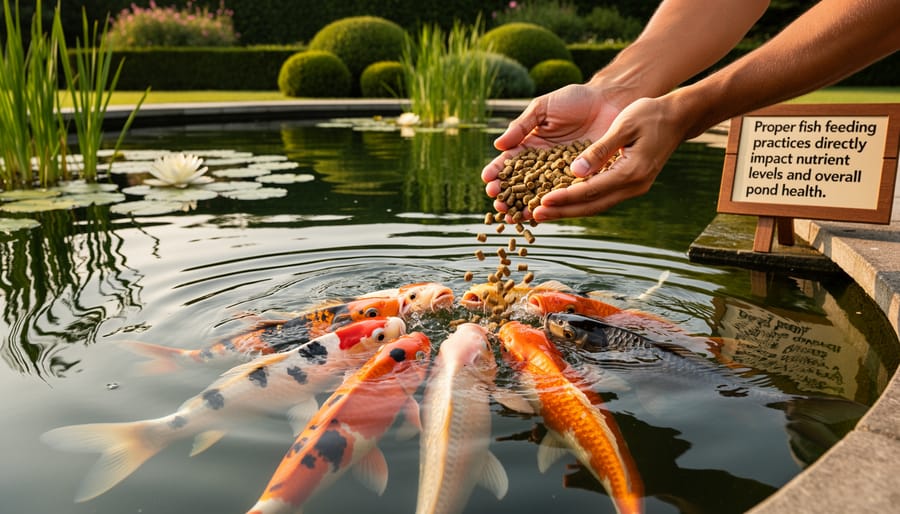
Here’s the golden rule: feed your fish only what they can consume in 3-5 minutes, once or twice daily during active months. Watch them eat and remove anything left floating after five minutes. This prevents excess food from decomposing and releasing nutrients into the water. Think of it as portion control for your pond’s health, not just your fish.
Choose quality fish food appropriate for your fish species. High-quality pellets or flakes produce less waste because fish digest them more efficiently. Look for foods with lower phosphorus content, as phosphorus is a major algae fuel.
Seasonal adjustment is crucial. When water temperatures drop below 50°F, reduce feeding frequency or stop altogether since fish metabolism slows dramatically. In spring and fall, feed once daily. During peak summer when fish are most active, you can feed twice daily, but stick to those 3-5 minute portions.
If you notice cloudy water or excessive algae shortly after establishing a feeding routine, you’re probably overfeeding. Scale back and let your pond rebalance naturally. Your fish won’t starve—they’ll happily snack on insects, algae, and other natural pond foods between meals.
Decaying Plant Material
Here’s the thing about decaying plant material: it’s both friend and foe in your pond! When autumn leaves drift into your water or spent lily flowers sink below the surface, they’re actually doing something wonderful. As they break down, they release nitrogen, phosphorus, and other nutrients back into your pond, feeding beneficial bacteria and creating a natural food web that supports everything from tiny daphnia to your fish.
In moderate amounts, this decomposition process is perfectly healthy. I’ve watched my own pond thrive with a light scattering of leaf litter providing slow-release nutrients throughout winter. The key word? Moderate. When debris accumulates too heavily, problems emerge quickly. Excessive decay consumes oxygen, creates toxic hydrogen sulfide gas (that rotten egg smell), and can trigger algae blooms that choke out other life.
Here’s my practical maintenance rhythm: do a light skimming weekly during growing season, removing floating debris before it sinks. In autumn, net your pond or skim daily when leaves are falling heavily. Every spring and fall, do a more thorough cleanup, removing accumulated sludge from the bottom. If you can still see your pond liner or rocks, you’re in good shape. If there’s more than an inch of mucky sediment, it’s cleanup time!
Runoff and External Sources
Your pond doesn’t exist in isolation—what happens around it dramatically affects what’s happening inside it. When rain hits your lawn, it picks up fertilizers and carries them straight into your pond. Those autumn leaves floating on the surface? They’re slowly releasing nutrients as they decompose. Even that beautiful tree canopy overhead contributes to your nutrient load.
The good news is that small changes make a big difference. Start by creating a buffer zone around your pond—a ring of plants or rocks that catches runoff before it enters the water. I learned this the hard way after watching algae blooms appear every spring, right after lawn fertilizing season! Consider switching to organic, slow-release fertilizers, or better yet, reduce fertilized areas near your pond.
Remove fallen leaves regularly, especially in autumn. A simple pond skimmer or net takes just minutes but prevents weeks of nutrient release. If you’re planning landscaping, position downspouts and drainage away from your pond. Rain barrels can capture roof runoff, giving you free water for garden plants while protecting your pond from sudden nutrient surges. These simple strategies help you control what enters your pond ecosystem, giving you the balanced, biodiverse water feature you’re working toward.
Your Tap Water (The Sneaky Culprit)
Your tap water might be secretly feeding algae blooms rather than supporting beneficial pond life. Municipal water often contains phosphates and nitrates from treatment processes, while well water can carry agricultural runoff or naturally high mineral content. If you’re topping off weekly and noticing green water or string algae, your water source deserves investigation. Grab an inexpensive aquarium test kit from any pet store and check your tap water’s nutrient levels before it enters your pond. If phosphates exceed 0.1 ppm or nitrates top 20 ppm, consider letting a rain barrel do the refilling work instead, or treat tap water with a dechlorinator that also binds phosphates.
Natural Nutrient Managers That Do the Work for You
Plants as Your Pond’s Filtration System
Here’s a secret I learned after years of battling green water: your pond plants are working harder than any filter you could buy. They’re quietly munching away on the excess nutrients that would otherwise fuel algae blooms and create murky, unhealthy conditions. Think of them as your pond’s natural cleanup crew, absorbing nitrogen and phosphorus before troublemakers can use them.
Aquatic plants work their magic through their roots and leaves, pulling nutrients directly from the water. As they grow, they literally build those excess nutrients into their own structure. It’s beautifully simple and incredibly effective.
Let me share which plants that boost biodiversity work best for nutrient control. Water lilies are your surface superstars, with extensive root systems that soak up nutrients while providing shade to discourage algae. For the edges, marginal plants like pickerel rush and water iris create dense root zones that filter water flowing into your pond. But my favorites are submerged oxygenators like hornwort and anacharis. These underwater workers are nutrient-absorbing machines while releasing oxygen that benefits everything living in your pond.
Now, here’s the planting density sweet spot I’ve found works best. For small ponds under 1000 liters, aim for plants covering about 40-50% of your surface area. Medium ponds from 1000-3000 liters do well with 50-60% coverage, while larger ponds can manage beautifully with 60-70%. Include a mix of all three plant types, with submerged oxygenators making up at least one-third of your total plant mass. This combination creates multiple filtration layers throughout your pond’s depth.
The Little Creatures That Keep Everything in Check
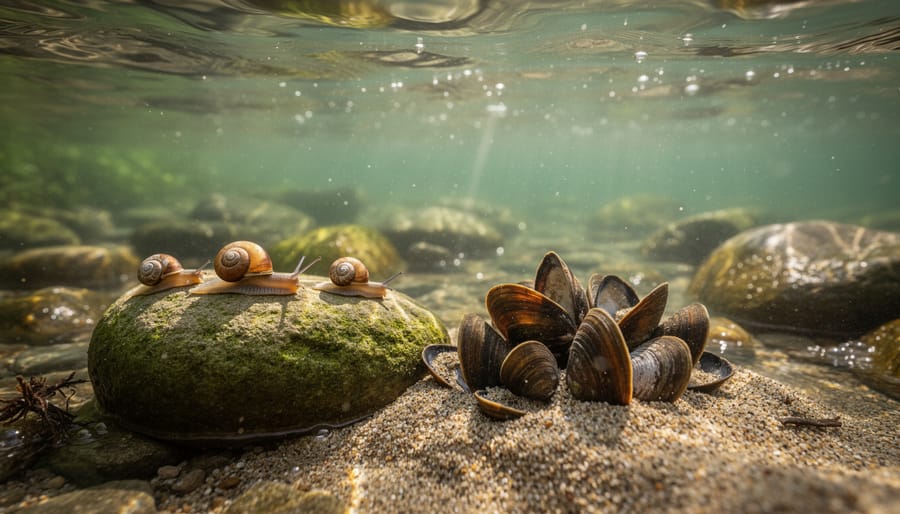
Think of your pond as having its own tiny cleanup crew working around the clock. Snails, freshwater mussels, and beneficial bacteria might not be as flashy as koi or dragonflies, but they’re absolute champions at keeping your water healthy. These beneficial pond organisms process excess nutrients before they can cause problems like algae blooms or murky water.
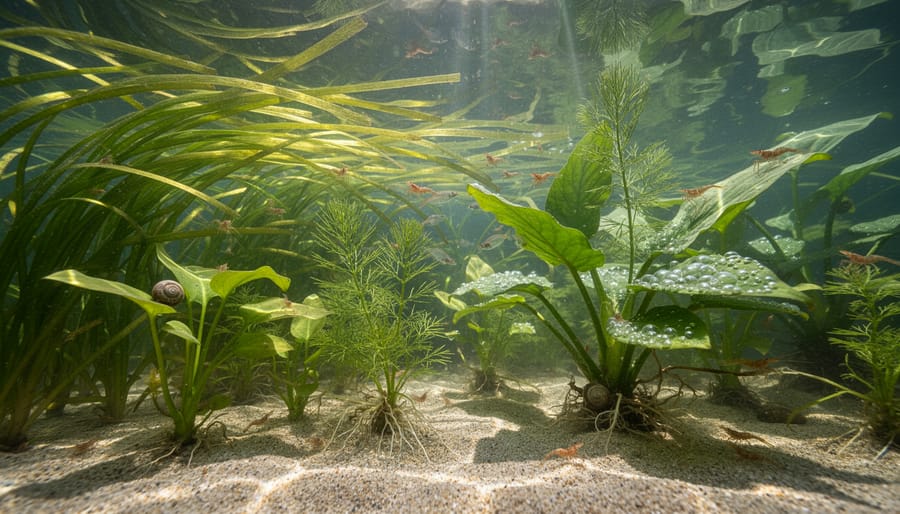
Snails are nature’s vacuum cleaners, munching on algae, decaying plant matter, and leftover fish food. Freshwater mussels are even more impressive. They filter water continuously, pulling out microscopic particles and turning nutrients into harmless waste. Meanwhile, beneficial bacteria colonize every surface in your pond, breaking down fish waste and decomposing leaves into simpler compounds that plants can use.
I learned about biological filtration the hard way when I first started my pond journey. My water stayed cloudy no matter how much I cleaned until I realized I’d been too thorough, removing the surfaces where good bacteria lived. Now I know that rocks, gravel, and even the inside of filters provide essential homes for these microscopic helpers.
To encourage these populations naturally, add plenty of surfaces for bacteria to colonize. Rocks with different textures work wonderfully. For snails, simply leave them be if they appear naturally. They’ll reproduce to match your pond’s food supply without any help from you.
Here’s the important part: never introduce species from other ponds or pet stores without research. Some snails and mussels are invasive and can harm local ecosystems if they escape. Stick with native species recommended by local pond suppliers who understand your area’s ecology. Your cleanup crew will establish itself naturally when conditions are right.
Simple Strategies to Boost Biodiversity Through Smart Nutrient Management
Quick Wins You Can Start Today
Ready to boost your pond’s biodiversity right now? These simple actions deliver immediate benefits and set the stage for a thriving ecosystem. Let’s dive into four quick wins you can tackle this weekend!
Start by adjusting your fish feeding routine. Overfeeding is one of the biggest nutrient culprits in backyard ponds. Here’s what to do: Feed only what your fish can consume in 2-3 minutes, once or twice daily. Watch them eat and stop when they lose interest. Remove any uneaten food after five minutes with a net. This simple change prevents excess nutrients from decomposing and fueling algae blooms while keeping your fish healthier.
Next, introduce floating plants like water lettuce or water hyacinth. These workhorses absorb nutrients directly from the water column before algae can grab them. Simply place 3-5 plants on your pond surface, covering about 30-40% of the area. They’ll multiply naturally, and you can thin them out as needed. Bonus: their roots provide hiding spots for beneficial microorganisms and fish fry.
Remove visible debris weekly using a skimmer net or rake. Spend 10 minutes scooping out fallen leaves, dead plant material, and floating waste before they sink and decompose. This prevents nutrient buildup at the source and takes minimal effort.
Finally, create shallow shelf areas if your pond lacks them. Use flat rocks or upturned plastic crates to build ledges 4-6 inches below the surface around pond edges. These zones become hotspots for beneficial bacteria, insects, and amphibians that naturally balance your ecosystem. Position them where morning sun reaches but afternoon shade protects them.
Each action takes under 30 minutes but compounds over time, transforming your pond’s health remarkably quickly.
Weekend Projects for Long-Term Success
Ready to tackle some bigger projects? These weekend activities will transform your pond into a thriving ecosystem that practically runs itself. Each project builds on those quick wins we talked about earlier, but delivers lasting benefits for your pond’s biodiversity.
Start with a bog garden (4-6 hours). Dig a shallow extension at your pond’s edge, about 30cm deep, and line it with your existing pond liner or a new piece. Fill it with a mix of soil and gravel, then plant moisture-loving species like iris, marsh marigolds, and cardinal flowers. These plants act as natural nutrient sponges while providing habitat for frogs and beneficial insects. The roots create filtering zones that intercept nutrients before they reach open water.
Next, consider adding plant shelves (3-4 hours). These shallow ledges at different depths let you diversify your plant collection, which is essential when creating a wildlife pond. Stack rocks or use pond-safe materials to create 15-30cm deep platforms around your pond’s perimeter. Different depths support different plant species, each contributing unique nutrient management benefits.
Create gravel beds for beneficial bacteria (2-3 hours). Spread a 5-10cm layer of pea gravel in shallow areas. These surfaces become colonization sites for bacteria that naturally process fish waste and decaying matter. Think of it as adding extra square footage for your cleanup crew.
Finally, install a simple biological filter (5-8 hours). A basic setup using a plastic container filled with filter media and a small pump creates a dedicated space for beneficial bacteria. Water circulates through the media, getting cleaned before returning to your pond. This weekend investment delivers year-round nutrient control.
Seasonal Adjustments That Make a Big Difference
Your pond’s needs shift dramatically with the seasons, and adjusting your approach makes all the difference for maintaining thriving biodiversity year-round.
In spring, as temperatures climb above 50°F, fish metabolism kicks into gear. Start feeding lightly with high-protein food, and add beneficial bacteria to jumpstart nutrient cycling after winter dormancy. This is when your pond wakes up hungry!
Summer demands the most attention. Trim back overgrown plants weekly to prevent them from dying off and releasing nutrients back into the water. Feed fish their peak amounts, but watch for leftovers that signal overfeeding. Test water weekly during heat waves when nutrient spikes happen fastest.
Fall is all about leaf management. Net your pond or skim daily to prevent leaves from sinking and decomposing. Gradually reduce feeding as temperatures drop, and add cold-water bacteria to handle the organic matter breakdown. I learned this the hard way after one autumn of neglect turned my spring water murky!
Winter means rest for most ponds. Stop feeding when water dips below 50°F, as fish enter dormancy and can’t digest food properly. Keep a small area ice-free for gas exchange, but otherwise, let nature take its course until spring returns.
Troubleshooting Common Nutrient-Related Problems
Green Water That Won’t Clear
If your pond looks like pea soup that just won’t clear up, you’re dealing with an algae bloom triggered by too many nutrients in the water. Think of it like overfeeding a garden – excess nitrogen and phosphorus become an all-you-can-eat buffet for microscopic algae.
Here’s your action plan to reclaim crystal-clear water:
First, identify and cut off nutrient sources. Check if fertilizer runoff from nearby lawns reaches your pond, reduce fish feeding amounts, and remove decomposing leaves or plant matter. These are the hidden culprits pumping nutrients into your system.
Next, add plant competitors that naturally out-compete algae. Submerged plants like hornwort and water milfoil are nutrient-hungry champions. Float some water lettuce or water hyacinth on the surface – they’re absolute workhorses at sucking up excess nutrients while shading out algae.
Consider adding beneficial bacteria products that break down organic waste more efficiently, reducing the nutrient pool available to algae.
Be patient – you’ll typically see improvement within 2-3 weeks, with significant clearing by 4-6 weeks. I’ve watched countless green ponds transform once the nutrient balance shifts in favor of diverse plant life instead of algae dominance.
Healthy Plants But No Wildlife
You’ve got beautiful, thriving plants but your pond feels oddly quiet? I’ve been there! A pond with lush greenery but no buzzing, croaking, or splashing usually means wildlife can’t find what they need to call it home.
The problem often boils down to food and shelter. Even with healthy plants, if your pond is too tidy or lacks diversity, there’s nothing for insects to munch on, nowhere for frogs to hide, or no safe spots for dragonfly larvae to develop. Think of it like having a gorgeous house with no kitchen or furniture – looks great, but nobody wants to move in!
Here’s how to roll out the welcome mat for wildlife. First, create some controlled “wild zones” by letting native marginal plants grow a bit scraggly along one edge. Add submerged oxygenators like hornwort, which harbor tiny invertebrates that become food for larger creatures. Include flat rocks near the water’s edge as sunning spots for frogs and newts.
Consider adding a shallow, pebbled beach area where birds can safely drink and bathe. Leave some leaf litter and hollow logs nearby – they’re five-star hotels for beneficial insects! A small pile of rocks creates hiding spots for amphibians.
Finally, patience pays off. Wildlife takes time to discover new resources, so give your improvements a full season to work their magic.
When One Species Takes Over
I’ve learned this lesson the hard way: when your pond looks like a green blanket, something’s out of whack. Nutrient imbalances create perfect conditions for opportunistic species like duckweed, string algae, or filamentous algae to take over. These plants thrive on excess nitrogen and phosphorus, crowding out everything else and suffocating diversity.
The good news? You can restore balance naturally. Start by removing excess debris manually, a satisfying Saturday morning task that makes an immediate difference. Add more oxygenating plants to compete for nutrients and create habitat diversity. Barley straw is my secret weapon, releasing compounds that discourage algae without harming other life. Increase water circulation with a fountain or waterfall to prevent stagnant zones where problem species flourish.
Consider adding beneficial bacteria that consume excess nutrients before troublemakers can claim them. I also reduce feeding fish during warmer months when algae blooms peak. The key is patience: restoring diversity takes weeks, not days, but watching new species return to your pond makes every effort worthwhile.
Here’s the truth I’ve learned from years of watching my own pond evolve: you’re not aiming for some spotless, chemistry-lab version of nature. A thriving pond is a bit messy, a bit wild, and absolutely full of life. The goal with nutrient management isn’t perfection—it’s balance. It’s creating the conditions where frogs call, dragonflies patrol, and fish flash beneath the surface.
Your pond will tell you what it needs if you take time to observe. Those algae blooms? They’re feedback. Crystal-clear water with nothing growing? Also feedback. The real reward comes when you start noticing the small changes—a new damselfly species, tadpoles you didn’t expect, or water plants spreading just right.
You don’t need to overhaul everything tomorrow. Start with one simple change. Maybe it’s adding a handful of native plants this weekend, or testing your water for the first time. Each small adjustment compounds over time. Before you know it, you’ll be that person who sits by the pond on summer evenings, watching the ecosystem you’ve nurtured come alive with the season’s rhythm. That’s the magic worth working toward.