
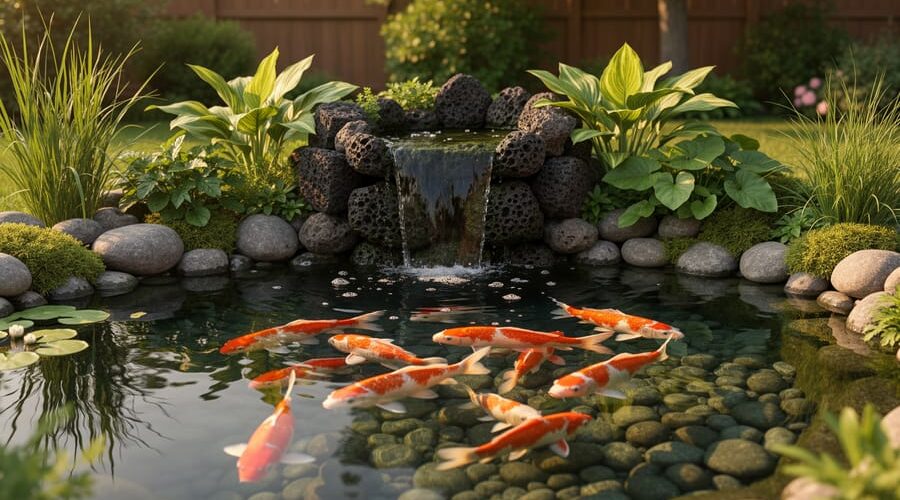
Why Your Pond Needs Living Filters (And How They Actually Work)
Your pond water looks murky, your fish are gasping at the surface, and you’re wondering why that expensive filter isn’t doing its job. The answer might surprise you: mechanical filtration alone won’t keep your pond healthy. You need an invisible army of beneficial bacteria working around the clock to break down fish waste, uneaten food, and decaying plant matter before they poison your water.
Biological filtration is nature’s own cleanup crew. Think of it as a miniature wastewater treatment plant right in your backyard. Beneficial bacteria colonize special filter media, converting toxic ammonia from fish waste into less harmful nitrites, then into relatively safe nitrates that your plants can actually use as fertilizer. This natural nitrogen cycle is what separates a thriving, crystal-clear pond from a green, smelly swamp.
Here’s the good news: setting up biological filtration isn’t complicated, and you don’t need a degree in microbiology to make it work. Whether you’re dealing with a small water garden or a sprawling koi pond, the principles remain the same. You need the right filter media for bacteria to live on, adequate water flow to deliver waste to those bacteria, and enough oxygen to keep them healthy and hungry.
The challenge is that most pond owners don’t understand how long biological filters take to establish, why they sometimes crash, or how to maintain them without accidentally killing off their bacterial colonies. Once you grasp these fundamentals, you’ll stop fighting against your pond’s ecosystem and start working with it instead. Your reward? Healthier fish, clearer water, and far less maintenance headache.
What Biological Filtration Actually Means (In Plain English)
Let me share something that completely changed how I thought about keeping my pond clean. For years, I assumed pond filtration was all about fancy equipment and complicated chemistry. Then I learned the truth: biological filtration is simply nature doing what it does best—recycling.
Think of biological filtration as your pond’s invisible cleanup crew. Just like a team of workers breaking down trash at a recycling center, beneficial bacteria in your pond break down waste materials and transform them into harmless substances. These microscopic helpers are the real heroes of a healthy pond.
Here’s how this natural recycling system works. Fish produce waste (both solid and through their gills), and any uneaten food begins to decompose in the water. If left alone, these materials break down into ammonia—a toxic compound that can harm or even kill your fish. This is where your cleanup crew steps in.
Beneficial bacteria colonize surfaces in your pond and filter—rocks, bio-media, even the walls of your pond. The first team of bacteria (called Nitrosomonas, but don’t worry about remembering that) eats ammonia and converts it into nitrites. Now, nitrites are still harmful, so a second crew of bacteria takes over. These bacteria consume the nitrites and transform them into nitrates, which are relatively harmless to fish at normal levels. Your pond plants then absorb these nitrates as fertilizer, completing the cycle.
I like to compare these bacteria colonies to a well-organized restaurant kitchen. The first chef prepares the ingredients, the second chef cooks them, and the final product feeds your plants instead of poisoning your fish. Each step depends on the previous one, and the whole system works together seamlessly.
The beautiful part? Once established, this system runs on autopilot. You don’t need to add bacteria constantly or monitor every chemical reaction. Your job is simply to provide the right environment—adequate surface area for bacteria to grow, proper water flow, and enough oxygen. The bacteria handle everything else, working tirelessly to keep your pond water crystal clear and your fish swimming happily.
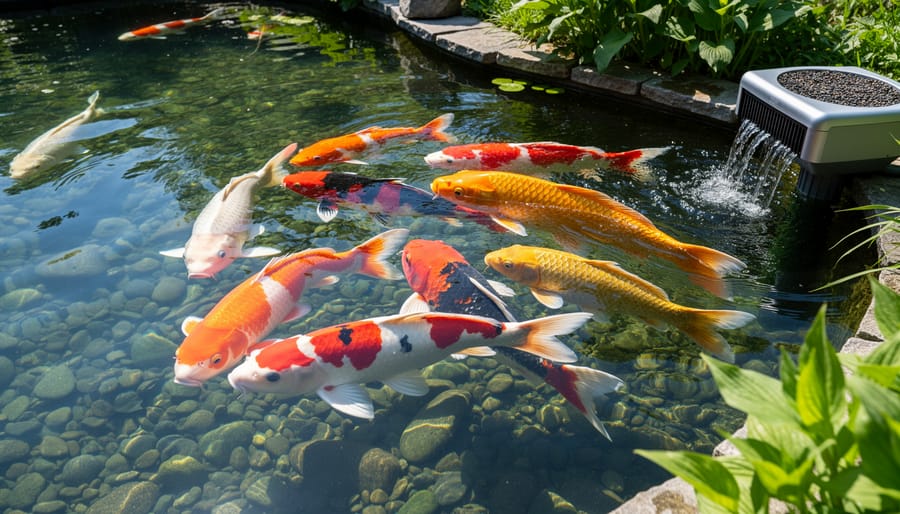
The Nitrogen Cycle: Your Pond’s Life Support System
Stage One: From Fish Waste to Ammonia
Your fish are wonderful pets, but here’s the truth: they’re constantly producing waste! Every time your fish eats, digests food, and breathes, they release ammonia into your pond water. Fish gills excrete ammonia directly as they respire, and their solid waste breaks down to release even more. Think of it like your pond being a closed room where the air never changes—things would get pretty toxic quickly, right?
Here’s why this matters: ammonia is seriously dangerous stuff. Even small amounts can burn fish gills, stress their immune systems, and in higher concentrations, it’s downright lethal. You won’t always see the problem right away either. Fish might seem fine one day, then suddenly show signs of distress. That’s why testing your pond water regularly is so important. The good news? Nature has an amazing solution to this ammonia problem, and it all happens through biological filtration.
Stage Two: Nitrosomonas Bacteria to the Rescue
Here’s where things get exciting! Once ammonia enters your pond water (from fish waste, decomposing leaves, or uneaten food), the first team of beneficial bacteria springs into action. These hardworking microorganisms are called Nitrosomonas, and they have one specific job: converting that toxic ammonia into nitrites.
Think of Nitrosomonas bacteria as your pond’s first line of defense. They colonize surfaces throughout your biological filter, on rocks, and even on plant roots. As water flows past these bacterial colonies, they literally consume the ammonia and transform it through their natural metabolic process.
Now, I’ll be honest with you – nitrites are still toxic to fish, though slightly less dangerous than ammonia. But don’t worry! This is just the middle step in nature’s brilliant filtration system. Your Nitrosomonas bacteria are essentially preparing the water for the next stage of treatment, where another type of beneficial bacteria will finish the job and make your pond water safe and healthy for all its inhabitants.
Stage Three: The Final Cleanup
Once Nitrosomonas bacteria have converted toxic ammonia into nitrites, there’s still work to be done. Nitrites, while less deadly than ammonia, can still stress your fish and harm their ability to transport oxygen through their bloodstream. This is where the second team of beneficial bacteria steps in to save the day.
Nitrobacter bacteria are the final heroes in your pond’s biological filtration story. These microorganisms feast on nitrites and transform them into nitrates, which are considerably safer for your aquatic friends. Think of nitrates as the leftovers from a well-organized cleanup crew—they’re still waste, but in a much gentler form.
Here’s the beautiful part: nitrates actually become plant food! Your water lilies, marginal plants, and any floating vegetation will absorb these nitrates as nutrients, essentially removing them from the water. It’s nature’s perfect recycling system happening right in your backyard.
I remember when I first understood this process, I felt like a scientist watching an invisible ecosystem work its magic. Your pond plants aren’t just decorative—they’re active participants in keeping your water balanced and your fish thriving. This complete cycle is what makes biological filtration so remarkably effective and self-sustaining.
Where Beneficial Bacteria Actually Live in Your Pond
Here’s something that surprised me when I first started keeping ponds: beneficial bacteria don’t just float around freely in the water. They’re actually homebodies that need solid surfaces to attach themselves to and form communities. Think of them like tiny apartment dwellers who need a place to settle down before they can do their work.
In nature, bacteria colonize every available surface in your pond. They cling to rocks, gravel, plant roots, and even the sides of your pond liner. I’ve watched my own pond develop that slightly slippery feel on the stones after a few weeks, which is actually a good sign—that’s your bacterial biofilm establishing itself!
However, relying on natural surfaces alone usually isn’t enough for most backyard ponds, especially if you have fish. This is where biological filter media comes in. These are materials specifically designed to give bacteria maximum real estate to colonize. The key is surface area—the more nooks and crannies available, the more bacteria you can support, and the better your filtration becomes.
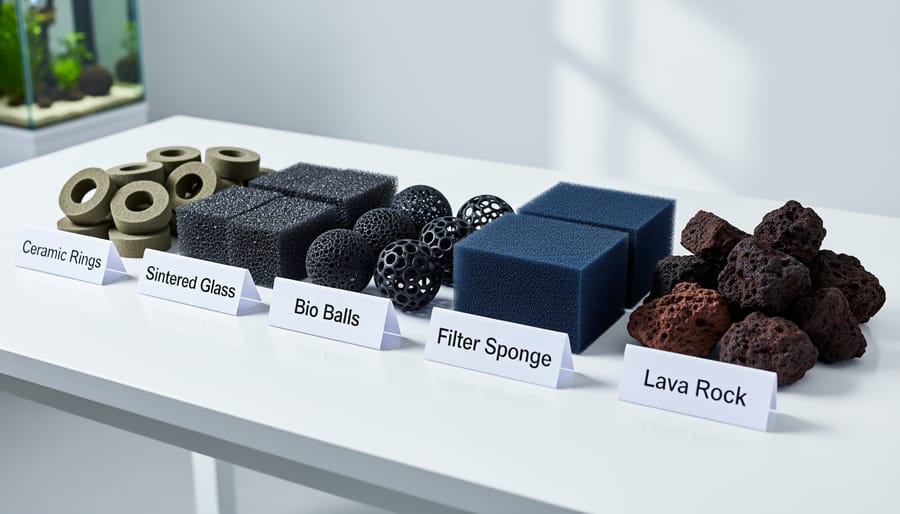
Traditional filter media includes lava rock, which has a wonderfully porous surface that bacteria love. Ceramic rings and bio-balls are also popular choices, offering tons of surface area in compact spaces. Many pond keepers use plastic pot scrubbers (yes, the kind from the kitchen section!) because they’re inexpensive and provide excellent surface area.
Modern biological filters often contain specialized media like matting, foam pads, or structured plastic elements. These materials are engineered to maximize bacterial colonization while allowing water to flow through easily. Some even have protected pores that create low-oxygen zones for those denitrifying bacteria we talked about earlier.
The beauty of biological media is that once bacteria colonize it, you’ve created a living filter that works continuously. It’s like having millions of tiny workers on the job twenty-four-seven, and they never ask for vacation time!
Types of Biological Filtration Systems for Your Pond
Submerged Biological Filters
Submerged biological filters sit right inside your pond, working quietly beneath the surface. These are typically sponge filters or containers filled with special filter media like bio-balls or ceramic rings that house those helpful bacteria we talked about. They connect to a pump that pulls water through the media, where bacteria break down fish waste and debris.
I love submerged filters for smaller ponds because they’re incredibly budget-friendly and easy to hide behind plants or rocks. They’re also perfect if you’re working with limited space around your pond’s perimeter. The setup is straightforward – just place the filter in your pond, connect it to a pump, and you’re good to go.
However, these filters do have limitations. They work best in ponds up to about 500 gallons with light fish loads. Cleaning them requires getting in the pond or fishing them out, which can be messy. They also take up valuable swimming space for your fish.
The biggest advantage? They’re fantastic starter filters for new pond owners learning the ropes. They let you understand biological filtration basics without a major investment, and you can always upgrade later as your pond needs grow.
External Bio-Filters (Waterfall and Pressurized)
External filter systems sit beside your pond rather than in it, and they’re incredibly popular for good reason. Think of them as dedicated processing stations where your pond water gets cleaned before returning home.
There are two main types: waterfall filters and pressurized filters. Waterfall filters (sometimes called gravity filters) work beautifully if you’re planning a waterfall or stream feature anyway. Water flows into the filter box at the top, trickles through biological media where beneficial bacteria work their magic, then cascades back into your pond. They’re easy to maintain since you simply lift the lid to check things out.
Pressurized filters are compact powerhouses that work under pressure from your pump. They’re perfect when space is tight or you want to position your filter below water level. The water gets forced through densely packed media, giving bacteria maximum contact time to break down waste.
I love external filters because they’re accessible. No wading into your pond for routine cleaning! They also don’t take up valuable swimming space for your fish. The downside? They require proper installation and can be more visible, though clever landscaping with rocks and plants easily solves that. Choose waterfall filters for natural aesthetics or pressurized units for hidden, space-saving filtration.
Bog Filters: Nature’s Way
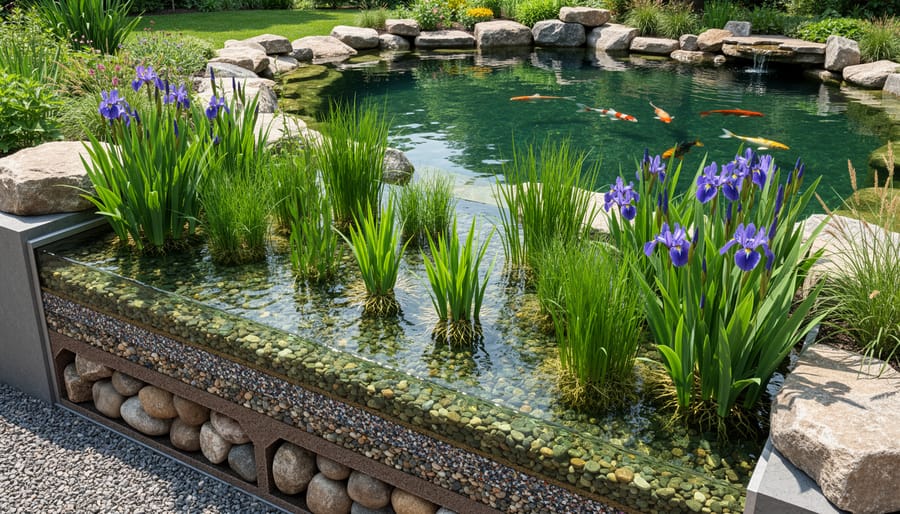
Want to take biological filtration to the next level? Bog filters are one of my favorite natural filtration methods because they’re both beautiful and incredibly effective. Think of them as constructed wetlands that work alongside your pond.
Here’s the magic: you create a shallow planted area where pond water flows through gravel and plant roots. The gravel provides massive surface area for beneficial bacteria to colonize, while plants like iris, rushes, and pickerel weed actively absorb nutrients that would otherwise feed algae. Their roots create additional surface area and release oxygen into the root zone, supporting even more beneficial bacteria.
I built my first bog filter five years ago, and the transformation was remarkable. Not only did water clarity improve within weeks, but I gained a gorgeous planted area that attracts dragonflies and butterflies. The plants essentially act as a living filter, pulling nitrates directly from the water while the bacteria colony beneath handles ammonia and nitrite conversion.
The best part? Once established, bog filters require minimal maintenance compared to mechanical systems. Just trim back plants seasonally and occasionally top up the gravel level. It’s nature doing what it does best.
DIY vs. Pre-Made Systems
Choosing between building your own system or purchasing a ready-made unit really comes down to three main factors: your budget, your confidence with DIY projects, and the size of your pond.
If you’ve got weekend DIY skills and a pond under 1,000 gallons, building a DIY bio-filter can be incredibly rewarding and cost-effective. I built my first one using basic containers, lava rock, and filter pads for about a third of what commercial units cost. It’s been running smoothly for three years now! The satisfaction of seeing your own creation keeping water crystal clear is truly special.
Commercial systems make more sense for larger ponds (over 2,000 gallons) or if you prefer plug-and-play convenience. They come with warranties, optimized flow rates, and often include features like backwash systems that take the guesswork out of maintenance.
For beginners, I’d suggest starting with a pre-made system to understand how biological filtration works in practice. Once you’re comfortable with the principles, you can always expand or modify with DIY elements. There’s no wrong choice here, just what works best for your situation and comfort level.
Setting Up Your Biological Filter for Success
Getting your biological filter up and running isn’t quite like flipping a switch, and honestly, that’s where many first-time pond owners (myself included, years ago!) run into frustration. You see, biological filtration relies on living organisms, and those beneficial bacteria need time to move in and set up shop.
This process is called “cycling,” and it’s basically the period when your filter transforms from an empty house into a thriving bacterial neighborhood. During cycling, ammonia-eating bacteria colonize your filter media first, followed by nitrite-eating bacteria. This typically takes 4-6 weeks in warm weather, though cooler temperatures can stretch it to 8 weeks or more.
Here’s how to cycle your pond successfully. If you’re starting a brand-new pond, add your filter system and let it run continuously. Introduce just a few hardy fish or simply add a pinch of fish food daily to create ammonia that feeds developing bacteria. Yes, you’re literally feeding invisible creatures! Test your water every few days using an aquarium test kit. You’ll see ammonia levels rise first, then nitrite levels climb as the first bacterial colony establishes, and finally both drop to near zero as your system matures.
The biggest mistake beginners make? Impatience. I remember adding a full fish load to my first pond after just two weeks because the water looked clear. Within days, my fish were gasping at the surface, stressed by toxic ammonia levels. Clear water doesn’t mean cycled water.
Another common error is over-cleaning your filter during this delicate phase. Those brownish films forming on your media aren’t dirt, they’re bacterial colonies establishing themselves. Resist the urge to scrub everything spotless.
You can speed things up by borrowing a handful of mature filter media from an established pond or adding commercial bacterial starter products. These give your system a head start with ready-made colonies.
Temperature matters too. Beneficial bacteria are sluggish below 50°F, so if you’re setting up in early spring, expect slower progress. Think of it like gardening—you’re cultivating life, not installing machinery. The reward for your patience is a self-sustaining ecosystem that works tirelessly to keep your pond healthy for years to come.
Keeping Your Biological Filter Healthy
Your biological filter is like a thriving city of helpful bacteria, and just like any community, it needs care to stay healthy. The good news? These little workers are pretty resilient when you follow a few simple guidelines.
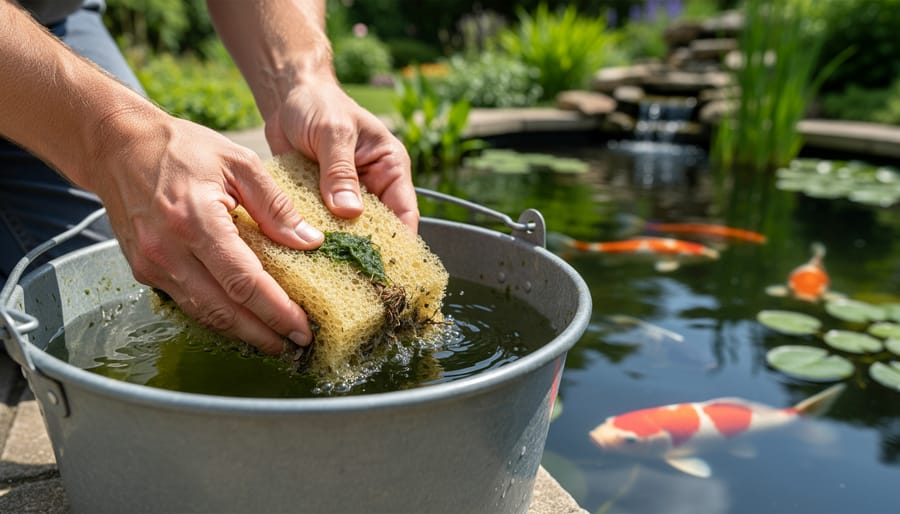
Here’s the golden rule: never clean your biological filter media with tap water. I learned this the hard way years ago when I thoroughly rinsed my filter foam under the garden hose, thinking I was being helpful. Within days, my pond water turned green and murky. Why? Tap water contains chlorine and chloramines that kill beneficial bacteria instantly. Always use pond water to rinse filter media, keeping those bacterial colonies safe and sound.
When it comes to cleaning frequency, less is often more. Check your filter media every 2-4 weeks during warmer months, but only clean it when water flow noticeably decreases or debris buildup becomes significant. A bit of brownish sludge is actually good, that’s your bacteria at work! You’re simply removing excess waste, not scrubbing everything spotless.
If you need to clean mechanical pre-filters or foam pads, do it in batches. Clean half one week, the other half two weeks later. This staggered approach ensures you always maintain a healthy bacterial population. Think of it as rotating maintenance rather than a complete overhaul.
Temperature matters too. During spring startup or after winter, your bacteria need time to rebuild their numbers. Be patient and avoid overfeeding fish during these transition periods. The bacteria population grows with the available ammonia, so gradual increases work best.
Never replace all your biological media at once. If media needs replacing due to deterioration, swap out only 25-30% at a time, allowing established bacteria on remaining media to colonize the new material. Following these maintenance best practices keeps your biological filter thriving season after season, giving you crystal-clear water with minimal fuss.
Signs Your Biological Filtration Isn’t Working (And How to Fix It)
Your pond is trying to tell you something, and learning to read those signs can save you a lot of headaches. Let me share what I’ve learned from my own pond mishaps over the years.
Green water is probably the most common red flag. If your pond looks like pea soup, you’ve got an algae bloom that your biological filter can’t handle. This usually happens when beneficial bacteria haven’t had enough time to establish themselves, or when something has disrupted your bacterial colony. I once added chlorinated tap water during a water change without using dechlorinator, and within days my crystal-clear pond turned green. Rookie mistake that taught me a valuable lesson.
Fish gasping at the surface is another urgent warning sign. When your biological filtration fails, ammonia and nitrite levels spike, reducing the oxygen available to your fish. If you notice your fish hanging out near waterfalls or gasping for air, test your water immediately. Ammonia readings above 0.25 ppm or any detectable nitrite means your biofilter isn’t keeping up with waste processing.
Cloudy or murky water that doesn’t clear after a few days points to an overwhelmed system. While some cloudiness after setup is normal, persistent murkiness suggests your beneficial bacteria can’t process the waste load. This happened to me when I enthusiastically overstocked my pond with too many fish too quickly.
Here’s how to diagnose and fix these issues. First, grab a water testing kit and check ammonia, nitrite, and nitrate levels. High ammonia or nitrite with low nitrate means your biological filter hasn’t fully cycled. The solution is patience combined with partial water changes to reduce toxin levels while your bacteria establish themselves.
Check your filter media too. If it’s clogged with debris, water can’t flow through properly, and beneficial bacteria can’t do their job. Gently rinse your media in pond water, never tap water, which kills those helpful microbes.
Consider whether you’ve recently added medication, changed water source, or cleaned too aggressively. Any of these can wipe out your bacterial colony. The fix is adding beneficial bacteria supplements and allowing several weeks for recolonization while monitoring water parameters closely.
Here’s the truth I’ve learned after years of working with ponds: biological filtration isn’t just a component of a healthy pond, it’s the very foundation. You can have the fanciest equipment and spend a fortune on treatments, but without those hardworking beneficial bacteria colonies doing their job, you’re fighting an uphill battle.
The beauty of biological filtration is that you’re not fighting nature at all. You’re working alongside it, creating an environment where the natural processes that keep water clean can thrive. Yes, it takes patience. Your biofilter won’t reach peak performance overnight, and I’ll be honest, those first few weeks can test your resolve. But once those bacterial colonies establish themselves, you’ll notice the difference. The water clears, the fish become more active, and you’ll spend less time worrying and more time enjoying your pond.
I remember my own early days, constantly checking water parameters and second-guessing every decision. What finally clicked for me was understanding that I wasn’t imposing a system on my pond, I was nurturing one that wanted to exist naturally. That shift in perspective changed everything.
So whether you’re planning your first pond or troubleshooting an existing one, commit to building a solid biological filtration system. Start with the right media, give your bacteria time to colonize, and maintain it consistently. Your future self, and your fish, will thank you for the patience and care you invest today.