
Why Your Pond Fish Are Struggling (And How Aeration Pumps Save Them)
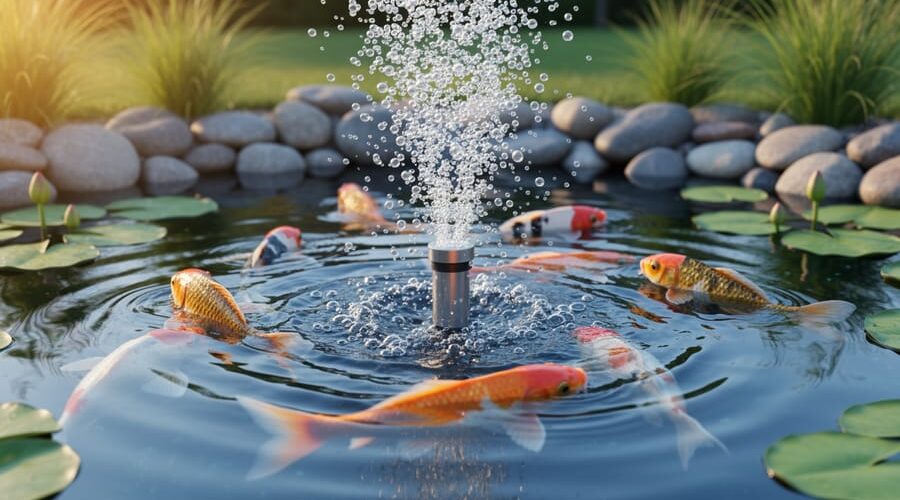
Watch your pond closely on a warm summer morning. If your fish are gasping at the surface or you’ve noticed murky, foul-smelling water, your pond is silently suffocating. The culprit isn’t disease or overfeeding—it’s depleted oxygen levels, and an aeration pond pump is the lifeline your underwater ecosystem desperately needs.
Think of aeration as your pond’s respiratory system. Just like you need fresh air to thrive, fish, beneficial bacteria, and aquatic plants require dissolved oxygen to survive. Without adequate circulation, stagnant water becomes a breeding ground for algae, harmful gases accumulate at the bottom, and your beloved koi or goldfish struggle to breathe. I’ve seen countless pond owners lose fish unnecessarily simply because they didn’t understand this fundamental principle.
Aeration pumps work by breaking the water’s surface tension and circulating oxygen throughout every layer of your pond. Whether you’re dealing with a small backyard water feature or a large recreational pond, these devices transform stagnant water into a vibrant, balanced habitat. They come in various types—from surface aerators that create dramatic fountains to diffuser systems that quietly bubble from the pond floor.
Choosing the right aeration system isn’t complicated once you understand your pond’s specific needs. Size, depth, fish population, and climate all factor into selecting equipment that will keep your water crystal clear and your aquatic life thriving year-round. Let’s dive into everything you need to make an informed decision.
What Aeration Pond Pumps Actually Do (And Why Your Pond Needs One)
Think of an aeration pond pump as your pond’s personal breathing coach. Just like you need oxygen to thrive, so does your pond. But here’s the thing: pond water doesn’t naturally get enough oxygen on its own, especially if you’ve got fish swimming around, plants growing, or anything decomposing at the bottom. That’s where aeration pumps step in to save the day.
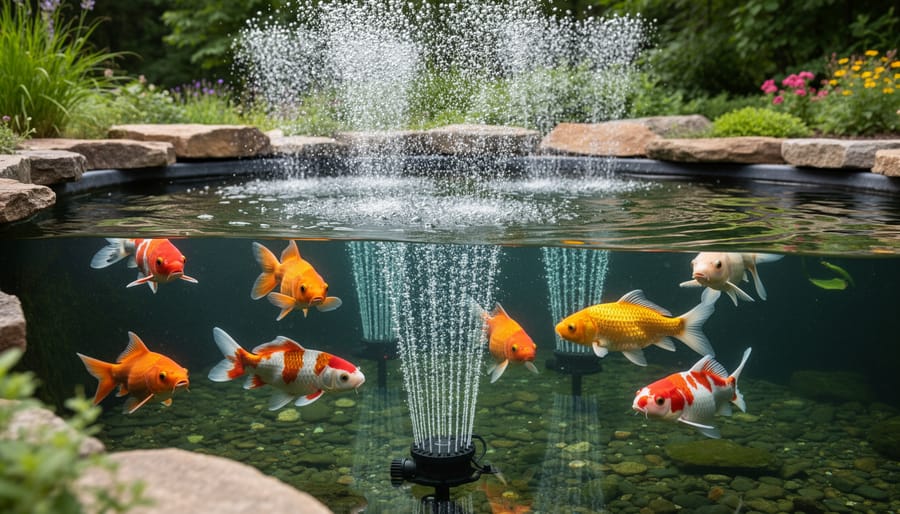
Here’s how it works in simple terms. An aeration pump pushes air through tubing down to the bottom of your pond, where it releases streams of tiny bubbles through a diffuser. As those bubbles rise to the surface, they do something magical. They mix the oxygen-rich surface water with the oxygen-poor water down below, creating circulation throughout your entire pond. It’s like giving your pond a deep, refreshing breath.
I learned this the hard way when I noticed my koi acting sluggish one summer. The water looked fine to me, but those fish were practically gasping at the surface. Once I installed an aeration pump, the difference was night and day. Within hours, they were swimming normally again.
The benefits go way beyond just happy fish, though. That oxygen boost feeds the beneficial bacteria living in your pond, the microscopic heroes that break down fish waste, decomposing leaves, and other organic matter. Without enough oxygen, these good bacteria can’t do their job, and that’s when problems start piling up.
Aeration also helps regulate water temperature by preventing stratification, where hot water sits on top and cold water stays at the bottom. This mixing creates a healthier environment all around. And here’s a bonus: proper aeration makes it tougher for algae to take over. Algae loves still, stagnant water with low oxygen levels. By keeping things moving and oxygenated, you’re creating conditions that favor clear water instead of green soup. Combined with tools like UV clarifiers, you’ve got a powerful defense against murky water.
Bottom line? An aeration pump literally breathes life into your pond, creating the foundation for everything else to thrive.
Signs Your Pond Is Crying Out for Aeration
Your pond has a way of telling you when something’s not quite right—you just need to know what to listen for. Over the years, I’ve learned to read these subtle (and sometimes not-so-subtle) signals, and I want to share them with you so you can catch oxygen problems before they become serious.
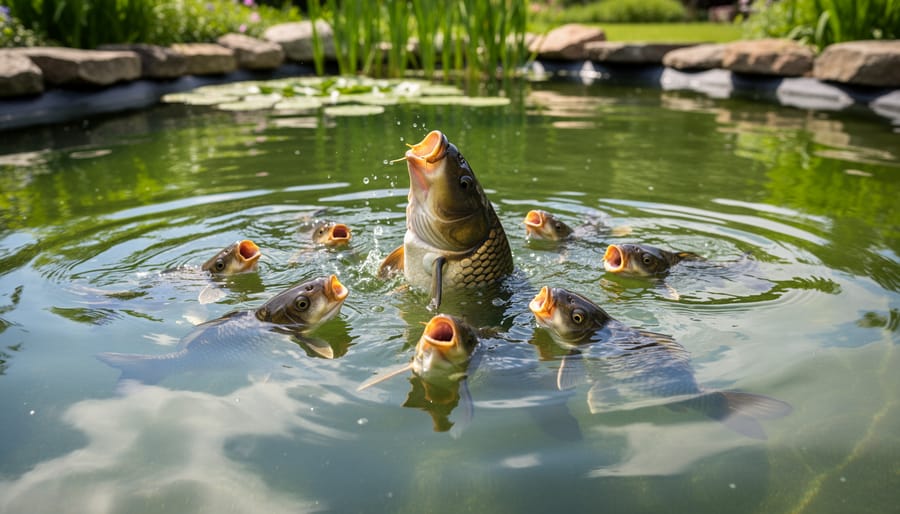
The most obvious red flag is watching your fish. If you notice them congregating at the water’s surface with their mouths open, almost like they’re gulping air, that’s your pond screaming for help. This fish gasping at surface behavior means they’re desperately trying to access oxygen-rich water near the top where it meets the air. Healthy fish should be cruising around at various depths, not stuck at the surface struggling.
Another telltale sign is a foul, swampy smell wafting from your pond. When I first encountered this with my own pond, I thought something had died in there. Turns out, low oxygen levels allow harmful bacteria to thrive, creating that rotten egg odor. Your nose knows when something’s wrong.
Take a look at your water too. Is it covered in thick green algae or looking murky and cloudy? Excessive algae blooms feed on the same nutrients that deplete oxygen, creating a vicious cycle. If your water looks more like pea soup than a clear pond, oxygen levels are likely suffering.
During hot summer months, you might notice your pond develops distinct temperature layers. The bottom feels noticeably colder and stagnant compared to the top. This stratification prevents oxygen from reaching deeper water where your fish spend time during heat waves.
The most heartbreaking sign is finding dead or lethargic fish, especially in early morning hours when oxygen naturally dips to its lowest point. Don’t wait for this tragedy—act on the earlier warning signs to keep your aquatic friends healthy and thriving.
Types of Aeration Pond Pumps: Finding Your Perfect Match
Diaphragm Air Pumps: The Workhorse for Small to Medium Ponds
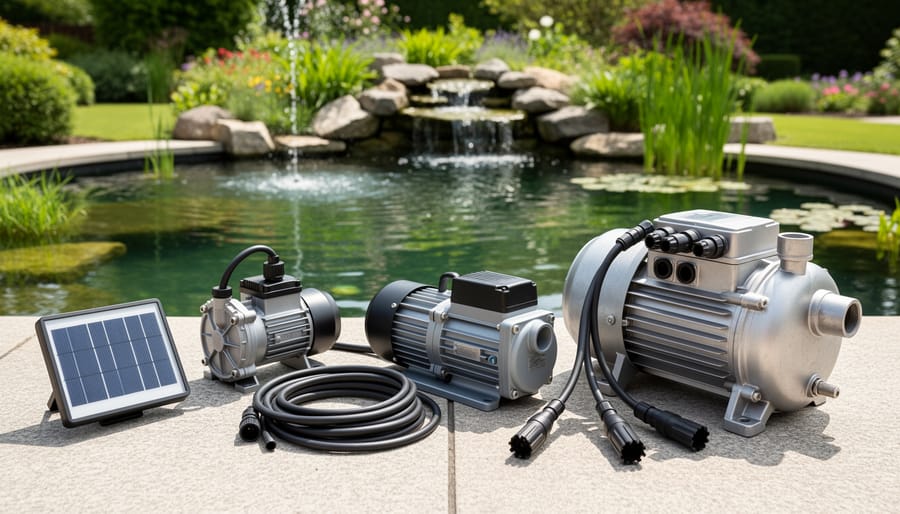
If you’re running a backyard pond up to around 2000 gallons, diaphragm air pumps are probably going to be your best friend. Think of them as the reliable Honda Civic of pond aeration—maybe not the flashiest option, but they’ll get the job done day after day without complaint.
These pumps work by using a vibrating rubber diaphragm to push air through your tubing and out to diffusers in your pond. They’re surprisingly efficient and remarkably quiet, which your neighbors will appreciate during those peaceful summer evenings. I’ve had mine running just outside my patio door for three years, and honestly, I barely notice the gentle hum anymore.
Diaphragm pumps shine in koi ponds and ornamental water features where you need steady, reliable aeration without breaking the bank on electricity. They’re fantastic for ponds ranging from 500 to 2000 gallons, though smaller units work beautifully for compact container water gardens too.
The pros? They’re affordable, energy-efficient (often using less power than a standard light bulb), easy to install, and require minimal maintenance. Most models come with everything you need to get started right out of the box.
The cons? They’re not powerful enough for large ponds or those with significant depth. If you’ve got a 5000-gallon pond or anything deeper than six feet, you’ll need to look at more robust options. They also have a limited lifespan for the diaphragm itself, typically needing replacement every couple of years with heavy use—but that’s an easy, inexpensive fix.
Linear Piston Pumps: Powerhouses for Larger Water Gardens
When your pond exceeds 2000 gallons, it’s time to consider graduating to a linear piston pump – the reliable workhorses of larger pond aeration. Think of these as the upgrade from your trusty sedan to a pickup truck when you’ve got serious hauling to do.
Linear piston pumps use a back-and-forth piston motion to push air into your pond, and they’re remarkably efficient at it. Unlike diaphragm pumps that work best for smaller setups, these powerhouses can handle multiple diffusers across expansive water gardens without breaking a sweat. I’ve seen pond owners running four or five diffuser stones off a single linear piston pump, creating beautiful aeration patterns across their entire pond surface.
The durability factor really shines here. These pumps are built with fewer moving parts than you might expect, which translates to less maintenance and longer lifespans. Many quality linear piston models run continuously for years with minimal attention, just an occasional air filter cleaning.
Now, let’s talk energy consumption, because nobody wants a shocking electricity bill. While linear piston pumps do use more power than smaller diaphragm units, they’re still surprisingly economical. Most use between 40-80 watts, roughly equivalent to running a standard light bulb. When you consider they’re working 24/7 to keep your pond healthy and your fish thriving, that’s a pretty reasonable trade-off for the peace of mind they deliver.
Windmill Aerators: The Off-Grid Alternative
If your pond is off the beaten path without convenient electricity access, or if you’re drawn to the timeless charm of a spinning windmill, wind-powered aerators might be your perfect match. These systems harness Mother Nature’s breezes to keep your water oxygenated without electric bills or extension cords snaking across your property.
Windmill aerators work beautifully for remote farm ponds, large acreage water features, or situations where running electrical lines would cost a fortune. They’re particularly effective in open areas with consistent wind patterns. I’ve seen them transform half-acre ponds that seemed impossible to aerate conventionally.
The romantic appeal is undeniable. There’s something peaceful about watching that gentle rotation while knowing your fish are thriving below. However, let’s be realistic about limitations. On calm days, aeration stops. They require more maintenance than electric pumps, with moving parts exposed to weather. Initial costs run higher too, though you’ll save on electricity long-term.
Consider windmill aeration if you’ve got acreage, reliable wind, and a pond over a quarter-acre. They’re less ideal for small backyard ponds or areas with inconsistent breezes. But for the right situation, they’re both practical and picturesque, proving that old-school solutions sometimes work beautifully.
Solar-Powered Options: Eco-Friendly Aeration
Going green with your pond setup? Solar-powered aerators are an increasingly popular choice for eco-conscious water gardeners. These systems harness sunlight to run your aeration pump, slashing electricity costs while reducing your environmental footprint.
The beauty of solar aeration is its simplicity. Most units come as complete kits with solar panels, air pumps, and diffusers, requiring no electrical wiring or outlet access. They’re perfect for remote ponds, natural wildlife areas, or anywhere you want to avoid trenching cables across your yard. I’ve installed them in clients’ gardens where running power lines would’ve been a nightmare.
However, they do have limitations. Solar pumps depend entirely on sunlight, so cloudy days and nighttime reduce effectiveness. Some advanced models include battery backup for continuous operation, but these cost considerably more. They’re generally best suited for smaller ponds under 1000 gallons or as supplementary aeration rather than your sole oxygen source.
For sunny locations with moderate aeration needs, solar pumps offer an elegant, sustainable solution that keeps working year after year with minimal maintenance.
Sizing Your Aeration Pump: Getting the Math Right (Without the Headache)
Here’s the truth: sizing an aeration pump doesn’t require a degree in mathematics. I remember staring at calculator apps and complicated formulas when I first needed to size my pump, feeling completely overwhelmed. Then a fellow pond keeper shared some simple rules that changed everything.
Let’s start with the basics. You need to know your pond’s volume. For rectangular ponds, multiply length times width times depth (all in feet), then multiply by 7.5 to get gallons. For circular ponds, it’s 3.14 times radius squared times depth times 7.5. Have an irregular shape? Break it into sections and add them up, or use the average length times average width method. Close enough really is good enough here.
Now for the golden rule: you want about 1 CFM (cubic feet per minute) of airflow for every 100-200 gallons of water. So if you’ve got a 2,000-gallon pond, you’re looking at 10-20 CFM. I always lean toward the higher end because more aeration rarely causes problems, while too little definitely does.
Depth changes everything, though. If your pond is deeper than 4 feet, you’ll need a stronger pump because it’s working harder to push air down against water pressure. Think of it like blowing bubbles at the bottom of a swimming pool versus at the surface. For every foot of depth beyond 4 feet, consider adding 10-15 percent more capacity.
Here’s a real example: My neighbor has a 3,000-gallon koi pond that’s 6 feet deep. We calculated he needed 15-20 CFM minimum, then added another 30 percent for the extra depth. He went with a 25 CFM pump, and his koi have never looked better.
When in doubt, size up. A pump running at 80 percent capacity will last longer and run quieter than one maxed out. Plus, if you add more fish or plants later, you’re already covered. The small price difference between pump sizes is nothing compared to replacing an undersized unit or dealing with stressed fish.
What’s Included in Aeration Kits (And What You Might Need Separately)
When you’re shopping for an aeration kit, you’ll typically find several essential components bundled together, though knowing what comes standard versus what you might want to add can save you some head-scratching later.
Most basic kits include the pump unit itself, which is the heart of your system and usually sits outside the pond. You’ll also get airline tubing that carries air from the pump to your pond. This tubing is typically 3/8-inch diameter and comes in various lengths, depending on the kit. The diffusers or air stones are included too. These are the business end of your setup, releasing those beneficial bubbles into the water. Think of them as the showerhead of your aeration system, breaking air into tiny bubbles for maximum oxygen transfer.
You’ll usually find a check valve in the box as well. This little device is a lifesaver because it prevents water from back-flowing into your pump if there’s a power outage. Trust me, you don’t want to skip this component. Most kits also include basic connectors and clamps to secure everything together.
Now, here’s where you might want to consider some extras. Weighted airline tubing is fantastic because it stays put on the pond bottom instead of floating around like an unruly garden hose. If you have a larger pond, additional diffusers can be a smart purchase to spread aeration more evenly. I learned this the hard way when I discovered one diffuser just wasn’t cutting it for my 2,000-gallon pond.
Some pond keepers like having backup diffusers on hand since they can clog over time, especially in mucky conditions. A longer length of tubing might be necessary if your pump needs to sit farther from the pond than the included length allows. Cabinet enclosures for the pump unit are another popular add-on, protecting your equipment from weather and curious critters while reducing noise.
Installing Your Aeration System: A Weekend Project Anyone Can Handle
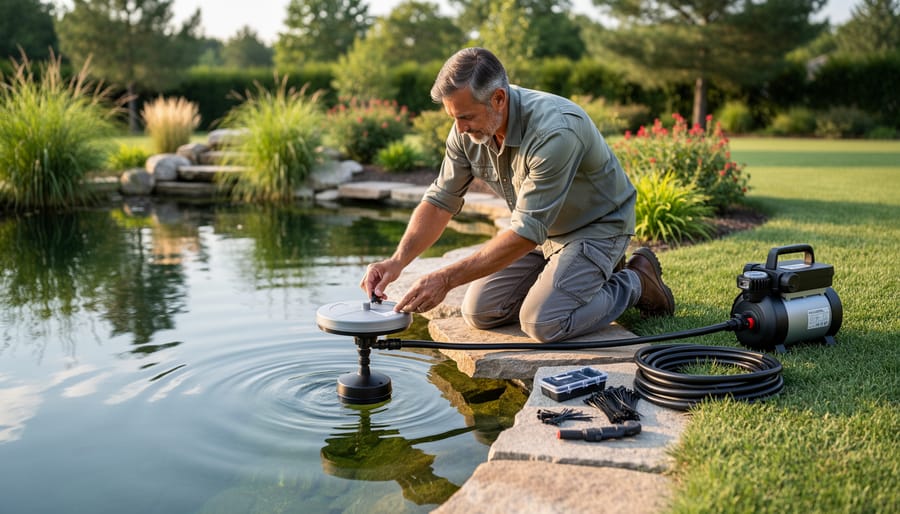
Here’s the good news: installing your aeration system is genuinely straightforward, and you’ll probably finish in an afternoon. I remember my first installation, convinced I’d need an engineering degree. Two hours later, I was sipping lemonade watching my pond come alive with bubbles. You’ve got this.
Start with pump placement, which is surprisingly important. Your pump needs to stay dry and protected from the elements. Find a spot near your pond but above the waterline, like a garage, shed, or covered deck area. Never place it directly on the ground where moisture can creep in. I use an old shelf in my garden shed about four feet off the floor. If you’re installing outdoors, invest in a weatherproof cabinet or housing. The pump needs adequate ventilation too, so don’t stuff it in an airtight box.
Next, run your airline tubing from the pump to the pond. Most systems include weighted tubing that sinks naturally, which makes life easier. Measure the distance first and add a few extra feet for flexibility. You can bury the tubing in a shallow trench if you want a cleaner look, but it’s not necessary. Just make sure there are no sharp kinks or bends that could restrict airflow.
Now for diffuser placement, where the magic happens. Position your diffusers in the deepest part of your pond for maximum circulation. The rising bubbles create a natural current that pulls bottom water to the surface. For ponds larger than 1,000 gallons, consider using multiple diffusers spaced evenly around the pond. I learned this the hard way when my single diffuser only aerated half my pond.
Attach the airline to your diffusers, securing connections with the provided clamps. Lower them gently into position. Once everything’s connected, plug in your pump and watch for steady bubble streams. If bubbles seem weak, check for kinked tubing or loose connections. No bubbles at all? Your diffuser might be clogged with debris, easily fixed with a quick rinse.
Common beginner mistakes include placing the pump too close to water, using undersized tubing that restricts airflow, or positioning diffusers too shallow where they’re less effective. If your pump seems noisy, it might need better vibration dampening. A rubber mat underneath works wonders.
Within minutes, you’ll see the difference. Your pond will shimmer with activity, and you’ll know you’ve done something genuinely beneficial for your aquatic ecosystem.
Keeping Your Aeration Pump Running Strong: Simple Maintenance Tips
Good news – aeration pumps are wonderfully low-maintenance, but giving yours a little TLC will keep it running reliably for years. Think of it like changing the oil in your car: small effort, big payoff.
Most manufacturers recommend checking your pump every few months during active use. Start by inspecting the air filter – this hardworking component prevents dust and debris from entering the pump mechanism. Simply remove it, rinse with warm water, let it dry completely, and pop it back in. I learned this the hard way when my pump started sounding like a wheezing accordion because I’d ignored the filter for an entire season!
The diaphragm is your pump’s heartbeat, and it will eventually need replacing – typically every 1-2 years depending on usage. You’ll know it’s time when air output noticeably decreases or you hear unusual clicking sounds. Replacement kits are inexpensive and usually come with simple instructions. Don’t worry, it’s easier than assembling furniture.
Check connections regularly for air leaks by listening for hissing sounds or feeling for escaping air. Tighten any loose fittings and replace cracked tubing promptly – even small leaks reduce efficiency.
Winterization depends on your climate. In freezing areas, most folks bring their pumps indoors for winter, especially if using subsurface aeration. If you’re maintaining a deicer system, ensure your pump is rated for continuous winter operation.
Warning signs your pump needs attention include reduced bubbling at diffusers, excessive noise, overheating, or the pump running but producing no air. Address these promptly to avoid complete failure.
Remember, fifteen minutes of maintenance every few months beats shopping for a replacement pump. Your fish will thank you, and your wallet will too!
Common Questions Pond Owners Ask About Aeration Pumps
Let me tackle the questions I hear most often from fellow pond owners who are considering aeration pumps.
Should I run my aeration pump 24/7 or just during certain hours? In my experience, continuous operation works best. Your pond is like a living, breathing ecosystem that needs constant oxygen exchange, especially during hot summer nights when plants stop producing oxygen and fish are most stressed. That said, if energy costs are a concern, running it during the warmest parts of summer and overnight typically covers your most critical periods. I’ve found that intermittent operation works for moderately stocked ponds, but heavily stocked ponds really benefit from round-the-clock aeration.
How noisy are these pumps? Here’s the good news: most modern aeration pumps are surprisingly quiet. The pump itself usually sits outside the pond and produces a gentle hum, similar to a small aquarium pump. What you’ll hear more is the bubbling water, which most of us find soothing rather than annoying. If noise is a real concern, you can house the pump in a ventilated box or small shed. I keep mine tucked behind some shrubs near my pond, and guests rarely notice it.
What about energy costs? Aeration pumps are incredibly efficient compared to traditional water pumps. Most residential systems use between 20-60 watts, roughly equivalent to running a small light bulb. Even with 24/7 operation, you’re typically looking at just a few dollars per month on your electric bill. It’s honestly one of the most cost-effective pond improvements you can make.
Can I run my aerator during winter? Absolutely, and you probably should! Winter aeration prevents complete ice-over, creating crucial gas exchange openings. Just position your diffuser carefully so it doesn’t supercool the entire pond, which can stress overwintering fish.
Will my waterfall provide enough aeration? Waterfalls help, but they primarily oxygenate surface water. Aeration pumps deliver oxygen throughout the entire water column, including those deeper areas where problems often start. Think of them as complementary rather than interchangeable.
Can you over-aerate a pond? It’s difficult but possible. Excessive aeration in very small ponds might stress fish, but you’d need industrial-level equipment to reach that point in typical backyard ponds.
Investing in the right aeration pond pump truly transforms your outdoor water space from a struggling ecosystem into a thriving, vibrant centerpiece. I’ve watched countless ponds go from murky and lifeless to crystal-clear havens teeming with active fish, and it never stops being exciting. The difference proper aeration makes isn’t just visible—it’s profound. Your fish will be healthier, your water clearer, and those frustrating algae battles will become far more manageable. The best part? You absolutely can do this yourself.
Yes, choosing and installing an aeration system might feel overwhelming at first, but remember that thousands of pond owners just like you have successfully tackled this project. Start with understanding your pond’s specific needs, select equipment that matches your volume and depth, and take installation one step at a time. Before you know it, you’ll be sitting by your beautifully aerated pond, watching your fish glide gracefully through clean water.
The journey to maintaining water clarity begins with that first decision to invest in proper aeration. Don’t put it off—your pond ecosystem will thank you, and you’ll wonder why you waited so long.
Ready to dive deeper? Explore our detailed product reviews to find the perfect pump for your situation. And we’d love to hear from you—share your own pond success stories or questions in the comments below. Your experience might be exactly what another pond enthusiast needs to hear.