
Why Your New Fish Need a Quarantine Tank (And How to Set One Up)
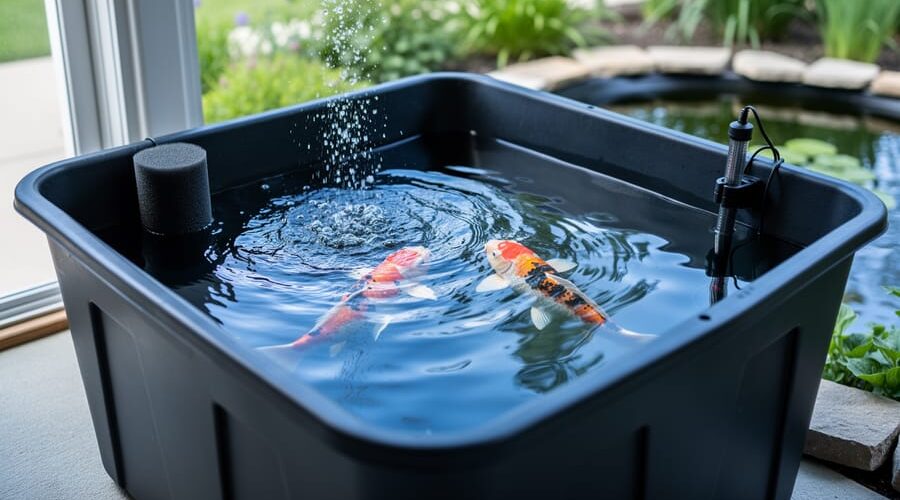
Set up your quarantine system before you bring new fish home—a 50-100 gallon stock tank or spare aquarium with a basic sponge filter and heater will protect your entire pond population from disease. Even healthy-looking fish from reputable dealers can carry parasites, bacterial infections, or viruses that show no symptoms until stress triggers an outbreak in your main pond.
Quarantine every new fish for a minimum of four weeks, watching carefully during the first two weeks when most problems surface. This waiting period isn’t just about spotting visible signs of illness like white spots, torn fins, or lethargy. You’re giving hidden parasites time to complete their life cycles and become detectable, while also allowing new fish to decompress from the stress of transport and handling.
The mistake most pond owners make? Skipping quarantine for “just one fish” or rushing the process because their pond looks empty. I learned this lesson the hard way when a beautiful new koi introduced velvet disease that wiped out half my established pond residents. That four-week investment of patience suddenly seemed insignificant compared to months of treatment and heartbreaking losses.
Think of quarantine as insurance for your pond. You’ve invested time, money, and emotion into creating a thriving aquatic ecosystem. A simple isolation period, some basic observation, and maybe a preventive treatment or two stand between your healthy pond and a devastating disease outbreak that could take years to recover from.
What Quarantine Really Means for Your Pond
The Hidden Threats New Fish Bring Home
That gorgeous new koi from the pet store might look perfectly healthy, but here’s something I learned the hard way: fish are excellent at hiding illness. In the wild, showing weakness makes them targets for predators, so they’ve evolved to mask symptoms until they’re seriously unwell. This means your new addition could be carrying invisible hitchhikers that won’t show up for days or even weeks.
The most sneaky culprits? Parasites like ich (those white spots that look like salt grains), flukes (microscopic flatworms that attack gills and skin), and anchor worms (yes, they’re as unpleasant as they sound). Then there’s the bacterial troublemakers – columnaris, aeromonas, and pseudomonas – that lurk in stressed fish waiting for the perfect moment to strike. Don’t forget viral infections like koi herpesvirus, which can devastate an entire pond population.
I once added three beautiful goldfish to my pond without quarantining them first. Within two weeks, my established fish started flashing against rocks and gasping at the surface. The newcomers had brought gill flukes with them, and suddenly I was treating my entire pond instead of just three fish in a separate tank. It was a costly lesson in time, money, and heartache.
Understanding these common fish diseases helps you appreciate why quarantine isn’t just recommended – it’s essential insurance for your existing pond community.
Why Your Pond Makes Quarantine Even More Critical
If you’ve ever tried to catch a specific fish in your pond, you know the challenge I’m talking about! Unlike an aquarium where you can easily spot every fish and monitor their behavior up close, ponds present unique obstacles that make quarantine absolutely essential—not optional.
Here’s the reality: your pond is a complex, established ecosystem. Those beneficial bacteria in your biofilter? They’ve taken months or even years to develop. Your water chemistry is balanced, your plants are thriving, and your existing fish have settled into a healthy routine. Introducing a sick fish directly into this environment is like inviting trouble to a peaceful party.
In a pond, early disease symptoms often go unnoticed. That goldfish with slightly clamped fins? Easy to spot in a 40-gallon tank, nearly impossible to detect among water lilies and algae. By the time you notice something’s wrong, the disease has likely spread to your entire fish population.
Then there’s the medication challenge. Treating a 2,000-gallon pond costs significantly more than treating a 50-gallon quarantine tank. Plus, many medications can harm your beneficial bacteria, plants, and even the pond liner itself. UV clarifiers and filtration systems may need to be turned off during treatment, disrupting your carefully balanced system.
Protecting your pond ecosystem starts with prevention. A simple quarantine setup gives you observation power, treatment flexibility, and peace of mind—without risking everything you’ve built.
Setting Up Your Quarantine Tank: The Essentials
Tank Size and Equipment You’ll Actually Need
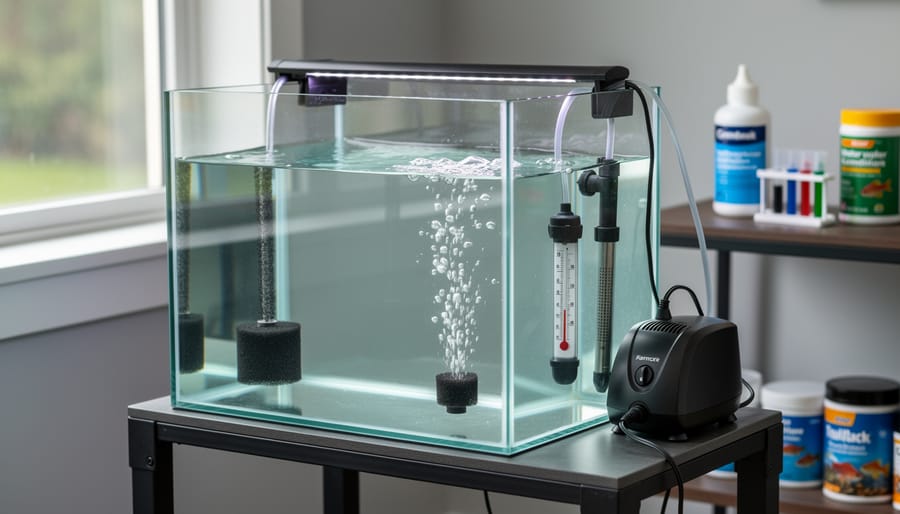
You don’t need to break the bank or dedicate an entire room to set up an effective quarantine tank. The right size depends on your fish. For small goldfish or koi up to 10cm, a simple 75-115 liter tank works perfectly. Planning to quarantine larger koi between 20-30cm? You’ll want at least 190-285 liters to give them comfortable swimming space and maintain stable water conditions.
Here’s the good news: your quarantine setup can be incredibly simple. I’ve successfully quarantined dozens of fish using basic equipment that costs less than a fancy restaurant meal. You’ll need a proper filtration system, but even a sponge filter connected to an air pump will do the job beautifully for most situations. Sponge filters are gentle, affordable, and won’t stress your new arrivals.
An air stone or bubbler is essential because it keeps oxygen levels high, which is especially important when you’re treating fish or dealing with warmer temperatures. Think of it as their life support system during this stressful transition period.
Temperature control matters too. A basic aquarium heater maintains consistency, which reduces stress and helps fish recover from any issues. For pond fish, aim to match your pond’s temperature or keep things between 18-22 degrees Celsius.
Budget tip from my own experience: skip the fancy tank stand. A sturdy plastic storage container on concrete blocks works just as well. I’ve also used large stock tanks with great success. Remember, this is temporary housing, not a showpiece. Focus your budget on good filtration and aeration rather than aesthetics. Your fish will thank you with better health and survival rates.
Location Matters: Where to Set Up Your Quarantine Space
Finding the right spot for your quarantine tank makes all the difference in keeping your new fish healthy and your existing pond population safe. I learned this the hard way when I placed my first quarantine setup in the garage, only to discover wild temperature swings that stressed my fish more than the move itself!
Choose a location with stable temperatures, ideally between 65-75°F depending on your fish species. Avoid areas near heating vents, drafty windows, or uninsulated spaces like garages unless you can control the temperature. A spare room, basement corner, or even a quiet utility area works wonderfully.
Make sure you can easily observe your fish daily. You’ll want to spot any signs of illness quickly, so place the tank where you naturally pass by or can comfortably spend a few minutes watching. Good lighting helps too, whether natural or artificial.
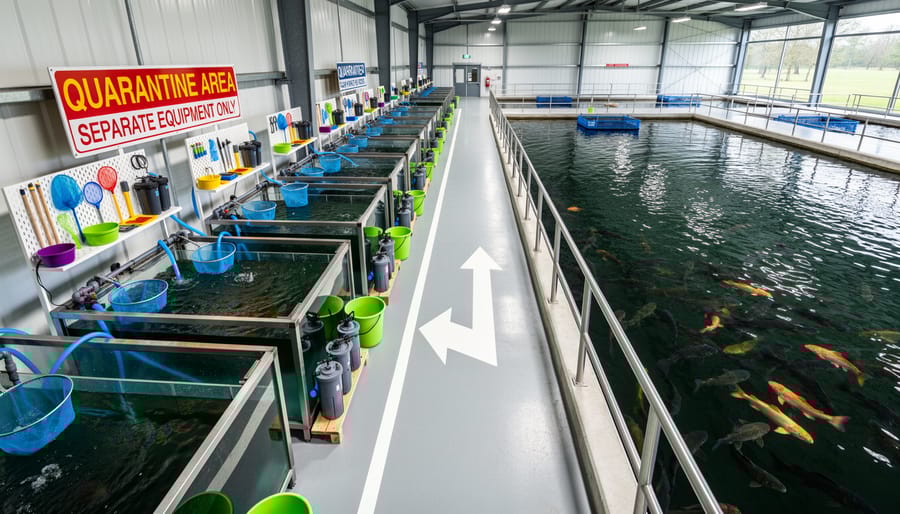
Here’s crucial: keep your quarantine space completely separate from your main pond equipment. Use dedicated nets, buckets, and siphons for quarantine only. Never share tools between spaces, as this defeats the entire purpose of isolation. I keep a small plastic tub with all my quarantine-only supplies labeled clearly.
Finally, ensure easy access to water sources and drains for maintenance, because you’ll be doing frequent water changes during the quarantine period.
Getting the Water Right Before Fish Arrive
Think of your quarantine tank as a temporary studio apartment for your new fish—it needs to be comfortable and safe before they move in! Getting the water right is simpler than you might think, but skipping these steps can spell disaster.
Start by filling your quarantine tank with dechlorinated water. If you’re using tap water, add a water conditioner to remove chlorine and chloramines that can harm fish. I learned this the hard way years ago when I lost some beautiful koi because I was too impatient to treat the water properly. Don’t make my mistake!
Temperature matching is crucial. Use a thermometer to ensure your quarantine tank water matches the temperature of wherever your fish are coming from, whether that’s a bag from the pet store or your friend’s pond. Sudden temperature changes stress fish and weaken their immune systems. Aim to get within a degree or two—your fish will thank you.
Now, here’s where many beginners stumble: establishing beneficial bacteria. These microscopic helpers break down fish waste into less harmful substances. Ideally, you’d run your quarantine tank for two to three weeks beforehand with a filter, adding a bacterial starter product to speed things up. If you don’t have time for full cycling, keeping up with monitoring water quality parameters and doing daily water changes during quarantine becomes even more important. Test kits are your best friends here—they’ll tell you exactly what’s happening in your water.
Your Step-by-Step Quarantine Protocol
Day 1: Bringing Your New Fish Home
Congratulations on your new fish! The first day sets the tone for a successful quarantine, so let’s make sure your finned friends settle in smoothly.
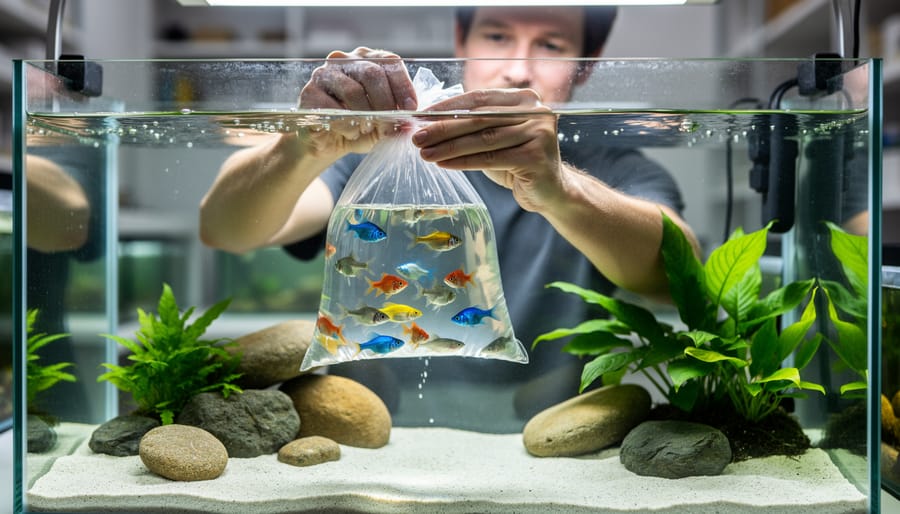
Start with proper acclimation to avoid shocking your fish. Float the sealed bag containing your new arrivals in the quarantine tank for about 15-20 minutes. This equalizes the water temperature between the bag and tank. Next, open the bag and add a cup of quarantine tank water every 10 minutes for the next hour. This gradual process helps fish adjust to differences in pH and other water chemistry. When ready, gently net the fish into the quarantine tank, but don’t pour the bag water in—it may contain parasites or diseases from the store.
Once your fish are swimming in their temporary home, resist the urge to hover constantly. Give them a few hours to decompress from the stress of travel. However, do check on them several times throughout the day. Look for these key signs: Are they swimming normally or listing to one side? Are their fins held out properly or clamped against their bodies? Check for visible spots, fuzzy patches, or damaged scales. Watch their breathing—rapid gill movement can signal stress or poor water quality.
Don’t worry if they’re shy or refuse food on day one. That’s completely normal. I remember my first koi hiding behind the filter for hours before cautiously exploring. Keep the lighting dim and the environment calm. You’re off to a great start!
The First Two Weeks: Observation and Early Detection
The first fourteen days are absolutely critical for catching problems early, and I’ll be honest—this is where your detective skills really come into play. Think of yourself as a fish health investigator during this period!
Start each day with a simple morning walk-around. Before you even feed your new arrivals, spend five minutes just watching them. Healthy fish should be swimming actively, exploring their temporary home, and showing interest in their surroundings. They might be a bit shy at first—that’s completely normal—but by day three or four, they should be settling in nicely.
Here’s your daily checklist: Check the water temperature first thing (it should remain stable), look at gill movement (steady, not rapid or labored), examine their body condition (no new spots, white patches, or fuzzy growths), and watch their swimming pattern (smooth movements, not darting or bottom-sitting). Trust me, after a week of this routine, you’ll spot anything unusual immediately.
Feeding requires patience initially. Offer small amounts once daily for the first three days—just enough that they can consume in two minutes. If they’re not interested, remove the uneaten food and try again tomorrow. Loss of appetite beyond three days is your first red flag. By day five, healthy fish should be eagerly anticipating meals.
Warning signs that demand immediate attention include gasping at the surface, clamped fins held tight against the body, white stringy feces, scratching against surfaces, cloudy eyes, or any visible lesions. These symptoms require action, and good pond fish health management means addressing issues quickly before they escalate.
Document everything—even a simple notebook works wonders for tracking changes over time.
Weeks 3-4: Final Checks and Pond Preparation
You’re in the home stretch! After three weeks of careful monitoring, your fish should be looking healthy and active. But before they join your pond community, let’s make sure everything is perfect for their grand arrival.
During weeks three and four, conduct your final health checks. Look closely at each fish for any lingering signs of stress or illness. Check their fins for tears or fraying, inspect their bodies for unusual spots or patches, and watch their behavior during feeding time. Healthy fish should be enthusiastic eaters with bright colors and smooth, effortless swimming. If everyone looks good, you’re ready to move forward!
Now’s the time to prepare your pond. Test the water parameters in both your quarantine tank and pond. The temperature, pH, and water chemistry should be as similar as possible. If there’s a significant difference, you’ll need to gradually acclimate your fish to avoid shock. I learned this lesson the hard way years ago when I transferred koi from a warm quarantine tank into my chilly spring pond without proper acclimation. The stress caused them to develop ich within days.
For the transfer itself, use the floating bag method. Place your fish in a bag with quarantine water and float it in the pond for 15-20 minutes to equalize temperatures. Then, gradually add small amounts of pond water to the bag every five minutes for about half an hour. This gentle introduction helps your fish adjust without stress.
Finally, keep a close eye on your new arrivals for the first week in the pond. Watch how they interact with existing fish and ensure they’re eating well. Congratulations on completing quarantine successfully!
Biosecurity Basics: Protecting Your Entire Pond System
Keeping Equipment Disease-Free
One of the sneakiest ways disease spreads between your quarantine setup and main pond is through the equipment we use every day. I learned this the hard way when a seemingly healthy batch of goldfish brought parasites that hitched a ride on my favorite net straight into my established pond. Don’t make my mistake!
The good news is keeping your equipment disease-free is incredibly simple. Start by having dedicated tools for your quarantine tank. If you can swing it, invest in a separate net, bucket, and siphon hose just for quarantine use. Label them clearly with waterproof tape so nobody accidentally grabs the wrong one.
When you must share equipment between tanks, disinfection is your best friend. After each use, rinse your nets and buckets thoroughly with clean water to remove debris. Then, choose your disinfection method. A 10-minute soak in a mild bleach solution (one tablespoon of unscented bleach per gallon of water) works wonderfully. Rinse everything extremely well afterward until there’s no chlorine smell whatsoever. Alternatively, you can use products specifically designed for aquarium disinfection, following the package directions.
For a quick between-tank option, keep a bucket of concentrated salt solution handy. A five-minute dip in heavily salted water kills many common pathogens. Just remember this isn’t foolproof against everything.
Air-drying equipment completely between uses adds another layer of protection, since many disease organisms can’t survive once dried out. Store your quarantine equipment separately from your main pond tools to avoid any accidental mix-ups.
When Visitors and Wildlife Become Risk Factors
You know what surprised me the most about pond keeping? It wasn’t wild animals or plants that brought disease to my pond—it was my well-meaning neighbor showing up after feeding his goldfish! Sometimes the biggest risks come from unexpected places.
When friends who keep ponds or aquariums visit, consider them potential disease carriers. I learned this the hard way when a buddy came over straight from his pond to help with mine. His fish had a mild infection we didn’t even know about, and within days, my quarantine protocols were put to the ultimate test. Now I keep antibacterial hand soap and a clean towel near the pond, and I politely ask visitors to wash up before handling nets or getting hands-wet in my water.
Wild birds are nature’s taxi service for parasites and bacteria. Herons, ducks, and other waterfowl move between water sources, potentially spreading illness. While you can’t quarantine a heron, you can protect your quarantine setup by covering tanks with netting or keeping them indoors where birds can’t access the water.
Plants from natural ponds or other water gardens deserve their own quarantine period too. I once added some beautiful water lettuce from a friend’s pond, and it hitchhiked in snails carrying parasites. Now I rinse all incoming plants thoroughly in a separate container with diluted potassium permanganate solution, inspect for hitchhikers, and keep them isolated for a week before adding them anywhere near my fish. Think of plants as potential Trojan horses—beautiful but possibly harboring unwanted guests.
Troubleshooting Common Quarantine Challenges
When You Don’t Have Space for a Permanent Setup
Don’t worry if you don’t have room for a dedicated quarantine tank year-round. I’ve been there myself, and there are some practical workarounds that work beautifully.
A large plastic storage bin or tote makes an excellent temporary quarantine container. I’ve used 30-50 gallon bins countless times with great success. Just add a basic sponge filter, an airstone, and you’re good to go. These bins are affordable, easy to store when not in use, and surprisingly effective. Pop them in a garage, basement, or even a spare bathroom during quarantine periods.
Stock tanks from farm supply stores offer another fantastic option. They’re durable, hold plenty of water, and many pond keepers already have one tucked away. If you’re handy with DIY projects, you can even create a fold-down or collapsible quarantine system using food-grade plastic sheeting and a simple frame.
Here’s my favorite space-saving tip: share equipment with fellow pond enthusiasts in your area. Many pond clubs coordinate quarantine setups that members can borrow. It’s a win-win situation that builds community while keeping everyone’s fish healthy. Remember, a temporary setup used properly beats no quarantine at all.
What to Do If Your Fish Gets Sick During Quarantine
Finding illness during quarantine is actually wonderful news—I mean it! You’ve just prevented a disaster in your main pond. Here’s what to do next.
First, don’t panic. Stop feeding immediately, as sick fish shouldn’t waste energy on digestion. Check your water parameters right away—ammonia, nitrite, nitrate, and pH—because poor water quality often triggers or worsens disease. If anything’s off, do a 25-50% water change with dechlorinated water.
Look closely at the symptoms. White spots? Likely ich, treatable with aquarium salt or ich medication. Clamped fins and lethargy? Could be bacterial. Fluffy white patches? Probably fungal. Take clear photos and notes—these help if you need expert guidance later.
For mild issues, try simple remedies first. Aquarium salt (not table salt!) at 0.1-0.3% concentration helps with many parasites and reduces fish stress. Raising the temperature slightly can speed up some parasites’ life cycles, making treatment more effective. Always follow medication instructions precisely and remove activated carbon from filters, as it absorbs medicine.
When should you call in the experts? If fish aren’t improving after 3-5 days of treatment, if multiple fish show different symptoms, or if you’re simply unsure what you’re dealing with. Local pond shops, aquatic veterinarians, or experienced pond clubs can provide invaluable guidance.
Remember, catching this now means your pond stays healthy. That quarantine tank just earned its keep!
Think of quarantine as your pond’s insurance policy – a small upfront investment that protects everything you’ve worked so hard to create. Yes, it takes a bit of extra time and space, but the peace of mind knowing you’re safeguarding your entire fish community is absolutely worth it. I’ll be honest: my first quarantine setup felt awkward and overwhelming, but by the third or fourth time, it became second nature. You’ll develop your own rhythm and shortcuts that work for your specific situation.
The beauty of quarantine is that it gets easier each time you do it. You’ll learn to spot subtle signs of stress or illness faster, your routine will become more efficient, and you might even find yourself enjoying the chance to observe your new fish up close before they join the pond. Starting small is perfectly fine – even a basic setup following the fundamentals we’ve covered will make a tremendous difference.
So here’s my challenge to you: commit to quarantining your very next fish purchase. Set up that spare tank, gather your supplies, and give it a try. Your future self (and your fish) will thank you for taking this crucial step toward long-term pond health.