
Why Herons Keep Finding Your Pond (And How to Protect Your Fish Ethically)
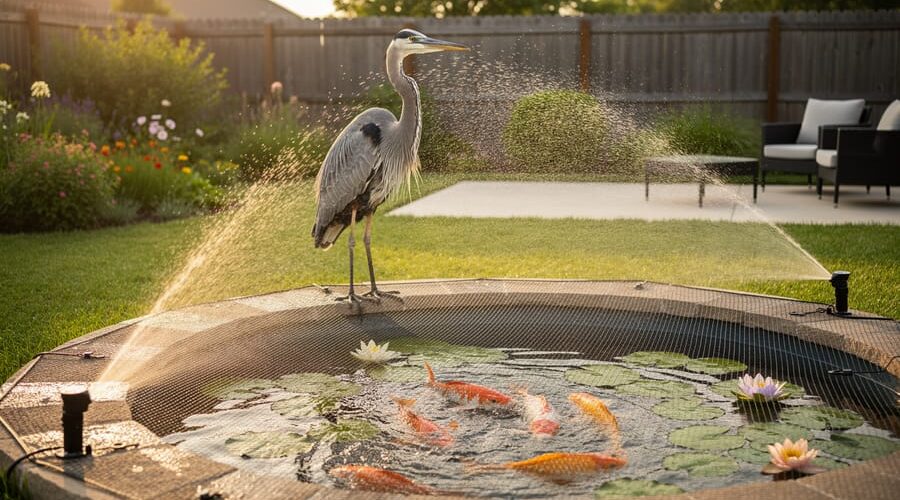
Install motion-activated sprinklers around your pond perimeter to startle herons and raccoons before they reach your fish—these devices detect movement and release harmless bursts of water that teach predators your pond isn’t worth the hassle. Position them 3-4 feet high for best coverage.
Create physical barriers using pond netting stretched 6-8 inches above water surface, securing edges with stakes every 2 feet so predators cannot wade in or reach through. Clear monofilament netting becomes nearly invisible while providing complete protection without harming wildlife.
Add hiding places for your fish by placing PVC pipe sections, ceramic pots, or floating lily pads across at least 40% of your pond surface—prey fish need escape routes, and predators lose interest when hunting becomes too difficult and energy-intensive.
Schedule feeding times during daylight hours when you’re present to monitor activity, as herons typically hunt at dawn and dusk when ponds are unattended. Your presence alone disrupts predator patterns and reduces repeat visits.
Understanding ethical predator management means accepting that wildlife has every right to hunt for food, but you also have every right to protect the fish you’ve nurtured and invested in emotionally and financially. The goal isn’t eliminating predators from your property—it’s making your pond less accessible and appealing than natural food sources nearby. This approach respects the ecological balance while preserving what makes your water garden special to you.
Understanding Your Pond’s Predators
Why Predators Target Garden Ponds
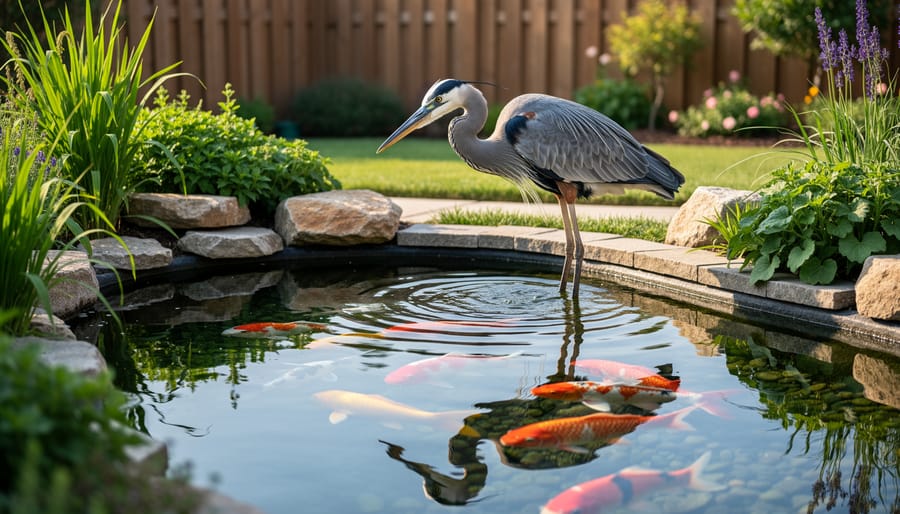
Your beautiful garden pond is like an all-you-can-eat buffet sign for local wildlife. Think about it from a heron’s perspective: here’s a shallow, crystal-clear pool where fish are swimming around in plain sight, with no overhanging branches or deep water to complicate the hunt. It’s exponentially easier than stalking prey in a murky creek or natural pond.
The sad reality is that natural habitats have shrunk dramatically over the years. As wetlands disappear and waterways become polluted or developed, predators like herons, raccoons, and even neighborhood cats are adapting by seeking out backyard ponds. Your pond isn’t just convenient—for some wildlife, it might be one of the few reliable food sources left in the area.
Easy accessibility is another factor. Most garden ponds sit right at ground level with gently sloping edges, making them incredibly easy for raccoons to wade into. There’s typically no dense vegetation to navigate, and the fish have nowhere to hide in these relatively small, open spaces. Combine that with the fact that koi and goldfish are often brightly colored and slow-moving compared to wild fish, and you’ve essentially created the wildlife equivalent of a drive-through restaurant.
The Natural Role of Predators
Here’s the thing we sometimes forget when a heron visits our pond at dawn: these creatures are simply doing what they’ve done for millions of years. Before our backyard ponds existed, herons, raccoons, and other fish-eating animals were part of a perfectly balanced ecosystem. They controlled fish populations naturally, preventing overcrowding and disease spread in wild waterways.
When we create ponds, we’re essentially setting up an all-you-can-eat buffet in their territory. From their perspective, there’s no difference between a wild stream and your carefully designed water feature. They’re not being malicious or spiteful—they’re just being efficient hunters.
I’ll be honest: watching a heron make off with a beloved koi still stings, even after years of pond keeping. But recognizing these animals’ ecological importance helps put things in perspective. They’re not pests; they’re neighbors following their instincts. This understanding is what ethical predator management is all about—finding ways to coexist that respect both our hobby and their natural behaviors. We can protect our fish while still preserving the dignity and welfare of these magnificent creatures.
What ‘Hunter Ethics Preserve’ Really Means for Pond Owners
The Three Principles of Ethical Predator Management
When it comes to protecting your beloved pond fish while respecting the natural world around you, three guiding principles can help you navigate this delicate balance with confidence and compassion.
First and foremost, always explore non-lethal options before considering anything else. Think of it as being a good neighbor to the wildlife that was here long before your pond. Herons, raccoons, and other predators are simply doing what nature programmed them to do—finding food. The good news? There are plenty of non-lethal deterrent solutions that work remarkably well, from motion-activated sprinklers to strategic netting and decoy predators. I’ve personally found that combining several gentle deterrents creates an effective barrier without causing harm.
Second, always respect local wildlife protection laws. Many predatory birds, including herons in various regions, are protected species. What seems like defending your property could actually land you in legal trouble. Take a moment to research your local regulations—it’s worth the effort and keeps you on the right side of the law.
Third, remember that ecosystem health matters too. Yes, your pond is your pride and joy, but it exists within a larger natural system. The goal isn’t to eliminate predators entirely, but to create reasonable protection for your fish while allowing nature to function around your backyard oasis. It’s about finding that sweet spot where your pond thrives and wildlife continues its natural patterns elsewhere.
Ethical Deterrent Methods That Actually Work
Physical Barriers: Your Best Defense
When it comes to protecting your pond fish ethically, physical barriers and deterrents are your front-line defense. These methods keep predators at bay without causing them harm, which is exactly what we’re aiming for.
Netting is probably the most straightforward solution. Pond netting stretched across your water surface creates an impenetrable barrier against herons and other diving predators. Choose a mesh size small enough to prevent birds from reaching through, but make sure it’s visible enough that wildlife won’t accidentally fly into it. I like to secure mine with stakes around the perimeter and check it weekly for any sagging or gaps.
Fencing works beautifully if you want something more permanent. A low decorative fence around your pond, about two to three feet high, discourages herons from landing since they need space to take off. You can integrate this into your garden design with attractive materials like bamboo or wrought iron that complement rather than detract from your pond’s aesthetic.
For smaller ponds, rigid mesh covers offer excellent protection while still allowing you to enjoy the view. These can be custom-cut to fit your pond’s shape and even removed easily during maintenance or feeding time.
The beauty of physical barriers is their reliability. Once installed properly, they work around the clock without batteries, maintenance, or complicated setup, giving you genuine peace of mind.

Creating Safe Zones for Your Fish
One of the best things you can do is give your fish a fighting chance by creating places where they can actually hide when predators show up. Think of it like giving them their own panic room!
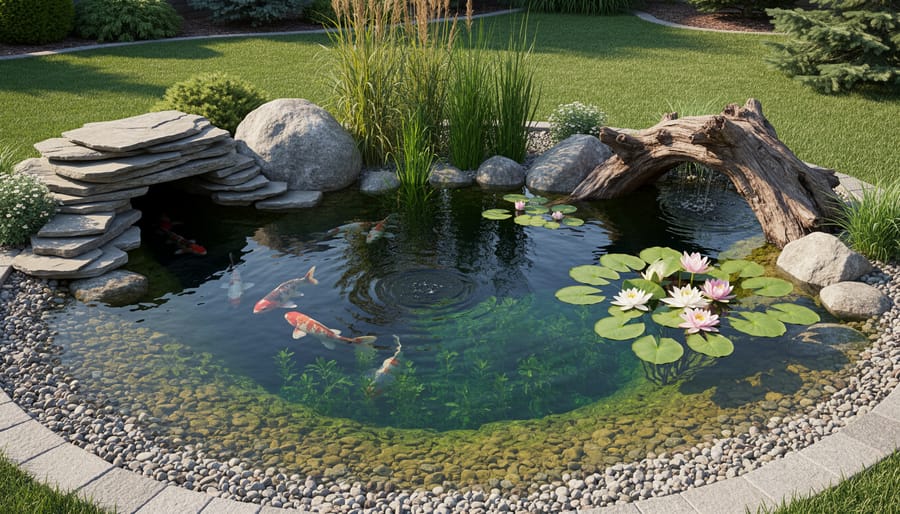
Start by adding rock caves or stacked stones along the pond edges. I love using flat rocks to create little overhangs where fish can tuck themselves out of sight. These work especially well against herons, who need shallow access to hunt effectively. Position these structures so they’re about 18-24 inches below the water surface.
Deeper zones are your secret weapon. If possible, include at least one area that’s 3-4 feet deep. Predatory birds simply can’t reach fish at that depth, and it gives your finned friends a safe retreat. Even a small deep pocket in one corner makes a huge difference.
Don’t underestimate the power of plants! Floating water lilies create overhead cover, while submerged plants like hornwort offer concealment throughout the water column. Dense plant growth around the edges acts like a curtain, breaking up sight lines for hunting predators.
The beauty of safe zones is they serve double duty, protecting your fish while making your pond look more natural and visually interesting. It’s a win-win situation!
Motion-Activated Deterrents
Motion-activated devices offer a humane middle ground between doing nothing and more aggressive interventions. Sprinklers work surprisingly well—herons especially hate getting unexpectedly soaked while hunting. Position them to cover your pond’s perimeter, but test the spray pattern first so you’re not drenching your patio furniture every time a neighborhood cat wanders by.
Motion-activated lights have mixed results. Nocturnal predators like raccoons may initially startle, but they adapt quickly. I’ve found them most effective when combined with other deterrents rather than used alone.
Sound devices are trickier. Ultrasonic models rarely deliver on their promises, and loud alarms might annoy your neighbors more than the predators. If you go this route, choose units with varying sounds to prevent habituation.
Here’s the important part: consider your fish’s stress levels too. Constantly triggering devices near the water can stress koi just as much as predator visits. Place sensors strategically—protect access points rather than creating a constant light-and-sound show. The goal is deterring hunters ethically, not turning your peaceful pond into an anxiety-inducing environment for everyone involved.
Methods to Avoid (And Why They Fail the Ethics Test)
The Relocation Myth
I’ll be honest with you—I’ve heard many pond owners consider relocating that persistent heron to a park across town, thinking it’s a win-win solution. Unfortunately, the reality is much harsher than we’d like to believe.
When predators are relocated, they’re dropped into unfamiliar territory where they don’t know the food sources, safe shelter, or dangers. Studies show that most relocated wildlife either dies from stress, starvation, or conflicts with resident animals already established in that area. It’s not the humane solution it appears to be.
Here’s something else to consider: in many states, relocating wildlife without a permit is actually illegal. You could face hefty fines for what seemed like a kind gesture.
But here’s the kicker that really matters for your pond—even if you successfully relocate one predator, you’ve only created a temporary vacancy. Nature abhors a vacuum, and another heron, raccoon, or mink will quickly discover your pond and move right in. You haven’t solved your problem; you’ve just reset the clock.
The better approach? Focus on making your pond less accessible rather than trying to eliminate individual hunters from the equation entirely.
Building a Predator-Resistant Pond from the Start
Depth and Design Considerations
Creating a predator-resistant pond design starts with depth. Aim for a minimum depth of 90-120cm (3-4 feet) in at least part of your pond. This gives fish a safe retreat zone where wading birds like herons can’t reach. Herons prefer standing in shallow water to hunt, so they’ll often move on if they can’t access your fish.
Here’s where shelf design becomes clever. Instead of traditional gradual slopes, consider steeper drops after a narrow marginal shelf. Keep that shallow rim to just 20-30cm wide for plants, then drop quickly to deeper water. This sudden depth change frustrates herons who need stable footing.
I learned this the hard way after watching a determined heron balance precariously on my gently sloping pond edges. After redesigning with steep drops, visits decreased dramatically.
For layout, incorporate overhangs or cave-like structures at the pond’s deepest point. Large flat rocks positioned to create hideaways give fish instant refuge when shadows pass overhead. Think of it as creating underwater safe rooms your fish can dash into when threatened.
Landscaping for Protection
Think of your landscaping as nature’s welcoming committee—but one that gently encourages certain visitors to move along. Strategic plant placement can work wonders without turning your pond into Fort Knox.
Start by creating visual barriers around your pond’s perimeter. Tall ornamental grasses like miscanthus or pampas grass grow 5-7 feet high and sway beautifully in the breeze while blocking direct sight lines for herons scouting from above. I learned this trick after watching a heron spend twenty minutes pacing around my neighbor’s pond but completely bypass mine, simply because it couldn’t see what was inside.
Place shrubs with dense branching patterns about 2-3 feet from your pond’s edge. Spirea, barberry, or juniper varieties create uncomfortable landing zones for wading birds without looking fortress-like. The key is making predators feel exposed and uncertain rather than physically blocking access.
Avoid perfectly manicured edges that predators love. Instead, let plants grow naturally with slightly uneven heights and textures. This creates psychological discomfort for animals that prefer predictable surroundings when hunting.
Consider adding floating plants like water lettuce or water hyacinth. They provide hiding spots for fish while breaking up the water’s surface, making it harder for aerial predators to spot movement below. It’s protection that looks beautiful and functions naturally.
When to Accept Loss as Part of the Ecosystem
Here’s something I learned after years of maintaining ponds: sometimes, despite our best efforts, we lose a fish. It’s heartbreaking, I know. I still remember the morning I found my favorite koi missing—I’d named her Sunset because of her gorgeous orange coloring. But here’s the gentle truth we need to embrace: when we create ponds, we’re inviting ourselves into nature’s world, not the other way around.
Think of it this way: that heron visiting your pond is just doing what herons have done for thousands of years. Your fish aren’t being targeted maliciously—they’re simply part of the local food web. Understanding ecosystem balance helps us accept that occasional losses, while painful, aren’t failures on our part.
So when is deterrence enough? If you’re losing one fish every few months rather than several weekly, your methods are working. Perfect protection would require covering your entire pond with netting year-round or keeping fish indoors—neither particularly enjoyable for you or the fish.
The key is finding peace with reasonable losses while maintaining effective deterrents. I’ve learned to stock a few extra goldfish knowing some might become heron snacks, saving my prized koi for well-protected areas. It’s not giving up—it’s choosing coexistence over constant battle, which honestly makes pond-keeping more joyful and sustainable in the long run.
Here’s the truth I’ve learned from years of pond keeping: protecting your fish ethically isn’t about picking sides between the herons and your beloved koi. It’s about finding that sweet spot where wildlife can exist around your pond without turning it into an all-you-can-eat buffet.
You don’t need to implement everything at once. Start simple. Maybe add some fishing line across your pond this weekend and see how it goes. Next month, consider planting some tall grasses around the edges. The beauty of ethical predator management is that it’s flexible and forgiving. If one method doesn’t work for your situation, adjust and try another.
I’ve watched my neighbor go from losing fish weekly to enjoying a thriving pond ecosystem, all while still seeing herons visit his yard. They just don’t visit his pond anymore. That’s the goal: coexistence, not elimination.
Remember, your pond is part of a larger environment. By choosing humane deterrents over harmful solutions, you’re not just protecting your fish. You’re showing respect for all the creatures that share your outdoor space, and honestly, that makes the whole water gardening experience so much richer.