
Why Antibiotics in Your Pond Could Be Making Fish Diseases Worse
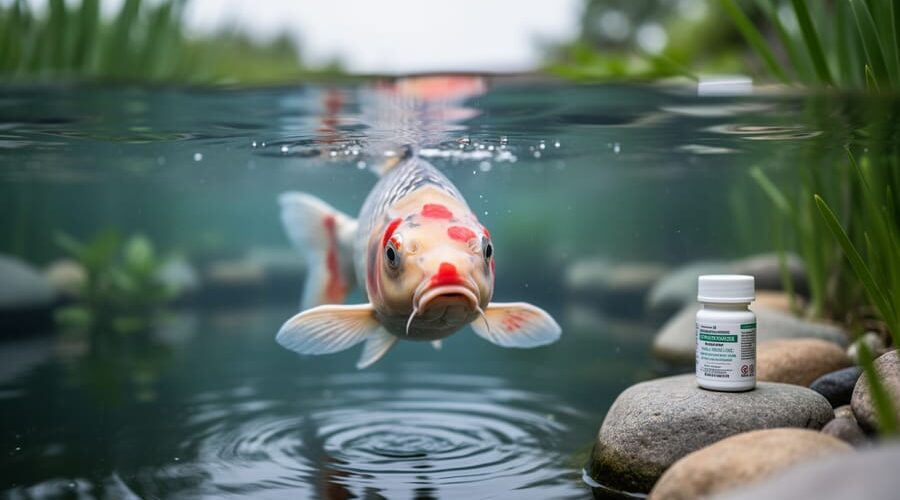
Your pond fish keep getting sick, you treat them with antibiotics, they recover, and then three months later the same problem returns. Sound familiar? You’re witnessing antimicrobial resistance in action, and it’s happening in backyard ponds across the country. Every time antibiotics enter your pond water, bacteria learn to survive them, making future treatments less effective and creating stronger, harder-to-kill pathogens.
The sobering truth is that approximately 73% of antibiotics used globally go into agriculture and aquaculture, not human medicine. In your pond, this means well-intentioned treatments can actually make disease problems worse over time. Resistant bacteria don’t just affect your fish. They enter your local water system when you drain or top off your pond, spreading to wild waterways and eventually impacting human health.
This isn’t about making you feel guilty for treating sick fish. I’ve been there myself, standing at the pond’s edge with a bottle of antibiotics, desperate to save a favorite koi struggling to breathe. The goal here is to break the treatment cycle by addressing what makes fish sick in the first place.
Most fish diseases stem from poor water quality and stress, not random bad luck. When your pond’s ecosystem is balanced with proper filtration, adequate oxygen, and stable parameters, fish develop strong immune systems that fight off infections naturally. Prevention through better pond management eliminates about 90% of situations where you’d reach for antibiotics.
This guide will show you how to create disease-resistant conditions in your pond and use medications responsibly only when truly necessary, protecting both your fish and the broader environment.
What Antimicrobial Resistance Actually Means for Your Pond
How Bacteria Become ‘Immune’ to Treatment
Think of bacteria like a neighborhood of tiny organisms living in your pond. When you introduce antibiotics to treat sick fish, you’re essentially creating a survival challenge for these bacteria. Here’s what happens in a way that might remind you of your own garden experiences.
Imagine you’re trying to eliminate weeds from your flower bed. The first time you use weed killer, most weeds die off. But there’s always that one stubborn dandelion that somehow survives. That survivor produces seeds, and suddenly you’ve got a whole new generation of tougher dandelions. Bacteria work exactly the same way in your pond.
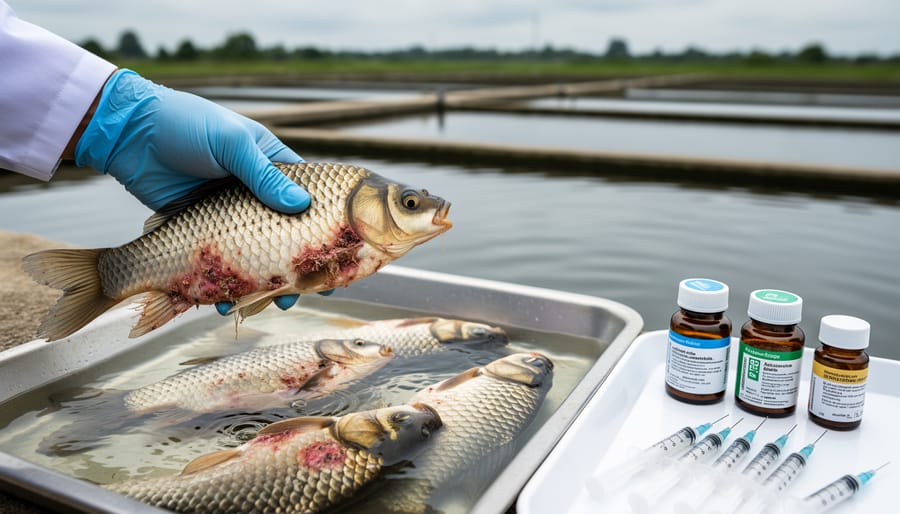
In your closed pond system, when you use antibiotics, most bacteria die quickly. However, a few lucky ones might have natural defenses that help them survive, like a tiny genetic shield. These survivors multiply rapidly in the emptier environment left behind, passing their resistance to their offspring. Within days, you’ve got a whole population of treatment-resistant bacteria.
What makes pond systems particularly tricky is that they’re like enclosed neighborhoods where bacteria can’t escape. The resistant bacteria stick around, trading their survival secrets with other bacteria through direct contact. It’s like neighbors sharing tips over the fence, except these tips help bacteria survive your treatments. This is why using antibiotics responsibly matters so much for keeping your pond healthy long-term.
Why Your Pond Is Different from a Lake or Stream
Think of your backyard pond as a cozy fish bowl rather than the wide-open ocean. This distinction matters more than you might realize when it comes to medications and bacteria. In streams and lakes, water constantly moves and refreshes itself. Anything you add—whether it’s fish waste, leaves, or medications—gets diluted and carried away downstream. Your pond, however, works differently.
When you add antibiotics to treat sick fish in your pond, those medications stay put. They circulate in the same water, day after day, slowly breaking down. This creates what I like to call a “bacteria training ground.” The harmful bacteria in your pond get repeated exposure to these medications at varying strengths. Some die off, but the toughest ones survive and multiply, passing their resistance to future generations.
Your pond’s closed system also means fish waste, uneaten food, and organic debris accumulate faster. This nutrient-rich environment is like an all-you-can-eat buffet for bacteria—good and bad alike. When you combine concentrated medications with abundant bacterial food sources and minimal water exchange, you’ve accidentally created perfect conditions for resistant bacteria to thrive and dominate your pond’s ecosystem.
Common Mistakes That Create Resistant Bacteria in Ponds
Using Leftover Medications or ‘Just in Case’ Treatments
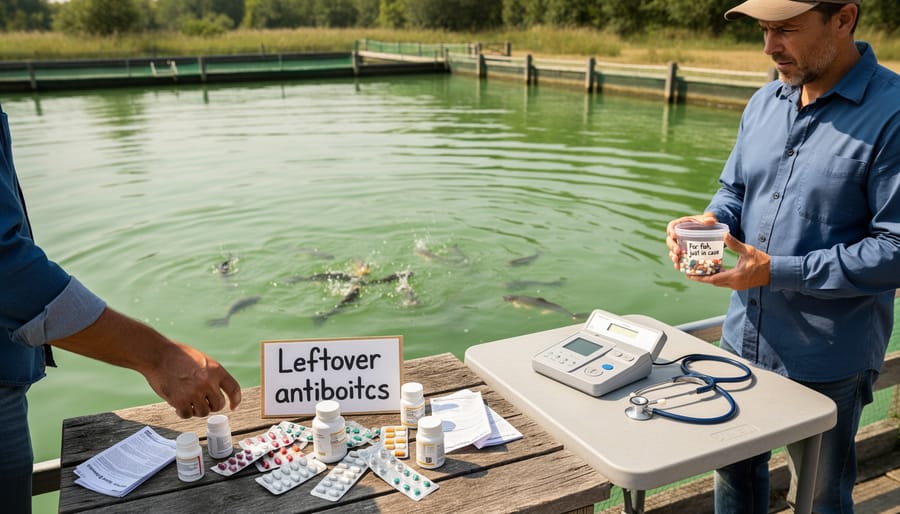
We’ve all been there – you spot a sick fish, remember that half-used bottle of antibiotics from last year sitting in the garage, and think, “Why not just use this?” Here’s the problem: those leftover medications lose potency over time, meaning you’re giving your fish a weaker dose than what’s actually needed. When fish receive inadequate doses, some bacteria survive and develop resistance to that medication.
The same issue happens with preventive dosing. Some pond keepers add antibiotics to their water “just in case” during stressful times like spring startup or after adding new fish. Without an actual infection present, this practice simply trains bacteria to resist these medications without providing any real benefit. It’s like practicing for a battle that isn’t happening – except you’re training the enemy instead of your troops.
I learned this lesson the hard way when preventive treatments stopped working entirely on a persistent fin rot issue in my pond. Once I focused on improving water quality and only treating confirmed infections with fresh, properly-dosed medications, my fish health problems dramatically decreased. Save those medications for actual diagnoses, check expiration dates religiously, and always complete the full treatment course as directed.
Stopping Treatment Too Early
We’ve all been there – you start treating your fish with antibiotics, they seem better after a few days, and you figure, “Great! Problem solved!” But here’s the tricky part: stopping treatment early is actually one of the biggest contributors to antimicrobial resistance in your pond.
Think of it like this: when you first start treatment, the medication kills off the weakest bacteria first. The stronger, more resilient ones take longer to eliminate. If you stop the treatment as soon as your fish look better, those tough bacteria are still hanging around. And guess what? These survivors are the ones most likely to be resistant to that antibiotic.
These resistant bacteria don’t just disappear – they multiply throughout your pond system, spreading through the water, substrate, and even your filter media. Before long, you’ve got a whole population of bacteria that won’t respond to that medication anymore.
I learned this lesson the hard way years ago with a koi that kept relapsing. Each time I thought he was cured and stopped treatment early, the infection came roaring back worse than before. Always complete the full treatment course your veterinarian recommends, even if your fish seem perfectly healthy halfway through. Those extra days matter more than you might think.
Overusing Antibacterial Products in Regular Maintenance
I’ll be honest with you – I’ve been guilty of this myself. When my pond water looked a bit cloudy or green algae started creeping along the edges, my first instinct was to reach for an antibacterial product or algaecide. It felt like I was being proactive, keeping things clean and safe for my fish. But here’s what I learned: most of the time, these products aren’t just unnecessary – they can actually contribute to bigger problems down the road.
Many pond additives marketed as “clarifiers” or “water conditioners” contain antimicrobial ingredients that kill bacteria indiscriminately. The problem is, your pond relies on beneficial bacteria to break down fish waste, uneaten food, and other organic matter. When you use these products routinely, you’re essentially wiping out the good guys along with anything harmful, forcing you into a cycle where you need to use more products to maintain balance.
Algaecides with antimicrobial properties work similarly. While they might give you quick results against string algae or green water, they don’t address why the algae grew in the first place – usually excess nutrients, too much sunlight, or inadequate filtration.
So when are these products actually necessary? Honestly, rarely. If you’re maintaining proper filtration, doing regular partial water changes, avoiding overfeeding, and managing sunlight exposure, you shouldn’t need routine antibacterial treatments. Save these products for genuine emergencies, like severe bacterial blooms that threaten fish health. Otherwise, you’re just adding unnecessary chemicals to your ecosystem while potentially breeding resistant bacteria that could cause real trouble later.
Smarter Ways to Keep Your Fish Healthy Without Creating Resistant Bacteria
Build a Naturally Resilient Pond Ecosystem
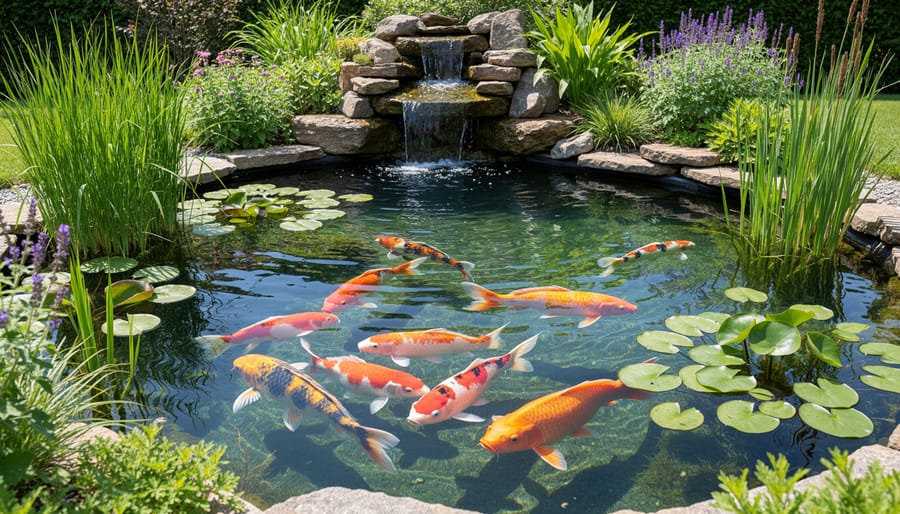
Think of your pond as a living community where everything works together to keep fish naturally healthy and strong. When you create the right conditions, your fish develop robust immune systems that can fight off infections without needing antibiotics.
Start with a quality filtration system that removes physical waste while preserving the good stuff. Your filter should include both mechanical and biological components. The biological filter is where beneficial bacteria colonize and break down harmful ammonia and nitrites into safer nitrates. These microscopic helpers are your pond’s cleanup crew, working 24/7 to maintain water quality.
Next, introduce pond plants strategically. Submerged plants like hornwort and water milfoil oxygenate the water naturally, while marginal plants such as water iris and pickerel rush filter nutrients and provide shelter for fish. Aim for plants to cover about one-third of your pond surface to balance oxygen production with open swimming space.
Don’t skip regular water testing. Check ammonia, nitrite, nitrate, and pH levels weekly during the first few months, then monthly once your ecosystem stabilizes. This helps you catch imbalances before they stress your fish and weaken their immune defenses.
Finally, avoid overstocking. A good rule of thumb is one inch of fish per square foot of surface area. Overcrowding creates stress and increases waste, overwhelming your natural filtration system and making fish vulnerable to disease. When your pond ecosystem is balanced, your fish thrive naturally without chemical intervention.
Quarantine New Fish the Right Way
Think of quarantine as your pond’s security checkpoint. When you bring home new fish, resist the temptation to pop them straight into your main pond. Instead, set up a simple holding tank for 2-4 weeks where you can watch for any signs of illness.
Here’s my straightforward approach: Use a spare aquarium or small plastic tub with an air pump and basic filtration. Keep the water conditions similar to your main pond, and observe your new fish daily. Look for changes in behavior, appetite, or appearance like spots, torn fins, or labored breathing.
The beauty of proper quarantine protocols is that you only medicate if you actually see a problem. Many fish sail through quarantine perfectly healthy, meaning you’ve avoided unnecessary antibiotic use entirely. If issues do appear, you’re treating a small volume of water rather than your entire pond, which reduces medication waste and environmental impact.
This patient approach has saved my main pond countless times from importing problems. Yes, waiting feels tedious when you’re excited about new additions, but it’s the single most effective disease prevention strategy available to home pond keepers.
Spot Problems Early Before They Need Medication
The best medicine is often no medicine at all, and that starts with being a detective in your own backyard. Your fish will tell you when something’s wrong, you just need to know what to watch for.
Start by spending a few minutes each day observing your pond. Healthy fish are active swimmers with good appetites. If your fish suddenly become lethargic, hang near the surface gasping for air, or lose interest in feeding time, something’s up. Look for physical changes too: clamped fins held close to the body, rubbing against rocks or pond walls, or unusual spots and discoloration are all red flags.
Don’t forget about your water quality. This is absolutely crucial and often the root cause of fish stress. Test your water weekly for ammonia, nitrite, nitrate, and pH levels. Cloudy or foul-smelling water is your pond waving a distress signal. High ammonia or nitrite levels can quickly weaken your fish’s immune systems, making them vulnerable to infections.
Temperature swings also stress fish considerably. During seasonal changes, monitor your thermometer closely and avoid sudden shifts when adding new water.
When you catch these warning signs early and address the underlying causes like poor water quality or overcrowding, you can often prevent disease entirely. That means healthier fish and no antibiotics needed.
Natural Alternatives That Actually Work
Before reaching for medications, you’ll be pleased to know several natural methods can effectively tackle minor fish health issues. Salt baths are your first line of defense – dissolve non-iodized salt (about 1 tablespoon per gallon) in a separate container and give affected fish a 5-10 minute treatment. This simple solution helps heal minor infections and removes parasites without antibiotics.
Temperature adjustment works wonders too. Gradually raising water temperature by a few degrees can boost your fish’s immune system, helping them fight off mild infections naturally. Just remember to increase aeration when you do this.
The most powerful preventative? Excellent water quality through chemical-free pond maintenance. Regular water changes, proper filtration, and maintaining optimal parameters prevent most health issues from developing in the first place. I’ve found that ponds with consistent maintenance rarely need any interventions at all – healthy water equals healthy fish!
When You Really Do Need Medication: Using It Responsibly
Getting the Right Diagnosis First
Before you reach for any medication, here’s something crucial: not all fish health problems need antibiotics. In fact, many don’t even involve bacteria at all! Just like when your kids get a cold (which is viral), antibiotics won’t help and might actually cause more harm than good.
Think of it this way: if your fish are lethargic and off their food, the culprit could be a bacterial infection, a viral illness, parasites, or even poor water quality. Using antibiotics for a parasitic problem is like trying to fix a flat tire by adding more fuel – you’re treating the wrong issue entirely.
This is where working with a fish veterinarian or experienced aquatic specialist becomes invaluable. They can examine your fish properly, sometimes under a microscope, and identify exactly what you’re dealing with. Many regions now have aquatic vets who can visit your pond or accept samples for testing.
If professional help isn’t readily available, connect with experienced pond keepers through local clubs or online communities. They can often help you identify common issues and understand whether you’re facing emerging pond pathogens or something more straightforward. Getting the diagnosis right from the start saves you money, protects your fish, and helps prevent antibiotic resistance.
Following Treatment Instructions Exactly
When your fish need medication, accuracy matters more than you might think. I learned this the hard way when I underdosed my koi pond years ago—thinking I was being cautious, I actually created the perfect environment for resistant bacteria to develop.
Start by calculating your pond’s exact volume. Don’t guess! Measure length, width, and average depth, then multiply. For irregular shapes, break your pond into sections and add them together. Remember that rocks and plants displace water, so reduce your calculation by about 10-20% depending on your setup.
Always use a kitchen scale for powder medications rather than eyeballing measurements. Those tiny scoops aren’t as accurate as you’d hope. Mix the treatment thoroughly in a bucket of pond water before adding it to avoid hot spots where fish might get concentrated doses.
Here’s the golden rule: complete the full treatment course, even if your fish look better after day two. Stopping early leaves behind the toughest bacteria, which then multiply into a resistant population. Mark your calendar and set phone reminders if needed.
Never combine medications unless specifically directed by a fish veterinarian, and keep detailed records of what you used and when. Your future self will thank you if problems resurface.
What to Do with Treated Water
Once you’ve treated your pond water with antibiotics, proper disposal is crucial for protecting our environment and preventing resistance spread. Never dump treated water directly into storm drains, natural waterways, or onto soil where it might seep into groundwater. These medications can harm beneficial bacteria in the environment and contribute to resistance development.
The safest approach is to let treated water sit in a holding container for several weeks, allowing the antibiotics to break down naturally through sunlight exposure and microbial activity. After this waiting period, you can dilute the water significantly with fresh water before disposing of it on your lawn or garden in small amounts.
When performing water changes on a recovering pond, start slowly with 10-15% changes to avoid shocking your fish. Use a quality dechlorinator and maintain stable temperatures. Consider treating removed water the same way you would fully medicated water, especially during the first few days of treatment when medication concentrations are highest. This responsible approach protects your local ecosystem while keeping your fish healthy.
Building Your Long-Term Pond Health Strategy
Your Seasonal Pond Health Checklist
Keeping your pond healthy throughout the year doesn’t have to be complicated! By following these simple seasonal tasks, you’ll prevent most problems that might otherwise require antibiotics or other medications.
In spring, as temperatures rise, test your water quality and perform a partial water change to refresh your pond after winter. Remove debris, trim back dead plants, and gradually restart feeding as your fish become more active. This is the perfect time to check your filtration system too.
Summer means staying on top of water quality. Test weekly during hot months, as warm water holds less oxygen. Keep your pump running consistently, add extra aeration if needed, and watch for algae blooms. Clean filters regularly and never overfeed your fish, as excess food quickly pollutes water.
Autumn is preparation time. Remove falling leaves with netting before they sink and decay. Reduce feeding as temperatures drop, and give your equipment a thorough clean. Consider adding beneficial bacteria to help break down organic matter.
Winter requires minimal intervention. If your pond doesn’t freeze completely, maintain a small opening for gas exchange. Avoid disturbing hibernating fish.
These straightforward responsible pond management practices create conditions where fish naturally thrive, dramatically reducing disease risks without reaching for antibiotics.
Keeping Records That Help You Spot Patterns
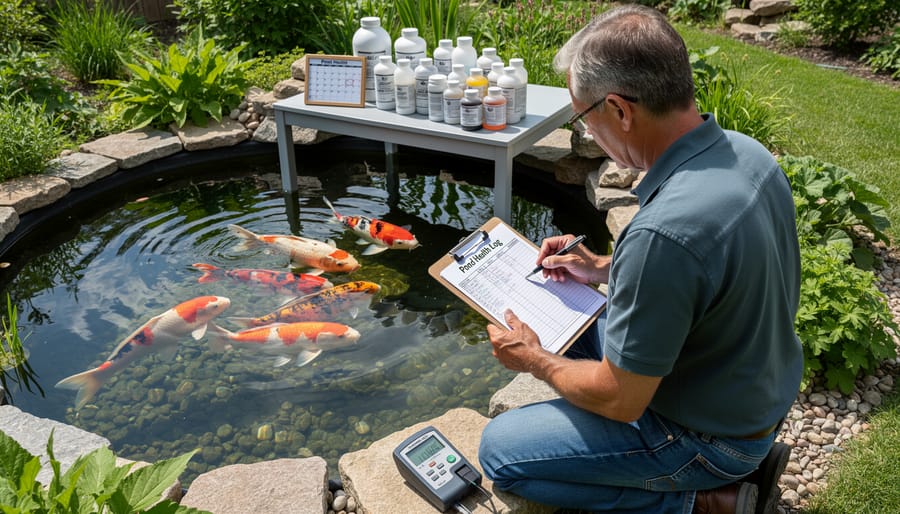
Think of record-keeping as your pond’s personal diary. I started using a simple notebook to track my water tests, and it completely changed how I managed my fish health. You don’t need anything fancy – even a basic calendar or phone app works wonderfully.
Each week, jot down your water temperature, pH, ammonia, and nitrite levels. Note anything unusual about your fish: Are they gathering at the surface? Rubbing against rocks? Acting sluggish? When you use any treatments, write down what you used, why, and the results. This might seem tedious at first, but patterns emerge quickly.
For example, you might notice that every spring when temperatures fluctuate, certain fish develop fin issues. Or perhaps water quality dips every time you add new plants. These patterns help you prevent problems before they start, reducing the need for medications altogether.
I keep a small waterproof notepad by my pond so I can record observations during my morning coffee routine. Looking back through months of notes has saved me from repeatedly making the same mistakes and helped me understand what truly keeps my fish healthy and thriving.
Here’s the truth: preventing antimicrobial resistance in your pond isn’t about being perfect. It’s about being thoughtful. Every time you test your water before adding chemicals, every time you quarantine a new fish, every time you choose to improve filtration instead of reaching for medication first, you’re making a difference that ripples far beyond your backyard.
Think of yourself as a guardian, not just of your pond, but of the larger ecosystem your pond connects to. When rainwater overflows your pond, when birds stop by for a drink, when beneficial bacteria thrive in your filter, your choices matter. Healthy pond practices don’t just protect your fish from disease; they protect local waterways, wild fish populations, and the effectiveness of medications we all might need someday.
The beauty of prevention is that it works with nature, not against it. Strong fish in balanced water don’t get sick as often. Clean filters and regular maintenance mean fewer emergencies. Good nutrition builds immune systems that can fight off problems naturally. These aren’t complicated solutions requiring expensive equipment or scientific expertise. They’re straightforward habits that fit right into your regular pond care routine.
Remember, you became a pond keeper because you love the tranquility and life it brings to your space. By committing to these responsible practices, you’re ensuring that joy continues for years to come, for your fish, your family, and the environment we all share.