
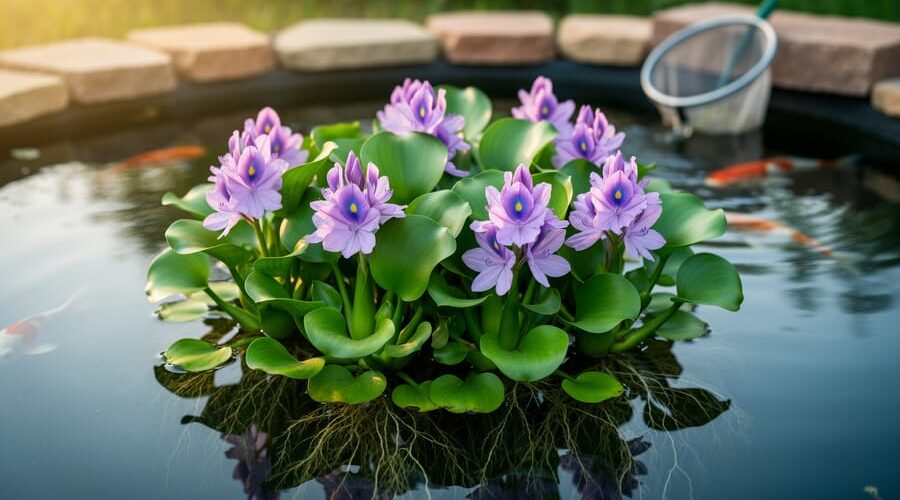
Water Hyacinth: Beautiful Blooms or Pond Nightmare?
Check your local regulations before acquiring water hyacinth—this beautiful floating plant with lavender blooms is banned in many regions because it can quickly overtake natural waterways. If it’s legal in your area, you’re in for a treat: water hyacinth is one of the easiest pond plants to establish, requiring no soil, no planting tools, and minimal effort.
Simply place the plants directly on your pond’s surface between late spring and early summer when water temperatures reach 70°F or above. The dangling roots will naturally filter your water while the glossy green leaves create shade that helps control algae. Within weeks, you’ll notice daughter plants forming as the hyacinth multiplies—which brings us to the most crucial part of growing this plant.
You’ll need to remove excess growth every two to three weeks during peak growing season. Without regular thinning, water hyacinth can double its coverage in just two weeks, choking out oxygen and harming fish. Think of it as mandatory maintenance, not optional gardening. This guide walks you through the complete process—from legal considerations and initial placement to seasonal care and responsible removal—so you can enjoy water hyacinth’s beauty while keeping your pond healthy and balanced. Let’s ensure your water garden stays stunning without becoming overwhelming.
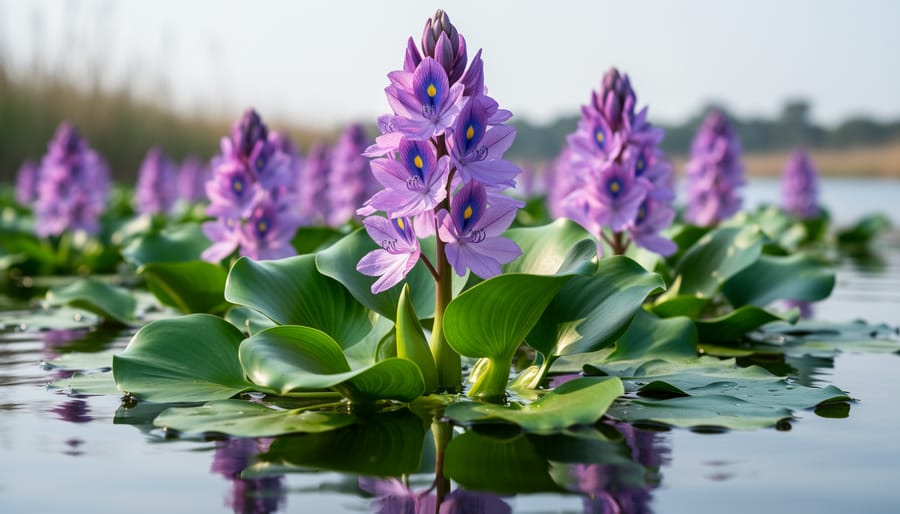
What Makes Water Hyacinth Special (And Notorious)
The Legal Stuff You Need to Know First
Before you fall in love with the idea of those gorgeous purple blooms floating across your pond, let’s talk about something super important: water hyacinth is actually illegal to plant in many places. I know, it’s a bummer, but there’s a good reason for this.
Water hyacinth is considered one of the world’s most invasive aquatic plants. In warm climates, it spreads incredibly fast, doubling its population in as little as two weeks. This means it can quickly escape from your pond into natural waterways, where it chokes out native plants, blocks sunlight, depletes oxygen, and makes waterways impassable for boats.
Because of these risks, many states and countries have banned or restricted water hyacinth completely. For example, it’s prohibited in California, Florida, Texas, Louisiana, and several other U.S. states. Even in places where it’s not outright banned, you might need special permits.
Here’s what you need to do right now: contact your local agricultural extension office, department of natural resources, or environmental agency to check your area’s specific regulations. A quick phone call or website search can save you from hefty fines and environmental damage. Trust me, it’s worth the five minutes to verify you’re in the clear legally before moving forward.
Is Water Hyacinth Right for Your Pond?
Climate Considerations
Water hyacinth is a sun-loving tropical and subtropical plant that absolutely thrives in warm weather. If you live in warmer climates like Florida, Southern California, or the Gulf Coast states, you’re in for a real treat because these beauties will grow year-round in your pond, producing those gorgeous purple blooms season after season.
However, if you’re in cooler regions, here’s what to expect: water hyacinth behaves more like an annual plant. When temperatures consistently drop below 50°F (10°C), the plants will start to slow down, and once frost arrives, they’ll typically die off completely. Don’t worry though—this natural die-off actually helps with management since the plant won’t overwinter and return next spring on its own.
Many water gardeners in northern climates treat water hyacinth as a seasonal addition, enjoying it from late spring through early fall. You can either purchase new plants each year or bring a few indoors before the first frost to overwinter in a sunny aquarium or container. Just remember that indoor overwintering requires bright light and warm temperatures to keep them healthy until you can return them to your pond in spring.
Pond Size and Type Matters
Before you introduce water hyacinth to your pond, let’s talk about whether your water feature is the right fit. Size really does matter here! For small contained ponds (think 50-200 gallons), just one or two plants can quickly fill the surface within weeks during warm weather. I learned this the hard way when three innocent-looking plants turned my backyard pond into a floating jungle by mid-summer!
Contained ponds like preformed liners or raised water features give you much better control. You can easily remove excess growth and prevent escapees. Natural ponds connected to streams or waterways? That’s where things get tricky. Water hyacinth doubles its population every 5-14 days in ideal conditions, and even a single plant escaping downstream can become an ecological nightmare.
For a balanced pond ecosystem, larger ponds (500+ gallons) handle water hyacinth better because you have room to let some plants work their filtering magic while maintaining open water. However, you’ll need to commit to weekly monitoring during the growing season. Smaller ponds need even more vigilant care since overcrowding happens faster, potentially choking out oxygen and harming fish.
How to Plant Water Hyacinth in Your Pond
When to Plant
Timing is everything when it comes to introducing water hyacinth to your pond! The golden rule is to wait until water temperatures consistently stay above 70°F (21°C). Think of these tropical beauties like the gardeners who refuse to leave the house until spring truly arrives – they’re just not fans of the cold.
In most regions, this means late spring to early summer is your sweet spot, typically from May through June. I learned this lesson the hard way my first year when I got a bit too eager in April. Those poor plants just floated there looking miserable until the water warmed up properly!
Avoid planting in fall or winter, even in warmer climates. Water hyacinth needs time to establish and multiply during the growing season. If you plant too late in the season, they won’t have enough warm days to settle in before temperatures drop.
A handy tip: wait until you’re comfortable swimming in your pond. If the water feels inviting to you, it’s probably perfect for water hyacinth too!
Where to Get Your Plants
Finding healthy water hyacinth is easier than you might think! Your best bet is to check with local aquatic plant nurseries or pond supply stores, as they typically carry specimens that are well-suited to your region. Online retailers specializing in water garden plants also offer convenient options, though you’ll want to verify they can legally ship to your area given the plant’s invasive status in some regions.
When selecting plants, look for vibrant green leaves that stand upright and feel firm to the touch. Healthy specimens have glossy, thick foliage without brown spots, yellowing, or mushy areas. The bulbous floats at the base should be plump and intact. Inspect the roots carefully—they should be feathery, dark purple to black, and free from slime or foul odors that indicate rot.
Avoid plants with obvious damage, wilting leaves, or signs of pest infestation like holes or webbing. A reputable seller will guarantee their plants arrive in good condition and provide care instructions. I always recommend starting with just a few plants since they multiply quickly, and it’s better to begin small while you learn their growth patterns in your specific pond environment.
The Planting Process
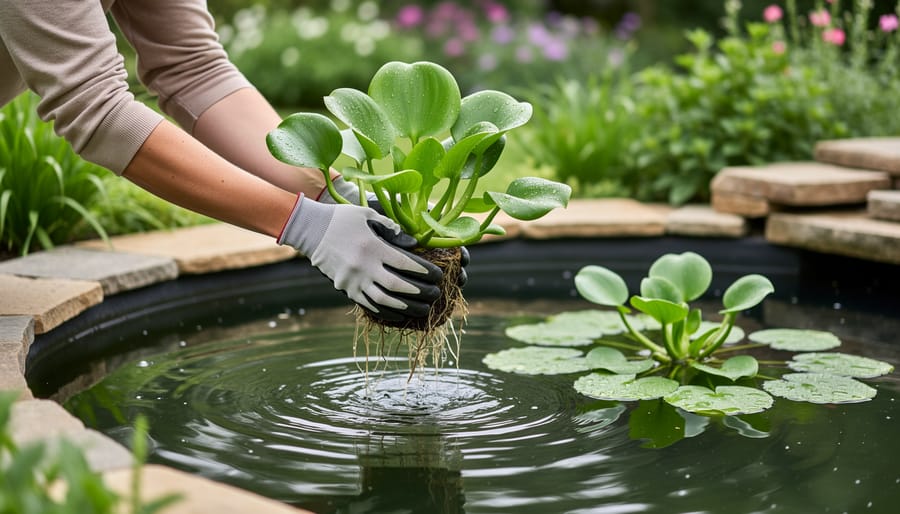
Ready to introduce these floating beauties to your pond? The actual planting process is wonderfully straightforward, though “planting” is a bit of a misnomer since water hyacinth simply floats on the surface. Let me walk you through getting them settled in their new home.
Start by acclimating your water hyacinth, especially if they’ve been shipped or stored differently than your pond conditions. Float the container they arrived in on your pond’s surface for about 30 minutes. This helps them adjust to the temperature difference and reduces transplant shock. I learned this the hard way when my first batch looked rather sad after being plopped straight into chilly spring water.
When you’re ready, gently remove the plants from their packaging. Rinse off any debris or packing material, and inspect each plant for healthy green leaves and plump, bulbous bases. Remove any yellowed leaves or damaged portions before introduction.
For initial placement, start small. Three to five plants are plenty for a medium-sized pond. Trust me, they’ll multiply faster than you expect. Place them in a sunny, calm area of your pond where there’s minimal water movement. Strong currents or waterfalls can stress the plants and prevent them from establishing properly.
Now comes the containment decision. In areas where water hyacinth is invasive or if your pond connects to natural waterways, you must use floating barriers or containment rings. These prevent escape while allowing growth. For enclosed ponds, free-floating works beautifully and looks more natural.
Simply release your water hyacinth onto the water’s surface, spacing them evenly. They’ll naturally cluster together within days, forming that gorgeous floating carpet you’re after. No soil, no anchoring required.
Creating Containment Barriers (Recommended)
Creating barriers is one of the smartest moves you can make when growing water hyacinth. Trust me, I learned this the hard way when my first batch spread across my entire pond in just three weeks!
The simplest DIY barrier uses PVC pipe and rope. Cut half-inch PVC into four-foot sections and connect them with waterproof rope threaded through the pipes, creating a floating rectangle. Seal the pipe ends so they float nicely. This contains your water hyacinth in a designated area while letting water flow through.
For a quicker solution, pool noodles work surprisingly well. Thread nylon rope through the center and connect the ends to form your containment zone. They’re colorful, affordable, and guests won’t even realize they’re serving a practical purpose.
Commercial floating barriers offer more durability if you prefer a ready-made option. Look for ones designed for pond management, typically made from UV-resistant materials.
Position your barrier in a spot with partial shade and anchor it using stakes or heavy weights on the pond bottom. Leave enough space for the plants to multiply slightly without overcrowding, usually starting with a six-by-six-foot area. Check your barrier weekly, especially after storms, and remove any escapees immediately.
Caring for Water Hyacinth After Planting
Managing Growth and Preventing Takeover
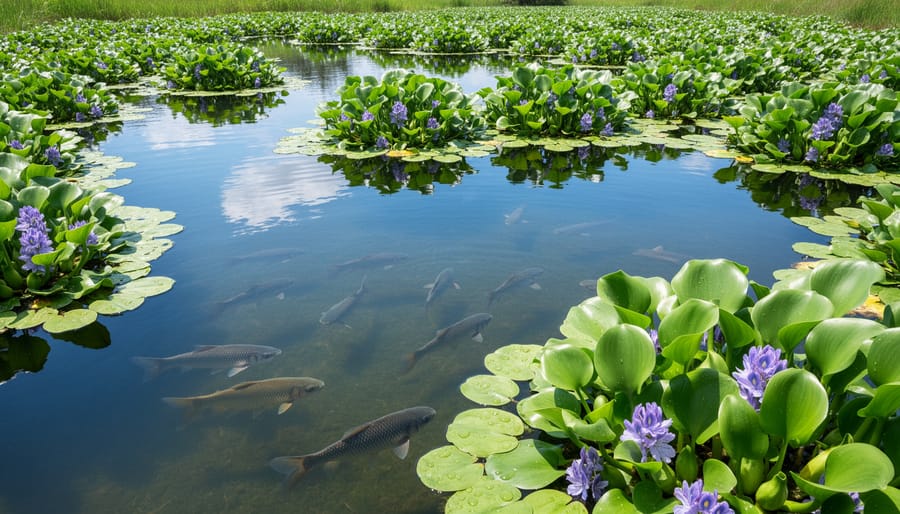
Here’s the truth I learned the hard way: water hyacinth goes from “charming accent” to “complete takeover” faster than you’d think! Regular management isn’t optional with these enthusiastic growers.
Aim to keep your water hyacinth covering no more than 30-40% of your pond’s surface. This sweet spot gives you that gorgeous water garden aesthetic while leaving plenty of open water for oxygen exchange and light penetration. Your fish and other aquatic life will thank you!
Check your pond weekly during the growing season. When plants start crowding together or spreading beyond your intended area, it’s thinning time. Simply scoop out excess plants with a net or rake, removing entire rosettes including their roots. I find early morning is easiest, when the plants are most accessible.
Watch for these takeover warning signs: rapidly disappearing open water, struggling water lilies or other plants, reduced water circulation, or difficulty accessing your pond edges. If you spot any of these, remove plants immediately.
Now, here’s the crucial part: never, ever toss removed water hyacinth into natural waterways, storm drains, or compost piles where they might escape. These plants can survive in surprisingly small amounts of moisture. Instead, let them dry completely in the sun for several days until they’re thoroughly dead and brittle. Then add them to your regular trash or use as mulch in garden beds far from water sources. Some communities offer special disposal programs for aquatic invasives, so check your local options.
Winter Care in Cold Climates
Here’s the hard truth: water hyacinth won’t survive freezing temperatures outdoors. If you live in a region where winter means ice and snow, you’ll need to bring your plants inside or treat them as annuals and start fresh each spring.
For those who want to save their water hyacinth, the indoor overwintering method works beautifully. About two weeks before your first expected frost, scoop out a few healthy plants and place them in a large aquarium or plastic container filled with pond water. Position this temporary home near a sunny window where temperatures stay between 60-70°F. You’ll need to change about half the water weekly to prevent stagnation, and adding a small amount of liquid fertilizer every few weeks keeps them nourished.
I’ve successfully overwintered water hyacinth in a simple five-gallon bucket on my enclosed porch, and come spring, those survivors multiplied quickly once returned to the pond. The key is maintaining warmth and adequate light throughout winter months.
Alternatively, many water gardeners simply let their plants die off naturally and purchase new ones each season. This approach eliminates winter maintenance hassles and ensures you’re starting with vigorous, pest-free specimens. Consider which method best fits your schedule and available indoor space before making your decision.
The Benefits Water Hyacinth Brings to Your Pond
Water hyacinth isn’t just a pretty face floating on your pond—it’s actually a hardworking plant that brings some fantastic benefits to your aquatic ecosystem! Let me share why pond owners like you and me appreciate having these beauties around.
First up, water hyacinth is nature’s filtration system. Those dangling roots act like tiny sponges, absorbing excess nutrients such as nitrogen and phosphorus from the water. This means fewer algae blooms and clearer water for you to enjoy. It’s one of the most effective natural filtration plants you can add to your pond, and it does all the work without electricity or expensive equipment!
Your fish will absolutely love water hyacinth too. The broad leaves create wonderful shade during hot summer days, helping to keep water temperatures comfortable and reducing stress on your aquatic friends. I’ve noticed in my own pond that koi and goldfish often gather beneath the floating canopy during peak sunshine hours. Those feathery underwater roots also provide excellent hiding spots for small fish and serve as perfect spawning habitat during breeding season. If you’re interested in creating an ideal environment, water hyacinth ranks among the best pond plants for fish.
And let’s not forget the visual appeal! The glossy green leaves and delicate lavender-blue flowers create a tropical oasis right in your backyard. There’s something magical about watching these plants gently drift across the water surface, creating an ever-changing landscape that adds movement and life to your pond.
Troubleshooting Common Water Hyacinth Issues
Plants Not Thriving or Turning Yellow
Yellowing or struggling water hyacinth usually signals something’s off with your pond conditions. The most common culprit? Nutrient deficiency. While these plants are known for thriving in nutrient-rich water, extremely clean or newly established ponds might lack the nitrogen and phosphorus they need for those vibrant green leaves. If your water is crystal clear, consider adding a balanced aquatic fertilizer to give them a boost.
Temperature plays a huge role too. Water hyacinth absolutely loves warmth and will start looking sad when water temperatures drop below 70°F. Yellowing leaves in early autumn are perfectly normal as they prepare for their seasonal decline.
Don’t overlook water quality issues either. Extremely acidic or alkaline water can stress your plants, as can contamination from chemicals or runoff. Test your pond’s pH (aim for 6.0-7.5) and ensure no harmful substances have entered the water.
Sometimes yellowing indicates broader pond plant diseases or pest problems. Check for aphids or fungal spots on leaves and treat accordingly. Remember, healthy water hyacinth should display glossy, bright green foliage and robust growth.
Aggressive Spreading
Water hyacinth can quickly go from charming pond addition to overwhelming takeover artist! If your plants have exceeded their designated area, don’t panic—you’ve got options. Start by manually removing excess plants weekly during the growing season. I learned this the hard way when my small starter cluster doubled in just two weeks during a hot summer.
Use a long-handled net or rake to scoop out floaters, composting them away from water sources to prevent spread. For persistent overgrowth, consider reducing nutrients in your pond by limiting fish food or installing better filtration. If plants escape into connected waterways, contact your local environmental agency immediately—they’ll appreciate your responsible reporting.
Create physical barriers using floating booms or ropes to corral plants into manageable sections. Some pond owners dedicate a “sacrificial zone” where hyacinths can grow freely for harvest. Remember, prevention beats cure: regular monitoring and weekly removal of daughter plants keeps populations manageable. Think of it as pruning your water garden—consistent small efforts prevent overwhelming cleanup sessions later.
Water hyacinth can truly transform your pond into a stunning aquatic showcase with its gorgeous purple blooms and lush green foliage. I’ve seen firsthand how these floating beauties can bring life and character to a water garden, creating that picture-perfect oasis you’ve been dreaming about. But as we’ve explored throughout this guide, the key to success lies in planting with your eyes wide open.
Yes, water hyacinth offers wonderful benefits like natural filtration, shade for fish, and undeniable aesthetic appeal. However, these advantages come with the responsibility of vigilant management. Think of it as adopting an energetic puppy – absolutely rewarding, but requiring consistent attention and care.
Before you introduce water hyacinth to your pond, make sure you’ve checked local regulations, assessed your pond’s conditions, and honestly evaluated the time you can dedicate to maintenance. Once planted, stay committed to regular monitoring and removal of excess growth. This balanced approach lets you enjoy all the beauty without the headache of an invasive takeover.
With the right preparation and ongoing care, your water hyacinth pond can become a thriving, balanced ecosystem that brings you joy for seasons to come. Here’s to your beautiful water garden adventure!