
Turn Your Backyard Pond Into a Safe Haven for Frogs and Toads
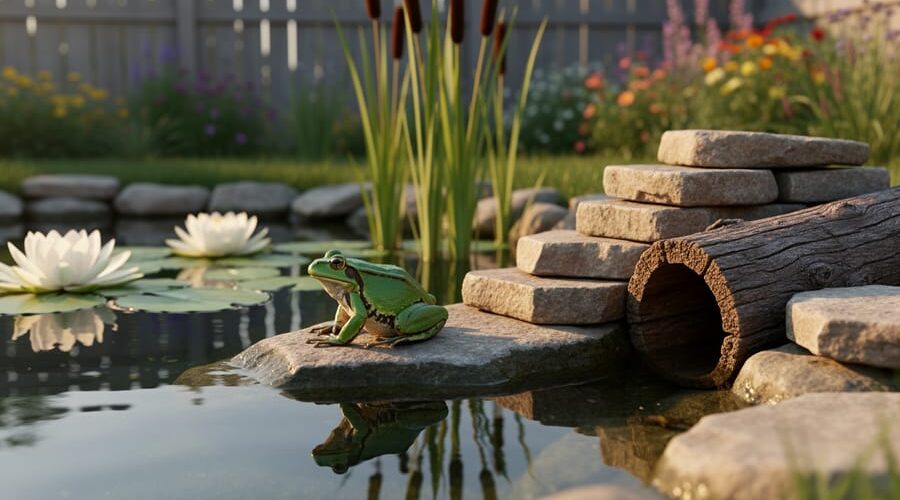
Transform your backyard pond into a thriving amphibian sanctuary by adding shallow entry zones with gradual slopes of 20 degrees or less, allowing frogs, newts, and salamanders easy access in and out of the water. Native aquatic plants like water lilies, cattails, and submerged vegetation provide essential egg-laying sites and protective cover—aim for 40-60% plant coverage around your pond’s edges. Create hiding spots using stacked rocks, hollow logs, and dense plantings within three feet of the water’s edge, giving amphibians safe spaces to retreat from predators and harsh weather.
Your pond becomes more than a decorative feature when you understand its role as a critical wetland habitat. Natural wetlands are disappearing at alarming rates, taking vital amphibian breeding grounds with them. The good news? Your backyard wildlife habitat can fill this gap. Even a modest water feature measuring just six feet across can support multiple frog species, providing breeding sites and year-round homes for these beneficial creatures that control mosquitoes and other garden pests.
Monitoring the amphibians that visit your pond connects you directly to conservation efforts while revealing the health of your local ecosystem. You’ll discover which species call your pond home, when they breed, and how your habitat improvements make a real difference. This journey transforms pond keeping from simple maintenance into meaningful stewardship, where every design choice supports the remarkable creatures that bridge the worlds of water and land.
Why Your Pond Matters More Than You Think
Your backyard pond isn’t just a beautiful water feature – it’s a lifeline for creatures that desperately need your help. Across the globe, amphibian populations are declining at alarming rates, with habitat loss being one of the biggest culprits. When I first learned that over 40% of amphibian species are threatened with extinction, I looked at my own garden pond with completely new eyes.
Here’s the thing: even a small pond can make a real difference. As natural wetlands continue to disappear under urban development and agricultural expansion, our garden ponds are becoming increasingly important as sanctuary spaces for frogs, toads, and salamanders. These aren’t just occasional visitors – for many amphibians, backyard ponds represent critical breeding sites where they can lay eggs and raise the next generation.
Think of your pond as part of a larger network. In fragmented landscapes where natural wetlands are few and far between, garden ponds act as stepping stones. Amphibians can hop from one pond to another, connecting isolated populations and maintaining genetic diversity. Without these corridors, populations become stranded and vulnerable.
I remember the first time I spotted frog spawn in my pond. What started as a simple water feature had become a nursery for dozens of tadpoles. That’s when I realized the incredible potential sitting right in my backyard. By incorporating thoughtful wildlife pond design elements like shallow edges, native plants, and chemical-free water, you’re not just creating a pretty garden accent – you’re actively participating in conservation.
The beauty is that creating amphibian habitat doesn’t require expertise or expensive equipment. Simple modifications to your existing pond or thoughtful planning for a new one can transform your outdoor space into a thriving refuge. Every pond counts, and yours might just be the difference between survival and disappearance for local amphibian populations.
What Makes a Wetland Habitat Perfect for Amphibians
Shallow Edges and Varying Depths
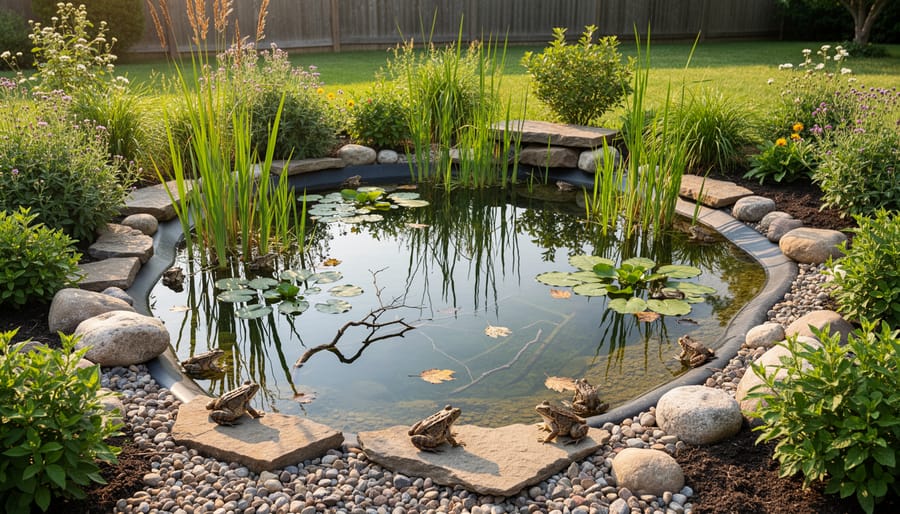
Think of your pond edge like a gentle beach rather than a cliff – that’s exactly what amphibians need! Graduated slopes with varying depths are absolutely essential for supporting different life stages, and here’s why this matters for your backyard wetland.
Shallow margins, ideally just a few centimeters deep, provide perfect nurseries where frogs and newts lay their eggs. The sun warms these shallow zones beautifully, helping tadpoles develop faster while giving them easy access to algae and tiny organisms they feed on. As your tadpoles grow legs and begin their transformation into adults, they’ll use these gradual slopes like a stairway between water and land.
I’ve watched this transition countless times in my own pond – those little guys need options! Some days they’ll bask in ankle-deep water, other days they’ll venture onto completely dry land. Without those gentle gradients, they simply can’t make the journey safely.
Deeper zones (around 60-90 cm) serve different purposes – they provide cool refuges during hot weather and safe overwintering spots. By creating microhabitats with various depths, you’re essentially building a complete apartment complex where every life stage has exactly what it needs to thrive.
Native Plants That Amphibians Actually Use
Creating a thriving amphibian habitat starts with choosing the right vegetation. Think of your pond as a multi-story apartment building where different plants serve different purposes for your tiny residents.
For egg-laying sites, frogs absolutely love Water Ribbons and native sedges like Carex. I’ve watched countless tree frogs carefully wrap their eggs around the submerged stems of these plants, using them as protective nurseries. Spikerush is another fantastic choice that grows in shallow water and provides perfect attachment points for egg masses.
Marginal plants create essential shelter zones. Native rushes like Juncus species grow in clumps that form little hiding spots where juvenile frogs can escape predators. Swamp Lily and Water Primrose offer broad leaves that create cool, damp hiding places during hot days.
Don’t forget floating plants like Pacific Azolla and native water lilies. These create shaded areas that keep water temperatures stable and provide launching pads where frogs can rest between swimming sessions.
The real magic happens when you include insect-attracting bloomers. Native Milfoil and Water Buttons produce flowers that draw midges, flies, and other tiny insects that amphibians feast on. I’ve noticed that ponds with diverse native pond plants develop robust food chains almost immediately.
Aim for variety across all water depths, from fully submerged to boggy margins, and your amphibian guests will have everything they need to complete their fascinating life cycles right in your backyard.
The Right Balance of Sun and Shade
Finding the sweet spot between sun and shade makes all the difference for your amphibian friends. I learned this the hard way when my first pond turned into a hot tub one July, and my visiting frogs disappeared completely! Aim for about 50-70% shade coverage to create those essential cool zones while still allowing enough sunlight for aquatic plants to thrive.
Morning sun is ideal, giving your pond gentle warmth without afternoon intensity. If you’re starting from scratch, position your wetland on the east side of your property or plant native shrubs and grasses along the south and west edges. Existing ponds can benefit from strategically placed potted marginal plants or even a simple shade sail during peak summer months. The magic happens when amphibians can choose their comfort level, basking in sunny spots when cool and retreating to shaded areas when temperatures climb. This temperature variety also prevents harmful algae blooms and keeps oxygen levels stable, creating that perfect balanced ecosystem where everyone thrives.
Chemical-Free Water Management
Here’s the thing about amphibians that really opened my eyes when I started creating my first frog-friendly pond: their skin is incredibly permeable, meaning they literally breathe and absorb water through it. This makes them extremely vulnerable to any chemicals in the water. Even products labeled “safe for fish” can be deadly to frogs, toads, and salamanders.
I learned this the hard way when I nearly used an algaecide to clear up some green water in my pond. After doing some research, I discovered that most algaecides contain copper compounds that are toxic to amphibians. Instead, I embraced natural methods like adding more aquatic plants to compete with algae and introducing beneficial bacteria.
Skip the pesticides and herbicides entirely around your wetland habitat. These chemicals run off into the water during rain and can decimate amphibian populations. If you have mosquito concerns, remember that frogs and their tadpoles are natural mosquito controllers! Let nature do the work for you, and you’ll create a truly safe haven for these sensitive creatures.
Simple Ways to Track Who’s Visiting Your Pond
Listening for Night Choruses
The magic really begins at dusk! Spring evenings from March through June offer the most spectacular amphibian concerts, when male frogs and toads call out to attract mates. I still remember my first listening session by my backyard pond—what I thought was silence suddenly became a symphony of chirps, trills, and croaks.
Start your listening adventures about 30 minutes after sunset on warm, humid evenings, especially following rain. These conditions get amphibians most active and vocal. Each species has its own distinctive sound. Spring peepers create high-pitched whistles that sound like sleigh bells, while American toads produce a long, musical trill. Bullfrogs deliver deep bass notes that sound like “jug-o-rum,” and cricket frogs make clicking sounds like two pebbles tapping together.
Position yourself quietly near the water’s edge and give your ears about ten minutes to adjust. You’ll be amazed at what you start hearing! Early spring brings out the chorus frogs and peepers, while summer showcases bullfrogs and green frogs. Download a free amphibian call app to help identify the voices you’re hearing—it transforms listening from confusing to truly enlightening.
Spotting Eggs and Tadpoles
Once your wetland habitat is thriving, the real magic begins when amphibians move in and start their life cycles right in your backyard! Spotting eggs and tadpoles is one of the most rewarding parts of maintaining a pond, and you don’t need a biology degree to identify what you’re seeing.
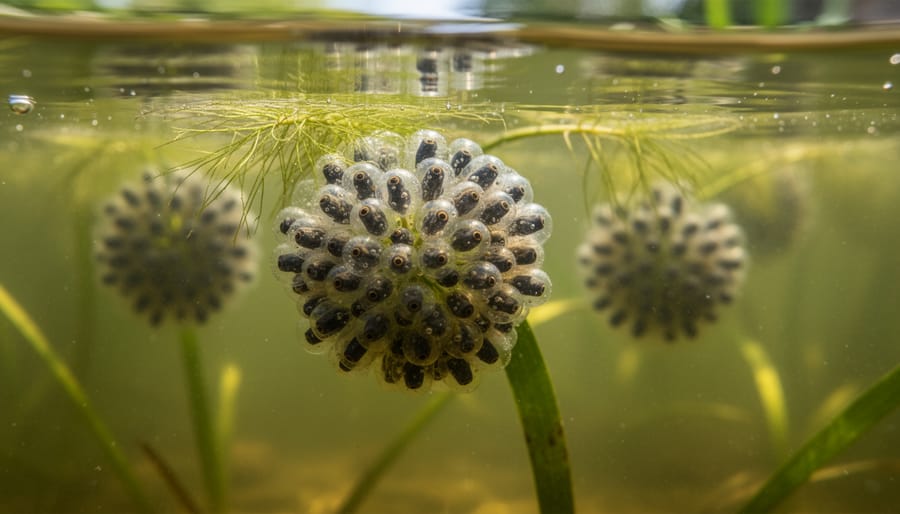
Frog eggs typically appear as jellylike clusters floating near the surface or attached to vegetation. They look like little black dots suspended in clear jelly balls, often grouped together in clumps the size of a grapefruit. Toad eggs, on the other hand, form long strands that wind through underwater plants like delicate pearl necklaces. Salamander eggs are usually laid individually or in small groups attached to submerged sticks and leaves.
When I first spotted egg masses in my pond, I was so excited I nearly jumped in for a closer look! But here’s where gentle observation becomes important. The key is to look without touching. Get down at water level with a flashlight during early morning or evening hours when the water is still. You can use your smartphone camera to zoom in for a closer view without disturbing anything.
As eggs develop, you’ll see tiny dark shapes wiggling inside before they hatch into tadpoles. These little swimmers will hang around plants at first, gradually becoming more active as they grow. Keep a simple journal noting when you first spot eggs, when they hatch, and how the tadpoles develop. This gentle monitoring helps you understand your wetland’s rhythms while keeping your amphibian neighbors safe and undisturbed.
Keeping a Simple Pond Journal
You don’t need fancy equipment or complicated spreadsheets to track the wildlife visiting your pond. I started with just a simple spiral notebook and a pen kept by my back door, and honestly, that’s all you really need.
When you spot something interesting, jot down the date, what you saw, and how many. For example: “May 15 – saw three frogs near the cattails, sunny and warm.” That’s it! Over time, you’ll notice patterns emerging. Maybe those frogs show up every spring around the same week, or certain dragonflies appear after particularly rainy periods.
Weather notes are surprisingly helpful. A quick mention like “first frost” or “heavy rain yesterday” can explain why activity suddenly picked up or disappeared. I also sketch rough drawings of creatures I can’t identify right away, which makes looking them up later much easier than trying to remember details.
Take occasional photos with your phone and note the date. Years later, these simple records become treasures, showing how your habitat has matured and which improvements worked best. You might discover your pond supports rare species you never expected, or track tadpole development week by week. The key is keeping it easy and enjoyable, not creating homework for yourself.
Common Backyard Amphibians You’ll Likely Meet
Your backyard pond is likely to attract some delightful amphibian visitors, and getting to know them makes the whole water gardening experience so much more rewarding. Let me introduce you to the most common characters you’ll probably meet.
The American toad is often your first guest, and honestly, they’re garden heroes. These chunky characters have dry, bumpy skin and can range from brown to reddish-gray. Don’t worry about those old myths – they won’t give you warts! I’ve found them hiding under my pond’s edge plants during the day, then hopping out at dusk to munch on mosquitoes and other insects. They only need water for breeding in spring, when you’ll hear their long, musical trill.
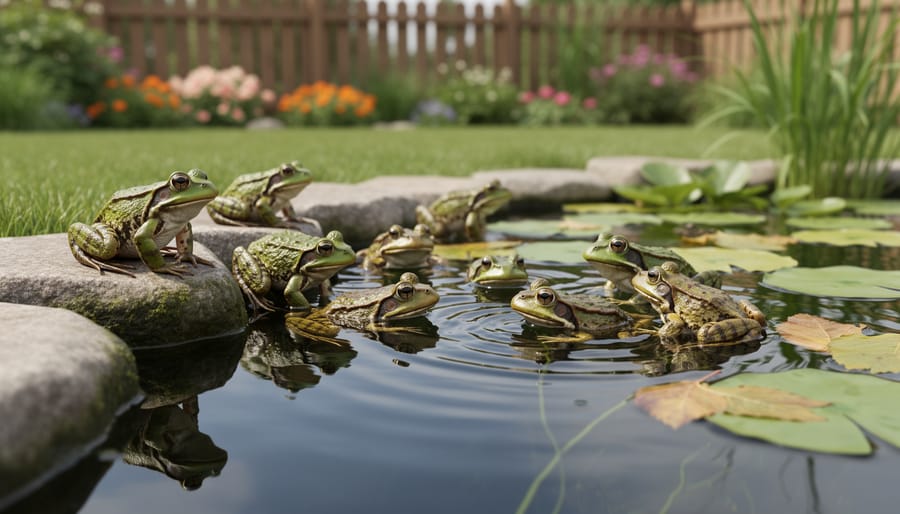
Green frogs and bullfrogs are the pond dwellers you’ll spot lounging at the water’s edge. Green frogs are medium-sized with prominent ridges running down their backs, while bullfrogs are the giants of the group. Both have smooth, moist skin and webbed back feet. Green frogs make a banjo-like “gunk” sound, while bullfrogs produce that classic deep “jug-o-rum” everyone recognizes. They’re excellent swimmers and will quickly plop into the water when you approach.
If you’re in the right region, you might encounter eastern newts in their red eft stage – bright orange juveniles that look almost prehistoric as they explore the damp areas around your pond. Adults return to water and turn olive-green with red spots. They’re slower-moving and absolutely fascinating to watch.
Spring peepers are tiny tree frogs you’ll hear more than see. Their evening chorus is unmistakable – a high-pitched peeping that signals spring has arrived. Despite being smaller than your thumbnail, they create quite the concert around breeding season.
Each species brings its own personality to your wetland habitat, turning your pond into a living classroom where you can observe nature’s rhythms firsthand.
Seasonal Care That Supports Amphibian Populations
Spring: Breeding Season Preparations
Spring is when your wetland habitat truly comes alive! As temperatures rise above 50°F, amphibians emerge from winter hiding spots and begin their journey to breeding sites. This is their most vulnerable time, so your pond maintenance needs careful timing.
Hold off on any major cleaning or dredging until late summer. Right now, frogs and salamanders are laying eggs in shallow waters, and disturbance can be devastating. If you absolutely must do light maintenance, work in small sections and always check for egg masses first. They look like clear jelly clusters attached to vegetation or floating near the surface.
Resist the urge to tidy up all that leaf litter and decaying plant matter around your pond edges. It provides essential cover for amphibians moving to and from the water. Instead, create safe corridors by leaving brush piles and ground-level vegetation intact.
Keep dogs and outdoor cats away from the pond area during peak breeding season, typically March through May depending on your region. I’ve learned this lesson watching excited pets inadvertently disrupt breeding chorus frogs.
Most importantly, avoid adding fish to your pond right now, as they’ll feast on vulnerable eggs and tadpoles.
Summer: Protecting Young Amphibians
Summer brings exciting changes as your tadpoles transform into tiny froglets and juvenile salamanders. This is when your wetland really needs to work for them! I learned this the hard way when I lost several young frogs that couldn’t climb out of my pond’s steep sides.
The key is managing water levels carefully. As metamorphosis happens, gradually lower your water level by an inch or two to expose more shoreline. This creates natural “steps” for young amphibians to navigate.
Create safe exit ramps using flat rocks stacked at gentle angles, or position textured boards partly submerged. These young ones are surprisingly weak swimmers at first, so they need easy ways out. Add plenty of hiding spots near the water’s edge using overturned clay pots, flat stones, or dense plantings. These provide crucial shelter from predators like birds and neighborhood cats.
Keep some shallow areas with vegetation where juveniles can rest while still staying moist. A little shade goes a long way too, preventing the edges from becoming too hot and dry during those scorching summer afternoons.
Fall and Winter: Hibernation Havens
As temperatures drop, your wetland habitat becomes a crucial sanctuary for amphibians preparing to hibernate. Many frogs and salamanders will burrow into the muddy bottom of your pond, while others seek shelter in the surrounding landscape. This is where your planning really pays off!
Leave a layer of fallen leaves and organic debris at the pond bottom—it provides insulation and hiding spots for overwintering creatures. Around the pond perimeter, create brush piles using stacked logs, branches, and more leaves. These become cozy hotels for toads and other amphibians that prefer to hibernate on land.
Resist the urge to do a complete fall cleanup. I learned this the hard way my first year when I tidied everything up and wondered where all my frogs went! Now I strategically leave messy areas, and every spring I’m rewarded with returning residents.
If you have a recirculating pump, consider adding a small bubbler to keep a section ice-free, ensuring oxygen exchange throughout winter—your hibernating friends will thank you come spring.
When to Call in the Experts
While monitoring your pond habitat is definitely a rewarding DIY project, there are moments when bringing in some professional expertise can make all the difference. Don’t worry—this doesn’t mean you’ve done anything wrong! In fact, reaching out shows you’re taking your wetland stewardship seriously.
If you spot amphibians you can’t identify, especially those with unusual colors, patterns, or behaviors, snap a photo and contact your local nature center or university extension office. They’ll be thrilled to help, and you might even discover a rare species using your pond! I once found what I thought was a common toad in my backyard wetland, only to learn from a local herpetologist it was actually a less common species for my area.
Consider joining citizen science programs like FrogWatch USA or your state’s amphibian monitoring project. These programs provide free training, give you access to expert guidance, and let your observations contribute to real conservation research. It’s incredibly satisfying knowing your backyard pond data is helping scientists track population trends.
Connect with local herpetology groups, native plant societies, or watershed associations. These folks love sharing knowledge and can offer site-specific advice for your region. Many organizations host free workshops on creating wildlife habitats and can suggest improvements to make your wetland even more amphibian-friendly. Plus, you’ll meet fellow pond enthusiasts who share your passion for creating thriving backyard ecosystems!
Your backyard pond is more than a beautiful water feature—it’s a potential lifeline for frogs, toads, and salamanders facing shrinking natural habitats. By creating a welcoming wetland habitat in your own space, you’re joining a growing network of citizen conservationists making real differences in their local ecosystems. Each pond matters. Truly.
When you take a few minutes to observe your pond inhabitants, record what you see, and share those observations, you’re contributing valuable data that helps scientists track population trends and identify areas where amphibians need support. Your casual evening stroll around your water garden becomes meaningful monitoring. That’s pretty amazing when you think about it.
The best part? You don’t need special training or expensive equipment to get started. A simple notebook, a camera phone, and a genuine curiosity about the creatures sharing your space are enough. As you watch tadpoles transform or notice new species visiting your pond, you’ll discover that water gardening becomes exponentially more rewarding when you recognize your role as a habitat guardian.
Every time you skip harsh chemicals, add native plants, or leave that leaf litter around your pond edges, you’re actively supporting biodiversity. These small choices ripple outward, creating corridors of habitat that connect isolated populations and give amphibians fighting chances for survival. Your pond isn’t just yours anymore—it belongs to something bigger, and that’s a wonderful thing.