
Transform Your Water Garden into a Four-Season Masterpiece
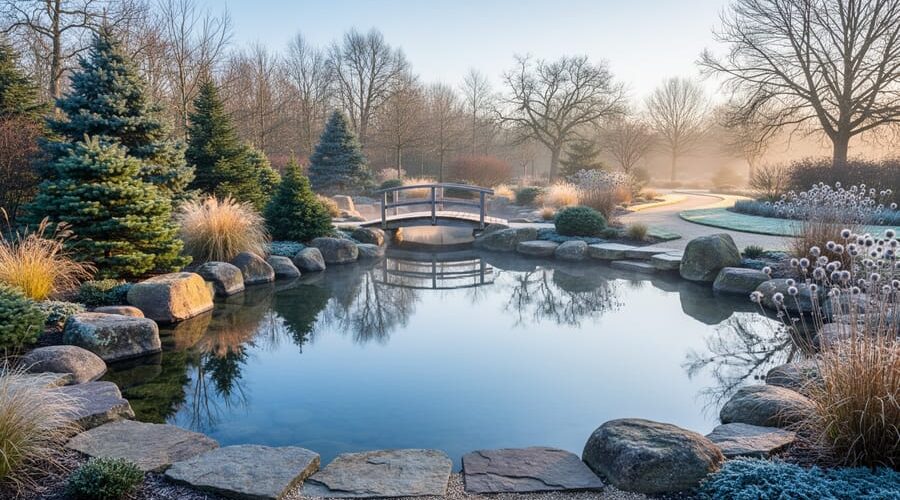
Layer evergreens like dwarf conifers and ornamental grasses around your water garden’s perimeter to create structure that persists when perennials fade. Plant these architectural elements in odd-numbered groupings, positioning taller specimens at the back and cascading varieties near the water’s edge where their winter silhouettes reflect beautifully on still surfaces.
Install permanent hardscape features such as natural stone borders, decorative bridges, or strategically placed boulders that anchor your design regardless of season. These elements provide visual weight during sparse months while creating focal points that draw the eye away from dormant areas.
Integrate cold-hardy aquatic plants like winter-blooming hellebores at the margins and leave ornamental seed heads standing through autumn. The dried structures of Joe-Pye weed, coneflowers, and rushes catch frost and snow, transforming your water garden into a crystalline sculpture gallery during winter months.
Schedule seasonal transitions by gradually introducing autumn-colored foliage plants in late summer, then adding evergreen boughs and winter-interest stems as temperatures drop. This progressive layering prevents the jarring shift from lush summer abundance to barren winter landscape that makes many water gardens lose their appeal.
Most water gardeners excel at creating stunning summer displays but struggle when cooler months arrive and their once-vibrant feature becomes a maintenance burden rather than a source of pride. The difference between a water garden that captivates year-round and one that disappoints lies not in complicated techniques, but in understanding how each season offers unique aesthetic opportunities worth celebrating.
Why Year-Round Beauty Matters More Than You Think
I’ll be honest—I used to think water gardens were purely a warm-weather project. Come October, I’d basically abandon my pond until spring, letting it fade into a forgotten corner of the yard. But here’s what changed my perspective: year-round beauty isn’t just about vanity or curb appeal. It transforms your entire relationship with your outdoor space.
Let’s start with the practical stuff. A water garden that looks intentional through all seasons can boost your property value by 5-15 percent, according to landscaping appraisers. But beyond dollars and cents, there’s something deeper at play. When you design for four-season interest, you’re creating a living landscape that gives back every single day—not just during those fleeting summer months.
Think about it this way: how often do you actually look out your window in January? If all you see is a dead, murky pond surrounded by brown sticks, you’re missing out on genuine joy during the months when we need nature’s beauty most. A few strategically placed evergreens, some ornamental grasses catching winter light, or even the architectural lines of a fountain can lift your spirits on grey days.
Here’s the ecosystem angle too—maintaining your water garden’s health year-round supports overwintering wildlife, from beneficial bacteria to hibernating frogs. A well-planned aesthetic approach naturally overlaps with better ecological practices.
The real mindset shift? Stop thinking of your water garden as a seasonal decoration and start seeing it as a dynamic, evolving feature. Each season offers unique beauty—frost-kissed seed heads, spring emergence, summer blooms, autumn color. When you plan for perpetual interest rather than peak moments, you create something genuinely special that rewards attention all year long.
Spring: Awakening Your Water Garden’s Fresh Start
Early Bloomers and Emerging Foliage
Spring is when your water garden truly wakes up, and getting those first splashes of color in place makes all the difference. I’ll never forget the first time I added marsh marigolds to my pond’s edge – those cheerful golden blooms appeared weeks before anything else, and suddenly my garden felt alive again after a long winter.
Marsh marigolds are absolute champions for early spring interest. Plant them in shallow water or boggy soil around your pond’s perimeter, where their bright yellow flowers will reflect beautifully off the water’s surface. They’re incredibly forgiving and spread naturally over time, creating those lovely clustered displays without any fussing on your part.
Iris are another spring superstar. Japanese iris and Louisiana iris varieties give you gorgeous vertical accents that contrast wonderfully with the horizontal plane of your water. Position them at different depths around your pond – some at the water’s edge, others slightly back – to create layers that draw the eye naturally around the space.
Don’t overlook the magic of emerging lily pads either. Before the flowers even appear, those unfurling leaves create captivating patterns and textures on the water. I always recommend placing lilies where morning light can catch their fresh green growth – it’s absolutely stunning.
For maximum impact, group your early bloomers in odd numbers and position them where you’ll see them from your favorite viewing spots, whether that’s a patio, window, or garden bench. This intentional placement ensures you’ll enjoy every moment of spring’s awakening.

Clearing Winter’s Remnants While Adding Character
Spring cleanup is your chance to refresh your water garden while making thoughtful choices about what stays and what goes. Start by removing dead leaves and plant debris that have accumulated over winter, but don’t toss everything. Those soggy leaf piles might shelter beneficial frogs and salamanders, so relocate them to a compost area rather than bagging them up immediately.
Once you’ve cleared the major debris, assess your hardscape features. Give stepping stones a good scrub to remove algae buildup, and check that edging stones haven’t shifted during freeze-thaw cycles. This is the perfect time to add or refresh decorative elements like river rocks around the pond perimeter or larger boulders that create visual anchors.
Fresh mulch works wonders for tying everything together. Apply a two to three inch layer around plantings, keeping it away from plant crowns to prevent rot. Dark mulch creates beautiful contrast against water and helps emerging spring foliage really pop. I like using shredded hardwood because it breaks down slowly and adds that rich, finished look that makes your water garden feel intentional and cared for, even before summer’s full bloom arrives.
Spring Color Through Strategic Planting
Spring is when your water garden truly comes alive, and thoughtful plant placement makes all the difference! Start by layering plants around your pond’s edges, placing taller varieties like Japanese iris toward the back and shorter marginal plants like marsh marigolds up front. This creates depth and ensures everything gets its moment in the spotlight.
Container gardens are game-changers for adding pops of color exactly where you want them. I love clustering potted primulas and pansies near viewing areas, where their cheerful blooms catch morning light. You can easily swap these out as seasons change, keeping your garden fresh without major replanting.
Color coordination ties everything together beautifully. Choose a palette of two or three complementary colors rather than a chaotic rainbow. Pairing soft yellows with deep purples, or crisp whites with vibrant blues, creates a cohesive look that feels intentional rather than accidental. Remember, spring is your garden’s grand reopening after winter, so have fun designing a display that welcomes you back outdoors!
Summer: Peak Performance and Lush Abundance
Balancing Lush Growth with Open Water Views
Here’s the thing I’ve learned after years of tending water gardens: plants are enthusiastic growers, and without regular attention, they’ll completely hide your beautiful water feature. I once let my cardinal flower get so lush that visitors couldn’t even see the pond underneath. Lesson learned!
The secret is creating breathing room. Think of your water garden as a painting where the water itself is just as important as the plants. I recommend the “rule of thirds” approach: aim for roughly one-third open water, one-third plants at or near water level, and one-third emergent or surrounding plants. This balance lets each element shine.
Regular pruning makes all the difference. Every two weeks during peak growing season, walk around your pond with pruning shears and remove spent blooms, yellowing leaves, and aggressive runners. Don’t be afraid to cut back vigorous growers like irises or cattails when they start encroaching too much.
For floating plants like water lettuce or hyacinth, I physically remove about half the coverage every few weeks. They reproduce incredibly fast and can completely carpet your pond surface, blocking sunlight and hiding the water’s sparkle.
Remember, editing is part of the art. Less really can be more when it comes to showcasing that gorgeous water reflection.

Water Clarity as an Aesthetic Element
Clear water isn’t just about health—it’s the foundation of a beautiful water garden! I learned this the hard way when my first pond looked more like pea soup than the sparkling oasis I’d imagined. The good news? Achieving crystal-clear water naturally is totally doable.
Think of your pond as a living ecosystem. Beneficial bacteria are your best friends here, breaking down organic waste before it clouds your water. You can boost these helpful microbes by adding bacterial supplements and ensuring your filter has plenty of surface area for them to colonize. A quality biological filter combined with mechanical filtration removes debris while nurturing those hardworking bacteria.
Natural methods work wonders too. Aquatic plants act as living filters, absorbing excess nutrients that would otherwise fuel algae blooms. Strategic placement of submerged oxygenators and floating plants provides shade while competing with algae for resources. For comprehensive strategies on keeping your water pristine throughout every season, explore effective natural algae control techniques.
When water is clear, every element of your garden shines—rocks sparkle beneath the surface, fish colors pop brilliantly, and reflections become crisp mirrors of the sky above. That clarity transforms your water feature from merely functional to truly magical.
Adding Movement and Sound
There’s something magical about water in motion—it catches the light, creates soothing sounds, and transforms a static pond into a living, breathing feature. I’ll never forget installing my first fountain; the moment I switched it on, my whole garden came alive!
Fountains are brilliant for adding vertical interest and creating focal points. Even a simple bubbler can make ripples that dance across your water’s surface, catching sunlight and adding sparkle. They’re also practical heroes, helping with aeration and managing water levels through evaporation during hot summer months.
Waterfalls bring drama and natural movement that mimics streams you’d find in the wild. The cascading water creates white noise that masks traffic sounds and invites you to linger nearby. Plus, the turbulence naturally oxygenates your water, keeping fish happy and algae in check.
Spillways offer a middle ground—gentler than waterfalls but more dynamic than still water. They’re perfect for creating transitions between pond levels or adding that peaceful trickling sound without overwhelming smaller spaces. The key is positioning them where you’ll appreciate the sound most, whether that’s near a seating area or visible from your favorite window.
Autumn: Embracing the Golden Transition
Fall Foliage Around Your Water Feature
Autumn transforms your water garden into a stunning focal point when you choose the right plants. I love positioning Japanese maples near my pond—their crimson and gold leaves create gorgeous reflections on the water’s surface. Other spectacular choices include burning bush, which lives up to its name with fiery red foliage, and ornamental grasses like maiden grass that develop bronze tones while adding graceful movement.
Here’s the practical side: falling leaves need management to keep your water healthy. I’ve found that stretching fine netting over the pond surface during peak leaf drop saves hours of skimming. Position it about six inches above the water and secure the edges with stones. Remove it weekly to clear accumulated leaves.
For a more natural aesthetic, allow some leaves to settle artistically around marginal plants—they’ll add earthy tones and texture. Just keep them out of the water itself, where they’ll decompose and create water quality issues.
Consider planting evergreens like boxwood or dwarf conifers nearby to provide structure once deciduous plants drop their leaves. This ensures your water feature maintains visual interest throughout the season. Proper autumn preparation means enjoying the colors while protecting your pond’s ecosystem.
Seed Heads, Grasses, and Textural Interest
Here’s a secret many gardeners overlook: some of the most dramatic winter interest comes from plants you deliberately leave standing. Instead of cutting everything back in fall, let certain perennials and grasses transform into frosty sculptures that elevate your water garden through the dormant months.
Ornamental grasses are absolute champions for this role. Their feathery plumes catch frost and snow beautifully, creating vertical interest when most plants have disappeared. Varieties like maiden grass, switchgrass, and fountain grass maintain their structure well into winter. Plant them near your pond’s edges where their reflections double the visual impact.
Perennials with sturdy seed heads deserve a spot in your design too. Coneflowers, black-eyed Susans, and sedums develop architectural forms that look stunning rimmed with ice. I learned this by accident one year when I got too busy to do fall cleanup, and honestly, my winter garden looked better than it ever had when I’d tidied everything away.
The key is choosing plants with strong stems that won’t collapse under snow. Position them where they’ll be visible from windows or pathways. Come spring, simply cut them back before new growth emerges. This approach gives you effortless winter beauty while providing seeds for birds throughout the coldest months.
Reflections and Lower Light Magic
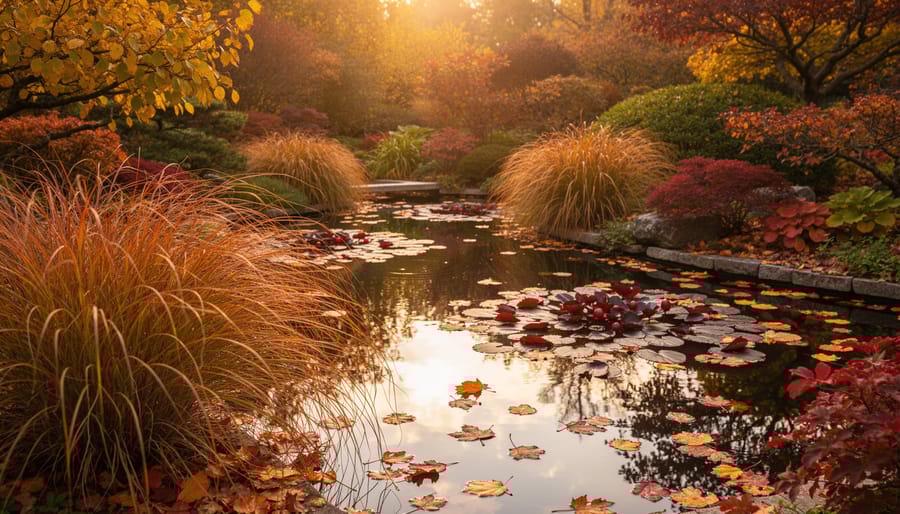
Autumn’s softer, golden-hour light creates absolutely magical moments around your water garden, especially in the early morning and late afternoon. I’ve discovered that positioning colorful fall elements like burgundy fountain grass or rust-colored sedges on the west or south side of your pond captures that warm, low-angle sunlight beautifully. The longer shadows add dramatic depth you just don’t get in summer.
Here’s a neat trick: float some fallen oak leaves or bright maple leaves on your pond’s surface. They create stunning mirror images that double your garden’s visual impact. The still water becomes like nature’s canvas, reflecting surrounding trees and autumn sky. Just remember to skim out excess leaves regularly so they don’t cloud your water.
Try placing light-colored stones or pale ornamental grasses near the water’s edge. They practically glow in that slanting autumn light, drawing your eye around the entire feature. This simple placement strategy transforms an ordinary pond into something truly Instagram-worthy during fall’s fleeting golden hours.
Winter: Creating Drama in the Dormant Season
Structure and Form Take Center Stage
When leaves drop and flowers fade, your garden’s true character emerges. This is when the bones of your landscape really shine, and let me tell you, a well-designed water garden becomes even more striking in its simplified winter form.
Think of hardscape elements as your garden’s permanent jewelry. That beautiful stone bridge you installed looks dramatic against snow or frost. Rocks naturally arranged around your pond’s edge create texture and visual weight year-round. I’ve found that larger boulders, positioned thoughtfully during installation, become sculptural focal points when plants die back.
Evergreens are your winter champions. Plant dwarf conifers, boxwoods, or hollies near your pond to maintain color and structure. These architectural plants frame your water feature beautifully, giving the eye something to appreciate even in January.
Don’t overlook statuary and decorative elements. A well-placed garden ornament or stone lantern adds personality and draws attention across dormant beds. Position these pieces where they’ll catch winter light or create interesting shadows on snow.
The secret is planning these structural elements during warmer months. When you’re designing or renovating, consider how each rock placement, every permanent plant, and all hardscape features will look stripped of seasonal distractions. Your winter garden will thank you.
Ice, Frost, and Snow as Design Elements
Winter transforms your water garden into something magical when you embrace its unique beauty rather than fighting it. I love watching ice patterns form across my pond’s surface—the crystalline designs change daily and catch sunlight in mesmerizing ways.
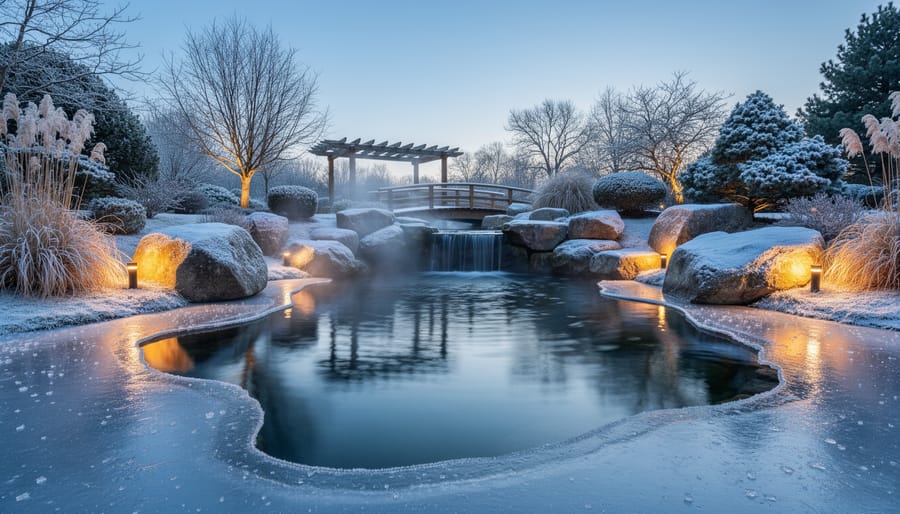
Instead of completely preventing ice formation, consider winter-proofing your pond while maintaining small open water areas. A simple pond heater or small bubbler keeps a section ice-free, creating stunning steam effects on cold mornings. This opening also benefits fish by allowing gas exchange and attracts winter birds looking for water sources.
Frost-covered ornamental grasses surrounding your pond add texture and movement, while evergreen plants provide structure when deciduous ones retreat. Snow accumulation on rocks and statuary creates natural sculptures that shift throughout the season.
Position outdoor lighting to highlight ice formations at night—you’ll discover an entirely different garden emerges after dark. The interplay between frozen and flowing water creates dynamic visual interest that summer simply cannot match. Safety tip: always test ice thickness before walking near your pond, and keep pathways clear to prevent slips while enjoying your winter water garden wonderland.
Winter Lighting for Extended Enjoyment
Winter’s early sunsets give you the perfect excuse to showcase your water garden in a whole new way. I discovered this accidentally one December evening when I left my submersible pump light on—the gentle glow transforming my pond from a dark void into a magical focal point visible from my kitchen window.
Landscape lighting around your pond’s perimeter creates dramatic shadows and highlights structural elements like rocks, evergreens, and ornamental grasses. Position low-voltage spotlights at ground level, angling them upward to emphasize texture and form. This technique works beautifully on ice formations too.
Underwater LED lights add enchantment from within. These energy-efficient fixtures cast a soft glow that makes even a partially frozen pond captivating. Choose warm white tones for a cozy feel or cool blues for a frosty, ethereal effect. Most underwater lights are easily installable—just place them on your pond floor, secure the cord, and plug into a weatherproof outlet.
Consider adding a timer to automate your lighting schedule, ensuring your water garden greets you each evening without extra effort.
Hardscape and Permanent Features That Shine Every Season
Choosing Timeless Materials and Designs
When I first designed my water garden, I learned that choosing the right materials makes all the difference between a feature that looks better with time and one that becomes a maintenance headache. Natural stone remains my top choice because it develops character as it weathers. Those mossy patches and subtle color changes that appear over the years? That’s exactly what you want. Limestone, sandstone, and granite all age gracefully, though I’ve found granite particularly forgiving in freezing climates.
Wood elements bring warmth to any water garden, but choose wisely. Cedar and redwood naturally resist decay, while pressure-treated lumber offers durability at a lower price point. I installed a simple cedar bench near my pond five years ago, and its silvery patina now blends beautifully with the surrounding landscape. For edging and borders, consider naturally rot-resistant options rather than materials requiring constant refinishing.
Metal accents add architectural interest that shines through every season. Weathering steel develops that gorgeous rust-orange patina, while copper ages to verdigris. Both require zero maintenance once installed.
The key design principle I follow: choose materials that require less intervention over time, not more. Your future self will thank you when autumn arrives and your water garden still looks intentional and beautiful without frantic last-minute fixes.
Focal Points and Artistic Touches
Think of focal points as the jewelry of your water garden—they should enhance, not overpower, the natural beauty you’ve created. I learned this the hard way when I placed an oversized Buddha statue near my modest koi pond, and it felt like hosting an elephant at a tea party!
The key is balance. A simple wooden bridge arching over your water creates movement and invites exploration, while a weathered stone lantern adds timeless elegance without shouting for attention. Benches positioned strategically become observation points where you’ll actually sit and enjoy your creation—place them where morning light hits the water or where you can watch dragonflies dance.
Choose materials that age gracefully. Copper sculptures develop beautiful patinas, natural stone weathers into the landscape, and wooden elements soften over time. Avoid shiny, bright pieces that compete with water reflections and plant textures.
Scale matters tremendously. A small fountain suits an intimate space, while larger gardens can handle bold features. Test placement with cardboard mock-ups before committing—you’d be surprised how different something looks from various angles.
Remember, your water and plants are the stars. Decorative elements should guide the eye toward these natural wonders, creating stopping points that make visitors pause, look closer, and appreciate the living ecosystem you’ve nurtured.
Creating Seamless Transitions Between Seasons
The secret to a garden that never loses its charm? Think of it like a relay race where each season hands the baton to the next. I learned this lesson the hard way when my water garden looked absolutely stunning in summer but turned into a sad, empty space come autumn. Now I plan for what I call “overlapping moments of beauty,” and it’s completely transformed my outdoor space.
Start by selecting plants with staggered bloom times and varied seasonal interests. While your water lilies are still showing off in late summer, introduce ornamental grasses around your pond’s edge that will catch the autumn light beautifully. Japanese forest grass and maiden grass are perfect companions that come alive just as your aquatic blooms begin to fade.
Consider plants that offer more than one season of interest. Red-twig dogwood, for instance, provides lovely foliage in summer and those gorgeous crimson stems that pop against winter snow. Hellebores bloom in late winter when everything else is sleeping, bridging that tricky gap between winter and spring. Smart year-round plant scheduling means you’re always planning two seasons ahead.
Don’t forget about structural elements that provide continuity. Evergreen shrubs, interesting rocks, and decorative bridges look good regardless of season. I’ve positioned a weathered stone lantern near my pond that becomes even more striking when snow collects on top.
The real magic happens when you create intentional “transition zones” where departing seasonal features gracefully fade while incoming ones take center stage. Plant spring bulbs behind your summer perennials, so as one dies back, fresh growth emerges. This layered approach ensures your garden always has something wonderful to offer.
Creating a water garden that captivates throughout the year isn’t just possible—it’s one of the most rewarding projects you’ll ever undertake. I’ve learned through my own journey that the secret isn’t fighting against the seasons, but rather embracing what each one offers. That bare winter garden you’re worried about? It’s actually a chance to showcase architectural elements and reflections you might never notice in summer’s abundance.
The beauty of year-round planning is that you can start right now, wherever you are in the calendar. If it’s autumn, begin thinking about adding evergreens for winter structure. Spring? Perfect time to plan your fall color palette. Each season flows naturally into the next when you approach your garden with curiosity instead of concern.
Think of your water garden as a living canvas that transforms rather than fades. Those seed heads you’d normally cut back might become frost-kissed sculptures. That open water surface in winter creates stunning mirror effects. Every season has its own magic waiting to be discovered.
So grab a notebook and start sketching your vision. Walk around your pond and imagine it dressed in spring pastels, summer greens, autumn golds, and winter whites. The garden of your dreams is absolutely within reach—it just needs your thoughtful attention and willingness to see possibilities in every season. Your year-round masterpiece starts with a single intentional choice today.