
Transform Your Pond into a Creative Retreat with Pondside Art Sessions
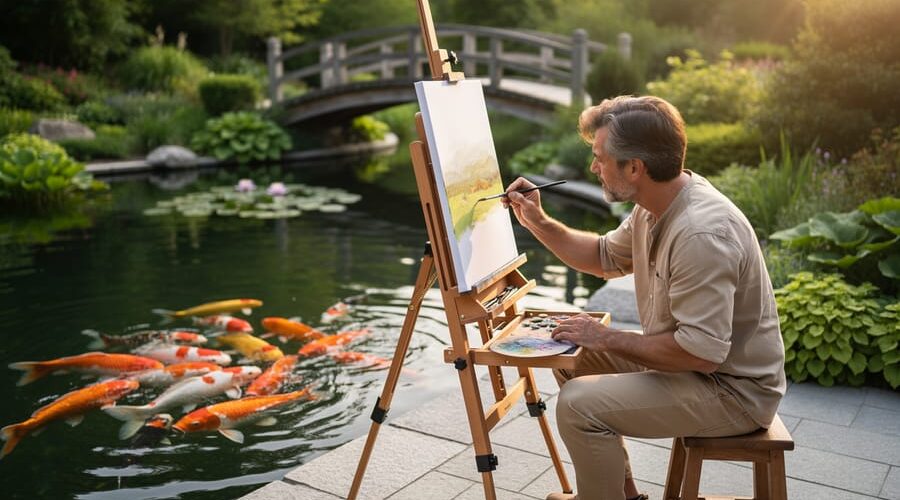
Transform your koi pond into an outdoor art studio by positioning a weatherproof easel or portable table within view of the water, where morning light catches the ripples and fish movements. Set up dedicated storage bins nearby with watercolor paints, sketching pencils, and waterproof paper to capture spontaneous creative moments whenever inspiration strikes.
Schedule regular pondside art sessions during peak koi activity times, typically early morning or late afternoon feeding hours, when the fish display their most vibrant colors and dynamic movements. Use these living subjects to practice observational drawing, focusing on the graceful curves of their bodies and the interplay of light on water surfaces.
Create nature-inspired craft projects using materials from your pond environment, such as pressing water plants between glass frames, photographing reflections for mixed-media collages, or molding clay sculptures inspired by pond rocks and fish forms. This hands-on approach deepens your connection to your water garden while producing meaningful artwork.
Invite family members or fellow pond enthusiasts to join guided art sessions, combining creative expression with shared appreciation for your aquatic ecosystem. These gatherings transform routine pond maintenance days into memorable experiences where everyone contributes their unique artistic perspective, building a personal gallery that celebrates your water garden year-round.
Why Your Koi Pond Makes the Perfect Creative Studio
The Therapeutic Power of Water and Art Combined
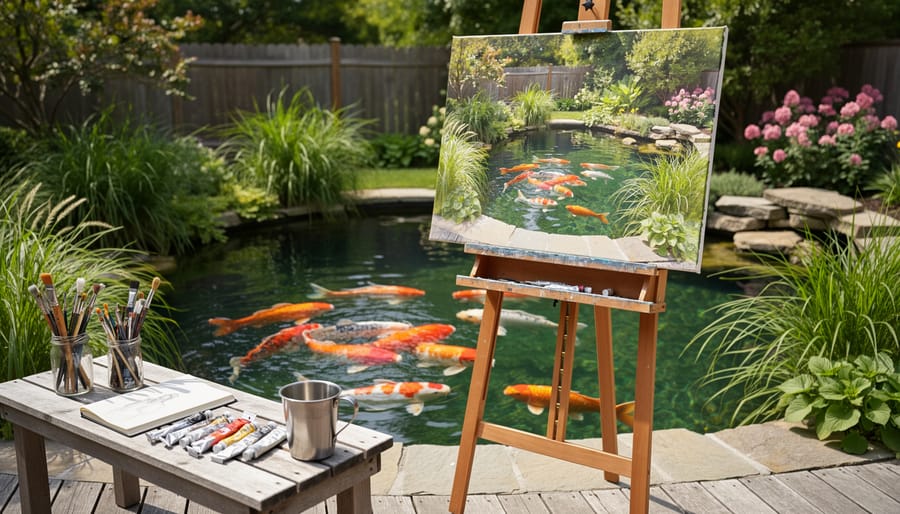
There’s something magical that happens when you combine the calming effects of water with creative expression. I’ve personally found that my best sketches happen when I’m sitting beside my pond, listening to the gentle splashing of the waterfall while my koi glide peacefully below.
The therapeutic benefits of this combination are backed by research. Moving water naturally lowers cortisol levels, while creative activities engage the mind in a meditative flow state. Together, they create a powerful antidote to daily stress.
What makes pondside art sessions particularly effective is the way they gently anchor you in the present moment. You’re not just painting or crafting, you’re also observing the subtle movements of fish, feeling the breeze, and noticing how light dances on the water’s surface. This multisensory experience provides mental clarity that’s hard to find elsewhere. Many pond owners report that their outdoor art sessions have become essential self-care rituals, offering a peaceful escape without leaving home.
Natural Inspiration at Your Fingertips
Your koi pond is a living canvas that changes throughout the day and across the seasons, offering you an incredible variety of artistic subjects right in your backyard. Those magnificent koi swimming gracefully through the water display stunning color combinations—brilliant oranges, deep blacks, pristine whites, and metallic golds—that are simply breathtaking to capture in paint, photography, or sketches.
But the inspiration doesn’t stop with the fish themselves. Have you ever noticed how the water surface creates mesmerizing reflections of clouds, surrounding trees, and garden structures? These mirror images make fantastic abstract art subjects. The ripples created when koi surface to feed add dynamic movement and texture that can inspire everything from watercolor paintings to textile designs.
Don’t overlook your aquatic plants either. Water lilies floating serenely, iris blooms reaching skyward, and delicate lotus flowers provide elegant focal points. The seasonal changes around your pond bring entirely new palettes and moods—spring’s fresh greens, summer’s lush growth, autumn’s golden tones, and winter’s stark beauty.
I love spending mornings sketching the morning light dancing across my pond’s surface. Each session reveals something new, and that’s the magic of pond-inspired art—you’ll never run out of subjects to explore.
Setting Up Your Pondside Art Space
Choosing the Right Spot Around Your Pond
Finding the perfect spot for your pondside art sessions can make all the difference between a frustrating experience and pure creative joy. I learned this the hard way when I tried painting on the sunniest side of my pond one July afternoon and ended up with a terrible glare and a squinting headache!
Start by walking around your pond at different times of day to see where the light falls naturally. Morning light on the east side is usually soft and perfect for painting, while harsh midday sun can wash out colors and make it uncomfortable to work. If you’re planning afternoon sessions, look for spots with natural shade from trees or consider bringing a large umbrella.
Accessibility matters more than you might think. Choose a level area where you can set up an easel or table without worrying about things rolling into the water. Trust me, chasing watercolor palettes into the pond isn’t fun! Keep at least three feet back from the water’s edge for safety, especially if children will be joining your creative sessions.
Consider your viewing angle too. Position yourself where you can see your favorite features, whether that’s a waterfall, a stunning water lily, or your prize koi gathering spot. The best art happens when you’re inspired by what’s right in front of you.
Essential Supplies for Outdoor Art Sessions
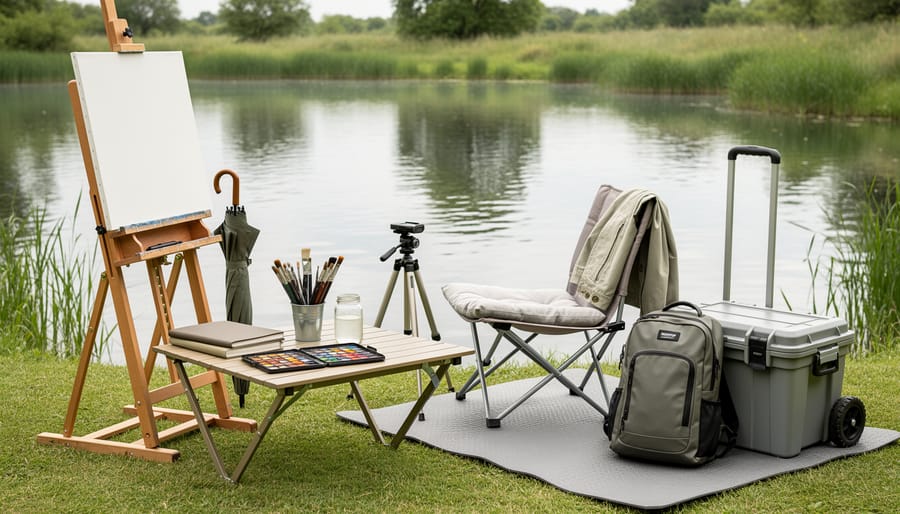
Getting your art supplies ready for pondside sessions doesn’t have to be complicated! Start with a lightweight, portable easel that won’t tip over on uneven ground near the water. I’ve learned from experience that tabletop easels work wonderfully on garden benches or sturdy outdoor tables.
For paints, watercolors are perfect for capturing those fluid koi movements and water reflections. They’re portable, quick-drying, and easy to clean up outdoors. Acrylic paints also work great since they’re weather-resistant once dry. Pack a variety of brush sizes, including fine-tip brushes for details like koi scales and broader ones for water effects.
Invest in a weatherproof storage container or tackle box to keep everything organized. These protect your supplies from unexpected splashes or light drizzle. Don’t forget a water container for cleaning brushes, sketch pads with thicker paper that can handle moisture, and a comfortable folding chair.
Keep microfiber towels handy for quick cleanups and protecting finished work. A portable umbrella or sun shade helps manage changing light conditions. Finally, bring a sketchbook specifically for quick observations of your fish and pond features throughout different times of day.
Protecting Your Art (and Yourself) from the Elements
Mother Nature can be both inspiring muse and challenging obstacle when you’re creating art outdoors. I learned this the hard way when a sudden breeze sent my watercolor sketch sailing into the pond! Here’s how to protect yourself and your masterpiece.
A simple pop-up canopy works wonders for blocking harsh sun and providing quick shelter if clouds roll in. Position it so you’re shaded but your view of the pond remains unobstructed. For solo sessions, a large beach umbrella with a sturdy base does the trick and won’t break the bank.
Sun glare bouncing off the water can be brutal on your eyes and make it tough to see your work. Wear a wide-brimmed hat and consider polarized sunglasses. If glare is washing out your reference photos, shift your position or wait for softer morning or evening light.
Secure everything that could blow away. Use clips to anchor paper to your easel, place rocks on corners of loose materials, and keep lids tightly closed on paint containers. A small toolbox or tackle box keeps supplies organized and weighted down. Trust me, chasing colored pencils across your lawn gets old fast!
Koi Pond Art Projects to Try
Watercolor Koi Portraits
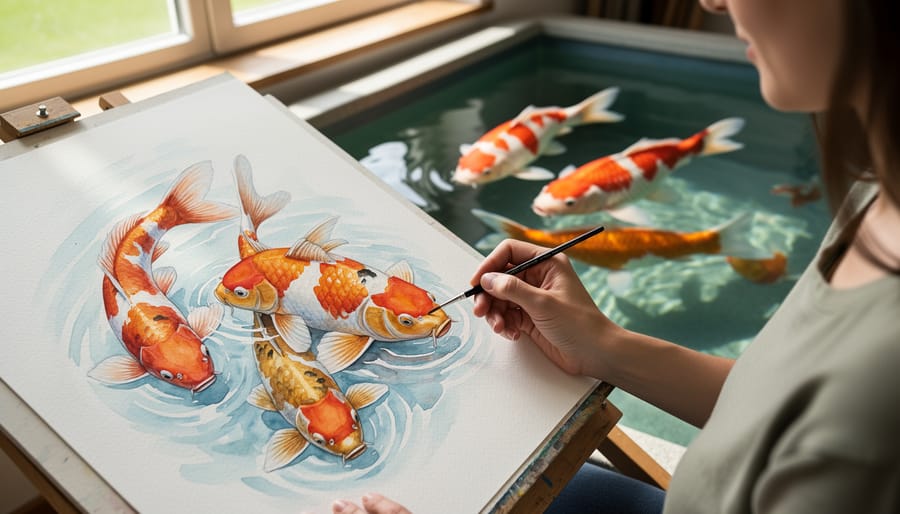
There’s something magical about watching koi glide through water, and capturing that beauty in watercolor is easier than you might think! I’ll never forget my first attempt at painting my favorite butterfly koi – the colors were tricky, but the process taught me so much about really seeing these magnificent fish.
Start by spending time observing your koi before you pick up a brush. Notice how they move, the way light catches their scales, and how their fins flow. Take photos or quick sketches to capture different poses and angles. This observation time is invaluable and makes your painting more authentic.
For your palette, you’ll need a good range of oranges, reds, whites, and blacks. Here’s a simple mixing tip: create depth by layering transparent washes rather than trying to get the perfect color in one go. Start with light washes and gradually build up intensity. For white koi, use the white of your paper and add subtle shadows with diluted grays and blues.
The water effects are where watercolor really shines! While your fish layer is still slightly damp, you can create ripples by gently touching your brush loaded with clean water to the paper. This creates those beautiful blooms that mimic water movement perfectly. For reflections, use horizontal strokes with watered-down versions of your koi colors.
Don’t worry about perfection – watercolor has a gorgeous spontaneity that actually captures the fluid nature of koi swimming. Let happy accidents become part of your art’s charm!
Nature Journaling Your Pond
Creating a pond journal is one of my favorite ways to truly connect with my water garden. Start with a simple sketchbook that can handle light watercolor washes or pencil drawings. Don’t worry about perfect artistic skills – this is about observation and personal connection, not gallery-worthy masterpieces.
Begin by sketching your pond’s layout from different angles. Notice how light reflects off the water at various times of day, and try capturing those moments with quick sketches or notes. Document your koi’s behavior, the way plants emerge in spring, or how fall leaves create patterns on the water’s surface.
Dedicate a page to each season, noting temperature changes, which plants are blooming, and how your fish interact differently throughout the year. Add pressed leaves, flower petals, or even small watercolor swatches matching your pond’s colors. Include weather observations, visitor notes when dragonflies arrive, or reflections on how tending your pond makes you feel.
The beauty of pond journaling is that there’s no right or wrong approach. Some days you might write detailed observations, other days just add a quick doodle. Over time, you’ll create a meaningful record that deepens your appreciation for your living water garden and all its seasonal transformations.
Photography and Digital Art
Capturing your koi pond through photography is one of the most rewarding creative activities you can enjoy right in your backyard. I’ve found that early morning is absolutely magical for pond photography. The soft light between 7-9 AM reduces harsh glare on the water surface, and your koi are often more active during feeding time. Golden hour in the late afternoon works beautifully too, giving everything that warm, dreamy quality.
For the best shots, get low and shoot at water level rather than standing above. This angle creates intimate portraits of your koi and adds depth to landscape shots. Try capturing reflections of surrounding plants or sky in the water for artistic flair. On windy days, wait for calm moments between gusts when the water stills.
Don’t worry about fancy equipment. Most smartphones today take stunning photos. Focus on composition: place your koi off-center using the rule of thirds, and include interesting elements like lily pads or rocks for context. For simple editing, adjust brightness and contrast to make colors pop, and crop to remove distractions. Free apps like Snapseed or the built-in editor on your phone work perfectly. The key is practice and patience, watching how light changes throughout the day and how your koi move through their watery world.
Crafts Using Natural Pond Materials
Your pond maintenance routine generates a surprising amount of beautiful craft materials that would otherwise end up in the compost bin. Those fallen lotus leaves? They make stunning natural printing plates for fabric art. Simply coat the underside with fabric paint and press onto canvas or cushion covers to capture their intricate vein patterns. I love using dried water lily leaves as decorative bowls by coating them with resin.
Stones removed during pond cleaning are perfect for creating painted rock families of koi fish. Let the kids paint them in bright oranges, whites, and blacks, then arrange them around your garden or use them as paperweights. The smooth, water-worn texture makes them ideal canvases that hold paint beautifully.
Pruned water plant stems, especially thick ones from irises or cattails, can be bundled and woven into rustic wreaths or garden markers. Attach small waterproof tags to create charming plant labels with that authentic pondside look.
Even algae has its place in craft projects. Dried pond algae creates interesting texture in handmade paper or can be pressed between glass sheets for unique sun catchers. These projects transform maintenance tasks into treasure hunts, helping you see your pond’s byproducts as creative opportunities rather than waste.
Making It a Regular Practice
Combining Pond Maintenance with Creative Time
Here’s a little secret I’ve learned over years of pond keeping: maintenance doesn’t have to feel like a chore when you weave creativity into your routine. Instead of viewing pond care and art as separate activities, try blending them together for a more satisfying experience.
Start your morning with a quick water quality check, then reward yourself with fifteen minutes of sketching the ripples or reflections you just observed. While your filter backwashes, set up your watercolors nearby and capture the changing light on the water’s surface. I’ve found that waiting periods during pond tasks become perfect opportunities for creative moments rather than wasted time.
Consider keeping a small art supply caddy near your pond maintenance tools. This simple setup means you’re always ready to switch gears from practical to creative without the hassle of gathering materials. After cleaning your skimmer, take a photograph of the interesting patterns leaves make floating on the water. While testing pH levels, jot down color observations in a dedicated pond journal.
The key is making both activities feel integrated rather than competing for your attention. You’ll find that noticing artistic details during maintenance actually makes you a better pond keeper, as you become more attuned to subtle changes in your water garden’s health and beauty.
Hosting Pondside Art Gatherings
There’s something magical about gathering friends and family around your pond for a creative afternoon. I’ve hosted several art sessions by my own water garden, and watching people relax and create together while the koi swim peacefully nearby never gets old.
Start by setting up a comfortable creative zone. Position folding tables or easels where guests have clear pond views but won’t accidentally drop supplies in the water. Provide plenty of seating options – garden chairs, cushions, or even picnic blankets work beautifully. I always set up a shaded area too, especially for summer sessions when the sun gets intense.
For supplies, keep things simple and accessible. Have basic materials ready: watercolor sets, sketching pencils, quality paper, and plenty of brushes. Include cups for water (clearly marked so they don’t get mixed up with drinking water!), paper towels, and aprons or old shirts to protect clothing. Consider offering a variety of pond activities so guests can choose what appeals to them most.
Make your gathering feel special with thoughtful touches. Set out light refreshments and cold drinks within easy reach. Create a small display area where finished artworks can dry and be admired. Play soft background music if it suits the mood.
The key is keeping everything relaxed and pressure-free. Remind guests that this is about enjoyment, not perfection. Some of my favorite pieces came from friends who swore they couldn’t draw!
Creating art by your koi pond isn’t just about making pretty things. It’s about forging a deeper connection with the living, breathing ecosystem you’ve worked so hard to build. When you sit beside your pond with a sketchbook or camera, you start noticing details you’ve never seen before—the way light dances across the water at different times of day, the unique personality of each fish, the subtle changes in plant growth throughout the seasons. This heightened awareness naturally makes you a better pond keeper because you’re truly seeing what’s happening in your water garden.
The beauty of combining pond keeping with artistic practice is that you don’t need to be a professional artist to benefit. Start simple. Grab a notebook and spend fifteen minutes sketching your favorite koi. Take photos of your pond from different angles. Press some water lily leaves between book pages. These small creative moments add richness to your hobby and give you a wonderful record of your pond’s evolution over time.
I’ve found that my most relaxing weekends now include at least one pondside art session. There’s something incredibly grounding about creating art in the same space where nature is creating its own masterpiece. The gentle sound of water, the movement of fish, the changing light—it all feeds into whatever you’re making.
So this weekend, try it. Set up a simple station by your pond. Bring whatever creative supplies appeal to you. Don’t worry about making gallery-worthy art. Just enjoy the process of combining two wonderful hobbies. Your pond has already given you so much—now let it inspire your creativity too.