
Keep Kids Safe Around Your Water Garden Without Ruining the Magic
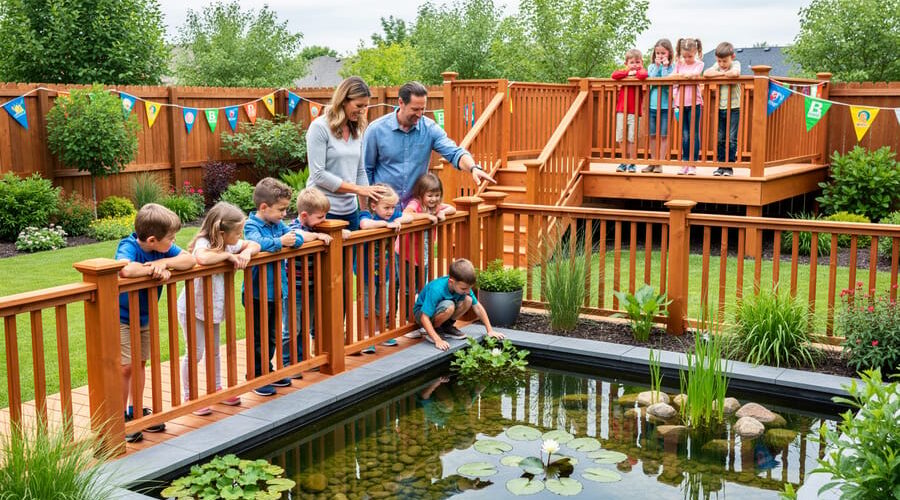
Establish clear boundaries around your water garden before kindergarteners arrive by installing secure fencing at least three feet high with self-closing gates, marking the perimeter with brightly colored visual markers, and creating designated observation zones where children can explore safely without direct water access. This physical setup becomes your first line of defense and makes supervision manageable even with energetic five and six-year-olds.
Practice the “arm’s length rule” during every water garden session by positioning at least two adults within reaching distance of the water feature at all times, assigning each supervisor specific zones to monitor, and conducting practice drills where children learn to freeze on command. This protocol transforms abstract safety concepts into muscle memory that children can recall instantly when excitement takes over.
Introduce water garden safety through hands-on demonstrations that kindergarteners can touch and manipulate rather than lengthy explanations they’ll forget. Use dolls or stuffed animals to show what happens when objects fall into water, let children practice putting on and removing life vests if your garden includes deeper features, and create a safety checklist with pictures that students physically check off before each session.
Develop an emergency action plan specific to your water garden layout by mapping the fastest routes to emergency equipment, posting waterproof instruction cards at eye level near the water feature, and ensuring every adult knows CPR. Run through mock scenarios monthly so responding to incidents becomes automatic rather than panicked, giving you confidence to embrace the incredible learning opportunities water gardens offer while keeping your students secure.
Why Water Gardens Are Worth the Extra Safety Planning
I’ll be honest with you—when I first introduced water gardens to young learners, I had butterflies in my stomach. The safety concerns felt overwhelming. But here’s what I discovered: water gardens offer some of the most powerful learning experiences you can create for kindergarteners, making the extra planning absolutely worthwhile.
Think about it. Where else can five-year-olds witness a dragonfly nymph transform before their eyes? Or watch tadpoles grow legs? These aren’t just cool moments—they’re windows into understanding life cycles, ecosystems, and the interconnectedness of nature. The educational benefits extend far beyond science, too. Children develop patience waiting for pond changes, practice gentle touch with delicate plants, and build observation skills that transfer to every subject.
Water gardens engage all the senses in ways traditional classrooms simply can’t match. The sound of trickling water calms anxious learners. The texture of smooth river rocks and fuzzy cattails invites tactile exploration. Watching water striders dance across the surface sparks endless questions and scientific thinking.
When you create water garden learning environments, you’re not just teaching about water—you’re fostering wonder, responsibility, and environmental stewardship. These early experiences often plant seeds for lifelong conservation values.
Yes, incorporating preschool pond activities requires thoughtful safety protocols. But the engagement level I’ve witnessed makes every precaution worthwhile. Children who struggle to sit still during circle time will spend twenty minutes quietly observing minnows. That’s the magic of water gardens—they naturally captivate young minds while providing rich, hands-on learning experiences you simply can’t replicate anywhere else.
Understanding the Real Risks (So You Can Address Them)
The Surprising Danger of Shallow Water
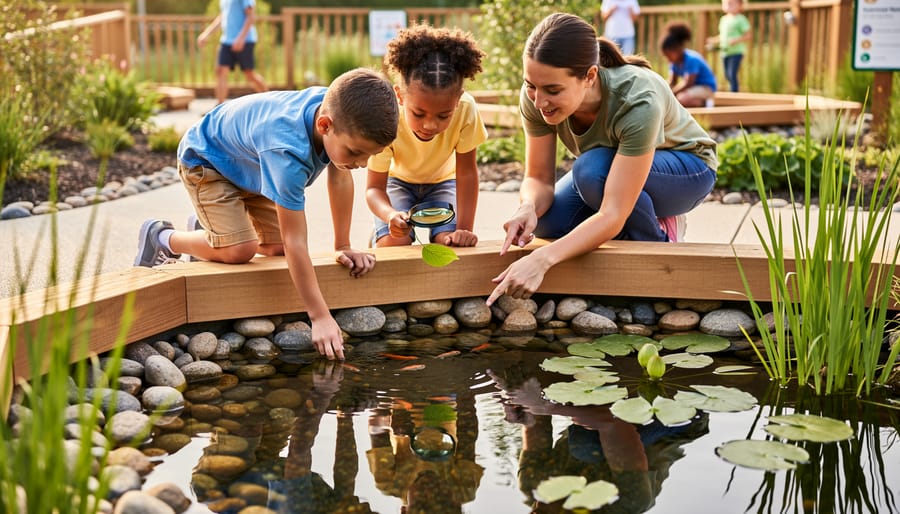
Here’s something that catches many people off guard: young children can get into serious trouble in water that’s only a few inches deep. I learned this firsthand when I installed a shallow reflection pond in my backyard and realized just how different kindergarteners are from older kids when it comes to water safety.
The statistics are sobering. Drowning can occur in as little as two inches of water, and children under six are especially vulnerable. Their smaller size, developing motor skills, and natural curiosity create a unique risk profile. Unlike older students who might understand cause and effect, kindergarteners are still developing the ability to assess danger and react appropriately.
What makes this particularly challenging around water gardens is that the very features we love as pond enthusiasts—the peaceful stillness, accessible edges, and fascinating water life—become magnets for curious five and six-year-olds. A child might lean over to touch a floating lily pad, lose their balance, and find themselves face-down in water that seems impossibly shallow to an adult.
This is exactly why kindergarten water garden programs require specialized safety protocols. You cannot simply adapt lessons designed for older students. The supervision needs to be closer, the boundaries clearer, and the backup plans more robust.
What Makes Pond Edges and Wet Surfaces Extra Tricky
Pond edges present unique challenges for kindergarteners who are still mastering basic balance and coordination. Those smooth, decorative rocks that look so beautiful around your water garden? They become incredibly slippery when wet, creating skating-rink conditions that even adults find tricky to navigate. Young children, whose motor skills are still developing, face an even greater challenge when their shoes meet these slick surfaces.
Algae buildup adds another layer of danger that’s easy to overlook during your initial pond planning. That greenish film might seem harmless, but it creates a nearly frictionless surface on rocks, wood edging, and even concrete borders. I learned this the hard way during a school visit when a student slipped on what I thought was just a damp stone – it was covered in a thin layer of algae I hadn’t noticed.
Unstable pond borders pose yet another concern. Unlike solid ground, the soil around pond edges often becomes soft and spongy from constant moisture. Children naturally want to get as close as possible to see the fish and plants, but that seemingly firm ground near the water can give way unexpectedly. Loose stones used for decorative edging can shift under small feet, and overhanging plants may conceal where solid ground ends and water begins, making supervision absolutely essential.
Before You Bring Children Near the Water Garden
Simple Physical Barriers That Don’t Block the View
Creating safe boundaries around your water garden doesn’t mean installing an ugly chain-link fence that ruins the view! I’ve found that simple, smart barriers work beautifully to keep little ones at a safe distance while still letting everyone enjoy the garden’s beauty.
Low decorative fencing about 18-24 inches high works wonders. Think white picket edging or charming wrought-iron borders that create a clear “this is the edge” message without blocking sightlines. Position these about 2-3 feet from the pond’s edge to create a safe buffer zone.
For a more natural approach, I love using larger rocks or smooth river stones as visual boundaries. Kids can see them clearly, and they create an obvious stopping point. Just make sure they’re too heavy for small hands to move or throw.
Designated viewing platforms are my favorite solution. A small wooden deck or flat stones positioned at specific spots let kindergarteners observe safely from approved areas. Mark these with colorful garden stakes or painted rocks that say “Safe Viewing Spot.”
Remember, these barriers work best when combined with your safety lessons. Use them as teaching tools by walking the perimeter together and explaining why we stay on this side of the fence. Physical reminders reinforce what you’ve taught in the classroom beautifully.
Creating Clear Boundaries Kids Can Actually Remember
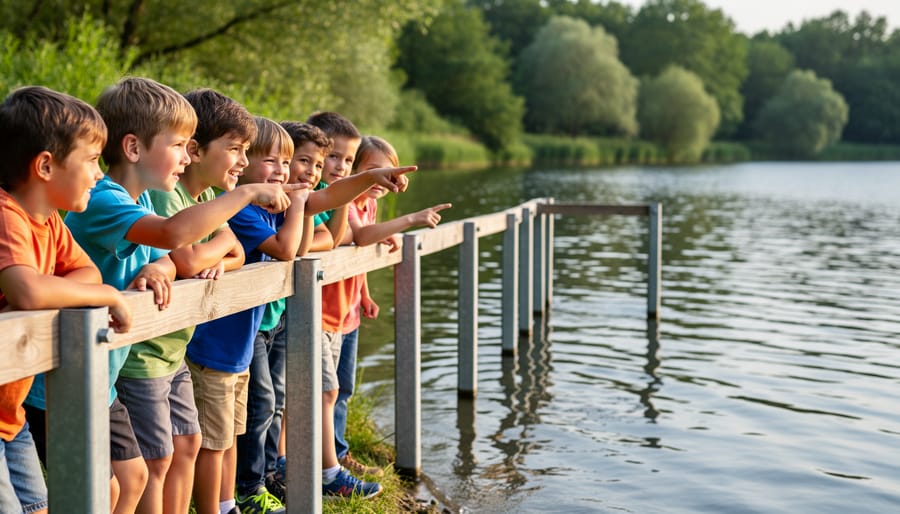
When teaching kindergarteners about water garden safety, think of boundaries as friendly fences rather than scary rules. Young children respond beautifully to visual markers they can see and touch. I’ve found that colorful garden stakes with simple pictures work wonderfully—a red stop sign means “Look, don’t touch without a grown-up,” while a green circle shows safe exploration zones.
Use the same phrases every single time. Instead of saying “be careful” one day and “watch out” the next, pick one consistent phrase like “Two steps back from the edge.” Repetition is your friend. Practice walking the boundary line together, turning it into a fun game where kids can point out the markers.
Create a simple hand signal that means “pause and check.” When children approach the water garden, they stop, show you the signal, and wait for your nod. This builds a predictable routine that becomes second nature.
Remember, five-year-olds understand concrete rules better than abstract concepts. “Sit on your bottom at the pond edge” makes perfect sense. “Be safe around water” doesn’t. Keep your language specific, positive, and repeatable. When boundaries feel like part of the adventure rather than restrictions, children embrace them naturally.
Getting Your Supervision Plan in Place
Before your little learners get anywhere near the water garden, you need a rock-solid supervision plan. For kindergarteners around water features, I always recommend a minimum ratio of one adult for every three children—and honestly, one-to-two is even better if you can swing it. Position yourself strategically so you can see every child at all times. I’ve found that standing at the shallow end with your back to the sun works wonderfully, giving you a clear view without squinting.
Assign specific zones if you’re working with multiple adults. One person manages the observation area, another supervises hands-on activities, and someone stays mobile to assist as needed. Always designate a backup adult who knows the plan and can step in immediately if the primary supervisor needs to address an emergency. Before each session, do a quick buddy-check where children pair up and agree to watch out for each other. And here’s my golden rule: if your adult-to-child ratio drops for any reason, the water activity stops until backup arrives. No exceptions.
Teaching Water Safety in Ways Kindergarteners Understand
The Three Rules Every Child Needs to Know
When teaching kindergarteners about water garden safety, keeping things simple is absolutely essential. Young children remember best when information comes in bite-sized, memorable chunks. I’ve found that three core rules work beautifully for this age group, and they’re easy enough for kids to recite back to you.
Rule number one: Always ask a grown-up before going near the water garden. This establishes that the water feature isn’t a free-play zone. Kids need to understand that water gardens require adult supervision, every single time.
Rule number two: Walking feet only around the water. Running near water features leads to accidents, plain and simple. Practice this with the children, having them demonstrate their careful walking around designated areas.
Rule number three: We look with our eyes, not our hands. Unless supervised during a planned activity, children should observe the water garden without touching. This protects both the kids and your aquatic ecosystem.
Make these rules fun by turning them into a simple song or chant. Have children repeat them during each visit to the water garden. You might even create colorful signs with pictures illustrating each rule. The repetition helps cement these safety guidelines into their everyday thinking, making protection second nature.
Practice Sessions That Stick
Before your kindergarteners step anywhere near an actual water garden, they need plenty of hands-on practice in a completely safe environment. Think of it like teaching someone to swim—you’d never start in the deep end! I learned this lesson when I first started bringing school groups to my pond, and it made all the difference in building their confidence and awareness.
Set up a pretend water garden in your classroom using blue tarps, hula hoops, or even painter’s tape on the floor to mark boundaries. This becomes your practice zone where children can rehearse walking around the “pond edge” without getting too close. Make it fun by placing stuffed fish or rubber ducks inside the boundary—items they can look at but absolutely cannot reach for.
Role-playing exercises work wonderfully for this age group. Assign different children to be the “safety monitor,” “line leader,” or “pond visitor,” rotating roles so everyone experiences different responsibilities. Practice the buddy system repeatedly until pairing up becomes second nature. You can even stage scenarios like “What if your ball rolls toward the water?” and let them practice calling an adult instead of reaching for it themselves.
Create simple response drills where you call out situations and children demonstrate the correct action. “Someone fell in the water!” should trigger them to immediately find an adult rather than attempting a rescue. This kind of water safety training through repetition helps responses become automatic when they’re actually standing beside real water.
During Water Garden Activities: What to Watch For
Reading the Signs a Child Is Getting Too Comfortable
Even the most water-cautious kindergartners can get a little too relaxed around your pond or water garden, especially after a few visits. Here’s what to watch for so you can gently redirect before accidents happen.
The most obvious sign is when a child stops asking permission before approaching the water. If a kiddo who initially waited for your okay suddenly wanders over independently, that’s your cue to reinstate boundaries. Similarly, pay attention when children start moving faster near the water—running, skipping, or leaning too far over the edge are all red flags that comfort has turned into carelessness.
I’ve noticed in my own garden that children sometimes begin testing limits in small ways. They might dip fingers in the water when they think you’re not looking, or stand a little closer than the designated safe zone. These aren’t acts of defiance; they’re simply children forgetting that water demands constant respect.
Another telltale sign is distraction. If a child becomes so focused on feeding fish or examining a frog that they stop paying attention to their footing, it’s time for a reminder. Watch for kids who stop responding to your voice as quickly, or who seem “in their own world” near the water’s edge.
The solution isn’t scolding—it’s gentle, consistent redirection. Remind children of the rules with specific praise when they follow them, and stay physically close enough to intervene quickly if needed.
Quick Redirects That Keep Everyone Safe and Happy
When little ones get too close to the water’s edge or reach for pond plants, quick and calm redirects work wonders. I’ve found that simple phrases like “Let’s step back to our safe spot” or “Remember, we watch with our eyes, not our hands” gently guide children without creating anxiety about the water garden itself.
The key is redirecting to something positive rather than just saying “no.” If a child leans over the pond edge, try “Come stand on this stepping stone where you can see the fish even better!” This maintains their excitement while establishing safer boundaries. When someone forgets the rules, a friendly reminder like “Show me your water garden walking feet” brings them back on track without embarrassment.
Physical redirects work beautifully too. Position yourself between curious kindergarteners and the water, creating a natural boundary. Keep colorful observation tools like magnifying glasses or fish food containers in designated safe zones, drawing children to appropriate viewing areas naturally.
The goal is staying upbeat and supportive while maintaining firm boundaries. Your calm, matter-of-fact approach teaches children that safety rules aren’t scary restrictions but helpful guidelines that let everyone enjoy this amazing outdoor classroom together.
Making Your Water Garden More Forgiving for Young Learners
Choosing Plants and Features with Safety in Mind
When setting up a water garden with young learners in mind, plant and feature selection makes all the difference between a safe exploration space and a potential hazard zone. Think of it as childproofing your outdoor classroom.
Start by choosing only non-toxic aquatic plants. Water lettuce, water lilies, and most ornamental grasses are wonderful choices that little hands can touch safely. Skip the pretty but poisonous options like water hemlock or certain iris varieties. I learned this lesson the hard way when a curious five-year-old tried tasting everything in my first educational pond! Now I keep a posted list of all plants near the water feature so parents and staff know exactly what’s growing there.
Rocks deserve special attention too. Smooth river rocks are your best friends, while sharp-edged limestone or jagged slate should stay far away from kindergarten gardens. Those tumbled, rounded stones won’t cut exploring fingers or knees during inevitable stumbles.
Position larger features strategically. Place fountains, statues, or filtering equipment toward the back or center of your water garden, away from the gathering edges where children naturally cluster. This keeps curious climbers from using decorations as stepping stones into deeper water. Consider creating a designated viewing area with clear boundaries, perhaps marked by smooth stepping stones or a low border that guides where students should stand during observation time.
Traction, Visibility, and Other Smart Modifications
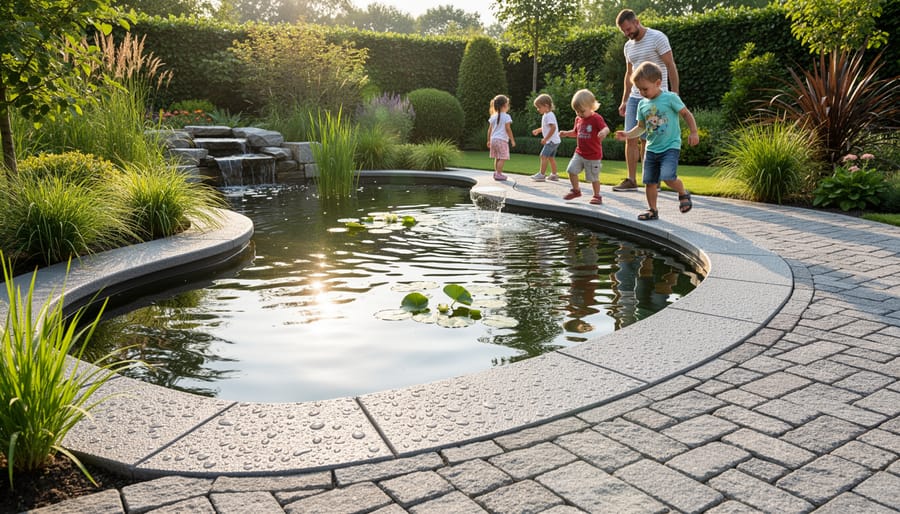
Creating a safe environment around your water garden means thinking beyond just the water itself. When teaching kindergarteners about pond safety, I always focus on the surfaces surrounding the feature first. Textured materials like non-slip pavers or pea gravel create natural stopping points that give little feet extra grip. I learned this the hard way during a particularly rainy visit when students in smooth-soled shoes started sliding near the edge. Now I recommend placing rougher textures at least three feet back from any water edge.
Clear sightlines matter tremendously when supervising young children. Trim back overgrown plants that block your view of the pond perimeter, and position taller specimens toward the back of your garden bed. During my classroom water garden programs, I make sure there’s nowhere a curious kindergartener can disappear from view, even for a moment.
Water clarity serves double duty in safety education. When children can see the bottom clearly, they better understand depth and boundaries. Murky water hides hazards and makes rescue more difficult. Maintain proper filtration and use beneficial bacteria to keep your teaching pond crystal clear. This visibility also helps during emergency situations, allowing you to quickly locate anything or anyone who might fall in. These simple modifications create a learning environment that’s both engaging and secure.
What to Do When Things Don’t Go as Planned
Even with the best planning, accidents can happen around water gardens. The key is being prepared before your little learners step outside.
Start by creating a simple emergency action plan specifically for your water garden area. Keep a first aid kit nearby, ideally in a waterproof container stationed close to your outdoor learning space. Make sure every adult supervisor knows exactly where it is. Your emergency plan should include clear steps for various scenarios: a child falling in, slipping on wet surfaces, or encountering wildlife in the pond.
Practice emergency drills with your kindergarteners, but keep them age-appropriate and non-frightening. Turn it into a game where they practice the “freeze and call for help” response if something goes wrong. Use your buddy system during these practice runs so children understand they should never attempt water rescues themselves.
Communication with parents is absolutely essential. Before starting any water garden activities, send home detailed information about your safety protocols. Include what you’re teaching, how you’re supervising, and what emergency procedures you have in place. Some parents may have concerns about water safety, and that’s completely valid. Invite them to observe a session or volunteer as an extra set of eyes.
Keep an incident log, even for minor events like a child getting muddy or a near-miss situation. This helps you identify patterns and adjust your approach. If something does go wrong, notify parents immediately with honest, clear communication about what happened and how you responded.
Remember, preparedness isn’t about creating fear around your beautiful water garden. It’s about building confidence that you can handle whatever comes up while your young students explore and learn in this amazing outdoor classroom.
Talking to Parents About Water Garden Learning
Getting parents excited about water garden learning while addressing their safety concerns is absolutely crucial for program success. I’ve found that transparency is your best friend here. Start with a detailed letter or email that explains exactly what you’re planning, highlighting both the educational benefits and your comprehensive safety measures.
Share your specific safety protocols upfront. Tell parents about your barriers, supervision ratios, buddy systems, and emergency procedures. When I first introduced water activities to my classroom, I created a one-page visual guide showing our pond setup with labeled safety features. Parents really appreciated seeing the physical layout and understanding how we’d keep their little ones safe.
Schedule an optional parent information session or open house before starting the program. This gives concerned parents a chance to see the water garden space, ask questions face-to-face, and watch you demonstrate safety equipment. Bring sample life jackets if you’re using them, show where first aid supplies are stored, and walk through what a typical lesson looks like. Many parents just need to visualize the experience to feel comfortable.
Be ready to address common worries. Some parents may have had negative water experiences themselves or have cultural concerns about water activities. Listen without being defensive, acknowledge their feelings, and explain how your precautions specifically address those worries.
Create a clear permission form that outlines activities, safety measures, and asks about swimming ability or water-related medical conditions. Make it easy for parents to say yes by showing you’ve thought through every detail.
You’ve done the hard work—you’ve planned, prepared, and equipped your little learners with the knowledge they need to explore safely around water. Now it’s time to trust that preparation while keeping your watchful eye on the magic unfolding before you.
Water gardens truly can be safe, enriching spaces for kindergarteners when you approach them with thoughtfulness and respect. Yes, water demands our vigilance, but it also offers something extraordinary: a living classroom where tadpoles become frogs, where reflections spark wonder, and where responsibility takes root in young hearts.
Remember, you don’t need a perfect setup or years of experience to create meaningful learning moments. Start small, stay consistent with your safety routines, and watch as your students grow more confident and capable around water. The key is maintaining that balance between freedom and structure, between exploration and boundaries.
Every time you guide a child to crouch safely at the water’s edge, every reminder to walk carefully, every practiced emergency response—these aren’t just safety measures. They’re investments in creating outdoor learning experiences that children will carry with them for life. Your dedication to both safety and wonder makes the magic possible.