
How Water Educators Are Opening Garden Doors for Everyone
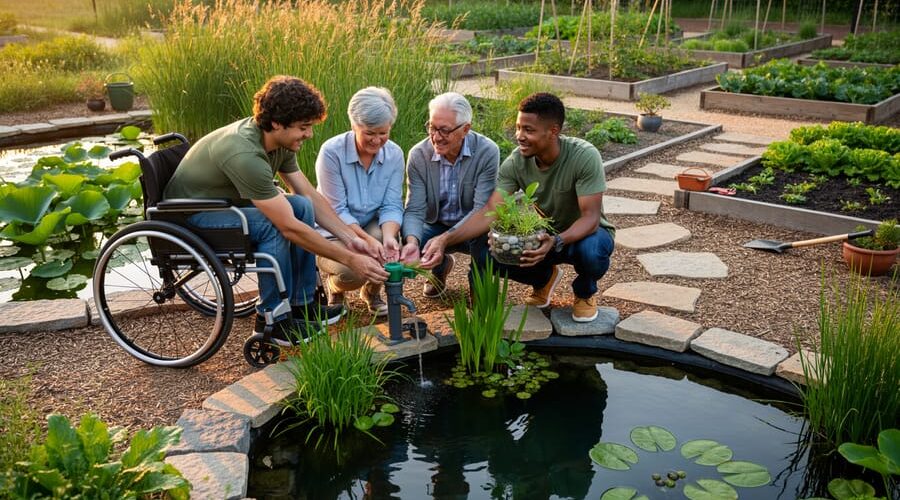
Picture yourself standing at the edge of a community pond, surrounded by curious neighbors eager to learn about creating their own backyard water features. A water educator makes this scene possible—they’re the friendly experts who break down complex aquatic concepts into hands-on experiences anyone can grasp, regardless of physical ability, learning style, or previous gardening knowledge. These passionate teachers transform intimidating topics like filtration systems, beneficial bacteria, and ecosystem balance into accessible, confidence-building workshops that welcome everyone from apartment dwellers dreaming of container water gardens to retirees planning elaborate koi ponds.
Unlike traditional instructors who lecture from textbooks, water educators get their hands wet alongside students, demonstrating techniques in real-world settings where people can touch plants, observe fish behavior, and troubleshoot actual pond problems. They recognize that someone might need visual demonstrations while another learns best through tactile exploration, so they adapt their teaching methods accordingly—perhaps using large-print handouts, providing seated workstation options, or offering one-on-one guidance during group sessions.
The beauty of water garden education lies in its inherent inclusivity: water features captivate people across all backgrounds and abilities. A skilled water educator harnesses this universal appeal, creating spaces where a teenager with mobility challenges learns alongside a gardening veteran, both discovering how simple design choices can support local wildlife while reducing maintenance headaches.
Whether you’re searching for workshops to jumpstart your water gardening journey or considering sharing your own pond expertise with others, understanding what makes water educators effective opens doors to richer learning experiences and stronger community connections around our shared love of aquatic environments.
What Exactly Is a Water Educator?
Beyond Teaching: Building Confidence and Community
The heart of great water education goes far beyond simply sharing facts about pumps and plants. Water educators understand that building confidence is just as important as building ponds. Many newcomers feel intimidated by technical aspects or worry they’ll make costly mistakes. That’s where educators shine by creating judgment-free spaces where questions are celebrated and learning happens at everyone’s own pace.
I’ve watched beginners transform during workshops when they realize there’s no “wrong” way to start their water garden journey. One participant told me she’d been researching for two years but felt too nervous to begin. After just one session in a supportive environment, she was sketching designs and planning her first pond.
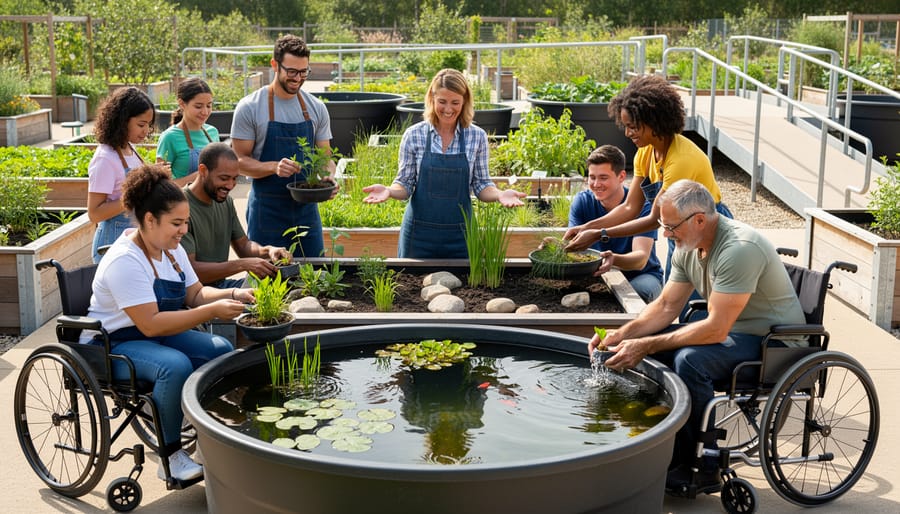
Water educators prioritize safe learning environments where everyone feels welcome, regardless of their experience level or physical abilities. This means adapting demonstrations for different learning styles, providing hands-on opportunities, and ensuring spaces are accessible to all.
The magic really happens when educators foster genuine community connections. They organize group troubleshooting sessions, facilitate online forums where members share successes and challenges, and encourage peer-to-peer learning. These connections often outlast the workshops themselves, creating networks of water gardening friends who support each other’s projects for years to come. When you learn alongside others who share your passion, the journey becomes just as rewarding as the destination.
The Skills That Set Water Educators Apart
What makes someone truly effective at teaching water gardening? It’s not just about knowing plants or understanding pumps—though those certainly help! The best water educators bring together a special mix of talents that transform learning from overwhelming to absolutely enjoyable.
First and foremost, they possess solid horticultural knowledge combined with practical hands-on experience. They’ve dealt with algae blooms at 6 AM, rescued struggling fish, and probably made plenty of their own mistakes along the way. This real-world experience means they can anticipate your questions before you even ask them.
But knowledge alone doesn’t make a great teacher. Effective water educators excel at adaptive teaching methods. They understand that some folks learn best by watching demonstrations, while others need to get their hands wet immediately. They can explain pond filtration to a complete beginner using simple analogies, then dive deeper with advanced hobbyists in the same workshop. This flexibility ensures everyone leaves feeling accomplished, regardless of their starting point.
Empathy plays a huge role too. Great water educators remember what it felt like to be confused about liner materials or intimidated by electrical components. They create judgment-free spaces where “silly” questions don’t exist, making workshops welcoming for everyone.
Finally, they’re natural problem-solvers who think on their feet. When someone describes their backyard challenges, effective educators can quickly offer creative, practical solutions tailored to individual situations. They don’t just teach methods—they teach you how to think through water gardening challenges independently.
Why Accessible Water Garden Workshops Matter
Breaking Down the Barriers
Let’s be honest—water gardening hasn’t always felt like it’s for everyone. Over the years, I’ve watched wonderful potential pond enthusiasts walk away from workshops before they even started, and it broke my heart every time. The barriers were real and varied, but understanding them is the first step toward knocking them down.
Physical accessibility tops the list of challenges. Traditional workshops often take place in gardens with gravel paths, uneven terrain, and pond edges that require bending or kneeling. For anyone using a wheelchair, walker, or dealing with mobility limitations, these spaces can feel completely off-limits. I’ve seen workshop venues with steps at every entrance and zero consideration for different physical needs.
Cost concerns create another significant hurdle. Quality water gardening workshops sometimes carry hefty price tags that include materials, plants, and instruction. When you’re just dipping your toes into this hobby, investing a hundred dollars or more feels risky. Add in the assumption that you’ll need expensive equipment to get started, and suddenly water gardening seems like a luxury hobby rather than an accessible passion.
The jargon problem drives people away faster than anything else. Terms like “biofilter,” “GPH rates,” and “nitrifying bacteria” get thrown around without explanation, making newcomers feel like they’ve walked into an advanced chemistry class. This technical language creates an invisible wall that whispers, “This isn’t for you.”
Lack of adaptive tools compounds these issues. Standard pond nets have long handles that require strong grip strength. Plant containers assume you can lift and move heavy weights. Few suppliers offer ergonomic alternatives or modifications.
Perhaps most damaging are the unspoken assumptions about who belongs in water gardening spaces. Marketing images rarely show diverse ages, abilities, or body types, subtly suggesting this hobby has a narrow demographic.
The Ripple Effect of Inclusive Education
When a water educator opens their workshop doors wider, something wonderful happens—the benefits ripple outward far beyond learning to balance pond pH or choose the right plants. People who might have felt intimidated by traditional gardening classes suddenly find themselves welcomed into a supportive community. Perhaps it’s someone managing anxiety who discovers the mental health benefits of sitting beside flowing water, or a retiree with mobility challenges who realizes they can still create a stunning aquatic feature with adapted techniques.
These inclusive spaces naturally attract diverse groups who might never have crossed paths otherwise. A young parent learning alongside a grandparent, someone with limited English connecting through hands-on activities, or wheelchair users sharing tips with able-bodied gardeners—all building friendships around their shared passion for water gardens. This diversity strengthens the entire community, bringing fresh perspectives and creative solutions to common pond problems. The hobby grows richer when voices from different backgrounds contribute their unique experiences, proving that water gardening truly belongs to everyone willing to get their hands wet.
How Water Educators Create Truly Inclusive Workshops
Designing Physically Accessible Spaces
Creating a welcoming learning environment starts with thoughtful physical design. When I first started teaching water gardening workshops, I quickly realized that traditional setups weren’t working for everyone. One participant using a wheelchair couldn’t get close enough to see the pond filter installation I was demonstrating, and that was my wake-up call.
Raised pond demonstrations are game-changers for accessibility. By elevating demonstration ponds to table height (around 30-34 inches), everyone can see and participate without bending or straining. I’ve built simple raised platforms using cinder blocks and sturdy plywood that work beautifully for showing liner installation, plant potting, and water testing techniques.
Wheelchair-accessible work areas need at least 36 inches of clear pathway width, with 60-inch turning circles at key spots. Position demonstration tables with knee clearance underneath so participants can roll right up. I arrange my workspace in a U-shape, which allows easy navigation and ensures nobody feels stuck in the back.
Adaptive tools make hands-on learning possible for everyone. Long-handled pond nets, ergonomic pruning shears with cushioned grips, and lightweight watering cans help participants with limited strength or dexterity. I always keep various tool options available and let people choose what feels comfortable.
Don’t forget diverse seating options. Provide sturdy chairs with armrests alongside open spaces for wheelchairs. Some folks prefer standing, so adjustable-height work surfaces accommodate different needs. When everyone can participate comfortably, the learning experience becomes truly enriching for the whole community.
Teaching Methods That Reach Everyone
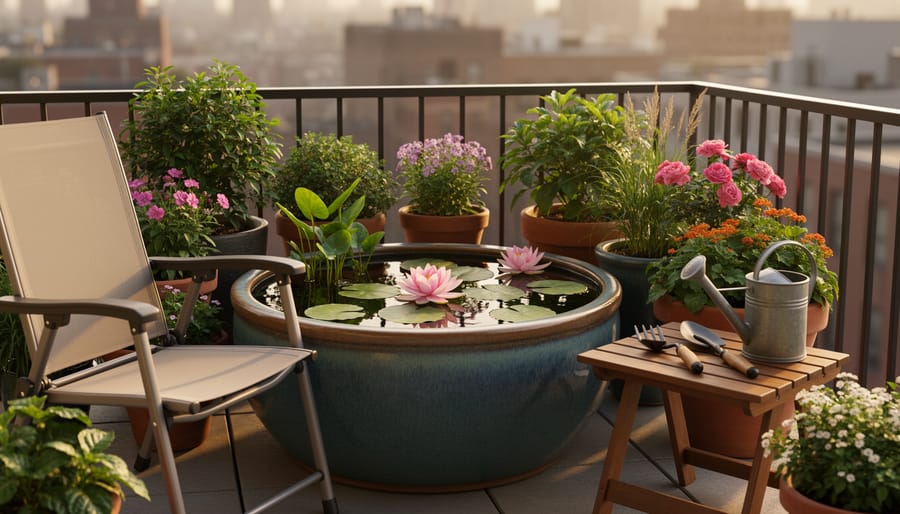
Great water educators know that everyone learns differently, so they design workshops that engage all your senses. Instead of just talking about pond filtration, they’ll let you touch filter media, watch water flow through different systems, and even listen to the sound of healthy water circulation. This hands-on approach means you’re not just hearing about concepts – you’re experiencing them.
Learning stations work wonderfully for water gardening workshops because they let people move at their own pace. One station might have live plants to examine, while another displays pump options you can handle and compare. Maybe there’s a demonstration area where you watch someone install a liner, followed by a practice station where you try it yourself. This setup respects that some folks grasp ideas quickly while others need more time to process information.
Visual aids make complex topics crystal clear. Think diagrams showing water flow patterns, photos of common problems and solutions, or even simple sketches drawn during the session. Pairing these visuals with clear verbal explanations creates multiple pathways for understanding. And here’s something I always appreciate: good educators provide handouts or digital materials you can review later at home. Some offer video tutorials, others create printable guides, and many share reference lists.
The best part? Skilled water educators build in plenty of question time and never rush through topics. They understand that creating a comfortable, judgment-free environment helps everyone participate and truly master new skills for their water gardens.
Making Water Gardening Affordable
One of the most refreshing aspects of learning from a water educator is discovering that you don’t need deep pockets to create a beautiful water feature. These passionate teachers actively work to break down financial barriers that might keep someone from exploring this rewarding hobby.
Many water educators offer sliding scale fees based on your income, ensuring workshops remain accessible regardless of your budget. Some partner with libraries, community centers, and gardening clubs to provide free or low-cost sessions. I’ve attended workshops where the educator brought salvaged materials and demonstrated how to transform an old sink or bucket into a charming container water garden for under twenty dollars.
The emphasis is always on creativity over cost. Water educators teach you to scout garage sales for containers, propagate plants from cuttings instead of buying new specimens, and use natural filtration methods that don’t require expensive equipment. They’ll show you how a simple tub, some gravel, and a few native plants can create a thriving ecosystem without fancy pumps or filters.
By focusing on accessible techniques and resourceful solutions, water educators prove that anyone can enjoy water gardening, regardless of their financial situation.
Creating a Welcome for All Skill Levels
The best water educators know that everyone starts somewhere, and they create spaces where complete beginners feel just as valued as experienced pond keepers. This means never assuming prior knowledge. Instead of launching into complex filtration systems, they might begin by asking participants to share what they hope to learn, then tailoring explanations to meet everyone where they are.
Great water educators actively encourage questions, often saying things like “There’s no such thing as a silly question here” and meaning it. They understand that what seems obvious to someone who’s been managing water features for years might be completely mysterious to a first-timer. When someone asks about basic concepts like pH levels or beneficial bacteria, these educators respond with genuine enthusiasm rather than impatience.
Celebrating small wins makes a huge difference too. When a nervous beginner successfully tests their pond water for the first time or identifies their first aquatic plant, acknowledging that achievement builds confidence. I’ve seen workshop participants light up when an educator congratulates them on catching algae growth early or choosing the right pump size.
Finally, fostering peer support creates lasting learning communities. By pairing experienced participants with newcomers for hands-on activities or creating informal mentorship opportunities, water educators help everyone feel they belong in the water gardening world, regardless of their starting point.
Real-World Examples: Inclusive Water Garden Education in Action
Container Water Gardens: The Great Equalizer
Here’s where water educators really shine: making water gardening possible for everyone. You don’t need a sprawling backyard, a huge budget, or even the ability to bend and dig. Container water gardens have become the great equalizer in the water gardening world, and skilled educators know exactly how to leverage them.
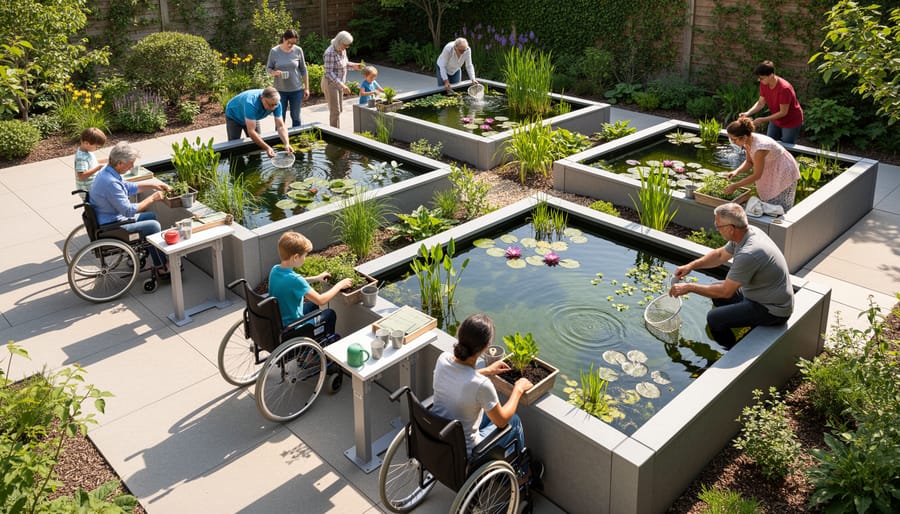
I’ve watched water educators transform tiny apartment balconies into thriving aquatic havens using nothing more than a glazed ceramic pot and a few carefully chosen plants. The beauty of container water gardening is that it meets people exactly where they are. Living in a rental? Your container garden moves with you. Working with a tight budget? Start with a single pot and expand when you’re ready. Dealing with mobility challenges? Set up your container at a comfortable height where you can reach it easily.
Water educators typically begin their workshops with container projects because they remove the intimidation factor. There’s no heavy digging, no complex filtration systems to install, and no permanent commitment to your landscape. Students can experiment, learn the basics of water chemistry and plant care, and gain confidence before tackling larger projects.
The best part? Container water gardens teach the same fundamental principles as full-sized ponds. Water educators use them to demonstrate plant selection, mosquito control, seasonal maintenance, and ecosystem balance in a manageable, affordable format that truly anyone can try.
Success Stories That Inspire
Nothing brings the power of inclusive water education to life quite like the real people whose lives have been transformed by it. Meet Margaret, a 72-year-old retired teacher who attended her first accessible workshop at a community center. Using a raised garden bed designed for wheelchair users, she built her first container water garden featuring water lettuce and a small fountain. “I thought my gardening days were over after my mobility decreased,” she shares, “but this opened up a whole new world for me.”
The Rodriguez family discovered water gardening through a bilingual workshop offered at their local library. With three young children and no prior experience, they felt intimidated at first. The educator’s patient, step-by-step approach and hands-on activities made all the difference. Within weeks, their backyard featured a small pond that became the family’s favorite gathering spot. “We learned together as a family,” says Maria Rodriguez. “Now my kids run outside every morning to check on the fish and plants.”
Then there’s James, who lives with visual impairment and participated in a sensory-focused workshop. The educator incorporated touch-based learning, describing plant textures and water sounds in vivid detail. James now maintains a thriving water garden on his apartment balcony, using raised markers and textured plant labels he learned to create during class. His story proves that with thoughtful adaptation, anyone can enjoy the therapeutic benefits of water gardening.
How to Find or Become a Water Educator
Connecting with Water Educators Near You
Finding the right water educator to guide your pond journey is easier than you might think! Start by checking your local community centers and botanical gardens—many offer seasonal water gardening workshops that welcome beginners with open arms. I discovered my first mentor at a weekend class at our neighborhood center, and it completely transformed my approach to pond care.
Master gardener programs through university extensions are treasure troves of knowledge. These certified volunteers often host specialized sessions on water features and aquatic plants, usually at little or no cost. Don’t overlook community gardens either—they’re increasingly adding water features and offering hands-on learning opportunities.
Online communities have become fantastic resources too. Facebook groups, Reddit forums, and specialized water gardening websites connect you with educators who offer virtual workshops, making learning accessible regardless of your location or mobility.
Local pond clubs are hidden gems! These enthusiastic groups typically meet monthly, share pond tours, and invite expert speakers. A quick internet search for “pond club” plus your city name usually yields results. Many members are passionate educators eager to share their expertise in welcoming, judgment-free environments perfect for asking those “silly” questions we all have when starting out.
Bringing Inclusive Teaching to Your Own Water Garden
You don’t need a teaching certificate or fancy credentials to share your water gardening passion with others. If you’ve successfully maintained a pond or water feature, you already have valuable knowledge worth passing along.
Start small by inviting a neighbor over for coffee and a casual tour of your water garden. Point out what’s worked well and what mistakes you’ve learned from. Everyone appreciates honest stories about algae battles or leaky liner fixes more than perfect success tales.
Consider hosting a simple hands-on session where friends can pot their first water lily or learn to divide iris plants. Prepare a few extra containers and plants, and walk through each step together. Keep it relaxed and encourage questions.
Make your teaching accessible by remembering how you felt as a beginner. Avoid overwhelming people with technical terms. Instead of saying “biological filtration,” try “helpful bacteria that keep water clean.” Demonstrate techniques slowly, and offer to let learners try themselves.
Share resources generously. If someone struggles with mobility, suggest container water gardens at comfortable heights. For those on tight budgets, explain how to start with a simple basin and a single plant.
The water gardening community thrives when experienced gardeners like you welcome newcomers with patience and encouragement. Your backyard can become someone’s outdoor classroom.
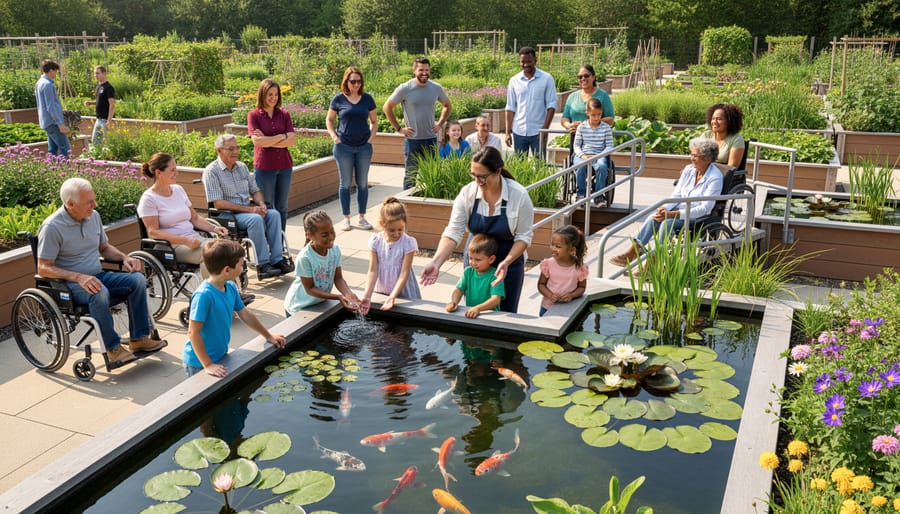
Water gardening becomes truly magical when everyone has the chance to participate, learn, and create their own aquatic paradise. The role of water educators in making this possible cannot be overstated. By breaking down barriers, adapting techniques, and welcoming learners of all backgrounds and abilities, these passionate instructors are transforming what was once seen as an exclusive hobby into an inclusive community activity that enriches lives in countless ways.
The beauty of accessible water garden education is that it creates ripples far beyond the individual learner. When someone discovers they can create and maintain a thriving water feature despite physical limitations, language barriers, or limited experience, they gain confidence that extends into other areas of their life. They become ambassadors who share their knowledge with neighbors, family members, and friends, expanding the circle of water gardening enthusiasts one conversation at a time.
If you’re looking for inclusive workshops in your area, start by reaching out to local garden centers, community colleges, and botanical gardens. Ask specifically about accessibility accommodations and teaching approaches. If inclusive options don’t exist yet, consider starting the conversation. Share this information with organizations in your community and express your interest in accessible programming.
For those feeling called to become water educators themselves, remember that you don’t need decades of experience to make a difference. Your enthusiasm, patience, and willingness to adapt your teaching methods matter more than having all the answers. Start small, perhaps by helping a neighbor with their first container water garden or organizing an informal workshop at your local library.
The world needs more water educators who believe that everyone deserves to experience the joy of watching dragonflies dance over their pond or hearing the gentle trickle of a fountain they built themselves. Will you be part of this growing movement?