
How Virginia Woolf’s Water Garden Transformed Modern Literature (And What It Means for Your Pond)
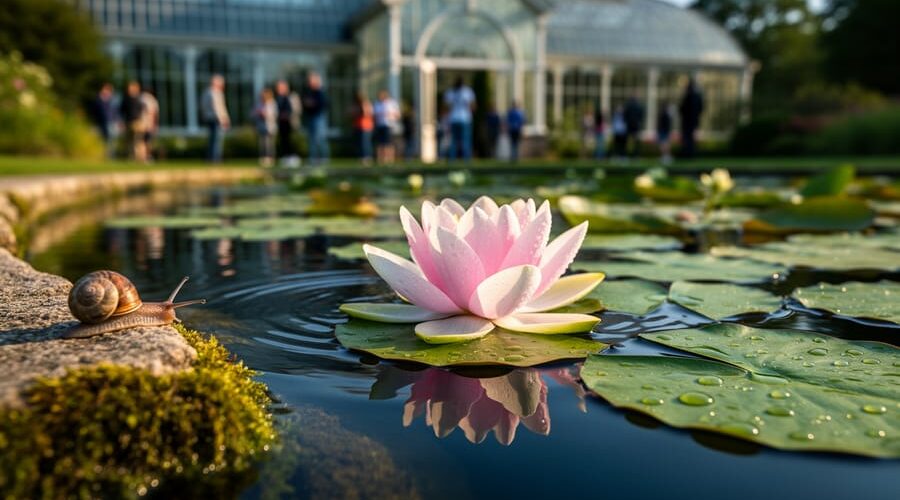
Virginia Woolf’s 1919 short story “Kew Gardens” transforms London’s famous botanical gardens into a meditation on human consciousness, memory, and the natural world—and it holds surprising lessons for anyone designing their own backyard water garden. The story follows four groups of visitors wandering past a flower bed, their conversations drifting like the shadows of leaves while Woolf’s narrator zooms in on a snail navigating the undergrowth. This experimental narrative technique mirrors the layered ecosystems in successful ponds: surface reflections, mid-water movement, and substrate life all existing simultaneously.
Woolf pays extraordinary attention to light playing on water droplets, the geometry of petals, and how perspective shifts meaning—the exact observations that separate mediocre water features from breathtaking ones. Her descriptions of color gradations in flowers (“the red, blue and yellow of the petals”) and the interplay between cultivated and wild spaces offer a masterclass in aesthetic composition that translates directly to pond design. The snail’s deliberate journey around obstacles becomes a metaphor for water flow patterns around rocks and plants.
For water gardening enthusiasts, “Kew Gardens” isn’t just literature—it’s a guide to seeing your pond as Woolf saw those gardens: as living art where every element, from visiting wildlife to reflected clouds, contributes to an ever-changing masterpiece. Understanding her modernist techniques enriches how we observe and create our own aquatic landscapes.
The Real Kew Gardens: Where Literature Met Water
The Water Lily House and Victorian Pond Design
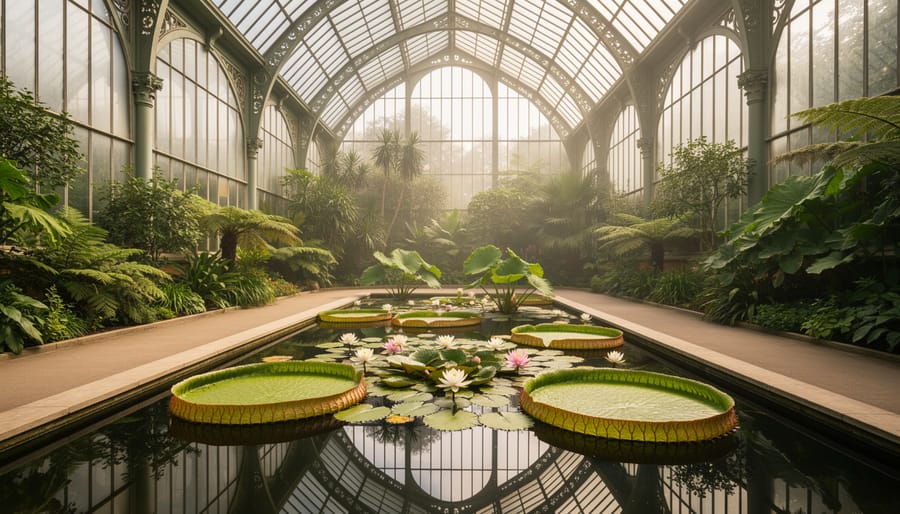
When Virginia Woolf visited Kew Gardens in the early 1900s, she would have encountered one of the most enchanting water features of the Victorian era: the Water Lily House. Built in 1852, this intimate glasshouse was specifically designed to showcase the giant Amazon water lily, Victoria amazonica, with its massive floating leaves that can support the weight of a small child. The heated pond within created a tropical paradise that must have felt wonderfully exotic to Edwardian visitors.
The Victorian approach to historical water garden design emphasized dramatic displays and exotic specimens, reflecting the empire’s reach. Kew’s outdoor ponds featured carefully arranged water lilies, lotus flowers, and aquatic plants from around the world, each positioned to create natural-looking yet deliberately composed scenes.
For us modern water gardeners, there’s something inspiring about how these Victorian designs balanced formality with naturalism. The ponds weren’t just botanical collections; they were living artworks that changed throughout the day as flowers opened and closed, as dragonflies skimmed the surface, and as light filtered through overhanging trees. This attention to the sensory experience clearly influenced Woolf’s writing, where she captures those fleeting moments of beauty and transformation.
If you’re designing your own pond, consider how the Victorians layered their plantings, creating depth and visual interest while maintaining clear water views. It’s about crafting those moments of discovery that make visitors pause and truly see.
Why Artists Flocked to Water Gardens
In the early 1900s, water gardens became magical gathering spots for creative minds seeking fresh perspectives. Think of them as the coffee shops of their era, but with lily pads instead of lattes! Public gardens like Kew attracted writers, painters, and thinkers who found that watching water ripple and flowers bloom sparked incredible ideas.
Water gardens offered something special that stuffy indoor spaces couldn’t provide. The constantly changing reflections, the gentle sounds of moving water, and the vibrant colors created a sensory experience that helped artists break through creative blocks. Virginia Woolf herself was drawn to these spaces, finding in them the perfect setting to explore themes of perception and fleeting moments.
For everyday garden enthusiasts like us, this tradition continues today. Creating your own water feature means joining a long history of people who understood that water gardens aren’t just pretty decorations. They’re living, breathing spaces that encourage contemplation and creativity. Whether you’re designing a simple container pond or an elaborate garden feature, you’re tapping into the same inspiration that fueled some of history’s greatest artistic minds. The combination of natural beauty and peaceful atmosphere makes water gardens timeless creative retreats.
Virginia Woolf’s ‘Kew Gardens’: A Story Told Through Water
The Snail by the Pond: Nature’s Quiet Observer
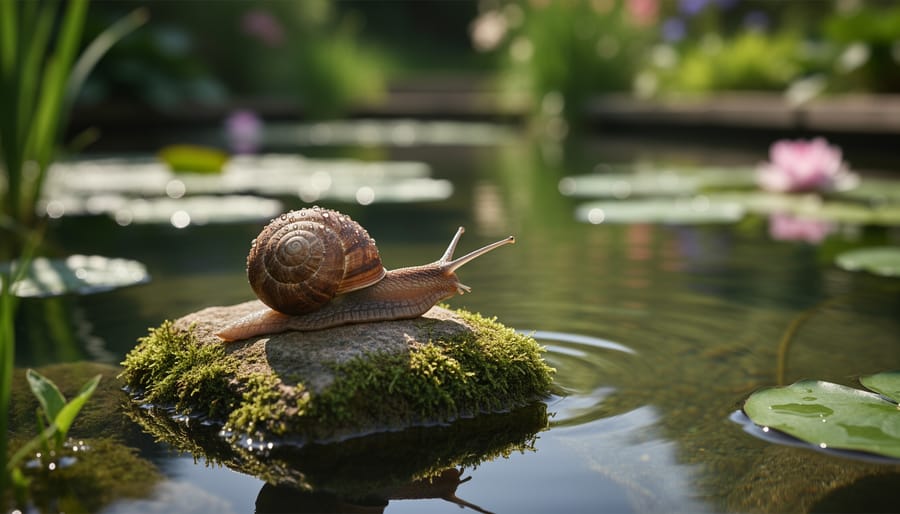
In one of the most captivating moments of Woolf’s story, we follow a humble snail making its way through the damp undergrowth beneath the flowerbed. This tiny creature becomes a mesmerizing focal point, and honestly, it’s something many of us pond keepers can relate to when we pause to watch the small life thriving in our own water gardens.
Woolf describes the snail’s journey with incredible detail, showing us how it navigates obstacles like fallen petals and leaf debris. The snail’s world is just inches across, yet in Woolf’s hands, it becomes a complete universe. She makes us slow down and appreciate the determination of this little mollusk as it considers whether to climb over or circumvent a dead leaf in its path.
If you’ve ever knelt beside your pond on a quiet morning, you’ve probably witnessed similar scenes. Maybe you’ve watched a pond snail gliding along the glass of your water feature, or noticed how these creatures methodically clean algae from rocks and plant leaves. They’re nature’s quiet workers, much like Woolf’s garden snail.
What makes this literary device so powerful is how Woolf uses the snail’s perspective to ground us in the present moment. While humans in the garden drift through memories and abstract conversations, the snail remains utterly focused on its immediate physical world. It’s a gentle reminder that sometimes the smallest observers notice what we overlook in our busy lives.
Light on Water: Woolf’s Impressionist Technique
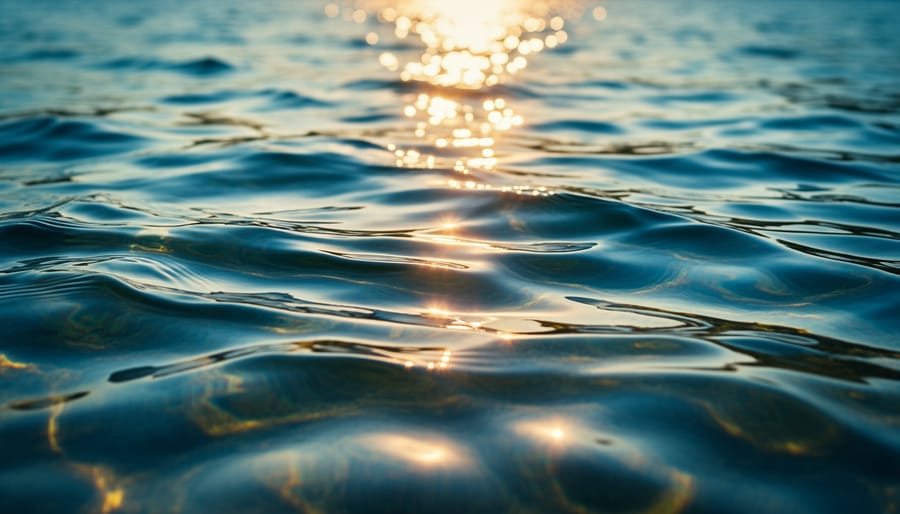
If you’ve ever watched sunlight dance across your garden pond in the early morning, you’re experiencing exactly what Virginia Woolf captures so brilliantly in “Kew Gardens.” She paints light as if it were something you could almost touch—describing how it filters through leaves, splashes onto damp earth, and shimmers across water surfaces.
Woolf writes about light in a way that feels immediately familiar to anyone who tends a water feature. She notices how raindrops cling to stems, how moisture catches and reflects brightness, how the whole garden seems to glow when everything’s still wet from morning dew. This isn’t just pretty description—it’s impressionism in words, capturing fleeting moments the way Monet captured water lilies.
For pond owners, this technique resonates deeply. We know how different our gardens look when light hits the water at various angles throughout the day. That golden hour glow, the silvery shimmer after rain, the way ripples scatter sunlight into dancing patterns—Woolf understood that these moments create atmosphere and emotion.
Her technique teaches us something valuable: pay attention to the quality of light in your own water garden. Consider how placement affects what you see. Notice how your pond reflects the sky differently on cloudy versus sunny days. These observations aren’t just poetic—they’re practical considerations for designing a space that feels alive and constantly changing, just like the garden in Woolf’s story.
Water Gardens as Muses: The Broader Artistic Movement
Monet’s Water Lilies and Literary Impressionism
Just as water gardens influenced visual art movements in the late 1800s, Claude Monet’s famous water lily paintings share a beautiful connection with Virginia Woolf’s writing style. Think of it this way: Monet spent years painting his pond at Giverny, capturing how light danced across the water’s surface at different times of day. He didn’t focus on sharp details or clear boundaries, but instead created dreamy, atmospheric impressions of his garden.
Woolf did something remarkably similar with words in Kew Gardens. Rather than describing every petal and leaf in precise detail, she painted with language, letting colors and sensations blend together naturally. When she writes about light filtering through leaves or reflections shimmering on a snail’s shell, she’s creating literary brushstrokes just like Monet’s artistic ones.
For us water gardeners, this connection is inspiring. Both artists understood that a pond or garden isn’t just about individual plants or fish, it’s about the entire mood and feeling of the space. When you’re designing your own water feature, consider how morning light plays across the surface, or how reflections create depth and mystery. You’re not just building a pond, you’re creating living art that changes with every passing hour, just like Monet’s paintings and Woolf’s prose captured those fleeting, magical moments of beauty.
The Japanese Garden Influence on Western Art
When Virginia Woolf wrote “Kew Gardens” in 1919, she was part of a broader artistic movement captivated by Eastern design principles. Think of it as a creative revolution that swept through studios and writing rooms across Europe! The early 20th century saw artists and writers alike drawing inspiration from Japanese water garden aesthetics, which emphasized simplicity, natural flow, and the beauty of reflection.
Japanese gardens offered something radically different from formal European landscapes. Instead of rigid geometry, they featured organic curves and thoughtful placement of water elements. This philosophy resonated deeply with modernist writers like Woolf, who sought new ways to capture consciousness and natural observation. The gentle movement of koi beneath lily pads or water trickling over stones became metaphors for the stream of human thought.
For water gardeners today, this historical connection is fascinating. The same principles that inspired Woolf can transform your backyard pond into an artistic statement. Consider how Japanese designers used still water as a mirror for sky and foliage, creating layered dimensions. When you position rocks or choose where to plant water irises, you’re engaging with the same aesthetic tradition that influenced literary masterpieces. It’s not just about creating a pretty pond; you’re participating in a cultural conversation that spans continents and centuries, bringing contemplative beauty into everyday life.
What Woolf Saw in Water Gardens (That You Can Create Too)
Creating Reflection and Light Play
Woolf’s genius in “Kew Gardens” lies partly in her attention to how light dances across water surfaces, creating those mesmerizing moments that stop us in our tracks. You can recreate this enchanting effect in your own pond with thoughtful planning!
Start by positioning your pond where it receives morning or late afternoon sun—these angles create the most dramatic reflections without harsh midday glare. I learned this the hard way when my first pond sat in direct noon sun and just looked like a bright, washed-out circle.
Choose plants strategically around your water feature. Tall grasses like rushes or irises positioned on the south or west side cast beautiful shadows that dance across the water’s surface throughout the day. Low-growing water lilies provide floating platforms that catch light from above, creating those dappled patterns Woolf describes so beautifully.
Consider adding different textures at various heights. Feathery plants like water milfoil create soft, impressionistic reflections, while broad-leafed varieties like lotus offer bold, defined mirror images. The key is variety—mixing heights, leaf shapes, and colors gives you an ever-changing canvas of light and shadow that shifts with the sun’s movement, just like the living artwork that inspired countless artists at Kew Gardens.
Adding Movement: Water Features That Tell Stories
Woolf captured something magical about water that we pond enthusiasts know intimately—its constant movement creates endless stories. In her narrative, water features aren’t just backdrop; they’re living characters that shift mood and meaning with every ripple.
Think about your own water garden for a moment. A simple fountain transforms from morning’s gentle trickle to afternoon’s lively dance as sunlight changes. Streams guide visitors’ eyes through your landscape, just as Woolf guided readers through her characters’ thoughts. Each splash and swirl adds unpredictability and life.
The dynamic quality that fascinated writers and artists comes from water’s refusal to stay still. A pond reflects clouds one minute, then shatters into a thousand fragments when a dragonfly lands. This ever-changing nature mirrors human consciousness—exactly what Woolf explored in her stream-of-consciousness style.
When planning your water feature, embrace this storytelling potential. Position fountains where light catches the spray. Design streams with varying speeds—fast sections create excitement, while slow pools offer reflection. Let natural stones interrupt flow patterns, creating those mesmerizing ripples that hold attention. Your garden becomes a living narrative, different every time someone experiences it.
The Power of Small Details: Moss, Snails, and Microhabitats
Here’s something magical that Woolf understood and we can apply to our own water gardens: the smallest details create the biggest impact. In “Kew Gardens,” she doesn’t just describe a grand landscape—she zooms in on moss-covered pebbles, snails making their slow journeys across leaves, and the play of light through individual blades of grass.
When you’re designing your pond or water feature, take a page from Woolf’s book. Instead of only thinking about the big picture, get down on your knees and really look at what’s happening at ground level. That patch of moss growing on your pond’s edge stones? It’s creating its own miniature forest. Those water snails gliding along your pond plants? They’re both cleanup crew and living sculpture.
I remember crouching by my own pond one morning, watching a snail navigate a lily pad, and suddenly understanding what Woolf was getting at. These tiny ecosystems—the microhabitats where insects shelter, where algae creates patterns, where morning dew catches light—are where the real magic happens. Don’t rush to scrub away every bit of natural growth. Sometimes the “imperfections” are what transform a constructed pond into a living, breathing work of art.
Building Your Own Inspirational Water Garden
Choosing Plants That Artists Loved
If you’re inspired by Virginia Woolf’s contemplative observations and want to create your own literary-inspired water garden, consider plants that captivated artists and writers throughout history. Water lilies are the obvious starting point—these floating beauties were beloved by Monet and symbolize the dreamlike quality Woolf captures in her prose. Choose hardy varieties in whites and pinks for a classic Victorian aesthetic that mirrors the Edwardian era of her story.
Irises add vertical drama and were frequently painted by Van Gogh and featured in Japanese woodblock prints. Plant Japanese irises at your pond’s edge for that artistic touch. Don’t overlook elegant papyrus and sweet flag, both common in botanical gardens like Kew during Woolf’s time. These plants create the layered, contemplative atmosphere she describes.
For a truly authentic nod to early 20th-century garden design, include lotus flowers if your climate allows. Their sculptural seed heads and large leaves create visual interest year-round. Remember, the goal isn’t perfection but creating a space for reflection and beauty—just as Woolf’s characters experienced in their brief garden visit.
Designing for Meditation and Observation
Virginia Woolf understood something magical about gardens: they invite us to slow down and truly see. When creating your own water garden, think about designing spaces that encourage this kind of quiet observation. Just as the characters in Kew Gardens followed their own meandering paths, your garden should offer spots where visitors naturally pause to watch dragonflies skim the water or ripples spread across the surface.
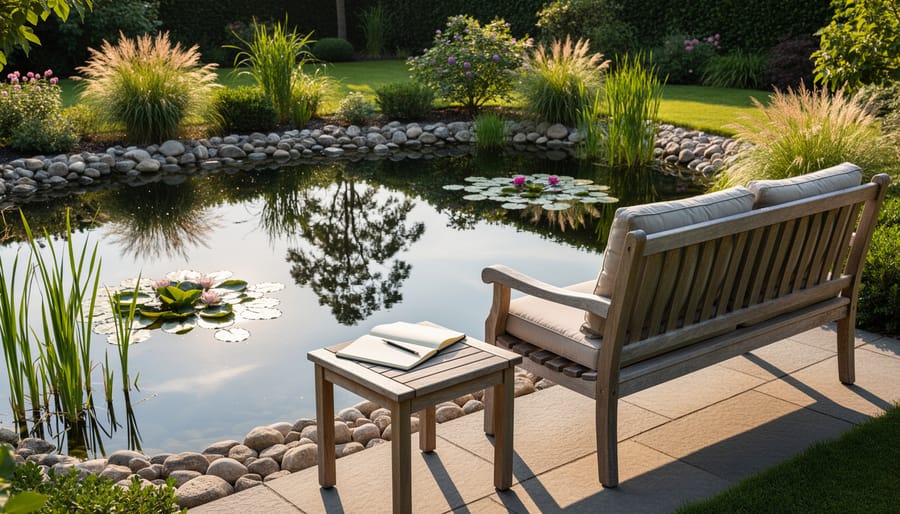
Start by positioning a simple bench where you can observe your pond from different angles throughout the day. I’ve found that morning light hits water differently than afternoon sun, and having a dedicated viewing spot helps you notice these subtle changes. Place seating about six to eight feet from the pond’s edge, close enough to see fish and plants clearly but far enough to take in the whole composition.
Consider creating multiple vantage points at varying heights. A low stone seat near the water encourages close inspection of aquatic life, while a slightly elevated position offers perspective on the entire garden layout. These contemplative water garden spaces don’t need elaborate construction. A flat boulder, a weathered wooden bench, or even a comfortable garden chair positioned thoughtfully can transform your pond from something you maintain into something that truly nourishes your creativity and peace of mind.
Virginia Woolf found endless inspiration in the patterns of water, the dance of light on petals, and the quiet movements of life in Kew Gardens. Your own backyard pond can offer that same wellspring of creativity and peace. You don’t need acres of manicured landscapes or a famous botanical garden to experience what Woolf captured so beautifully in her writing. All you need is a willingness to slow down and truly observe the world you’re creating.
Every time you kneel beside your pond to adjust a stone or trim a water plant, you’re engaging in the same kind of artistic practice that informed Woolf’s work. The ripples spreading across your water’s surface, the dragonflies hovering at dusk, the way sunlight filters through your irises—these aren’t just pretty details. They’re invitations to see beauty in small moments and find meaning in the everyday rhythms of nature.
As you continue developing your water garden, remember that you’re not just maintaining a backyard feature. You’re cultivating a space for contemplation, a living canvas that changes with each season, and your own personal Kew Gardens. Let Woolf’s attention to detail inspire your own observations. Grab a journal, sit beside your pond, and simply watch. You might be surprised by what stories emerge from your own little corner of water and life.