
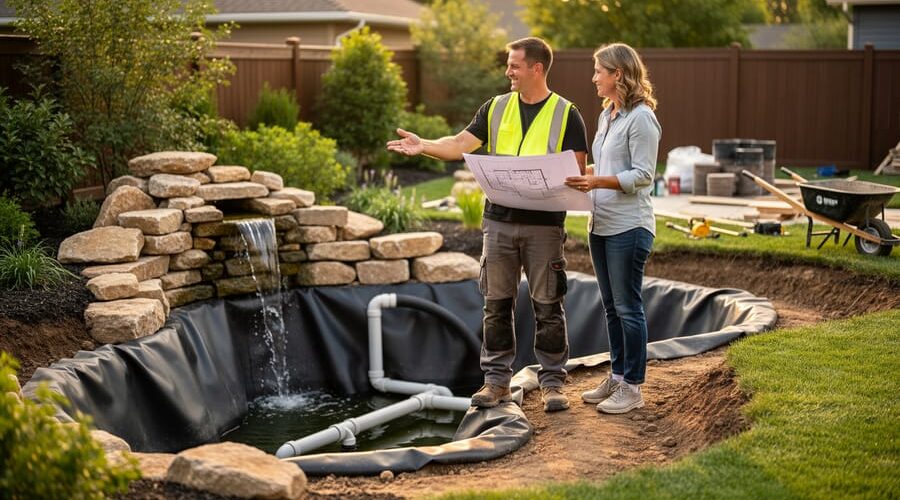
How to Hire the Right Pond Contractor Without Overpaying
Hiring a pond contractor shouldn’t feel like navigating a corporate boardroom, but too many homeowners lose thousands of dollars by treating it too casually. Whether you’re installing your first backyard water feature or expanding an existing pond, understanding the procurement process transforms you from a vulnerable buyer into an informed decision-maker who controls costs and quality.
The seven-step procurement framework might sound like business school jargon, but it’s actually your roadmap to avoiding the three most expensive mistakes homeowners make: hiring the wrong contractor, accepting vague proposals that balloon into budget-busting change orders, and skipping the evaluation phase that reveals red flags before you sign anything.
Think of procurement as your financial protection system. Each step builds on the last, creating checkpoints that prevent you from rushing into commitments you’ll regret. When my neighbor skipped proper contractor evaluation for his koi pond, he ended up with a beautiful installation that leaked within six months because the contractor had no experience with proper liner installation. The repair cost nearly as much as the original project.
This guide breaks down each procurement step into pond-specific actions you can take this week. You’ll learn exactly what to include in your project requirements, how to evaluate bids beyond just comparing bottom-line prices, and which contract terms protect your investment. No MBA required, just practical steps that save money and headaches.
Why the Contractor Bidding Process Matters for Your Water Garden
I learned this lesson the hard way when my neighbor Sarah excitedly hired the first contractor who gave her a quote for her dream koi pond. She skipped the formal bidding process, thinking it would save time. Three months later, her beautiful pond turned into a murky mess because the contractor had zero experience with water features. He treated it like a swimming pool installation, forgot the proper filtration system, and couldn’t figure out why the fish kept dying. She ended up paying another contractor twice as much to fix everything.
Taking time with a proper contractor bidding process isn’t just bureaucratic nonsense. It’s your financial safety net and quality guarantee. When you follow a structured approach, you’re essentially interviewing multiple professionals who need to prove they understand the unique challenges of water gardens. Unlike regular landscaping, ponds require specific knowledge about water circulation, ecosystem balance, and seasonal maintenance.
Think about it this way: would you hire a plumber to fix your car? Probably not. Yet many homeowners accidentally hire general landscapers for complex water features simply because they didn’t ask the right questions upfront.
A solid procurement process protects your budget by getting everything in writing before work begins. My friend Tom saved nearly four thousand dollars by comparing three detailed bids. He discovered one contractor planned to use inadequate liner material that would’ve failed within two years. Another forgot to include electrical work for the pump in their quote, which would’ve become an expensive surprise mid-project.
When contractors know they’re competing for your business, they bring their best pricing, clearest timelines, and most detailed plans. You gain leverage, clarity, and peace of mind knowing you’ve made an informed decision rather than an expensive gamble.
Step 1: Define What You Really Want (And What It’ll Cost)
Before you start calling contractors or comparing bids, you need to get crystal clear on what you actually want. I learned this the hard way with my first pond project when I contacted five different contractors with a vague “I want a nice pond with a waterfall” description. The quotes I received ranged from $3,000 to $15,000, and I had no idea why. Turns out, I hadn’t done my homework.
Start by creating a detailed vision for your pond. Grab a notebook and sketch out the basics. How big do you want it? A small 6×8 foot koi pond? A sprawling natural swimming pond? Will it include a waterfall, stream, or fountain? Do you want aquatic plants, fish, or both? These aren’t just aesthetic choices, they dramatically impact your budget.
Next comes the reality check: research what things actually cost. Spend a few hours online looking at completed projects similar to yours. Basic pond liners run anywhere from $0.50 to $3.00 per square foot depending on quality. Pumps and filtration systems can range from $200 for small setups to several thousand for elaborate koi ponds. Waterfall features might add $500 to $5,000 depending on size and complexity. Don’t forget about rocks, plants, edging materials, and landscaping, which often cost more than people expect.
Consider permit costs too, as these vary widely by location and can add unexpected expenses to your project.
Once you’ve done your research, set a realistic budget range with about 20 percent wiggle room for surprises. Having this detailed vision and budget established before you contact contractors puts you in control. You’ll be able to evaluate bids accurately, spot unrealistic proposals, and have meaningful conversations about trade-offs and alternatives. This preparation is your foundation for everything that follows.
Step 2: Find the Right Contractors for Water Gardens
Finding the right contractor for your water garden isn’t quite the same as hiring someone to mow your lawn. You need specialists who understand pond ecosystems, not just folks who can move dirt around prettily.
Start by looking specifically for pond contractors or aquatic specialists rather than general landscapers. While landscapers can create beautiful gardens, water features require knowledge of pumps, filtration, waterproofing, and aquatic plant care. Ask potential contractors how many ponds they’ve built in the past year. If they hesitate or mention just one or two, keep searching.
Check their portfolio carefully. Don’t just glance at pretty pictures. Look for variety in pond styles, sizes, and complexity. Ask to see photos of projects from installation through to a year later. Ponds that develop problems often show signs within the first year, so this follow-up documentation tells you volumes about their work quality.
References are gold. Request contact information for at least three recent clients and actually call them. Ask about communication, timeline adherence, problem-solving, and whether their pond still looks great. Visit completed projects if possible. Seeing a functioning pond beats photos every time.
Certifications matter too. Look for credentials from organizations like the International Professional Pond Contractors Association or similar groups. These indicate ongoing education and commitment to best practices. Also verify contractor insurance requirements are met, including liability and workers compensation coverage.
Watch for red flags: contractors who pressure immediate decisions, refuse written estimates, lack proper licensing, or can’t provide references. If someone promises an elaborate koi pond for bargain-basement prices, trust your instincts. Quality water features require investment, and experienced contractors price accordingly.
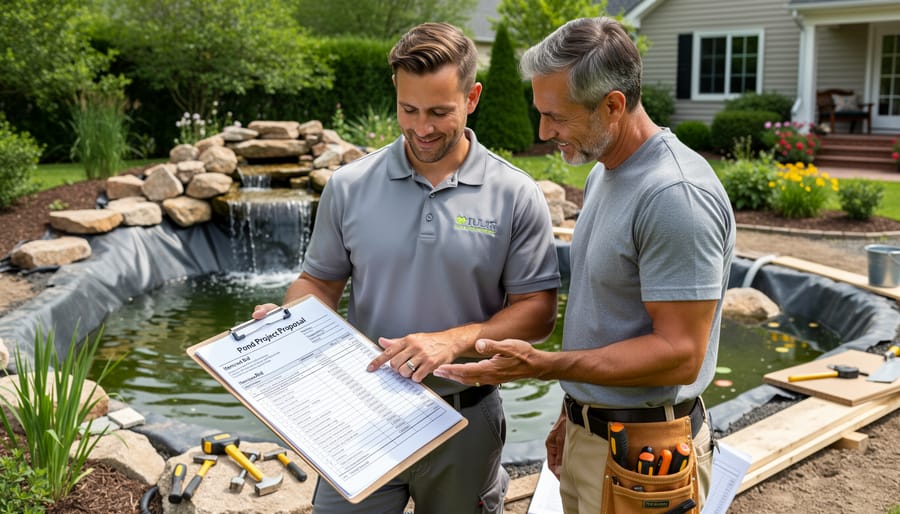
Step 3: Request Detailed Bids (Not Just Ballpark Numbers)
Now that you’ve narrowed down your list of potential contractors, it’s time to get serious about the details. This is where you’ll move beyond those quick phone estimates and request detailed, written bids. Think of this as creating your pond project’s shopping list, where you’re asking each contractor to show their work.
A proper Request for Proposal (or RFP, which sounds fancier than it is) doesn’t need to be intimidating. You’re simply asking contractors to provide a comprehensive breakdown of what they’ll do and what it’ll cost. Start by requesting itemized pricing for everything: excavation costs, liner materials, filtration systems, pumps, plants, rocks, labor, and any additional features like waterfalls or lighting. When contractors lump everything into one price, you can’t compare apples to apples or identify where you might save money.
Be specific about materials. Instead of accepting “pond liner” as a line item, ask which brand, thickness, and warranty period they’re proposing. The same goes for pumps and filters. Will they use energy-efficient models? What’s the expected lifespan? These details matter tremendously for your long-term costs and satisfaction.
Request a clear timeline with milestones. When will they start? How long for excavation? When will water features be operational? A vague “takes about three weeks” won’t cut it. You need dates and phases, especially if your project intersects with permits and regulations that require inspections at specific stages.
Don’t forget warranties and guarantees. What’s covered if the liner develops a leak six months later? Is there a workmanship guarantee? How long will they stand behind their installation? These protections are worth their weight in koi.
Finally, ask about what’s not included. Will you need to handle landscaping around the pond? Are plants extra? Knowing the boundaries prevents surprise expenses later.
Step 4: Compare Apples to Apples
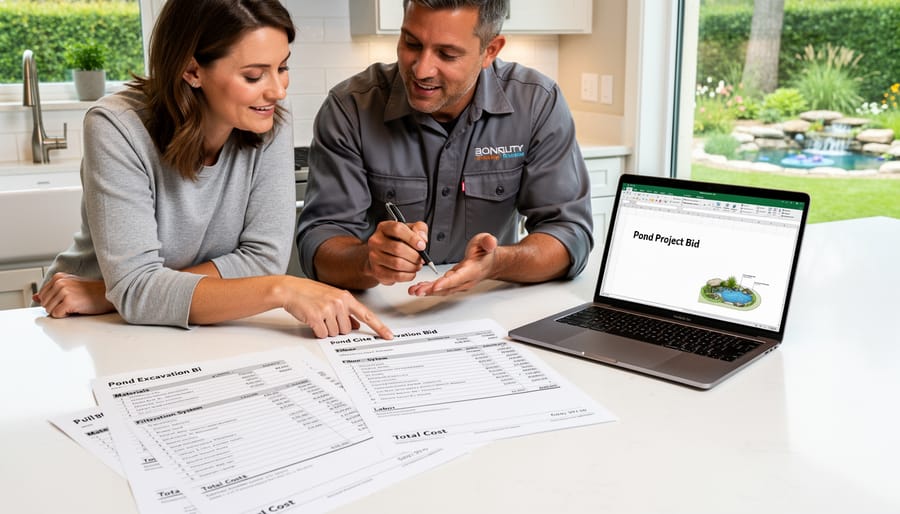
Now comes the detective work! You’ve got several bids sitting on your kitchen table, and it’s time to figure out which one truly offers the best value. Think of this like comparing different pond pump models – the price tag is just one piece of the puzzle.
Start by creating a simple comparison chart. Grab a piece of paper or open a spreadsheet, and list each contractor down the left side. Across the top, create columns for the important stuff: total price, project timeline, materials quality, warranty offered, payment schedule, and any extras included. When I was comparing bids for my koi pond installation, this chart saved me from a potentially expensive mistake.
Here’s where it gets interesting – the cheapest bid isn’t always your best friend. I learned this the hard way when a rock-bottom quote for my waterfall turned out to exclude the underlayment and proper filtration system. That “bargain” would’ve cost me twice as much once I added the missing essentials!
Look carefully for hidden costs lurking in the fine print. Does one contractor charge extra for site cleanup? Are permits included, or will that hit your wallet later? What about warranties – a five-year guarantee on workmanship beats a one-year any day. Make sure you verify contractor credentials and insurance coverage too, as these protect your investment.
Pay attention to what’s actually included in each bid. One contractor might specify premium EPDM liner while another mentions “standard liner” without details. Those vague descriptions? Red flags waving at you. The most complete, detailed bid often represents the most reliable contractor, even if it’s not the lowest number. You’re not just buying a service – you’re buying peace of mind and a pond that’ll bring you joy for years to come.
Step 5: Negotiate Without Being ‘That’ Homeowner
Here’s the truth about negotiation: contractors expect it, but there’s a right way and a wrong way to go about it. I learned this the hard way when I tried to haggle down a pond installer’s labor costs and nearly lost a great contractor over a few hundred dollars.
Let’s talk about what you can negotiate. Timeline flexibility is golden. If your contractor can fit your project into their slower season, you might save 10-15%. I once saved $800 on my koi pond simply by agreeing to a September installation instead of rushing for July. Material alternatives are another sweet spot. Ask if there’s a different liner brand that performs just as well, or if local stone could replace imported flagstone. Most contractors appreciate this collaborative approach.
You can also discuss payment schedules. Some contractors offer small discounts for upfront payments, while others are flexible with milestone-based payments that protect both parties.
Now, what’s off the table? Never try to negotiate down skilled labor costs. Quality workmanship on your pond’s plumbing, electrical, and structural elements isn’t where you want to cut corners. Safety standards and proper permitting are likewise non-negotiable. I’ve seen homeowners try to skip electrical permits for pond lighting, and it always comes back to haunt them during home sales.
Here’s my approach: “I really want to work with you, and I’m wondering if there’s any flexibility in the timeline or materials that could help me stay within budget?” This opens dialogue without insulting their expertise. Remember, you’re building a relationship with someone who’ll likely maintain your pond for years. A respectful negotiation today means they’ll answer your panicked call when your pump fails on a Sunday.
Step 6: Lock It Down with a Solid Contract
You’ve found your perfect contractor, the price is right, and everyone’s excited to get started. But here’s where many homeowners make a costly mistake—they skip the detailed contract or settle for a handshake agreement. Don’t do it! A solid contract protects both you and your contractor, preventing misunderstandings that could turn your dream pond into a nightmare.
Think of your contract as the roadmap for your entire project. It should spell out exactly what’s being built, from the pond dimensions to the specific liner material. I learned this lesson the hard way when a contractor assumed “natural stone” meant any rocks he could find, while I was picturing carefully selected river rocks. Get specific about materials, brands, and quality levels.
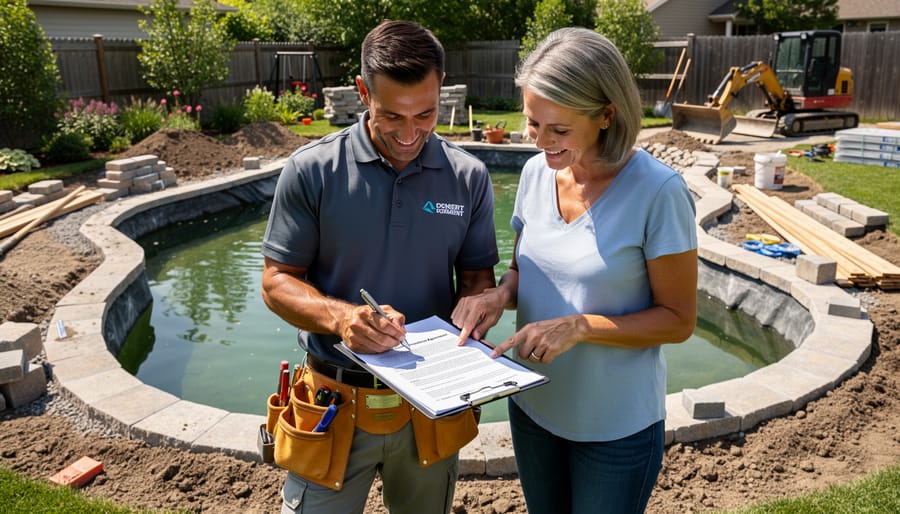
Payment schedules matter tremendously. A fair structure typically involves a small deposit (10-20% maximum), milestone payments as work progresses, and a final payment upon completion. Never pay the full amount upfront, no matter how trustworthy the contractor seems. Break payments into stages like excavation completion, plumbing installation, and final landscaping.
Your contract must include a change order process. When you decide mid-project that you want that waterfall two feet taller, how will pricing and timeline adjustments work? Put it in writing. This protects you from surprise charges and gives your contractor clear boundaries.
Don’t forget the cleanup clause. Who removes excavated dirt? Who’s responsible for protecting your existing garden beds? When will the site be returned to a livable condition?
Include project milestones with specific dates and verify that your contractor carries proper insurance coverage. Add warranty information—both for materials and workmanship—and outline what happens if problems arise after completion.
Finally, include a dispute resolution process. Hopefully you’ll never need it, but knowing how disagreements will be handled brings peace of mind to everyone involved.
Step 7: Manage the Project (Without Micromanaging)
Once construction begins, you’ll want to stay engaged without hovering over your contractor’s shoulder every minute. Think of yourself as the project sponsor, not the construction manager. Schedule regular check-ins, perhaps weekly, to review progress and discuss any concerns. I learned this balance the hard way during my first pond installation when I called my contractor three times daily with questions. He politely reminded me that constant interruptions actually slowed progress, and we agreed on a daily end-of-day update instead.
Trust your contractor’s expertise for standard construction decisions. You hired them for their knowledge, so let them work. However, don’t hesitate to speak up when something looks off or differs from your approved plans. Questions about material substitutions, significant design changes, or timeline adjustments are always appropriate. If your liner color suddenly looks different than what you selected, or the waterfall placement has shifted, that’s worth a conversation.
Unexpected issues will arise, whether it’s hidden tree roots, unexpected soil conditions, or delayed material deliveries. Stay flexible and solution-focused. Ask your contractor to explain the problem, propose solutions with associated costs, and give you time to decide on adjustments. Document these change orders in writing before work proceeds.
Visit the site regularly but at agreed-upon times. Take photos to track progress and note any questions for your next scheduled conversation. This approach shows you’re engaged without disrupting workflow. Quality control happens through observation and asking questions when you notice something concerning, not by telling professionals how to do their job. Remember, a good contractor welcomes reasonable oversight and appreciates clients who communicate clearly without constant interference.
Money-Saving Strategies That Won’t Compromise Your Pond
Creating a beautiful pond doesn’t mean draining your wallet. I’ve learned through years of splashing around in this hobby that smart planning can save you thousands without sacrificing the peaceful oasis you’re dreaming of.
Start by identifying tasks you can genuinely handle yourself. Things like removing sod, digging (if you’ve got a small to medium pond), and installing edging stones are perfect DIY opportunities. I saved nearly $1,500 on my second pond by tackling these labor-intensive but straightforward jobs myself. However, know your limits. Electrical work for pumps and major excavation are worth hiring professionals for both safety and efficiency.
Timing is everything in pond construction. Schedule your project for late fall or early winter when contractors typically have lighter workloads. You’ll often find they’re more willing to negotiate prices during these slower months. Plus, completing construction before spring means you’re ready to plant and stock fish when conditions are ideal.
Consider phasing your construction if budget is tight. Build the basic pond structure first, then add features like waterfalls, lighting, or elaborate filtration systems in subsequent seasons. This approach spreads costs over time and lets you learn what features you actually want versus what looked good on paper.
Material choices make a huge difference. Instead of expensive natural stone, explore manufactured pond liner alternatives that mimic the look at half the cost. Local stone yards often sell perfectly good irregular flagstone pieces at clearance prices. For plants, buy smaller specimens or divide plants from fellow pond enthusiasts rather than purchasing mature plants at premium prices.
Finally, get multiple quotes but don’t automatically choose the cheapest. Look for contractors who offer value through experience, proper insurance, and realistic timelines. Sometimes paying slightly more upfront prevents expensive fixes later. Balance frugality with quality, and your pond will reward you for years to come.
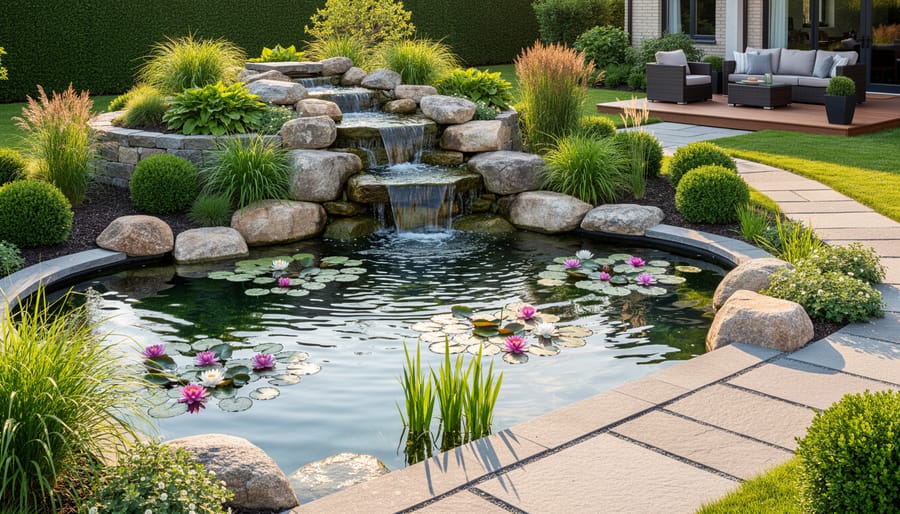
You’ve made it through all seven steps, and I couldn’t be more excited for you! Take a moment to appreciate what you’ve just learned. What might have seemed like an overwhelming process when you started reading is now a clear roadmap you can follow with confidence. You’re no longer walking into contractor meetings feeling intimidated or uncertain about whether you’re getting a fair deal.
Here’s the beautiful truth: every hour you invest in this procurement process saves you from potential headaches down the road. I’ve seen too many fellow pond enthusiasts rush through contractor selection, only to end up with leaking liners, poorly integrated filtration systems, or bills that spiraled way beyond their original budget. You’re choosing a different path, one where you stay in control.
Think about what’s waiting for you at the end of this journey. Picture yourself sitting beside your gorgeous new pond on a warm summer evening, watching koi glide peacefully through crystal-clear water, listening to the gentle cascade of your waterfall. That vision becomes reality when you take the time to do things right from the start.
The procurement process isn’t just about paperwork and formalities. It’s about protecting your investment, your property, and your dream. You now have the tools to evaluate contractors fairly, communicate your needs clearly, and ensure everyone stays accountable throughout the project. That’s powerful knowledge, and you should feel confident putting it into action. Your perfect pond awaits!