
Why Your Pond is Filling Up With Muck (And How to Fix It for Good)
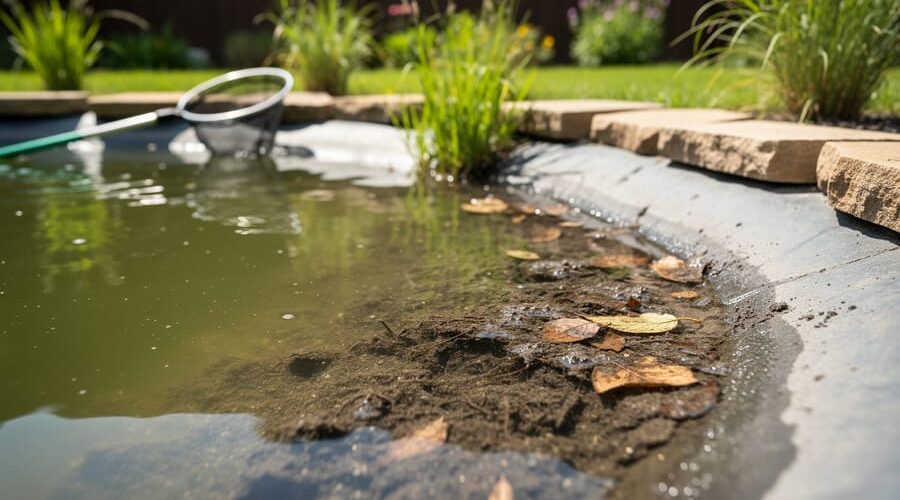
Look down into your pond and notice that crystal-clear water from last spring now appears cloudy and murky. Wade in and you’ll feel that soft, mucky layer beneath your feet growing thicker each season. That’s pond sedimentation at work, and if you’re reading this, you’ve probably already discovered your pond is shallower than it used to be or your fish seem stressed in increasingly turbid water.
Sediment accumulation is one of those sneaky problems that builds up gradually until one day you realize your beautiful backyard water feature has lost a foot of depth and the water looks more like chocolate milk than the sparkling retreat you envisioned. The good news? You don’t need expensive equipment or harsh chemicals to tackle this challenge. Whether sediment comes from erosion around your pond edges, decomposing leaves and plants, or runoff from surrounding areas, sustainable management strategies can restore your pond’s health and keep it clear for years to come.
This guide walks you through understanding exactly what’s causing sediment buildup in your specific situation, then moves into practical prevention techniques that work with nature rather than against it. You’ll discover hands-on removal methods for existing sediment, from manual dredging perfect for small garden ponds to beneficial bacteria that break down organic muck naturally. Most importantly, you’ll learn how to create a simple maintenance routine that prevents sediment from returning, so you can spend more time enjoying your pond and less time worrying about it.
What’s Really Happening at the Bottom of Your Pond
The Good, The Bad, and The Sludgy: Types of Sediment
Not all pond sediment is created equal, and knowing the difference can save you from unnecessary worry (or prompt you into action when needed!).
Let’s start with the good stuff. A thin layer of organic sediment is actually your pond’s friend. Think of it as nature’s composting system right there in your water. Decomposing leaves, plant material, and natural debris create a nutrient base that beneficial bacteria call home. This layer supports your pond’s ecosystem and can even help filter water naturally. When I first started pond keeping, I panicked at every bit of sediment I saw, but I quickly learned that a little organic matter is perfectly normal and even helpful.
Now for the problematic buildup. When sediment accumulates faster than your pond can process it, you’ve got trouble brewing. Excess muck appears thick, dark, and sludgy, often releasing that telltale rotten egg smell when disturbed. This happens when too many leaves fall in, fish waste accumulates, uneaten food settles, or algae dies off in large quantities. You’ll notice your pond getting shallower, water clarity declining, and plants struggling.
Here’s how to identify what you’re dealing with: Gently probe your pond bottom with a stick or your hand (wearing gloves). If you feel a thin, firm layer, you’re in good shape. If your stick sinks deep into soft, goopy material, you’ve got excess buildup that needs attention. The thickness and consistency tell the whole story.
Signs Your Pond is Crying for Help
Your pond has a way of telling you when something’s not quite right—you just need to know what to look for! I remember walking out to my pond one morning and immediately knowing something was off, even before I got close enough to see clearly.
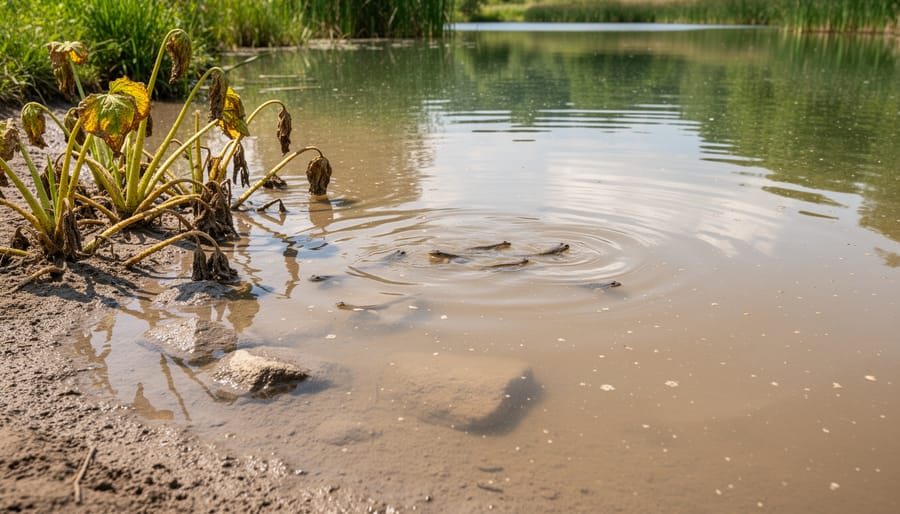
The most obvious sign is reduced water depth. If your pond suddenly looks shallower or you can’t see features that were previously visible, sediment is likely building up on the bottom. You might notice rocks or pond edges that used to be underwater now peeking above the surface.
Cloudy or murky water is another red flag. While some cloudiness after rain is normal, persistently hazy water that never clears suggests sediment particles are suspended throughout your pond. Think of it like a snow globe that never settles.
Your nose knows trouble too. Foul odors—that swampy, rotten egg smell—indicate decomposing organic matter trapped in sediment layers. This happens when sediment creates low-oxygen zones where beneficial bacteria can’t break down waste properly.
Watch your fish behavior closely. Gasping at the surface, hanging near waterfalls or fountains, or appearing lethargic all signal oxygen depletion, often caused by excessive sediment decomposition. Similarly, aquatic plants that once thrived may start yellowing, losing leaves, or dying back as sediment smothers their roots.
Ironically, while your desirable plants struggle, you might see an explosion of algae. Nutrients released from decomposing sediment act like fertilizer for algae, turning your water green or covering surfaces with slimy growth.
During your regular pond walks, check for these warning signs. Early detection makes management much easier than waiting until problems become severe. Trust your observations—if your pond doesn’t look, smell, or feel right, it’s probably asking for help.
Where All That Muck Actually Comes From
Let me tell you something I learned the hard way during my first year with a backyard pond: that mucky layer building up at the bottom doesn’t just magically appear. It’s coming from somewhere, and playing detective to find the sources is actually half the battle in keeping your pond clean.
Your surrounding landscape is usually the biggest culprit. Every time it rains, water rushes across your lawn, garden beds, and patio, picking up soil particles, grass clippings, and fertilizer residue before dumping it all into your pond. If your pond sits at a low point in your yard, you’ve basically created a collection basin for everything uphill. I remember watching in dismay after one heavy storm as muddy streams carved little rivers straight into my pond.
Those beautiful trees overhanging your water feature? They’re gorgeous until you realize they’re dropping leaves, flowers, seeds, twigs, and pollen directly into the water all year long. In autumn, it gets even worse. All that organic matter sinks and starts breaking down into that brown, soupy layer you’re trying to avoid.
Here’s where many pond owners accidentally create their own problems: fish. If you’ve got too many koi or goldfish crammed into your pond, or if you’re tossing in more food than they can eat in a few minutes, you’re contributing directly to sediment buildup. Uneaten food and fish waste don’t just disappear. They settle, decompose, and add to the muck.
Don’t forget about your aquatic plants either. Yes, they’re beautiful and help filter the water, but when leaves die back or flowers fade, that plant material needs to go somewhere. If you’re not removing it, it’s becoming sediment.
Finally, wind carries in dust, pollen, and debris from neighboring properties. You might be doing everything right, but Mother Nature has other plans. Understanding which of these sources affects your specific pond helps you target your prevention efforts where they’ll make the biggest difference.
Stop Sediment Before It Starts: Prevention Strategies
Smart Landscaping Around Your Pond
Think of your pond’s surroundings as its first line of defense against sediment. The way you landscape around your water feature can either invite sediment problems or prevent them entirely.
Start with proper grading. Your pond should sit in a gentle bowl shape, not at the bottom of a slope where water naturally rushes down. When I installed my first pond, I didn’t pay attention to this detail and ended up with muddy water after every rainstorm. If your yard slopes toward your pond, consider regrading or installing a berm to redirect runoff away from the water.
Creating buffer zones is your next smart move. Plant a ring of vegetation at least three to five feet wide around your pond’s edge. Native grasses, ferns, and groundcovers work beautifully because their roots grab onto soil particles before they reach the water. These plants act like nature’s filter, catching sediment and absorbing excess nutrients.
Mulching is another game-changer. Apply a two to three inch layer of organic mulch around nearby garden beds and pathways. This cushions rainfall impact and prevents soil from splashing and washing into your pond. Just remember to keep mulch a few inches back from the water’s edge to prevent it from floating away.
Position matters too. Avoid placing your pond at the base of hills or near areas with loose, sandy soil. These spots are erosion magnets. If you’re planning a new pond, scout your yard after a heavy rain to see where water naturally flows and avoid those paths entirely.
The Right Plants Make All the Difference
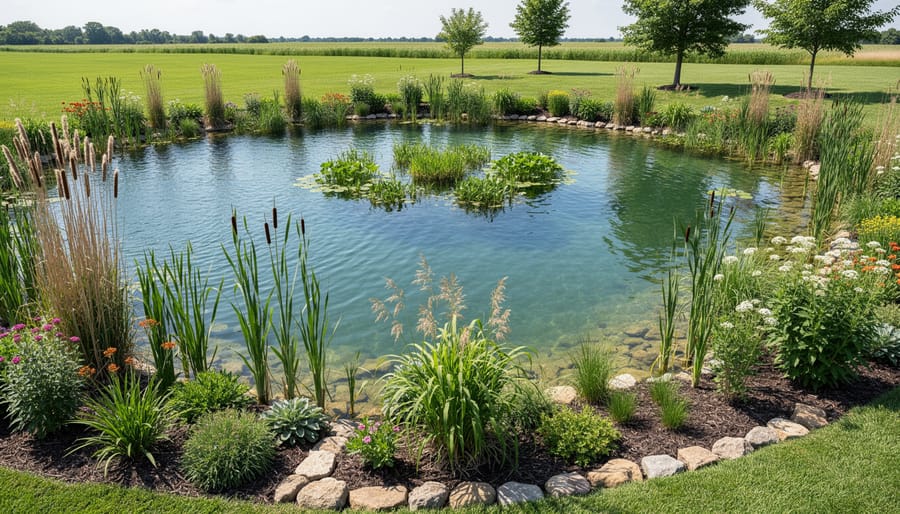
Here’s a secret I learned after years of battling murky pond water: the best sediment fighters aren’t fancy gadgets, they’re plants! Aquatic and marginal plants work like nature’s own filtration system, and once they’re established, they do most of the heavy lifting for you.
The magic happens beneath the surface. Plant roots create a living network that holds soil in place around pond edges, preventing erosion that contributes to sediment buildup. These roots also absorb excess nutrients that would otherwise feed algae and create more organic matter settling to the bottom. It’s like having a team of tiny workers constantly cleaning your pond.
For sediment control, I always recommend starting with these champions: Water irises and rushes are fantastic for stabilizing pond margins with their dense root systems. Submerged plants like hornwort and water milfoil actually filter particles as water flows through their feathery leaves. Water lilies deserve a special mention because their broad leaves shade the water, reducing algae growth while their roots anchor into the substrate.
Around the edges, try planting pickerel rush or cattails in shallow zones. They’re tough, look beautiful, and their roots grip the soil like natural rebar. Start with a mix of these plants, spacing them about 12 inches apart, and you’ll notice clearer water within just one growing season.
Feeding and Stocking: Finding the Balance
Here’s the thing about feeding fish – what goes in must come out, and that “out” settles right on your pond bottom! I learned this lesson the hard way when my once-crystal pond turned murky from overfeeding my enthusiastic koi.
Start with proper fish stocking densities. A good rule of thumb is one inch of fish per square foot of surface area, though less is always better for water quality. Overcrowding means more waste, more uneaten food, and you guessed it – more sediment.
When it comes to feeding, only offer what your fish can consume within five minutes. Uneaten food sinks and decomposes, creating that mucky layer we’re trying to avoid. I now feed smaller portions twice daily rather than one large feeding, which my fish digest more efficiently.
Consider switching to high-quality, easily digestible fish food. Better nutrition means less waste production. During cooler months, reduce feeding as fish metabolism slows – they simply don’t need as much, and excess food will just accumulate on the bottom.
Sustainable Ways to Remove Existing Sediment
The Manual Approach: When to Roll Up Your Sleeves
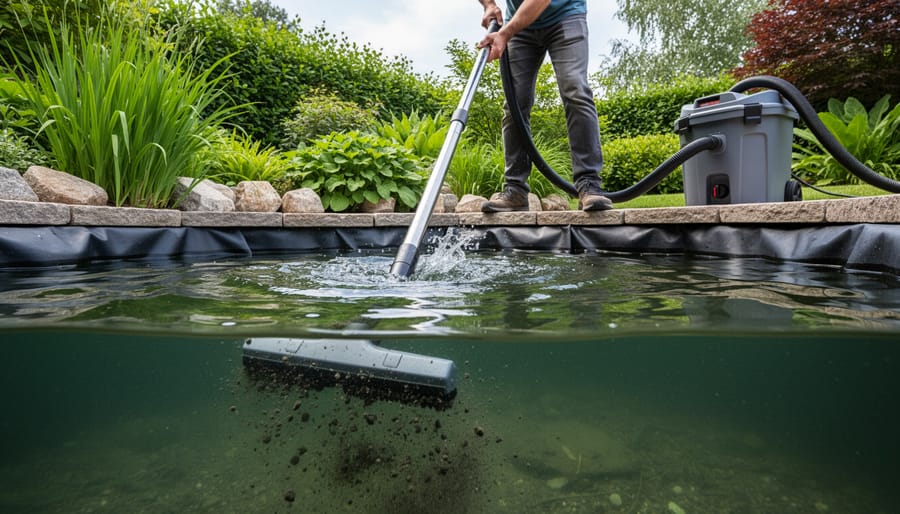
Sometimes you just need to get hands-on with your pond, and there’s something oddly satisfying about seeing the immediate results of your hard work. I’ll never forget the first time I vacuumed my own pond – watching that murky cloud of sediment disappear through the hose felt like giving my fish a brand new home.
The best time to tackle manual sediment removal is during spring or early fall when temperatures are moderate. Your fish will be less stressed, and you’ll be more comfortable working outdoors. Avoid summer’s heat when oxygen levels are already lower, and never disturb sediment during winter when your pond ecosystem is fragile.
Start with a pond vacuum, which works like an underwater shop vac. Begin at the deepest point and work your way to the edges in systematic passes. Move slowly – rushing creates sediment clouds that defeat the purpose. For smaller ponds or tight corners, a fine mesh net works beautifully for scooping leaves and loose debris from the surface and shallow areas.
If you’re dealing with compacted sediment several inches deep, careful dredging might be necessary. Use a flat-bottomed scoop or rake, working in small sections. Remove only a portion at a time to avoid shocking your pond’s ecosystem. Some muck is actually beneficial, so don’t aim for sterile perfection.
Here’s the bonus: that sediment you’re removing is garden gold. It’s rich in nutrients and organic matter, making it perfect for composting or spreading directly around non-edible plants. Mix it into your compost pile or let it dry in a designated area before adding it to garden beds. Just avoid using it near vegetables since pond sediment can contain bacteria. Your roses and perennials, though, will absolutely love this natural fertilizer.
Beneficial Bacteria: Your Invisible Cleanup Crew
Think of beneficial bacteria as your pond’s tireless maintenance team, working around the clock to break down leaves, fish waste, and other organic matter that would otherwise pile up as muck on your pond bottom. These microscopic helpers are nature’s recyclers, converting sludge into harmless gases and nutrients that plants can actually use.
Your pond naturally harbors these bacteria, but sometimes they need reinforcement, especially in spring when things wake up or after you’ve cleaned your pond. I learned this the hard way when my newly cleaned pond became a murky mess within weeks because I’d inadvertently removed too much beneficial bacteria along with the debris.
Consider adding bacterial products when you first establish your pond, after major cleanings, during spring startup, or if you notice increasing sludge despite your best efforts. These products essentially jumpstart your biological cleanup crew. Look for products containing multiple bacterial strains designed specifically for muck reduction and water clarity, not just general pond bacteria.
Here’s the secret to keeping your bacteria thriving: they need oxygen. Without adequate aeration, these helpful microbes simply can’t do their job efficiently. A simple air pump or fountain makes all the difference. I run mine continuously during warmer months when bacterial activity peaks.
Temperature matters too. Bacteria work best between 10-32 degrees Celsius, becoming sluggish in cold water. Combining beneficial bacteria with other natural pond solutions creates a sustainable maintenance approach that keeps sediment under control year-round.
Working With Nature: Biological Sediment Management
Nature offers some of the best sediment management tools right in your pond. I discovered this firsthand when I added a few koi to my water garden, and they immediately began sifting through the bottom muck. It was like having tiny underwater cleaning crews working around the clock!
Bottom-feeding fish are your first line of natural defense. Koi, goldfish, and particularly catfish love to forage through sediment, consuming organic matter before it breaks down. They’re not just eating the muck though – they’re converting it into fish waste, which your plants can use as fertilizer. It’s a beautiful cycle once you see it in action.
Snails and freshwater mussels are the unsung heroes of sediment control. Pond snails glide along surfaces eating algae and decaying plant material, while mussels filter water constantly, removing tiny particles that would otherwise settle as sediment. A healthy snail population can make a remarkable difference in water clarity.
The key is creating a balanced ecosystem where each creature plays its part. Add beneficial bacteria to break down waste, include plenty of oxygenating plants to support your clean-up crew, and avoid overstocking fish, which creates more waste than your natural system can handle.
Start small with just a few biological helpers and observe how they interact with your pond’s unique conditions. This approach takes patience, but once established, your pond essentially maintains itself with minimal intervention from you.
Year-Round Maintenance That Actually Works
Spring and Summer: Active Season Management
Spring and summer are when your pond comes alive, but they’re also prime time for sediment buildup. The good news? A few quick tasks each week can keep things beautifully clear.
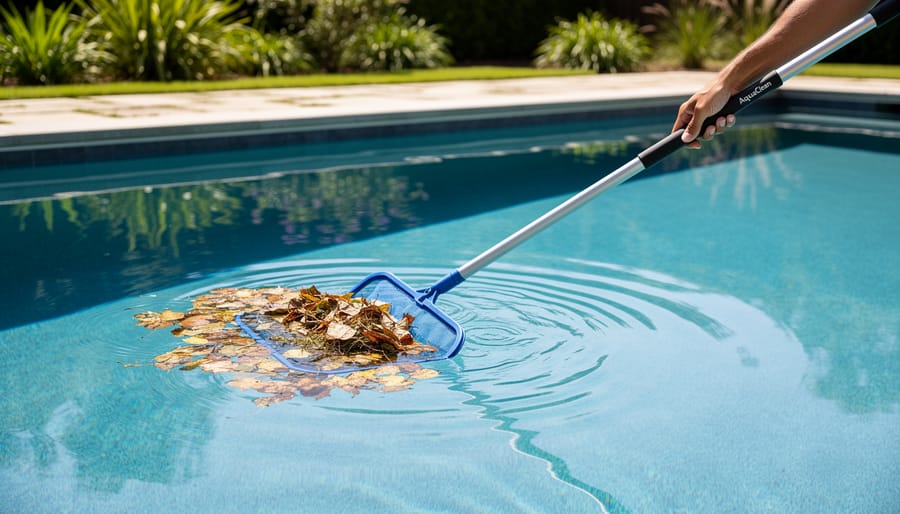
Start with daily skimming during peak season. I grab my net every morning with my coffee and spend just two minutes pulling out leaves, flower petals, and floating debris. It’s honestly meditative, and you’ll be amazed how much this prevents from sinking and decomposing on the bottom.
Keep an eye on plant growth during these active months. Aquatic plants are wonderful natural filters, but they can get overzealous. Trim back excessive growth every couple of weeks, removing dead leaves before they drop. I learned this the hard way when my water lilies went wild one June and created a decomposing mess by July.
Monitor fish feeding carefully. Only offer what your fish can eat in about five minutes. Uneaten food is a major sediment contributor. During warmer weather when fish are most active, it’s tempting to overfeed, but restraint pays off with clearer water.
Check your filtration system weekly. Clean filter media when water flow slows, and inspect pump intakes for clogs. A struggling filter means debris settles instead of getting captured.
These simple routines become second nature quickly. Think of them as pond meditation rather than chores. Five to ten minutes daily prevents hours of deep cleaning later and keeps your water garden looking pristine all season long.
Fall and Winter: Preparing for Dormancy
As autumn arrives and temperatures drop, your pond enters a critical transitional period that can either set you up for success or create a sediment nightmare come spring. This is honestly my favorite time to be proactive, because a little effort now saves so much work later.
First things first: leaves are public enemy number one for fall sediment buildup. I learned this the hard way my first year when I let beautiful autumn leaves drift into my pond, thinking they looked picturesque. By spring, I had a thick layer of decomposing muck. Now I’m vigilant about using pond netting stretched across the surface from late September through November. It catches leaves before they sink and start breaking down. Remove the netting weekly and compost those leaves in your garden instead.
As water temperatures cool below 60 degrees Fahrenheit, start cutting back marginal plants to about three inches above the waterline. This prevents dead plant material from falling into the water and adding to sediment layers. Hardy water lilies naturally die back, so remove any brown, mushy foliage as you spot it.
Reduce fish feeding significantly when temperatures drop below 50 degrees, and stop entirely below 45 degrees. Fish metabolism slows dramatically, meaning uneaten food becomes sediment rather than nutrition.
Consider continuing aeration throughout winter, especially if you keep fish. A small bubbler prevents complete ice coverage and maintains oxygen levels without churning up bottom sediment like large aerators might. Just position it away from the deepest areas where fish overwinter.
Equipment That Makes Sediment Management Easier
Having the right equipment can transform sediment management from a dreaded chore into a manageable part of your pond care routine. Let me walk you through what’s actually worth your hard-earned money based on my years of pond keeping.
For smaller ponds under 500 gallons, a quality pond vacuum is your best friend. Think of it as a wet-dry shop vac designed specifically for underwater work. I use mine every few weeks during peak debris season, and it pulls up leaves, sludge, and muck without draining the pond. Budget models start around $100, but mid-range options between $200-300 offer better suction and durability. They’re especially handy for spot-cleaning problem areas without disturbing your entire ecosystem.
Surface skimmers are unsung heroes in preventing sediment buildup. By catching leaves and floating debris before they sink and decompose, you’re stopping problems before they start. Most mechanical filters include skimmer boxes, but standalone floating skimmers work great for ponds without full filtration systems. They’re relatively inexpensive, typically $50-150, and save you tons of cleanup time.
Quality filtration makes all the difference for medium to large ponds. A properly sized filter system with both mechanical and biological components keeps water clear while managing fine particles. Don’t skimp here – undersized filters create more work, not less. Plan on spending roughly $300-800 depending on pond volume, but consider it an investment that pays dividends in reduced maintenance.
Aerators and fountains help too, though indirectly. By keeping water circulating and oxygenated, they prevent sediment from settling into thick layers and discourage anaerobic decomposition. Even a simple bubbler helps, starting around $50 for basic models.
Finally, pond netting during fall is the cheapest preventive tool you’ll find. A $30 net saves hours of vacuuming later. Sometimes the simplest solutions really are the best.
Here’s the truth I’ve learned after years of working with ponds: sedimentation doesn’t have to be your enemy. Yes, it’s a natural process that every pond faces, but it’s also completely manageable when you approach it the right way. You don’t need expensive equipment, harsh chemicals, or a degree in aquatic science. What you need is understanding, a sustainable plan, and the commitment to take small, consistent actions.
Think of pond maintenance like tending a garden. A few minutes of attention each week prevents hours of backbreaking work later. By adding beneficial bacteria regularly, managing what enters your pond, incorporating plants that naturally filter sediment, and keeping up with simple observation routines, you’re staying ahead of the problem rather than scrambling to fix it.
I remember feeling overwhelmed when I first noticed my pond losing its sparkle. But once I understood that sediment buildup was natural and created a simple maintenance rhythm, everything changed. My pond became something I enjoyed again rather than dreaded.
You’ve got this. The strategies we’ve covered aren’t complicated, they just require consistency. Start with one or two changes that feel manageable. Maybe it’s adding plants this month and setting up a bacteria routine next month. Small steps lead to big results.
Your reward? More time relaxing by your beautiful, clear pond and less time fighting maintenance battles. That’s what water gardening should be about.