
Your Pond’s Survival Plan When Extreme Weather Strikes
Your pond represents months or even years of careful planning, hard work, and investment—and a single severe weather event can undo it all in hours. I learned this the hard way when an unexpected late spring freeze killed half my koi and damaged my pump system, costing me hundreds in replacements and countless hours of heartbreak. That morning taught me what every pond owner eventually discovers: hoping for the best isn’t a strategy.
Extreme weather doesn’t announce itself politely. Heatwaves spike water temperatures and deplete oxygen faster than you’d think possible. Flash floods overwhelm filtration systems and wash away plants. Sudden freezes can crack liner, burst pipes, and trap fish under ice. Even severe storms dump debris, knock out power to essential equipment, and contaminate water with runoff chemicals. The question isn’t whether your pond will face weather threats, but when—and whether you’ll be ready.
The good news? You don’t need expensive equipment or expert knowledge to protect what you’ve built. A solid weather emergency plan combines simple preparation steps you can take this weekend with quick-response actions for when severe weather hits. This means knowing which supplies to keep on hand, understanding your pond’s specific vulnerabilities, and having clear protocols that take the guesswork out of crisis moments.
This guide walks you through creating a customized emergency plan that fits your pond, your climate, and your schedule. You’ll learn exactly what to do before, during, and after extreme weather events—plus how to build long-term resilience so each season brings less worry and more enjoyment of your water garden.
Understanding Weather Threats to Your Water Garden

Heavy Storms and Flooding
Heavy storms can turn your peaceful pond into a turbulent mess faster than you might expect. When excessive rainfall hits, it’s not just about rising water levels—it’s about what that water brings with it. I learned this the hard way during my first monsoon season when my pond transformed from crystal clear to murky brown overnight.
The biggest concern is runoff contamination. Rainwater racing across your lawn carries fertilizers, pesticides, soil, and debris straight into your pond, drastically affecting water quality and potentially spiking ammonia or nitrate levels. This sudden change can stress or even harm your fish. Overflow is another serious issue—your pond can breach its banks, allowing fish to escape or foreign objects to wash in.
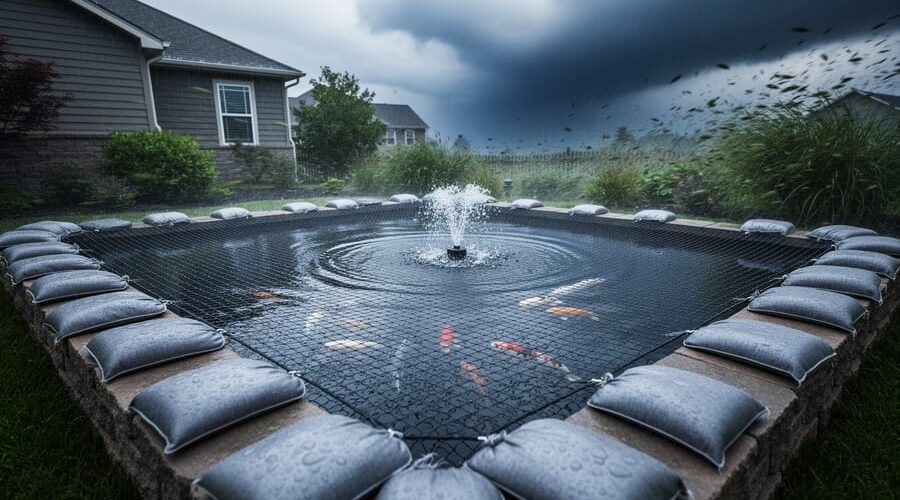
Before heavy storms arrive, cover your pond with netting to catch debris like leaves and branches. Turn off electrical equipment to prevent damage, and consider reducing feeding since fish become less active in turbulent conditions. If possible, create a controlled overflow path that directs excess water away from structures while preventing fish escape.
After the storm passes, test your water immediately. Remove any debris, perform partial water changes if parameters are off, and watch your fish closely for signs of stress like gasping or unusual behavior.
Drought and Heat Waves
Extreme heat and drought create a perfect storm of challenges for your pond. As water levels drop through evaporation, your fish become crowded and stressed in smaller volumes. Warmer water holds less dissolved oxygen, which can be dangerous or even fatal for your aquatic life. I learned this the hard way during a scorching summer when my goldfish were gasping at the surface each morning.
During heat waves, top up your pond regularly with dechlorinated water to maintain stable levels. Run your pump and fountain continuously to maximize oxygen circulation. Add shade cloth or floating plants to reduce water temperature by several degrees. Consider installing an aerator or air stone for extra oxygen support. Monitor your fish closely for signs of stress like rapid gill movement or lethargy.
Temperature stress affects plants too. Submerged plants may struggle, while marginals can wilt in extreme heat. Implement water management strategies before the season starts, and keep emergency equipment like backup aerators on hand to protect your entire pond ecosystem.
Freeze Events and Winter Storms
Winter can be magical, but freezing temperatures pose serious risks to your pond ecosystem. When water freezes, ice formation can trap harmful gases underneath, suffocating your fish. Ice expansion can also crack pond liners, damage pumps, and shatter decorative features. Your fish naturally slow down and enter a semi-dormant state in cold water, but they still need oxygen to survive the winter months.
Start winter-proofing your pond before the first freeze hits. Install a pond heater or de-icer to maintain a small opening in the ice for gas exchange. Never break ice by hitting it, as shock waves can harm your fish. Remove submersible pumps if temperatures drop below freezing, or keep them running to create water movement that prevents complete freezing. Consider adding a floating object like a tennis ball to absorb ice pressure and protect your pond structure.
Building Your Pre-Weather Emergency Kit
Essential Equipment and Supplies
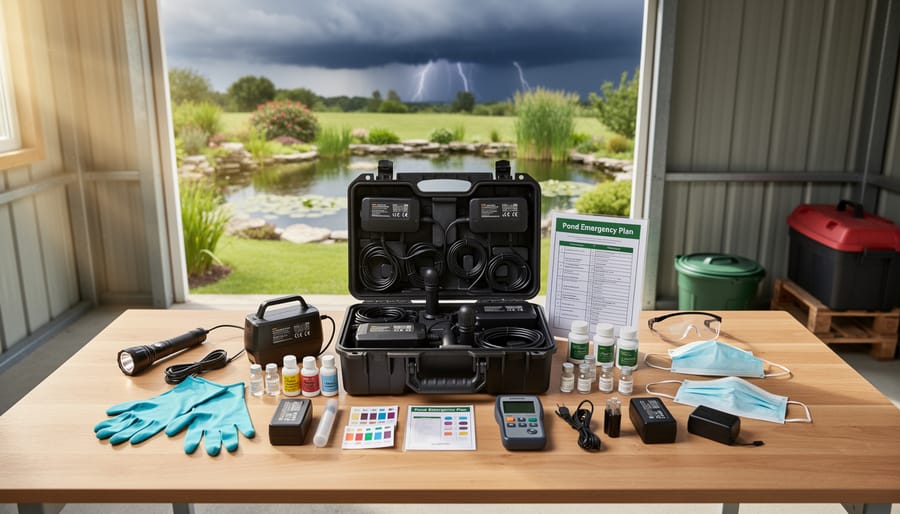
Having the right equipment on hand before disaster strikes can mean the difference between losing your beloved fish and keeping them safe. Think of this as your pond’s emergency kit—items you hope you’ll never need but will be incredibly grateful to have when weather turns nasty.
Start with a battery-powered aerator, which becomes your lifeline during power outages. Without electricity, your fish can quickly run out of oxygen, especially in warmer weather. These portable units keep water oxygenated when your main pump fails, giving you precious time to address the emergency. Keep fresh batteries stored with it so you’re not scrambling in the dark.
Water testing kits are essential for monitoring conditions after storms. Heavy rain can drastically alter your pond’s pH, ammonia levels, and other parameters. Quick testing lets you know if you need to take corrective action before your fish show signs of stress.
Keep at least one spare pump ready to go. I learned this lesson the hard way during a summer thunderstorm when debris clogged my main pump. Having a backup saved my koi from overheating in stagnant water.
Round out your supplies with sturdy netting to catch falling debris, heavy-duty tarps to protect against hail or create temporary shelter, pond dechlorinator for treating emergency water additions, and clean fish holding containers for temporary evacuation if needed. Store everything together in a waterproof bin that’s easy to grab when weather threatens.
Emergency Contact List
Before severe weather strikes, put together a reliable emergency contact list and keep it somewhere accessible—I keep mine laminated near my pond toolkit. Start with your local pond supplier’s phone number; they’re your go-to for emergency equipment like backup pumps or aerators when you need them fast. Add at least one veterinarian who specializes in fish—trust me, you’ll want this handy if your koi show signs of stress after a storm. Include contact information for a few fellow pond enthusiasts from local clubs or online groups; the pond community is incredibly generous about helping during emergencies, whether that means storing fish temporarily or lending equipment. Don’t forget your utility companies’ emergency numbers, especially if power outages could affect your pond’s filtration system. Finally, add numbers for tree removal services and your insurance agent. Having these contacts ready means you can act quickly when every minute counts, rather than frantically searching online while watching storm clouds gather.
Documentation to Keep Handy
Having your pond’s vital information organized in one place can be a lifesaver when weather emergencies strike and you need to make quick decisions. Start by documenting your pond’s dimensions, depth, and total gallons, which helps you calculate medication doses or replacement water needs accurately. Keep all equipment manuals together, especially for pumps, filters, and aerators, so you can troubleshoot issues quickly or order replacement parts without delay.
I always recommend taking photos of your pond during its best days. These reference images become invaluable after a storm when you’re trying to assess damage or explain problems to repair professionals. Include shots from different angles and some close-ups of your filtration setup.
Maintain a current fish inventory list with species, sizes, and any special care requirements. This becomes essential if you need to evacuate fish or treat the entire pond. Keep a simple log of your regular water parameters like pH, ammonia, and nitrite levels. This baseline helps you recognize when things have gone seriously wrong after extreme weather events, allowing you to respond appropriately rather than guessing what treatment your pond needs.
Step-by-Step: Preparing Your Pond Before the Storm
Three Days Out: Initial Preparations
Three days gives you the perfect window to get everything shipshape before the weather hits. I learned this lesson the hard way during my first serious storm season—scrambling at the last minute is no fun at all!
Start by testing all your essential equipment. Fire up your pump, check that your aerator is running smoothly, and make sure backup battery systems actually hold a charge. If something’s not working properly, you’ve still got time to fix or replace it.
Walk around your pond and secure anything that could become a projectile in high winds. That decorative statue, your net, garden tools—move them indoors or tie them down securely. I once found my favorite pond skimmer three yards away after a windstorm because I forgot this simple step.
Take a good look at the trees surrounding your pond. Trim back any branches that hang precariously overhead. They might look fine now, but heavy rain or ice can bring them crashing down into your water.
Finally, top off your pond to its normal level. You want that buffer space available to handle extra rainwater without overflowing. While you’re at it, test your water quality and jot down the numbers—you’ll want these baseline readings for comparison later.
One Day Before: Critical Actions
When you’re down to the final 24 hours before severe weather hits, it’s time to take those last-minute actions that can make all the difference. I know this feels like crunch time, but you’ve got this!
Start by harvesting any edible or valuable plants that won’t survive the storm. Water lilies in pots can be submerged deeper in the pond if you’re expecting hail or strong winds. Remove floating plants that might clog your pump or skimmer, and trim back tall marginal plants that could become projectiles.
If you’re expecting extreme temperature drops or contamination risks, consider temporarily relocating your most delicate or prized fish to indoor holding tanks. Use pond water to fill these containers so you’re not shocking them with different water chemistry. I’ve done this with my fancy goldfish during hurricane warnings, and while it’s stressful for everyone involved, it’s worth the peace of mind.
Install protective netting over the pond if you haven’t already. This catches falling debris like branches and leaves before they sink and decompose, which could spike ammonia levels. Secure the netting with stakes or weights so it doesn’t blow away.
Here’s something people often forget: disconnect all electrical equipment if flooding is even remotely possible. Unplug pumps, filters, UV clarifiers, and lighting. Water and electricity are a dangerous combination, and your equipment can be replaced, but safety cannot. Take photos of your setup before disconnecting so reassembly is easier later.
Final Hours: Last-Minute Checklist
When the weather alert moves from “watch” to “warning,” it’s go-time! Start with a quick walk around your pond, checking that everything you prepped is still secure. Confirm your pond netting is fastened down, pumps are positioned correctly, and any loose items are stored away.
Test your backup power sources right now, not when the lights go out. If you have a generator, run it for a few minutes to ensure it starts smoothly. Check your battery-powered aerators have fresh batteries. This five-minute test could save your fish during a power outage.
Here’s something many pond owners forget until it’s too late: grab your phone and take photos of your pond setup from multiple angles. Capture close-ups of equipment, plants, and the overall landscape. These images become invaluable for insurance claims if damage occurs. I learned this the hard way after a storm took out my favorite waterfall feature, and I had no proof of its original condition.
Finally, bring your emergency supply kit indoors where you can easily access it. Double-check you have water test kits, fish nets, and any medications your aquatic friends might need during the recovery phase.
Riding Out the Storm: During-Event Protocols
When to Check Your Pond (and When to Stay Away)
Your safety always comes first, no matter how much you love your pond. During active severe weather—high winds, lightning, torrential rain, or blizzard conditions—stay indoors. I know it’s tempting to peek outside and check on your fish friends, but no pond emergency is worth risking your life. Seriously, those koi will understand!
Once the worst has passed and conditions are merely unpleasant rather than dangerous, you can do a quick visual check from a safe vantage point. Look for obvious damage like fallen trees, displaced equipment, or major debris from a window or covered porch. A five-minute assessment is plenty—this isn’t the time for detailed inspections or repairs.
Wait until weather conditions fully stabilize before approaching your pond for hands-on work. Wet surfaces are slippery, branches may still be falling, and downed power lines could be hidden under debris. If you see any electrical hazards near your pond, call professionals immediately and keep everyone away from the area. Your pond has survived millions of years of evolution; it can wait a few more hours for you to safely assess the situation.
Emergency Interventions That Can’t Wait
Some pond emergencies simply can’t wait until morning. If you lose power during a storm and your aerator stops working, your fish could be in serious trouble within hours, especially in warmer weather when oxygen depletes faster. Keep battery-powered air stones or a backup generator on hand, and check on your fish immediately if the power goes out. I learned this the hard way during an unexpected summer blackout when I found my koi gasping at the surface at 2 AM.
Watch for visible signs of fish distress like gulping air at the water’s surface, swimming erratically, or gathering near waterfalls where oxygen is higher. These behaviors mean you need to act now, not later. Add extra aeration immediately, perform a partial water change with dechlorinated water, or temporarily relocate fish to a holding tank with adequate oxygen.
Catastrophic leaks demand instant attention too. If you notice your water level dropping rapidly, turn off pumps to prevent them from running dry and burning out. Locate the leak source if possible, and use pond liner repair tape or rubber patches as temporary fixes until you can make permanent repairs. Keep these emergency supplies in an easily accessible kit so you’re never scrambling during a crisis.
Post-Weather Recovery: Getting Your Pond Back to Normal
Immediate Assessment (First 24 Hours)
Once the storm passes and it’s safe to venture outside, take a deep breath and resist the urge to rush. Your first priority is personal safety, so watch for downed power lines, unstable trees, or slippery surfaces around your pond area.
Start with a visual safety sweep of your entire pond perimeter. Look for obvious hazards like fallen branches overhanging the water, damaged electrical equipment, or compromised pond edges that might collapse. If anything looks dangerous, rope off that area and deal with it before getting close to the water.
Next, check your pond’s structure itself. Walk around the entire edge looking for cracks, shifts in liner position, or erosion damage. Heavy rain can wash away soil supporting your pond walls, so pay special attention to any settling or separation. Don’t panic if you spot issues – most are fixable – just document them with photos for reference.
Now for the water quality check. Does it look murky, smell off, or have an unusual color? These are clues about what happened during the storm. Grab your water testing kit and check pH, ammonia, and dissolved oxygen levels. Extreme weather often throws these out of balance.
Your fish need attention too. Spend ten minutes observing their behavior. Are they gasping at the surface, hiding, or swimming oddly? Count them if possible – sometimes fish jump out during storms or predators take advantage of chaos.
Finally, prioritize debris removal. Start with anything blocking pumps or filters first, then remove larger items that could decompose and foul your water. Smaller debris can wait until tomorrow.
Water Quality Restoration
After severe weather passes, your pond water likely needs some TLC. Don’t panic if it looks murky or smells off – this is totally normal and fixable!
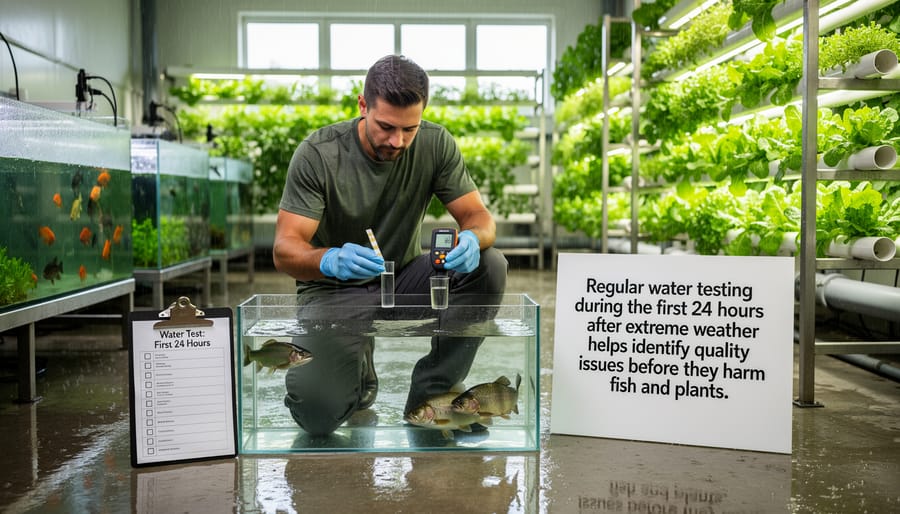
Start by testing your water parameters within 24 hours. Check pH, ammonia, and nitrite levels to understand what you’re working with. If readings are only slightly off, resist the urge to do a massive water change right away. Large, sudden changes can stress your fish more than gradual improvements.
Begin with a 10-15% partial water change if ammonia or nitrite levels are elevated. Wait 48 hours, retest, and repeat if necessary. This gentle approach helps without shocking your aquatic ecosystem. I learned this the hard way when I changed 50% of my pond water after a storm – my koi were noticeably stressed for days!
Add beneficial bacteria supplements immediately after the weather event. Storm runoff and debris overload can crash your biological filtration, so you’re essentially jump-starting your pond’s natural cleaning crew. Follow product directions, but don’t be shy about using a double dose initially.
If your pond has debris, remove it manually before adding bacteria. Dead leaves and branches will continue decomposing and creating ammonia, working against your restoration efforts.
For pH adjustments, make changes gradually over several days – no more than 0.2 points per day. Your fish will thank you for the patience!
Helping Fish and Plants Recover
After a weather emergency, your pond inhabitants need some extra TLC. Keep a close eye on your fish for signs of stress like gasping at the surface, lethargy, loss of appetite, or unusual swimming patterns. Plants might show wilting, yellowing leaves, or broken stems. These are normal responses to dramatic weather changes, so don’t panic.
Start with supportive care basics. Test your water quality daily for the first week, watching ammonia, nitrite, and pH levels closely. Perform partial water changes if parameters drift out of range, but go slowly with temperature-sensitive fish. Resume feeding gradually, starting with smaller portions than usual. For damaged plants, trim away dead foliage to redirect energy toward healthy growth.
If fish show persistent symptoms beyond a few days, develop wounds, or exhibit rapid breathing despite good water quality, it’s time to consult an aquatic veterinarian or experienced pond professional. Sometimes underlying issues surface after stress events.
Here’s the truth: recovery takes time. I’ve watched ponds bounce back beautifully, but it rarely happens overnight. Give your ecosystem 2-4 weeks to stabilize. Your patience will pay off as fish regain their appetite and plants send out fresh shoots, proving nature’s remarkable resilience.
Long-Term Resilience: Making Your Pond Weather-Ready Year-Round
Design Features That Protect
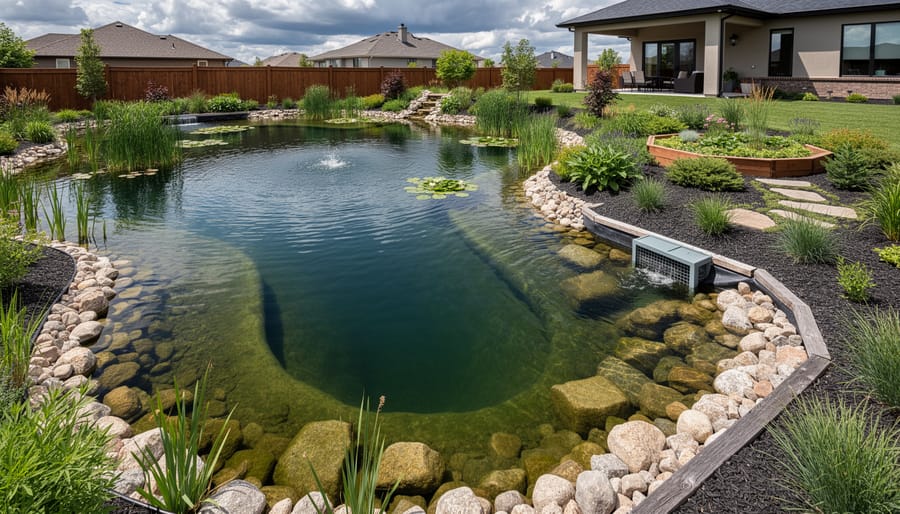
Building smart design features into your pond from the start is like giving it a suit of armor against weather extremes. An overflow system is your first line of defense during heavy rainfall—think of it as a safety valve that directs excess water away from your pond’s edges, preventing erosion and keeping fish safely contained. I learned this lesson the hard way during my first monsoon season!
Proper depth zones make a huge difference too. A deeper section (at least 3-4 feet) gives fish a safe retreat during temperature swings, whether it’s scorching heat or freezing conditions. Combine this with windbreaks like strategically placed rocks, fencing, or hardy shrubs to reduce evaporation and protect delicate plants from wind damage.
Shade structures are game-changers for summer heat. A simple pergola with climbing vines or a strategically positioned umbrella can drop water temperatures by several degrees. Consider elements from drought-resistant pond design if water scarcity is a concern in your area.
Finally, having a backup filtration option—even a simple battery-powered aerator—ensures your beneficial bacteria survive power outages. These thoughtful features work together, creating a resilient pond that bounces back faster from whatever weather throws your way.
Seasonal Maintenance as Prevention
Think of seasonal checks as your pond’s annual health exam—catching small problems before they become weather disasters. I learned this the hard way after a surprise storm caught me off-guard with a clogged skimmer that nearly flooded my filtration system!
Start with spring and autumn walkarounds. Check your liner for weak spots, test your backup pump, and clear debris from drains. These simple seasonal maintenance practices reveal vulnerabilities when you still have time to fix them. Trim overhanging branches that could fall during storms, and reinforce loose edging stones that heavy rain might dislodge.
Summer’s your time to assess shade structures and test your aeration system under heat stress. Winter prep means checking ice prevention equipment and ensuring drainage paths are clear. Document everything with photos—it helps you spot gradual changes.
Building pond resilience through regular maintenance is like strengthening your home’s foundation. These proactive steps align perfectly with climate adaptation solutions, turning routine care into your best weather insurance policy. A healthy, well-maintained pond bounces back faster from whatever nature throws at it.
Here’s something I’ve learned from years of tending ponds and connecting with fellow water gardeners: preparation doesn’t just protect your pond, it transforms that knot of anxiety in your stomach into genuine confidence. When storm clouds gather or the forecast warns of extreme temperatures, you’ll stand ready instead of scrambling in panic.
I’ve watched our pond community pull together during countless weather emergencies. Neighbors sharing generators during power outages, experienced keepers mentoring newcomers through their first hard freeze, group chats buzzing with real-time advice as hurricanes approach. This shared resilience reminds me that we’re never truly alone in these challenges.
Your pond is tougher than you might think. It’s a living ecosystem that has survived millions of years of evolution, adapting to whatever nature throws its way. And you? You’re stronger than you realize too. Every challenge you face makes you a more skilled, more intuitive pond keeper.
The beauty of emergency planning is that you don’t need to do everything at once. Start small today. Maybe it’s just writing down your local emergency contacts. Perhaps it’s buying one extra air stone to keep in storage. Or simply walking around your pond with fresh eyes, noting what might need attention before the next weather event hits.
Take that first step. Your future self, standing beside a healthy, thriving pond after the storm passes, will thank you for the preparation you’re starting right now.