
Why Your New Koi Will Die Without a Quarantine Tank (And How to Build One)
Set up a dedicated holding tank before bringing new koi home, even if your fish look perfectly healthy. Disease outbreaks spread fast in ponds, and a simple quarantine tank setup prevents devastating losses that can wipe out your entire collection. You need a bare minimum 100-gallon container with basic filtration, an air pump, and clean dechlorinated water maintained between 65-75°F. Keep new arrivals isolated for 3-4 weeks while monitoring for parasites, bacterial infections, and behavioral changes that healthy-looking fish often hide.
Most koi keepers learn this lesson the hard way. I’ve watched heartbroken pond owners lose prized fish worth thousands because they skipped quarantine, thinking their new purchase from a reputable dealer was safe. The reality is simpler than you might think. Quarantine doesn’t require expensive equipment or complicated procedures. A stock tank in your garage, a sponge filter, and consistent observation will protect your investment better than any medication.
This guide walks you through exactly what you need, how to set everything up in an afternoon, and the daily protocols that make quarantine effective. Whether you’re bringing home your first koi or adding to an established pond, these straightforward steps ensure your new fish integrate safely without putting your current collection at risk.
What Makes Koi Quarantine Different From Regular Fish Tanks
Size Requirements That Actually Work
Here’s the reality I learned the hard way: that 40-gallon tank gathering dust in your garage probably won’t cut it for quarantining koi. The general rule I follow is 50 gallons for every 6 inches of fish, which means a single 8-inch koi needs at least a 75-gallon tank minimum.
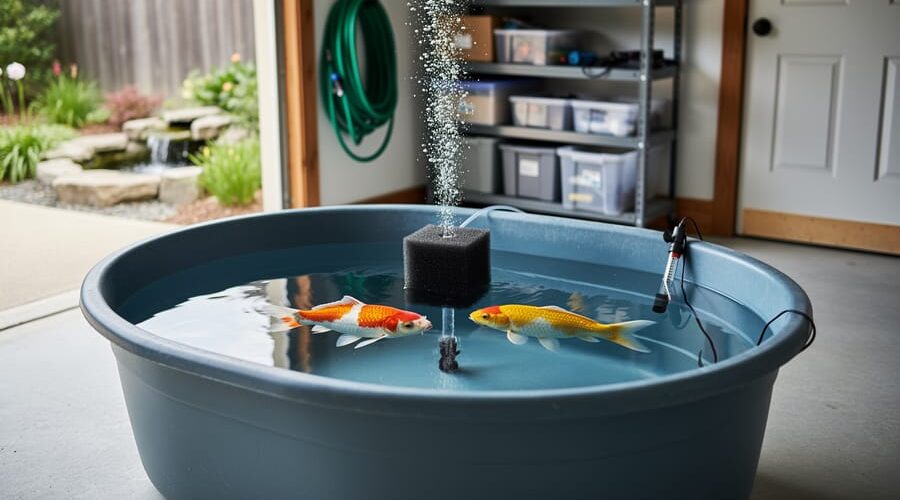
For most situations, I recommend starting with a 100-150 gallon stock tank. These large, oval tubs give you enough space to quarantine 2-3 young koi comfortably. If you’re bringing in larger koi (10 inches or more), you’ll want to bump up to 200-300 gallons. I’ve seen people try to squeeze adult koi into smaller spaces, and it never ends well because stressed fish get sick faster, defeating the entire purpose of quarantine.
Why does size matter so much? Bigger tanks dilute waste more effectively, maintain stable water parameters, and give you precious time to respond when ammonia spikes at 2 AM. During my first quarantine attempt with an undersized 55-gallon tank, I was changing water twice daily just to keep three small koi alive. Once I upgraded to a 150-gallon setup, water quality remained stable with basic maintenance, and my stress levels dropped dramatically along with it.
The Water Quality Challenge
Here’s something I learned the hard way during my first quarantine experience: koi are basically eating and pooping machines! A single koi can produce as much waste as several goldfish, and when you’re working with the smaller water volume of a quarantine tank, this creates serious water quality issues fast.
Let me break down what’s happening in simple terms. When koi eat, they produce waste that releases ammonia into the water. Think of ammonia as poison – even small amounts can burn their gills and stress them out. In a healthy pond, beneficial bacteria convert this ammonia into nitrites, which are also toxic but slightly less dangerous. Then, another type of bacteria converts nitrites into nitrates, which are much safer. This process is called the nitrogen cycle.
The challenge? These beneficial bacteria take weeks to establish, but your new koi start producing waste immediately. In a quarantine tank without an established cycle, ammonia and nitrites can spike within hours. This is why your filtration system and water monitoring become absolutely critical during quarantine.
Setting Up Your Koi Quarantine Tank: The Essential Components
Choosing Your Tank (Stock Tanks vs. Aquariums vs. DIY Options)
When I set up my first quarantine tank, I overthought everything and nearly bought an expensive glass aquarium. Here’s what I wish someone had told me then.
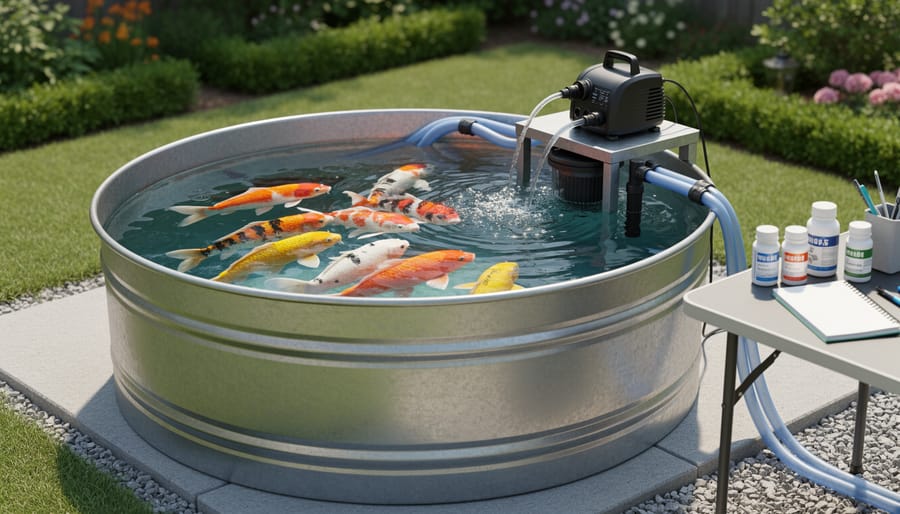
Stock tanks are hands-down the best choice for most pond owners. These galvanized or poly livestock watering troughs cost between $80-150 for a 100-gallon size, they’re indestructible, and you can find them at any farm supply store. I love that they’re portable, easy to clean, and can handle our sometimes-clumsy koi keeping adventures. The round models eliminate corners where debris collects, making maintenance a breeze.
Glass aquariums might seem appealing because you can observe your fish from all angles, but they’re pricey, heavy, and frankly overkill for quarantine purposes. A 75-gallon aquarium runs $200-300 and offers no real advantage over a stock tank. Save those for your indoor goldfish.
DIY options using food-grade containers or repurposed hot tubs can work in a pinch, but verify they’re fish-safe and haven’t held chemicals. I’ve seen creative setups using 55-gallon food-grade barrels cut lengthwise, though accessing fish for observation becomes tricky.
My recommendation? Start with a 100-150 gallon stock tank. It’s affordable, practical, and gives your new koi plenty of room during their 4-6 week quarantine. You’ll thank yourself when it’s time to drain, scrub, and reset between batches of fish.
Filtration That Won’t Let You Down
Your quarantine tank needs a reliable filtration system to keep the water clean and your koi healthy during their isolation period. Think of filtration as your tank’s life support system—it removes waste and creates the stable environment your fish need to thrive.
You’ll need two types of filtration working together. Mechanical filtration is the first line of defense, catching physical debris like uneaten food and fish waste before it breaks down in the water. This is usually handled by sponge filters or filter pads that trap particles. Biological filtration is where the magic happens—beneficial bacteria colonize the filter media and convert harmful ammonia and nitrites into safer nitrates. Both types are essential, and choosing the right filtration setup makes all the difference in your quarantine success.
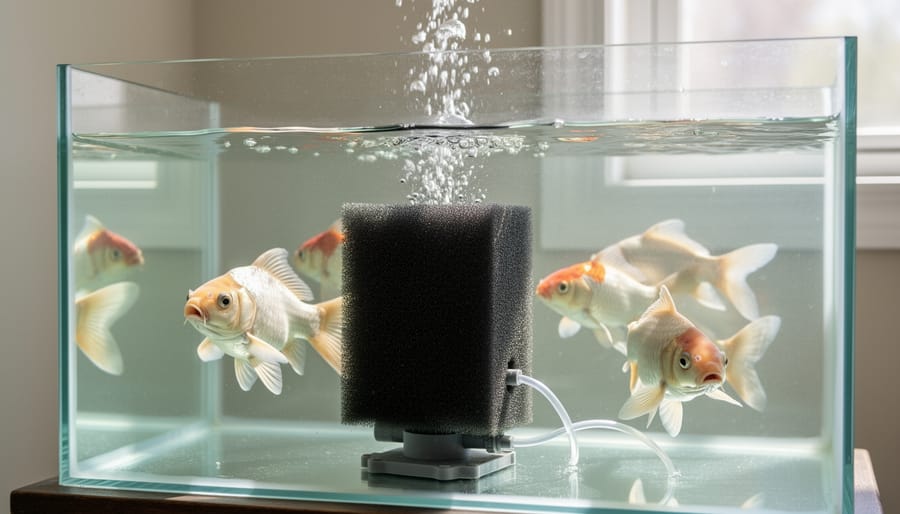
For a typical 100-200 gallon quarantine tank, I recommend a canister filter or a sponge filter rated for at least 150% of your tank volume. Why oversize? Koi are messy fish, and during quarantine, you can’t afford water quality issues. Sponge filters are fantastic because they provide gentle filtration without creating strong currents that might stress already vulnerable fish. Plus, they’re incredibly easy to maintain.
If you’re using a canister filter, choose one with multiple media trays so you can layer mechanical and biological media effectively. The key is having enough surface area for beneficial bacteria to establish quickly and handle your koi’s bioload efficiently.
Aeration and Water Movement
Koi are oxygen-hungry fish, much more so than goldfish or tropical species. Their large bodies and active metabolism mean your quarantine tank needs excellent aeration to keep them healthy during their stay. Think of it this way: stressed fish in quarantine need even more oxygen than usual, so don’t skimp on this step.
The simplest setup involves an air pump connected to one or two air stones placed at opposite ends of the tank. I always use a pump rated for at least double the tank volume—so for a 100-gallon quarantine tank, get a pump rated for 200 gallons. This ensures plenty of bubbles even if you add medications that can reduce oxygen levels.
Look for air stones that produce fine bubbles rather than large ones. Those tiny bubbles create more surface agitation, which is where oxygen actually enters the water. Popular options include the Hydrofarm Active Aqua air stones or simple cylinder-style stones from pet stores.
Position your air stones to create gentle water movement throughout the tank without creating a washing machine effect. Koi appreciate current but shouldn’t have to fight against it constantly. A little surface ripple is perfect—you’ll know it’s working when you see steady, gentle bubbling across the water’s surface.
Other Must-Have Equipment
Beyond your tank, filter, and air supply, you’ll need a few additional items to keep your quarantine setup running smoothly and safely.
A reliable heater becomes essential if you’re quarantining during cooler months or treating certain diseases that respond better to warmer water. Most koi do well at 65-75°F, but some medications work more effectively at specific temperatures. Pair your heater with an aquarium thermometer so you can monitor conditions at a glance. I learned this the hard way when I didn’t realize my garage quarantine tank dropped to 58°F overnight!
Your water testing kit is absolutely non-negotiable. You’ll need to test ammonia, nitrite, nitrate, and pH regularly since quarantine tanks lack the established beneficial bacteria of your main pond. Test every other day initially, then dial back to twice weekly once things stabilize.
Finally, invest in a tight-fitting cover or pond netting. Stressed koi are notorious jumpers, and I’ve heard too many heartbreaking stories of fish launching themselves out during their quarantine period. A simple mesh cover prevents escapes while still allowing air circulation. It’s a small investment that could save your new koi’s life.
The Right Way to Quarantine New Koi
Day One: Acclimation Without Stress
You’ve got your new koi floating in their bags, and I know the temptation to release them immediately is strong. Trust me, I’ve been there! But this first day is absolutely crucial, and rushing it is the number one mistake that leads to stressed, sick fish.
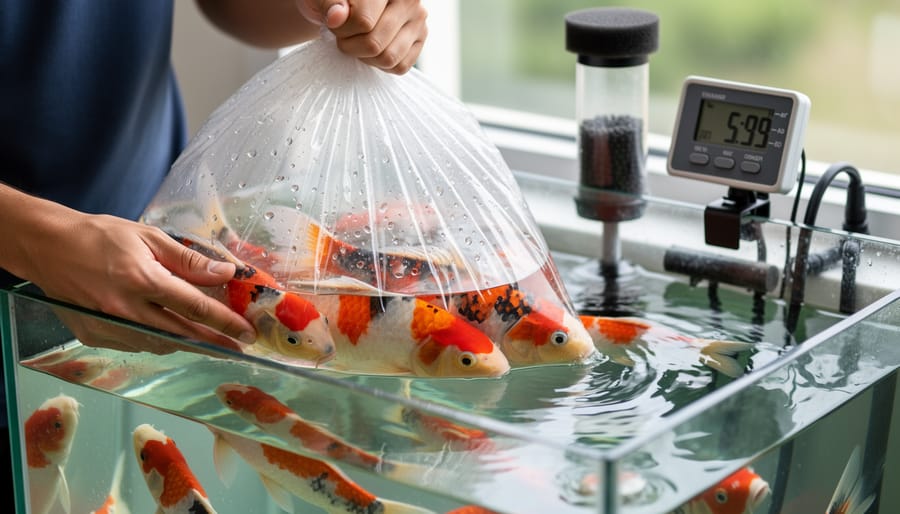
Start by floating the sealed bags in your quarantine tank for 15-20 minutes. This equalizes the temperature between the bag water and your tank water. Even a few degrees difference can shock your koi’s system, weakening their immune response right when you need it strongest.
After temperature matching, open the bags and begin the gradual water transition. Add about a cup of quarantine tank water to each bag every 10 minutes for the next hour. Yes, a full hour. I know it feels excessive, but koi are incredibly sensitive to water chemistry changes. Different pH levels, mineral content, and other parameters between the dealer’s water and yours need time to adjust.
During this process, watch your koi’s behavior closely. They should remain calm and upright. Erratic swimming or gasping means you’re moving too fast.
Once you’ve added tank water several times and the bag is nearly full, gently net your koi and place them in the quarantine tank. Never pour the bag water into your tank – it may contain parasites or bacteria from the dealer’s system.
Some koi hide initially or refuse food for a day or two. This is normal acclimation behavior. Give them dim lighting and minimal disturbance for the first 24 hours.
The 21-Day Minimum (And Why You Might Need Longer)
Here’s the thing about that 21-day minimum: it’s based on the lifecycle of most common koi parasites and the incubation period for bacterial infections. Think of it as giving problems enough time to show themselves before you introduce new fish to your main pond.
During the first week, watch for obvious signs of stress like erratic swimming, gasping at the surface, or refusing food. This is when shipping stress and immediate health issues become apparent. Your new koi might be shy at first, which is totally normal, but they should start eating within 2-3 days.
Week two is when things get interesting. Parasites that hitched a ride on your fish start completing their life cycles and become visible. You might spot flashing (fish scratching against surfaces), excess mucus, or tiny white spots. Bacterial infections that were brewing beneath the surface may also emerge now.
By week three, you’re looking for anything you might have missed. Are the fins healing properly? Is their appetite strong? Are they swimming naturally with the group?
Here’s when to extend quarantine: if you treated for parasites or disease during quarantine, add another full 21 days after treatment ends. If fish are still showing symptoms, keep them separate until they’re completely healthy for at least two weeks. I know it’s tempting to rush things, especially when your new koi seem fine, but patience here saves heartache later. Better safe than facing a pond-wide outbreak.
Daily Maintenance and Observation Checklist
Establishing a daily routine keeps you connected with your koi and helps you catch potential problems before they become serious. Think of this as your morning coffee ritual, but for fish.
Start each day by observing your koi before they notice you. Healthy koi swim actively and explore the tank, showing curiosity about their surroundings. They should hold their fins erect and glide smoothly through the water. Warning signs include fish hanging at the surface gasping for air, rubbing against tank walls, clamped fins held close to the body, or isolating themselves in corners.
Feed once or twice daily, offering only what they’ll consume in about five minutes. I learned the hard way that overfeeding in quarantine creates water quality nightmares. Watch how they eat. Enthusiastic feeding is excellent. Ignoring food or spitting it out signals trouble.
Test water parameters daily during the first two weeks, then every other day if readings stay stable. Record ammonia, nitrite, nitrate, and pH in a simple notebook. These numbers tell a story about what’s happening in your tank.
Perform a 25 percent water change every three days, or more frequently if ammonia or nitrite readings climb above zero. Match the temperature of new water to avoid shocking your koi.
Check your thermometer and make sure the heater maintains consistent temperature. Inspect equipment like filters and air stones to ensure they’re functioning properly.
Keep a log of observations. Jot down anything unusual, even if it seems minor. Patterns emerge over time that might save a fish’s life.
Spotting Trouble: Common Koi Diseases During Quarantine
Parasites: What to Look For
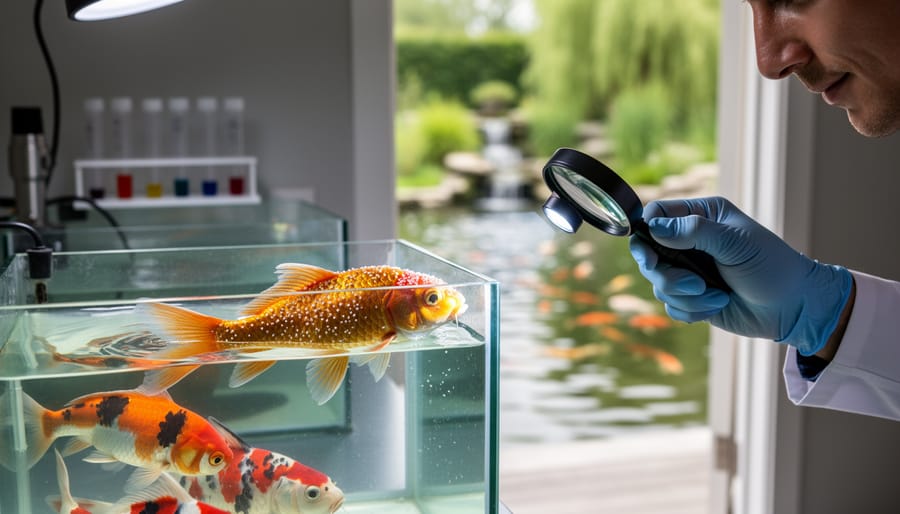
During quarantine, you’ll want to watch closely for unwelcome hitchhikers. The most common parasites are actually pretty easy to spot once you know what you’re looking for.
Ich, or white spot disease, shows up as tiny white dots on your koi’s body and fins—like someone sprinkled salt on them. You’ll notice your fish flashing (rubbing against surfaces) and acting lethargic. It’s one of the most frequent common koi health problems, but thankfully treatable with aquarium salt or specialized ich medications.
Flukes are microscopic parasites that attach to gills and skin. Your koi might gasp at the surface, clamp their fins tight against their body, or produce excessive mucus that looks like a cloudy coating. Treatment typically involves praziquantel-based medications.
Anchor worms look like thin threads sticking out from your fish’s body—they’re actually crustaceans, not worms. You can physically remove them with tweezers, then treat the wound with antiseptic to prevent infection.
The beauty of quarantine is catching these issues before they spread to your main pond. Most treatments work best in the controlled environment of your quarantine tank anyway, where you can monitor water parameters and medication levels precisely.
Bacterial and Fungal Infections
During quarantine, you’ll want to watch carefully for two common troublemakers: bacterial and fungal infections. Bacterial issues like fin rot show up as frayed, discolored fin edges or reddish patches on the body. Fungal infections look like cotton-like white or gray tufts on the skin or fins. The good news? Catching these early makes treatment much simpler.
For mild fin rot, improving water quality alone sometimes does the trick. Keep up with those water changes and maintain pristine conditions. If the issue progresses or you notice body lesions, it’s time for antibacterial treatments like medicated foods or bath treatments specifically designed for koi.
Fungal infections typically appear after an injury or stress event. Salt baths at proper concentrations can help, but be cautious with dosing. I learned this lesson years ago when I added too much salt too quickly and stressed my fish even more.
Here’s my honest advice: if you’re unsure about what you’re seeing or if treatments aren’t working within a few days, call in a fish veterinarian or experienced koi specialist. There’s no shame in getting expert help, especially when you’re just starting out. Your koi’s health is worth the consultation fee.
When to Call for Help
Here’s the thing—you don’t need to be a fish doctor to keep koi healthy, but you should know when to call in the experts. If your quarantined koi shows rapid breathing even after water conditions check out perfectly, refuses food for more than three days, or develops strange growths or open sores, it’s time to reach out. Same goes for erratic swimming patterns like constant flashing against surfaces or lying on their side.
Don’t feel embarrassed asking for help. I’ve learned more from a quick call to my local koi club than hours of internet searching. Most experienced koi keepers are genuinely happy to share advice—we’ve all been the worried beginner staring at a fish wondering what’s wrong. Your veterinarian, especially one familiar with pond fish, can prescribe treatments that aren’t available over the counter. When in doubt, ask. Acting quickly with professional guidance beats waiting and hoping every single time.
Biosecurity Beyond the Tank: Protecting Your Pond
The Cross-Contamination Trap
Here’s the hard truth I learned after losing three beautiful koi to an avoidable outbreak: your hands, nets, and buckets can be silent disease carriers. Even with a perfectly set up quarantine tank, diseases can hitchhike from your main pond to your new arrivals or vice versa.
Think of it like this – you wouldn’t use the same cutting board for raw chicken and salad without washing it, right? The same principle applies here. Dedicate specific equipment exclusively to your quarantine tank. This means separate nets, buckets, siphon hoses, and even towels. Mark them clearly with colored tape or labels so you never accidentally grab the wrong one.
Before touching anything in your quarantine setup, wash your hands thoroughly. Better yet, keep a pair of disposable gloves near your quarantine tank. When you move between systems, change gloves or rewash your hands. It sounds fussy, but it takes just seconds and prevents weeks of heartache.
I keep my quarantine gear in a plastic tote right next to the tank. Everything stays contained, organized, and separate from my pond supplies. This simple habit has saved me countless headaches and kept my established koi healthy while safely introducing newcomers.
Quarantining Isn’t Just for New Fish
Here’s a scenario many pond keepers don’t think about until it’s too late: quarantine isn’t just for newcomers. Your long-time koi residents sometimes need isolation too. If you notice one fish acting lethargic, hiding constantly, or showing signs of illness like clamped fins or unusual spots, moving it to quarantine protects your entire pond population from potential disease spread. I learned this the hard way when a usually energetic koi started bottom-sitting, and within days, three others showed similar symptoms.
Quarantine also makes sense after major pond maintenance. If you’ve drained your pond for cleaning or repairs, temporarily housing fish in a quarantine setup gives you peace of mind while monitoring them for stress-related issues. Similarly, if you’ve taken koi to shows, they’ve been exposed to other fish and different water conditions. A two-week quarantine period afterward acts as your safety buffer, ensuring they haven’t picked up hitchhiking parasites or pathogens before rejoining their pond mates.
Building Long-Term Healthy Habits
The best quarantine setup in the world won’t help if you’re constantly introducing disease. Think of this like keeping a tidy home – prevention is easier than cleanup!
Start with your koi source. Buy only from reputable dealers who quarantine their own stock. I learned this the hard way after losing three beautiful fish to a parasite hitchhiker from a bargain sale. Ask questions about their health protocols before handing over your money.
Create a visitor protocol for your pond area. It sounds strict, but keeping nets, buckets, and hands that have touched other ponds away from yours prevents cross-contamination. Keep dedicated equipment for your pond only, and if you must share tools, disinfect them thoroughly with a potassium permanganate solution.
Clean equipment between uses, even your own. That net you used last month? Rinse and dry it completely before the next use. Wet equipment harbors bacteria and parasites that love to tag along.
Remember, avoiding pond health dangers starts with smart habits. Your future self (and your koi) will thank you for building these routines now rather than scrambling during a health crisis later.
Setting up a quarantine tank isn’t about being overly cautious or paranoid. It’s about showing real care for the koi you already love and the investment you’ve made in your pond. Think of it as a welcoming committee that happens to include a health screening. Every koi keeper who’s lost fish to a preventable disease wishes they’d taken this step, and every one who’s dodged disaster thanks to quarantine knows the effort is absolutely worth it.
Here’s the encouraging truth: quarantine gets easier every time you do it. That first setup might feel overwhelming, but by your second or third round, you’ll move through the process almost on autopilot. You’ll know exactly where your equipment is stored, how to cycle your tank quickly, and what signs to watch for during observation periods.
Your pond is a living ecosystem you’ve worked hard to create. Protecting it with a simple quarantine period isn’t extra work—it’s smart fishkeeping. You’ve got this, and your koi will thrive because you took the time to do things right.