
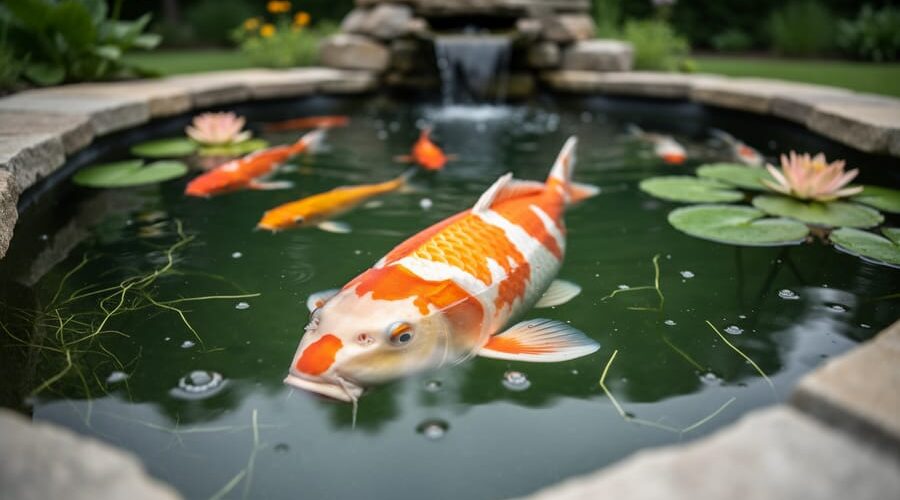
Why That 9 Pound Fish Could Crash Your Pond Ecosystem
That nine-pound koi gliding majestically through your backyard pond might be your pride and joy, but it could also be quietly suffocating your entire aquatic ecosystem. Large fish create challenges that catch most pond owners completely off guard—excessive waste that overwhelms biological filtration, oxygen depletion that stresses smaller fish, and bio-load calculations that suddenly don’t add up the way they did when your fish were fingerlings.
If you’re wondering whether your pond can handle that impressive specimen, you’re asking exactly the right question at exactly the right time. The difference between a thriving water garden and a murky, algae-choked disaster often comes down to understanding the real capacity limits of your system. Most pond owners follow the old “one inch of fish per gallon” rule without realizing that formula breaks down completely once fish exceed six or seven pounds.
The truth is, managing large fish isn’t about fancy equipment or expensive solutions. It’s about understanding three fundamental factors: your pond’s actual water volume, your filtration system’s biological capacity, and the waste production rate of mature fish. Get these wrong, and you’ll spend every weekend battling green water and gasping fish. Get them right, and that nine-pounder becomes a sustainable centerpiece rather than a ticking time bomb.
This guide walks you through the real-world math, warning signs your pond is maxed out, and practical adjustments that let you keep those magnificent fish healthy without constant crisis management.
What a 9 Pound Fish Really Means for Your Pond
The Bioload Reality Check
Let me tell you something that surprised me when I first learned about pond keeping: a 9-pound fish produces way more waste than you’d think. We’re not just talking about what you can see floating around either.
Here’s the reality. A fish that size is essentially a biological factory running 24/7. It’s constantly processing food, breathing, and yes, creating waste. For every pound of food your fish eats, it produces waste that contains ammonia, nitrites, and nitrates. These compounds don’t just disappear, they accumulate in your water and can quickly turn your beautiful pond into a toxic environment.
Think of it this way: a 9-pound koi or goldfish produces roughly the same amount of waste as several dozen smaller fish combined. That single fish is creating ammonia levels that your beneficial bacteria need to process constantly. If your filtration system wasn’t designed with large fish in mind, it’s playing catch-up every single day.
The numbers matter here. A healthy fish produces waste equal to about 3% of its body weight daily. That means your 9-pounder is generating waste continuously, and your pond’s biological filter needs to handle that load without breaking a sweat. If you’re noticing cloudy water, algae blooms, or your fish gasping at the surface, those are red flags that your system is overwhelmed.
The good news? Understanding this bioload reality is the first step toward creating a healthier environment for everyone in your pond.
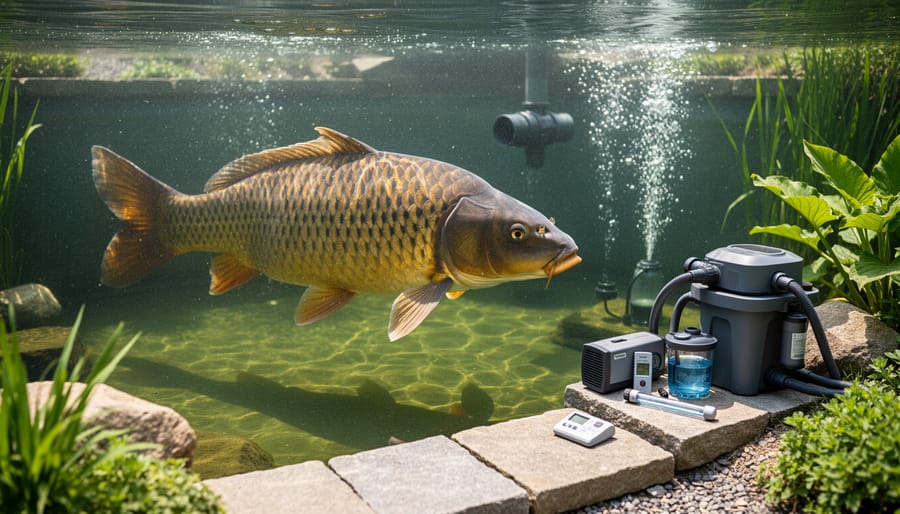
Swimming Room Requirements
A 9-pound fish needs serious swimming space to stay healthy and happy. Think of it this way: would you want to live in a closet? Your fish feels the same about cramped quarters.
For a single 9-pound fish, you’ll want a minimum pond volume of 250 gallons, though 500 gallons is much better. I learned this the hard way when my koi outgrew my starter pond and started acting sluggish. More water means better oxygen levels, easier temperature regulation, and less stress on your fish.
Depth matters just as much as volume. Your pond should be at least 3 feet deep, ideally 4 feet or deeper. This depth protects your fish from predators like herons and gives them cooler water during hot summers. During winter, that deeper zone stays warmer and prevents the entire pond from freezing solid.
Surface area is equally important. A 9-pound fish needs room to cruise around, so aim for at least 50 square feet of surface area. Long, narrow ponds work better than round ones because they give your fish a proper swimming lane.
Remember, these are minimums for one fish. If you’re keeping multiple large fish or planning for growth, you’ll need to scale up accordingly. When in doubt, go bigger. Your fish will thank you with vibrant colors and active behavior.
Understanding Your Pond’s Carrying Capacity
The Simple Math That Saves Your Fish
Here’s the good news: you don’t need to be a mathematician to figure out if your pond can handle that 9-pound fish. Let’s walk through some simple calculations together that’ll give you peace of mind.
The most popular rule in pond keeping is the “inch per gallon” guideline. For basic pond setups, you want about 1 inch of fish for every 10 gallons of water. So if your fish measures 12 inches long, it needs roughly 120 gallons. A 9-pound koi typically stretches between 24 to 30 inches, meaning it requires 240 to 300 gallons just for itself. Now multiply that by however many fish you have, and you’ll quickly see if you’re pushing the limits.
But here’s where it gets interesting. Surface area matters even more than volume because that’s where oxygen exchange happens. Measure your pond’s length and width in feet, then multiply them together. For every square foot of surface area, you can support about 1 inch of fish. A pond that’s 10 feet by 8 feet gives you 80 square feet, supporting roughly 80 inches of fish total.
Let me share a quick example from my own experience. When I upgraded my pond, I had three large koi totaling about 75 inches. My 200-square-foot pond could technically handle them by surface area standards, but the water quality told a different story. That’s when I learned these formulas are starting points, not absolute rules.
When calculating fish capacity, always round down rather than up. Your fish deserve room to thrive, not just survive. If your numbers look tight, it’s time to consider solutions before problems develop.
Beyond the Numbers: Other Factors That Matter
Here’s the thing about pond capacity – it’s not just a numbers game! I learned this the hard way when my calculations said everything was fine, but my fish were still gasping at the surface each morning.
Your filtration system is your pond’s life support. A high-quality filter can honestly handle more fish than a basic setup, even in the same sized pond. Think of it as the difference between a small vacuum cleaner and an industrial one – they both clean, but capacity differs dramatically.
Aeration makes a massive difference too. During hot summer months, warm water holds less oxygen, which means your 9-pound koi might struggle even in a pond that seemed perfect in spring. I always recommend adding extra aeration if you’re keeping larger fish – it’s like insurance for their health.
Don’t underestimate plant coverage and oxygenation either. Aquatic plants naturally filter water and produce oxygen during daylight hours, essentially expanding your pond’s capacity. Aim for about 40-60% plant coverage for optimal results.
Remember, these factors work together as a system. Improving one area often compensates for limitations in another, giving your big fish the thriving environment they deserve.
Signs Your Pond Is Overcrowded
Water Quality Red Flags
Your pond water is basically shouting for help when things go wrong! If you’ve got a nine-pound fish or several large koi, watch for these telltale signs that your system is overwhelmed.
Green, murky water that looks like pea soup means excessive nutrients from fish waste are feeding algae blooms. You might also notice foamy bubbles collecting at the surface or along the edges—this happens when proteins from uneaten food and waste accumulate faster than your filtration can handle.
Trust your nose too! A healthy pond smells earthy and fresh, but an overstocked system develops that unmistakable ammonia smell, almost like a dirty litter box. That’s toxic stuff for your fish and one of the common pond dangers you’ll want to address quickly.
Testing your water tells the real story. Grab an affordable test kit and check these numbers regularly. Ammonia or nitrite readings above zero spell trouble. Nitrates climbing above 40 ppm indicate your bioload is too high. If your pH swings wildly or oxygen levels drop (especially overnight), your big fish are likely producing more waste than your ecosystem can process naturally.
Fish Behavior Warning Signs
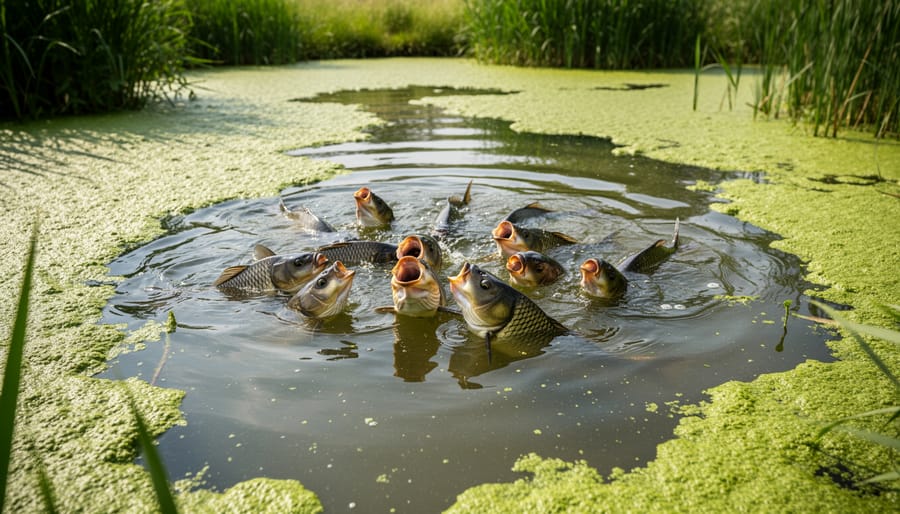
Your fish will tell you when they’re struggling with overcrowding, and learning to read these warning signs can save their lives. The most obvious indicator is gasping at the surface, where fish hang near the top gulping air because oxygen levels have dropped too low. This isn’t normal basking behavior – it’s a distress signal.
You might also notice increased aggression among your fish. When space becomes limited, even typically peaceful species start competing for territory, leading to nipping, chasing, and stress-related injuries. I’ve seen beautiful koi turn on each other simply because their pond couldn’t support their growing size.
Stunted growth is another red flag. If your fish aren’t growing as expected despite regular feeding, overcrowding might be restricting their development. In cramped conditions, fish release growth-inhibiting hormones that prevent them from reaching their natural size.
Perhaps most concerning are disease outbreaks. Overcrowded ponds create perfect conditions for parasites and infections to spread rapidly. Stressed fish have weakened immune systems, making koi health problems and other illnesses much more likely. If you’re constantly battling diseases, your stocking density might be the underlying cause rather than bad luck.
Managing Large Fish Without Compromising Your Pond
Upgrade Your Filtration System
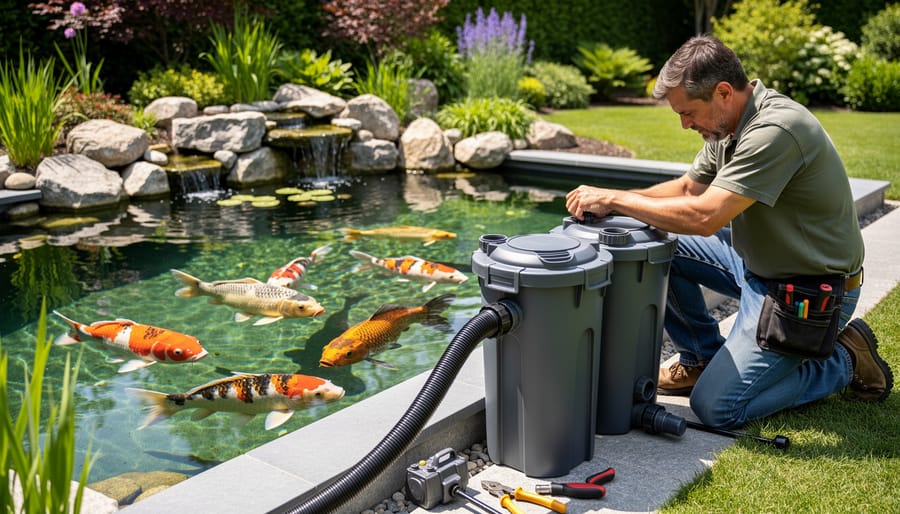
When you’ve got 9-pound fish swimming around, your standard pond filter just won’t cut it anymore. Think of it this way: bigger fish produce more waste, and that waste needs serious filtration power to keep your water healthy and clear.
For ponds housing large fish, I always recommend starting with a biological filter rated for at least 1.5 times your actual pond volume. So if you’ve got a 1,000-gallon pond, look for filters rated for 1,500 gallons or more. This gives you that cushion you need when dealing with heavyweight residents.
My go-to setup includes a multi-chamber biological filter paired with a quality mechanical pre-filter. The pre-filter catches the big chunks before they clog your biological media, and trust me, this saves so much maintenance headache. If you’re choosing the right filtration system, consider DIY options like modified stock tanks or large plastic tubs filled with filter media. I’ve built several myself using food-grade barrels, and they work beautifully.
For really large fish populations, add a bead filter or moving bed biofilter to your setup. These provide massive surface area for beneficial bacteria without taking up too much space. UV clarifiers are also worth considering as they help control algae blooms that often accompany heavy fish loads.
Population Management Strategies
Finding yourself with fish that are outgrowing your pond doesn’t mean you’ve failed as a pond keeper. It happens to the best of us! The good news is you have several ethical options to address the situation before problems develop.
Rehoming is often the kindest solution for everyone involved. Contact local aquarium societies, pond clubs, or community gardening groups. Many experienced pond owners with larger systems are happy to adopt healthy fish. Some garden centers and fish specialty stores accept trade-ins or can connect you with interested hobbyists. Just be honest about your fish’s size and needs.
Creating a separate grow-out pond gives you breathing room if you have the space. Even a simple above-ground stock tank can serve as temporary housing while you decide on a permanent solution or wait for a pond upgrade. This approach works beautifully if you’re planning to expand your main pond eventually.
The smartest strategy, though, is preventing overcrowding before it starts. Adjust your stocking levels based on your actual pond capacity, not your wishful thinking. If you’re breeding fish, be realistic about how many babies you can accommodate long-term. Consider rehoming young fish while they’re still small and easier to transport.
Remember, responsible pond keeping sometimes means making tough decisions for the wellbeing of your aquatic friends.
Planning Ahead: Stocking Your Pond Responsibly
Know Your Fish’s Growth Potential
Before you worry about having a fish that might reach nine pounds, let’s talk about what to realistically expect from popular pond fish. Understanding growth potential helps you plan properly from the start.
Goldfish typically reach 6-10 inches in backyard ponds and rarely exceed 2-3 pounds, even after several years. They’re perfect for smaller setups and grow steadily over 3-5 years to their adult size.
Koi are the true giants of pond keeping. While they can eventually reach 24-36 inches and weigh 9-15 pounds or more, this doesn’t happen overnight. A well-cared-for koi might reach 12 inches in its first two years, then add 2-3 inches annually. That nine-pounder you’re imagining? It’s likely 8-10 years old and has been living in excellent conditions.
Shubunkins and comets fall somewhere in between, usually maxing out around 12 inches and 1-2 pounds in typical pond environments.
Here’s the reality check: most pond fish never reach their theoretical maximum size because pond conditions naturally limit growth. A 500-gallon pond won’t produce the same massive koi as a 3,000-gallon system, regardless of how long you wait.
The Five-Year Plan for Your Pond
Here’s the thing about pond fish – they don’t stay small forever! When you bring home those adorable three-inch koi or goldfish, imagine them at their future size. That cute fingerling could easily reach nine pounds or more in just five years under good conditions.
Plan your pond population with growth in mind. If your 500-gallon pond comfortably holds ten small fish today, it might only support three or four mature fish down the road. Keep a journal tracking your fish sizes and water quality readings annually. This helps you spot trends before problems develop.
Consider building in expansion options when designing your pond, or create a network of smaller ponds connected by streams. Some pond keepers even plan “graduation ponds” where growing fish can move to larger quarters. Think of it as your fish growing up and moving into their own place!
Having a nine-pound fish in your pond is genuinely something to celebrate! These magnificent creatures represent years of growth and the reward of dedicated pond keeping. The key is making sure your setup matches their impressive size. If you’ve discovered your pond is operating at its limits, don’t worry. You’re not alone, and you’ve already taken the most important step by recognizing the situation.
Take a moment to assess where you stand right now. Calculate your actual capacity, observe your fish for signs of stress, and test your water quality. Armed with this information, you can make informed decisions whether that means upgrading your filtration, adding aeration, or finding a responsible new home for some of your fish. These aren’t failures; they’re smart adjustments that show you care about providing the best life possible for your aquatic friends.
Remember, successful pond management isn’t about perfection from day one. It’s about learning, adapting, and responding to your pond’s evolving needs. With proper planning and the right equipment in place, those gorgeous nine-pounders will continue thriving for years to come, bringing you endless joy as they glide gracefully through crystal-clear water.