
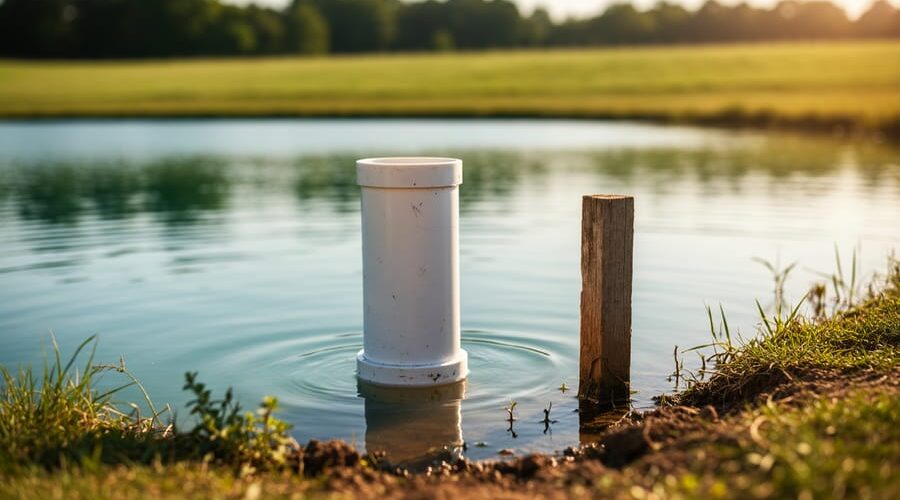
Why Your Pond’s Water Level Matters More Than You Think
Check your pond’s water level weekly by marking a fixed reference point on a stake or rock at the waterline. Consistent monitoring reveals whether you’re losing inches to evaporation, leaks, or excessive outflow before small issues become expensive problems.
Control water flow by installing a simple standpipe or adjustable weir at your pond’s outlet. This lets you set your desired water level and maintain it automatically, preventing both overflow during heavy rains and excessive drawdown during dry spells.
Identify leak locations by letting your pond drop naturally and watching where the water level stabilizes. If it stops dropping at a specific height, your leak sits right at that waterline. If it continues dropping until empty, you’re dealing with a bottom leak or liner puncture.
Balance inflow and outflow by calculating your pond’s natural water budget. Measure incoming water from streams, runoff, and rainfall, then compare it against losses from your outlet, evaporation (typically one inch per week in summer), and any identified leaks. This baseline tells you whether you need to add supplemental water, reduce outflow, or address excessive seepage.
Understanding these fundamentals transforms pond management from reactive crisis control into proactive maintenance. Whether you’re managing a small backyard water garden or a multi-acre lake, proper water level control protects your investment, supports healthy aquatic life, and keeps your water feature looking its best year-round. The techniques range from simple manual adjustments anyone can master to automated systems for hands-free operation, giving you options that match your skill level and budget.
Understanding Water Level Dynamics in Your Pond
Natural Water Loss: What’s Normal and What’s Not
Here’s something that surprises many pond owners: your pond is supposed to lose some water naturally! Understanding what’s normal versus what signals a problem can save you a lot of worry and help you catch real issues early.
During warm summer months, evaporation is your pond’s constant companion. On average, expect to lose about one to two inches of water per week through evaporation alone. Hot, windy days can push this even higher. Think of it like leaving a glass of water outside – it gradually disappears, and your pond does the same thing, just on a larger scale.
Seasonal variations make a big difference too. Spring and fall typically bring gentler water loss, sometimes just half an inch weekly. Winter evaporation slows dramatically, though ice formation can make levels harder to track.
Here’s a simple trick I’ve used for years to distinguish normal loss from leaks: the bucket test. Float a bucket in your pond (weight it down with a rock) and mark the water level inside and outside the bucket. After 24 hours, both levels should drop equally if it’s just evaporation. If your pond drops more than the bucket, you’ve likely got a leak.
Also consider your water source and local rainfall. Some ponds naturally fluctuate with groundwater levels or seasonal streams. Red flags include water loss exceeding two inches weekly during moderate weather, soggy areas around your pond’s edge, or consistently dropping levels despite rain. These signs warrant investigation beyond normal evaporation.
How Water Flow Affects Your Pond’s Ecosystem
Think of your pond as a living, breathing system – because in many ways, it really is! The way water moves through your pond plays a huge role in keeping everything balanced and thriving.
Here’s the simple truth: moving water is happy water. When water sits completely still, it’s like holding your breath – things start to go wrong pretty quickly. Stagnant water can’t hold much oxygen, and without proper oxygen levels, your fish struggle, beneficial bacteria can’t do their job breaking down waste, and algae often takes over.
I learned this lesson the hard way with my first backyard pond. I thought a calm, mirror-like surface was the goal, but within weeks, the water turned murky and my fish were gasping at the surface. Once I added a simple fountain to create movement, everything changed within days.
Water flow does several important things for your pond. First, it circulates oxygen throughout the water column, not just at the surface. Second, it helps distribute nutrients more evenly, preventing dead zones where nothing thrives. Third, moving water discourages mosquitoes from laying eggs and helps prevent that unpleasant stagnant smell.
Even gentle movement makes a difference. You don’t need a dramatic waterfall or expensive equipment – sometimes a modest fountain or aerator is enough to keep water circulating and support overall pond health.
The key is understanding that water flow and oxygen work together as your pond’s life support system. Get this right, and you’ve laid the foundation for a beautiful, balanced ecosystem that practically takes care of itself.
Problems That Come With Poor Water Level Management
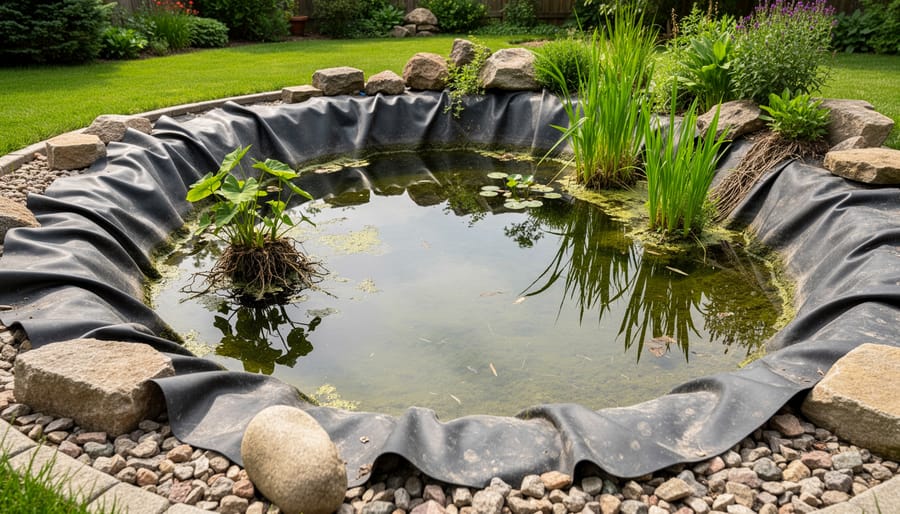
When Water Levels Drop Too Low
When your pond’s water level drops significantly, it triggers a cascade of problems that affect both the pond’s appearance and the health of your aquatic environment. Let me walk you through what happens and why it matters.
First, if you’ve installed a pond liner, low water levels can leave sections exposed to harsh sunlight. UV rays quickly degrade most liner materials, causing them to crack and become brittle. I learned this the hard way one summer when a small leak went unnoticed for weeks. The exposed liner developed tiny cracks that later became bigger problems once the water returned.
Your fish suffer tremendously when water levels drop. The reduced volume means less dissolved oxygen, especially during warm weather when fish need it most. Water temperatures also fluctuate more dramatically in shallow conditions, creating stress that weakens immune systems and makes your fish vulnerable to disease. You’ll often notice them gasping at the surface or becoming lethargic.
The pond’s biological balance takes a hit too. Your compromised filtration system may stop working effectively if intake pipes become exposed or water flow decreases. Beneficial bacteria colonies can die off when their habitat shrinks, leaving you with poor water quality.
Finally, there’s the aesthetic disappointment. That beautiful water feature you’ve worked so hard to create looks tired and neglected with muddy edges showing and plants wilting at the margins. Regular monitoring helps you catch these issues before they become serious headaches.
When Water Levels Rise Too High
When your pond or lake swells beyond its intended capacity, you’re facing more than just a cosmetic issue. I learned this the hard way during an unexpectedly heavy spring rainfall season when my once-charming koi pond transformed into a miniature lake that threatened my patio!
High water levels create a cascade of problems that demand quick attention. Overflow is the most obvious concern, where excess water spills over edges and potentially floods surrounding gardens, lawns, or even structures. This runaway water doesn’t just disappear—it can erode soil around your pond’s perimeter, gradually undermining the structural integrity you’ve worked hard to establish. Those carefully placed edging stones? They can shift or topple completely when the ground beneath them washes away.
Your aquatic plants suffer too. While they love water, most pond plants are adapted to specific depths. When water rises significantly, marginal plants get submerged beyond their tolerance levels, essentially drowning them. Your beautiful iris and cattails might struggle or die if kept underwater for extended periods.
Perhaps most concerning are the structural risks. Excessive water pressure against pond liners can cause tears or separation at seams. For larger installations with dams or berms, the increased hydraulic pressure could lead to dangerous failures if left unchecked.
The good news? Catching rising water early gives you plenty of options to redirect, drain, or manage the excess before serious damage occurs. Stay vigilant during rainy seasons and after snowmelt.
Setting Your Ideal Water Level
Fish Ponds vs. Water Garden Ponds
Here’s the thing about ponds – not all of them have the same job! Understanding whether you’ve got a fish pond or a water garden pond makes a huge difference in how you’ll manage water depth and levels.
If you’re keeping koi or goldfish, depth is your best friend. Fish ponds typically need at least 3 to 4 feet of water depth to keep your finned friends healthy year-round. This depth protects them from temperature extremes – staying cool in summer and preventing the pond from freezing solid in winter. You’ll want to maintain consistent water levels here because fluctuations can stress fish and mess with your filtration system’s effectiveness. When water drops too low, oxygen levels can plummet, and that’s bad news for your fish.
Water garden ponds, on the other hand, are all about those gorgeous aquatic plants. These beauties are more flexible! Most water plants thrive in shallower conditions, typically 6 inches to 2 feet deep, depending on the plant variety. Marginal plants love the edges, while water lilies need a bit more depth. You can actually let levels vary slightly more here without major consequences – though your plants will look happiest with steady conditions.
The bottom line? Know your pond’s primary purpose, and you’ll know exactly how vigilant you need to be about maintaining those water levels!
Seasonal Adjustments You Should Know About
Your pond needs different care throughout the year, and understanding these seasonal adjustments will keep your water levels healthy and your fish happy.
Winter requires special attention to water depth. If you live in a freezing climate, maintain at least 18-24 inches of depth for fish survival. This deeper zone stays warmer and provides a safe haven when ice forms on the surface. I learned this the hard way during my first winter—thankfully, my goldfish were forgiving!
Summer brings evaporation challenges. You might lose an inch or more of water per week during hot, dry spells. Plan ahead by checking levels weekly and having a reliable water source ready. Consider adding a shade structure or floating plants to reduce evaporation naturally.
Spring runoff deserves careful monitoring. Melting snow and heavy rains can overwhelm your pond, bringing in sediment and debris. Install overflow systems before spring arrives, and position barriers to redirect excessive runoff away from your pond. Check your outlet structures regularly during this busy season to prevent flooding or damage to surrounding areas.
Simple Solutions for Maintaining Consistent Water Levels
Manual Top-Off: The Budget-Friendly Approach
The manual top-off method is perfect if you’re just starting out or have a smaller pond. It’s as simple as keeping an eye on your water level and adding more when needed. I’ve been doing this with my backyard pond for years, and honestly, it’s become part of my morning coffee routine.
Start by marking your ideal water level on a rock or the pond liner with a permanent marker or small stake. Check it every few days, or daily during hot summer months when evaporation speeds up. When the water drops an inch or two below your mark, it’s time to top off.
Here’s a time-saver I learned the hard way: use a long garden hose so you’re not hauling buckets back and forth. If your pond has fish, let the hose run slowly to avoid shocking them with temperature changes. I usually fill in the morning or evening when water temperatures are similar.
Pro tip: Install a simple flow meter on your hose to track how much water you’re adding each time. This helps you spot unusual water loss that might indicate a leak. Keep a notebook nearby to jot down your readings. It takes just a minute but gives you valuable insights into your pond’s patterns.
Automatic Water Fill Systems That Actually Work
Let me share something that changed my pond-keeping life: automatic water fill systems. After years of dragging hoses around every few days during summer, I finally installed a float valve system, and honestly, I wish I’d done it sooner.
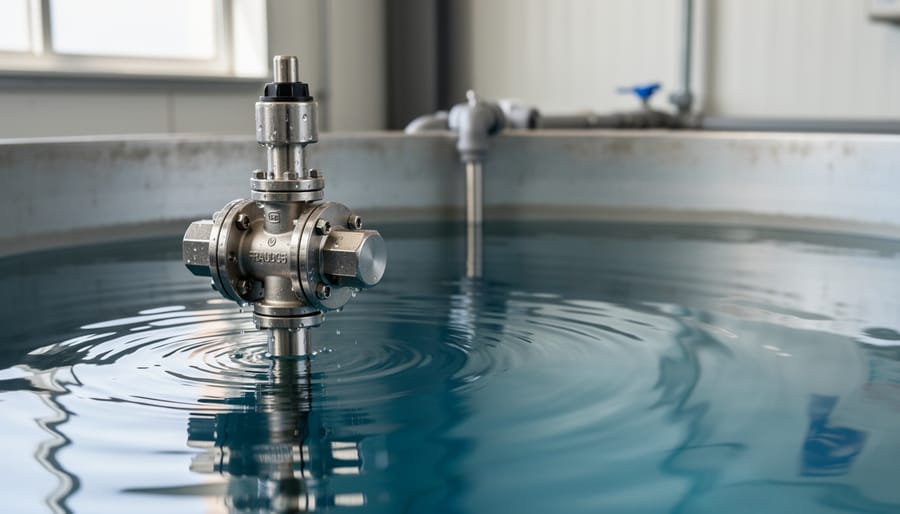
Think of a float valve like the mechanism inside your toilet tank. When water drops below a certain level, a floating ball lowers and opens a valve. Water flows in until the float rises back up and shuts everything off. Simple, right? That’s the beauty of it.
For pond installation, you’ll need a float valve rated for outdoor use, a water line running from your house or well, and some basic plumbing skills. Most systems connect to a standard garden hose thread, making installation pretty straightforward. Position your float valve where it won’t get tangled in plants or disturbed by fish. I mounted mine in a protective box near the edge, partially hidden by rocks.
When shopping for float valves, look for durable brass or heavy-duty plastic construction. Cheaper versions might save money upfront but often fail within a season. Adjustable float arms let you fine-tune your target water level, which is incredibly handy.
One quick tip from experience: install a shut-off valve somewhere accessible along your water line. You’ll thank yourself when maintenance time rolls around. Also consider adding a simple filter to prevent debris from clogging the valve mechanism. These small details make the difference between a system that works flawlessly and one that becomes another chore.
Creating a Water Level Indicator
Creating a simple visual reference for your pond’s water level is easier than you might think, and it’ll save you from constantly guessing whether things look right. I learned this lesson after spending weeks wondering if my pond was actually losing water or if I was just being paranoid!
The simplest method is using a permanent marker on a light-colored rock or concrete block placed at your pond’s edge. When your water level is perfect—typically after a good rain when everything looks healthy—draw a clear line where the water meets the stone. For better visibility, try painting a bright stripe with outdoor paint.
For a more polished look, you can install a decorative stake or post near the water’s edge with measurement marks every inch or two. Think of it like a giant ruler for your pond. Some pond enthusiasts get creative with painted PVC pipes or repurposed yard decorations that double as water level indicators.
Check your indicator weekly during normal conditions and daily during hot weather or after heavy storms. This habit helps you catch problems early before they become serious issues, making pond management much less stressful and more enjoyable.
Managing Water Flow for a Healthier Pond
Pumps and Circulation: Finding the Right Balance
Choosing the right pump for your pond is a bit like Goldilocks finding the perfect porridge—you want it just right! Too powerful, and you’ll create a whirlpool that stresses your fish and uproots your carefully planted water lilies. Too weak, and you’ll end up with stagnant water that invites algae and mosquitoes.
Here’s a simple rule I learned after my first pump sent my koi hiding behind rocks for days: calculate your pond’s volume in gallons and aim for a pump that circulates the entire volume every one to two hours. For example, a 1,000-gallon pond needs a pump rated between 500 to 1,000 gallons per hour. This gentle turnover keeps water fresh without creating turbulent conditions.
Position matters tremendously. Place your pump away from waterfalls or fountain outlets to create a complete circulation pattern—think of drawing a gentle circle through your pond. I like positioning mine at the deepest point, which naturally pulls debris from the bottom while avoiding shallow areas where fish spawn or plants root.
Consider your pond’s inhabitants too. Goldfish and koi appreciate moderate flow, but if you’re keeping delicate plants like water poppies, you’ll want to dial things back. Many pumps come with adjustable flow rates, which I find incredibly handy for seasonal adjustments. During spawning season in spring, I reduce my pump’s flow by about twenty-five percent to give everyone a peaceful environment.
Test your setup by watching how your fish behave—they’ll tell you everything you need to know!
Waterfalls, Streams, and Fountains as Flow Management Tools
Here’s the wonderful news: those beautiful water features you’ve been admiring aren’t just eye candy! Waterfalls, streams, and fountains can actually do serious work when it comes to managing your pond’s water flow and keeping it healthy.
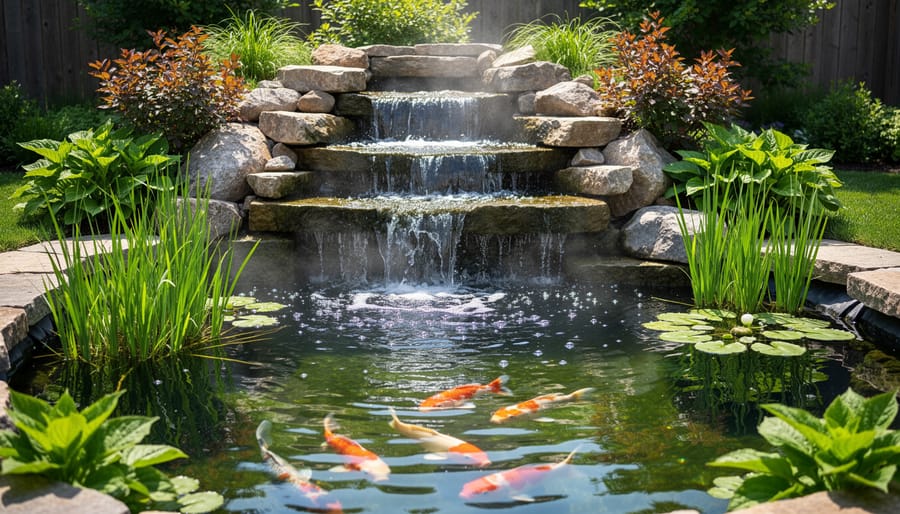
Think of these features as multitasking superstars. When water tumbles over a waterfall or shoots up from a fountain, it’s doing something amazing: it’s mixing air into the water. This process, called aeration, adds oxygen that fish and beneficial bacteria desperately need. I learned this lesson when I added a simple fountain to my stagnant pond, and within weeks, the water clarity improved dramatically.
Strategically placed waterfalls create circulation patterns that prevent dead zones where water just sits and becomes problematic. The movement keeps debris from settling in corners and helps distribute oxygen throughout your pond. Even a modest stream connecting different areas of your pond can guide water flow exactly where you want it.
Fountains are particularly practical for smaller ponds where installing a waterfall might be overkill. They’re easy to add, move around if needed, and come in countless styles to match your aesthetic. Position them to push surface water toward your skimmer or filter intake, creating a helpful circulation loop.
The key is thinking functionally, not just decoratively. Before installing any water feature, consider where you need more movement, which areas tend to stagnate, and how the feature will influence overall flow patterns. Your pond will thank you with clearer, healthier water.
Troubleshooting Common Water Level Issues
Finding and Fixing Leaks Without Draining Your Pond
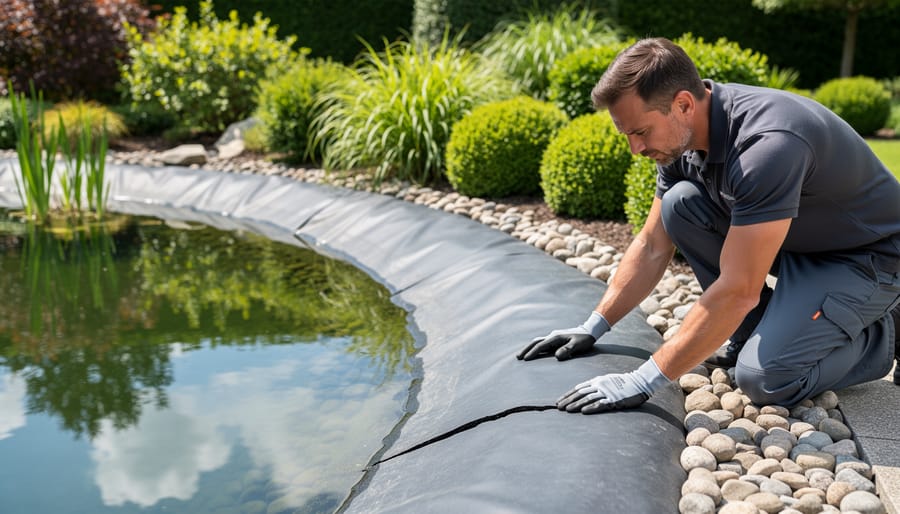
Finding a leak can feel like searching for a needle in a haystack, but don’t worry—you’ve got this! Start by turning off all pumps and waterfalls, then mark your current water level with a piece of tape or chalk. Wait 24 hours and check if the level dropped. If it did, congratulations (sort of)—you’ve confirmed a leak beyond normal evaporation!
Now for the detective work. Walk around your pond’s edge looking for soggy spots, unusual plant growth, or muddy areas that might indicate where water is escaping. If you have a liner pond, inspect the edges carefully—many leaks happen right at the waterline where UV exposure weakens the material over time.
Here’s a trick I learned from years of pond keeping: add a few drops of food coloring near suspected areas. The dye will flow toward the leak, creating a visible trail. It’s surprisingly effective and kind of fun to watch!
For repairs, pond patch kits are your best friend. Clean the area thoroughly, even if it means lowering the water level slightly around the leak. Let it dry completely—this is crucial! Apply the patch following the manufacturer’s instructions, pressing firmly to remove air bubbles. Most patches work underwater once applied, which is fantastic news.
Small holes can also be sealed with waterproof pond sealant. Just remember: patience is key. Rushing the drying process means you’ll be doing this again next month, and nobody wants that!
Dealing With Excessive Evaporation in Hot Climates
If you live where summer temperatures soar, you’ve probably noticed your pond water disappearing faster than you’d like! In hot, sunny climates, evaporation can steal several inches of water per week, leaving you constantly refilling and potentially stressing your aquatic friends.
The good news? You have several effective strategies to combat this water loss. Start by adding floating plants like water lettuce or water hyacinth, which act as living shade umbrellas while looking beautiful. They can reduce evaporation by up to 50 percent while providing habitat for beneficial organisms.
Strategic shading makes a huge difference too. I’ve seen remarkable results from positioning shade sails or pergolas over portions of ponds, especially during peak afternoon sun. If that’s not possible, consider planting tall marginal plants on the south and west sides of your pond to create natural shade barriers.
For smaller ponds, you might explore pond netting during extreme heat waves, though this is a temporary solution since it affects gas exchange. Another clever trick is adding a fountain or waterfall, which may seem counterintuitive, but the cooler water temperature and increased circulation actually reduces overall evaporation compared to still, hot water sitting in direct sunlight.
Managing Runoff and Overflow During Heavy Rain
Heavy rains can turn your peaceful pond into a muddy mess if you’re not prepared. I learned this the hard way during my first spring storm when rushing water carved a mini-canyon right through my pond edge!
Start by creating a designated overflow route before you need one. Choose the lowest natural edge of your pond and dig a shallow channel directing excess water away from structures and toward a safe drainage area. Line this spillway with rocks or gravel to prevent erosion as water flows through.
Protect your pond edges by reinforcing them with strategically placed stones or planting deep-rooted vegetation like irises and rushes along the banks. These natural barriers absorb impact and hold soil in place during downpours.
Consider installing a simple overflow pipe if your pond has a liner. Position it at your desired maximum water level so excess water drains automatically without flooding surrounding areas or damaging the liner edges. This passive system works beautifully without any effort on your part during sudden storms.
I’ll be honest with you – when I first started managing my pond, I thought it would be complicated and time-consuming. But once I began monitoring water levels regularly and made a few simple adjustments, everything changed. My pond went from being a constant worry to something I genuinely look forward to checking each morning.
The beauty of proper water level and flow management is that you don’t need to tackle everything at once. Start by simply observing your pond for a week or two. Note the water line, watch how rainfall affects it, and see where water naturally flows. These observations alone will teach you more than any manual could.
From there, each small improvement builds on the last. Maybe you’ll add an overflow pipe, install a simple float valve, or create a rain garden nearby. None of these projects are overwhelming on their own, yet together they create a pond that practically manages itself.
The reward isn’t just a healthier pond – it’s peace of mind. You’ll spend less time worrying about water levels and more time enjoying the wildlife, the reflections on the surface, and the tranquil space you’ve created. That’s what pond ownership should really be about.