
The Filter Media Your Pond Actually Needs (Not What Big Brands Push)
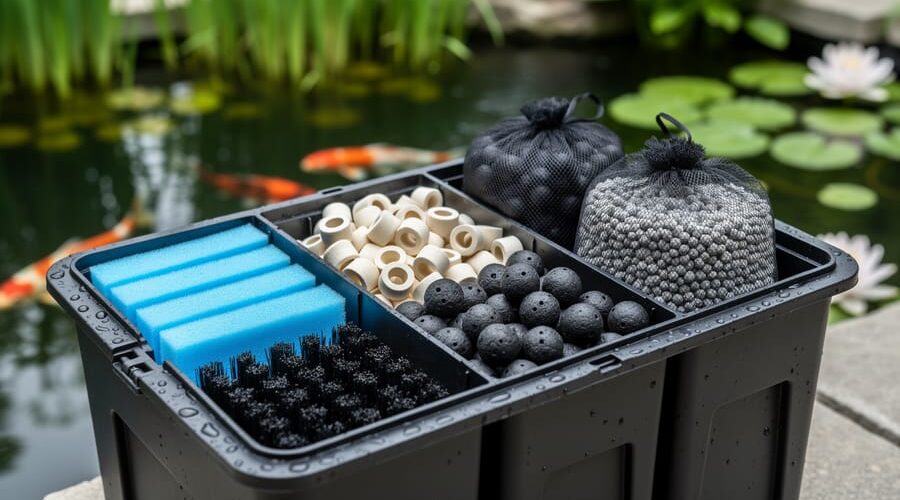
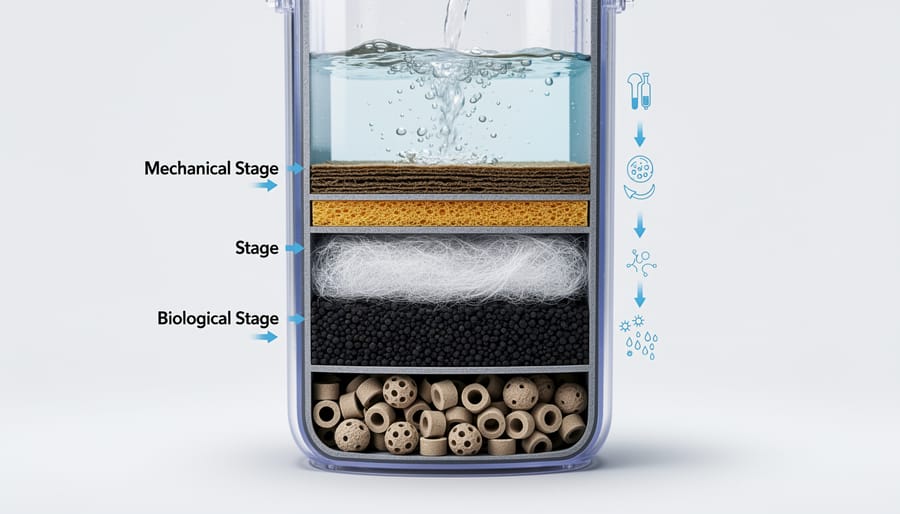
Choose mechanical media like foam pads or filter brushes as your first line of defense—they trap visible debris before it clogs your biological media, and you’ll clean them every 1-2 weeks during peak season. Layer biological media such as ceramic rings or bio-balls in the chamber after mechanical filtration, creating maximum surface area where beneficial bacteria colonize to convert harmful ammonia into safer nitrates. Add activated carbon or zeolite as chemical media when you’re battling algae blooms, medication residue, or persistent odors, but replace them monthly since they become saturated and stop working.
Your filter media quality matters more than you might think. I learned this the hard way after my first pond turned into pea soup despite running a fancy filter—turned out I’d stuffed it with cheap media that clogged instantly and provided almost no biological filtration. The right combination keeps your water crystal clear and your fish healthy, but the wrong setup wastes money and creates endless maintenance headaches.
The confusion around filter media comes from manufacturers using different names for similar products and making bold claims without explaining how their media actually functions in your specific pond setup. Understanding what each media type does, how to layer them correctly, and which products genuinely perform versus which ones just sound impressive will save you from costly trial-and-error experiments and give you the thriving, balanced pond ecosystem you’re working toward.
Why Filter Media Matters More Than the Filter Itself
Think of your filter like a house and the media as the furniture inside. Sure, you need the house to hold everything together, but it’s the furniture that makes it functional and livable. The same goes for your pond filtration system. The filter housing is just a container, while the media inside does all the heavy lifting.
Here’s what I mean: when you run water through an external filter systems or any pond filter, the housing simply directs water flow. The actual cleaning happens when water passes through the media layers. Mechanical media catches debris like leaves and fish waste, while biological media provides a home for beneficial bacteria that convert harmful ammonia and nitrites into safer nitrates. Without the right media performing these tasks, even the most expensive filter becomes little more than a fancy water pump.
I learned this lesson the hard way with my first pond. I invested in a premium filter unit but filled it with cheap, low-quality foam. Within weeks, my water turned green and murky. The filter housing was working perfectly, but the inadequate media couldn’t support enough beneficial bacteria or trap fine particles effectively. Once I upgraded to proper filter media with better surface area and appropriate density, the transformation was remarkable. Crystal clear water within days.
The bottom line is simple: you can have the best filter housing money can buy, but if you fill it with subpar media, you’ll struggle with poor water quality. Conversely, quality media in a basic filter often outperforms expensive setups with inadequate media choices.
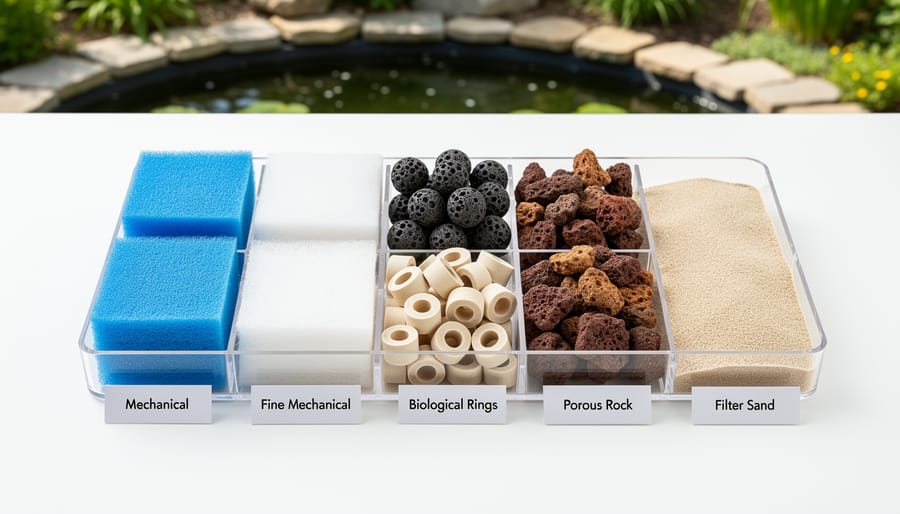
The Three Types of Filtration Your Pond Media Must Handle
Mechanical Filtration: Your First Defense
Think of mechanical filtration as your pond’s bouncer—it stops the troublemakers at the door before they can cause real problems. This first line of defense catches all the visible nasties: fish waste, uneaten food, dead plant matter, dirt, and debris. Without it, these particles would clog your biological media downstream, suffocating the beneficial bacteria that keep your water healthy.
I learned this lesson the hard way when I skipped proper mechanical filtration in my first pond setup. Within weeks, my expensive biological media was gunked up and useless. Now I always use coarse foams or filter pads at the entry point to trap larger particles, followed by finer materials to catch smaller bits. This simple layering keeps the rest of your filter system running smoothly and extends the life of everything downstream. Clean mechanical media regularly—it’s doing the dirty work so your biological filter doesn’t have to.
Biological Filtration: Where the Magic Happens
This is where your pond filter truly earns its keep. Think of biological filtration as creating a tiny city for helpful bacteria that work 24/7 to keep your water safe. Here’s what happens: fish waste and decomposing plants release ammonia, which is toxic to your finned friends. Beneficial bacteria naturally colonize the surfaces of your filter media, and these microscopic helpers convert that dangerous ammonia into nitrites, then other bacteria transform nitrites into much safer nitrates.
The key word here is surface area. The more nooks and crannies your media has, the more bacteria can set up shop. I learned this the hard way when I first started – I thought any sponge would do, but my fish kept getting stressed. Once I switched to proper biological media with tons of surface texture, those bacteria colonies flourished, and my water tests finally showed safe levels.
This process takes a few weeks to establish, which we call cycling your pond. Patience pays off beautifully here.
Chemical Filtration: The Specialty Player
Think of chemical filtration as your pond’s emergency response team—it jumps in when you’re facing specific problems that biological and mechanical filtration can’t handle alone. Activated carbon is fantastic for removing medications after treating sick fish, eliminating discoloration from tannins (those yellowy-brown stains from leaves), and pulling out unpleasant odors. I once had a pond that smelled like rotten eggs after a particularly hot summer, and activated carbon cleared it right up within days.
Zeolite is your go-to hero for ammonia spikes during those stressful moments when your biological filter can’t keep up—like after adding new fish or during spring start-up. Just remember, chemical media isn’t for everyday use. It gets exhausted quickly and needs replacing, making it more of a specialty player than a starter.
Best Mechanical Filter Media for Crystal Clear Water
Filter Foam and Sponges
Filter foam and sponges are honestly where I tell everyone to start their filtration journey. They’re affordable, easy to understand, and incredibly effective at trapping debris. Think of foam as your pond’s security checkpoint, catching everything from fish waste to leaves before they break down into harmful compounds.
Foam comes in different densities measured in pores per inch (PPI). Coarse foam (10-20 PPI) works as your first line of defense, grabbing larger particles and protecting finer media downstream. Medium foam (30 PPI) handles mid-sized debris, while fine foam (45-60 PPI) polishes water to crystal clarity. I always layer them from coarse to fine, letting each density handle its specific job.
The beauty of foam is its dual purpose. Yes, it mechanically traps debris, but those pores also provide fantastic surface area for beneficial bacteria to colonize. After a few weeks, your foam becomes a biological powerhouse too.
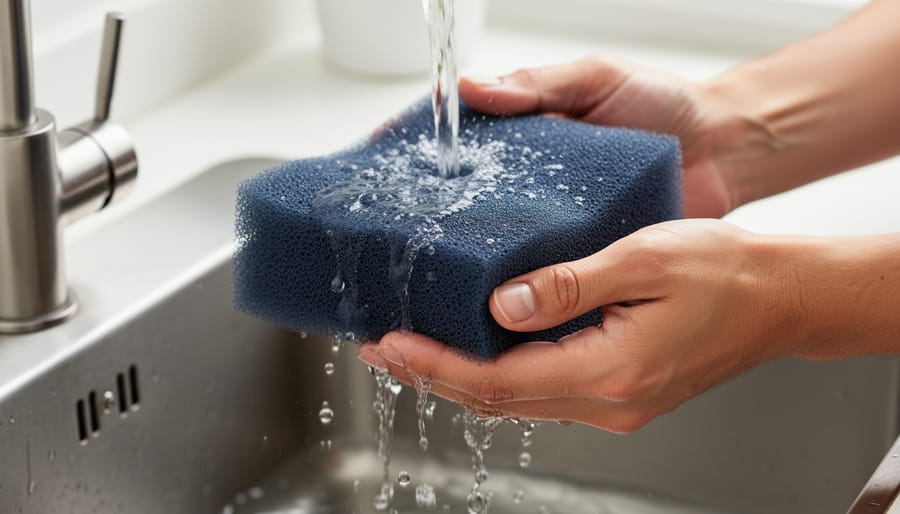
Maintenance is straightforward. Simply squeeze and rinse your foam in old pond water (never tap water, which kills beneficial bacteria) every few weeks. When foam starts falling apart or won’t come clean, replace it. Most foam lasts 6-12 months depending on your pond’s bioload.
Filter Brushes
Filter brushes are those quirky-looking bottle-brush-style media that might not win beauty contests, but they’re absolute workhorses in mechanical filtration. Think of them as your pond’s first line of defense, catching debris before it reaches your biological media. The bristles create tons of surface area where beneficial bacteria can colonize while simultaneously trapping leaves, fish waste, and other floating particles.
Koi keepers absolutely swear by these brushes, and here’s why: they handle heavy bioloads without compacting or channeling. Place them first in your filter’s flow path, standing upright if possible, so water flows through the bristles rather than around them. I’ve found that arranging them in a staggered pattern works beautifully for maximum contact time.
Cleaning is refreshingly simple. Every few weeks during peak season, just pull them out, give them a good shake or rinse with pond water (never tap water, which kills beneficial bacteria), and pop them back in. They’ll last for years with minimal maintenance, making them both budget-friendly and beginner-friendly.
Japanese Mat (Matala)
If you’re looking for a reliable, affordable mechanical filter media that just works, Japanese matting (often called Matala) deserves a spot in your filter. I’ve been using this stuff for years, and it’s honestly one of my go-to materials for capturing debris before it reaches my biological media.
What makes Japanese mat special is its open, wavy structure that grabs particles without clogging quickly. You’ll find it comes in different colors, and here’s where it gets clever: the colors actually indicate density. Black is coarsest (great for first-stage filtration), green is medium, and blue is finest. This color-coding system makes it super easy to layer your filtration from coarse to fine without guessing.
Durability is another big win. Unlike foam that breaks down and needs replacing every year or two, quality Japanese matting can last five years or more with proper cleaning. Just pull it out, rinse it off with your pond water (never tap water, which kills beneficial bacteria), and pop it back in.
Cost-wise, it’s incredibly budget-friendly, especially when you consider longevity. A single sheet covers significant surface area and handles high flow rates without restricting water movement. For DIY pond keepers watching their budget while wanting professional results, this media delivers exceptional value.
Filter Pads and Bags
Filter pads and bags offer a simple, low-maintenance solution that’s perfect if you’re running a smaller pond or just getting started. Think of these as the convenient grab-and-go option in your filtration toolkit. Disposable pads are fantastic when you need mechanical filtration without the hassle of cleaning—just toss them when they’re gunked up and pop in a fresh one. I’ve found them especially helpful during spring cleanups when debris loads are heavy. Reusable bags filled with media like activated carbon or zeolite let you customize your filtration approach while keeping everything contained and easy to swap out. They’re brilliant for spot-treating specific water quality issues. While they won’t handle the biological load of larger ponds, these options shine in preformed garden ponds or small water features where simplicity matters most.
Best Biological Filter Media for Healthy Fish
Plastic Bio-Balls and K1 Media
Bio-balls and K1 media represent the moving bed filtration approach, and they’re genuinely fun to watch in action! These lightweight plastic pieces tumble around in your filter, constantly exposing fresh surfaces to beneficial bacteria. K1 media looks like tiny wagon wheels with incredible surface area—about 900 square meters per cubic meter of media. That’s roughly the size of two tennis courts packed into a shoebox!
The magic happens because they never clog. Traditional static media eventually gets gunked up, but moving bed media self-cleans through constant tumbling. You’ll need an air pump or water flow to keep them moving, which adds a bit to your running costs but eliminates manual cleaning.
When does moving bed make sense? If you have heavy fish loads or feed frequently, it’s brilliant. For koi enthusiasts or larger ponds over 2,000 gallons, the consistent performance justifies the setup. However, if you’re running a smaller wildlife pond or prefer a simpler DIY bio-filter setup, static media might suit you better.
Real-world performance? Expect ammonia processing within 3-4 weeks of cycling. The constant movement means bacteria colonize slower initially compared to static media, but once established, they’re incredibly efficient and low-maintenance.
Ceramic Rings and Tubes
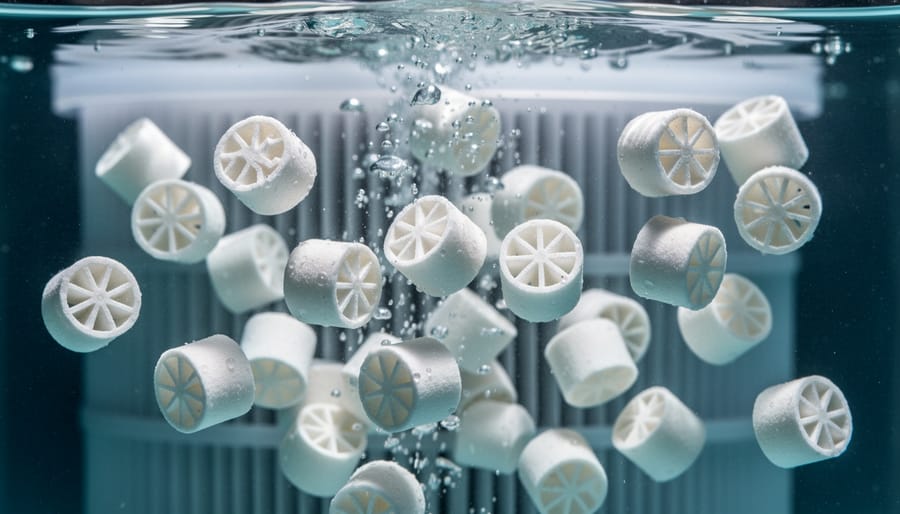
Ceramic rings and tubes have been the go-to choice for pond keepers for decades, and there’s good reason why they’ve stood the test of time. These chunky little cylinders are loaded with microscopic pores that create an enormous surface area for beneficial bacteria to call home. I remember when I first switched to ceramic media in my koi pond – within a few weeks, the difference in water clarity was remarkable.
The porous structure acts like a tiny apartment complex for bacteria, housing millions in every piece. This means more biological filtration happening in less space. They’re incredibly durable too, lasting years without breaking down, which makes them cost-effective in the long run.
The main downside? They’re heavy. Really heavy. If you’re setting up a large filter, you’ll feel it in your back and your filter housing needs to support the weight. Maintenance is straightforward though – just give them a gentle rinse in pond water every few months to remove debris without killing your beneficial bacteria. Never use tap water, as chlorine will wipe out your bacterial colonies instantly.
Lava Rock and Natural Media
Here’s a secret many pond keepers discover by accident: those chunks of lava rock from your garden center can outperform fancy filter media costing five times as much. I learned this from a neighbor who’d been running crystal-clear koi ponds for decades using mostly natural materials.
Lava rock works beautifully because it’s incredibly porous, creating tons of surface area for beneficial bacteria to colonize. Those little nooks and crannies become bacterial apartments, housing the microscopic workers that break down ammonia and nitrites. You’ll find it at garden centers, landscape supply yards, or even hardware stores for a fraction of what specialty media costs.
Before adding lava rock to your filter, give it a thorough rinse to remove dust and loose particles. I usually soak mine overnight in dechlorinated water, which helps saturate the rock and releases trapped air bubbles.
Other natural options include pumice stone and certain river rocks, though you’ll want to avoid smooth stones that don’t offer enough surface texture. The rougher and more porous, the better. While these natural media may not have the engineered precision of manufactured alternatives, they’ve proven themselves in countless backyard ponds with impressive results.
Bio-Ribbon and Structured Media
If you’re ready to level up your filtration game, bio-ribbon and structured media are worth a serious look. These newer options feature incredibly complex surface designs that pack massive biological capacity into compact spaces. Think of them like high-rise apartments for beneficial bacteria compared to the single-family homes of traditional media.
Bio-ribbons use folded, textured plastic strips that create protected channels where bacteria colonies thrive without getting washed away during cleaning. Structured media takes this further with engineered shapes, honeycomb patterns, and specialized textures that maximize every square inch. I’ve seen ponds transform within weeks after upgrading to these premium options.
Here’s the honest truth about cost: yes, they’re pricier upfront, sometimes three times the cost of basic bio-balls. But the performance difference is real. They’re especially worthwhile if you’re dealing with heavy fish loads, persistent water quality issues, or limited filter space. For smaller ponds with moderate stocking, standard media works perfectly fine. Premium media really pays off when you need maximum biological filtration in minimum space, or when you’re tired of constant maintenance battles. Consider your specific situation before investing.
Chemical Filter Media: When and How to Use Them
Activated Carbon for Clarity and Odor
Activated carbon works like a magnet for dissolved organics, tannins, medications, and those funky pond odors that sometimes appear after heavy feeding or decomposing leaves. It’s your secret weapon for crystal-clear water before guests arrive or after treating fish with medications that leave the water looking tea-stained.
Here’s the thing though: carbon has a limited lifespan. Once it’s saturated (usually after 4-6 weeks), it stops working and just becomes expensive biological media. I learned this the hard way when I wondered why my pond stayed yellowish despite “having carbon in there.” Replace it regularly or remove it once it’s done its job.
Common mistake? Using carbon continuously. You don’t need it running year-round. Pop it in when you need that extra polish for clarity or to remove specific contaminants, then take it out. It’s a temporary helper, not a permanent resident. Also, rinse it gently before use to remove dust, or you’ll cloud your pond temporarily.
Zeolite for Ammonia Emergencies
Zeolite is your emergency responder when ammonia levels spike unexpectedly. This natural volcanic mineral works like a sponge, literally pulling ammonia molecules out of the water through a process called ion exchange. Think of it as a temporary fix while you address the underlying problem, whether that’s overcrowding, overfeeding, or a crashed biological filter.
The beauty of zeolite is that you can recharge it. When it becomes saturated, simply soak it in a strong saltwater solution for 24 hours, rinse thoroughly, and it’s ready to use again. However, don’t rely on zeolite as your primary filtration method. It doesn’t remove nitrites or nitrates, and it does nothing for beneficial bacteria colonization. I learned this the hard way during my first fish emergency, thinking zeolite was a permanent solution rather than a band-aid.
Keep some zeolite in your pond toolkit for crisis situations, but always investigate why your ammonia spiked in the first place and strengthen your biological filtration to prevent future emergencies.
Phosphate Removers for Algae Control
Phosphate removers can help tackle stubborn algae blooms by targeting a key nutrient algae needs to thrive. These specialized media absorb phosphates from your water, essentially starving algae of their food source. You’ll find them useful during green water crises or when dealing with string algae that won’t quit. However, here’s the truth from my own pond-keeping experience: phosphate removers are a temporary fix, not a long-term solution. They need frequent replacement and can get expensive if you’re relying on them constantly.
The better approach? Address the root cause of excess phosphates. Reduce fish feeding, remove decaying plant matter regularly, and make sure your biological filtration is working efficiently. Adding more aquatic plants naturally consumes phosphates before algae can grab them. I’ve found that combining good maintenance habits with occasional phosphate remover use during problem periods works best. Think of phosphate media as your emergency backup, not your everyday defense against algae.
How to Layer Your Filter Media for Maximum Performance
Getting your filter media layers right makes all the difference between murky water and that gorgeous, clear pond you’re dreaming of. Think of it like making a lasagna – the order of ingredients really matters!
Here’s the golden rule: arrange your media from coarsest to finest, following the direction of water flow. This might seem counterintuitive at first, but trust me, there’s solid reasoning behind it.
Start with your mechanical filtration layer at the bottom (where water enters). Place coarse foam or brushes here to catch the big stuff – leaves, twigs, fish waste, and debris. This protects your finer media from clogging too quickly, which I learned the hard way after my first setup failed within weeks.
Next comes your medium foam or matting. This catches smaller particles that slipped through the first layer. You’re essentially creating a progressive barrier system.
After mechanical filtration, position your biological media – ceramic rings, bio-balls, or lava rock. By this point, the water’s already clearer, so beneficial bacteria can colonize these surfaces without getting smothered by debris. This is where the magic of multi-stage filtration really shines.
Finally, add a fine foam pad or filter floss at the top (where water exits) for that final polish.
Why does this order matter? Water naturally takes the path of least resistance. If you put fine media first, it clogs immediately, creating bypass channels where dirty water sneaks through untreated. You’ll be cleaning constantly and still have cloudy water.
Following this arrangement means longer intervals between maintenance sessions and consistently crystal-clear results. Your wallet and your back will thank you!
Matching Media to Your Pond Type and Size
Choosing the right filter media starts with understanding your pond’s unique personality. Let me share some practical guidelines that have worked beautifully in my own water gardening journey.
For small ponds under 1,000 litres with minimal fish, you can keep things simple. A combination of coarse foam and lightweight bio-balls works wonderfully without breaking the bank. I’ve seen gorgeous water gardens thrive with just these basics because they’re not dealing with heavy biological loads.
Medium ponds between 1,000-5,000 litres need more firepower, especially if you’re keeping goldfish or a few koi. Layer your filtration with coarse and medium foam pads, followed by ceramic rings or lava rock. This creates that essential staged approach where mechanical filtration happens first, protecting your biological media from clogging.
For dedicated koi ponds, you’ll want to invest in premium koi pond filters and high-performance media. Japanese matting combined with K1 or K3 moving bed media gives you the robust biological filtration these hungry fish demand. Trust me, skimping on media quality in a koi pond leads to frustration down the track.
Wildlife ponds present a different scenario altogether. Here, you’re mimicking nature, so natural materials like lava rock work beautifully. Avoid super-fine media that might trap beneficial organisms.
Remember, your fish load matters more than pond size alone. Ten koi produce far more waste than fifty goldfish, so adjust your media volume accordingly.
Maintenance Reality Check: What Each Media Type Demands
Let me be honest with you – I’ve learned this lesson the hard way. That fancy bio-media you’re eyeing might promise amazing results, but if it needs cleaning every week and you’re already juggling work and family, it’s not the right choice for you.
Mechanical media like sponges and filter pads demand the most attention. I’m talking every 1-2 weeks during peak season. They clog quickly because they’re doing the heavy lifting of catching debris. Plan on squeezing them out in pond water for about 10 minutes each session. Replacement? Every 3-6 months depending on wear.
Biological media is far more forgiving. Ceramic rings and bio-balls can go 4-6 weeks between rinses, and they last years if you’re gentle. Just give them a light swish in old pond water – never tap water, which kills those precious bacteria colonies.
Here’s what fits different lifestyles: if you can only commit to monthly maintenance schedules, focus on quality biological media with pre-filters. Weekend warriors? You can handle mechanical media. Traveling frequently? Consider self-cleaning systems or low-maintenance lava rock options that practically care for themselves.
Here’s the truth I wish someone had told me when I first started: there’s no magic filter media that works perfectly for everyone. The “best” choice really depends on your pond size, fish load, budget, and how much maintenance you’re willing to tackle. Don’t let flashy marketing convince you that you need the most expensive option right out of the gate.
Start simple. Many pond keepers find success with a basic combination of mechanical and biological media, then adjust based on what they observe. Is your water still cloudy? Add more mechanical filtration. Ammonia spikes? Boost your biological media. You’ll learn what your specific pond needs through experience, not through reading product descriptions.
Remember, creating crystal-clear water isn’t about buying everything at once or following someone else’s exact setup. It’s about understanding the fundamentals we’ve covered, choosing quality media that fits your situation, and giving your system time to establish. You’ve got this! Clear, healthy water is absolutely achievable when you focus on the right approach rather than the hype. Trust the process, stay patient with your biological filter as it matures, and don’t be afraid to experiment until you find what works for your unique pond ecosystem.