
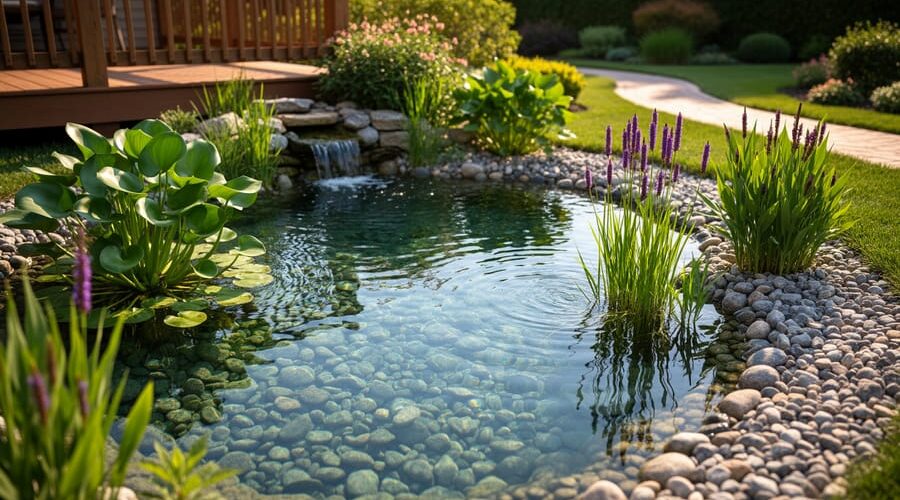
Build a Water Feature That Actually Cleans Itself (No Chemicals Required)
Transform your backyard pond or fountain into a thriving, crystal-clear ecosystem by letting nature do the heavy lifting. Chemical-free filtration isn’t just possible—it’s actually more effective and sustainable than traditional methods, and you can build these systems yourself this weekend.
Skip the expensive canister filters and chlorine tablets. Natural filtration harnesses beneficial bacteria, aquatic plants, and strategic water movement to create balanced, self-maintaining water features that stay clear year-round. I’ve watched my own pond transform from a murky disappointment into a vibrant habitat simply by adding the right plants and a basic gravel biofilter I constructed for under fifty dollars.
The secret lies in understanding how wetland ecosystems naturally purify water. Plants like water hyacinth and pickerelweed absorb excess nutrients that would otherwise fuel algae growth. Gravel beds provide surface area where beneficial bacteria colonies establish themselves, breaking down fish waste and organic debris. Gentle circulation ensures oxygen reaches these hardworking microorganisms while preventing stagnant zones.
Whether you’re building a new fountain, rehabilitating an existing pond, or exploring DIY water feature projects, eco-friendly filtration adapts to any scale. You don’t need a degree in biology or a massive budget. With basic materials from your local hardware store and the right plant selections, you’ll create a filtration system that works harder, costs less, and looks more beautiful than anything you’d buy off the shelf.
Why Your Water Feature Needs Eco-Friendly Filtration
The Real Cost of Chemical Treatments
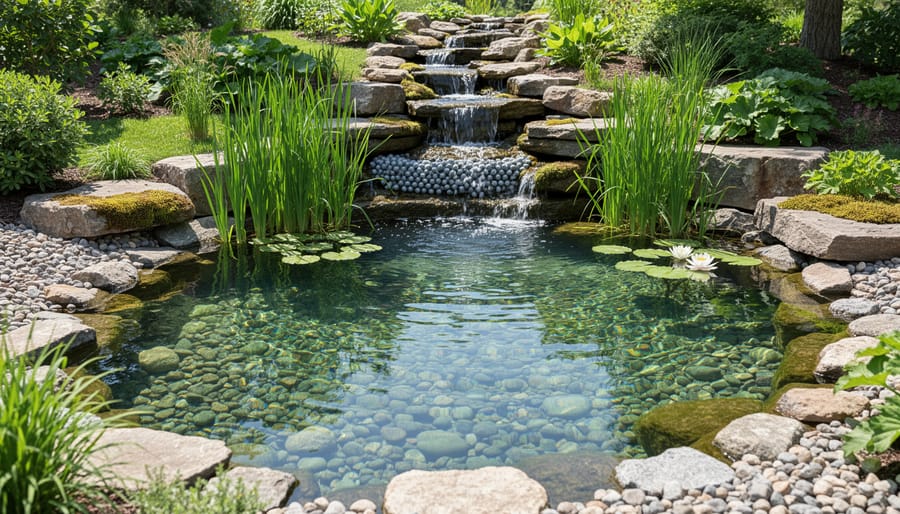
Let me be honest with you – those chemical treatments promising crystal-clear water come with a hefty price tag, and I’m not just talking about money. When I first started my pond journey, I was spending around $50-80 monthly on algaecides, clarifiers, and bacteria supplements. That’s nearly $1,000 a year just to keep the water looking decent!
But here’s what really bothered me: those chemicals were working against nature, not with it. Algaecides kill off the beneficial bacteria your pond desperately needs to break down fish waste and decomposing plant matter. Every time you add chemicals, you’re essentially hitting the reset button on your pond’s natural ecosystem. Your fish become stressed from the chemical exposure, their immune systems weaken, and you end up needing more treatments to fix the problems the first treatments created. It’s an exhausting, expensive cycle.
Chemical runoff also damages surrounding plants and soil, making wildlife-safe water features nearly impossible to maintain. The environmental impact extends beyond your backyard, affecting local waterways when excess chemicals drain away. Once I understood the true cost – financial, environmental, and emotional – switching to natural filtration became an obvious choice.
How Nature Does It Better
Ever wonder why a pristine mountain stream stays crystal clear without any filters or chemicals? Nature has perfected the art of water purification over millions of years, and you can tap into that same magic right in your backyard.
In healthy ponds and streams, a fascinating community of beneficial bacteria lives on every surface – rocks, plants, even the pond bottom. These microscopic helpers break down fish waste and decaying leaves, transforming harmful ammonia into harmless nitrates that aquatic plants absolutely love. Think of it as nature’s recycling program, where nothing goes to waste.
Meanwhile, water plants act as living filters. Their roots absorb excess nutrients while releasing oxygen into the water. Floating plants shade the surface, keeping algae in check by blocking sunlight. Submerged plants provide hiding spots for beneficial organisms while filtering water as it flows through their leaves.
The best part? This biological filtration works 24/7 without electricity bills or expensive replacement filters. You’re essentially creating a self-sustaining ecosystem where every element supports the others. When you build your water feature with these natural principles in mind, you’re not fighting nature – you’re partnering with it.
Understanding Eco-Friendly Filtration Systems
Mechanical Filtration: Your First Line of Defense
Think of mechanical filtration as your water feature’s bouncer – it catches the troublemakers before they can cause real problems! This is where physical barriers like filter pads, screens, and brushes grab hold of leaves, twigs, fish waste, and other debris floating around in your water.
Here’s why this matters so much: when organic matter sits in your pond, it doesn’t just float there looking unsightly. It starts breaking down, releasing ammonia and other compounds that can turn your beautiful water feature into a murky mess. By catching this stuff early, you’re preventing a cascade of water quality issues down the line.
I learned this lesson the hard way during my first autumn with a backyard pond. I thought skimming leaves occasionally was enough, but within weeks, my crystal-clear water looked like tea! Once I installed a proper pre-filter basket in my pump intake, the difference was incredible.
The beauty of mechanical filtration is its simplicity – no chemicals, no complicated equipment. Just strategically placed barriers that do the heavy lifting, quite literally, so your biological filtration can focus on the microscopic work.
Biological Filtration: The Invisible Cleanup Crew
Think of beneficial bacteria as your water feature’s invisible maintenance crew, working 24/7 to keep things clean and healthy. These microscopic helpers naturally colonize surfaces in your pond, especially in filter media, rocks, and gravel.
Here’s how they work their magic: fish waste and decomposing plant matter release ammonia, which is toxic to aquatic life. Your bacterial crew converts this ammonia into nitrites (still harmful), then into nitrates (much safer). This natural process, called the nitrogen cycle, is absolutely essential for a balanced ecosystem.
When I first started my pond, I made the mistake of adding fish immediately. Big error! The bacteria hadn’t established yet, and I learned the hard way that this “cycling” process takes 4-6 weeks. Now I always wait patiently, testing my water regularly.
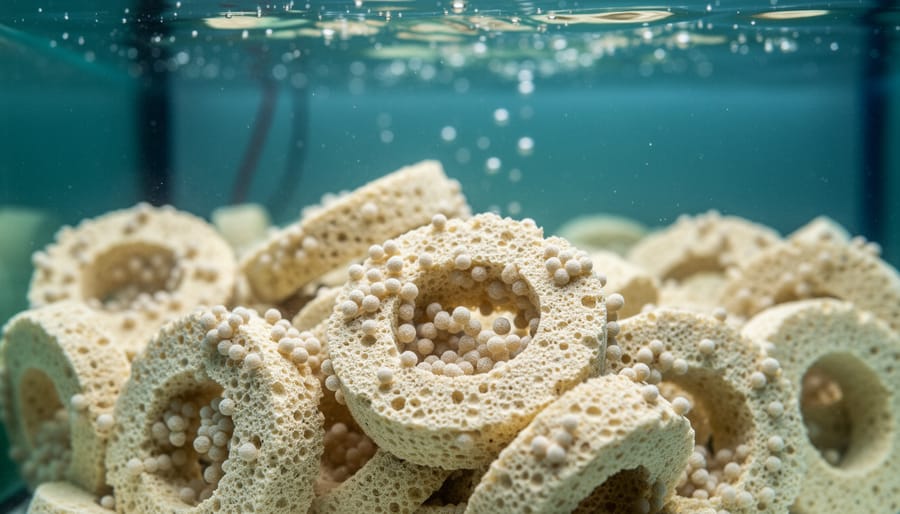
To encourage these beneficial bacteria, provide plenty of surface area through porous rocks, bio-balls, or specialized filter media. Keep your filter running continuously since these bacteria need constant oxygen flow. Avoid harsh chemicals or over-cleaning your filter, as you’ll wash away your hardworking cleanup crew. Once established, they’ll maintain water quality naturally, reducing your maintenance time significantly.
Plant-Based Filtration: Nature’s Water Purifiers
Think of aquatic plants as your water feature’s natural cleaning crew, working 24/7 to keep things crystal clear. Here’s the cool part: algae and your chosen plants compete for the same nutrients in the water, mainly nitrogen and phosphorus. When you stock your feature with the right plants, they’ll gobble up these nutrients before algae can get to them. It’s like inviting helpful guests to a dinner party who eat all the food before the troublemakers arrive!
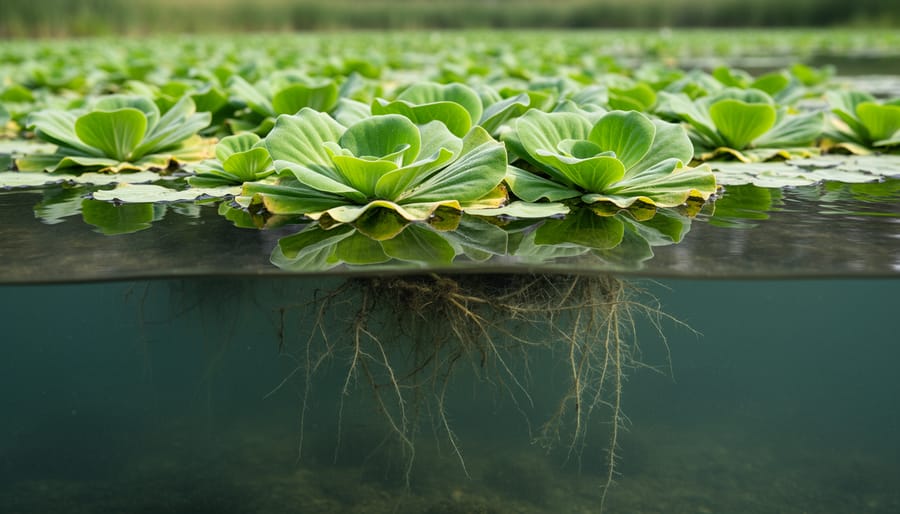
Plants like water lettuce, water hyacinth, and submerged varieties such as hornwort are champion nutrient absorbers. Their roots dangle in the water, acting like tiny filtration systems that pull out excess nutrients from fish waste, decaying leaves, and runoff. The result? Starved algae can’t bloom, and you’re left with beautifully clear water without a single chemical. I’ve watched my own pond transform from murky green to sparkling clear within weeks of adding floating plants. The best part? This system maintains itself once established, requiring minimal effort from you.
Choosing the Right Filtration System for Your Water Feature
Small Features and Container Gardens
For smaller water features like tabletop fountains, half-barrel ponds, and container gardens, keeping the water clean doesn’t have to be complicated! A simple sponge filter or small submersible pump with a built-in filter works wonderfully for these compact setups. I’ve found that even a basic aquarium filter can do the job beautifully in a 50-gallon whiskey barrel pond.
The key is matching your filtration to your water volume. For containers under 100 gallons, a small pump that circulates the water once per hour is usually plenty. Add a few floating plants like water lettuce or dwarf water lilies, and they’ll help absorb excess nutrients naturally. I like to tuck a mesh bag filled with lava rock near the pump intake, which provides extra surface area for beneficial bacteria to colonize.
Change about 10-20% of the water weekly, and your mini water garden will stay crystal clear without harsh chemicals or expensive equipment!
Medium Ponds with Fish
For ponds in the 100-1000 gallon range with a healthy fish population, you’ll need a more robust filtration approach. The good news? Nature still does most of the heavy lifting! Start with a biofilter containing lava rock or specialized filter media where beneficial bacteria colonize and break down fish waste. Pair this with a planted bog filter that acts as your natural polishing system. I’ve found that dedicating about 10-20% of your total pond volume to bog filtration keeps water crystal clear without chemicals.
Your plant lineup should include heavy feeders like water iris, pickerel rush, and cardinal flower in the bog area, plus floating plants like water hyacinth to absorb excess nutrients. Add a moderate-sized waterfall or stream to oxygenate the water, which your fish absolutely need. The key is balance: stock conservatively (about one inch of fish per 10 gallons), feed sparingly, and let your plants work their magic. With proper setup, you’ll only need to clean mechanical filters monthly while the ecosystem maintains itself beautifully.
Large Ponds and Extensive Water Gardens
When designing your water feature on a grand scale, you’ll need a multi-stage filtration system to keep the water crystal clear. Think of it as teamwork between different filter types, each handling specific jobs.
Start with a mechanical filter to catch leaves and debris before they sink. This pre-filter saves your biological filter from getting clogged. Next, add a biological filter where beneficial bacteria break down fish waste and organic matter. For ponds over 1,000 gallons, consider a separate UV clarifier to control algae blooms without chemicals.
Position your skimmer at one end and return flow at the opposite end to create circulation throughout the entire pond. I learned this the hard way when my first large pond had dead spots where debris accumulated. Proper flow patterns make all the difference in maintaining water quality naturally and reducing your maintenance time significantly.
DIY Eco-Friendly Filtration Systems You Can Build Today
The Simple Bucket Biofilter
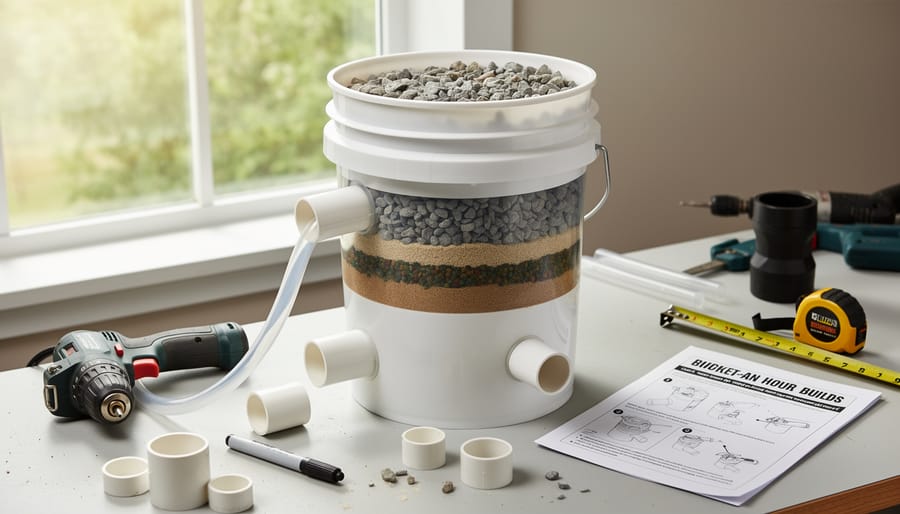
If you’re just dipping your toes into water feature filtration, this bucket biofilter is your new best friend. I absolutely love recommending this project to beginners because it’s nearly impossible to mess up, costs under $30, and works beautifully for fountains, small ponds, or container water gardens up to 100 gallons.
Here’s what you’ll need to gather: one 5-gallon bucket (food-grade works great), a drill with a 1/4-inch bit, about 20 pounds of lava rock, a sheet of coarse filter foam (roughly 12×12 inches), a small submersible pump (rated for your water feature size), and some plastic mesh or window screen material.
Let’s put it together. First, drill about 30 to 40 small holes randomly around the bottom and lower sides of your bucket. These drainage holes let water flow through while keeping your filter media contained. Next, cut your mesh material to fit the bottom of the bucket as a liner. This prevents smaller lava rocks from escaping through the holes.
Now for the layering magic. Pour in your lava rock until the bucket is about two-thirds full. Those porous volcanic rocks are absolute champions at harboring beneficial bacteria. Top everything off with your filter foam, cutting it to fit snugly. This foam catches larger debris before it reaches your lava rock layer.
Position your pump inside the bucket, threading the cord through a notch you’ve cut in the rim. Submerge the entire bucket in your water feature, or place it in-line if you’re using tubing. The pump pulls water through the foam and lava rock, where beneficial bacteria work their magic breaking down organic waste.
Within two to three weeks, your biofilter will be fully colonized with helpful bacteria, keeping your water crystal clear naturally.
The Gravel Wetland Filter
Ready to take your pond’s natural filtration to the next level? A gravel wetland filter is like giving your water feature its own kidney system, and trust me, once you see how crystal-clear your water becomes, you’ll wonder why you didn’t build one sooner.
This intermediate project creates a shallow planted area adjacent to your main pond where beneficial bacteria colonize gravel surfaces while aquatic plants absorb excess nutrients. Water flows through the gravel bed, getting cleaned naturally before returning to your pond. I added one to my backyard pond three years ago, and my water quality improved dramatically within just a few weeks.
Start by excavating a shallow basin about 12-18 inches deep alongside your pond. Make it roughly one-third the surface area of your main pond for optimal filtration. Line it with pond liner, ensuring it connects seamlessly with your existing feature. Fill the basin with pea gravel or river rock, creating layers from larger stones at the bottom to smaller gravel on top.
Install a pump in your pond that pushes water into the wetland filter at one end. The water percolates through the gravel and plants before gravity-feeding back into the pond at the opposite end. This gentle flow is key, moving water slowly enough for effective biological filtration.
Plant selection makes all the difference here. Hardy choices like iris, cattails, rushes, and pickerel weed thrive with their roots in gravel. These workhorses pull nutrients from the water while adding beautiful vertical interest. Space plants about 12 inches apart for the first season.
The beauty of this system is its low maintenance. Simply trim back dead foliage in fall and occasionally rinse the surface gravel if debris accumulates. Your pond will thank you with sparkling, balanced water year-round.
The Skippy-Style Barrel Filter
If you’ve spent any time researching pond filters online, you’ve probably stumbled across the legendary Skippy filter. Named after its inventor, this clever design has become the gold standard for DIY pond filtration, and for good reason. It’s affordable, effective, and surprisingly easy to build in an afternoon.
The basic concept is brilliantly simple. You’re creating a multi-chamber biological filter using an inexpensive plastic barrel or stock tank. Water flows through different media layers where beneficial bacteria colonize and break down harmful ammonia and nitrites from fish waste. I built my first Skippy filter about six years ago for a 1,500-gallon koi pond, and it’s still going strong.
Here’s what you’ll need: a 55-gallon plastic barrel (or larger stock tank for bigger ponds), various sizes of lava rock or bio-balls, filter matting, PVC pipe and fittings, a submersible pump, and a drill with hole saws. The beauty is in the layering. Start by drilling an overflow hole near the top of your barrel. Then create your filter layers from bottom to top: large lava rock for initial debris capture, medium lava rock for additional filtration, finer bio-media like K1 or bio-balls for maximum bacterial surface area, and finally filter matting on top.
For smaller ponds under 1,000 gallons with minimal fish, a single barrel works wonderfully. If you’re like me and have a pond over 2,000 gallons with a decent fish population, consider connecting two barrels in series for extra filtration power. The first barrel handles the heavy lifting with coarse media, while the second provides fine polishing.
Position your Skippy filter slightly above pond level so gravity helps with water return, and you’ve got yourself a workhorse filter that rivals commercial systems.
Best Plants for Natural Water Filtration
Floating Powerhouses
Here’s my secret weapon for keeping pond water crystal clear: floating plants! Water lettuce and water hyacinth are absolute champions at soaking up excess nutrients that algae love to feast on. I call them my natural nutrient sponges.
These fast-growing beauties float right on the surface with their roots dangling below, filtering the water as they go. Water lettuce forms lovely rosettes that remind me of floating cabbages, while water hyacinth produces gorgeous purple blooms as a bonus. They multiply quickly, which is exactly what you want for filtration purposes.
The best part? Just drop them in your water feature and let nature do its thing. They’ll start absorbing nitrates, phosphates, and other nutrients immediately. When they spread too much (and they will), simply scoop out the extras and toss them in your compost pile. It’s like having a self-maintaining filter that actually looks good while working hard to keep your water balanced and healthy.
Marginal Plant Workhorses
These shallow-water champions work overtime to keep your feature crystal clear. Cattails are absolute powerhouses, drawing up excess nutrients through their roots while adding that classic pond aesthetic. I’ve watched them transform murky water in just weeks! Plant them where water sits 2-6 inches deep. Japanese iris and yellow flag iris add gorgeous blooms while their root systems trap sediment and filter out impurities. Rushes like corkscrew rush or soft rush create stunning vertical interest and excel at absorbing nitrogen and phosphorus that would otherwise fuel algae growth. Position these beauties around your feature’s edges in shallow zones, planting them in heavy clay soil or aquatic planting media to anchor their roots. They’ll naturally spread to create dense filtration zones, so give them space or contain them in submerged pots if you’re working with a smaller feature.
Submerged Oxygenators
Think of submerged oxygenators as your water feature’s hardworking underwater garden. These plants live completely beneath the surface, pumping oxygen into the water while acting as natural algae fighters. Popular choices include hornwort, anacharis, and water milfoil. They’re brilliant because they compete directly with algae for nutrients, essentially starving out the green stuff you don’t want. I love adding bundles of these plants to new ponds because they get to work immediately.
Aim for about one bunch per square foot of water surface. Simply drop them in with small weights attached to their stems, or let them float freely if you prefer. They’ll quickly establish themselves and start their cleanup work. Best of all, they need virtually no maintenance. Just thin them out occasionally if they get too enthusiastic about growing. These underwater workhorses are essential for keeping your water crystal clear naturally.
Getting Your System Up and Running
The Nitrogen Cycle: What’s Actually Happening
Here’s what’s really happening in those crucial first weeks after you set up your water feature. When you first fill your pond and get your pump setup running, the water might look crystal clear, but it’s essentially sterile. Within days, fish waste and decomposing plant matter start releasing ammonia into the water, which is toxic to aquatic life.
This is where the magic begins. Beneficial bacteria naturally arrive and start colonizing every surface in your pond—rocks, gravel, filter media, even plant roots. These microscopic heroes work in stages: first, one type converts ammonia into nitrites, then another type transforms nitrites into nitrates, which plants happily absorb as fertilizer.
The entire process typically takes 4-6 weeks to establish fully. I know it’s tempting to add fish immediately, but patience here saves heartbreak later. During this cycling period, your bacteria colonies are building up their numbers, learning to handle the bioload of your feature. Rush it, and you risk losing fish to ammonia spikes. Trust the process, test your water weekly, and you’ll be rewarded with a naturally balanced ecosystem that practically takes care of itself.
Troubleshooting Early Issues
Don’t panic if your water looks a bit murky at first! When I set up my first natural water feature, I was convinced I’d done something terribly wrong when the water turned cloudy within days. Turns out, this is completely normal and usually clears up on its own within one to three weeks as beneficial bacteria establish themselves.
Cloudy water typically happens because your ecosystem is still finding its balance. The simple fix? Patience. Resist the urge to keep changing the water, as this only resets the process. If cloudiness persists beyond three weeks, check that your pump is running properly and consider adding more filtration plants like water hyacinth or parrot feather.
Green water, on the other hand, means algae is having a party in your feature. This usually happens when there’s too much sunlight hitting the water and not enough plants to compete with the algae for nutrients. Add floating plants to shade about half the water surface, and introduce submerged oxygenators like hornwort. Within two to four weeks, you should notice improvement.
Slow clearing often points to poor circulation. Make sure your pump isn’t clogged with debris and that water is flowing through your planted filter area effectively.
Maintaining Your Eco-Friendly System
Monthly Check-Ins
Set aside just ten minutes each month to keep your eco-friendly filtration system thriving! Start by checking water flow through your bog filter or gravel bed. If it seems sluggish, gently clear any debris blocking the intake or overflow areas. Next, inspect your pump for any tangled plant matter or leaves that might reduce efficiency. While you’re at it, look over your filtration plants and trim back any dead or yellowing leaves, which helps redirect the plant’s energy toward filtering nutrients from the water.
Take a quick walk around your water feature to spot any algae buildup on rocks or the pond liner. A light scrub with a soft brush keeps things looking fresh without chemicals. Finally, test your water clarity by simply observing it. Crystal-clear water means your system is balanced, but if you notice cloudiness, it might be time to add more filtering plants or check if your pump needs adjustment. These simple monthly habits prevent bigger problems down the road and keep your water feature looking beautiful year-round!
Seasonal Deep Maintenance
Your eco-friendly water feature thrives when you adjust care with the seasons. These seasonal maintenance tasks keep your natural filtration working beautifully year-round.
Spring brings new growth and increased activity. Remove any winter debris, trim back dead plant material, and divide overgrown marginal plants. This is perfect timing to add new filtration plants as water temperatures rise above 10°C. I always get excited seeing those first green shoots emerge!
Summer demands more attention. Top up water levels weekly due to evaporation, and check that your pump stays submerged. Trim vigorous growers like water celery to prevent overcrowding. If algae blooms appear, add more floating plants to shade the water.
Fall preparation protects your system. Cut back dying foliage before it decomposes in the water. Remove tender plants to indoor containers if you experience frost. Install netting to catch falling leaves.
Winter maintenance is minimal in mild climates. Simply remove the pump if freezing is expected, or keep it running in deeper sections to maintain oxygen exchange. Your filtration plants rest now, ready to work again come spring.
Here’s the truth that might surprise you: eco-friendly filtration isn’t just kinder to the environment—it’s actually easier on your wallet and your schedule in the long run. Those chemical treatments add up month after month, while plants and beneficial bacteria work for free once you’ve got them established. You won’t be running to the store for filters and additives, and you definitely won’t be spending your weekends scrubbing away algae blooms caused by chemical imbalances.
If you’re feeling a bit overwhelmed by everything we’ve covered, take a breath. You don’t need to build the perfect ecosystem overnight. Start with one simple project—maybe a floating plant island or a basic bog filter. Get comfortable with how it works, watch what happens, and then add more elements as you gain confidence. Nature is remarkably forgiving and wants to help you succeed.
I’ll never forget the morning I realized my DIY filtration system had truly clicked into place. I was standing by my pond with my coffee, watching dragonflies dart between the cattails, when I noticed the water was crystal clear all the way to the bottom. I hadn’t touched it in weeks beyond adding some water to replace evaporation. The plants were thriving, the fish were happy, and I was just… watching. That’s the real magic of natural filtration—once you set it up right, nature takes over and does the heavy lifting while you get to enjoy the show.