
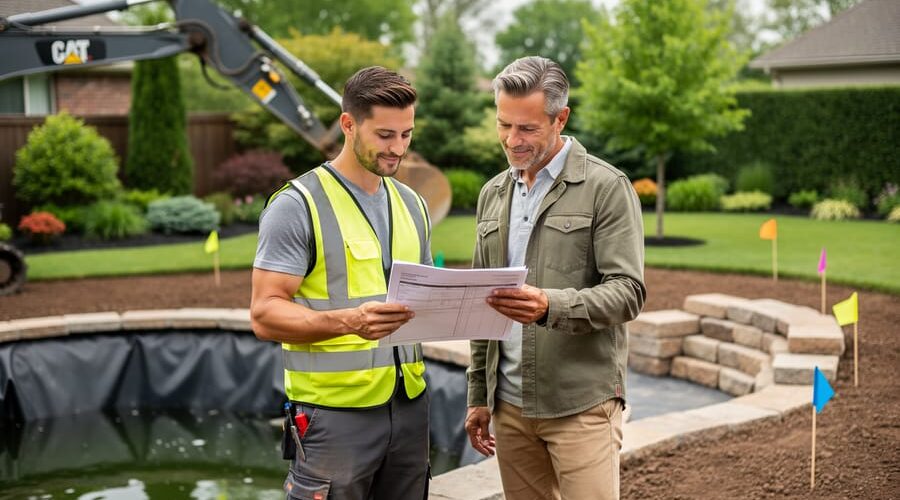
Why Your Pond Contractor Needs Insurance (And What It Means for Your Project)
Hiring a contractor to build your dream pond without proper insurance and bonding is like diving into murky water—you can’t see what dangers lurk beneath the surface. One contractor I knew seemed perfect for a backyard koi pond installation until their excavator struck a hidden gas line. Without adequate insurance, the homeowner faced $18,000 in repair costs because the contractor’s minimal coverage didn’t include underground utility damage.
Insurance and bonding aren’t just paperwork formalities. They’re your financial safety net when heavy equipment damages your property, when a worker gets injured on your land, or when a contractor abandons your half-finished project with your deposit money. General liability insurance protects against property damage and accidents, while a surety bond guarantees project completion even if the contractor disappears.
Before signing any contract, verify three things directly with the insurance company: that the policy is current, that it covers the specific work you’re planning, and that coverage limits match your project scope. A pond installation involves excavation, electrical work for pumps and lighting, and often significant landscaping—each presenting unique risks.
Most homeowners discover insurance gaps only after something goes wrong. You’ll learn exactly what coverage protects you, how to verify credentials without feeling awkward, and which warning signs indicate inadequate protection. Understanding these safeguards transforms you from a vulnerable homeowner into an informed client who can confidently create the water feature you’ve envisioned.
What Insurance and Bonding Actually Mean (In Plain English)
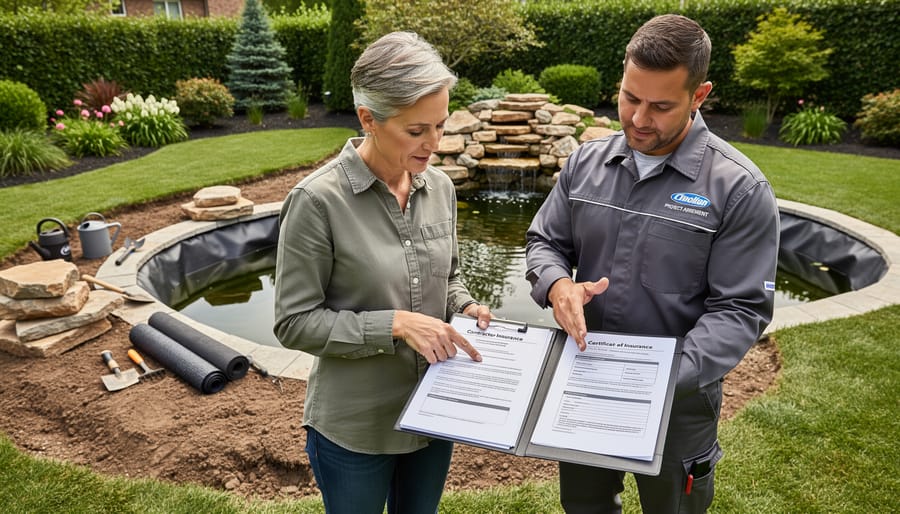
General Liability Insurance: Your Safety Net
General liability insurance is like your contractor’s promise that if something goes wrong during your pond project, you won’t be left holding the bag. Think of it as the safety net that catches all those “oops” moments that can happen during construction.
So what does it actually cover? General liability protects you if the contractor’s work causes property damage or if someone gets injured on your property during the project. Here’s what that looks like in real pond-building scenarios: imagine the excavator accidentally clips your irrigation line while digging, flooding your flower beds. Or picture a heavy piece of equipment leaving deep ruts across your carefully manicured lawn. Maybe a worker trips over pond liner materials and gets injured, or a neighborhood kid wanders onto the work site and falls into the partially excavated hole.
Without general liability coverage, guess who might end up paying for medical bills, property repairs, or legal fees? That’s right—you could be on the hook for thousands of dollars in damages that weren’t your fault.
A reputable pond contractor should carry at least one million dollars in general liability coverage. This isn’t just good business practice; it’s your financial protection throughout the entire construction process.
Worker’s Compensation: Why It Matters to You
Worker’s compensation insurance might not sound exciting, but trust me, it’s one of those things that could save you from a major headache down the road. Here’s the deal: if you hire a contractor to build your dream pond and one of their workers gets injured on your property, you could be held responsible for medical bills and lost wages if the contractor doesn’t have proper worker’s comp coverage.
Let me paint you a picture. Imagine a crew member slips on wet rocks while digging out your pond’s deep end and breaks their ankle. Without worker’s comp, that injured worker might file a claim against your homeowner’s insurance, or worse, sue you directly. We’re talking potentially thousands of dollars in medical expenses, rehabilitation costs, and legal fees coming out of your pocket.
When your contractor has worker’s compensation insurance, their policy covers these workplace injuries instead of you. It’s that simple. Before signing any contract, always ask to see current proof of worker’s comp coverage. Most legitimate contractors will happily provide this documentation because they understand it protects everyone involved in your backyard oasis project.
Bonding: Your Project Completion Guarantee
Think of bonding as a safety net that catches you if your contractor can’t finish your pond project. There are two main types you should know about: performance bonds and payment bonds, and both work to protect you.
A performance bond is essentially a promise that your pond will get completed even if something unexpected happens to your contractor. Let’s say you’ve hired someone to install a 500-gallon koi pond, but halfway through they go out of business or simply abandon the project. With a performance bond in place, the bonding company steps in to either hire another contractor to finish the work or reimburse you for the costs to complete it yourself. It’s like having a backup plan you hope you’ll never need.
Payment bonds protect you from a different headache. They guarantee that your contractor will pay their suppliers and subcontractors. This matters because in some situations, if your contractor doesn’t pay the company that supplied your pond liner or the electrician who installed your pump, those businesses could potentially file a claim against your property. A payment bond prevents this scenario, ensuring everyone gets paid without putting your home at risk.
What Could Go Wrong (And Why Insurance Saves the Day)
When Excavation Goes Sideways
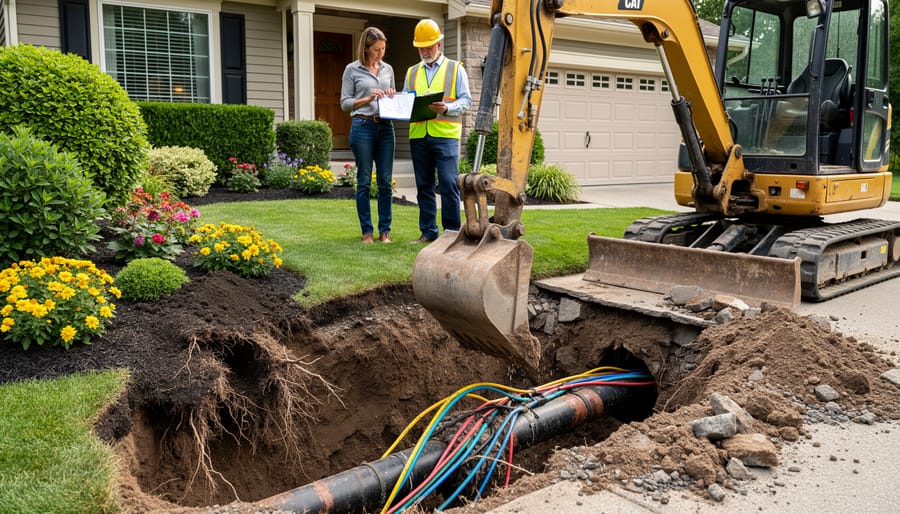
Even the most experienced contractors occasionally encounter surprises underground. Picture this: you’re watching your dream pond take shape when suddenly the excavator hits an unmarked gas line or accidentally clips your neighbor’s buried sprinkler system. Perhaps the equipment leaves deep ruts across your lawn, or a misjudged scoop damages your prized rose bushes. These scenarios happen more often than you’d think, which is exactly why proper insurance matters so much.
General liability insurance steps in to cover property damage caused during excavation. If your contractor strikes utility lines, their insurance should handle repair costs and any related damages. Similarly, if equipment damages your landscaping, driveway, or fencing, you won’t be left footing the bill. Some contractors also carry equipment insurance, protecting you if their machinery malfunctions and causes harm to your property. Without adequate coverage, these mishaps could cost you thousands out of pocket. That’s why verifying your contractor’s insurance before they break ground isn’t just smart—it’s essential financial protection for your pond project.
If Your Contractor Disappears Mid-Project
Picture this: you’re halfway through your dream pond installation—there’s a big hole in your yard, equipment scattered around, and your contractor stops returning calls. Yikes! This nightmare happens more often than you’d think, and it’s exactly why bonding matters so much.
A surety bond acts like your safety net in this situation. If your bonded contractor vanishes or can’t complete the work, the bonding company steps in to make things right. They’ll either find another qualified contractor to finish your pond or compensate you for the financial loss. Without that bond, you’re stuck with an abandoned project, out thousands of dollars, and facing expensive legal battles just to recover some costs.
Think of bonding as your project completion insurance. Before hiring anyone to dig up your backyard, always verify they’re properly bonded and ask for documentation. That simple step could save you from staring at an unfinished crater where your beautiful water feature should be.
Injuries and Accidents on Your Property
Picture this: a worker slips on wet rocks around your pond excavation and breaks their wrist. Or perhaps a delivery driver trips over excavation equipment in your driveway. Without proper contractor insurance, you could face thousands in medical bills and legal fees. These scenarios happen more often than you’d think during pond installation projects. Workers might injure themselves while digging, moving heavy boulders, or working with electrical components for pumps and filters. Even seemingly minor accidents can lead to major expenses. That’s why general liability insurance is your safety net. When your contractor carries proper coverage, their insurance handles medical costs and any related claims if someone gets hurt on your property during the project. You can enjoy watching your dream pond take shape without worrying about unexpected financial disasters from accidents beyond your control.
How to Check If Your Pond Contractor Is Properly Covered
Ask for Certificates of Insurance (And Actually Read Them)
Before any contractor starts digging around your property, ask them to provide a Certificate of Insurance. This is like a report card showing their current coverage, and you absolutely should request it every single time. Don’t feel awkward about asking – legitimate contractors expect this and will gladly provide it.
The certificate should list you as the “certificate holder” and clearly show the policy numbers, coverage amounts, and expiration dates for both general liability and workers’ compensation insurance. Make sure your name and address appear correctly on the document. Here’s the thing many homeowners miss: the certificate should come directly from the contractor’s insurance company or their agent, not printed off the contractor’s home computer. That direct connection matters.
Look closely at those expiration dates. I once heard about a homeowner who glanced at a certificate but didn’t notice it had expired three months earlier. When an accident happened, guess who was liable? Check that the coverage amounts meet your project needs – for pond installations involving excavation and heavy equipment, you’ll want substantial liability coverage, typically at least one million dollars.
Red flags to watch for include vague descriptions of coverage, missing policy numbers, or certificates that look photocopied and altered. If something seems off, call the insurance company directly to verify. Trust your gut on this one.
Verify Coverage Directly with the Insurance Company
Here’s a simple extra step that gives you real peace of mind: pick up the phone and call the insurance company directly. Don’t just rely on the certificate your contractor provides. This quick verification call protects you from outdated or fraudulent documents, which unfortunately do happen.
When you call, have the contractor’s policy number ready and ask these key questions: Is this policy currently active? Does it cover the specific work dates for your pond project? What are the actual coverage amounts? Are there any exclusions I should know about? The representative can confirm everything in just a few minutes.
Think of it like double-checking your pond liner before filling your feature with water. Sure, your contractor said it’s fine, but wouldn’t you rather inspect it yourself? This verification step costs you nothing but a brief phone call, yet it could save you thousands if something goes wrong during your pond installation. Insurance companies expect these calls and make the process straightforward for homeowners.
Check Bonding Status and Licensing
Before hiring a contractor for your pond project, take a few minutes to verify their bonding status. It’s easier than you might think! Start by asking your contractor for their bond number and the name of their surety company. A reputable contractor will provide this information without hesitation. You can then contact the surety company directly to confirm the bond is active and find out the coverage amount.
Most states also maintain online databases where you can check contractor licensing and bonding status. Visit your state’s contractor licensing board website and search by business name or license number. This quick step can save you from potential headaches down the road.
Here’s something important to know: licensing and bonding often go hand-in-hand. Many states require contractors to maintain both a bond and minimum insurance coverage to keep their license active. When you verify a contractor’s license, you’re often confirming they’ve met these insurance requirements too. Think of the license as proof they’ve checked all the boxes to work legally in your area, including having proper protection in place for customers like you.
Understanding How Insurance Costs Affect Your Pond Project Budget
Why Insured Contractors Cost More (And Why That’s Okay)
Let’s talk money! You might notice that licensed, insured contractors charge more than that “guy who knows a guy.” Here’s why that’s actually protecting your wallet.
When contractors quote your pond project, they’re including their insurance premiums in the price. Think of it as built-in peace of mind. Yes, it bumps the total up by roughly 10-20%, but you’re paying for real protection, not just labor.
Here’s the thing: choosing an uninsured contractor to save a few hundred dollars now can cost you tens of thousands later. Imagine your neighbor’s property gets flooded during excavation, or a worker gets hurt on your property. Without insurance, guess whose bank account takes the hit? Yours.
I learned this the hard way years ago when I hired an unlicensed helper for a simple waterfall addition. He damaged my home’s foundation, disappeared, and left me holding a $8,000 repair bill. That “cheap” labor turned into my most expensive lesson.
Insured contractors also tend to be more established and professional. They’ve invested in their business, follow building codes, and care about their reputation. You’re not just paying for insurance coverage; you’re paying for quality workmanship and accountability. That premium is really an investment in your project’s success and your family’s financial security.
Red Flags: When a Quote Seems Too Good to Be True
Here’s a situation I’ve seen too many times: A homeowner gets three quotes for their pond installation, and one comes in at half the price of the others. It seems like a dream deal, right? But here’s what I’ve learned from years in water gardening—when a bid is significantly lower than the rest, something’s usually missing, and it’s often proper insurance coverage.
Contractors who cut corners on insurance often pass those “savings” along with lowered bids. Think about it: comprehensive coverage costs money, and uninsured contractors have a built-in pricing advantage. But you’ll pay the difference if someone gets hurt on your property or your existing landscaping gets damaged.
Watch for contractors who dodge insurance questions, can’t produce certificates immediately, or get defensive when you ask to verify coverage. Another red flag? Pressure to start immediately without proper documentation. Legitimate contractors expect these questions and have answers ready. They know homeowners need protection, especially for complex projects involving excavation, water features, and electrical work. Trust your instincts—if a quote feels unrealistically low, dig deeper into what coverage that contractor actually carries before signing anything.
Protecting Yourself: Additional Steps for Peace of Mind
Review Your Homeowner’s Policy Before Construction Begins
Before the first shovel hits the ground, take a few minutes to review your own homeowner’s insurance policy. Many standard policies have specific clauses about major landscape modifications, and a pond installation definitely qualifies! Some insurers consider ponds an “attractive nuisance” similar to swimming pools, which might affect your coverage or premiums.
Give your insurance agent a quick call to discuss your pond project. Let them know the size, depth, and any features like waterfalls or lighting you’re planning. They’ll tell you if you need additional coverage or if your existing policy needs updating. This conversation is usually free and takes just a few minutes, but it can save you from nasty surprises later if something goes wrong during construction or after your pond is complete. Some insurers even offer helpful advice about safety features that might reduce your costs!
What to Include in Your Contractor Agreement
Before you sign on the dotted line, let’s make sure your contract protects you properly. Think of your contractor agreement as your safety net – it should clearly spell out the insurance requirements that keep you covered throughout your pond project.
First and foremost, require your contractor to maintain their insurance coverage for the entire duration of the project. It sounds obvious, but policies can lapse, and you want language that states coverage must remain active from day one until final cleanup.
Here’s a really important clause: request to be named as an additional insured on their liability policy. This means if something goes wrong during your pond installation – say, equipment damages your neighbor’s fence – you’re protected under their policy too. It’s like having an extra umbrella on a rainy day.
Your contract should also specify minimum coverage amounts for both general liability and workers’ compensation. For most residential pond projects, one million dollars in general liability is standard, though larger projects might warrant more.
Don’t forget to include a requirement for certificates of insurance to be provided before work begins, with your name clearly listed. Some homeowners even add a clause requiring 30-day advance notice if the contractor’s insurance is cancelled or changed during the project.
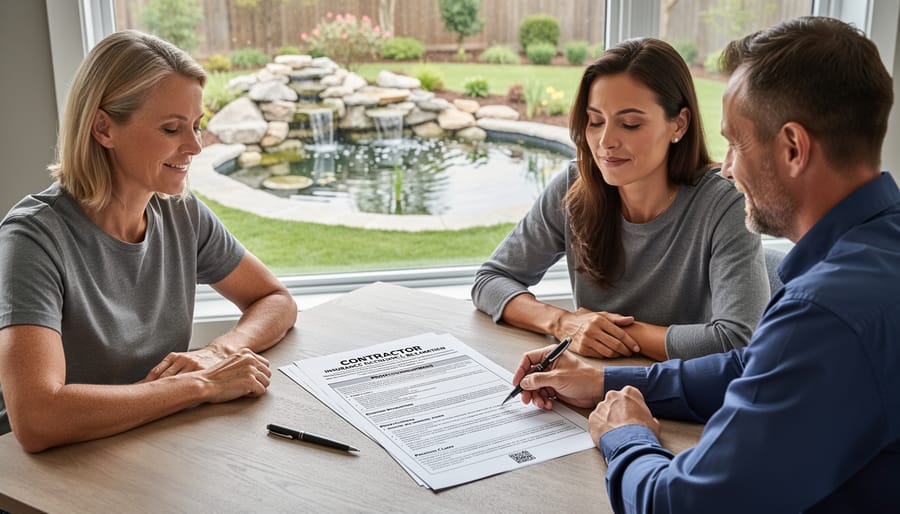
You’ve just taken an important step that many homeowners skip, and your pond project is already better protected because of it. Understanding insurance and bonding might not be the most exciting part of planning your dream water feature, but it’s definitely one of the smartest moves you can make.
Here’s the beautiful truth: checking a contractor’s insurance and bonding status isn’t complicated. It takes just a few minutes to ask for certificates, verify coverage with the insurance company, and confirm the policy is current. That small investment of time could save you thousands of dollars and countless headaches down the road.
Now that you know what general liability insurance covers, why worker’s compensation matters, and what bonding actually means, you’re equipped to have confident conversations with potential contractors. You understand the red flags to watch for and the questions to ask. You’re not just another homeowner hoping for the best—you’re an informed client who knows how to protect their investment.
As you move forward with your pond project, remember that reputable contractors will be happy to provide proof of insurance. They understand that knowledgeable clients make better partners throughout the construction process. So go ahead and reach out to those contractors on your shortlist. Request those certificates. Verify the coverage. And then enjoy the peace of mind that comes with knowing your property, your family, and your beautiful future pond are all properly protected.