
When Abstract Art Meets Water: Creating Your Jackson Pollock Pond
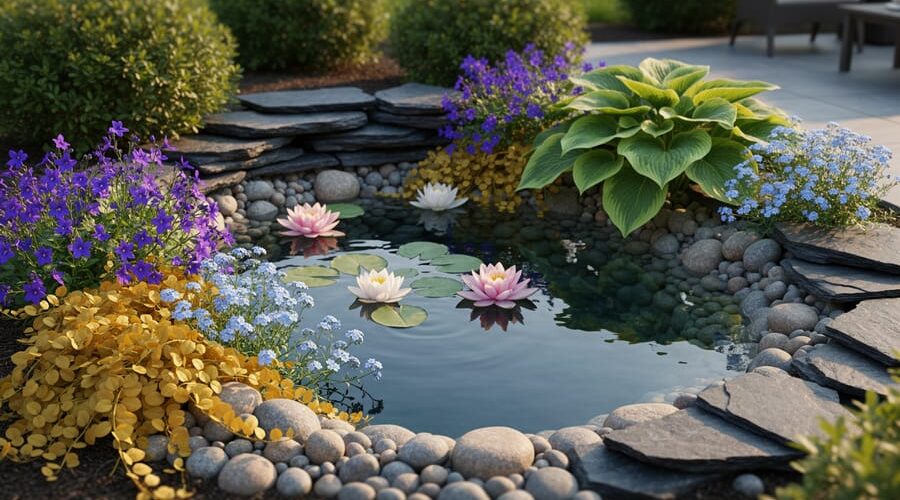
Splash color across your pond’s edge with spontaneous plantings that mirror Pollock’s drip technique—cluster golden creeping Jenny and purple lobelia in irregular patterns rather than rigid rows. Layer river rocks in varying sizes and earth tones around your water feature, creating the same dynamic energy and movement found in abstract expressionist canvases. Break free from symmetrical designs by positioning water lilies and floating plants in unexpected groupings that guide the eye naturally across the surface. Add depth through contrasting textures: smooth pebbles against jagged slate, delicate water forget-me-nots beside bold hostas. This artistic approach transforms standard water gardens into living masterpieces where chaos and control dance together, proving that the same principles revolutionizing mid-century art can revolutionize your backyard oasis. Your pond becomes a three-dimensional canvas where splashes, drips, and organic flow replace traditional formality with raw, authentic beauty.
Who Was Jackson Pollock and Why Does He Matter to Your Pond?
Jackson Pollock was an American artist who turned the art world upside down in the 1940s and 50s by literally dripping, splashing, and pouring paint onto canvases laid flat on the floor. Instead of carefully controlling every brushstroke, he let the paint flow naturally, creating organic patterns that seemed to have a life of their own. Think of it like watching water ripple across a pond surface or rain creating random patterns on pavement. That spontaneous, natural movement is exactly what makes Pollock’s work so exciting, and here’s the cool part: those same principles can transform your backyard pond from ordinary to extraordinary.
What made Pollock revolutionary wasn’t just his technique, but his philosophy. He rejected rigid rules and straight lines, embracing curves, swirls, and unpredictable patterns that mimicked nature itself. When you look at a Pollock painting up close, you see layers upon layers of flowing lines intersecting and creating depth, much like how water naturally carves paths through landscapes or how pond edges curve around natural obstacles.
For pond lovers like us, this matters because nature rarely creates straight lines or perfect circles. A Pollock-inspired pond celebrates irregular shapes, meandering edges, and the beautiful chaos of organic design. His drip paintings show us that letting go of control can create something more visually interesting than any perfectly planned design. When you embrace this approach, your pond stops looking like something dropped into your yard and starts feeling like it naturally belongs there, as if it’s always been part of the landscape.
The Core Principles: From Canvas to Water Garden
Embracing Controlled Chaos
Here’s the thing about Pollock that surprised me when I really started studying his work: those paint splatters weren’t random at all. He controlled every drip, every fling of the brush. It looked wild, but it was intentional. That’s exactly the secret to creating a stunning natural-looking pond.
When I designed my first pond, I made everything symmetrical and neat. It looked artificial and, honestly, a bit boring. Then I embraced the Pollock approach. I started planning irregular edges that curved unpredictably, placing larger rocks at unexpected intervals rather than evenly spaced. I clustered water lilies in groups of three and five instead of neat rows. The key was sketching it all out first, then executing what appeared spontaneous.
Think of it this way: you’re controlling the chaos. Choose where your “wild” grasses will arch over the water. Decide which stones will jut out at odd angles. Place your tallest plants off-center. Each placement is deliberate, but the overall effect feels like nature arranged it herself. This approach takes more planning than traditional design, but the payoff is a pond that looks like it’s always been part of your landscape, not something you installed last summer.
Layering for Depth and Interest
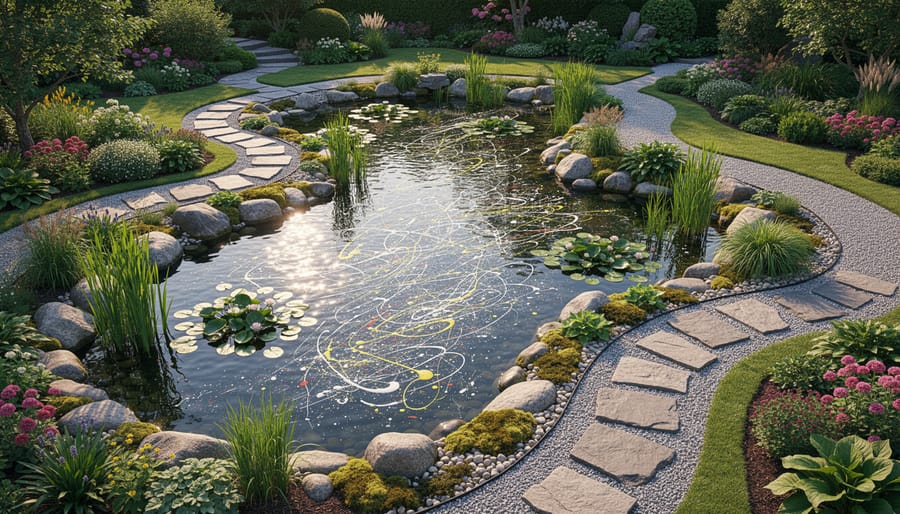
Pollock didn’t just splash paint randomly—he built up layers upon layers, creating incredible depth in his work. You can do the same thing in your pond! Think of your water garden as a three-dimensional canvas where every layer adds another dimension of beauty.
Start with your deepest elements at the pond bottom. Place larger rocks and boulders first, creating your foundational layer. Then work upward with medium-sized stones, breaking up any harsh lines. I remember when I first tried this approach—the transformation was amazing! My pond suddenly had mystery and intrigue instead of looking flat.
Next, consider your plant heights. Tall emergent plants like cattails or irises create your background layer, while shorter marginals occupy the middle ground. Floating plants add that top layer, just like Pollock’s final paint drips. Each plant height creates visual movement, drawing the eye through different depths.
Water levels themselves contribute to layering too. Varying depths create natural shelves where different ecosystems thrive. This complexity mirrors expert aquascaping techniques while maintaining that organic, unforced aesthetic Pollock championed. The result? A pond that reveals new details every time you look at it.
Movement and Flow as Art
Think about how Pollock’s paintings draw your eye across the canvas—there’s no single focal point, just endless energy flowing in every direction. You can create that same captivating movement around your pond by thinking of water as your paint and the landscape as your canvas.
Start by observing how water naturally wants to move through your space. Where does a stream feel right? Instead of forcing it to run in a straight, predictable line from point A to point B, let it meander and curve. Add a gentle cascade here, a small waterfall there. The sound and sight of moving water creates rhythm, just like the sweeping gestures in Pollock’s work.
Consider how you’ll guide visitors around your pond. Create winding pathways using stepping stones, gravel, or mulched trails that encourage people to walk slowly and discover different viewpoints. Place larger rocks or plant clusters at irregular intervals to create visual stopping points without being too structured.
Your stream placement matters tremendously. Rather than centering everything, try positioning your water features off-center or at angles. This asymmetry feels more organic and exciting. Let one stream split into two smaller channels, or have water emerge from unexpected spots between rocks.
The goal is creating visual pathways that feel spontaneous yet intentional—where each element leads naturally to the next, keeping eyes and feet moving through your garden with that signature Pollock energy and flow.
Designing Your Pollock-Inspired Pond: Practical Steps
Breaking the Geometric Mold
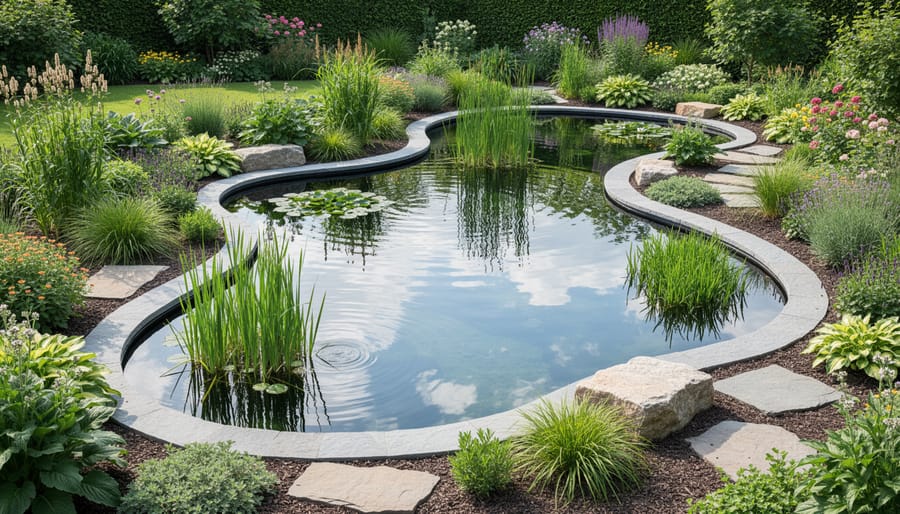
Ready to throw out the rulebook? Let’s embrace Pollock’s spontaneity! Start by laying a garden hose or rope on the ground where you envision your pond. Don’t think too hard about perfect curves—just let it flow naturally, creating gentle sweeps and unexpected bends. Walk around it from different angles. Does it feel right? Trust your gut.
Here’s my favorite trick: imagine water flowing across your yard during a rainstorm. Where would it naturally pool and meander? Those organic paths often create the most authentic-looking pond shapes. Step back fifteen feet and take a photo with your phone. This wider perspective helps you see whether the shape feels balanced, even if it’s wildly asymmetric.
Try the “three-point method” I learned through trial and error. Pick three key spots around your proposed pond area—maybe where a favorite shrub sits, a seating area, or a garden bed. Let your pond shape weave around these anchor points. This creates visual connection without forcing symmetry.
For marking natural pond edges, use landscape marking paint or flour to trace your final outline. Add gentle curves rather than sharp angles—nature rarely creates hard corners. Remember, you’re not aiming for chaos, but controlled spontaneity. The goal is a shape that looks like it’s always belonged there.
The ‘Splatter’ Approach to Plant Placement
Here’s the secret to capturing Pollock’s energy in your pond: think of your plants as paint splatters, not soldiers in a row. When Pollock flung paint across his canvases, it looked chaotic at first glance, but there was rhythm underneath. Your plant placement should feel the same way.
Start by choosing three to five plant varieties with different heights and textures. Instead of spacing them evenly around your pond’s edge, work in clusters. Grab three water irises and plant them close together at one spot, then skip a section completely. Add a drift of five marsh marigolds a few feet away, letting them almost tumble into each other.
The key is varying your cluster sizes. Place a bold group of seven cardinal flowers here, then balance it with a single specimen plant there. Step back frequently and squint at your work. Do your eyes travel naturally around the pond? That’s the visual rhythm you’re after.
I learned this technique the hard way after planting my first pond in perfect intervals. It looked like a parking lot. When I replanted using the splatter method, suddenly the space felt alive and spontaneous. Don’t be afraid of negative space between clusters. Those empty gaps let each grouping breathe and create that signature Pollock tension between order and chaos.
Rock and Hardscape as Bold Strokes
Think of Pollock’s heavy paint drips—those dramatic globs that give his work texture and dimension. You can recreate this visual weight in your pond with strategic rock placement. Instead of lining your pond edge with uniform stones like everyone else does, try clustering large boulders at irregular intervals. I learned this the hard way after my first pond looked like a boring bathtub ring!
Position your biggest, most interesting rocks as focal points—maybe a stunning granite piece near the waterfall or a group of three weathered boulders at different heights along one side. These become the bold strokes that anchor your design. Between these statement pieces, scatter smaller rocks in seemingly random patterns, letting some jut out over the water while others recede into plantings.
Don’t be afraid to stack rocks at unexpected angles or partially bury large stones so only their interesting tops peek through. This creates depth and movement, just like those thick paint applications Pollock used to draw your eye across the canvas. The key is breaking away from symmetry and embracing the beautiful chaos of nature. Your rocks should feel discovered, not arranged.
Color Theory: From Paint to Petals and Fins
Pollock didn’t hold back with color, and neither should you! Think beyond the typical goldfish-and-green lily pad combo. I remember visiting a friend’s pond where she’d paired bright orange koi with deep purple pickerel rush and splashes of yellow iris. It was electric, totally unexpected, and absolutely stunning.
Start by choosing one bold fish color as your anchor, maybe those vibrant orange or lemon-yellow koi. Then add contrasting aquatic plants that pop against that base. Purple loosestrife pairs beautifully with golden fish, while red ludwigia creates drama against white or platinum koi. Don’t be afraid to throw in a wildcard, like bright pink water lilies with blue-grey fish.
The key is mastering contrast in ponds through unexpected pairings. Mix warm and cool tones, light and dark values. Visit your local pond supplier with an open mind and pick combinations that make you do a double-take. That gut reaction of surprise and delight? That’s your Pollock moment right there.
Real Water Gardens with Abstract Influence
I’ve witnessed some truly magical transformations when pond owners embrace these free-flowing concepts. Last spring, I worked with Sarah, a homeowner who felt stuck with her predictable kidney-shaped pond. Together, we reimagined it by adding irregular stone groupings that jutted out at unexpected angles, creating small peninsulas that broke up the water’s edge. We planted water irises in asymmetrical clusters rather than evenly spaced intervals, and the result? A pond that felt alive and spontaneous, much like a Pollock canvas.
Another memorable project involved John, who initially wanted a perfectly symmetrical koi pond. After discussing artistic pond design principles, he decided to let the pond’s shape follow the natural contours of his sloping yard. We positioned rocks where they felt right rather than where symmetry demanded, and added three small waterfalls at varying heights. The water’s movement created overlapping ripple patterns that changed throughout the day, embodying that beautiful chaos we’d been chasing.
These real-world examples prove you don’t need to start from scratch. Sometimes it’s about rearranging existing elements, breaking your own rules about placement, and trusting your instincts. The ponds that resonate most deeply are often those where the designer took a chance, layered unexpected elements, and allowed imperfection to create character.
Common Mistakes When Going Abstract
I’ve seen plenty of pond owners get excited about abstract design, only to create something that looks more like an accident than art. The biggest mistake? True chaos instead of controlled creativity. Remember, Pollock’s drips had rhythm and intention—your rocks and plants should too. If you can’t spot any visual flow or balance after stepping back, you’ve gone too far.
Another pitfall is sacrificing function for form. An abstract arrangement still needs proper filtration access, safe edges, and healthy circulation patterns. I once watched a neighbor place her pump behind an “artistic” rock pile so elaborate she couldn’t reach it for cleaning. Don’t do that!
Maintenance gets tricky when plants overlap in unexpected ways. My advice: keep a simple sketch showing what’s planted where. Those beautiful intermingled grasses and groundcovers become mysterious when you’re trying to trim or divide them six months later.
Lastly, abstract doesn’t mean neglected. Random-looking designs actually need more attention to prevent them from becoming genuinely messy. Weekly checks keep your controlled chaos looking intentional rather than overgrown. The goal is artistic energy that enhances your pond, not overwhelms it.
Your pond doesn’t need to follow a rulebook. Just as Jackson Pollock threw out the canvas and easel to create something entirely his own, you have permission to reimagine what a water feature can be. Those spontaneous drips and splashes, the unexpected color combinations, the organized chaos that makes abstract expressionism so captivating—these same principles can transform your backyard into something truly one-of-a-kind.
The beauty of drawing inspiration from art is that there’s no single right answer. Your pond can be as wild or as subtle as you want. Maybe you’ll arrange river rocks in flowing patterns that mirror Pollock’s energy lines, or perhaps you’ll choose aquatic plants in bold, unexpected groupings. The point is to trust your instincts and let your personality shine through.
Start small if you’re feeling unsure. Experiment with one area, step back, and see how it feels. Remember, even Pollock practiced his technique before creating his masterpieces. Your water garden is a living, evolving artwork, and you’re the artist holding the brush—or in this case, the pond liner and stones. So go ahead, break free from conventional designs, and create something that makes you smile every time you see it.