
What Is a Recommended Water-Skiing Safety Practice? (And Why Pond Owners Should Care)
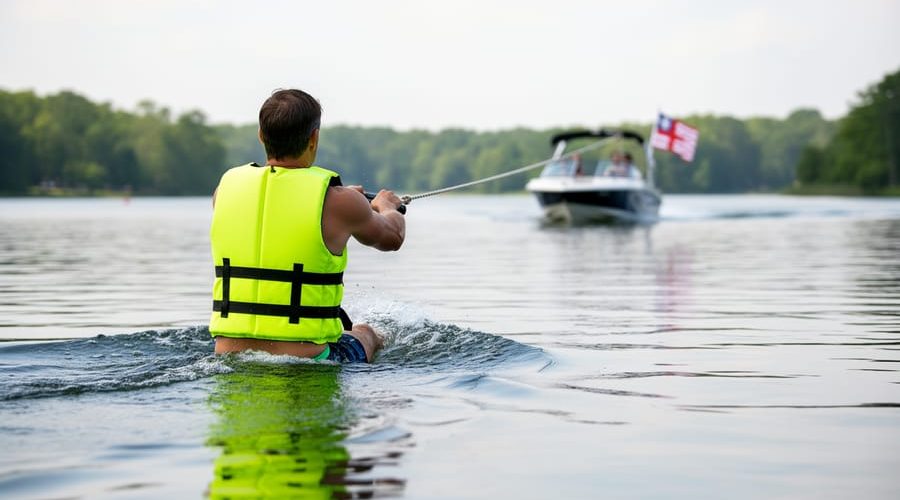
A recommended water-skiing safety practice is wearing a properly fitted U.S. Coast Guard-approved life jacket at all times while skiing, being towed, or in the water. This single practice prevents the majority of water-skiing fatalities and keeps skiers visible and buoyant after falls, even when disoriented or injured.
If you’re lucky enough to own a large recreational pond where water-skiing is possible, safety isn’t negotiable. Unlike pool or hot tub environments where you control every variable, open water introduces boat traffic, variable depths, submerged obstacles, and rapid weather changes. A life jacket transforms a head injury or leg cramp from a potential drowning into a manageable incident. It buys time for the spotter and driver to circle back, keeps an unconscious skier face-up, and ensures children and weak swimmers stay afloat without effort.
Beyond the life jacket itself, a complete safety practice includes a dedicated spotter in the boat (separate from the driver), hand signals everyone understands, a tow rope in good condition, and pre-ski communication about the route and hazards. For pond owners, that last point matters even more. You know where the old dock pilings sit just below the surface, where the drop-off steepens, and which cove stays shallow. Mapping a safe ski zone and briefing every participant prevents collisions and groundings that wouldn’t happen on a marked public lake.
This guide breaks down what makes a life jacket suitable for skiing, how the spotter-driver-skier system works, the gear you need, and how to adapt these practices to private pond settings where you set the rules.
Understanding Water-Skiing Safety: What It Really Means
When you read “recommended water-skiing safety practices,” you’re looking at a set of non-negotiable protocols designed to keep people alive and injury-free during towed water sports. These aren’t suggestions or nice-to-have extras, they’re the fundamental rules that prevent drowning, propeller strikes, and collisions. The core requirements include wearing Coast Guard-approved personal flotation devices, having a dedicated spotter in the boat to watch the skier, maintaining safe speed and distance from hazards, and establishing clear communication signals for emergencies. Each element addresses a specific failure point that has killed or injured skiers in real-world accidents.
Here’s what pond owners need to understand: these requirements don’t recognize property lines. If your pond is large enough to ski on (typically one acre or more with adequate depth and clearance), you’re operating in the same risk environment as a public lake. The water doesn’t care that you own it, and the physics of drowning work identically in your backyard feature as they do in a state recreation area. Wear Coast Guard-approved PFDs applies to your private pond the same way it applies to Lake Tahoe.
- PFD (Personal Flotation Device)
- Coast Guard-approved wearable flotation that keeps an unconscious or injured person’s head above water. Type III performance vests are standard for water-skiing.
- Spotter
- A second person in the boat whose sole job is watching the skier and communicating their status to the driver. Required by law in most states regardless of water body type.
- Skiable Water Feature
- Any pond or lake with sufficient size (1+ acre), depth (6+ feet in ski zones), and clearance from obstacles to safely support towed water sports.
- Tow Rope Safety Zone
- The area extending from the boat to the full length of the ski rope plus maneuvering distance, kept clear of docks, fountains, and other hazards.
The practices work as a system. The PFD keeps a fallen skier floating even if they’re knocked unconscious. The spotter ensures the driver knows instantly when someone goes down, preventing the boat from circling back over them. Speed management and clear zones prevent the catastrophic injuries that happen when skiers hit fixed objects at 25 miles per hour. Together, these protocols create layers of protection that compensate for the inherent dangers of dragging a person behind a moving boat. Skip one element, and the whole safety net weakens.
How Water-Skiing Safety Practices Work in Action
Picture this: your 2-acre pond on a Saturday morning, ski rope coiled in the boat, family ready for their first run of the season. Here’s how the safety system actually works when everything comes together.
Before the boat even starts, your spotter takes position in the rear seat with an unobstructed view of the skier. This isn’t a passenger role, they’re watching for hand signals, scanning for obstacles your pond might hide (submerged logs, shallow patches near that inlet), and keeping eyes on the skier while you focus on steering. The moment your teenager gives the thumbs-up from the water, wearing their Coast Guard-approved Type III vest, the spotter relays “ready” to you. You advance the throttle smoothly, the rope tightens, and they pop up.
Now the layered protection kicks in:
- The PFD keeps them buoyant if they fall, even in the deeper center section where your aerator creates current
- Your spotter watches their balance and immediately signals you to slow down when they start wobbling
- You maintain 15-20 mph and a wide buffer from the dock pilings and that decorative boulder cluster on the east shore
- When they finally tumble near the lily pad zone, the spotter’s already grabbing the bright orange flag to display while you circle back
- The floating tow rope stays visible on the surface instead of sinking into the vegetation
As you approach the downed skier, your spotter directs hand signals, wide right to avoid the shallow shelf, throttle back, neutral. The kill-switch lanyard attached to your wrist means if you somehow get thrown from the seat (it happens), the engine cuts immediately instead of the boat circling back toward your family in the water.
This isn’t paranoia; it’s physics and human limits working in your favor. Each element compensates for what can go wrong in a pond’s confined space, limited runoff room, fixed obstacles you can’t move, and the reality that even experienced skiers misjudge turns. One safety measure might fail (the spotter glances away for a second), but the others keep working. That’s the system.
Essential Safety Components Every Pond Skier Needs
Personal Flotation Devices: Your First Line of Defense
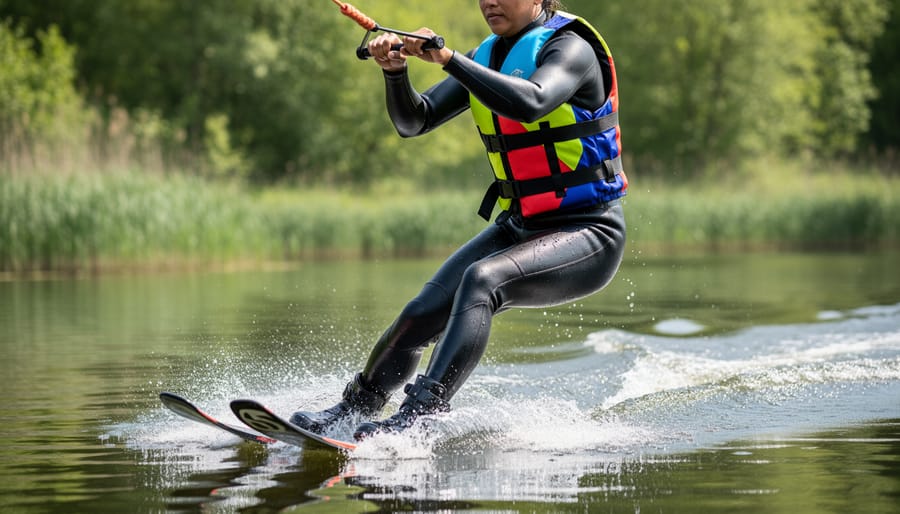
Type III performance vests are the gold standard for water-skiing because they allow arm mobility while keeping you afloat if you fall. Unlike bulky recreational life jackets, these Coast Guard-approved vests won’t ride up or restrict your movement during turns and jumps. Proper fit is critical, too loose and the vest can slip off on impact; too tight and you’ll struggle to breathe. Test it by raising your arms overhead: the vest shouldn’t ride above your chin.
Even on your own pond, don’t skip this safety equipment. Familiarity breeds complacency, but pond hazards, submerged aerator lines, sudden depth changes near planting shelves, or exhaustion from a long run, are just as real as lake dangers. Your pond’s shallow edges can create a false sense of security, but one hard fall in deep water changes everything. Treat your backyard skiing zone like any public waterway: PFDs on, every time, no exceptions.
The Spotter Role: Why Three Eyes Are Better Than Two

A spotter’s job is deceptively simple: watch the skier, not the scenery. While the boat operator focuses on navigation and speed, the spotter sits facing backward, maintaining constant visual contact with the skier. When someone falls, the spotter signals the driver immediately, preventing dangerous overrun situations where the boat circles back into the skier’s zone. On ponds, where space is limited and turns are tighter than on open lakes, this becomes even more critical. The spotter also communicates hand signals between skier and driver: thumbs up for faster, thumbs down to slow, hand slice across the throat to stop, and the essential “okay” signal after a fall.
Most states legally require a spotter for towed water sports, even on private property. Enforcement varies, but liability doesn’t, if someone gets hurt and you lacked proper safety observers, you’re exposed. On your pond, where family and guests ski closer to docks, fountains, and planting beds, that second pair of eyes watching the skier lets the driver concentrate on avoiding your pond’s fixed features. It’s the simplest safety layer you can add, and it costs nothing beyond assigning the role before anyone gets in the water.
Tow Ropes and Visual Markers
Tow ropes create hazards in confined pond spaces if you choose the wrong type. Standard water-skiing ropes run 75 feet, but on a pond you’ll often shorten to 60 feet to keep the skier’s arc away from docks, aerators, and planted shorelines. Brightly colored floating ropes, yellow, orange, or neon green, stay visible above water lilies and surface plants, preventing propeller entanglement when the rope drops. If your pond has fountain features or shallow zones, a floating rope won’t sink into vegetation or wrap around underwater structures. State boating laws typically require you to display an orange or red flag whenever a skier is down in the water, even on private ponds, so passing boats or your own returning watercraft know someone’s in the ski zone. Mount the flag on a telescoping pole at the boat’s stern for clear visibility across your pond’s entire surface.
Putting Safety Into Practice on Your Pond
Owning a large pond that’s transitioned into a family recreation spot means juggling two worlds: maintaining a healthy aquatic ecosystem and creating a safe skiing environment. The key is intentional planning so neither side suffers.
Start by mapping out a clear skiing corridor. Walk your pond’s perimeter and identify the longest, straightest stretch with the most depth, that’s your primary run. Mark it mentally or with subtle shore markers (decorative rocks or posts work well). This corridor should sit at least 50 feet away from aerators, fountain heads, and established planting zones. One pond owner I know in rural New South Wales runs his skiing path down the center axis of his 2-acre pond, leaving shallow planted margins untouched. His three-stage filtration system operates along the eastern shore, well outside the skiing zone, so pump intakes never become hazards.
Before anyone gets in the water, establish family protocols. Hold a quick safety briefing covering spotter roles, hand signals, and what to do if someone falls near the planted edges. Make PFD wear non-negotiable, even for confident swimmers. Post a laminated rule sheet at your dock: no skiing when visibility drops below 10 feet, minimum water temperature 18°C, always check for surface debris first. These aren’t killjoy measures, they’re what separate a fun afternoon from a disaster.
Seasonal factors matter more on ponds than lakes. Summer weed growth can tangle tow ropes and obscure submerged hazards, so schedule skiing sessions after your regular maintenance sweeps. Spring and autumn bring temperature swings; cold water increases hypothermia risk even in shallow falls. Winter? Skip it entirely unless you fancy testing thin ice, which you shouldn’t.
The beauty of this approach is that skiing and pond care actually reinforce each other. Your weekly checks for crystal-clear water double as safety inspections. You’re already monitoring conditions with water flow meters and testing equipment, add a quick scan for floating debris or shoreline hazards to that routine. One family I know treats their Saturday morning pond walk as a combined maintenance check and pre-ski safety sweep. Their pond stays beautiful and their kids stay safe, because both priorities get equal attention.
Common Questions About Pond Water-Skiing Safety
Large pond owners considering water-skiing often face unique questions that blend recreational boating safety with pond management concerns. These frequently asked questions address the practical realities of turning your water feature into a ski-friendly space while maintaining its health and beauty.
Do I need a spotter if I’m just skiing in my own pond?
Yes, state boating laws typically apply to private ponds over a certain size, and spotters are legally required in most jurisdictions whenever someone is being towed. Beyond legal requirements, a spotter provides essential safety even in familiar water, watching for equipment failures, signs of distress, and obstacles you might miss while driving.
What’s the minimum pond size for safe water-skiing?
You need at least one acre of open water with a straight run of 1,000 to 2,000 feet for basic skiing, though more space is safer for turns and falls. Smaller ponds don’t provide enough distance to reach safe skiing speeds or room to maneuver away from shoreline hazards.
How do I protect my fish and plants during skiing activities?
Establish designated skiing corridors that avoid shallow planting zones and keep boats at least 50 feet from shoreline vegetation. Schedule skiing during times when fish are less active (midday rather than dawn or dusk), and limit sessions to prevent prolonged disturbance to aquatic life.
Can I use my pond for skiing and still keep it as a water garden?
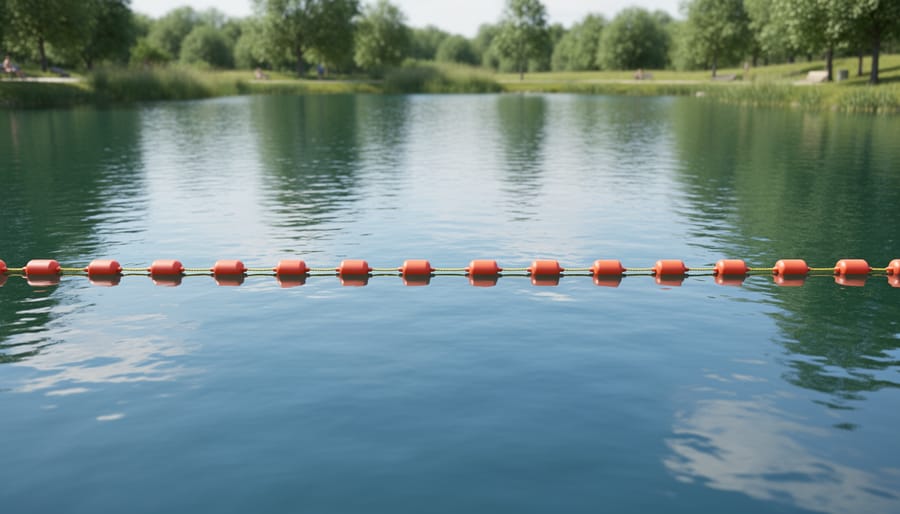
Absolutely, but it requires thoughtful zoning. Dedicate specific areas for each purpose, deep central zones for skiing and shallow perimeter areas for plants, with clear boundaries marked by buoys or visual markers. Many pond owners successfully balance both by limiting skiing to certain hours or days, allowing the ecosystem time to settle between sessions.
The biggest concern for most pond owners is whether recreational use will undo years of careful ecosystem cultivation. The answer lies in moderation and planning. Designate permanent no-ski zones around your lilies, marginal plantings, and fish spawning areas. Use floating boom barriers if needed to physically separate active skiing corridors from sensitive habitats. Consider limiting skiing to once or twice weekly rather than daily use, giving your pond time to recover its natural balance.
Another practical consideration is insurance and liability. Even on private property, you’re responsible for guest safety, and homeowner’s policies may require notification if you’re regularly hosting water sports. Check with your insurance provider about coverage for water-skiing activities, and consider posting basic safety rules near your dock or boat launch area. This protects both you and your guests, turning informal fun into responsibly managed recreation.
When your pond reaches that magical size where it can support water-skiing, you’re no longer just maintaining a water feature, you’re operating a recreational venue. That means the safety practices we’ve covered aren’t optional extras you can skip because it’s “just your backyard.” PFDs, spotters, proper tow equipment, and emergency protocols become as essential to your pond as your filtration system and aerators.
Think of your safety gear as permanent pond infrastructure. Your life jackets should hang in the boathouse alongside your maintenance tools. Your spotter training should be as routine as your seasonal water testing. This isn’t about turning your peaceful water garden into a liability, it’s about protecting what you’ve built and the people who enjoy it.
The good news? Ponds that support skiing can absolutely remain beautiful, balanced ecosystems. I’ve seen properties where morning hours belong to dragonflies and water lilies, while afternoons bring laughter and safe family skiing. With clear safety zones, respect for your aquatic life, and proper equipment, your pond serves both purposes wonderfully. You’ve already invested time and care into creating something special, don’t let a preventable accident undo that work.