
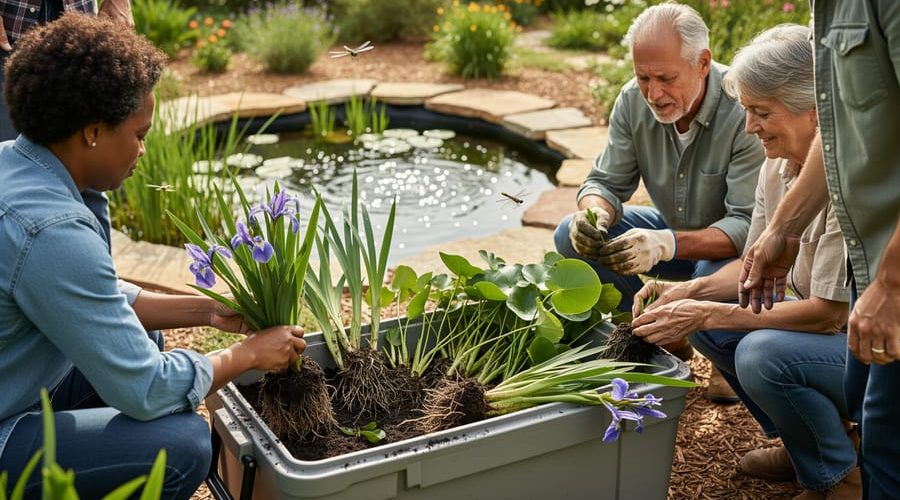
Native Plant Community Gardeners: Building a Thriving Water Garden Swap Network
Native plant community gardeners have cracked the code on building thriving, low-maintenance water gardens: they gather locally to swap regionally adapted aquatic plants, share proven growing techniques, and build lasting connections with fellow pond enthusiasts. This grassroots approach delivers something garden centers can’t match: free or low-cost plants already proven to thrive in your specific climate, plus the collective wisdom of neighbors who’ve actually grown them in conditions identical to yours.
If you’ve struggled to find native water plants suited to your region, or felt isolated trying to solve pond challenges on your own, these informal swap networks change everything. Instead of gambling on mail-order plants from different growing zones or paying premium prices for specialty nursery stock, you’ll gain access to divisions, cuttings, and seeds from established local water gardens. The plants arrive pre-adapted to your frost dates, summer heat, and water chemistry.
The community aspect matters just as much as the plants themselves. You’ll meet experienced water gardeners who can tell you exactly when to divide your native iris, which dragonfly species to expect, and how to manage algae without chemicals. Beginners get patient mentorship. Veterans find eager audiences for their surplus plants and years of knowledge.
This movement has grown steadily since 2020, driven by increasing interest in sustainable gardening and a desire to support local ecosystems. In 2026, these networks are more active and accessible than ever, with groups meeting in backyards, community gardens, and even parking lots to exchange everything from cardinal flowers to native water lilies.
What Makes Native Water Plants Special for Your Pond
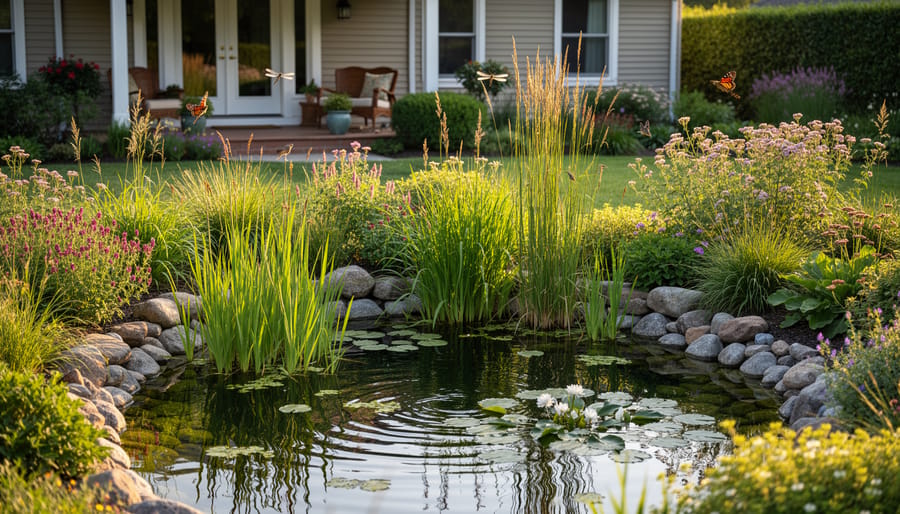
I’ll be honest, I spent my first few pond seasons buying whatever looked pretty at the garden center. Bright tropical water lilies, fast-growing grasses that promised instant coverage, those neon-colored cultivars that screamed “water feature” from across the yard. They looked amazing for about six weeks. Then the constant battle began: extra fertilizing, aggressive spreading that required weekly pruning, algae blooms because the plants weren’t actually filtering anything, and a pond that felt more like a high-maintenance aquarium than a natural water garden.
Everything changed when I discovered cardinal flower growing wild near a local stream. I dug a small clump (with permission from the landowner), tucked it into the shallow edge of my pond, and forgot about it. That single native plant thrived without fuss, came back stronger each spring, and attracted hummingbirds I’d never seen in my yard before. That’s when I understood what native water plants actually do.
The adaptation advantage is real and saves you money. Native water plants have spent thousands of years figuring out your local rainfall patterns, temperature swings, and soil chemistry. They don’t need special fertilizers formulated for tropical species or winter storage in your garage. My Midwest pond’s marsh marigolds and blue flag iris sail through subzero winters and July heat waves without a single adjustment from me. They know exactly when to go dormant and when to emerge because those cycles are hardwired into their biology.
Wildlife benefits extend far beyond looking pretty. Research on native plants for pollinators shows that local species support significantly more beneficial insects than ornamental alternatives, and that holds true around ponds. My native swamp milkweed hosts monarch caterpillars every summer, while the pickerelweed attracts native bees I didn’t know existed. Dragonflies patrol for mosquitoes, frogs nest in the sedges, and wood ducks actually stop by during migration. Non-native water hyacinth might look lush, but it’s essentially a food desert for local fauna.
The water filtration piece surprised me most. Studies confirm that native macrophytes improve water quality by absorbing excess nutrients more efficiently than introduced species, which often contribute to imbalances instead of solving them. After I swapped out half my ornamental grasses for native rushes and sedges, my pond’s clarity improved noticeably within one season. The roots create natural biofilters, the plants consume nitrates that would otherwise feed algae, and the whole system just balances itself without chemical interventions.
Lower maintenance isn’t marketing speak. It’s the practical reality of working with plants that want to be exactly where you’ve put them. I still pull the occasional weed and divide clumps every few years, but I’ve stopped fighting my pond. Native water gardening feels like partnership instead of constant management.
How Water Gardening Plant Swap Networks Work
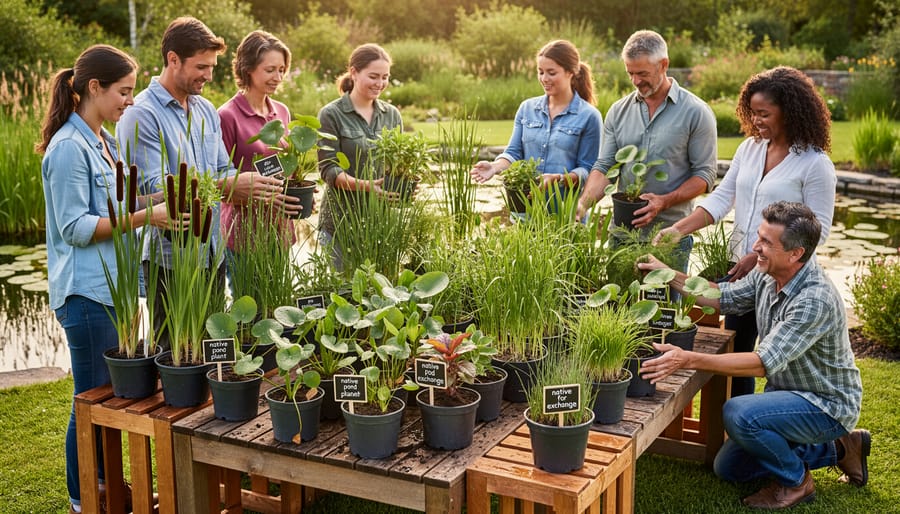
Finding or Starting a Local Water Garden Swap Group
Finding an established swap network takes less detective work than you might think. Start by searching Facebook groups for terms like “water garden swap,” “native plant exchange,” or your region plus “pond enthusiasts.” Local garden clubs and native plant societies often host seasonal swaps or know enthusiasts eager to trade aquatics. Check community bulletin boards at nurseries specializing in water plants, many display flyers for upcoming exchanges.
If you strike out locally, consider launching your own group with two or three fellow pond owners. You don’t need formal structure, just pick a convenient public spot like a community center parking area or botanical garden pavilion where members can spread out plants safely. Spring and early autumn work best for swapping, when divisions establish quickly.
Set simple ground rules from day one: members should label plants clearly, share honest care requirements, and avoid bringing known invasives. Decide whether your group operates on a bring-one-take-one basis or welcomes newcomers empty-handed. A shared Google Sheet or WhatsApp group keeps communication flowing between meetups.
Understanding how to join a swap matters less than showing up with genuine enthusiasm and a willingness to learn. Many groups model themselves after successful pond society events blending plant trading with informal knowledge sharing. Your first gathering might be small, but word spreads quickly when passionate water gardeners discover kindred spirits nearby.
Top Native Water Plants Perfect for Swapping
The best native water plants for swapping are the ones that practically beg to be divided, they multiply readily, handle root disturbance without sulking, and establish quickly in new ponds. I’ve watched seasoned swap regulars arrive with overflowing boxes of common arrowhead or pickerelweed, only to leave with rare sedges they’ve been hunting for years. The generosity flows both ways when you bring plants that genuinely want to spread.
Submerged Oxygenators
These underwater workhorses pump oxygen into your pond while outcompeting algae for nutrients. Native varieties are swap stars because you can simply cut stems, bundle them with a small weight, and toss them in a bucket of pond water for transport.
Wild celery thrives in cooler regions across the northern states, sending up long ribbonlike leaves that wave gracefully underwater. Dragonfly nymphs love hiding in its dense growth, and waterfowl nibble the nutritious foliage. A handful of cuttings will fill a small pond corner by season’s end.
Coontail grows nearly everywhere in North America and survives without rooting at all, it just floats suspended beneath the surface, absorbing nutrients directly through its feathery whorls. Bundle six-inch stems together and you’ve got a perfect swap offering that requires zero potting effort.
| Plant Name | Native Region Examples | Growth Type | Swap-Readiness |
|---|---|---|---|
| Wild Celery | Northern US, Canada | Submerged oxygenator | Very easy (stem cuttings) |
| Pickerelweed | Eastern US | Marginal emergent | Easy (rhizome division) |
| Broadleaf Arrowhead | Widespread US | Marginal emergent | Very easy (tuber offsets) |
| Golden Club | Eastern swamps | Marginal emergent | Moderate (mature clump division) |
| Common Water Lily | Widespread US | Floating-leaved rooted | Easy (rhizome sections) |
Marginal Emergents
Plants that grow in shallow water or saturated soil edges make up the bulk of most swap tables. Their root systems divide cleanly, they adapt to varying water depths, and many produce showy flowers that bring personality to pond margins.
Pickerelweed develops thick rhizomes that you can slice into palm-sized chunks, each capable of producing several stems. Its violet-blue flower spikes bloom all summer, attracting bumblebees and various native pollinators. The seeds feed waterfowl in fall, and the plants tolerate everything from three inches of water to wet soil at the waterline.
Broadleaf arrowhead spreads via underground tubers that pop off easily when you dig a clump. The arrow-shaped leaves emerge on tall stems, followed by three-petaled white flowers. Swap veterans love this one because a single parent plant yields dozens of marble-sized tubers by autumn, you’ll have plenty to share and still expand your own planting.
Floating-Leaved Rooted Plants
Native water lilies don’t quite match the ease of marginals, but they’re swap-network treasures because nursery prices run high and divisions from established plants usually outperform store-bought specimens.
Common white water lily spreads slowly enough to manage but vigorously enough to divide every few years. Cut a rhizome section with at least one growing tip, pot it in heavy clay soil, and it’ll produce pads within weeks of replanting. The fragrant flowers open in morning sun, and frogs appreciate the shade underneath.
Golden club offers something different, bright yellow clublike flower spikes in early spring and large floating leaves that stay attractive all season. It forms dense clumps in shallow water that you can divide with a sharp spade, though it appreciates a year to settle before dividing again. Less common at swaps, which makes it excellent trading currency when you have extras.
Preparing Plants for a Successful Swap
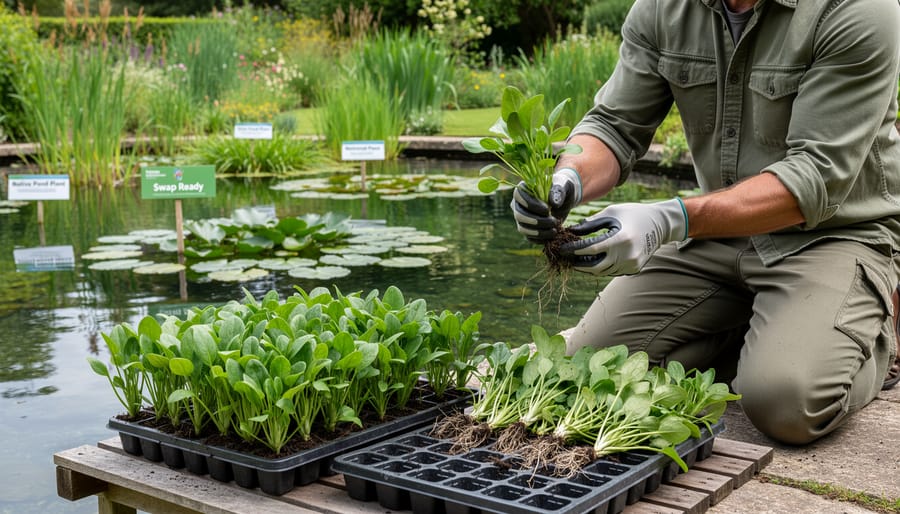
Getting your plants ready for a swap doesn’t need to be stressful. I still remember my first swap, I showed up with pickerelweed stuffed in a grocery bag, dripping all over my car seat. Not ideal. Here’s what I’ve learned since then.
Timing Your Divisions
Spring and early fall are your sweet spots for dividing most native water plants. The weather’s mild, and plants recover quickly. Aim to prepare your plants two to three weeks before the swap. This gives them time to settle after division but keeps them fresh and actively growing when you arrive.
Bare-Root or Potted?
For short transport times (under two hours), bare-root works beautifully. Gently rinse soil from roots, wrap them in damp newspaper or paper towels, and slip everything into a plastic bag with a few air holes. For longer trips or delicate species, pot divisions in small containers using aquatic soil or clean sand. Either way, trim any dead leaves and overgrown roots before packing.
Label Everything
Seriously, label everything. Use waterproof plant tags or permanent marker on plastic labels. Include the plant name, whether it’s a marginal or submerged species, and any quirks (spreads fast, needs full sun, winter dormant). Your fellow swappers will thank you, and you’ll look like you know what you’re doing.
Transport Tips
Pack plants in shallow plastic bins or milk crates. Add an inch of water to keep roots moist, but don’t submerge entire plants, they’ll slosh around and get bruised. On hot days, place a damp towel over the bins and keep them out of direct sunlight in your vehicle. For oxygenators like hornwort, pack them loosely in bags with water and twist the top to trap some air.
Bring a few extras if you can. Someone always shows up hoping for that exact plant you brought.
Swap Etiquette and Best Practices
A thriving swap network runs on mutual respect and a shared commitment to keeping everyone’s ponds healthy. The golden rule is simple: bring plants you’d be proud to put in your own water garden. That means healthy divisions with strong roots, no visible pests or algae mats clinging to stems, and honest labels that include the plant’s name and any quirks it might have.
Be upfront about growth habits. If your cardinal flower spreads aggressively or your pickerelweed self-seeds with enthusiasm, say so. Experienced swappers appreciate the heads-up, and beginners deserve to know what they’re taking home. Most networks follow a loose take-what-you-bring guideline, if you arrive with three plants, aim to leave with roughly three. It keeps the tables balanced and ensures everyone finds treasures.
Biosecurity matters more than many newcomers realize. Rinse soil from roots before transport, inspect for snails or eggs tucked into leaf axils, and never share water from your pond in transport containers. These small steps prevent algae blooms, parasites, and diseases from hitchhiking between ecosystems. When someone asks about a plant’s care needs, share what’s worked for you, sun exposure, water depth, winter behavior. Swaps are as much about exchanging skills for your pond as they are about trading plants. That generosity strengthens the whole community and keeps people coming back.
Building Connections Beyond the Swap
The real magic of native plant swapping happens between events. As members gather experience and enthusiasm, groups naturally evolve into year-round support networks. Regular meetups shift from plant exchanges to pond tours where seasoned water gardeners open their backyards, showing newcomers how native marginals have filled in around stone edges or how a thriving colony of native waterlilies requires minimal intervention. These informal visits spark ideas you won’t find in books.
Many networks coordinate group seed purchases in late winter, pooling orders for native sedges and rushes to save money together while ensuring everyone receives genuinely local ecotypes. Members share tips on germination quirks and propagation timelines through group chats, building collective expertise that benefits everyone’s pond.
Some communities take on bigger projects, restoring degraded creek banks with native aquatics, installing demonstration water gardens at local parks, or setting up shared water-saving collection systems for propagation areas. First-timers often find experienced mentors who’ll answer frantic texts about unexpected algae blooms or offer cuttings when a prized plant fails.
The connections grow as deep as the roots. You’re not just swapping plants, you’re building a network of people who genuinely care about thriving ponds and healthy local ecosystems.
Common Questions About Water Garden Plant Swaps
New to plant swaps? You’re not alone. Most water gardeners arrive at their first exchange with similar questions, and the experienced swappers remember feeling just as uncertain before their debut event.
Do I need to bring plants to receive plants?
Most groups operate on a generous community model where newcomers can take plants even on their first visit. Bringing something to swap is appreciated but rarely required, especially when you’re just getting started.
How can I tell if a plant is truly native or a nativar?
Ask the person offering it about its origin and look for characteristics matching wild populations in your region. Nativars often have unusual leaf colors, double flowers, or compact growth that native plants don’t display naturally.
What should I expect at my first swap event?
Expect a casual, outdoor gathering where people set up plants on tables or tarps, chat about what grows well in their ponds, and freely share advice. The atmosphere is welcoming and educational rather than transactional.
How do I winterize plants I receive late in the season?
For hardy natives, sink pots to the bottom of your pond below the freeze line, or overwinter them in a cool garage in containers of moist soil. Tender species need to come indoors to a bright, cool spot.
Beyond these basics, many gardeners wonder about plant health guarantees. Swap networks rely on trust and shared knowledge rather than warranties. If a plant struggles after swapping, reach out to the person who provided it. They’ll often troubleshoot with you or offer a replacement at the next event. This collaborative problem-solving is part of what makes these communities so supportive.
Concerns about accidentally spreading invasive species are valid and worth discussing. Responsible swappers clearly label anything with aggressive tendencies and keep known invasives out of circulation entirely. When in doubt about a plant’s behavior, ask the group or consult your local extension office before introducing it to your pond.
You don’t need to be an expert to dive into the world of native plant swapping, just curiosity and a willingness to share. Whether you join an established Water Gardening Community Plant Swap Network or gather a handful of fellow pond enthusiasts to start your own, you’re stepping into a movement that makes water gardening more sustainable, more affordable, and infinitely more connected.
The plants you’ll bring home aren’t just beautiful additions to your pond. They’re pieces of your local ecosystem, adapted to thrive without fuss and support the wildlife that makes your water garden come alive. But honestly? The plants are only half the story. The real magic happens when you meet someone who shares your excitement over a thriving pickerelweed clump or who can troubleshoot your algae troubles over coffee at a swap meet.
Starting small is perfectly fine. Invite three neighbors with ponds. Post in a local gardening group. Show up to your first swap with a single divided plant and an eagerness to learn. These networks grow organically because they’re built on generosity and shared passion, not complicated rules or gatekeeping.
Your pond will thank you for the native plants. Your calendar will fill with swap dates and garden tours. And you’ll discover that the best part of water gardening isn’t just what grows in your pond, it’s the community that grows around it.